The Kennedy Assassination: Inside the Book Depository
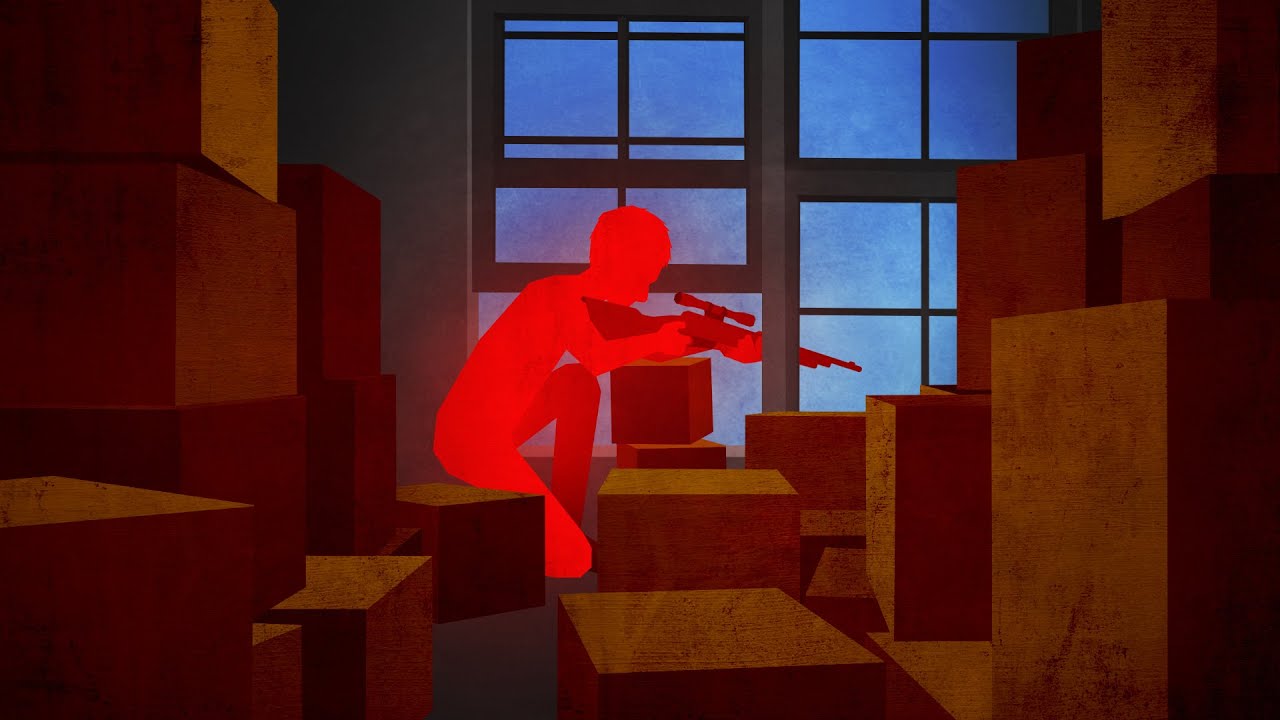
LEMMiNO
AI-assisted summary of The Kennedy Assassination: Inside the Book Depository — original source. Check the original for full context.
Source published:
Key ideas
- The video focuses specifically on events inside the Texas School Book Depository before, during, and after the assassination of President John F. Kennedy on November 22, 1963. (0:14)
- Lee Harvey Oswald secured employment at the Depository on October 16, 1963, a full month before the final Dealey Plaza motorcade route was decided or made public. (1:42)
- Reenactments established that a descent from the sixth-floor sniper's nest to the second-floor lunchroom was mechanically feasible within razor-thin margins of Baker and Truly's ascent. (44:26)
- Forensic ballistics conclusively matched all three spent cartridge casings recovered on the sixth floor to the Mannlicher-Carcano rifle purchased under Oswald's alias. (61:44)
- The tactical drawbacks of the sniper's nest and the chain of coincidences strongly support a spontaneous crime of opportunity rather than an elaborate multi-agency conspiracy. (92:10)
Detailed notes
## Background Published on YouTube by LEMMiNO on July 24, 2023, this documentary focuses strictly on the events surrounding the assassination of President John F. Kennedy on November 22, 1963. The video investigates what transpired inside the Texas School Book Depository shortly before, during, and after the shooting where accused assassin Lee Harvey Oswald worked.
## TL;DR The documentary reconstructs the timeline of November 22, 1963, by zooming in on the physical architecture, employee movements, and forensic evidence inside the Texas School Book Depository. It methodically analyzes the chain of events that led to Oswald's temporary warehouse hiring, the mechanics of the motorcade route selection, and the physical feasibility of Oswald escaping from the sixth-floor sniper's nest to the second-floor lunchroom encounter within 90 seconds. Through forensic records, contradictory witness testimonies, and physical evidence such as the Mannlicher-Carcano rifle and the paper sack, the piece highlights significant investigative blunders by local police and the Warren Commission. Ultimately, it evaluates conspiratorial claims against the simpler reality of institutional negligence and opportunistic lone-actor behavior.
## Atmosphere & style The presentation is analytical, quiet, and hyper-methodical, establishing a clinical and contemplative atmosphere rather than indulging in sensationalism. LEMMiNO delivers the complex narrative with a measured, detached cadence, accompanied by intricate 3D architectural diagrams, vintage newsreel footage, and atmospheric sound design that builds deliberate investigative tension. It feels like examining an archival cold-case dossier under a magnifying glass, systematically juxtaposing confusing witness accounts with strict physical logistics to strip away decades of conspiratorial mythmaking.
## Bulletin - [00:14](https://www.youtube.com/watch?v=5u7euN1HTuU&t=14s) The video focuses specifically on events inside the Texas School Book Depository before, during, and after the assassination of President John F. Kennedy on November 22, 1963. - [01:42](https://www.youtube.com/watch?v=5u7euN1HTuU&t=102s) Lee Harvey Oswald secured employment at the Depository on October 16, 1963, a full month before the final Dealey Plaza motorcade route was decided or made public. - [44:26](https://www.youtube.com/watch?v=5u7euN1HTuU&t=2666s) Reenactments established that a descent from the sixth-floor sniper's nest to the second-floor lunchroom was mechanically feasible within razor-thin margins of Baker and Truly's ascent. - [01:01:44](https://www.youtube.com/watch?v=5u7euN1HTuU&t=3704s) Forensic ballistics conclusively matched all three spent cartridge casings recovered on the sixth floor to the Mannlicher-Carcano rifle purchased under Oswald's alias. - [01:32:10](https://www.youtube.com/watch?v=5u7euN1HTuU&t=5530s) The tactical drawbacks of the sniper's nest and the chain of coincidences strongly support a spontaneous crime of opportunity rather than an elaborate multi-agency conspiracy.
## Key takeaways - [01:42](https://www.youtube.com/watch?v=5u7euN1HTuU&t=102s) Lee Harvey Oswald's hiring at the Depository was arranged through casual neighborhood connections weeks before any motorcade route was planned. - [08:51](https://www.youtube.com/watch?v=5u7euN1HTuU&t=531s) The motorcade route passing the Depository was only finalized on November 14 and publicly revealed on November 16, ruling out advance staging via Oswald's job. - [07:32](https://www.youtube.com/watch?v=5u7euN1HTuU&t=452s) Witness accounts regarding Oswald's brown paper package conflicted on whether he carried curtain rods or rifle-sized parcels into the Depository. - [24:53](https://www.youtube.com/watch?v=5u7euN1HTuU&t=1493s) Eyewitness reports of figures in the upper windows of the Depository were inconsistent, contradictory, and plagued by unreliable testimony. - [34:24](https://www.youtube.com/watch?v=5u7euN1HTuU&t=2064s) Dealey Plaza acted as an acoustic echo chamber, leading over 200 witnesses to report varying shot counts and conflicting origins between the Depository and Grassy Knoll. - [41:14](https://www.youtube.com/watch?v=5u7euN1HTuU&t=2474s) Officer Baker and Roy Truly encountered an unagitated Oswald in the second-floor lunchroom within 90 seconds after the final shot. - [44:26](https://www.youtube.com/watch?v=5u7euN1HTuU&t=2666s) Timed reenactments demonstrated that a fast descent from the sixth floor matched the police ascent within seconds, confirming mechanical plausibility. - [46:14](https://www.youtube.com/watch?v=5u7euN1HTuU&t=2774s) Fourth-floor employees Victoria Adams and Sandra Styles asserted they descended the stairs immediately without encountering Oswald, Baker, or Truly. - [54:11](https://www.youtube.com/watch?v=5u7euN1HTuU&t=3251s) Crime-scene discrepancies, such as misplaced chicken bones and handled cartridge casings, fueled rumors of evidence manipulation. - [01:01:44](https://www.youtube.com/watch?v=5u7euN1HTuU&t=3704s) Initial media reports misidentified the recovered rifle as a 7.65 Mauser, but forensic analysis confirmed it was Oswald's 6.5mm Mannlicher-Carcano. - [01:03:37](https://www.youtube.com/watch?v=5u7euN1HTuU&t=3817s) No curtain rods were ever found in the building or in Oswald's room, while the improvised paper package carried his palmprint and matched depository materials. - [01:09:37](https://www.youtube.com/watch?v=5u7euN1HTuU&t=4177s) During unrecorded interrogations, Oswald offered first-floor alibis that were uncorroborated by coworkers and inadvertently matched sixth-floor elevator interactions. - [01:25:55](https://www.youtube.com/watch?v=5u7euN1HTuU&t=5155s) Sole lineup witness Howard Brennan initially declined to positively identify Oswald before later changing his testimony for the Warren Commission. - [01:30:17](https://www.youtube.com/watch?v=5u7euN1HTuU&t=5417s) Institutional errors, administrative coverups, and witness memory shifts reflect human fallibility and cold-war agency panic rather than a massive coordinated plot. - [01:32:10](https://www.youtube.com/watch?v=5u7euN1HTuU&t=5530s) The tactical hazards of the sixth-floor sniper's nest point toward a lone, opportunistic assassin rather than a meticulously planned ambush.
## Detailed walkthrough ### [00:14](https://www.youtube.com/watch?v=5u7euN1HTuU&t=14s) Introduction: A Narrow Slice of the Assassination
On November 22, 1963, American President John F. Kennedy was assassinated in Dallas, Texas. The man accused of carrying out the murder was Lee Harvey Oswald, who himself met a violent death after being held in police custody for less than forty-eight hours. Official investigations concluded that Oswald had fired three shots from the sixth floor of the Texas School Book Depository, where investigators recovered three spent cartridge casings and a bolt-action rifle. Yet the sudden murder of Oswald in police custody instantly ignited pervasive suspicions of a wider plot. As narrator LEMMiNO observes, “Suspicions that persist to this day and have driven most Americans to reject the government's conclusion that Oswald acted alone.”
The arguments surrounding potential conspiracies are vast, multifaceted, and far too expansive to be addressed fairly in a single presentation. Rather than attempting to tackle the entire conspiracy landscape, this examination deliberately narrows its scope to look exclusively at the ground-level reality of Dealey Plaza. As LEMMiNO frames the central investigation: “Instead, in this video, I want to zoom in and focus on a very narrow slice of this case. Specifically, the events surrounding the Texas School Book Depository.” The core question is what transpired within those walls immediately before, during, and after the fatal shots were fired.
- Date of the assassination: November 22, 1963 - Suspect: Lee Harvey Oswald (killed less than two days after arrest) - Evidence discovered on the sixth floor: Three spent shell casings and one bolt-action rifle
---
[01:42](https://www.youtube.com/watch?v=5u7euN1HTuU&t=102s) Chapter I: The Hiring of Oswald
The chain of circumstances that placed Lee Harvey Oswald inside the depository began innocuously in September 1963. A young man named Wesley Frazier received a tip from an employment agency regarding a potential opening at the Texas School Book Depository. On September 13, Frazier traveled from his home in Irving, Texas, into downtown Dallas, interviewed with building superintendent Roy Truly, and was hired immediately on the spot. Frazier resided in Irving with his older sister, Linnie Mae Randle, just down the street from the home of Ruth Paine.
On October 14, Randle and Paine sat down for coffee at a neighbor's house. Paine brought along Marina Oswald, an immigrant from the Soviet Union who spoke virtually no English. Marina and her young children had been staying at Paine's home for several weeks, driven there partly because Lee Oswald was unemployed and looking for work. During their casual conversation, Randle mentioned that her brother Wesley had just secured employment at the book warehouse. Upon returning home, Paine and Marina phoned Roy Truly to ask whether any other positions might be open. Truly agreed to an interview, and Oswald reported to the depository the next morning, officially beginning his employment on October 16.
```mermaid flowchart TD accTitle: Chain of Events Leading to Oswald's Hiring accDescr: Flowchart illustrating how casual neighbor interactions connected Frazier's job to Oswald's employment. subgraph S1["Frazier's Employment"] A["Agency contacts Wesley Frazier"] --> B["Roy Truly hires Frazier (Sept 13)"] end subgraph S2["The Irving Connection"] B -.->|"Frazier lives with sister"| C["Linnie Mae Randle"] C -->|"Casual coffee talk (Oct 14)"| D["Ruth Paine & Marina Oswald"] end subgraph S3["Oswald's Placement"] D -->|"Phone call to Truly"| E["Interview arranged for Lee Oswald"] E -->|"Hired (Oct 15)"| F["Oswald starts work (Oct 16)"] end ```
The job itself was merely temporary, created solely to handle a short-term staff shortage during the autumn book-rush season. The path that led Oswald to the sixth-floor vantage point was not a calculated covert infiltration, but an improbable daisy chain of neighborly gossip, a sister's passing remark, and a wife's plea to her host. As LEMMiNO notes regarding theories of premeditated positioning: “If Oswald was somehow entangled in a conspiracy, and the aim of that conspiracy was for him to become employed at the Book Depository, this roundabout sequence of events is a very strange way to go about it.”
- September 13, 1963: Wesley Frazier hired by superintendent Roy Truly - October 14, 1963: Coffee meeting between Linnie Randle, Ruth Paine, and Marina Oswald - October 15, 1963: Roy Truly interviews Lee Harvey Oswald - October 16, 1963: Oswald begins work at the Texas School Book Depository
---
[04:44](https://www.youtube.com/watch?v=5u7euN1HTuU&t=284s) Chapter II: Routine, Rooming Houses, and the Thursday Trip
The Texas School Book Depository operated as a commercial wholesale fulfillment warehouse. Oswald earned $1.25 an hour working as an order filler, matching invoices to book inventory, packing orders, and hauling heavy cartons between the upper storage levels and the first-floor shipping dock. The depository was a seven-story brick building served by two distinct elevator systems: two heavy freight elevators and an adjacent wooden staircase located in the rear northwest corner that serviced all seven levels, alongside a smaller passenger elevator and a second staircase near the front entrance that connected only the lower floors.
Because Oswald did not possess a driver’s license or an automobile, he forged an arrangement with his coworker Wesley Frazier. During the workweek, Oswald lived frugally under the alias O.H. Lee in a small rented room in the Oak Cliff district of Dallas. On Friday afternoons, he would catch a ride with Frazier to Irving to spend the weekend with Marina and their two daughters at the Paine residence, returning to Dallas with Frazier early Monday morning.
This established pattern was abruptly broken on Thursday, November 21—the day before Kennedy’s visit. That morning, Oswald approached Frazier and asked for an unscheduled ride to Irving that afternoon. When Frazier asked why he wanted to go home on a Thursday, Oswald claimed he needed to pick up some curtain rods to hang in his room in Dallas. Arriving unannounced at the Paine residence on Thursday afternoon surprised both Ruth Paine and Marina; they assumed he had made the trip to apologize after a marital quarrel earlier that week, though Oswald remained subdued throughout the evening.
- Hourly wage: $1.25 per hour - TSBD structure: Seven stories, two rear freight elevators, one front passenger elevator, two staircases - Usual schedule: Weekdays in an Oak Cliff rooming house, weekends at the Paine home in Irving - Stated reason for Thursday trip: Retrieving curtain rods for his room
---
[07:32](https://www.youtube.com/watch?v=5u7euN1HTuU&t=452s) The Package and the Missing Curtain Rods
Early on Friday morning, November 22, Oswald rose quietly, leaving his wedding ring behind in a cup atop Marina's dresser alongside hundreds of dollars in cash. Around 7:15 AM, he departed the Paine house on foot. Linnie Mae Randle, looking out her kitchen window across the street, observed Oswald walking toward her house carrying a long, heavy brown paper package tucked under his arm.
Oswald placed the package onto the back seat of Frazier's car before Frazier joined him. Frazier noticed the brown parcel and asked what it contained; Oswald replied simply that they were the curtain rods he had mentioned the day before. Notably, Oswald did not carry a lunch bag that morning, another break from his standard habit. Upon arriving at the depository parking lot shortly before 8:00 AM, Oswald did not wait to walk in alongside Frazier as was his custom. Instead, he gripped the long parcel and walked briskly ahead, entering the rear entrance of the building alone.
Inside the depository near the rear entrance, shipping clerk Jack Dougherty was already at work on the ground floor. Dougherty watched Oswald walk through the doors, but in later statements, he was positive that Oswald was carrying nothing in his hands. Frazier insisted he saw the long package; Dougherty insisted Oswald was empty-handed. As LEMMiNO emphasizes, “Contradictions like this one will become a recurring theme throughout the rest of this video.”
- Departure time: Approximately 7:15 AM from Irving - Left behind: Wedding ring placed on bedroom dresser - Contradictory eyewitness accounts: - Wesley Frazier: Oswald carried a long brown paper package of "curtain rods" into the building. - Jack Dougherty: Oswald walked through the back door with empty hands.
---
[08:51](https://www.youtube.com/watch?v=5u7euN1HTuU&t=531s) Chapter III: The Motorcade Route and the Trade Mart Decision
Throughout Friday morning, Oswald performed his order-filling duties without drawing unusual attention. Building superintendent Roy Truly considered him an efficient, quiet, and above-average employee who kept strictly to himself, remaining largely an enigma to his fellow warehousemen. Yet an exception to this reticent demeanor took place on the ground floor when coworker James Jarman Jr. observed Oswald staring through a window facing Elm Street. Oswald asked Jarman why a crowd was gathering outside, and Jarman explained that President Kennedy was scheduled to pass by along Elm Street within the hour.
The interaction raises the question of whether Oswald was genuinely ignorant of the motorcade or merely feigning surprise. While Oswald certainly knew Kennedy was visiting Dallas, the specific route down Elm Street directly below the depository was determined only days earlier. The presidential schedule hinged upon selecting a venue for an official luncheon: either the Dallas Trade Mart northwest of the city center or the Women's Building at Fair Park to the east. Texas Governor John Connally fought relentlessly for the Trade Mart, finally winning approval on November 14.
Had the Women's Building been chosen, the motorcade would have traversed Dealey Plaza heading east on Main Street—farther away, perpendicular to the depository, and with Jacqueline Kennedy seated on the side of the vehicle directly between the depository windows and the President. Selecting the Trade Mart required the presidential limousine to turn off Main onto Houston Street, and then make a sharp, slow turn onto Elm Street to enter the Stemmons Freeway. Connally himself had actually advocated against a public motorcade altogether, preferring a direct, high-speed transfer from Love Field to the Trade Mart that would have bypassed downtown entirely. As LEMMiNO notes: “He was unfortunately overruled by Kennedy himself who wanted to see and be seen by the people of Dallas.”
- Competing luncheon venues: Dallas Trade Mart vs. Women's Building at Fair Park - Route selection finalized: November 14, 1963 (favoring Governor Connally's choice of the Trade Mart) - Motorcade turn: Main Street to Houston Street, then a sharp turn onto Elm Street directly in front of the Book Depository
---
[12:25](https://www.youtube.com/watch?v=5u7euN1HTuU&t=745s) Public Announcements and Oswald's Political Awareness
To the general public, the motorcade plan was entirely uncertain until the final week before the visit. As late as Friday, November 15, the *Dallas Morning News* reported that a motorcade through downtown was improbable. The parade was officially confirmed in local newspapers only on Saturday, November 16, and the granular street-by-street map was not published until November 19. The earliest date any Dallas citizen could have deduced that Kennedy would pass beneath the depository windows was November 16—a full month after Oswald had already secured his job with Roy Truly.
Unlike many of his coworkers who paid little attention to civic news, Oswald followed politics obsessively. Coworkers frequently saw him reading newspapers in the depository break rooms. In an archival audio excerpt from a radio appearance earlier that year, Oswald openly debated his political leanings when questioned by an interviewer:
> [INTERVIEWER]: “I think you did admit on an earlier radio interview that you consider yourself a Marxist.” > > [OSWALD]: “Well I would very definitely say that I am a Marxist, that is correct. But that does not mean, however, that I am a Communist.” > > [INTERVIEWER]: “What is the difference between the two?” > > [OSWALD]: “Well there's a great deal of difference. Several American parties and several countries are based on Marxism such as Ghana, uh Ghana. Certain countries have characteristics of a socialist system such as Great Britain with its socialized medicine. These then are the differences between an outright Communist country and countries which adhere to leftist or Marxist principles.”
Given Oswald's active political interest, it remains puzzling why he appeared caught off-guard by the parade during his conversation with Jarman on Friday morning. Regardless of whether his surprise was genuine, the timeline demonstrates that Oswald's employment at the site preceded any public knowledge of the parade route by weeks.
- November 15: Local press reports a motorcade is unlikely - November 16: Motorcade confirmed; earliest date route could be inferred - November 19: Detailed motorcade route maps published in Dallas newspapers - October 15 vs. November 16: Oswald hired one month prior to public route confirmation
---
[15:38](https://www.youtube.com/watch?v=5u7euN1HTuU&t=938s) Chapter IV: The Sixth Floor Flooring Crew and the Elevator Race
On the morning of November 22, the sixth floor of the depository was far from deserted. A work crew of depository employees spent the morning laying fresh plywood flooring across the level, repeatedly moving heavy book cartons out of the way. Throughout the morning, the flooring crew intermittently crossed paths with Oswald as he gathered books for shipment.
Shortly before noon, the crew decided to break for lunch so they could eat and watch the presidential motorcade. For amusement, the workers climbed into the two side-by-side freight elevators in the northwest corner to race each other down to the first floor. As the open-gate elevator cars descended past the fifth floor, the crew spotted Oswald standing on the fifth-floor landing. Oswald shouted down at them, demanding that they send the elevator back up or close the elevator gates once they reached the ground floor so the cars could be recalled from above.
Upon arriving at the ground level, worker Charles Givens realized he had left his jacket and a pack of cigarettes on the sixth floor. Givens took an elevator back up to retrieve his personal belongings. As he picked up his items and prepared to head back down to join the others for lunch, he turned to see Oswald walking toward him across the sixth floor.
- Morning activity: Depository crew laying new plywood flooring on the sixth floor - Elevator incident: Workers race the two freight elevators down to the ground floor shortly before 12:00 PM - Oswald's position: Shouting from the fifth-floor landing to close the elevator gates - Charles Givens: Returns to the sixth floor for his jacket and cigarettes, spotting Oswald near the work area
[17:20](https://www.youtube.com/watch?v=5u7euN1HTuU&t=1040s) The Solitary Lunch and the Fifth-Floor Gathering
According to the official investigation, order filler Charles Givens was the final person inside the Texas School Book Depository to see Lee Harvey Oswald alive prior to the assassination. That encounter was placed at precisely 11:55 AM, more than thirty minutes before the motorcade would pass by Elm Street. However, other employees reported seeing Oswald in different areas of the building around that exact time or even later, and Givens himself gave conflicting statements. Regardless of that encounter, Givens was not the last worker on the sixth floor.
Immediately after Givens took the elevator down, nineteen-year-old employee Bonnie Ray Williams grabbed his lunch sack and headed upstairs to eat while waiting for the President's arrival. Williams sat down near the center of the sixth floor, roughly near the two windows overlooking Dealey Plaza. The southeast corner of that same floor—the location soon known to history as the “Sniper's Nest”—was where the fatal shots were fired. While Williams was up there, he believed he was completely alone, though he acknowledged that stacks of book cartons several tiers high obstructed his view toward the far corners.
Meanwhile, at the building's main front entrance downstairs, an unidentified individual attempted to gain access. As the narrator emphasizes:
> “This individual was never identified and is the only unknown person known to have entered the Book Depository before the shooting.”
Upstairs, having finished his chicken and soda, Williams overheard the voices of his co-workers James Jarman Jr. and Harold Norman floating up from the floor below. Finding the cavernous sixth floor quiet and lonely, Williams decided to head down to the fifth floor to join them. While his departure time cannot be established to the second, it was no more than five to ten minutes before the shooting began. On the streets below, crowds lined Elm and Houston streets, occasionally gazing up to see Jarman, Williams, and Norman leaning out of the arched windows on the far eastern end of the fifth floor. Yet spectators also noticed movement on the sixth floor directly above them—a floor that was supposed to be completely deserted.
```mermaid flowchart TD accTitle: Sixth Floor Timeline and Witness Sightings accDescr: Chronology of occupants and witnesses on the fifth and sixth floors of the Book Depository leading to the shooting.
subgraph BeforeShooting["11:55 AM - 12:25 PM: Sixth Floor Activity"] A["11:55 AM: Charles Givens sees Oswald"] --> B["Bonnie Ray Williams eats lunch on Floor 6"] B -->|"~12:20 PM: hears voices below"| C["Williams moves down to Floor 5 to join Jarman & Norman"] end
subgraph StreetSightings["12:15 PM - 12:30 PM: Spectators on the Ground"] D["12:15 PM: Arnold Rowland sees gunman in SW window"] E["~12:25 PM: Howard Brennan sees man pacing in SE window"] F["12:30 PM: Amos Euins & James Worrell see rifle barrel during shots"] end
C -.->|"Windows directly below"| E ```
---
[19:57](https://www.youtube.com/watch?v=5u7euN1HTuU&t=1197s) Gunmen in the Windows and the Three Explosions
Waiting along the east curb of Houston Street was a young newlywed couple, Arnold and Barbara Rowland. Roughly fifteen minutes before the motorcade arrived, Arnold looked up at the Book Depository and noticed a white man positioned inside the westernmost window of the sixth floor. The man held an exposed rifle across his chest and stared southward down Houston Street. Although Rowland was standing mere feet from an armed police officer, he chose not to report what he saw, assuming the man was part of the presidential security detail. If Rowland's timeline is accurate, it directly conflicts with the testimony of Bonnie Ray Williams, who was eating his lunch on that exact same floor at that exact moment. Williams neither heard footsteps nor saw anyone, even though he had a clear sightline toward the southwest corner of the warehouse.
A short time later, across the street on a concrete wall directly opposite the Depository, steamfitter Howard Brennan spotted a white man pacing back and forth behind the easternmost window on the sixth floor. At 12:30 PM, the presidential open-top limousine rounded from Main onto Houston and slowly executed the sharp, 120-degree left turn onto Elm Street. High school student Amos Euins glanced upward and noticed a narrow metal rod protruding from an upper window. Moments later, a sharp crack split the air. Deals of spectators were caught completely off guard, mistaking the blast for a motorcycle backfire, an errant cherry bomb, or a ceremonial salute; some standing near the Rowlands even broke into laughter at their own reflexive flinches.
Near the northwest corner of Elm and Houston, James Worrell looked up after the initial boom shook the pavement above him:
> “Sure enough, on one of the upper floors, Worrell could see the barrel of a gun.”
As the second explosion boomed across Dealey Plaza, both Worrell and Euins saw the rifle recoil and witnessed a plume of smoke and muzzle flash. Brennan, who initially thought someone had dropped a firecracker from an upper window, looked back up to the southeast window and watched the pacing man he had seen minutes earlier now leaning deliberately against the window frame, taking careful aim down the rifle scope. Brennan remembered hearing only two shots, though his statements suggested a third occurred. He maintained he saw the sniper fire the final shot, even as he perplexingly denied seeing the rifle's muzzle flash. Immediately after the final crack, several witnesses watched the dark barrel swiftly and cautiously withdraw into the darkness of the sixth floor.
- Arnold Rowland estimated his sighting of a gunman holding a rifle in the southwest window occurred at approximately 12:15 PM. - Amos Euins and James Worrell observed the actual muzzle recoil and smoke from the sixth-floor window during the shooting sequence. - Howard Brennan had the clearest view of the sniper's nest, watching the gunman take deliberate aim out the window as the limousine moved down Elm Street.
---
[24:53](https://www.youtube.com/watch?v=5u7euN1HTuU&t=1493s) Conflicting Accounts, Fabrications, and the Mystery Men
While the testimonies of Brennan, Euins, and Worrell broadly supported the narrative of a lone sniper firing from the sixth-floor southeast window, several other witness testimonies introduced glaring contradictions. Arnold Rowland claimed that after seeing the armed man in the west window at 12:15 PM, he saw an elderly Black man hanging out of the southeast window just five minutes before the shooting. This was potentially a misidentification of the fifth-floor employees (Jarman, Norman, and Williams), yet none of those men were elderly. More troubling was Rowland's sudden shifts in testimony under oath: after initially stating he had paid very little attention to the man in the window, he abruptly supplied intricate details about the suspect's hair, build, age, shirt collars, and precise facial blemishes.
> “Officials at two separate high schools attended by Arnold explicitly warned authorities not to trust everything he says.”
School administrators described Rowland as someone who would not hesitate to fabricate stories and could not be trusted to tell the truth, an assessment shared privately by his own wife Barbara.
```mermaid flowchart LR accTitle: Witness Discrepancies on Window Occupants accDescr: Flowchart comparing contradictory witness reports regarding suspects in the upper floors of the Book Depository.
subgraph Rowland["Arnold Rowland"] R1["12:15 PM: Armed white man in West Window"] R2["12:25 PM: Elderly Black man in East Window"] end
subgraph Walther["Carolyn Walther"] W1["Floor 4 or 5: Man with machine gun"] W2["Accompanied by man in brown suit"] end
subgraph Carr["Richard Carr"] C1["Man with hat, glasses, sportcoat on Floor 7"] C2["1969 version: Floor 5, escapes in station wagon"] end ```
Rowland was far from the only spectator who reported anomalous figures in the Depository:
* **Carolyn Walther**: Stood along Elm Street and insisted she saw a light-haired man holding a machine gun on either the fourth or fifth floor (firmly ruling out the sixth), accompanied by a companion wearing a brown suit. However, during the motorcade, the fourth-floor window was closed with blinds shut, and the fifth-floor window was occupied by Williams and Norman. Walther told neither the police nor the coworker standing beside her. * **Amos Euins**: Claimed that while looking up at the sixth floor, he could distinctly see a bald patch on the top of the shooter's head. Oswald had a receding hairline in front, but possessed a full crown of hair with no bald spot. * **Johnny Powell**: Interviewed fifteen years later in 1978, Powell claimed he watched two men fiddling with the scope of a rifle in the sniper's nest window, describing their skin as darker than white. * **Richard Carr**: Working on a nearby construction project, Carr reported spotting a man wearing horn-rimmed glasses, a hat, and a sportcoat on the seventh floor shortly before the motorcade arrived. After the shots, Carr claimed he saw this same man hurrying south on Houston Street before climbing into a station wagon. By 1969, Carr had changed his story, testifying the man was on the fifth floor, emerged from behind the building with two accomplices, and sped away in another vehicle.
---
[32:24](https://www.youtube.com/watch?v=5u7euN1HTuU&t=1944s) The Rear Exit and the Chaos of the Gunshots
Carr's account of an operative fleeing the building in a sportcoat found a strange parallel in the testimony of James Worrell. Running around the west side of the Book Depository roughly three minutes after the gunfire ceased, Worrell reported seeing a man bolt out of the building's rear loading dock door and take off running south toward Elm Street. However, the descriptions failed to line up: Carr described a stocky man wearing a hat, whereas Worrell described an unhatted, slender individual. Furthermore, taking flight south toward the scene of the crime made little tactical sense for an escaping conspirator compared to heading north away from the crowds.
Two other witnesses, James Romack and George Rackley, were positioned with an unobstructed view of the Book Depository's rear loading dock and watched the entrance intently in the minutes following the shots; neither saw anyone suspicious sprint from the building.
These floor and sighting discrepancies were exacerbated by Dealey Plaza's architecture. The Depository's ground floor had high loading dock ramps and lacked traditional visible street-level windows, causing many spectators on the pavement to miscount the floor levels. The seventh floor also featured distinct, smaller square window openings compared to the double-hung arched windows below. Compounding the confusion, several witnesses described the sixth floor as "the second floor from the top," a descriptor that police and reporters frequently truncated simply to "the second floor." Beyond the building itself, the surrounding crowd was engulfed in total disagreement over the basic sensory reality of the event:
> “Among the hundreds of witnesses in the vicinity of Dealey Plaza, nothing was as disputed as the number and origin of the gunshots.”
Spectators and local media, including reporter Jay Watson interviewing eyewitness William Newman mere moments after the shots, could reach no consensus on whether the explosions occurred simultaneously, seconds apart, or whether two, three, or more shots had been fired into the plaza.
[34:13](https://www.youtube.com/watch?v=5u7euN1HTuU&t=2053s) Earwitness Testimony and the Grassy Knoll
Estimating what occurred during the assassination by sound alone produced conflicting, highly subjective accounts. No one knows exactly how many spectators lined Dealey Plaza that afternoon, though well over two hundred were eventually questioned by law enforcement, reporters, and investigators. Attempted consolidations of their testimonies consistently demonstrate that a clear majority of earwitnesses heard three shots. Far less clear, however, was where those gunshots originated. Witness reactions in real time caught both the certainty and the confusion; while television program director Jay Watson insisted on air, “Well, I heard three. I know there were three,” another spectator recalled, “My family hit the ground and I don't recall a third shot.”
```mermaid flowchart TD accTitle: Contradictory Perceptions of Shot Origins accDescr: Diagram contrasting spectator physical locations with their perceived shot origins.
subgraph Plaza["Dealey Plaza Observers"] OC["Ochus Campbell<br/>(Front Entrance)"] JR["Jearaldean Reid<br/>(Front Entrance)"] MS["Marilyn Sitzman<br/>(Grassy Knoll)"] WN["William Newman<br/>(Curb by Knoll)"] end
subgraph Perceptions["Perceived Source"] TSBD["Book Depository<br/>(East)"] GK["Grassy Knoll<br/>(West)"] end
OC -->|Heard shots from| GK JR -->|Heard shots from| TSBD MS -->|Heard shots from| TSBD WN -->|Heard shots from| GK ```
Witnesses largely divided the origin of fire between the Texas School Book Depository to the east and the elevated Grassy Knoll to the west. Yet parsing earwitness data reveals that the exercise is deeply vulnerable to investigator bias, with different researchers producing wildly diverging pie charts from the exact same pool of witness statements. The physical location of observers offered no simple correlation to what they heard: - Ochus Campbell stood outside the front entrance of the Book Depository, yet was convinced the shots came from the Grassy Knoll. - Jearaldean Reid stood right beside Campbell at the front entrance, but believed the shots originated directly from the Book Depository. - Marilyn Sitzman stood on the Grassy Knoll itself, yet testified that the shots sounded as though they came from the Book Depository. - William Newman stood at the curb directly in front of Sitzman on the Grassy Knoll, yet believed the shots were fired from the knoll behind him.
These opposing accounts have led numerous authors and even a congressional investigation to conclude that two separate gunmen fired at the President. However, an examination of the witness records reveals a crucial detail: almost no earwitnesses heard shots originating from multiple directions simultaneously. As the narrator underscores: “All the shots came either from the east or west, not both.”
[37:41](https://www.youtube.com/watch?v=5u7euN1HTuU&t=2261s) The Dealey Plaza Echo Chamber and Depository Confusion
The sharp division in witness testimony stemmed from a severe auditory illusion. Surrounded on multiple sides by large masonry structures, Dealey Plaza functioned as an echo chamber, distorting the crack of gunfire. Even seasoned hunters frequently struggle to judge the source or number of rifle shots by ear alone, a reality documented in ballistics literature years before 1963.
Inside the Book Depository itself, employees were just as disoriented as the crowds outside: - On the first floor, Eddie Piper heard three shots that seemed to come from inside the building. - On the third floor, Edna Case and Sandra Elerson heard nothing at all, while their coworker Steven Wilson heard three shots and was positive they came from the west. - On the fourth floor, Elise Dorman believed multiple shots were fired from the Dal-Tex Building across the street; Victoria Adams insisted three shots came from the west; and Mary Hollies heard three shots that she thought originated inside the Depository.
Higher up, the sensory experience became physical. On the second floor, Geneva Hine felt the building tremble. On the fifth floor, directly beneath the sniper's position, Bonnie Williams felt the concussive force shake the structure. Williams initially thought the shots came from the floor right above him. His colleague James Jarman first guessed the gunfire came from the ground level before agreeing with Williams. Harold Norman, sitting beside them at the southeast corner windows, heard the mechanical operation of the rifle bolts and the clatter of spent shells striking the floorboards directly above their heads. The concussive blasts were violent enough to shake loose dirt or plaster from the window ledge above, striking Williams on the head. Street spectators looking up immediately spotted the three men leaning out of the fifth-floor windows, staring directly at the ceiling above them. Frightened and captivated by the pandemonium below, Williams, Jarman, and Norman stayed put for several minutes.
[41:14](https://www.youtube.com/watch?v=5u7euN1HTuU&t=2474s) The Second-Floor Lunchroom Encounter
Just outside on Houston Street, Dallas motorcycle patrolman Marrion Baker had just completed his turn off Main Street when the shots rang out. Baker recognized the sound as rifle fire and looked up to see a flock of pigeons scatter frantically from the roofs of the buildings ahead. Acting instantly, he parked his motorcycle and sprinted toward the main entrance of the Book Depository.
```mermaid flowchart TD accTitle: Police Pursuit up the TSBD Stairs accDescr: Sequence showing Marrion Baker and Roy Truly ascending to the lunchroom encounter.
A["Baker enters Book Depository"] --> B["Meets building superintendent Roy Truly"] B --> C["Try elevators: neither car responds;<br/>Truly shouts up shaft to close gates"] C --> D["Take northwest rear stairway on foot"] D --> E["Reach 2nd floor landing (approx. 75-90 sec)"] E --> F["Baker spots Lee Harvey Oswald in lunchroom"] F --> G["Truly identifies Oswald as employee; resume search toward roof"] ```
Inside the lobby, Baker was met by building superintendent Roy Truly. Truly tried to summon the two freight elevators, but both were stopped on upper levels. Truly hammered on the call button and shouted up the elevator shaft for workers above to close the safety gates, but received no reply. Abandoning the lifts, Truly and Baker took to the northwest stairway, running up toward the roof.
When Baker reached the second floor, he caught sight of Lee Harvey Oswald through the glass window of the vestibule door leading into the lunchroom. Baker drew his revolver and approached Oswald, but Truly quickly caught up and verified that Oswald was an employee who belonged in the building. As the narrator notes: “The encounter was brief, lasting no more than 30 seconds.” Oswald showed no obvious signs of agitation, breathlessness, or panic. Leaving him behind, Truly and Baker resumed their sprint up the stairs, ultimately reaching the roof, where they found nothing.
Downstairs, clerical employee Jearaldean Reid walked back to her second-floor office roughly two minutes after the gunfire had ceased. She passed Oswald in the office area, making her the last confirmed person to see him inside the building. Oswald walked down the front staircase and exited through the front entrance, where he briefly encountered an individual frantically asking for a telephone. Oswald directed them inside toward a phone, walked out into the gathering crowd, and boarded a city bus on Elm Street a few blocks away.
[44:26](https://www.youtube.com/watch?v=5u7euN1HTuU&t=2666s) The Warren Commission Timed Reenactments
Nearly four months after the assassination, investigators staged crude time trials with Baker and Truly to test the mechanical feasibility of the single-assassin scenario. Investigators needed to verify whether an individual could fire three rounds from the southeast sixth-floor window, conceal the rifle among stacks of boxes, run across the entire length of the building, descend four flights of stairs, and enter the lunchroom before Baker's arrival. The narrator stresses the stakes: “After all, if there wasn't enough time, Oswald could not have been the assassin.”
| Reconstruction Trial | Route / Role | Elapsed Time | Notes | |:--- |:--- |:--- |:--- | | **Baker & Truly (Run 1)** | Main entrance to 2nd-floor lunchroom | 1 minute, 30 seconds | Normal walking/running pace, factoring elevator delay | | **Baker & Truly (Run 2)** | Main entrance to 2nd-floor lunchroom | 1 minute, 15 seconds | Accelerated pace | | **Shooter Stand-in (Run 1)** | 6th-floor sniper's nest to 2nd-floor lunchroom | 1 minute, 18 seconds | Walking briskly / trotting down northwest stairs | | **Shooter Stand-in (Run 2)** | 6th-floor sniper's nest to 2nd-floor lunchroom | 1 minute, 14 seconds | Slightly accelerated fast pace |
While alternative escape routes such as the exterior fire escape or elevators were considered, they were ruled out as functionally impossible under the timeframe. The rear northwest staircase was the only viable descent. Comparing the timings revealed that the shooter's fastest descent (1:14 to 1:18) matched Baker and Truly's ascent (1:15 to 1:30) within a razor-thin margin. The timeline was physically possible, suggesting that Oswald might have slipped into the lunchroom upon hearing Truly bellowing up the empty elevator shaft just seconds before they reached the landing.
[46:14](https://www.youtube.com/watch?v=5u7euN1HTuU&t=2774s) The Victoria Adams Stairway Dilemma
The official descent timeline relied on the assumption that Oswald had the northwest staircase entirely to himself immediately following the shots. However, that timeline was directly challenged by fourth-floor employee Victoria Adams. Adams stated that within 30 seconds of the final shot, she and her coworker Sandra Styles ran out of their fourth-floor office and hurried down that exact same wooden stairway to the ground floor.
```mermaid flowchart TD accTitle: The Staircase Timeline Conflict accDescr: Flowchart illustrating the time collision between Adams and Oswald on the stairs.
subgraph ExpectedSync["Theoretical Convergence"] Oswald["Oswald descends 6th to 2nd floor"] AdamsStyles["Adams & Styles descend 4th to 1st floor"] BakerTruly["Baker & Truly ascend 1st to 2nd floor"] end
AdamsStyles -.->|"Heard no footsteps above or below"| Oswald AdamsStyles -.->|"Did not see Baker or Truly ascending"| BakerTruly AdamsStyles -->|"Exit to 1st floor"| SL["Encounter Shelley & Lovelady"] SL -.->|"Claimed they spent several minutes outside first"| AdamsStyles ```
If Adams's recollection of leaving within 30 seconds was accurate, her path should have directly intersected with Oswald's descent: - If Oswald was descending from the sixth floor to the second, he should have been directly above or on the landing with Adams and Styles. - Adams and Styles heard no footsteps on the loud wooden stairs other than their own, nor did they see anyone. - If they reached the first floor mere seconds ahead of Baker and Truly's ascent, they also should have passed Baker and Truly on the lower stairs, which they did not.
Upon reaching the ground floor, Adams claimed she encountered supervisor William Shelley and employee Billy Lovelady. This introduced a second major contradiction: both Shelley and Lovelady were standing outside on the front steps when the shots were fired, and both testified they remained outside on Elm Street for several minutes before re-entering the building. When questioned later, Shelley could not recall encountering Adams on the first floor immediately after the shooting, though Lovelady remembered seeing her.
Authorities resolved this discrepancy by concluding Adams was simply mistaken about her timing, asserting that she and Styles must have waited several minutes before taking the stairs. That explanation allowed Oswald to make his escape down the empty stairway and allowed Baker and Truly to reach the roof unhindered before Adams ever entered the stairwell.
[48:53](https://www.youtube.com/watch?v=5u7euN1HTuU&t=2933s) Unheard Witnesses and Barry Ernest's Investigation
The Warren Commission's dismissal of Adams as mistaken unraveled when considering fourth-floor supervisor Dorothy Garner. Garner watched the motorcade from the same fourth-floor window alongside Adams and Styles. In a contemporaneous statement, Garner affirmed that Adams and Styles ran to the stairs within seconds of the shooting. Garner stood near the fourth-floor stairwell door after they left and distinctly watched Truly and Baker run up the stairs past her floor toward the roof—yet she saw no sign of Oswald descending ahead of them.
Despite the profound implications of Garner's statement, neither Garner nor Styles were called to testify before the Warren Commission. As the narrator observes: “Authorities appear to have presumed Adams unreliable and then ignored the witnesses who could have easily refuted or confirmed that presumption.” Investigators never conducted a timed reenactment with Adams, Styles, or Garner as they had with Baker and Truly.
Decades later, researcher Barry Ernest tracked down the three women to investigate the discrepancy: - Sandra Styles confirmed that she and Adams left the window within seconds of the shots, noting that as they hurried down the staircase, she heard no other footfalls above or below them. - Dorothy Garner reaffirmed her original account, confirming that while she clearly saw Baker and Truly ascending past the fourth floor, she never saw Oswald come down those stairs.
[50:38](https://www.youtube.com/watch?v=5u7euN1HTuU&t=3038s) The Disputed Descent and the Stairway Timeline
Victoria Adams went so far as to accuse investigators of tampering with her official testimony, an allegation Sandra Styles reportedly echoed to researcher Barry Ernest. Evaluating the plausibility of their rapid stairway descent requires examining which employees were near the rear stairs at the moment of the shooting. The only Black employees who could have reached that rear stairway in time were Carl Jones, Roy Lewis, Eddie Piper, and Troy West. Among them, only Eddie Piper was paying any attention to the back stairs in the immediate aftermath; as soon as the gunfire erupted, Piper crossed the first floor to get a clearer view of a clock, lingering in that general area until he observed Roy Truly and Officer Marrion Baker running up the steps.
```mermaid flowchart TD accTitle: Rear Stairway Descent Timeline Contradictions accDescr: Diagram illustrating the conflict between Adams and Styles' reported rapid descent versus the testimonies of witnesses and outside observers.
subgraph GroundFloor ["First Floor & Rear Exit"] A["Gunshots fired"] --> B["Eddie Piper crosses floor<br/>to check clock"] B --> C["Piper sees Truly & Baker<br/>run up stairs"] D["James Romack & George Rackley<br/>watch rear entrance"] end
subgraph 4thFloor ["Fourth Floor Descent"] E["Victoria Adams & Sandra Styles<br/>run down back stairs"] F["Dorothy Garner hears footsteps<br/>from behind bookshelves"] end
E -->|"Descend stairs<br/>(seconds or minutes?)"| G["Exit Book Depository<br/>via rear door"] G -.->|"Unseen by"| D E -.->|"Unseen by"| C ```
Further complicating the story are James Romack and George Rackley, who kept eyes on the Book Depository's rear exit and saw nobody leave through those doors for several minutes after the shooting. Since both Styles and Adams maintained that they exited the building via that very rear entrance immediately upon reaching the ground floor, Romack and Rackley’s observations suggest the descent took place minutes rather than seconds after the assassination. Furthermore, when contacted later by another researcher, Styles expressed great uncertainty about their timing, conceding that their trip down the stairs might have occurred "a couple of minutes" post-shooting.
The narrator emphasizes how easily second-by-second timelines break down under scrutiny: > “Once you get down to seconds, there's a lot of guesswork at play.”
Beyond the clock, physical space also clouded perceptions: - Schematic records show the fourth floor was heavily cluttered with tall stacks of storage boxes and bookshelves. - Supervisor Dorothy Garner never actually saw Adams and Styles enter the stairwell opening; she merely heard running footsteps that she assumed belonged to them. - Time trials conducted with Truly and Baker provided rough baseline estimates, but slight variations in pace could apply equally to William Shelley, Billy Lovelady, Garner, Styles, Adams, or Lee Harvey Oswald.
---
[54:11](https://www.youtube.com/watch?v=5u7euN1HTuU&t=3251s) The Sniper's Nest and Disputed Sixth-Floor Evidence
After a rapid search of the roof, Roy Truly and Officer Baker descended back to the ground floor. While Oswald was not the only employee missing from the roll call, Truly knew for certain that Oswald had been inside and had subsequently left the building. Meanwhile, on the sixth floor, Dallas County Deputy Sheriff Luke Mooney grew suspicious of a stack of cardboard boxes arranged in the southeast corner window overlooking Dealey Plaza.
Two window bays to the west of this corner perch, investigators found an empty Dr. Pepper bottle alongside a brown paper sack of chicken bones—the remnants of a lunch eaten by worker Bonnie Ray Williams shortly before the motorcade arrived. However, an enduring dispute emerged when several officers, Mooney included, alleged that similar chicken bones had also been left directly inside the Sniper's Nest itself. Despite these claims, no lunch remnants or chicken bones in the corner window were ever recorded in crime scene photographs, nor do any police inventories document leftovers recovered anywhere near the sniper's barricade other than Williams' sack two windows away.
```mermaid flowchart LR accTitle: Sixth Floor Physical Evidence Overview accDescr: Layout of evidence items discovered across the southeast sector of the Book Depository's sixth floor.
subgraph SniperNest ["Southeast Corner Window (Sniper's Nest)"] SN1["3 Cartridge Cases<br/>(6.5x52mm Carcano)"] SN2["Book Cartons Arranged<br/>as Perch & Shield"] SN3["Brown Paper Bag<br/>(Homemade package)"] end
subgraph WestWindows ["Two Windows West"] WW1["Bottle of Dr. Pepper"] WW2["Sack of Chicken Bones<br/>(Bonnie Ray Williams' lunch)"] end
subgraph StairwayNook ["Near Northwest Stairway"] R1["6.5mm Carcano Rifle<br/>(Discovered between boxes)"] end ```
Controversy also erupted over the three spent cartridge cases discovered near the window: - Deputy Luke Mooney strongly implied that Dallas Police Captain J. Will Fritz had handled or shifted at least one cartridge case before crime scene photographers documented the area. - Captain Fritz insisted his handling of the physical scene followed protocol to the letter. - Independent news cameraman Thomas Alyea of WFAA-TV, who filmed the chaotic sixth-floor search, alleged three decades later that Fritz had gathered the shells in his hand before having them tossed back onto the floor for filming. - Alyea's full unedited original footage was cut up and discarded during rapid broadcast preparation on the day of the assassination, leaving behind only fragmented clips. - Close photographic analysis contradicted Alyea's account of casings being carelessly re-scattered: crime scene images taken from different angles depict the casings resting in precise, undisturbed orientations. - While the casings appear undisturbed in the photos, investigators undeniably shifted several of the heavy cardboard boxes before photographic documentation was complete.
---
[01:01:44](https://www.youtube.com/watch?v=5u7euN1HTuU&t=3704s) The Rifle: Mauser Rumors vs. Carcano Facts
Minutes after Mooney located the Sniper's Nest, searchers uncovered a bolt-action rifle concealed between two tall rows of cartons near the northwest stairway. A wave of early confusion arose concerning the weapon's model. Some officers initially thought it looked like a German 7.65 Mauser, but careful inspection quickly proved it to be an Italian 6.5mm Mannlicher-Carcano. The officer responsible for the initial confusion later clarified that his remark about a Mauser had been made casually, based purely on a brief glance.
Decades later, in 1976, former Deputy Sheriff Roger Craig claimed that he had seen the words "7.65 Mauser" clearly stamped directly into the metal barrel. Craig stood entirely alone in this claim, having made it long after the event and after having previously claimed to a reporter that an entirely separate Mauser had been discovered on the Depository's roof. Yet no official records or witnesses corroborate any rifle ever being found on the roof. Crucially, the camera footage shot on the sixth floor by Thomas Alyea plainly shows a Carcano being retrieved. Forensic ballistic comparisons confirmed that the three recovered cartridge cases bore mechanical firing pin and chamber markings that matched that specific Carcano to the exclusion of all other firearms.
Tracing the Carcano's paper trail moved rapidly: - By the end of that day, investigators traced the weapon back to Klein’s Sporting Goods in Chicago, Illinois. - In early 1963, Klein's had fulfilled a mail-order purchase sent to a post office box in Dallas registered under the name "A. Hidell." - "Alek James Hidell" was an established alias used by Lee Harvey Oswald. - Latent fingerprints and palmprints matching Oswald were lifted directly from the metal of the rifle and from several book cartons in the Sniper's Nest.
---
[01:03:37](https://www.youtube.com/watch?v=5u7euN1HTuU&t=3817s) The Paper Bag and the Curtain Rod Pretext
In addition to the rifle and spent hulls, law enforcement discovered an empty homemade paper bag made of heavy brown wrapping paper tucked in the corner of the Sniper's Nest. Intriguingly, the bag does not appear in any of the initial crime scene photographs of the corner window. Detective Robert Studebaker of the Dallas Police Crime Lab, who had held his position as a forensic assistant for less than two months, never recorded a clear explanation for why he neglected to photograph the bag in situ before picking it up. However, the searchers were scouring the room for an armed gunman, a rifle, and discarded bullet casings; a crumpled strip of packaging paper in a dark corner naturally drew little attention until it was unfolded and analyzed.
```mermaid flowchart TD accTitle: Curtain Rods versus Brown Paper Package Evidence Flow accDescr: Comparison of Oswald's stated justification of transporting curtain rods against physical and forensic findings.
subgraph OswaldStory ["Oswald's Justification"] direction TB OS1["Told Frazier he was getting<br/>curtain rods in Irving"] OS2["Carried long wrapped package<br/>to car on Nov 22"] end
subgraph PhysicalReality ["The Physical Facts"] direction TB PR1["No curtain rods ever found<br/>in Book Depository"] PR2["Room on Beckley Ave had<br/>curtains already installed"] PR3["Never sought permission from<br/>landlady to redecorate"] PR4["Never mentioned curtain rods to<br/>Marina Oswald or Ruth Paine"] end
subgraph ForensicMatch ["Paper Bag Discovery"] direction TB FB1["Brown kraft paper & paper tape"] FB2["Matched wrapping materials on<br/>Depository 1st floor"] FB3["Oswald's right palmprint & fingerprint<br/>recovered from bag surface"] end
OswaldStory -->|"Contradicted by"| PhysicalReality OswaldStory -->|"Materially matches"| ForensicMatch ```
The bag brought the story back to Oswald's commute. On Thursday, November 21, Oswald had asked co-worker Buell Wesley Frazier for a ride to Irving, Texas, claiming he needed to pick up curtain rods. The next morning, both Frazier and his sister, Linnie Mae Randle, watched Oswald carry a long, paper-wrapped package to Frazier's car. Conversely, employee Jack Dougherty claimed to have watched Oswald walk into the Book Depository that morning carrying nothing at all. Yet Dougherty proved to be a highly unreliable witness:
> “When questioned by the FBI and Secret Service, he appeared 'very confused about times and places'.”
Frazier, who spent far more time observing Oswald that morning, remained certain Oswald carried a long package. Skeptics point out that both Frazier and Randle later judged the package they saw to be shorter than the paper bag recovered on the sixth floor—a bag sized precisely to accommodate the Carcano with its wooden stock disassembled. However, Randle only caught a fleeting view through a window from across the driveway, while Frazier acknowledged he had barely paid attention to the parcel as they drove and walked.
The physical attributes of the brown paper bag itself provide a direct forensic match: - The brown paper and water-activated paper tape matched the exact rolls kept on the shipping tables on the Book Depository’s first floor. - Latent fingerprint and palmprint impressions lifted from the paper matched Lee Harvey Oswald. - Alternative theories proposing that the bag was fabricated by police to frame Oswald fail to explain why no curtain rods were ever found inside the Book Depository. - Oswald's rented room on North Beckley Avenue already had working curtains, and he had never requested permission from his landlady to install new fixtures. - Oswald had broken his regular weekend routine to make an unexpected trip to Irving on a Thursday, yet neither his wife Marina nor homeowner Ruth Paine heard him say a single word about curtain rods during his stay.
[01:09:37](https://www.youtube.com/watch?v=5u7euN1HTuU&t=4177s) Chapter XI: The Alibis
Ruth Paine kept spare curtain rods stored in her garage—the very same garage where Lee Harvey Oswald had kept his rifle tucked away. Meanwhile, inside the Texas School Book Depository, the discovery of the Carcano rifle on the sixth floor coincided with Captain Will Fritz learning that Oswald was unaccounted for among the staff. Fritz left the building immediately and rushed back to police headquarters to direct the manhunt.
```mermaid flowchart TD accTitle: Oswald's Escape Route and Capture accDescr: Chronological sequence of Oswald fleeing the Texas School Book Depository to his capture at the Texas Theatre. subgraph Escape["Depository to Oak Cliff"] A["Leaves Book Depository"] --> B["Boards city bus"] B --> C["Flees stalled traffic & hails cab"] C --> D["Oak Cliff rooming house: changes clothes & takes revolver"] end subgraph Confrontations["Encounters"] D --> E["45 min post-assassination: shoots Patrolman J.D. Tippit"] E --> F["Sneaks into Texas Theatre"] end subgraph Arrest["Capture"] F --> G["Officers surround theatre, scuffle, & arrest Oswald"] G --> H["Transported to Dallas Police Headquarters"] end ```
After slipping out of the Book Depository, Oswald initially boarded a public transit bus. When gridlock from the assassination brought traffic to a dead crawl, he abandoned the bus and hailed a taxicab to reach his rooming house in the southwestern Dallas neighborhood of Oak Cliff. There, he swapped his clothes, picked up a handgun, and took off on foot. Roughly 45 minutes after the President was shot, Police Patrolman J.D. Tippit pulled up alongside Oswald on the street. The moment Tippit stepped out of his patrol car, Oswald pulled his firearm and fired four bullets in rapid succession, killing the officer on the spot.
Fleeing the shooting scene, Oswald was spotted slipping into the nearby Texas Theatre without buying an admission ticket. A swarm of police quickly surrounded the cinema, turned on the house lights, and closed in. When confronted in the seats, Oswald drew his revolver and fought back, but officers quickly tackled, subdued, and cuffed him before hauling him off to downtown Dallas police headquarters.
Over the forty-eight hours between his capture and his death, Oswald was questioned repeatedly by detectives from the Dallas Police Department, agents from the Federal Bureau of Investigation, and the Secret Service. Yet, critically, not a single second of those interrogation sessions was recorded on audio or tape. Because investigators kept no verbatim transcripts, researchers must piece together Oswald's explanations from scattered official notes and second-hand summaries. When shouting reporters asked him in the station corridors, “Did you shoot the President?”, Oswald insisted on his innocence:
> “I didn't shoot anybody, no, sir.”
- Oswald denied all culpability, claiming that during the time of the shooting he was eating lunch on the first floor of the Book Depository. - He claimed to have seen or eaten alongside two coworkers on the first floor: James Jarman and an unnamed Black employee whose name Oswald said he could not remember. - Interrogation records disagree on whether Oswald stated he actually shared lunch with Jarman and the unnamed worker, or simply observed them walking through the lunchroom while he was eating. - Neither alibi could be verified: James Jarman remembered last seeing Oswald riding an elevator up between 11:30 AM and 12:00 PM; Eddie Piper and William Shelley placed him walking around the first floor around 12:00 PM, where Oswald told Piper he was either “going out” or “going up” to eat lunch.
---
[01:16:33](https://www.youtube.com/watch?v=5u7euN1HTuU&t=4593s) The Conflicting Sightings and Front Entrance Claims
Official accounts identify Charles Givens as the last Book Depository employee known to have seen Oswald before the shooting. The commission placed their encounter at 11:55 AM on the sixth floor. However, Givens had earlier given a statement to the FBI reporting he saw Oswald on the first floor at 11:50 AM—a claim Givens subsequently denied ever having made. Yet, even if Oswald had been on the ground floor at noon, half an hour remained for him to make his way up to the sixth floor before the motorcade passed.
The primary disruption to this timeline comes from Book Depository employee Carolyn Arnold. In initial written notes, Arnold described catching a brief glimpse of someone matching Oswald's description in the first-floor hallway around 12:15 PM or 12:25 PM as she prepared to step out to watch the parade. Taken literally, this would have placed Oswald on the ground floor just five to ten minutes before the fatal shots. However, her view was acknowledged as a fleeting glimpse of someone she could not positively identify, and she later disavowed that version altogether. Fifteen years later, Arnold revised her story, insisting the sighting occurred in the second-floor lunchroom. The glaring problem with both variations is that no other employee corroborated either sighting; on both floors, Oswald was completely invisible to everyone else who passed through.
Another branch of interrogation notes suggested Oswald went outside to watch the presidential parade from the front steps:
``` [Interrogation Notes & Claims] "Claimed to have gone to front steps during the parade" │ ├─► 1963: Altgens photo shows a figure on the front steps │ └─► Identified as coworker Billy Lovelady │ ├─► Modern debate: Low-res photo showing an unidentifiable silhouette │ └─► Theorists argue the blurry figure must be Oswald │ └─► Contradictions: ├─► Oswald told another interrogator he never watched motorcade └─► None of the workers on the front steps saw him outside ```
When photos taken by James Altgens of the Depository entrance surfaced showing a man standing in the doorway, many initially speculated it was Oswald. That man was rapidly identified as Billy Lovelady. While Lovelady's own stepchildren reportedly mistook television broadcasts of Oswald for Lovelady due to a perceived physical similarity, the narrator remarks that in retrospect, the two do not look like identical matches:
> “Am I missing something here because they're not exactly doppelgangers, right?”
In modern years, amateur researchers have pointed to an even blurrier background figure on the steps, arguing that an unidentifiable smudge must be Oswald. Yet this theory conflicts directly with other interrogation memos where Oswald explicitly stated he never watched the motorcade, not to mention that dozens of staff members crowded onto the entrance steps never saw him standing among them.
A final, peculiar interrogation memo skirts dangerously close to self-incrimination. In that account, Oswald attempted to describe an interaction with an unnamed Black employee on an upper floor during the shooting window, telling investigators he had seen an elevator bypass his floor and spoke with a worker. The conversation he described matched the exact dialogue Charles Givens reported having with Oswald on the sixth floor around 11:55 AM. By trying to recount this event as an alibi, Oswald accidentally placed himself on the upper floors right before the shooting.
- Interrogation accounts are plagued by second-hand memories collected weeks or months later without contemporaneous audio recordings. - Between 12:00 PM and the shooting at 12:30 PM, no witness inside the Book Depository—save for the thoroughly contradicted Carolyn Arnold—reliably reported seeing Oswald anywhere.
---
[01:22:15](https://www.youtube.com/watch?v=5u7euN1HTuU&t=4935s) Chapter XII: The Lineup
Among the spectators standing in Dealey Plaza who saw a rifle barrel in the southeast corner window of the sixth floor, 45-year-old steamfitter Howard Brennan was the only witness who claimed he could visually identify the sniper. Brennan had been sitting on a concrete wall directly opposite the Book Depository. However, his confidence waned swiftly after the shooting.
```mermaid flowchart TD accTitle: Howard Brennan's Changing Identification accDescr: Evolution of Brennan's certainty from initial reporting through the lineup and subsequent testimony. A["Observes gunman on 6th floor from street"] --> B["Initial report: Confident he can ID the shooter"] B --> C["Basement Police Lineup: Fails to make a positive identification"] C --> D["Warren Commission Testimony: Claims he feigned uncertainty"] D --> E["Justification: Feared a communist conspiracy endangering his family"] ```
When police brought Brennan into the station basement on the evening of November 22 to view an in-person lineup that included Oswald, Brennan declined to make a positive identification, admitting Oswald merely resembled the man he had seen.
Brennan later attempted to explain away his failure at the lineup when testifying before investigators. He claimed that within hours of the murder, he had convinced himself that the President had been eliminated by an international communist conspiracy. Fearing that identifying the triggerman would mark him and his family for retaliation, he insisted he deliberately feigned uncertainty in the lineup room:
> “So when Brennan was brought down to view a lineup later that evening, he feigned uncertainty to protect his family.”
Whether Brennan's story of staged hesitation was an authentic act of protective caution or a face-saving fabrication after failing a line-up is left for the viewer to decide.
---
[01:25:55](https://www.youtube.com/watch?v=5u7euN1HTuU&t=5155s) Chapter XIII: The Ending & Contradictions
Two days after the assassination, on Sunday morning, November 24, Dallas authorities prepared to transfer Oswald from the municipal police cells to the Dallas County Jail. News cameras crowded into the basement garage as an armored car waited to receive the suspect. Standing outside before the transfer, an on-scene television reporter unknowingly tempted fate:
> “Strict security precautions have been exercised from the very beginning and have been even increased this morning as fear arises and grows stronger that someone may attempt to take the life of the man accused of murdering the President of the United States.”
Moments after Oswald was brought into the open basement, nightclub operator Jack Ruby darted from the assembled reporters and shot Oswald at point-blank range with a revolver. Live news feeds erupted into chaos as anchors yelled, “He's been shot! Lee Oswald has been shot!” Oswald was rushed to Parkland Memorial Hospital, where surgeons worked frantically to halt massive internal trauma. Reporting on the emergency room findings, CBS News anchor Walter Cronkite reported:
> “The doctors at Parkland Hospital said that the single shot could scarcely have done more damage to a body than that shot did to Lee Harvey Oswald. It penetrated his spleen, his pancreas, the aorta, the kidney, and the liver.”
Oswald died on the operating table. Dallas Chief of Police Jesse Curry later walked out to face the reporters in the hallway to confirm the death:
> “Oswald expired at 01:07 PM.”
When journalists pressed Curry about the shooter's identity, Curry announced:
> “The suspect's name is Jack... Rubenstein, I believe. He goes by the name of Jack Ruby. That's all I have to say.”
The video turns to the broader evidentiary mess surrounding the witness testimonies. Throughout the Depository investigation, individuals frequently contradicted not just each other, but also their own earlier statements. A central tenet of JFK conspiracy literature is that these sudden shifts and discrepancies prove that witnesses were coached, intimidated, or altered by shadowy plotters seeking to cover up what happened.
Charles Givens's changing recollection serves as a prime case study: he initially claimed to have crossed paths with Oswald on the first floor at 11:50 AM, but later disavowed that interview entirely, testifying instead that he spoke to him on the sixth floor at 11:55 AM. Skeptics point to a memo by Dallas Police Lieutenant Jack Revill warning about changes in worker testimonies as evidence of institutional coercion. The narrative steps back to evaluate whether these inconsistencies truly indicate a coordinated cover-up or are simply the natural byproduct of chaotic, unrecorded interrogations and fallible human memory under immense historical pressure.
[01:28:51](https://www.youtube.com/watch?v=5u7euN1HTuU&t=5331s) The Conspiratorial Contradiction in Witness Testimony
Under the interpretation that shadowy conspirators orchestrated the framing of Lee Harvey Oswald, those orchestrators supposedly held virtually unchecked power to dictate witness statements. They could allegedly instruct witnesses on what to say or retroactively alter official records—mirroring claims made earlier by Victoria Adams and implied by Carolyn Arnold, both of whom suggested investigators put words in their mouths or altered transcripts. Yet, if conspirators wielded such absolute control, the specific testimony they supposedly forced Charles Givens to give makes little sense. Instead of planting a damning, open-and-shut statement—such as Givens claiming he saw Oswald stationed in the sniper’s nest or hauling a rifle-sized package toward the window—they manufactured an inconsequential interaction about lunch and elevators, situated far from the southeast corner window and taking place more than thirty minutes before the shooting occurred.
This absence of direct, manufactured certainty extends across every single witness present in Dealey Plaza. Aside from the highly disputed and doubtful identification provided by Howard Brennan, not one witness could definitively place Oswald in the sixth-floor sniper’s nest at the moment the shots were fired. It seems bizarrely negligent that an all-powerful cabal capable of altering transcripts and coercing witnesses neglected to secure even one unambiguous eyewitness identification or a single clear photograph placing Oswald in the window holding a rifle. Constructing an elaborate cover-up while neglecting to fabricate the most critical piece of corroborating evidence appears to be a glaring oversight.
- Victoria Adams and Carolyn Arnold both claimed or suggested that authorities manipulated their official records after the fact. - Charles Givens’s testimony only described a brief conversation about lunch and elevator operation well before the motorcade arrived. - Howard Brennan was the only witness who claimed to identify Oswald firing from the window, and his identification remains contested. - No photographic evidence captured Oswald in the sixth-floor sniper's nest window during the assassination.
---
[01:30:17](https://www.youtube.com/watch?v=5u7euN1HTuU&t=5417s) Shades of Gray vs. Conspiracy Theories
Building a compelling conspiracy theory around the JFK assassination is deceptively easy. By pulling a stray, contradictory document from the archives, selecting an uncorroborated allegation, and layering hypothetical motives onto various government bodies or criminal syndicates, one can assemble a narrative that sounds persuasive on its face. Authors and filmmakers have capitalized on this formula for decades, crafting lucrative exposés implicating organized crime, foreign regimes, or domestic intelligence agencies. However, treating every oddity or suspicious action as undeniable proof of high treason creates a dangerously simplistic worldview. As LEMMiNO observes: “A person acting in a way that's unlawful, unethical, untruthful does not prove they colluded in a plot to assassinate the President of the United States.”
A clear example of this dynamic is news cameraman Thomas Alyea, who filmed on the sixth floor alongside law enforcement during the initial search. Years later, Alyea vocally accused Dallas police officers of staging photographs, tampering with the crime scene, and committing perjury. Despite levelling these grave charges, Alyea maintained a remarkably grounded perspective: he never believed Kennedy was killed as part of a conspiracy. He grasped that corruption and sloppy police work are routine human realities rather than definitive evidence of a coordinated plot to assassinate a head of state. People lie, cover up errors, or bend the truth for reasons ranging from pride, fear, and careerism to outright embarrassment. Furthermore, the notion of an elite conspiracy is undermined by simple logistics: what mastermind orchestrating a sophisticated assassination cover-up would casually allow a local television news cameraman to walk around the primary crime scene filming their every move?
```mermaid flowchart TD accTitle: Skepticism of Conspiracy Theories accDescr: Flowchart contrasting reflexive conspiracy assumptions with realistic explanations for official misconduct.
subgraph Assumptions ["Reflexive Conspiracy Logic"] A["Suspicious Behavior / Altered Records"] --> B["Unlawful or Unethical Police Conduct"] B --> C["Collusion to Assassinate the President"] end
subgraph Reality ["Nuanced Human Reality"] D["Human Error & Sloppy Police Work"] --> E["Mundane Motivations:<br>Fear, Pride, Embarrassment, Careerism"] E --> F["Cover-ups to Save Face<br>(Corruption ≠ Grand Conspiracy)"] end ```
---
[01:32:10](https://www.youtube.com/watch?v=5u7euN1HTuU&t=5530s) The Logic of the Sniper's Nest
Examining the assassination from the tactical viewpoint of hypothetical conspirators exposes profound strategic absurdities. Choosing the southeast window of the sixth floor as a primary firing platform introduced needless vulnerabilities: an operative risked being caught red-handed by colleagues working on the same floor, stood exposed to spectators and motorcade personnel looking up from Elm Street, and had to contend with a live oak tree that partially obstructed the field of fire. Moreover, shooting at a moving vehicle with a bolt-action rifle is inherently risky when compared to targeting a president who routinely exposed himself to the public at point-blank range.
These tactical compromises only align logically if Oswald acted alone and seized a spontaneous opportunity. Oswald already worked in the Texas School Book Depository, learned of the motorcade route merely days in advance, and used the only elevated vantage point accessible to him. Framing this scenario as a conspiratorial setup forces theorists into increasingly complex rationalizations—claiming Oswald was a planted patsy meant to be caught, or that additional snipers fired from other positions:
> “If Oswald acted alone and the assassination was a crime of opportunity, these less-than-ideal choices start to make a lot more sense.” — LEMMiNO
---
[01:33:26](https://www.youtube.com/watch?v=5u7euN1HTuU&t=5606s) The Implausible Complexity of an Ensemble Plot
For a high-level conspiracy to have functioned as theorists claim, dozens of fragile coincidences had to break perfectly in their favor. The conspirators' plan relied on the accidental way Oswald secured employment at the Depository weeks prior, the city's selection of the Dealey Plaza route, Oswald’s narrow escape and capture, and his unexpected press appearances in police custody. It also required dozens of independent medical, ballistics, and forensic specialists to be either duped or coerced into committing perjury. Planning such an operation in advance would present endless points of total failure.
Assassinating John F. Kennedy via an elaborate multi-agency sniper ambush was unnecessary overkill. As contemporary television coverage emphasized just moments before the shooting, Kennedy was notoriously accessible, repeatedly wandering away from his Secret Service protection to plunge into unvetted crowds and shake hands. Eliminating him required nothing more than a lone shooter stepping out of a crowd at point-blank range, identical to the way Jack Ruby later murdered Oswald in a police basement.
Postulating a massive plot implicating the CIA, FBI, Secret Service, Dallas Police, and medical personnel forces an absurd intellectual paradox. The theorist must picture conspirators mapping out an excessively complicated scheme filled with catastrophic risks, only to nod and declare, “Yep, that's a solid plan.” As LEMMiNO notes: “So, I guess, you somehow have to convince yourself that they were clueless enough to wing the crime of the century, yet clever enough to get away with it.”
---
[01:36:40](https://www.youtube.com/watch?v=5u7euN1HTuU&t=5800s) Benign Conspiracies and Final Thoughts
Rejecting grand conspiracy models does not mean outside factors or institutional deceptions were nonexistent. One plausible framework that explains official discrepancies without invoking treason is a “benign conspiracy.” Under this model, Oswald acted entirely on his own, but intelligence and security agencies engaged in a quiet cover-up afterward to protect their reputations. In the middle of the Cold War, allowing a known Marxist defector with ties to the Soviet Union to openly assassinate the Commander-in-Chief in broad daylight was a catastrophic failure for the FBI and CIA; hiding how badly they dropped the ball was an act of institutional self-preservation rather than complicity in the murder.
Ultimately, the Texas School Book Depository represents only one facet of a sprawling, multi-layered historical puzzle. While the evidence within the building fails to support the grand claims of a flawless, orchestrated ambush, the shear breadth of files, testimonies, and contradictory records means the event will likely remain open to debate indefinitely.
- A benign conspiracy involves suppressing evidence to hide agency negligence rather than complicity in the crime. - Oswald's background as an outspoken Marxist defector who lived in the Soviet Union posed a massive public-relations disaster for U.S. intelligence agencies. - The Texas School Book Depository represents just a fraction of the total documentary evidence surrounding the events of November 22, 1963.
## Notable quotes > [01:30:17](https://www.youtube.com/watch?v=5u7euN1HTuU&t=5417s) A person acting in a way that's unlawful, unethical, untruthful does not prove they colluded in a plot to assassinate the President of the United States. — LEMMiNO
> [50:38](https://www.youtube.com/watch?v=5u7euN1HTuU&t=3038s) Once you get down to seconds, there's a lot of guesswork at play. — LEMMiNO
> [32:24](https://www.youtube.com/watch?v=5u7euN1HTuU&t=1944s) Among the hundreds of witnesses in the vicinity of Dealey Plaza, nothing was as disputed as the number and origin of the gunshots. — LEMMiNO
## Mentioned John F. Kennedy, Lee Harvey Oswald, LEMMiNO, Texas School Book Depository, Wesley Frazier, Roy Truly, Linnie Mae Randle, Ruth Paine, Marina Oswald, Jack Dougherty, James Jarman Jr., John Connally, Jacqueline Kennedy, Dallas Trade Mart, Women's Building at Fair Park, Charles Givens, Bonnie Ray Williams, Harold Norman, Arnold Rowland, Barbara Rowland, Howard Brennan, Amos Euins, James Worrell, Carolyn Walther, Johnny Powell, Richard Carr, James Romack, George Rackley, Jay Watson, William Newman, Ochus Campbell, Jearaldean Reid, Marilyn Sitzman, Grassy Knoll, Dallas Morning News, Marrion Baker, Warren Commission, Victoria Adams, Sandra Styles, William Shelley, Billy Lovelady, Dorothy Garner, Barry Ernest, Eddie Piper, Luke Mooney, J. Will Fritz, Thomas Alyea, Roger Craig, Robert Studebaker, Mannlicher-Carcano, Klein's Sporting Goods, J.D. Tippit, Texas Theatre, Carolyn Arnold, James Altgens, Federal Bureau of Investigation, Central Intelligence Agency, United States Secret Service, Dallas Police Department, Jack Ruby, Jesse Curry, Walter Cronkite, Parkland Memorial Hospital, Dallas County Jail
## Video description American President John F. Kennedy was assassinated in Dallas, Texas, on November 22, 1963. The accused assassin was a man named Lee Harvey Oswald. According to a subsequent investigation, Oswald had fired three rounds from a building known as the Texas School Book Depository. But what exactly happened inside this building shortly before, during, and after the shooting? That's the central question that this video attempts to answer.
𝐂𝐫𝐞𝐝𝐢𝐭𝐬, 𝐫𝐞𝐟𝐞𝐫𝐞𝐧𝐜𝐞𝐬, 𝐚𝐧𝐝 𝐦𝐨𝐫𝐞 https://www.lemmi.no/p/the-kennedy-assassination-inside-the-book-depository
𝐒𝐮𝐩𝐩𝐨𝐫𝐭 𝐦𝐞 𝐨𝐧 𝐏𝐚𝐭𝐫𝐞𝐨𝐧 https://www.patreon.com/lemmino
𝐒𝐮𝐩𝐩𝐨𝐫𝐭 𝐦𝐞 𝐨𝐧 𝐘𝐨𝐮𝐓𝐮𝐛𝐞 https://www.youtube.com/c/lemmino/join
𝐒𝐨𝐜𝐢𝐚𝐥𝐬 Bluesky: https://bsky.app/profile/lemmi.no https://www.reddit.com/r/lemmino https://www.discord.gg/lemmino
𝐂𝐡𝐚𝐩𝐭𝐞𝐫𝐬 00:00:00 Intro 00:01:32 Chapter I: The Hiring of Oswald 00:04:44 Chapter II: The Curtain Rods 00:08:51 Chapter III: The Motorcade Route 00:15:38 Chapter IV: The Sixth Floor 00:19:57 Chapter V: The Shooting 00:24:53 Chapter VI: The Men In the Windows 00:34:30 Chapter VII: The Gunshots 00:41:06 Chapter VIII: The Escape 00:46:06 Chapter IX: The Stairway 00:54:01 Chapter X: The Sniper's Nest 01:11:47 Chapter XI: The Alibis 01:22:15 Chapter XII: The Lineup 01:27:44 Ending
[Source](https://www.youtube.com/watch?v=5u7euN1HTuU)