Chris Sacca of Lowercase Capital - TWiST #291
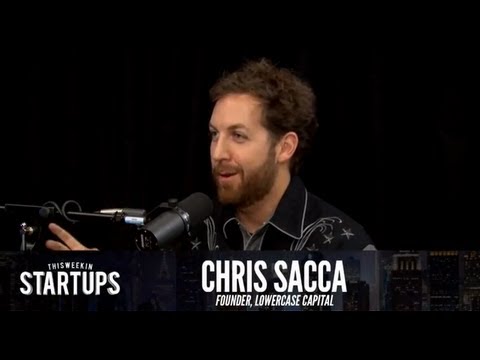
This Week in Startups
AI-assisted summary of Chris Sacca of Lowercase Capital - TWiST #291 — original source. Check the original for full context.
Source published:
Key ideas
- Lowercase Capital expanded its platform to over $1 billion in total assets under management, operating early-stage vehicles like Lowercase Spur alongside the newly unveiled digital media fund Lowercase Stampede. (60:04)
- Chris Sacca revealed an internal fund audit showing that 0% of Lowercase Capital's top-performing investments came from cold pitches, public inbounds, or conference networking, with 100% stemming from high-trust personal relationships. (6:18)
- During Google's early buildout, Sacca utilized shell entities such as The Salinger Group and Design LLC to acquire land, power, and data center contracts covertly, saving an estimated $400 million and concealing infrastructure scale from Microsoft. (37:07)
- Twitter's ad monetization engine delivered 6% to 8% engagement rates on Promoted Tweets, with Zappos internal conversion data outpacing Pinterest by 33x and Facebook by 5x. (56:36)
Detailed notes
## Background This video was published on YouTube by the channel This Week in Startups on September 26, 2012. It features host Jason Calacanis interviewing venture capitalist Chris Sacca of Lowercase Capital in the first installment of a two-part conversation covering Sacca's investing career and background.
## TL;DR Chris Sacca details his transition from massive personal debt to running Lowercase Capital, recounting how he turned leveraged student loans into $12 million before the 2000 dot-com crash left him $4 million in the red. He explains his unconventional operational roles, from leading covert data center land grabs at Google under shell company names to writing early seed checks for companies like Twitter, Instagram, and Uber. Sacca also critiques the contemporary startup climate for funding unqualified founders, explains the divergence of incentives between seed angels and Series B venture capitalists, and defends Twitter's developer policy and monetization power. Finally, he outlines Lowercase Capital's fund structure, including Lowercase Spur and the media-focused Lowercase Stampede, as well as his patient, mission-aligned investment in Kickstarter.
## Atmosphere & style The conversation carries the relaxed, candid rhythm of two longtime industry insiders swapping battle-tested war stories without corporate polish. Calacanis plays the provocative, enthusiastic foil to Sacca's intense, unapologetic storytelling, which oscillates between self-deprecating humor and sharp, clinical assessments of Silicon Valley culture. Listening feels like sitting in an off-the-record salon where vulnerability about crushing debt balances against high-stakes swagger, complete with a running studio swear jar and frank critiques of venture capital misbehavior.
## Bulletin - [01:00:04](https://www.youtube.com/watch?v=6VOQnK7O2To&t=3604s) Lowercase Capital expanded its platform to over $1 billion in total assets under management, operating early-stage vehicles like Lowercase Spur alongside the newly unveiled digital media fund Lowercase Stampede. - [06:18](https://www.youtube.com/watch?v=6VOQnK7O2To&t=378s) Chris Sacca revealed an internal fund audit showing that 0% of Lowercase Capital's top-performing investments came from cold pitches, public inbounds, or conference networking, with 100% stemming from high-trust personal relationships. - [37:07](https://www.youtube.com/watch?v=6VOQnK7O2To&t=2227s) During Google's early buildout, Sacca utilized shell entities such as The Salinger Group and Design LLC to acquire land, power, and data center contracts covertly, saving an estimated $400 million and concealing infrastructure scale from Microsoft. - [56:36](https://www.youtube.com/watch?v=6VOQnK7O2To&t=3396s) Twitter's ad monetization engine delivered 6% to 8% engagement rates on Promoted Tweets, with Zappos internal conversion data outpacing Pinterest by 33x and Facebook by 5x.
## Key takeaways - [06:18](https://www.youtube.com/watch?v=6VOQnK7O2To&t=378s) High-trust networks dominate venture sourcing; stepping away from public-facing conferences and media appearances significantly improved deal flow quality and portfolio focus. - [08:35](https://www.youtube.com/watch?v=6VOQnK7O2To&t=515s) An influx of cheap capital has disrupted the startup ecosystem's quality filter, allowing unvetted founders and low-multiple lifestyle concepts to raise funding easily. - [10:21](https://www.youtube.com/watch?v=6VOQnK7O2To&t=621s) Exceptional founders such as Elon Musk, Evan Williams, and Travis Kalanick stand apart by entirely removing downside risk from their operating calculus rather than needing investors to push them to scale. - [21:15](https://www.youtube.com/watch?v=6VOQnK7O2To&t=1275s) Exploiting online brokerage margin loopholes allowed Sacca to turn $10,000–$20,000 of student loans into $12 million, before reverse leverage in the dot-com bust created a $4 million personal debt. - [29:45](https://www.youtube.com/watch?v=6VOQnK7O2To&t=1785s) Avoiding bankruptcy to preserve his legal and venture career, Sacca negotiated 10% debt repayment plans and established the fictitious Salinger Group advisory firm to secure consulting work. - [33:44](https://www.youtube.com/watch?v=6VOQnK7O2To&t=2024s) Hands-on legal, finance, and infrastructure crisis management at Speedera Networks proved far more formative for early-stage startup advisory than later operating at Google. - [39:56](https://www.youtube.com/watch?v=6VOQnK7O2To&t=2396s) Sacca launched Lowercase Capital Fund I with $8.5 million anchored by Industry Ventures, treating solo fund fundraising as a direct referendum on personal integrity rather than market analysis. - [44:28](https://www.youtube.com/watch?v=6VOQnK7O2To&t=2668s) Series B dynamics introduce a structural divergence of interests, where multi-stage VCs push for binary billion-dollar outcomes while founders and seed investors could lock in life-changing $100 million acquisitions. - [50:30](https://www.youtube.com/watch?v=6VOQnK7O2To&t=3030s) Garrett Camp conceived Uber by renting out his own Lexus via an app, creating an immediate blank-check conviction for Sacca alongside Travis Kalanick. - [53:23](https://www.youtube.com/watch?v=6VOQnK7O2To&t=3203s) Twitter's strategic strength lies in radical platform simplicity and proprietary interest-graph monetization rather than supporting duplicative third-party timeline clients. - [01:02:18](https://www.youtube.com/watch?v=6VOQnK7O2To&t=3738s) Lower production studio costs and digital-first intellectual property rights have unlocked higher profit margins for native internet video compared to legacy Hollywood studios. - [01:07:00](https://www.youtube.com/watch?v=6VOQnK7O2To&t=4020s) Kickstarter operates on a non-traditional 20-year horizon, demanding that founders and investors forgo near-term trade sales, IPOs, or secondary liquidity in favor of cultural mission alignment.
## Detailed walkthrough ### [00:01](https://www.youtube.com/watch?v=6VOQnK7O2To&t=1s) Show Kickoff and The Startup Grind
Jason Calacanis opens episode 291 of *This Week in Startups*, marking the milestone by welcoming venture capitalist and angel investor Chris Sacca of Lowercase Capital. After running through initial acknowledgments for sponsors CloudSigma, Hiscox, and Stamps.com, the broadcast kicks into its energetic theme song riffing on the perils and power of capital. Jason sets the stage for the conversation, reflecting on the weekly effort required to sit down with founders and investors who are actively reshaping industries, pushing progress, and building real economic opportunities.
Jason underscores the broader mission driving the series, expressing genuine pride in the builders and risk-takers reshaping technology. He frames the episode as a long-awaited conversation between close friends, noting that securing Chris Sacca—a founder, attorney, former Google executive, and prominent early-stage backer—has been hundreds of episodes in the making.
> “Every week I drag my sorry ass in here and I interview another great entrepreneur or an investor or an investor entrepreneur and we discuss what's going on in the world of people who are trying to put a dent in the universe trying to push the human race forward trying to build products and services that make the world a little bit better maybe even create some goddamn jobs in this country huh what a great idea that would be and today is going to be one of the best episodes ever.” — Jason Calacanis
[02:22](https://www.youtube.com/watch?v=6VOQnK7O2To&t=142s) Protecting the Business: Small Business Insurance and the Realities of Litigation
Turning to the episode sponsor Hiscox, Jason delves into the practicalities of operating a startup and shielding it from legal exposure. Drawing on his two decades of running ventures, he emphasizes that founders must outsource operational burdens to remain fully focused on product development. One of the harshest realities early-stage entrepreneurs face is frivolous legal threats; regardless of whether an entrepreneur is in the right, defending against legal challenges can incur crippling expenses that derail an unfunded or emerging operation.
Jason demonstrates Hiscox's onboarding flow on screen, noting how quickly an entrepreneur can configure coverage tailored to their specific state, entity structure, payroll size, and operational risks—such as whether they handle physical inventory or consulting services. He points out how accessible general liability and business owner’s policies have become, offering comprehensive protection starting at around $29 a month or $350 per year, which buys early founders peace of mind.
> “It doesn't matter if you're right it matters if you can defend yourself and these legal bills are insane.” — Jason Calacanis
- Typical entry-level liability policies are available for roughly $350 annually or $29 per month. - Standard intake questions evaluate physical inventory distribution, payroll estimates, entity type (sole proprietorship vs. corporation), and occurrence limits. - Essential risk mitigation allows founders to sleep at night rather than burning runway answering legal warning letters.
[04:45](https://www.youtube.com/watch?v=6VOQnK7O2To&t=285s) Welcoming Chris Sacca: Pedigree, Banter, and the Swear Jar
Jason introduces Chris Sacca by reviewing his extensive background: founding Lowercase Capital in 2007, heading special initiatives under Larry Page and Sergey Brin at Google, practicing as a corporate lawyer at Fenwick & West, serving on Barack Obama’s 2008 presidential campaign tech team, and supporting non-profits including the Tony Hawk Foundation, Livestrong, and charity: water. He also notes Sacca’s appearance on the 2011 Forbes Midas List as one of the youngest VCs ranked.
The conversation immediately dissolves into friendly banter when Sacca mentions that, completely unprompted, he had been researching Hiscox only the previous day to find commercial insurance. During the exchange, Sacca slips a curse word, triggering Jason’s in-studio swear jar policy. Jason immediately whips out a Square card reader to collect the $10 penalty. Sacca playfully hands over a Virgin America co-branded credit card, prompting Jason to tease him for flashing his card details on camera while Sacca defends the airline’s customer-friendly frequent flyer redemption rules.
```mermaid flowchart TD accTitle: Chris Sacca Career Timeline Leading to Lowercase Capital accDescr: Key career phases of Chris Sacca showing progression from corporate law to tech executive and venture investing. subgraph Law["Legal Roots"] A["Attorney at Fenwick & West"] end subgraph Google["Operator Experience"] B["Google Head of Special Initiatives<br/>Reporting to Larry Page & Sergey Brin"] C["Obama 2008 Campaign Tech Advisor"] end subgraph Venture["Capital & Impact"] D["Founded Lowercase Capital (2007)"] E["Forbes Midas List (2011)"] F["Philanthropic Boards: charity: water, Tony Hawk Foundation"] end A --> B B --> C B --> D D --> E D --> F ```
> “I don't know if the swear jar applies when I'm plugging your sponsors.” — Chris Sacca
[06:18](https://www.youtube.com/watch?v=6VOQnK7O2To&t=378s) From Public Hype to Real Relationships: "Mo Ink, Mo Problems"
Jason asks Sacca how he allocates his working hours day-to-day, observing that after an intense stretch of public-facing angel investing, Sacca appeared to intentionally step back from the limelight to manage large, targeted investment vehicles. Sacca confirms that this shift was deliberate. Early in his investing career, he believed staying relevant required constant public visibility—speaking on conference panels, writing blog posts, and appearing on camera. Over time, he discovered that excessive publicity functioned purely as a distraction that failed to serve his founders, limited partners, or pipeline.
Sacca explains that he conducted an empirical evaluation of his historical returns to identify the true origin of every winning investment Lowercase Capital had made. The results were stark: not a single winning investment had arrived through an inbound email to his public website or via a handshake pitch following a conference speech. Every single breakout investment came directly through high-trust, long-term personal networks. Sacca consequently abandoned public, ego-driven posturing to spend his time breaking bread with trusted peers and backing founders whose judgment he already valued, proving that sustained venture success stems from a genuine reputation for helpfulness rather than media attention.
```mermaid flowchart TD accTitle: Chris Sacca Deal Sourcing Analysis accDescr: Comparison of public exposure sourcing versus trusted network sourcing showing zero returns from cold channels. subgraph Outbound["Ego-Driven / Forward-Facing Channels"] A["Conference Panels & Speeches"] B["Cold Inbound Emails to Public Site"] C["Post-Talk Casual Handshakes"] end subgraph Inbound["High-Trust Personal Ecosystem"] D["Trusted Peer Co-Investors"] E["Existing Portfolio Founders"] end Outbound -->|"Yielded no winning investments"| F["Zero Profitable Exits"] Inbound -->|"Strong relationships & shared history"| G["Breakout Deals & Profitable Fund Returns"] ```
> “What I ended up finding out was that instead of mo money, mo problems, it was like mo ink, mo problems, like the more publicity I got, the more it was a distraction from doing my job right that appearing in every at every conference, every panel discussion, every speaking opportunity and getting out there wasn't actually serving my companies, it wasn't serving my deal flow, it wasn't serving my investors.” — Chris Sacca
- Sacca conducted an internal pipeline audit that proved 0% of his top-performing fund returns came from unsolicited inbounds, public emails, or casual post-keynote pitches. - All high-performing investments stemmed from an established circle of co-investors and previous founders with proven judgment. - Lowercase Capital consciously transitioned its operational focus away from general conference circuits toward direct, private engagement with core portfolio companies.
[08:35](https://www.youtube.com/watch?v=6VOQnK7O2To&t=515s) Ecosystem Dynamics and the Flood of Capital
Chris Sacca emphasizes that succeeding in tech requires playing a constructive role across every layer of the startup ecosystem. Rather than just targeting founders, valuable participants make themselves useful to other investors, the press, service providers, and everyday users. Building a reputation where a venture becomes noticeably more valuable simply because you are involved naturally attracts high-quality deal flow.
Jason Calacanis pivots to current market conditions, noting that cash seems omnipresent. Sacca readily agrees that there is far too much capital chasing startups, observing that this flood of money has broken the industry's quality filter. Unqualified founders are raising capital with ease, distorting talent distribution across the tech landscape.
Calacanis brings up Y Combinator funding around 250 companies a year, sharing that many intelligent people privately suspect the accelerator is graduating double or triple the volume it should, resulting in declining average quality.
- Sacca identifies the primary unintended consequence of cheap capital: “I think the quality filter is is just way off right now I think a lot of crap is getting funded.” - In-studio humor: Sacca checks himself after saying "crap," noting he is watching his credit card balance in light of the studio swear jar. Calacanis reassures him that "crap" is free to use.
---
[10:21](https://www.youtube.com/watch?v=6VOQnK7O2To&t=621s) The Truly Disruptive "Founder Gene": Evan Williams, Elon Musk, and Travis Kalanick
When Calacanis asks what separates real founders from people who merely think they should run companies, Sacca points to a distinct psychological wiring. While Sacca considers himself a calculated risk-taker who explicitly maps out downside scenarios, world-changing founders simply do not let failure enter their calculus. Sacca compares this trait to free solo rock climbers who scale sheer cliffs without ropes because they experience fear and doubt fundamentally differently than normal people.
```mermaid flowchart TD accTitle: The Disruptive Founder vs Standard Risk Analysis accDescr: Diagram contrasting how calculated risk investors evaluate downside risk against how fearless founders ignore failure to pursue massive scale.
subgraph StandardApproach["Calculated Risk Analysis (e.g., Sacca)"] A["Evaluate Likelihood of Success"] B["Keep Failure in Active View"] C["Weigh Outcomes & Downside"] A --> B --> C end
subgraph DisruptiveApproach["The 'Founder Gene' (e.g., Ev Williams, Travis Kalanick)"] D["Identify a Cooler Future World"] E["Omit Failure from the Math"] F["Drive Unreasonable Speed & Scale"] D --> E --> F end ```
Sacca points to Evan Williams, co-founder of Blogger, Odeo, and Twitter. Even when projects hit hurdles or fall short of the original vision, Williams moves on to the next massive challenge completely undeterred. Calacanis notes that Elon Musk shares this exact mentality, citing Musk's frequent comment that most people drastically overestimate downside risk. Sacca calls Musk one of the most underappreciated entrepreneurs of their generation, precisely because he pursues massive problems at scale without seeking the media spotlight.
Turning to Travis Kalanick and Ryan Graves at Uber, Sacca shares how Travis operates with an aggressive, borderline terrifying velocity:
> “Travis is an unreasonably fast moving person, you know which is perfect for Uber right I mean like Travis will show you the expansion plan and it makes me nervous in the and I'm like oh my God no really and and and yet he just crushes it he executes on it...”
- Sacca reveals an internal anxiety: when he finds himself asking a portfolio team, "How can this be 100 times bigger?", it signals a red flag because that scaling drive should originate from the founder. - Calacanis synthesizes the non-negotiable traits of iconic founders: relentless fearlessness, rapid execution speed, and an innate drive toward massive scale.
---
[13:46](https://www.youtube.com/watch?v=6VOQnK7O2To&t=826s) Kevin Systrom's Gravitas and the Post-Bubble Paradigm Shift
Sacca recalls meeting Instagram founder Kevin Systrom a year to eighteen months earlier. Even though Sacca felt burned out on the photography sector after selling Photobucket—and did not understand filters or photo tech trends—Systrom's sheer conviction was irresistible:
> “...you would get up from that conversation and be like I'm not bullish on photos I don't even really understand filters but I have no doubt this is going to be a billion dollar company it's just he had that kind of Gravitas and that kind of belief in the in the ultimate Destiny of what Instagram was going to be that you just wanted to be involved right...”
A studio banter tangent occurs when Sacca drops another minor swear word, prompting him and Calacanis to raise the studio swear jar bet to $20 per slip, agreeing to match and donate the total to charity: water ($100 each on the spot). Calacanis teases Sacca for carrying a duct tape wallet with a few receipts instead of a fat bankroll ("a knot") of cash ready for high-stakes poker.
Refocusing on startup history, Sacca contrasts modern founding conditions with the 1999–2000 dot-com bubble. Today's infrastructure allows legitimate, technically gifted builders to focus exclusively on product execution instead of wrestling with attorneys or running expensive physical data centers. In the prior bubble, engineers were locked away while MBA-heavy teams spent months drafting 60-page business plans tailored to bankers:
> “The engineers were locked in the closet because they couldn't get a chance to actually code anything because it was too expensive to code before you could write code you need to have proprietary equipment and a bunch of money to get that money you had to go pitch VCS VC spoke Banker yeah and so you had to have an MBA write a 60-page business plan take it to a VC the VCS were Bankers cuz their job was to take your thing polish it up put lipstick on the pig turd you know polish the turd and take it out to a bank...”
When the crash hit in March and April 2000, the finance-oriented executives packed into U-Hauls and fled Silicon Valley, finally leaving the ecosystem open to product-focused engineers.
[17:29](https://www.youtube.com/watch?v=6VOQnK7O2To&t=1049s) The Democratization of Startups and the Poser Problem
Reflecting on the aftermath of the dot-com bust, Chris Sacca and Jason Calacanis recall just how desperate things were in San Francisco: moving vans had emptied out the city because people were forced to move back in with their parents, and you couldn't find a single U-Haul left to leave town. Sacca points out that a fundamental sea change followed that collapse, crediting figures like Y Combinator's Paul Graham for transforming the startup ecosystem. Graham recognized an extraordinary layer of technical and engineering talent that had previously felt alienated by corporate posturing, finance-driven middlemen, and what Sacca calls the “douches.” By standardizing legal documents, teaching engineers the language of early-stage fundraising, weaving consumer design into products, and utilizing emerging cloud infrastructure from Amazon and Google, Graham helped empower an entirely new class of technical founders.
However, Sacca argues that this lowered barrier to entry created a double-edged sword. While it dramatically accelerated the success of founders who genuinely deserved to be there, it also encouraged a flood of people who were out of their depth or simply faking it. Sacca emphasizes that many founders lack the resilience to weather hard times, while others are merely building small-scale lifestyle businesses that cannot deliver the multiples venture capital requires:
> “That's been great to accelerate the success of the guys who deserve to be there and it's awful for all these people who think they should be there and are just posers.” — Chris Sacca
Calacanis then presses Sacca on his extraordinary track record. Noting that institutional venture capitalists would give anything to get into high-performing deals like Instagram, Uber, and Twitter, Calacanis asks how Sacca managed to get early allocations in all of them.
---
[19:38](https://www.youtube.com/watch?v=6VOQnK7O2To&t=1178s) Getting Into Twitter While Deep in Debt
Sacca illustrates his deal access by telling the story of how he got into Twitter's seed round. His friend Evan Williams called him directly to let him know he was wrapping up a financing round, telling him, "I got you down for 25." Sacca agreed on the phone, hung up, and immediately panicked because he did not actually have $25,000 to spare. Even though he had been working at Google, committing that money was financially reckless because he was still emerging from a catastrophic financial hole from the year 2000 that took him until roughly 2005 to dig out of.
Calacanis is stunned to learn that Sacca was millions of dollars in personal debt after a massive leveraged trading disaster. To survive and pay off his creditors, Sacca had to scramble constantly: he used earnings from his job at Speedera Networks and later Google, moonlighted on Craigslist taking any gig he could find, and even did voiceover work just to generate cash flow.
```mermaid flowchart TD accTitle: Chris Sacca leveraged trading cycle accDescr: Sequence showing how student loans were leveraged into millions before crashing into massive personal debt.
subgraph Phase1["1998–1999: Rise"] A["Law School Loans"] --> B["Day Trading & Pink Sheets"] B --> C["Leverage Software Loophole"] C --> D["Account Peaks at $12M"] end
subgraph Phase2["2000–2005: Collapse & Recovery"] D --> E["Spring 2000 Market Crash"] E --> F["Millions in Personal Margin Debt"] F --> G["Speedera, Google & Craigslist Moonlighting"] end ```
---
[21:15](https://www.youtube.com/watch?v=6VOQnK7O2To&t=1275s) From Math Prodigy to a $12 Million Student-Loan Portfolio
To explain how he ended up in that debt, Sacca traces his path back to his childhood in Lockport, New York, a blue-collar town on the Erie Canal north of Buffalo. Starting in sixth grade, Sacca took advanced mathematics classes at the University of Buffalo alongside adult students several nights a week. By 11th grade, having completed graduate-level coursework, he burned out on the grueling regimen and experienced a total rejection of the subject. Deliberately avoiding math and science, he enrolled in the Edmund A. Walsh School of Foreign Service at Georgetown University with aspirations of becoming a diplomat. During his studies abroad in Latin America and Spain, the 1995 Netscape IPO took place. Sacca found himself waiting in two-hour lines at a Spanish university campus of 160,000 students just to access their single computer lab and email people back in the United States, pulling him right back toward technology.
Lacking personal wealth or venture connections, Sacca entered law school, took out student loan checks, and used the capital to try to launch a business. When his hubris caused the startup to falter, he stalled the university's financial office regarding his missing tuition checks and used the remaining funds to trade stocks around 1998. Driven by the bull market, Sacca picked obscure pink-sheet equities that ran 40x over eighteen months.
He discovered that online brokerages had not yet hard-coded Regulation T leverage limits (which cap standard margin at 50%) into their trading software. The platforms allowed an account with only $1,000 to execute multi-million dollar equity purchases, triggering a margin call that granted a five-to-seven-day settlement window. Sacca repeatedly bet on stock runs within that window to clear the margin balances, converting roughly $10,000 to $20,000 in student loan capital into $12 million in about 18 months. Caught in the euphoria, his blue-collar friends—limo drivers, bartenders, and pharmaceutical reps back home—started copying his trades and buying boats. As Sacca explains:
> “When things are going up it's because you're a genius, when things are going down it's because you're unlucky, right?... When you turn it around later as you grow up and you're an old guy like the two of us, you realize when things are going up it's because you're lucky and when things are going down it's because you fucked up.” — Chris Sacca
- **Student loans as startup funding**: Sacca used student loan checks as seed capital for an early venture while stalling school administrators on tuition payments. - **Regulatory loophole**: Reg T rules limit borrowing to 50% leverage ($1,000 buying power allows $2,000 in equities), but early retail trading platforms allowed uninhibited order sizing, issuing margin calls with a seven-day cure period. - **The $12M peak**: Sacca turned an initial base of $10,000–$20,000 into a paper net worth of $12 million before the bubble burst, with no mentor stepping in to advise him to sweep off the chips and take his profits off the table.
---
[25:30](https://www.youtube.com/watch?v=6VOQnK7O2To&t=1530s) Sponsor Break: Stamps.com
Calacanis pauses the narrative for a mid-roll break to promote show sponsor Stamps.com. He discusses how the service eliminates wasted time spent traveling to the post office and explains that the digital scale provided prevents users from wasting money by overpaying on postage with excess stamps. Calacanis emphasizes that the product reliably pays for itself, specifically highlighting United States Postal Service shipping classes such as Priority Mail, Media Mail, and bulk mail.
[26:16](https://www.youtube.com/watch?v=6VOQnK7O2To&t=1576s) Mid-Roll: Endorsing Stamps.com
Jason wraps up a sponsor read for Stamps.com, explaining that their Priority Mail service beats competitor pricing from the recognizable "brown truck" (UPS) and "red, white, and blue truck" (FedEx) while delivering the exact same level of service. Pointing viewers directly to the microphone icon in the top right corner of Stamps.com, he walks through how applying the promo code **TWiST** provides users with a risk-free four-week trial, a digital postage scale, and up to $55 in free postage.
Jason pauses to reflect on the show's operations, noting that *This Week in Startups* is sold out for advertising months in advance. He credits his colleague, Jason DeMonto, for lining up partnerships strictly from products and services that Jason and his team already use and love. This organic alignment makes pitching easy and truthful while allowing the production team to produce candid, long-form interviews like this conversation with Chris Sacca.
[28:06](https://www.youtube.com/watch?v=6VOQnK7O2To&t=1686s) The Market Crash and the $4 Million Debt Hole
```mermaid flowchart TD accTitle: Chris Sacca Debt and Hustle Timeline accDescr: Progression from peak paper wealth to debt, layoff, consulting, and early operational experience.
subgraph DebtCrisis["1. The Crash"] A["Peak: $12M Paper Wealth<br/>Fully levered into two stocks"] --> B["Market Unwinds<br/>$4M debt in personal name"] end
subgraph TheGrind["2. Survival & Rebranding"] B --> C["Fenwick & West Law Job<br/>Fired 4 days before 9/11"] C --> D["Salinger Group Created<br/>Fake-it-till-you-make-it consulting"] end
subgraph OperationalBase["3. Real Startup Experience"] D --> E["Speedera Networks<br/>Generalist operator & CDN battles"] end ```
Returning to the narrative, Jason reminds the audience where the story left off: Sacca was sitting on roughly $12 million in the bank. Sacca bluntly summarizes the sudden collapse that occurred over the next few weeks. Sacca had maxed out his leverage, concentrating his entire net worth into just two tech stocks—describing his position as "literally tonsils deep." When the market turned sharply downward, the leverage worked against him in reverse. Sacca went from an eight-figure net worth to being roughly $4 million underwater. Crucially, none of this trading was sheltered within an LLC; the debt was held directly in his own personal name.
When Jason asks if he vomited when the reality hit, Sacca explains the psychological detachment that came over him: “There's a level where amounts are so big they almost feel fictional, right? Like it might be easier to owe $4 million than it is to owe $50,000.” With no children, no mortgage, and a transient lifestyle—crashing on a friend's couch in Park City, Utah, while skipping law school classes to co-manage a record store—the sum felt totally surreal, yet terrifyingly real because it was vastly more money than he ever expected to make in his entire life.
[29:45](https://www.youtube.com/watch?v=6VOQnK7O2To&t=1785s) Collection Agencies, Fenwick & West, and 9/11
The collection process began in earnest. Lenders and aggressive collection agencies hounded Sacca relentlessly. Rather than filing for personal bankruptcy—which he feared would permanently blacklist him from the corporate world and destroy his future legal or financial career—he negotiated long-term repayment plans with his creditors. Because interest rates hovered around 10% at the time, his monthly obligations were staggering, resembling a giant mortgage payment on a mansion he would never own.
Having landed a position as an attorney at top-tier Silicon Valley firm Fenwick & West, Sacca worked long hours at the firm by day and spent his nights drafting side business plans and rebranding corporate identities to scrape together extra cash. The firm knew he was a bit of a "loose cannon," but they had no clue about the crushing $4 million debt. Just as he was finding a rhythm, disaster struck again: four days before September 11, 2001, Fenwick executed mass layoffs due to the collapsing tech economy, and Sacca was terminated. When 9/11 hit four days later, the broader economy froze, turning Sacca's already precarious situation into a fight for survival.
[30:59](https://www.youtube.com/watch?v=6VOQnK7O2To&t=1859s) Hustling Silicon Valley and Inventing The Salinger Group
Facing immediate eviction from his Foster City apartment and the prospect of retreating to Buffalo, New York, Sacca aggressively hustled for work. Unable to afford admission to industry conferences, he used his fluent Spanish to slip into venue kitchens and sneak onto event floors. He attended every gathering imaginable, from Churchill Club and the Chinese Software Professionals Association to TiE (The Indus Entrepreneurs) and the World Internet Forum. Armed with a generic business card identifying himself as an "attorney / IT law / business guy," he struck up conversations with anyone who made eye contact, only to be patronizingly told, "You sound like a good kid, things will work out for you."
Frustrated by how little traction he was getting as an individual, Sacca decided to reinvent his image. He established a fictitious advisory firm called **The Salinger Group** because the name sounded established and authoritative. His longtime close friend and future wife, Crystal, designed slick business cards, and Sacca built an evasive website with grand consulting prose but deliberately omitted any phone number or street address. By simply switching his pitch from "I" to "we," the dynamic flipped overnight. Clients assumed The Salinger Group was a respected boutique firm, hiring Sacca for consulting work and granting him equity. The firm became such an effective cover that when his unemployed friends needed to fill gaps on their resumes after dot-com layoffs, Sacca vouched for them: - Friends invented roles covering everything from "Healthcare Consulting" to posts in a fictional "Hong Kong office." - Sacca joked that recruiters looking at resumes from that era probably have Salinger Group alumni on file who turned out to be incredible hustlers.
[33:44](https://www.youtube.com/watch?v=6VOQnK7O2To&t=2024s) Speedera Networks: The Generalist Training Ground
Sacca's consulting and networking eventually led to an operating position at Speedera Networks, a content delivery network (CDN) that competed head-to-head with Akamai. Sacca served in multiple executive roles across legal, finance, and operations. Although his later role at Google brought him public fame, Sacca firmly attributes his foundational business instincts and tactical startup versatility to his tenure at Speedera.
He explains that sitting in one communal room in a small, under-resourced company forced everyone to become a dynamic operator. If the company was near the end of a fiscal quarter, every employee picked up the telephone to close deals; if you sat closest to the front door, you served as the receptionist; if server data centers were moving overnight, everyone drank beers together and learned how to configure rack units. Sacca contrasts the two environments by highlighting the distinct value of early-stage chaos: “I learned infinitely more working at a small company that you've never heard of than I did at Google, you know, which was what I'm known for... That's what made me lethal as a startup adviser.” At Speedera, most of daily business operations centered around executing CDN infrastructure while fighting off an endless barrage of aggressive patent and intellectual property lawsuits from Akamai.
[34:46](https://www.youtube.com/watch?v=6VOQnK7O2To&t=2086s) Going Undercover for Google's Global Data Center Expansion
After a brutal legal war in which Akamai sued Speedera nearly a dozen times—and Speedera countersued before ultimately being acquired by Akamai—Chris Sacca found himself in high demand. Google was hunting for a rare profile: someone with a law degree and business acumen who understood internet transit, colocation, and data centers. Sacca was one of only three or four people with that exact background. Joining the company, he was paired with a colleague and given an enormous budget and a direct mandate: Google needed vastly more data center capacity, and they had to scour the globe to negotiate, lease, and build facilities before server installation.
Crucially, the operation had to remain completely covert. At the time, Google leadership lived in fear of Microsoft discovering how much money search generated and deploying its vast balance sheet to crush them. To keep Microsoft in the dark regarding the true scale of their infrastructure, Sacca utilized front companies and shell entities, including his former consulting firm, The Salinger Group. Larry Page even personally advised Sacca on how to invent "Google-proof" corporate names—bland titles like "Design LLC" that would drown in generic search results and avoid tipping off competitors or driving up regional real estate prices. Sacca spent months globetrotting, locking down land, negotiating massive municipal power contracts, and resolving local tax treaties. The aggressive cost-cutting worked: Sacca and his peers secured an early Google Founders' Award after structuring deals that shaved roughly $400 million off infrastructure outlays.
```mermaid flowchart TD accTitle: Google Covert Data Center Strategy accDescr: Workflow showing how Google covertly built global infrastructure to avoid alerting Microsoft.
subgraph Strategy["Covert Expansion Mandate"] A["Google Search Growth"] --> B["Need Massive Global Transit & Power"] B --> C["Paranoia: Prevent Microsoft from Seeing Scale"] end
subgraph Execution["Front Entities & Stealth Ops"] C --> D["Shell LLCs with Google-Proof Names"] D --> E["The Salinger Group / Design LLC"] E --> F["Secure Land, Data Centers, & Tax Treaties"] end
subgraph Outcome["Corporate Impact"] F --> G["$400M in Documented Cost Savings"] G --> H["Google Founders' Award"] end ```
- Chris Sacca on Google’s intense secrecy: “They were very paranoid that Microsoft would try and crush Google if they ever knew how much money was in search.” - Shell company tactics: Operating under intentionally unsearchable entity names allowed Google to negotiate favorable power rates and tax exemptions without triggering a bidding war or alerting Wall Street. - High-level recognition: The data center savings earned Sacca’s team one of the company's earliest Founders' Awards, vaulting him into high-profile projects across the organization.
---
[37:07](https://www.youtube.com/watch?v=6VOQnK7O2To&t=2227s) Meeting-Crashing, Credit-Card Checks, and Showing Up at Twitter
The success of the infrastructure buildout caught the attention of Google leadership. Senior Vice President and Chief Legal Officer David Drummond began pulling Sacca into mergers and acquisitions, and Eric Schmidt tapped him for high-stakes business negotiations. Taking full advantage of Google’s open corporate culture, Sacca practiced what he called the ultimate hustle: he scanned shared executive calendars, identified high-stakes meetings concerning new advertising formats or Hollywood entertainment deals, and simply sat in. As long as he offered sharp insights and made himself genuinely useful, no one questioned his presence. He frequently flew to industry conferences on his own dime, hustled for deals, and then brought the results back to his boss with an expense report asking for reimbursement after the value had already been demonstrated.
Having cleared his debts and accumulated a modest personal bankroll, Sacca began angel investing. His very first investment was in the photo-hosting platform Photobucket. Having virtually no liquid cash on hand, Sacca financed the check using a credit card cash advance, betting on the company because its core operational hurdle was high-volume hosting and bandwidth management—territory he mastered at Speedera. His second angel deal was a $25,000 investment in Twitter. Because $25,000 represented a massive, high-stakes sum to him at that moment, Sacca adopted an aggressively hands-on approach. He showed up at the Twitter office uninvited, hovering around founder Jack Dorsey and volunteering to help with whatever needed fixing just to safeguard his capital. He leveraged his everyday Google exposure to coach Y Combinator founders on ad strategies; even though he never viewed himself as an elite ad expert, compared to raw startup founders, he possessed far more advertising fluency than anyone else in the room.
- Chris Sacca on recognizing personal leverage: “I think each of us doesn't give ourselves enough credit for how helpful we can be.” - Financial improvisation: Sacca's first angel investment in Photobucket was funded through a credit card balance transfer check while he was still employed at Google. - Advisory philosophy: Sacca made it a strict personal rule to provide undeniable tactical value to founders long before asking for advisory shares or equity compensation.
---
[39:56](https://www.youtube.com/watch?v=6VOQnK7O2To&t=2396s) Raising Fund I and Buying Secondary Twitter Stock
Sacca's habit of providing upfront value quickly transformed into an angel and advisory portfolio. Recognizing his knack for early-stage operations, he formalized his investing career by raising a standalone $8.5 million seed fund under Lowercase Capital. Securing the capital was grueling. While institutional investors routinely shun first-time solo fund managers, Hans Sweldens and Mike Gidley of Industry Ventures—who remembered Sacca from his Speedera negotiations—encouraged him to take the leap and anchored the fund alongside a handful of high-net-worth acquaintances.
Sacca reflected on the sheer vulnerability required to raise a solo venture vehicle compared to pitching a startup. In a startup, a founder pitches a team, a tangible product, and an addressable market. In a solo venture fund, the entire diligence process hinges on a binary character referendum: whether the manager is reputable and capable of producing returns. After distributing his private placement memorandum (PPM), Sacca recalled getting drunk from sheer anxiety while waiting to see if potential LPs would commit. The inaugural fund delivered exceptional traction, allowing Sacca to establish follow-on special-purpose vehicles specifically tailored to snap up secondary shares of Twitter back when the microblogging platform was privately valued in the nine figures.
- Chris Sacca on the stark reality of pitching a solo fund: “Raising money for a solo fund, they're just like, 'Is Chris a douche or will he give me back more money than I gave him?'” - LP backing: Neither Larry Page nor Sergey Brin were LPs in Lowercase Capital's initial vehicle; capital came largely from high-net-worth relationships and venture secondary specialists Industry Ventures. - Secondary positioning: Sacca moved aggressively to purchase pre-IPO equity from early employees and investors when Twitter was valued in the hundreds of millions.
---
[42:57](https://www.youtube.com/watch?v=6VOQnK7O2To&t=2577s) Psychological Resilience and the Silicon Valley Loyalty Trap
Jason probes how Sacca developed the emotional fortitude to negotiate nine-figure deals and invest large sums without crumbling under pressure, questioning whether his past debt crisis or managing Google’s massive checkbook desensitized him to large figures. Sacca explains that big numbers do not frighten him because he views the capital as abstract math rather than personal spending money. When Jason asks how much of entrepreneurship and early-stage investing comes down to managing internal psychology, Sacca responds emphatically: it is 100 percent of the job.
The conversation pivots to interpersonal dynamics and character within the tech ecosystem. Sacca notes that having grown up in an environment where loyalty was paramount—with friends he still keeps from his childhood block—he has zero tolerance for betrayal. When someone violates his trust, his immediate, visceral response is to detonate the relationship completely and burn the bridge with TNT. Jason and Sacca contrast this raw, uncompromising code against the prevalent culture of Silicon Valley, where people maintain a smooth, passive-aggressive facade. Valley operators routinely greet each other as friendly peers and pretend everyone is on the same team, only for that artificial camaraderie to vanish the second high-stakes money or self-interest enters the equation.
- Chris Sacca on the central struggle of startup investing: “It is all managing your own psychology, like and how I interact with people.” - Emotional boundaries: Sacca confesses that while he wishes he reacted with more detachment, perceived disloyalty triggers an extreme reaction: “If I feel even mildly betrayed, I will river the out of a bridge.” - Cultural critique: Jason and Sacca highlight the superficiality of Northern California tech etiquette, where surface-level warmth masks ruthless transactionality when capital is on the line.
[44:28](https://www.youtube.com/watch?v=6VOQnK7O2To&t=2668s) The Divergence of Interests: When Series B Changes Everything
Jason Calacanis poses a pointed question about Silicon Valley culture: is it true or false that everyone pretends to be friendly collaborators (“dude, I got you”) until actual money, exits, or contentious shareholder votes come into play, at which point the camaraderie vanishes? Chris Sacca answers without hesitation that it is “true.” Before diving into the details, Sacca jokes that he needs to put out an ask for an IT person: he has acquired the domain lowercasecapital.com, needs someone to help migrate his digital life over to it, and needs a contractor to tune up his WordPress site. Jason laughs and promises they have plenty of people who can do that.
Sacca explains that he has a forthcoming blog post on this exact dynamic, tentatively titled *“It’s all fun and games until somebody raises Series B.”* Up through the early seed rounds, he argues, everyone really does share the exact same scorecard: the angels and the founders are completely aligned, aiming for the same exit multiple and growing wealthy together. Everything fractures the moment a Series B venture capitalist steps into the cap sheet. A Series B investor does not want a reasonable acquisition six to nine months down the line; they need a massive 10x return on top of their late valuation. Consequently, the founder, the seed investor, and the growth VC end up playing three fundamentally different games with divergent scorecards.
```mermaid flowchart TD accTitle: Investor and Founder Alignment Divergence accDescr: Diagram illustrating how early-stage seed alignment breaks down into conflicting incentives after raising a Series B.
subgraph EarlyStage ["Seed & Early Stage: Unified Scorecard"] Founders["Founders"] --- Angel["Angel / Seed Investors"] Founders -.->|"Shared Goal"| Alignment["Aligned Outcomes (Target: 10x+ / Early Exit Viable)"] Angel -.->|"Shared Goal"| Alignment end
Alignment -->|"Raise Series B"| SeriesB["Series B Financing Event"]
subgraph LateStage ["Post-Series B: Divergent Scorecards"] SeriesB -->|"Demands 10x on New High Base"| GrowthVC["Series B Growth VC\n(Binary: $1B+ or Zero)"] SeriesB -->|"Life-Changing Cash at $100M"| FounderRealities["Founders\n(40% Equity = $40M)"] SeriesB -->|"Great Outcome at $100M"| AngelRealities["Seed Investors\n(5% Equity = $5M)"] end ```
The friction becomes intense when buyout offers surface. If an acquisition offer for $100 million appears, a founder owning 40% walks away with life-changing money ($40 million), and a seed investor with 5% banks $5 million. Yet a venture capitalist who already has $50 million sitting in personal bank accounts will dismiss that offer to force a binary outcome—either a billion-dollar grand slam or complete ruin. As Jason summarizes, the VC manages a diversified mutual fund, whereas the entrepreneur has put everything into a single stock. Sacca reflects that once companies hit Series C and Series D rounds, boardrooms often devolve into bitter infighting among founders, original seed backers, growth investors, and newly imported managerial CEOs.
- Sacca summarizes the structural boardroom conflict succinctly: “It’s the divergence of interests.”
[47:52](https://www.youtube.com/watch?v=6VOQnK7O2To&t=2872s) Has VC Behavior Improved? The Myth of Universal Accountability
Jason asks whether venture capital behavior has actually improved over the past decade or gotten worse, noting that founders now wield far more public leverage. In theory, crossing a prominent founder like Ev Williams or Travis Kalanick means an investor gets permanently blacklisted and badmouthed across the ecosystem. Sacca concedes that VC conduct has improved on the surface, but insists it remains “pretty ugly” underneath. He draws an analogy to the early promises of the internet: a decade earlier, one might have predicted that the web would sanitize politics and establish an era of fact-based truth via watchdog sites, yet political discourse instead metastasized into endless fabrications.
A similar dynamic has shielded bad venture behavior. Alongside founder empowerment, a potent “cult of personality” around venture capitalists has emerged. Investors possess large megaphones, blogs, and public relations platforms to counter negative narratives with their own spin. More decisively, high returns and logo-hunting trump bad reputations. Even if a VC mistreats an entrepreneur, founders will swallow their pride and take the check as long as that investor's website boasts the Twitter logo and the track record of a Midas touch. Sacca notes with regret that the ideal of total transparency creating universal good behavior simply has not materialized.
- Reflecting on how bad actors evade consequences in tech, Sacca observes: “I see investors doing really awful shit still, and they still get rewarded by getting to invest in great companies.”
[50:30](https://www.youtube.com/watch?v=6VOQnK7O2To&t=3030s) Backing Garrett Camp, Travis Kalanick, and the Founding of Uber
The conversation turns to how Sacca’s biggest winners took shape. He explains that while Ev Williams pulled him into Twitter as an early user and believer, Sacca took personal initiative on the subsequent secondary vehicles where he raised entire dedicated funds to amass Twitter stock. When it came to Uber, Sacca witnessed its earliest moments firsthand. Knowing Garrett Camp and Travis Kalanick, Sacca considered the team a total no-brainer: “When Garrett Camp and Travis Kalanick put their heads together on something, it’s just like blank check, just do it.”
Jason remarks that Garrett Camp—the quiet Canadian founder behind StumbleUpon—rarely receives the public credit he deserves for creating Uber. Sacca praises Camp as an exceptionally gifted, relentless builder who comes up with a new concept every week over casual drinks and immediately hires a contract programmer that very night to start hacking on a prototype. Uber originated when Camp rented out his own personal Lexus so friends could hail it through an app. Alongside early general manager Ryan Graves, who brought immense operational hustle, the service gained traction. Travis Kalanick initially advised on the side, but the product was so captivating that it soon consumed Travis completely, echoing how Ev Williams was inexorably drawn into Twitter.
- Reflecting on Garrett Camp's underappreciated track record, Sacca highlights: “StumbleUpon is the biggest traffic mover short of Twitter, I mean referral traffic is sick.”
[51:38](https://www.youtube.com/watch?v=6VOQnK7O2To&t=3098s) Twitter’s Developer Backlash and Trusting Leadership
Jason brings up a tough, controversial issue: the widespread perception that Twitter has alienated and mistreated the third-party developer ecosystem that helped build the network into a mainstream powerhouse. While acknowledging that he does not speak on behalf of the company, Jason presses Sacca on how he reconciles that friction. Sacca notes that Twitter has navigated distinct corporate phases under three different CEOs—first Jack Dorsey, then Evan Williams, and now Dick Costolo—each of whom was uniquely suited for his specific chapter of the company's evolution.
Sacca emphasizes that founders and executives should be substantially smarter than their investors, noting that having an investor dictate product ideas is a recipe for failure. He humorously recounts that Ev Williams often treats him as a reverse barometer: whenever Sacca hates a proposed feature, Williams takes it as an immediate green light to ship it. Despite the public noise surrounding API changes and developer relations, Sacca expresses immense faith in CEO Dick Costolo and Michael Sippy, who heads consumer product. When reviewing product roadmaps with them, Sacca feels confident that Twitter's leadership has a much clearer, long-term vision for the ecosystem than outside critics give them credit for.
- Highlighting the necessity of founder-led vision over investor meddling, Sacca states: “If your investor has all your ideas, you’re screwed.”
[53:23](https://www.youtube.com/watch?v=6VOQnK7O2To&t=3203s) Twitter's Product Simplicity and the Third-Party Developer Dilemma
Addressing the ongoing friction between Twitter and its third-party developer ecosystem, Chris Sacca explains that outsiders often misunderstand product stewardship and vastly overestimate the size of the developer community relative to the mainstream user base. While Sacca frequently tosses product ideas over the fence to Jack Dorsey and Evan Williams, he considers himself lucky if even one out of ten is viable, emphasizing that the internal leadership understands the product at a far deeper level. Sacca recalls emceeing the early Chirp developer conference, where Ev Williams explicitly cautioned attendees against building standalone Twitter clients. The issue was never about stifling competition; it was about protecting ordinary consumers. When an everyday user—like someone’s mother or a cousin who rarely uses the web—searches for Twitter and encounters seventeen disparate third-party apps with inconsistent interfaces and varying logos, it causes immense confusion. Twitter’s leadership needed an end-to-end, unified experience capable of scaling reliably across different devices, operating systems, and international markets for hundreds of millions of people.
At the same time, Sacca acknowledges that while third-party developers helped make Twitter valuable, observers give too much credit to outside feature ideas while ignoring how difficult it is to preserve radical simplicity. He points out an aphorism he carries on his business card: simple is easy to use, hard to make, and hard to charge for, whereas complex is hard to use, easy to make, and easy to charge for. Stripping away features rather than piling them on required years of deliberate discipline from Evan Williams, Jack Dorsey, Biz Stone, Jason Goldman, and Dick Costolo. Despite the loud pushback from vocal developers, Sacca notes that third-party clients only account for a single-digit percentage of all tweets, whereas the real enterprise value in the developer ecosystem continues to thrive through data firehose partners like Gnip and DataSift.
“The beauty of Twitter is all the stuff that's not there and that's not an accident that's that's Ev and Jack and Biz and Goldman and Dick spending years on trying to pull a bunch out of there and letting the simplicity speak for itself.” — Chris Sacca
- Ryan Sarver and Twitter's platform team tracked that third-party client traffic accounted for only a single-digit percentage of overall tweets. - Early client fragmentation was so pronounced that different apps displayed disparate branding, including legacy logos with tufts of hair on the bird. - Data infrastructure providers like DataSift and Gnip represent the high-value side of Twitter's platform ecosystem rather than duplicative timeline viewers.
[56:36](https://www.youtube.com/watch?v=6VOQnK7O2To&t=3396s) Monetization and Engagement: Why Twitter Outconverts Facebook
When Jason asks whether Twitter suffers from a looming revenue crisis or is poised to surprise Wall Street, Sacca dismisses the skepticism outright: “I'm a buyer of the stock is what I'll say.” Whenever critics complain about Twitter's unproven business model, Sacca tells them to sell him their private shares immediately. Backing up his conviction, he cites internal conversion data from Zappos demonstrating that a tweet converts at thirty-three times the rate of a Pinterest pin and roughly five times that of a Facebook post. The core difference lies in user intent: Facebook connects people with past acquaintances, whereas Twitter connects people with shared passions, brands, and real-time cultural moments. As Sacca succinctly frames the sociological contrast, “Facebook is who you used to know, Twitter is who you want to know.”
That dynamic transforms Twitter into a commercial engine. Virgin America, for instance, saw four out of its five biggest sales days in corporate history driven directly by promotional Twitter campaigns. Promoted tweets regularly command engagement rates between 6% and 8%, outperforming standard web display ads and Facebook campaigns by twenty-five to one hundred times. The monetization engine, built by former Fox and MySpace executive Adam Bain—whom Sacca helped recruit over midday beers at the Hollywood Roosevelt Hotel—avoids shady, opaque background tracking. Instead, Twitter relies on an explicit interest graph where users openly declare what they care about, and ads only surface if they are validated by engagement from trusted figures within a user's network.
```mermaid flowchart TD accTitle: Twitter Transparent Ad Delivery Model accDescr: Diagram illustrating how Twitter targets promoted tweets using explicit interest signals and peer validation rather than covert tracking.
subgraph Signals["User Graph Signals"] A["Explicit User Follows<br/>(e.g., Starbucks, Virgin America)"] B["Network Affinity<br/>(Followed peers: Kevin Rose, industry peers)"] end
subgraph Validation["Algorithmic Relevance & Social Proof"] C["Ad Candidate Identified<br/>(e.g., Blue Bottle Coffee, Delta)"] D["Social Validation Filter<br/>(Peer favorites, retweets, and high engagement)"] end
subgraph Delivery["High-Engagement Feed"] E["Promoted Tweet Delivered to Timeline"] F["6% to 8% Engagement Rate<br/>(25x-100x Traditional Display)"] end
A --> C B --> D C --> D D --> E E --> F ```
“If you're worried about Twitter's business model sell me the shares.” — Chris Sacca
- Virgin America reported that four of its five largest single-day ticket sales were powered directly by Twitter flash sales. - Promoted tweet engagement hovers between 6% and 8%, contrasting sharply with fractional-percentage click-through rates across traditional display ad networks. - Twitter's primary commercial constraint is not advertiser interest, but a lack of dedicated sales personnel to service inbound advertiser demand.
[01:00:04](https://www.youtube.com/watch?v=6VOQnK7O2To&t=3604s) Lowercase Capital's Scale: Lowercase Spur and the Unveiling of Lowercase Stampede
Jason asks whether Sacca is stepping back from angel investing or feigning inactivity to test which entrepreneurs have the hustle to track him down. Sacca cuts him off with blunt humor, stating that phones are fundamentally broken and founders should never call him under any circumstances. More importantly, he rejects the "angel" label altogether because of the sheer scale of capital he now deploys. Lowercase Capital has grown past small seed checks into an institutional powerhouse, holding over $1 billion in assets under management across its various entities. The disclosure catches Jason off guard, prompting Sacca to joke about his Sicilian heritage and the movie *True Romance*, noting that public SEC filings have already verified the numbers.
Lowercase operates opportunistically across both primary venture investments and secondary market share acquisitions. Rather than running a single catch-all vehicle, Sacca highlights two primary funds at the center of his current operations:
* **Lowercase Spur:** A dedicated $35 million early-stage fund that represents Lowercase's bread-and-butter venture strategy, writing standard $500,000 checks into promising early startups. * **Lowercase Stampede:** A previously unannounced fund revealed publicly for the first time, designed specifically to invest at the convergence of technology platforms and digital media content.
Reflecting on the thesis behind Lowercase Stampede, Sacca explains that the technology-content crossover space has finally reached economic viability. While early venture capitalists incinerated millions backing high-overhead digital video concepts too soon, the underlying cost structure has collapsed. High-end, television-quality broadcasts can now be produced and streamed globally from a couple of folding desks in an office hallway, validating content investing as a capital-efficient frontier.
“First of all I don't angel invest, I write bigger checks so um you know all told I've got over a billion dollars under management.” — Chris Sacca
[01:02:18](https://www.youtube.com/watch?v=6VOQnK7O2To&t=3738s) The New Economics of Digital Video and Hollywood's Blind Spot
Chris Sacca points out the radical transformation underway in video production. A broadcast-quality studio setup now costs roughly $75,000 to $100,000 in equipment—an investment that would have required $2 million to $3 million only a decade earlier. Furthermore, this gear can be operated smoothly by a small team of young people with just two to three years of experience, drawing massive digital audiences while commanding real television-scale advertising rates of $3,000 per ad spot. Jason Calacanis confirms this dynamic from his own operation, noting that *This Week in Startups* generates roughly half a million dollars a year in revenue.
Sacca explains that traditional Silicon Valley venture capitalists have historically shied away from media and entertainment because past attempts ended in disaster over licensing disputes: “Everyone got their ass kicked in content due to rights issues.” However, the landscape has fundamentally shifted. Today's productions are entirely digitally native, meaning there are no record labels to placate and founders retain full ownership of an appreciating content library. Meanwhile, traditional Hollywood studios remain preoccupied with defending their status quo and struggle to adopt lean startup thinking. This culture clash leaves a massive gap of highly lucrative media opportunities untouched by both legacy entertainment institutions and tech investors.
[01:03:17](https://www.youtube.com/watch?v=6VOQnK7O2To&t=3797s) Learning the Studio System and the 9/11 Howard Stern Tangent
Calacanis asks how Sacca manages to see these entertainment opportunities with fresh eyes while other VCs remain blind to them. Sacca explains that he has actually been active in the Hollywood ecosystem for years without publicizing it, backing ventures across music, labels, and television that performed well while teaching him how agency, network, and studio models operate from the inside.
As they talk through television and audio models, Sacca asks whether their recording has a hard stop. Calacanis relishes the flexibility of online production, comparing himself to Howard Stern and noting that if an interview runs long, he can simply turn it into a two-part special. Sacca quips that this makes Calacanis Stern, and wonders aloud whether that makes him Baba Booey or High Pitch Erik from Stern's "Wack Pack."
```mermaid flowchart TD accTitle: Chris Sacca's Hollywood Immersion accDescr: Diagram illustrating how Google gave Sacca access to traditional Hollywood institutions before Lowercase Stampede invested in online video startups.
subgraph GoogleAccess["Google Industry Bridge"] A["Google's lack of entertainment deals"] --> B["Sacca speaks freely at all-hands meetings"] B --> C["Learns inner workings of studios, labels, and agencies"] end
subgraph StampedeStrategy["Lowercase Stampede Deployment"] C --> D["Identifies content and distribution gaps"] D --> E["$20M Lowercase Stampede fund"] D --> F["$500M institutional affiliate fund"] E --> G["Investments: Big Frame, VHX, Chill"] end ```
The mention of Howard Stern prompts Sacca to bring up an uncut recording circulating on YouTube of Stern's live morning broadcast during the September 11 attacks. Calacanis recalls listening to that exact broadcast live in New York, remembering the initial confusion when Stern mentioned a small plane had accidentally hit the World Trade Center, followed by co-host Robin Quivers realizing the nation was under attack. Both discuss how that spontaneous broadcast stands as one of the most remarkable historical moments in radio history, transitioning in real time from comedy into absolute tragedy.
[01:05:27](https://www.youtube.com/watch?v=6VOQnK7O2To&t=3927s) Lowercase Stampede and Investing in the New Media Stack
Returning to his background in entertainment, Sacca recounts how he initially gained access to Hollywood during his tenure at Google. Because Google had no formal entertainment business at the time, Sacca routinely accepted invitations to speak at all-hands meetings for major talent agencies, networks, and record labels. Unlike executives at Yahoo, who had to walk on eggshells to protect existing studio relationships managed by executives like Lloyd Braun or Terry Semel, Sacca had complete freedom: “We were such Outsiders I could come in and and speak the truth and like talk about what was broken about their model and I wasn't offending anybody and I didn't have to defend my comments in the paper later and I didn't get called into Eric's office and hit over the head with his shoe.”
Those unfiltered appearances gave Sacca deep connections across the industry while revealing precisely where traditional media models were failing. He is now capitalizing on those insights through Lowercase Stampede, a focused $20 million seed vehicle backed by an affiliated $500 million fund for larger checks. The fund targets companies disrupting video production, digital distribution, and direct monetization.
- **Big Frame**: A multi-channel digital video network cultivating native YouTube talent. - **VHX**: A direct-to-consumer digital distribution platform (powering independent download releases such as Aziz Ansari's stand-up special). - **Chill**: A social video platform co-founded by Brian Norgard.
[01:07:03](https://www.youtube.com/watch?v=6VOQnK7O2To&t=4023s) Backing Kickstarter: The 20-Year Long Game
Calacanis asks about crowdfunding's effect on entertainment and is surprised to learn Sacca was an early investor in Kickstarter. Sacca admits that when co-founder Perry Chen originally offered him the chance to participate, he viewed the platform as a cultural mission rather than a financial home run: “This is the kind of thing that'll make the world a better place but I don't know if it's actually going to be an amazing business.”
Consequently, Sacca put up personal capital instead of putting it into his primary venture fund, which he had seeded with high-conviction angel investments to attract prospective limited partners. To his astonishment, Kickstarter's valuation surged into the hundreds of millions, turning that modest personal stake into an investment worth millions.
However, founders Perry Chen and Yancey Strickler reject standard venture timelines. Sacca emphasizes that Kickstarter's leadership runs the company for the ultra-long term: - **No near-term liquidity**: Chen and Strickler have insisted that everyone commit to holding their shares without pushing for a trade sale or an initial public offering. - **Twenty-year horizon**: “We are in that company for 20 years like there will be no liquidity that thing makes money and yet there's just no one looking to the exits and they've made everyone their commit to never sell their shares.” - **Restraint over extraction**: Rather than maximizing monetization, the founders take modest salaries, refuse to squeeze their community for every dollar, and focus entirely on long-term systemic impact.
Sacca admits this required personal reflection, since his core occupation involves generating superior capital returns: “I invest in things to ultimately get more than my money back and I had to do a little soul searching and and sign up to that idea like okay let's really really do this.” Calacanis points out that Scott Heiferman of Meetup operates with a similar ethos. While typical venture investors label non-growth-obsessed founders as mere "lifestyle businesses," Calacanis and Sacca observe that mission-driven companies playing the long game often grow into unstoppable community powerhouses that serve hundreds of thousands of people.
As Calacanis notices the live chat digging through Lowercase Capital's SEC filings to find fund sizes like $30 million and $20 million, the show brings part one of the interview to a close, promising that part two with Chris Sacca will follow shortly.
## Notable quotes > [56:36](https://www.youtube.com/watch?v=6VOQnK7O2To&t=3396s) Facebook is who you used to know, Twitter is who you want to know. — Chris Sacca
> [51:48](https://www.youtube.com/watch?v=6VOQnK7O2To&t=3108s) If your investor has all your ideas, you’re screwed. — Chris Sacca
> [47:52](https://www.youtube.com/watch?v=6VOQnK7O2To&t=2872s) I see investors doing really awful shit still, and they still get rewarded by getting to invest in great companies. — Chris Sacca
> [37:07](https://www.youtube.com/watch?v=6VOQnK7O2To&t=2227s) I think each of us doesn't give ourselves enough credit for how helpful we can be. — Chris Sacca
> [28:06](https://www.youtube.com/watch?v=6VOQnK7O2To&t=1686s) There's a level where amounts are so big they almost feel fictional, right? Like it might be easier to owe $4 million than it is to owe $50,000. — Chris Sacca
## Mentioned Adam Bain, Akamai, Amazon, Aziz Ansari, Barack Obama, Big Frame, Biz Stone, Blogger, Brian Norgard, charity: water, Chill, Chinese Software Professionals Association, Chris Sacca, Churchill Club, CloudSigma, Crystal Sacca, DataSift, David Drummond, Design LLC, Dick Costolo, Elon Musk, Eric Schmidt, Evan Williams, Facebook, FedEx, Fenwick & West, Garrett Camp, Georgetown University, Gnip, Google, Hans Sweldens, Hiscox, Howard Stern, Industry Ventures, Instagram, Jack Dorsey, Jason Calacanis, Jason DeMonto, Jason Goldman, Kevin Systrom, Kickstarter, Larry Page, Livestrong, Lloyd Braun, Lowercase Capital, Lowercase Spur, Lowercase Stampede, Meetup, Michael Sippy, Microsoft, Mike Gidley, Netscape, Odeo, Paul Graham, Perry Chen, Photobucket, Pinterest, Robin Quivers, Ryan Graves, Ryan Sarver, Scott Heiferman, SEC, Sergey Brin, Speedera Networks, Square, Stamps.com, StumbleUpon, Terry Semel, The Indus Entrepreneurs (TiE), The Salinger Group, Tony Hawk Foundation, Travis Kalanick, Twitter, Uber, United States Postal Service, University of Buffalo, UPS, VHX, Virgin America, World Internet Forum, Y Combinator, Yancey Strickler, Zappos
## Video description Chris's interview was so incredible that we couldn't contain it in just one episode, so today is only part one--you'll have to check back soon for part two!
1:00 Welcome everyone! Today on TWiST we have Chris Sacca of Lowercase Capital. 2:30 Thank you to Hiscox for supporting the show. Everyone go to hiscoxusa.com/smallbiz to get a free quote online in less than 15 minutes. 5:00 Chris, welcome to the show. 6:15 What is it that you do on a daily basis? 9:15 Chris: There's a lot of garbage getting funded today. 10:00 What does it mean to be a founder in your book? 12:15 Is fearlessness a good trait? 14:45 Has it become too easy to become a founder? 19:15 How did you wind up being an investor in companies like Facebook, Twitter and Uber? 20:00 Chris shares the story of how he found himself in a huge financial hole. 25:30 Thank you to Stamps.com for their support of the show! Everyone go to stamps.com and use the code TWIST for your free, 4-week trial. 28:15 Chris resumes his story of how he gambled and lost big. 29:45 What happens when people come to collect on the debt? 34:30 What was Speedera's business? 35:00 How did you land at Google? 38:15 Chris: My first angel investment was in Photobucket. 40:00 Is it right that you once took over on the secondary market for most Twitter shares? 44:30 True or false: people in the Valley tend to be like "dude, I got you,"--until the money comes in. 47:45 Has VC behavior gotten better or worse in the last decade? 50:30 Tell me about Garrett Camp of Stumbleupon. 51:45 Twitter, some would say, is screwing over the developers that helped build it. What's your take on that? 1:00:00 Are you slowing down on angel investing right now? 1:01:45 Chris reveals the existence of the fund Lowercase Stampede. 1:03:30 What gives you the ability to look at a new space with fresh eyes? 1:05:30 How did you get involved in Hollywood? 1:07:00 What do you think the impact of Kickstarter is on the entertainment business? 1:10:15 This concludes part one of Jason's interview with Chris. Party two is coming soon--stay tuned!
Support This Week in Startups and independent media by joining the TWiST Producer Program at TwistList.co!
Want to support TWiST another way? Use bit.ly/twistamazon when you shop and a portion of your purchase will go toward helping keep independent media like TWiST on air!
Keep up with the latest from our sister company, LAUNCH:
Google's Fiber 'Proof of Concept' is Anything But http://www.launch.co/blog/googles-fiber-proof-of-concept-is-anything-but.html
Good to Great to Excellent: A Roadmap http://www.launch.co/blog/good-to-great-to-excellent-a-roadmap.html
Building a Better Techmeme http://www.launch.co/blog/building-a-better-techmeme.html
LAUNCH Looking for an Awesome Full Stack Engineer/Developer http://www.launch.co/blog/launch-looking-for-an-awesome-full-stack-engineerdeveloper.html
Live Blogging LAUNCH Education & Kids - Day Two http://www.launch.co/blog/live-blogging-launch-education-kids-day-two.html
FOLLOW ON TWITTER Jason: @jason Chris: @sacca Hiscox: @hiscoxsmallbiz Stamps.com: @stampscom
[Source](https://www.youtube.com/watch?v=6VOQnK7O2To)