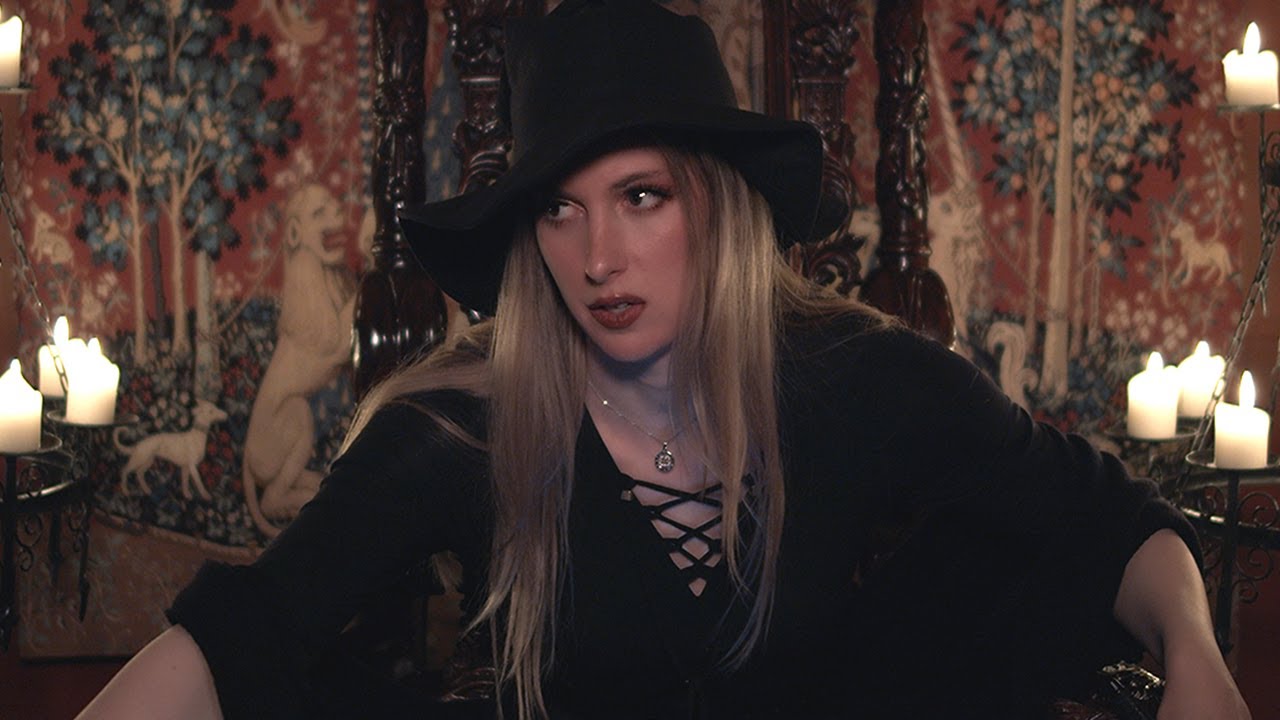
Natalie Wynn analyzes J.K. Rowling's anti-trans commentary as an educational case study in 'indirect bigotry,' where prejudice is masked behind polite concern, biological common sense, and self-defense narratives. (1:36)
Rowling's framing of trans masculine youth relies on sensationalized UK clinic data, where a cited 4,400% referral increase represents an actual shift from 32 to 1,740 adolescent girls—constituting roughly 0.03% of the UK female youth population. (39:21)
Rowling's 2020 novel 'Troubled Blood' reproduces the harmful 20th-century cinematic trope of the cross-dressing serial killer, reinforcing cultural panics about male predators invading female-only spaces. (48:02)
Wynn draws on Sarah Schulman's 'Conflict Is Not Abuse' to argue that genuine personal trauma is being unethically weaponized to justify rollbacks of civil rights for an already vulnerable and impoverished trans population. (67:09)
Detailed notes
## Background
This video essay was created and published by Natalie Wynn on the YouTube channel ContraPoints on January 26, 2021. With a description that playfully references Harry Potter ('I did not come out of the cupboard under the stairs for this'), the video presents an in-depth examination of J.K. Rowling's public statements and essays regarding transgender issues.
## TL;DR
Natalie Wynn analyzes J.K. Rowling's public turn toward gender-critical politics, tracing her trajectory from the Maya Forstater controversy to her 'TERF Wars' essay and the novel Troubled Blood. Wynn dissects the mechanics of 'indirect bigotry,' arguing that polite rhetoric and slogans like 'sex is real' conceal historical anti-trans tropes that inflict tangible harm on trans people's healthcare and civil rights. The essay examines how Rowling's own personal trauma and adolescent struggles are projected onto trans youth and trans women, reinforcing moral panics and cinematic tropes of cross-dressing predators. Ultimately, Wynn highlights the stark material asymmetry between an ultra-wealthy celebrity and vulnerable trans individuals, articulating the deep sense of personal betrayal experienced by trans readers who once found refuge in Rowling's work.
## Atmosphere & style
The presentation blends theatrical camp and elaborate visual styling—featuring witch imagery, wands, and classical music—with deeply serious philosophical and psychological critique. Wynn's tone is measured, wry, and intellectually sharp, consciously avoiding shallow outrage in favor of an empathetic yet unsparing deconstruction of how decent people adopt prejudiced frameworks. The piece carries an undercurrent of melancholy and personal exhaustion, culminating in an aching meditation on trauma, online vitriol, and the grief of watching a beloved childhood author spearhead a political backlash.
## Bulletin
- [01:36](https://www.youtube.com/watch?v=7gDKbT_l2us&t=96s) Natalie Wynn analyzes J.K. Rowling's anti-trans commentary as an educational case study in 'indirect bigotry,' where prejudice is masked behind polite concern, biological common sense, and self-defense narratives.
- [39:21](https://www.youtube.com/watch?v=7gDKbT_l2us&t=2361s) Rowling's framing of trans masculine youth relies on sensationalized UK clinic data, where a cited 4,400% referral increase represents an actual shift from 32 to 1,740 adolescent girls—constituting roughly 0.03% of the UK female youth population.
- [48:02](https://www.youtube.com/watch?v=7gDKbT_l2us&t=2882s) Rowling's 2020 novel 'Troubled Blood' reproduces the harmful 20th-century cinematic trope of the cross-dressing serial killer, reinforcing cultural panics about male predators invading female-only spaces.
- [01:07:09](https://www.youtube.com/watch?v=7gDKbT_l2us&t=4029s) Wynn draws on Sarah Schulman's 'Conflict Is Not Abuse' to argue that genuine personal trauma is being unethically weaponized to justify rollbacks of civil rights for an already vulnerable and impoverished trans population.
## Key takeaways
- [01:36](https://www.youtube.com/watch?v=7gDKbT_l2us&t=96s) Celebrity shaming and Twitter mob mechanics often isolate public figures into defensiveness, creating echo chambers where decent individuals can rationalize and adopt bigotry.
- [07:48](https://www.youtube.com/watch?v=7gDKbT_l2us&t=468s) Slogans like 'sex is real' function as dog whistles that reduce trans identities to superficial dress-up while misrepresenting trans people as being in denial of biological science.
- [13:11](https://www.youtube.com/watch?v=7gDKbT_l2us&t=791s) Rowling's rhetoric directly mirrors foundational trans-exclusionary radical feminist (TERF) texts, including Janice Raymond's 1979 book 'The Transsexual Empire', which sought to morally mandate transsexualism out of existence.
- [17:50](https://www.youtube.com/watch?v=7gDKbT_l2us&t=1070s) The 'Westboro Baptist Church theory of bigotry' creates a false sense of innocence by assuming prejudice only exists as cartoonish, overt malice rather than polite, intellectualized concern.
- [20:31](https://www.youtube.com/watch?v=7gDKbT_l2us&t=1231s) Indirect bigotry works through depersonification and political backlash, framing civil rights struggles as abstract metaphysical debates over definitions of womanhood.
- [33:50](https://www.youtube.com/watch?v=7gDKbT_l2us&t=2030s) Bathroom panics fundamentally misrepresent public facility access, which is governed by visual gender conformity rather than identity documentation, disproportionately harming cisgender butch women.
- [41:29](https://www.youtube.com/watch?v=7gDKbT_l2us&t=2489s) Anti-trans discourse creates an asymmetrical double standard: trans women are demonized as predatory infiltrators, while trans men are infantilized as confused, vulnerable victims of social contagion.
- [52:08](https://www.youtube.com/watch?v=7gDKbT_l2us&t=3128s) Media portrayals from 'Psycho' to 'The Silence of the Lambs' historically linked gender variance to psychopathic violence, conditioning audiences to associate cross-dressing with sexual predation.
- [01:07:09](https://www.youtube.com/watch?v=7gDKbT_l2us&t=4029s) Unprocessed trauma creates irrational hyper-vigilance, but personal victimhood cannot ethically justify organized political campaigns against trans legal equality.
- [01:10:06](https://www.youtube.com/watch?v=7gDKbT_l2us&t=4206s) Gender-critical activism frequently engages in victimhood reversal, presenting affluent, privileged figures as embattled martyrs while trans individuals face severe material precarity and struggle for healthcare access.
- [01:14:18](https://www.youtube.com/watch?v=7gDKbT_l2us&t=4458s) Despite Rowling's insistence that gender-critical feminists are sympathetic, leading activist rhetoric regularly employs dehumanizing slurs, autogynephilia weaponization, and intense hostility.
- [01:25:10](https://www.youtube.com/watch?v=7gDKbT_l2us&t=5110s) The Harry Potter narrative of an outcast escaping abuse fostered a deep sense of betrayal among trans fans when Rowling leveraged her platform to lead a backlash against trans liberation.
## Detailed walkthrough
### [00:00](https://www.youtube.com/watch?v=7gDKbT_l2us&t=0s) Introduction: A Witch Trial in Reverse
Natalie Wynn opens amid theatrical witch imagery, stirring an imaginary cauldron to the classic incantation from *Macbeth*: “Bubble, bubble toil and trouble. Fire burn and cauldron bubble! Something wicked this way comes!” Playfully snapping a fan and brandishing an “elderberry wand, turgid, with a core of... icedragon,” she cries out “Expecto Patreon!” before addressing the creator of the Wizarding World directly: “Joanne, I wanna talk to you Joanne!” Reflecting on the close of 2020—a year she dryly characterizes as “whomst is bad”—she notes that on top of every other catastrophe, the last thing anyone needed was the author of *Harry Potter* surfacing to declare that there are two things she cannot stand: bigotry and transgender people.
```mermaid
flowchart TD
accTitle: Public Reaction to J.K. Rowling
accDescr: Chart showing the divergent public narratives around J.K. Rowling's statements on trans people.
subgraph Framing["Divergent Public Narratives"]
direction TB
A["J.K. Rowling's Public Statements"] --> B["Framed as Common Sense / Free Speech"]
A --> C["Experienced as Anti-Trans Bigotry"]
B --> D["Backlash viewed as 'Cancel Culture' / 'Witch Hunt'"]
C --> E["Targeted communities feel betrayed and harmed"]
end
```
The public reaction immediately split into two entrenched camps. On one side stood those appalled by Rowling's anti-trans comments; on the other, defenders who insisted she was merely stating that biological sex is real and was now being persecuted by dogmatic ideologues. Wynn sketches out the defensive hysteria of Rowling's allies with biting parody: “This is cancel culture gone too far, this is a witch hunt. Celebrities are under attack. This is the new Salem. This is Orwell’s nightmare.”
[01:36](https://www.youtube.com/watch?v=7gDKbT_l2us&t=96s) The Trauma of the Mob and the Pain of the Trans Reader
For Wynn, the situation is intensely personal and fraught from multiple angles. As a transgender woman, she describes feeling genuinely wounded by Rowling’s commentary over the past year. At the same time, having endured her own brutal experiences with Twitter mob outrage, she recognizes the visceral psychological toll of mass condemnation:
> “The truth is that unless you've personally experienced infamy, being shamed and shunned on a scale the human brain can't really even understand, then you just don't know what it's like, and you don't know how you would react in that situation.”
While critics might dismiss a billionaire's distress over mean tweets as whiny and self-absorbed, Wynn argues this ignores the fundamental alienation that immense celebrity produces. When the public dehumanizes someone into an icon, idolizing them as a goddess or pursuing them as a witch, fame only deepens isolation. Seeing Rowling attacked on the timeline triggers an instinctual, protective sympathy born of Wynn's own trauma. Yet that empathy conflicts directly with the profound sting of Rowling's rhetoric: “How could you do this to me Joanne? I did not come out of the cupboard under the stairs for this.” Rather than producing a typical cancellation drag-video, Wynn sets out to take Rowling’s pain and complexity seriously while critically dismantling her ideas about transgender people, using her trajectory as an educational case study into how otherwise decent people are seduced by bigotry.
[05:11](https://www.youtube.com/watch?v=7gDKbT_l2us&t=311s) The Spark: Maya Forstater and "#IStandWithMaya"
Rowling’s public foray into gender politics had earlier hints—such as liking an anti-trans tweet and following gender-critical accounts in 2018—but Wynn sets those aside to avoid guilt by association. The definitive rupture occurred in December 2019, when Rowling posted the hashtag `#IStandWithMaya`. This was a direct reference to Maya Forstater, an English think-tank consultant whose contract was not renewed after posting tweets deemed hostile toward transgender people. Forstater subsequently compiled her posts in a thread titled “Allegedly Transphobic Tweets,” which laid out classic gender-critical tenets: asserting that biological sex is immutable, that male persons can never be women regardless of identity, and sharing cartoons depicting trans women as grotesque, hairy men invading women’s private facilities.
Rowling intervened in the controversy with a viral tweet:
> “Dress however you please. Call yourself whatever you like. Sleep with any consenting adult who'll have you. Live your best life in peace and security. But to force women out of their jobs for stating that sex is real? #IStandWithMaya #ThisIsNotADrill.”
While seemingly benevolent on its surface, the tweet framed Forstater’s termination as an authoritarian crackdown on basic scientific literacy, misrepresenting the dispute to shield Forstater's overt anti-trans stance behind an innocuous slogan.
- **Maya Forstater's core argument:** Forstater's legal tribunal filings explicitly argued that no medical intervention, legal declaration, hormone regimen, or social transition can ever alter a person's sex, categorizing all trans women as fundamentally male.
- **The "Starter Pack" trope:** Wynn identifies the familiar architecture of anti-trans rhetoric: framing binary sex as an absolute truth, presenting trans women as predatory intruders, and styling oneself as an oppressed truth-teller under attack by dogmatists.
- **The Wizarding sorting metaphor:** Wynn satirizes Rowling’s rigid essentialism by asking what happens if someone is simply “a Gryffindor trapped in Hufflepuff's body.”
[07:48](https://www.youtube.com/watch?v=7gDKbT_l2us&t=468s) Deconstructing "Sex Is Real" as a Dog Whistle
Rowling’s phrasing—that Forstater was punished simply “for stating that sex is real”—functions as a strategic euphemism. Wynn points out that Forstater was not penalized for acknowledging biology, but for insisting that trans people can never be recognized as the gender they live as. Describing that ideology as merely acknowledging that "sex is real" deliberately misrepresents trans people as anti-scientific zealots living in denial of bodily reality.
In a comedic aside, Wynn's alter-ego persona Nigella pops up to sneer: “You will never be a woman, Nathan. Every cell in your body is male and has a Y chromosome.” Wynn shrugs off the taunt, remarking that she makes do with just one X chromosome, finding the petite Y chromosome rather dainty compared to the cumbersome appendages of a second X.
On a serious level, Wynn emphasizes that transgender transition is grounded in an acute, painful awareness of biological sex:
> “No trans person thinks it's possible to change chromosomal sex and to pretend otherwise is to argue in bad faith.”
When trans people discuss gender, they are referring to psychological and social reality, not asserting that their karyotype has changed. Consequently, when anti-trans campaigners claim "sex is real," they are not defending an objective scientific premise that trans people deny; they are using a rhetorical trick to argue that only chromosomal sex matters, thereby reducing trans identities to mere cosmetic dress-up, eccentricity, and superficial fashion.
[10:10](https://www.youtube.com/watch?v=7gDKbT_l2us&t=610s) Casual Bigotry and Trivializing Identity
When J.K. Rowling writes phrases like "call yourself whatever you like," she is subtly belittling what it means to be transgender by reducing a core identity to a mere change of clothes, name, or superficial costume. Natalie Wynn draws a direct parallel between this rhetoric and the language of casual homophobia. A homophobic equivalent to Rowling's tweet might read: "Choose whatever lifestyle you want. Indulge your sexual preferences with any consenting adult in the privacy of your own bedroom. But force Christians out of their jobs for stating that marriage is between a man and woman? #IStandWithKimDavis. A penis and a sausage cannot make a baby. Checkmate the gays, it's just science." Just as homophobes trivialize gay existence by dismissing it as an elective "lifestyle," a "sexual preference," or strictly "what you do in the bedroom," Rowling's framing treats transness as an aesthetic choice. Straight people are never instructed to confine their entire lifestyle to the bedroom—though Natalie jokes that perhaps they should be, as "the straights are not oppressed enough."
Being gay or transgender encompasses far more than isolated private behaviors or surface-level presentations. It is about whom you love, your fundamental humanity, and the physical reality of living in a transsexual body. Telling trans people to "dress however you want" is patronizing rather than supportive. Natalie quips that such a sentiment only works if applied to YouTubers wearing Louis Vuitton socks while posting tearful apology videos for being racist—behavior that is neither valid nor acceptable, fueled by creators endlessly dragging each other because they hate seeing their own reflection in someone else.
[12:02](https://www.youtube.com/watch?v=7gDKbT_l2us&t=722s) "If You Were Discriminated Against": The June Tweets
Following her initial December tweet in defense of Maya Forstater, Rowling remained publicly silent about trans people for roughly six months. She reentered the discourse in June, initially taking issue with an article that used the phrase "people who menstruate"—a term intentionally chosen by public health advocates to include trans men and non-binary people in discussions of menstrual hygiene and period poverty. After her Twitter notifications were subsequently flooded by leftist teenagers ("who think Stalin did nothing wrong but Rachel Maddow is a war criminal"), Rowling posted a broader thread reiterating the slogan that sex is real, adding: “It isn't hate to speak the truth.”
She closed that thread with what Natalie characterizes as another deeply backhanded statement of solidarity, asserting: “I respect every trans person's right to live any way that feels authentic and comfortable to them. I'd march with you if you were discriminated against on the basis of being trans.” Natalie zeroes in on the word *if*. Widespread discrimination against trans people is extensively documented; indeed, during the exact same week Rowling posted that thread, the Trump administration finalized a rule stripping transgender people of federal nondiscrimination protections in healthcare and health insurance. Natalie asks pointedly whether Rowling is actually ready to march, highlighting the chasm between Rowling's performative allyship and political reality.
```mermaid
flowchart TD
accTitle: Rhetorical Structure of Polite Transphobia
accDescr: Diagram showing how superficial tolerance masks real-world legal and systemic harms against trans people.
subgraph Rhetoric["Rhetorical Strategy"]
A["Surface Affirmation<br>'Live however you like'"] --> B["Conditional Allyship<br>'I would march IF you were discriminated against'"]
B --> C["Core Assertion<br>'Sex is real / Truth isn't hate'"]
end
subgraph Reality["Material Consequences"]
D["Trivializes Identity as mere costume"]
E["Erases Documented Oppression"]
F["Justifies Rollbacks in Healthcare & Rights"]
end
A -.-> D
B -.-> E
C -.-> F
```
[13:11](https://www.youtube.com/watch?v=7gDKbT_l2us&t=791s) Recognizing the Tropes: The History of TERFism
To an untrained audience, Rowling's statements may appear benign, reasonable, or merely clumsy. However, to those familiar with the history of prejudice against marginalized groups, her posts set off immediate alarm bells. Bigotry is not innate; it is an acquired framework built out of specific tropes, historical stereotypes, and recurring arguments. People do not enter the world believing that gay people destroy traditional families, that women are inherently subservient, or that Jewish people manipulate the global banking system. When someone unaware of anti-Semitic canards hears an anti-Semite express "concern about the over-representation of Jewish people in media and banking," they might miss the prejudice entirely because the speaker avoids saying they hate Jews.
In the same way, Rowling’s claims—that trans activism erases sex, invalidates same-sex attraction, and silences women—are the established, foundational talking points of trans-exclusionary radical feminism (TERFism), an ideological movement that wraps transphobia in the language of feminist concern. This movement's ideological roots trace back to radical feminist academic Janice Raymond and her foundational 1979 text, *The Transsexual Empire: The Making of the She-Male*. Unconstrained by modern social media backlash, Raymond expressed the movement's raw ideology, writing: “All transsexuals rape women's bodies by reducing the real female form to an artifact, appropriating this body for themselves.” Raymond went further, characterizing trans women as agents of patriarchy who “merely cut off the most obvious means of invading women.”
[15:15](https://www.youtube.com/watch?v=7gDKbT_l2us&t=915s) From Ideology to Policy: The Material Harm of "Polite" Bigotry
Natalie stages an interruption by a stereotypical British gender-critical character ("Nigella"), who accuses her of being a "typical male narcissist" manipulating a cultish audience into viewing him as a victim. Natalie counters by clarifying that bigotry cannot be understood simply as interpersonal cruelty or meanness. Bigots are often cruel when they feel they can get away with it, but the fundamental danger of bigotry lies in its political objectives: it represents an organized hostility that poses a tangible threat to the civil rights and survival of a target group.
In the final chapter of *The Transsexual Empire*, Raymond outlined an explicit strategy to eradicate trans people from public and medical life:
> “The problem of transsexualism would best be served by morally mandating it out of existence. I believe that the elimination of transsexualism is not best achieved by legislation prohibiting transsexual treatment and surgery but rather by legislation that limits it. I would favor restricting the number of hospitals and centers where transsexual surgery could be performed. The kind of counseling to pass successfully as masculine or feminine that now reigns in gender identity clinics only reinforces the problem of transsexualism.”
Raymond advocated replacing transition care with feminist consciousness-raising therapies—a form of conversion therapy intended to curb trans identity. Recognizing that trans medicine could not be banned outright overnight, early gender-critical activists adopted the incremental strategy of the anti-abortion movement: making care so legally, financially, and logistically difficult to obtain that it ceases to be accessible. This was not merely theoretical:
- In 1980, Janice Raymond authored a pivotal paper for the U.S. Department of Health and Human Services (HHS) arguing against transition-related treatments.
- Raymond's paper was directly cited in the 1981 federal policy decision excluding gender-affirming care from Medicare coverage.
- That Medicare exclusion remained in effect for over three decades until it was finally overturned in 2014.
Natalie emphasizes that polite, couched bigotry can inflict just as much structural damage as explicit slurs.
[17:50](https://www.youtube.com/watch?v=7gDKbT_l2us&t=1070s) The "Westboro Baptist Church Theory" and the Psychology of Bigots
Unlike Janice Raymond's explicit hostility, J.K. Rowling takes pains to present herself as an enlightened, compassionate liberal who holds deep affection for trans people even while repeating arguments designed to roll back their rights. Rowling regularly relies on defensive rhetorical qualifiers: she claims to know and love trans people, insists she would march for them *if* they faced discrimination, and asserts that the gender-critical women she speaks with do not hate trans individuals but are motivated by profound concern for gender-nonconforming youth.
Natalie argues that many observers fail to identify Rowling's rhetoric as bigoted because society operates on an excessively narrow definition of prejudice. People imagine bigots as comic-book villains—like Lord Voldemort or cartoonish Nazis who openly despise love, friendship, and kindness:
> “Because when you dehumanize the villains you become unable to recognize the villain within.”
In reality, historical fascists and bigots do not understand themselves as evil monsters. Nazis genuinely believed their own propaganda: they convinced themselves they were defending German blood, culture, and soil against Marxist-Bolshevism and Jewish contamination, framing their violence as righteous defense against external threats.
Natalie dubs this misconception the "Westboro Baptist Church theory of bigotry"—the flawed idea that bigotry only exists when someone is picketing on a street corner holding a sign that explicitly reads "God hates you," or acting like the exaggerated villains in a Taylor Swift music video. Because real-world prejudice relies on an internal logic of grievance, self-defense, and moral righteousness, reducing it to crude hatred blinds people to dangerous ideas dressed up in polite, civil rhetoric. Natalie pauses to sip a hot toddy through an eco-friendly metal straw, joking self-deprecatingly about her own virtue, and quips that while pop stars like Swift rush to become gay icons, she has no such ambitions: "I don't want to be a gay icon; I'm just stuck with you people."
[20:31](https://www.youtube.com/watch?v=7gDKbT_l2us&t=1231s) Direct vs. Indirect Bigotry
Responding to Taylor Swift’s line “shade never made anybody less gay” from her music video *You Need to Calm Down*, ContraPoints points out that shade isn't what homophobia is; rather, true shade is J.K. Rowling condescendingly tweeting for trans people to “sleep with any consenting adult who’ll have you.” Swift’s video treats homophobia as mere internet "haters" represented by caricatured backwoods hillbillies marching with misspelled signs. In reality, the most dangerous bigots are not fringe, uneducated caricatures, but highly sophisticated, powerful people. While blatant, frothing homophobia (“it’s an abomination,” “they’re recruiting children”) still exists, modern anti-LGBT rhetoric is far more sanitized. Today's prejudice typically masquerades as polite, defensive concern: professing love for gay friends while arguing that teaching children about LGBT issues constitutes an assault on religious freedom.
ContraPoints divides prejudice into two distinct rhetorical styles: **direct bigotry** and **indirect bigotry**. Direct bigotry is outwardly aggressive, venomous, and dehumanizing. It uses overt slurs, open discrimination, and apocalyptic language depicting minority groups as predators, rapists, parasites, or vermin. Indirect bigotry, by contrast, is framed as rational, measured "concern" or intellectual "debate" over proxy topics. It claims to be defensive rather than offensive, asserting that a once-necessary liberation movement has now "gone too far," that the activists are the real bullies threatening free speech, and that ordinary citizens are terrified of cancel culture. The indirect bigot casts themselves as a righteous, noble defender—protecting children, women, family, common sense, and civilization itself.
Furthermore, indirect bigotry operates by depersonifying its targets and replacing flesh-and-blood human beings with threatening, abstract concepts. Hostility toward Jewish people is framed as opposition to a "Zionist Occupied Government"; hostility toward women is masked as hating "feminazis"; gay people are reduced to "the gay agenda"; and trans people are replaced with terms like "transgenderism," "gender ideology," or "transactivists." While indirect bigots rarely admit—or even consciously believe—that they oppose human equality, their deep-seated hostility surfaces the moment marginalized groups agitate for social change.
- **Direct Bigotry:** Characterized by open contempt, slurs, explicit calls for subordination or violence, and hysterical warnings about perverts, rapists, and contagions.
- **Indirect Bigotry:** Characterized by polite proxy debates, appeals to "common sense" and tradition, cast as a heroic defense of women, children, and civilization against an aggressive activist overreach.
- As ContraPoints highlights about the self-aggrandizing psychology of the indirect bigot: “I think a lot of people take a borderline heroic view of themselves, and an indirect bigotry flatters that self-image.”
```mermaid
flowchart TD
accTitle: Comparison of Direct and Indirect Bigotry
accDescr: A flowchart contrasting the tone, framing, and linguistic targets of direct versus indirect bigotry.
subgraph Direct["Direct Bigotry"]
D1["Open contempt & slurs"]
D2["Offensive posture: attack"]
D3["Depicts targets as predators, beasts, contagions"]
end
subgraph Indirect["Indirect Bigotry"]
I1["Polite proxy debates & 'concerns'"]
I2["Defensive posture: protecting children & values"]
I3["Replaces people with concepts: 'gender ideology', 'the gay agenda'"]
end
Direct --> R["Underlying Driver: Resistance to Social Equality"]
Indirect --> R
```
---
[24:12](https://www.youtube.com/watch?v=7gDKbT_l2us&t=1452s) Bigotry as Backlash and the Psychology of Threat
Drawing on Elisabeth Young-Bruehl's book *The Anatomy of Prejudices*, ContraPoints argues that bigotry is fundamentally a political backlash against movements for equality rather than merely a personal psychological feeling of hatred. When oppressed groups successfully disrupt existing hierarchies, prejudice arises as a regressive attempt to restore old boundaries. For example, a casual misogynist does not necessarily harbor active malice toward every woman in his daily life; rather, he feels destabilized by women demanding structural and political equality. As ContraPoints asserts: “In fact I would argue that *feeling threatened* is the distinctive psychological experience of bigotry, much more so than feeling hateful.”
Prejudice mutates over time to adapt to shifting social realities. While 1950s misogyny openly demanded female domestic servitude, modern misogyny manifests differently because gender roles have shifted over the last seventy years, even if the urge to control women's bodies persists. Similarly, the dramatic surge in public transphobia over the last decade is a direct reaction to trans visibility and civil gains. Trans people are no longer relegated to being punchlines or cinematic monsters; they are colleagues in the workplace, public figures, and multidimensional characters in media. Because trans people are successfully integrating into public life and insisting on their dignity, traditionalists feel unsettled, and their defensive backlash intensifies accordingly.
- Bigotry functions primarily as a political reaction to shifts in demographic power and civil rights advancements.
- Elisabeth Young-Bruehl notes that regressive prejudices reinstate inequalities once movements for equality have exerted force on society.
- The sudden volume of anti-trans discourse is not accidental; it is the friction caused by trans people gaining real-world acceptance and demanding equal participation.
---
[26:18](https://www.youtube.com/watch?v=7gDKbT_l2us&t=1578s) From Metaphysical Debates to Trans Liberation
When J.K. Rowling protests that she is merely stating the biological reality that "sex is real," she relies on the defensive claim that an empirical fact cannot be bigoted. While facts themselves cannot be bigoted, they are routinely weaponized to tell politically reactionary stories—much like how white supremacists cite racial crime statistics out of context to advance racist agendas. Rowling's maneuver camouflages an urgent political conflict over the civil rights and survival of trans people as an abstract intellectual debate over the metaphysics of sex and gender.
This tactical distraction is precisely why ContraPoints takes issue with popular activist mantras like "trans women are women." While well-intentioned, the slogan frequently leaves out trans men and non-binary people (for whom the clunky slogan "non-binary people are... valid?" falls flat) and actively walks into semantic traps. It lures trans advocates into endless, exhausting debates over how to define "womanhood," what it "feels like" to be a woman, or postmodern theories of gender performativity. Citing Ludwig Wittgenstein’s principle that certain philosophical puzzles should be dissolved rather than solved, ContraPoints points out that even trans people cannot reach a unified philosophical consensus on what gender means, and they do not share a single monolithic ideology. What trans people actually share is a common, material fight against medical gatekeeping, employment and housing discrimination, harassment, and social ostracism.
Instead of getting bogged down in circular metaphysical traps and internal demands for personal validation, ContraPoints advocates reviving the 1970s slogan: **"Trans Liberation Now!"** This shifts the terrain away from linguistic definitions and forces opponents to engage with concrete human rights and systemic oppression. Moving from validation to equality refocuses the trans movement on winning equal standing in society rather than debating dictionary definitions.
- Quoting the trap of semantic discussions, ContraPoints notes: “One way indirect bigotry works is by camouflaging political struggles as intellectual debates.”
- Debates over what it "feels like" to be a woman lead nowhere; ContraPoints jokes that nobody really feels like a woman except perhaps a specific subgenre of gay men or 1990s Shania Twain.
- As ContraPoints concludes regarding the true focus of civil rights movements: “I feel like trans culture is just so obsessed with reassuring ourselves that we're valid, that we sometimes forget that the end goal of a political movement is not validity, it's equality.”
[31:07](https://www.youtube.com/watch?v=7gDKbT_l2us&t=1867s) Human Rights vs. Gender Scholasticism
ContraPoints pushes back against the common public framing of transgender discourse, which obsessively asks questions like “Does J.K. Rowling think we're valid?” While admitting she might care a little on an emotional level, she argues that this is fundamentally the wrong question to be asking. The real question is whether someone is or is not an ally in the political struggle for equality. Shifting the conversation in this way cuts through the endless noise, bringing material reality back into focus. Trans people do not need to be dragged into abstract, scholastic gender theology; they are a concrete demographic entitled to basic human rights, civil equality, and freedom from discrimination.
As ContraPoints summarizes: “We are not an ideology that's up for debate.” However, J.K. Rowling consistently frames the entire trans rights struggle as a theoretical ideology she simply happens to disagree with, masking her opposition under innocuous-sounding platitudes like asserting that sex is real.
---
[32:10](https://www.youtube.com/watch?v=7gDKbT_l2us&t=1930s) The "TERF Wars" Essay and Jimmy Choos
Soaking in a lavish bath filled with milk, rose oil, and Epsom salts—a setup she jokingly wonders was inspired by the prefects' bathroom scene with Moaning Myrtle in *Harry Potter and the Goblet of Fire*—ContraPoints laments having to abandon the subject of luxurious baths to address Rowling’s polemic. On June 10, Rowling published an essay to her website, sharing it on Twitter under the title "TERF Wars" (an essay later awarded the Russell Prize by the BBC). The essay lays out Rowling’s rationale for intervening in sex and gender legislation, arguing that trans activism harms women and shields predators.
Rowling writes: “I refuse to bow down to a movement that I believe is doing demonstrable harm in seeking to erode woman as a political and biological class and offering to cover predators like few before it.”
ContraPoints highlights Rowling’s reductive depiction of trans womanhood:
> “Woman is not a costume. Woman is not an idea in a man's head. Woman is not a pink brain, a liking for Jimmy Choos or any of the other sexist ideas now somehow touted as progressive.”
Mocking this caricature, ContraPoints sarcastically concludes that her entire transition must have been a whimsical misunderstanding: she isn't actually a woman, just an ordinary man who happens to love high-end footwear. Joking that the channel is officially over, she quipped that she might as well head to the Jimmy Choo store and then have her breasts amputated.
---
[33:50](https://www.youtube.com/watch?v=7gDKbT_l2us&t=2030s) The Bathroom Myth and Gender Policing
Turning to Rowling's claims regarding single-sex spaces, ContraPoints addresses the assertion that legal reforms like streamlined gender recognition certificates will open public facilities to predatory men:
> “When you throw open the doors of bathrooms and changing rooms to any man who believes or feels he's a woman, and, as I've said, gender confirmation certificates may now be granted without any need for surgery or hormones, then you open the door to any and all men who wish to come inside.”
While acknowledging the legitimate fear women have of predators, ContraPoints points out that the entire premise falls apart because nobody presents identification or legal paperwork to enter a public restroom. Citing Jack Halberstam’s book *Female Masculinity*, she discusses "The Bathroom Problem," which demonstrates that public restrooms function as mechanisms for enforcing gender conformity rather than verifying legal status. Halberstam, who was assigned female at birth but presents in a masculine, butch fashion, routinely has security called on him in women's restrooms. By contrast, ContraPoints—a conventionally feminine trans woman—has used women's restrooms for years without ever being questioned.
Restroom policing relies entirely on visual conformity to femininity, meaning Rowling’s proposed heightened policing would disproportionately harass cisgender butch lesbians while doing nothing to stop predators, short of stationing literal genital inspectors at every stall. ContraPoints also skewers Rowling's bizarre defense that radical feminists cannot be transphobic because they still embrace trans men:
> “Ironically, radical feminists aren't even trans-exclusionary, they include trans men in their feminism, because they were born women.”
---
[37:07](https://www.youtube.com/watch?v=7gDKbT_l2us&t=2227s) The Panic Over Being "Transed" and the 4,400% Stat
Rather than just repeating standard rebuttals to well-worn arguments, ContraPoints explores what the essay reveals about the psychology of transphobia. Rowling explicitly states that her investment in the topic is "intensely personal," driven in part by the anxious belief that had she grown up today, she would have been "transed" by a cultural contagion, recruited by a dark cabal of endocrinologists to escape girlhood. To justify this fear, Rowling cites a sensational statistic:
> “4400% increase in girls being referred for transitioning treatment.”
ContraPoints contextualizes the math to show how misleading raw percentages can be when dealing with small baseline numbers:
- A decade earlier, only **32** female-assigned patients under the age of 18 were referred for gender-related care in the UK.
- The most recent figure was **1,740** referrals, with the steepest rise occurring around the mid-2010s "transgender tipping point" when trans visibility dramatically expanded.
- In a country with approximately 11 million children (roughly 5.5 million girls), 1,740 patients represents just **0.03%** of the female youth population.
- Given that roughly 1% of the adult population identifies as transgender, 0.03% of youth seeking referrals is completely demographically proportionate, if not lower than expected.
---
[39:21](https://www.youtube.com/watch?v=7gDKbT_l2us&t=2361s) Conflating Trans Masculinity with Female Adolescence
Rowling's underlying assumption is that trans men are merely confused, troubled adolescent girls attempting to escape the systemic burdens of misogyny:
> “The writings of young trans men reveal a group of notably sensitive and clever people. The more of their accounts of gender dysphoria I've read, with their insightful descriptions of anxiety, dissociation, eating disorders, self-harm and self-hatred, the more I've wondered whether, if I'd been born 30 years later, I too might have tried to transition. The allure of escaping womanhood would have been huge. If I'd found community and sympathy online that I couldn't find in my immediate environment, I believe I could have been persuaded to turn myself into the son my father had openly said he'd have preferred.”
Rowling recounts that she overcame her own adolescent ambivalence by reading female writers who taught her that a woman does not have to feel "pink, frilly and compliant" to be female. ContraPoints methodically dismantles this comparison, clarifying that while trans men may suffer from mental health struggles, those struggles do not define trans identity.
Being a transgender man is not:
- Having anxiety or dissociation
- Struggling with an eating disorder
- Engaging in self-harm or self-hatred
- A coping mechanism to win the approval of a sexist father
- Feeling dark, confused, or non-compliant with feminine stereotypes
Wanting to take testosterone, undergo physical masculinization, and live day-to-day life as an adult man is fundamentally distinct from ordinary teenage angst about patriarchal gender roles. Rowling is merely projecting her own adolescent trauma onto trans men and assuming their lives mirror her past.
[41:29](https://www.youtube.com/watch?v=7gDKbT_l2us&t=2489s) "Irreversible Damage" and the Infantilization of Trans Men
When people lack the capacity or willingness to understand an internal state foreign to their own, they often project their own feelings and invent conspiratorial explanations: someone must have persuaded them to transition. Transphobic discourse paints a cartoonish picture where any young girl picking up a toy truck on a playground is immediately ambushed by an endocrinologist leaping from behind a tree to announce they are going to "trans" her. This panic is directed with particular intensity at trans masculine youth. Abigail Shrier’s 2020 book, *Irreversible Damage: The Transgender Craze Seducing Our Daughters*, serves as the modern counterpart for trans men to what Janice Raymond’s *The Transsexual Empire* was for trans women. Opening with a chapter titled "The Contagion," Shrier frames female-to-male transition as an infectious social disease—a rhetorical move historically employed against gay people.
While public discussion following J.K. Rowling’s essay focused heavily on trans women—prompting Daniel Radcliffe to issue the statement, “Transgender women are women”—Rowling actually dedicates more words in her essay to trans men than to any other subject. Transphobia directed at trans men operates on fundamentally different psychological mechanisms than transphobia directed at trans women. While trans women are simultaneously demonized as predatory male infiltrators and hyper-sexualized fetish objects (an "incubus-succubus" threatening to destroy traditional households), trans men are routinely infantilized. Viewed by transphobes through a patronizing, misogynistic lens as "vulnerable, confused girls," trans men are treated as incapable of determining their own bodily autonomy. This paternalistic framing bore real-world legal consequences in the UK, where the High Court ruled that youth under 16 must obtain a court order alongside medical sign-off to access puberty blockers, precisely echoing Rowling's language about fragile teenage girls.
```mermaid
flowchart TD
accTitle: Transphobic Caricatures Comparison
accDescr: Diagram showing how transphobia manifests differently against trans women versus trans men.
subgraph TW["Transphobia Toward Trans Women"]
TW1["Threat Profile: Male Predator"]
TW2["Fetish Profile: Pornographic Fetish Object"]
TW1 & TW2 --> TW_Outcome["Vilified as dangerous deceivers"]
end
subgraph TM["Transphobia Toward Trans Men"]
TM1["Condition Profile: 'Confused, Vulnerable Girls'"]
TM2["Diagnosis: Victims of 'Social Contagion'"]
TM1 & TM2 --> TM_Outcome["Infantilized and stripped of medical autonomy"]
end
```
- In her essay, Rowling points to an older, self-described transsexual woman who underwent years of rigorous evaluation and psychotherapy as the ideal standard, lamenting that modern trans activism seeks to dismantle these systems.
- Rowling's desired outcome mirrors Janice Raymond’s: the enforcement of stringent medical gatekeeping to restrict access to transition care.
[44:48](https://www.youtube.com/watch?v=7gDKbT_l2us&t=2688s) Gatekeeping, Comphet Crises, and Cis Projection
Taking a pause to pour a drink and joke about chastely covering her exposed leg with wet white chiffon to "honor God with my sex change," ContraPoints explores why cisgender men and women experience distinct forms of transphobic anxiety. For many cis straight men, trans women pose an existential threat to the certainty of their manhood and heterosexuality. Hooking up with a trans woman becomes an agonizing, high-stakes moral threshold—a dramatic crossing of the Rubicon that triggers a spiraling Cartesian crisis of self-doubt.
```
“A lot of cis men are transphobic against trans women because the thought that a man can become a woman threatens the certainty of their own manhood.”
```
For many cis women, particularly older butch lesbians who fought grueling internal battles to reconcile themselves with womanhood against societal misogyny, the existence of trans people opens unhealed wounds. When such women see hyper-feminine trans women embracing makeup and dresses, they view them as parodies and fetishists reinforcing retrogressive stereotypes; when they look at trans men, they view them as traitors and self-loathers who took an easy exit rather than doing the hard work of accepting their female bodies. Yet this is sheer projection: trans women do not believe dresses define womanhood, nor do trans men transition simply because they dislike pink frills. Rowling imputes ideological motives to trans lives, interpreting individual journeys as abstract manifestos on womanhood rather than recognizing the people living them.
- Straight men often feel an attraction to trans women that directly threatens their self-conception, plunging them into panicked rationalizations: *“What have I done? What does this mean? Who am I?”*
- Critical gender theorists and TERFs interpret personal transition as a doctrinal assault on womanhood, superimposing their own historical trauma and political interpretations onto the lived reality of trans individuals.
[48:02](https://www.youtube.com/watch?v=7gDKbT_l2us&t=2882s) Projecting Baggage and "Troubled Blood"
Rowling concludes her essay by claiming she never forgets the inner complexity of trans people, yet her public writings consistently reduce them to abstract theories or projections of her own adolescent discomfort and troubled relationship with her father. ContraPoints argues that genuine empathy requires listening to trans men as individuals rather than treating their transitions as a personal commentary on female suffering or parental trauma.
Turning to Rowling’s creative work, ContraPoints addresses the 900-page detective novel *Troubled Blood*, published in September 2020 under the pseudonym Robert Galbraith. ContraPoints dryly notes the irony of an author so intensely concerned with female erasure choosing to write under a male identity. The book—which she dubs the "*Infinite Jest* of TERFery"—revolves around the simmering heterosexual tension between its two lead investigators, a dynamic Rowling famously excels at sustaining. The discussion detours into a dramatic, tongue-in-cheek fantasy sequence set to Schubert's *Ständchen*, wherein ContraPoints bids a playful, theatrical farewell to her own lingering compulsory heterosexuality over an image of an adult Daniel Radcliffe before turning back to the novel's antagonist.
```
“And that's a nice thought, but, until you're actually able to stop seeing trans people as some kind of like abstract theory of gender, or as a projection of your own adolescence, then you're not really seeing us as distinct individuals with our own experiences and stories.”
```
[50:57](https://www.youtube.com/watch?v=7gDKbT_l2us&t=3057s) Dennis Creed and the Cross-Dressing Killer Trope
The central antagonist of *Troubled Blood* is Dennis Creed, a serial killer who adopts women's clothing and wigs as a disguise to disarm and lull female victims before abducting, torturing, raping, and murdering them. While Rowling’s defenders argue that Creed is merely a cross-dresser rather than a transgender character, and that trans critics are being overly sensitive, this defense willfully ignores the extensive history of the predatory cross-dressing serial killer in popular media.
```
“One, is that the transvestite or transsexual serial killer is an old transphobic trope.”
```
Tracing the trope back to its apparent cinematic origins in Alfred Hitchcock’s 1960 classic *Psycho*, ContraPoints points out that conflating gender non-conformity or male cross-dressing with predatory sexual violence is a decades-old narrative device designed to elicit disgust and terror. While acknowledging that she does not view *Psycho* itself as inherently transphobic in its historical context, deploying this exact monster archetype in a 2020 novel—against the backdrop of an active political campaign asserting that biological males pose a danger in women-only spaces—carries unmistakable and irresponsible subtext.
- *Troubled Blood* centers its mystery on a man using female presentation as a tactical disguise to commit horrific violence against women, paralleling the core argument TERFs use against allowing trans women into female facilities.
- The use of the deceptive male-bodied killer weaponizing femininity has deep cinematic roots, echoing sensationalist media tropes that have historically criminalized and stigmatized transfeminine identity.
[52:08](https://www.youtube.com/watch?v=7gDKbT_l2us&t=3128s) The Cinematic History of the Cross-Dressing Killer
Alfred Hitchcock’s *Psycho* concludes with a scene in which a psychiatrist delivers a pseudo-Freudian explanation for Norman Bates’s crimes: Norman cross-dresses because the internal persona of his dead mother takes over and, driven by jealousy, murders the women Norman desires. The psychiatrist specifically diagnoses Norman as not being a genuine transvestite, prompting Natalie Wynn to joke, “You’re a fake transvestite Norman. Trender alert!” Even though *Psycho* may not have been conceived with explicit transphobic malice, Wynn observes that cinema implants subconscious associations into viewers’ minds. As Wynn summarizes, quoting a line made famous by *Red Letter Media*, “You might not have noticed it, but your brain did.” The most iconic and terrifying murder scene in cinematic history remains an image of a man in a dress stabbing a woman inside a bathroom.
```mermaid
flowchart TD
accTitle: Evolution of the Cross-Dressing Killer Trope in Cinema
accDescr: Diagram tracing the lineage of the cross-dressing killer trope from Psycho through Dressed to Kill and The Silence of the Lambs to Troubled Blood.
subgraph EarlyCinema["20th Century Cinema"]
Psycho["Psycho (1960)<br/>Norman Bates: Mother persona kills; 'not a real transvestite'"]
Dressed["Dressed to Kill (1980)<br/>Bobbi/Elliot: 'Opposite sexes inhabiting the same body'"]
Lambs["The Silence of the Lambs (1991)<br/>Buffalo Bill: Denied SRS; 'Billy is not a real transsexual'"]
end
subgraph ModernFiction["Contemporary Media"]
Troubled["Troubled Blood (2020)<br/>Dennis Creed: Deceptive disguise & sexual fetish"]
end
That trope turned explicitly transphobic in Brian De Palma’s campy 1980 thriller *Dressed to Kill*, in which Michael Caine portrays a psychiatrist who disguises himself as a woman to slaughter women he finds attractive. The film similarly ends with a psychiatric post-mortem explaining that opposite sexes inhabit the same physical form. The psychiatrist in *Dressed to Kill* lays out the mechanics of the violence: “Elliot's penis became erect and Bobbi took control trying to kill anyone that made Elliot masculinely sexual.” Wynn points out that a deep vein of misogyny sits right behind this transphobic framework: the violence is blamed on the internal female persona and maternal pathology, framed around the idea that his mother was a clinging, demanding woman.
- In *Psycho*, the psychiatrist explicitly gatekeeps Norman Bates by declaring him not to be an authentic transvestite.
- In *Dressed to Kill*, the killer alternates between the male identity Elliot and the female alter ego Bobbi, who murders whenever Elliot experiences male sexual arousal.
- Decades of horror cinema repeatedly coupled gender non-conformity with sexualized violence and maternal blame.
---
[54:01](https://www.youtube.com/watch?v=7gDKbT_l2us&t=3241s) *The Silence of the Lambs* and the Scarcity of Representation
Wynn identifies the mature apex and “crown jewel” of this cinematic lineage in Jonathan Demme’s *The Silence of the Lambs*, a film she admires for the radiant performances of Jodie Foster and Anthony Hopkins despite hating what it represents. The narrative centers on serial killer Jame Gumb, alias Buffalo Bill, who murders women to construct a suit made of human skin after being rejected for gender-affirming surgery. In the film, Dr. Hannibal Lecter assures Clarice Starling that Gumb is not an authentic trans person: “Billy hates his own identity you see, and he thinks that makes him a transsexual, but his pathology is a thousand times more savage and more terrifying.” Wynn quips that Hannibal Lecter acts as a literal “truscum” gatekeeper, sarcastically assuring her trans viewers that even if they have only killed one or two people, their identities are still completely valid.
Unlike earlier male-gaze slashers, *The Silence of the Lambs* functions almost like a radical feminist text: Clarice Starling embodies strength and vulnerability while nearly every man around her is an absolute pig—from Dr. Chilton to the entomologists to Jack Crawford, with Buffalo Bill framed as the ultimate “Überschwein.” The only figure who treats Clarice with genuine respect is Hannibal Lecter. Gumb’s obsession with the death's-head hawkmoth subverts the classic, self-congratulatory trans metaphor of transforming into a butterfly. While Wynn does not believe depicting a gender-nonconforming killer is inherently forbidden, she emphasizes the devastating real-world impact of representation: for decades, nearly all mainstream depictions of gender variance were confined to psychopathic murderers, creating a cultural association that haunts modern political debates over bathroom access.
- Growing up in the 1990s and 2000s, Wynn knew no trans individuals personally; her only cultural reference points were horror villains or camp figures like Dr. Frank-N-Furter (*The Rocky Horror Picture Show*) and Divine (*Pink Flamingos*), who were also murderers.
- This media saturation led Wynn in her early twenties to internalize the belief that being trans was morally comparable to being a serial killer.
- The cultural memory of these films primes the general public to feel innate dread when trans women in public restrooms are debated.
---
[57:32](https://www.youtube.com/watch?v=7gDKbT_l2us&t=3452s) Dennis Creed and the Subtext of *Troubled Blood*
This cinematic lineage culminates in J.K. Rowling’s 2020 novel *Troubled Blood* (written under the pseudonym Robert Galbraith), which features Dennis Creed, a serial killer who dons women’s clothes to prey upon female victims. Rather than subverting, humanizing, or updating this exhausted trope, Rowling repeats the Buffalo Bill blueprint without innovation. Reading excerpts directly from her phone—while noting she read the physical book, complete with physical bookmarks—Wynn highlights the clinical diagnosis delivered by the story’s resident psychiatrist, who classifies Creed as a sociopath scoring off the charts on the dark triad of narcissism, Machiavellianism, and psychopathy.
Rowling writes Dennis Creed as a narcissistic fetishist whose deviance begins with voyeurism: “I was aroused not only by the obviously sensual aspects, but by the sense of power. I felt I stole something of their essence from them, taking that which they thought private and hidden.” Creed progresses from spying through lit windows to stealing underwear from neighbors’ clotheslines and his grandmother Ena to wear while masturbating. Wynn points out that Sigmund Freud’s theory of fetishistic partialism claimed fetishes stem from unconscious male panic upon discovering that women lack penises, dryly noting, “Boy have I got news for Dr. Freud.”
```mermaid
flowchart LR
accTitle: Alignment Between Dennis Creed and Anti-Trans Caricatures
accDescr: Flowchart illustrating how Dennis Creed's traits mirror anti-trans rhetoric regarding fetishism, predation, and tactical disguise.
subgraph RowlingCreed["Dennis Creed Portrayal"]
A["Narcissistic male fetishist"]
B["Voyeurism & invasion of female spaces"]
C["Disguise as 'harmless woman/queer'"]
end
subgraph TERFRhetoric["Gender Critical Tropes"]
D["Trans women framed as hyper-sexual fetishists"]
E["Trans women framed as male invaders of privacy"]
F["Transition framed as predatory deception"]
end
A <--> D
B <--> E
C <--> F
```
Given Rowling’s immersion in gender-critical literature, Wynn argues that Creed’s characterization closely matches the foundational TERF caricature of trans women as hyper-sexual, hyper-aggressive male predators who invade female spaces for erotic gratification. Attempting to debate whether trans women are literal “sex demons” is self-defeating, a trap Wynn illustrates using the classic satirical bumper sticker: “My 'Not involved in human trafficking' t-shirt has people asking a lot of questions already answered by my shirt.” Crucially, Rowling also depicts Creed’s cross-dressing as a calculated strategy of deception:
> “In a wig, bit of lipstick they think you're harmless, odd... maybe queer... You're the nice man who's safe.”
Rowling's narrative describes Creed as a meticulous planner driving a neat white van, using a stolen pink coat and a wig so that, from a distance to an intoxicated victim, his silhouette projects a feminine appearance just long enough to lure women to their deaths.
- Dennis Creed’s cross-dressing serves two distinct functions in the text: sexual arousal derived from violating female boundaries, and tactical camouflage to disarm female victims.
- Rowling frames cross-dressing as an intentional deception exploiting female sympathy for gender-nonconforming or queer men.
- Wynn argues that Creed's fictional portrayal is inextricably linked to Rowling's real-world rhetoric regarding trans women in single-sex spaces.
[01:02:00](https://www.youtube.com/watch?v=7gDKbT_l2us&t=3720s) “Pronouns Are Rohypnol” and the Fiction of Male Disguise
In her fiction written under the pseudonym Robert Galbraith, J.K. Rowling conceives a killer whose cross-dressing serves a calculated purpose: he dons female attire to disarm his unsuspecting victims, tricking them into lowering their guard before his hands close over their mouths. This literary trope closely mirrors rhetoric circulated within gender-critical circles. Specifically, tax specialist Maya Forstater shared an article titled “Pronouns are rohypnol” by a user named HairyLeggdHarpy (whom ContraPoints jokingly refers to as “Vulvamort, she who must not be named,” naturally followed on Twitter by Rowling). Accompanied by imagery of a pill stamped with the word “she,” the article argues that granting someone their preferred pronouns acts like a date-rape drug that subverts female intuition:
> “Using Rohypnol on others isn't a courtesy.”
The author of the essay maintains that women possess a subconscious, evolutionary early-warning radar—comparable to hairs standing on end before a saber-toothed tiger attacks—that conditions them to remain vigilant around men and relax around women. Under this logic, compelling women to use feminine pronouns for biologically male individuals is a deliberate psychological trick designed to dull their protective faculties. The author asserts that refusing preferred pronouns is a moral duty owed to young girls, ensuring they are not groomed to disregard survival instincts honed to keep them safe. These writings reflect the profound anxiety of someone who has suffered genuine harm, providing a direct bridge to Rowling’s own deeply personal framing of the trans debate.
```mermaid
flowchart TD
accTitle: The 'Pronouns as Rohypnol' Rhetorical Logic
accDescr: A flow diagram showing how gender-critical rhetoric equates pronoun courtesy with the subversion of protective survival instincts.
subgraph Premise ["Evolutionary & Trauma Premise"]
A["Instinctive Vigilance<br>(Alert to men, relax to women)"]
B["Protective Threat Radar<br>(Saber-toothed tiger defense)"]
end
subgraph Rhetoric ["The Gender-Critical Claim"]
C["Using Preferred Pronouns<br>('She' applied to biological males)"]
D["Psychological Disarming<br>(Functions like Rohypnol / roofies)"]
end
subgraph Outcome ["Perceived Hazard"]
E["Defenses and boundaries dulled"]
F["Women & girls rendered vulnerable to assault"]
end
A --> B
B --> C
C --> D
D --> E
E --> F
```
---
[01:03:54](https://www.youtube.com/watch?v=7gDKbT_l2us&t=3834s) Trauma, Triggers, and the Scottish Gender Recognition Reform
Taking a theatrical pause accompanied by Bach’s Goldberg Variations, ContraPoints mixes a dry gin martini, joking about dressing as a two-hundred-year-old witch named Agatha, before addressing the serious core of Rowling’s June 2020 essay, “TERF Wars.” In that piece, Rowling broke decades of public silence regarding her past as a survivor of severe domestic abuse and sexual assault. She recounted reading news on a Saturday morning that the Scottish government intended to move forward with reforms to the Gender Recognition Act—legislation that she characterized as enabling any man to legally become a woman simply on his own say-so. Rowling detailed entering a dark psychological spiral where memories of an assault from her twenties looped uncontrollably, triggered simultaneously by the legislative news and online hostility from trans activists.
Rowling explained that permanent scars attend severe violence, regardless of wealth or status, noting that her involuntary jumpiness around sudden loud noises or people sneaking up behind her has long been an acknowledged family quirk. Addressing this admission, ContraPoints introduces Sarah Schulman’s book *Conflict Is Not Abuse*, which analyzes hyper-vigilance as an enduring consequence of trauma:
> “The traumatized person's sense of their ability to protect themselves has been damaged or destroyed.”
As Schulman observes, survivors carry an acute sense of ongoing peril even when no present danger exists, because past exposure to catastrophic cruelty has proved to them what human beings are capable of doing.
---
[01:07:09](https://www.youtube.com/watch?v=7gDKbT_l2us&t=4029s) The Limits of Trauma as a Justification for Politics
While validating that trauma triggers represent authentic, blameless suffering, ContraPoints cautions that personal triggers cannot excuse political harm. If an individual mugged by a Black teenager subsequently feels jumpy around Black youths, that somatic reaction may be understandable; however, if that individual channels their anxiety into a political crusade demanding aggressive, militarized policing of Black communities, they are actively engaging in racism and deserve robust criticism. By the same token, trans people in Scotland securing streamlined administrative gender recognition in 2020 has zero rational connection to Rowling suffering an assault by a cisgender man during the 1990s. Rowling demonstrates enough insight to recognize that her startle reflexes are an irrational byproduct of trauma, yet she remains blind to the fact that her dread of trans women is an identical projection of that very same hyper-vigilance.
This projection disregards the reality lived by trans women, many of whom deliberately compromise their own physical safety and comfort by avoiding public restrooms entirely, terrified of making cisgender women uncomfortable. Instead of remaining an involuntary emotional reaction, Rowling’s anxieties metastasized over years into a political obsession, culminating in a 900-page novel about a transvestite serial killer and a high-profile public crusade opposing trans liberation. Past trauma does not absolve reactionary politics:
> “You're not less of a bigot because your bigotry has a tragic backstory.”
History demonstrates that hostility frequently roots itself in genuine victimization. Following the collective shock of September 11, widespread American fear was weaponized not merely against al-Qaeda, but against the global Muslim population to sanction warfare, state-sponsored discrimination, and travel restrictions. When unresolved feelings of victimhood are mobilized into aggression toward an already vulnerable minority group, bigotry is the inevitable consequence.
---
[01:10:06](https://www.youtube.com/watch?v=7gDKbT_l2us&t=4206s) The Reversal of Victimhood: Bullies, Witches, and Retaliation
Within gender-critical discourse, this power dynamic is flipped entirely. Figures within the movement insist that trans women are in truth male patriarchs intruding into sacred female sanctuaries, dismissing the term "TERF" as a misogynistic slur designed to intimidate women into compliance. This creates a collision between two opposing factions who both claim the mantle of the victim. In such stalemates, standard progressive injunctions to simply “believe victims” break down, because the entire disagreement hinges on identifying who is actually the victim and who is the perpetrator. Citing Schulman again, ContraPoints highlights how the systematic exaggeration of harm serves to rationalize real cruelty across interpersonal and political landscapes alike:
> “Bullies often conceptualize themselves as being under attack when they are the ones originating the pain.”
Throughout her essay, Rowling depicts herself as a lonely, courageous champion of free speech withstanding relentless abuse from trans activists who demand that gender-critical women be punched and silenced. On Twitter, she leaned further into the iconography of persecution, sharing an image of a T-shirt declaring, "This witch doesn't burn." ContraPoints examines the online vendor behind that shirt, the Wild Womyn Workshop, browsing through its combative merchandise catalog:
- "Fuck your pronouns"
- "Trans men are my sisters"
- "Sorry about your dick bro"
- "Don't call me cis"
ContraPoints satirizes this indignant stance, marveling at how cisgender women construct their normative identity as an embattled minority facing a modern-day Salem witch trial.
[01:12:06](https://www.youtube.com/watch?v=7gDKbT_l2us&t=4326s) "Slurred as Bigots": Reversing Victim and Aggressor
Mocking the extreme persecution complex found in anti-trans rhetoric, ContraPoints opens with an Orwellian parody: “War is peace, freedom is slavery, ignorance is strength, trans women are women.” She skewers the dramatic comparisons to authoritarianism, joking about how critics imagine Nazi Germany began when Hitler supposedly told trans people they were “super hecking valid uwu” right before burning their books—when in reality, the historical book burnings targeted Magnus Hirschfeld’s Institute for Sexual Science. Examining a gender-critical shirt listing alleged slurs—man-hater, feminazi, prude, witch, and bigot—she questions the absurdity of attempting to reclaim "bigot" as a slur designed to silence women.
This framing comes directly from J.K. Rowling’s essay, where she positioned herself alongside “women who have histories like mine, who've been slurred as bigots for having concerns around single-sex spaces.” ContraPoints argues that treating "bigot" as a slur exposes a core mechanic of indirect discrimination: reversing the roles of victim and aggressor. She observes, “Because so much of indirect bigotry is an attempt to reverse the roles of victim and aggressor.” Just as white nationalists eschew the term "white supremacy" in favor of claiming victimhood through "white genocide," transphobic discourse has invented the concept of "lesbian extinction." Right-wing outlets that spent decades disparaging lesbians as angry and mannish now depict them as fragile, virginal damsels under threat from two invented fronts: predatory trans women supposedly coercing them into sex, and an imagined cabal of endocrinologists tricking autonomous adults—such as 33-year-old actor Elliot Page—into transitioning.
```mermaid
flowchart TD
accTitle: Reversal of Victim and Aggressor
accDescr: Flowchart illustrating how indirect bigotry reframes dominant prejudice into self-defensive victimhood.
subgraph Rhetorical_Inversion ["Rhetorical Inversion"]
A["Dominant Aggression / Prejudice"] -->|"Defensive Reframing"| B["Claimed Victimhood"]
B --> C["The Accusation as 'Slur'"]
end
subgraph Parallel_Examples ["Parallels Across Movements"]
D["White Supremacy"] -->|"Reframed as"| E["'White Genocide'"]
F["Anti-Trans Pushback"] -->|"Reframed as"| G["'Lesbian Extinction'"]
H["Calling out Bigotry"] -->|"Reframed as"| I["'Slurring Women'"]
end
Rhetorical_Inversion -.-> Parallel_Examples
```
[01:14:18](https://www.youtube.com/watch?v=7gDKbT_l2us&t=4458s) "Hugely Sympathetic": The Reality of Gender-Critical Rhetoric
Rowling insists in her essay that none of the gender-critical women she speaks with hate transgender individuals, writing: “Many of them became interested in this issue in the first place out of concern for trans youth, and they're hugely sympathetic towards trans adults who simply want to live their lives.” However, the only gender-critical women Rowling explicitly praises are Maya Forstater and the late YouTuber Magdalen Berns, whom Rowling describes as an “immensely brave young feminist and lesbian” who merely objected to lesbians being labeled bigots for refusing to date trans women with penises.
While ContraPoints agrees that nobody should be pressured into dating someone with anatomy they are not attracted to, she highlights that Berns's actual public record was defined by raw, dehumanizing vitriol. In clips played directly, Berns rants: “You are fucking blackface actors. You aren't women. You're men who get sexual kicks from being treated like women. Fuck you and your dirty fucking perversions. Our oppression isn't a fetish you pathetic, sick, fuck.”
ContraPoints juxtaposes Rowling's portrait of "hugely sympathetic" feminists with the relentless cruelty trans women encounter daily in gender-critical spaces. On TERF forums, trans people are metaphorically pinned to the vivisection table: deadnamed, misgendered, mocked, and told their gender-affirming surgeries are "necrotic mutilated wounds." Recalling how gender-critical users responded to her speaking publicly about being sexually assaulted by a man, ContraPoints reveals that they weaponized Blanchardian autogynephilia tropes to declare that, as a trans woman, she must have “enjoyed his so-called rape.” She notes: “I hope I don't even need to say that the idea that trans women can't be raped, because we'll just enjoy it is a violently anti-feminist thought.”
[01:17:17](https://www.youtube.com/watch?v=7gDKbT_l2us&t=4637s) Trans Twitter, Misogyny, and *Conflict Is Not Abuse*
ContraPoints acknowledges that Rowling has unquestionably faced extreme harassment online, an experience Natalie deeply empathizes with because trans Twitter subjects her to the exact same treatment. She shares screenshots of threats from trans accounts targeting her—ranging from threats to beat her to death with a golf club over charges of being "truscum" to threats of being bashed over the head with a metal bat after being accused of antisemitism for a three-year-old reptilian overlord joke. Pausing to mix a Dark 'n' Stormy cocktail, she quips that it is impossible to deliver a serious lecture on misogynistic cyberbullying while holding a tropical drink with a straight face.
Resuming her analysis, ContraPoints emphasizes that misogyny is an unavoidable component of social media mobs, which consistently target women with a distinctive, crowd-sourced viciousness:
- Famous women are trapped in a no-win double bind: if they are one pound overweight they are branded "fatty," if one pound underweight they are accused of an eating disorder, and if they are at an ideal weight they are dismissed as a "fatty with an eating disorder."
- The obsession celebrities like Taylor Swift harbor toward their haters is a direct byproduct of the internet directing nonstop vitriol at them.
- However, interpersonal abuse and internet hatred are not synonymous with systemic oppression: “Being mean or rude or even abusive is not bigotry, unless it's tied to a history of oppression or a backlash against a movement of equality.”
- Just as "homophobic" is not a slur against conservatives and "racist" is not equivalent to racial slurs, "TERF" and "bigot" are not slurs, and being canceled on Twitter is not structural oppression.
ContraPoints breaks down the psychology of online pile-ons: even if 99.9% of incoming messages are merely expressions of genuine hurt or anger, receiving thousands at once feels like a crushing tidal wave of loathing. The 0.1% that contain explicit death threats and violent fantasies become emblematic of the entire ordeal, triggering anyone who has a past history of trauma. Turning to Sarah Schulman’s book *Conflict Is Not Abuse*, ContraPoints suggests that both radicalized gender-critical women and reactionary trans Twitter mobs are caught in identical cycles of unhealed pain, citing Schulman's observation: “People living in unrecovered trauma often behave in very similar ways to the people who traumatized them.”
[01:22:24](https://www.youtube.com/watch?v=7gDKbT_l2us&t=4944s) Mirror Images of Trauma and Online Rage
The video reflects on how unrecognized trauma shapes interpersonal and political hostility, citing the psychological insight that an unexamined, traumatized person refuses scrutiny because they panic that their fragile, rigid sense of self cannot withstand interrogation. Because trauma and supremacy frequently mirror one another—and perpetrators of harm are themselves often victims—the battleground between gender-critical feminists and trans people becomes an echo chamber of displaced pain. Natalie Wynn explains that many TERFs have endured horrific abuse at the hands of men, but because confronting powerful men directly is perilous and exhausting, they misdirect that anger toward trans people instead. As Natalie observes: “And they misdirect some reflection of that abuse at trans people, a vulnerable group who they can mostly get away with hurting.”
On the opposite side, countless trans people have experienced severe cruelty and humiliation from men, gender-critical feminists, street harassment, and their own families. Lacking systemic authority, some turn to Twitter dogpiling and celebrity cancellation as the solitary lever of power available to them. Compounding this dynamic, many extremely online trans people struggle with deep self-doubt regarding their own gender identity. Because they rely heavily on constant external reassurance to sustain their fragile self-concept, any perceived slight or oblique theoretical questioning feels like an existential threat, leaving them to lash out using social media as their only weapon.
```mermaid
flowchart TD
accTitle: Dynamics of Displaced Trauma
accDescr: A flow diagram showing how trauma from powerful figures gets displaced down onto vulnerable groups and online conflict.
subgraph TraumaSource["Roots of Harm"]
M["Abuse by Powerful Men / Family / Society"]
end
subgraph Displacement["Displaced Hostility"]
TERF["Gender-Critical Women / TERFs<br/>(Target vulnerable group rather than dangerous men)"]
TRANS["Vulnerable Trans People<br/>(Lack institutional power; fragile self-concept)"]
end
subgraph OnlineClash["Social Media Conflict"]
TW["Twitter Outrage, Cancellations, and Escalating Backlash"]
end
M -->|"Inflicts trauma on"| TERF
M -->|"Inflicts trauma on"| TRANS
TERF -->|"Misdirects fear and abuse at"| TRANS
TRANS -->|"Retaliates via Twitter dogpiling against"| TERF
TERF --> TW
TRANS --> TW
```
[01:23:43](https://www.youtube.com/watch?v=7gDKbT_l2us&t=5023s) Begging for Healthcare vs. Hundreds of Millions
Addressing J.K. Rowling directly, Natalie points out the stark contrast between Rowling's closing plea in her essay—where she asks only for empathy and understanding—and the harsh reality trans people face. While Natalie notes she has tried to extend genuine empathy throughout her analysis, she stresses that trans people are owed vastly more empathy than Rowling has ever shown them. She urges Rowling to actually inspect the timelines of the Twitter accounts attacking her, past the surface-level rage, to see what those individuals are actually experiencing day-to-day: desperate crowdfunding pleas for basic survival.
Natalie brings home the grotesque asymmetry of power between an extraordinarily wealthy author and an impoverished minority. Rowling possesses hundreds of millions of dollars (or pounds, or “Gringotts, or whatever you people have”), while trans people online are literally begging for money to cover hormone prescriptions, gender-affirming surgeries, and rent. In an impassioned appeal, Natalie exclaims: “And trans people are out here literally begging for healthcare.” Given this reality, Natalie asks how anyone could seriously believe in an all-powerful, sinister “trans agenda.” While Natalie acknowledges her own privileged standing and influence relative to other trans people, she points out that many trans individuals possess nothing at all, making Rowling's public portrayal of herself as an oppressed victim of trans activists absurdly out of touch.
- Trans people on Twitter frequently oscillate between raging at public figures and begging for mutual aid to afford housing and basic medical care.
- Natalie highlights her own relative fortune and platform, contrasting it with ordinary trans people who possess no social safety net or institutional defense.
- She directly challenges Rowling's victim narrative: “Get it together gorg. Are you listening to yourself? What are you doing Joanne?”
[01:25:10](https://www.youtube.com/watch?v=7gDKbT_l2us&t=5110s) The Boy in the Closet and the Feeling of Betrayal
Natalie explains why the trans community's reaction to Rowling is so intensely emotional and hostile: trans people often spend their lives enduring systemic rejection, humiliation, and abandonment, leaving them deeply sensitized to betrayal. Rowling's creative work is uniquely tied to that exact wound. She built global fame on the story of Harry Potter—an abused, neglected boy trapped in a cupboard under the stairs who escapes into a magical world where oddities and misfits protect and accept one another. A film clip highlights this core theme when Hagrid calls the young trio the “biggest bunch of misfits I ever set eyes on,” to which Ron replies that they still are, and Hagrid comforts them by saying they have each other.
Because countless trans readers found sanctuary and solace in that fictional world when reality offered them none, Rowling's real-life crusade feels like a profound, intimate betrayal. Summarizing this heartbreak, Natalie states: “So for you to use your fame and influence to rally the backlash against trans acceptance, it feels like a betrayal to a lot of people.” Natalie emphasizes that she does not blame anyone for feeling devastated and angry, admitting that she feels that precise sense of betrayal herself.
[01:26:12](https://www.youtube.com/watch?v=7gDKbT_l2us&t=5172s) Human Metamorphosis and Mischief Managed
In her closing remarks, Natalie bids farewell to Rowling, addressing her successively as “Joanne,” “Jo,” and “Mother.” She acknowledges the sheer misery of facing an enraged online mob and offers to buy Rowling a drink as an apology for that specific ordeal, but concludes that their dialogue has reached its end. While transition instills a belief in the power of human transformation, Natalie realistically assesses Rowling's current social incentives: surrounded by unconditional love-bombing from anti-trans activists on one side and unrelenting condemnation from trans people on the other, changing course would be virtually unprecedented.
Natalie concedes that pulling off such an about-face would make Rowling one in a million, wryly noting that Rowling did manage to write *Harry Potter and the Prisoner of Azkaban*, a book that carried Natalie through fifth grade. Yet Natalie grounds her expectations in reality: “But I'm too old to believe in magic now so, I'm not gonna sit around waiting for a letter from Hogwarts.” Releasing a final sigh, she delivers the series' iconic closing phrase, “Mischief managed,” before the video fades into the end credits accompanied by recordings of Bach's *Goldberg Variations* (Variations 1 and 2).
## Notable quotes
> [01:07:09](https://www.youtube.com/watch?v=7gDKbT_l2us&t=4029s) You're not less of a bigot because your bigotry has a tragic backstory. — ContraPoints
> [24:12](https://www.youtube.com/watch?v=7gDKbT_l2us&t=1452s) In fact I would argue that feeling threatened is the distinctive psychological experience of bigotry, much more so than feeling hateful. — Natalie Wynn
> [26:18](https://www.youtube.com/watch?v=7gDKbT_l2us&t=1578s) One way indirect bigotry works is by camouflaging political struggles as intellectual debates. — Natalie Wynn
> [26:18](https://www.youtube.com/watch?v=7gDKbT_l2us&t=1578s) I feel like trans culture is just so obsessed with reassuring ourselves that we're valid, that we sometimes forget that the end goal of a political movement is not validity, it's equality. — Natalie Wynn
> [17:50](https://www.youtube.com/watch?v=7gDKbT_l2us&t=1070s) when you dehumanize the villains you become unable to recognize the villain within. — Natalie Wynn
> [01:17:17](https://www.youtube.com/watch?v=7gDKbT_l2us&t=4637s) Being mean or rude or even abusive is not bigotry, unless it's tied to a history of oppression or a backlash against a movement of equality. — ContraPoints
> [20:31](https://www.youtube.com/watch?v=7gDKbT_l2us&t=1231s) I think a lot of people take a borderline heroic view of themselves, and an indirect bigotry flatters that self-image. — Natalie Wynn
## Mentioned
Abigail Shrier, Alfred Hitchcock, Anthony Hopkins, BBC, Brian De Palma, Buffalo Bill, Clarice Starling, Conflict Is Not Abuse, ContraPoints, Daniel Radcliffe, Dennis Creed, Divine, Donald Trump, Dr. Chilton, Dr. Frank-N-Furter, Dr. Hannibal Lecter, Dressed to Kill, Elisabeth Young-Bruehl, Elliot Page, Female Masculinity, Franz Schubert, Gender Recognition Act, Goldberg Variations, HairyLeggdHarpy, Harry Potter, Harry Potter and the Prisoner of Azkaban, Institute for Sexual Science, Irreversible Damage: The Transgender Craze Seducing Our Daughters, J.K. Rowling, Jack Crawford, Jack Halberstam, Jame Gumb, Janice Raymond, Jimmy Choo, Jodie Foster, Johann Sebastian Bach, Kim Davis, Louis Vuitton, Ludwig Wittgenstein, Macbeth, Magdalen Berns, Magnus Hirschfeld, Maya Forstater, Medicare, Michael Caine, Natalie Wynn, Norman Bates, Pink Flamingos, Psycho, Rachel Maddow, Red Letter Media, Robert Galbraith, Russell Prize, Sarah Schulman, Scottish Government, Shania Twain, Sigmund Freud, Taylor Swift, TERF Wars, The Anatomy of Prejudices, The Rocky Horror Picture Show, The Silence of the Lambs, The Transsexual Empire: The Making of the She-Male, Troubled Blood, Twitter, UK High Court, U.S. Department of Health and Human Services (HHS), Wild Womyn Workshop
## Video description
I did not come out of the cupboard under the stairs for this.
Support this channel: https://www.patreon.com/contrapoints
Natalie Wynn (ContraPoints) examines J.K. Rowling’s public opposition to transgender rights, arguing that Rowling's ostensibly polite rhetoric camouflages historical prejudice, misinterprets personal and demographic data, and projects past domestic trauma into a damaging political campaign.
Indirect Bigotry and Strategic Euphemisms (7:48)
Wynn argues that Rowling practices 'indirect bigotry,' a rhetorical style that avoids explicit slurs in favor of intellectualized 'concern,' appeals to free speech, and complaints about cancel culture. Rowling’s interventions—beginning with her defense of Maya Forstater under the slogan 'sex is real'—reframe organized political opposition to trans recognition as mere defense of biological facts. According to Wynn, this relies on a false dichotomy: trans people do not deny chromosomal biology, but navigate legal, social, and psychological realities. Slogans trivializing transition as an elective aesthetic choice echo historical, polite homophobic rhetoric that reduced gay identity to private bedroom behavior.
Radical Feminist Roots and Material Consequences (13:11)
Far from being common-sense observations, Rowling’s claims mirror the established framework of trans-exclusionary radical feminism (TERFism), historically articulated by Janice Raymond in 1979's *The Transsexual Empire*. Raymond sought to morally mandate transition care out of existence by gradually restricting access to clinics and surgery. Wynn asserts that prejudice must be judged by its political consequences rather than subjective feelings of hatred; it emerges as a backlash when marginalized groups make visible civil gains. Rowling’s focus on metaphysical gender definitions distracts from practical struggles against healthcare rollbacks, housing discrimination, and street harassment.
Statistical Misrepresentation and Distorting Trans Masculinity (37:07)
Addressing Rowling's June 2020 essay 'TERF Wars,' Wynn critiques her use of statistics, specifically a reported '4400% increase' in UK adolescent girls referred for transition treatment. Wynn contextually recalculates the figures: the baseline was merely 32 patients a decade prior, and the updated 1,740 referrals represent roughly 0.03% of the UK female youth population—a figure entirely consistent with broader adult trans demographics. Wynn also refutes Rowling's conflation of trans masculinity with adolescent female discomfort under misogyny, pointing out that seeking masculinization is completely distinct from struggling with patriarchal gender roles or teenage dissociation.
Fictional Tropes, Trauma, and Reversing Victimhood (50:57)
Wynn analyzes Rowling’s novel *Troubled Blood* (written as Robert Galbraith), in which the serial killer Dennis Creed adopts women's clothing to entrap victims. This repeats a cinematic trope popularized by *Psycho* and *The Silence of the Lambs*, aligning with gender-critical talking points that frame male presentation as a predatory ruse to breach single-sex spaces. Furthermore, while Rowling attributed her anxieties to surviving domestic abuse, Wynn cites Sarah Schulman's *Conflict Is Not Abuse* to argue that somatic trauma triggers cannot justify reactionary political crusades. Traumatic hyper-vigilance inverts the roles of aggressor and victim, obscuring the severe power disparity between a wealthy author and an impoverished minority often crowdfunding for survival.
Wynn notes that the trans community's intense anger toward Rowling stems from a profound sense of betrayal, as many marginalized youth originally found refuge in the *Harry Potter* books. While acknowledging that online harassment directed at Rowling is inexcusable and steeped in internet misogyny, Wynn concludes that Rowling is unlikely to reconsider her position given the opposing dynamics of uncritical praise from anti-trans advocates and unrelenting vitriol from social media mobs.
## Background
该视频由知名创作者 ContraPoints(Natalie Wynn)于 2021 年 1 月 26 日发布在 YouTube 平台。视频简介戏谑地借用《哈利·波特》的意象写道:“我从楼梯下的碗橱里走出来可不是为了面对这个”,并附带了创作者的赞助渠道、社交媒体链接及往期代表作推荐。
## TL;DR
视频深入剖析了《哈利·波特》作者 J.K. 罗琳一系列反跨性别言论背后的心理机制与修辞陷阱。ContraPoints 拆解了“生理性别是真实的”(Sex is real)等看似温和的委婉语,指出间接偏见如何通过自我英雄化、诉诸常识和受害者倒错来掩盖剥夺边缘群体权利的政治实质。结合罗琳的长文《TERF Wars》及侦探小说《麻烦的血》,视频批判了反跨阵营将跨男幼态化、将跨女妖魔化为“异装连环杀手”的陈词滥调。最后,ContraPoints 剖析了男性暴力创伤在各方阵营中引发的过度警觉与弱弱相残,呼吁跨性别运动跳脱形而上学的语义争论,回归真正的平权与解放政治。
## Atmosphere & style
全片充满 ContraPoints 标志性的华丽巴洛克坎普(camp)美学与黑色幽默,场景在诡谲的女巫仪式、铺满花瓣的牛奶浴缸和古典小夜曲间自如切换。主讲人以极具讽刺张力的独白与道具互动拉开帷幕,但随着对偏见历史、银幕偏见及创伤机制的抽丝剥茧,叙事逐渐沉淀为冷峻、严密且极富同理心的学术与心理剖析。整场观看体验既像是一场辛辣狂欢的流行文化解构秀,又像是一次直面网络猎巫、阶级鸿沟与深刻背叛感的沉重精神对话,最终在清澈的巴赫琴声与“恶作剧完毕”的叹息中归于释怀。
## Bulletin
- [07:31](https://www.youtube.com/watch?v=7gDKbT_l2us&t=451s) ContraPoints 剖析 J.K. 罗琳将争议包装为“生理性别是真实的”(Sex is real)的修辞手法,指出该口号实质上是委婉语,意在将剥夺跨性别者法律与社会认同的诉求伪装成基础生物学常识。
- [24:12](https://www.youtube.com/watch?v=7gDKbT_l2us&t=1452s) 偏见的核心心理机制并非单纯的仇恨,而是既得利益者在弱势群体能见度提升、推动平权变革时所感受到的“威胁感”与防御性反弹。
- [37:07](https://www.youtube.com/watch?v=7gDKbT_l2us&t=2227s) 罗琳对跨性别男性的担忧本质上是一种心理投射,将自身青春期对父权制压迫的不适粗暴套用在跨男身上,并借助“社交传染”等虚构叙事将他们幼态化。
- [52:08](https://www.youtube.com/watch?v=7gDKbT_l2us&t=3128s) 影视与文学作品长期缺乏正面跨性别形象,大量充斥将跨性别者与“异装连环杀手”绑定的陈词滥调(从《惊魂记》到罗琳笔下的 Dennis Creed),直接加剧了现实中针对公共卫生间等议题的道德恐慌。
- [01:06:28](https://www.youtube.com/watch?v=7gDKbT_l2us&t=3988s) 个人的性侵与家暴创伤虽然令人同情,但创伤后产生的“过度警觉”绝不能成为将政治偏见制度化、推行反跨性别立法的正当理由。
## Key takeaways
- [07:31](https://www.youtube.com/watch?v=7gDKbT_l2us&t=451s) 反跨言论常用“生理性别是真实的”作为委婉修辞,目的是把排斥跨性别群体的歧视主张包装成无可辩驳的客观常识,从而将批评者抹黑为反科学的激进分子。
- [10:10](https://www.youtube.com/watch?v=7gDKbT_l2us&t=610s) 罗琳“爱怎么穿就怎么穿”的表态与经典恐同修辞高度平行,本质上是将不可分割的人格认同贬低为轻佻的换装、时尚选择或私密性癖好。
- [13:20](https://www.youtube.com/watch?v=7gDKbT_l2us&t=800s) TERF 运动起源于 Janice Raymond 1979 年的著作《跨性别帝国》,其历史核心策略是通过限制医疗报销和准入门槛在制度上消灭跨性别存在;现代言论不过是将露骨仇恨换成了温和礼貌的外衣。
- [15:34](https://www.youtube.com/watch?v=7gDKbT_l2us&t=934s) 大众常误以为偏见持有者是卡通式的纯粹恶棍,但最具破坏力的往往是身居高位、言辞客气并自命为“常识与弱者捍卫者”的间接偏见制造者。
- [24:12](https://www.youtube.com/watch?v=7gDKbT_l2us&t=1452s) 感到受威胁(feeling threatened)而非单纯的仇恨,才是偏见最典型的心理体验;反跨声浪骤增正是保守大众对近十年跨性别平权能见度提升的应激反弹。
- [27:38](https://www.youtube.com/watch?v=7gDKbT_l2us&t=1658s) 过度纠结于“跨性别女性就是女性”容易陷入形而上学的语义学泥潭,运动应重回上世纪70年代的“跨性别解放”,将焦点拉回免受歧视与法律平等的现实政治诉求。
- [33:50](https://www.youtube.com/watch?v=7gDKbT_l2us&t=2030s) 公共卫生间的排查在现实中完全基于刻板的“女性气质”外貌规训,反跨阵营炒作厕所安全反倒让中性打扮的顺性别女性和布奇女同频遭盘查驱逐。
- [41:29](https://www.youtube.com/watch?v=7gDKbT_l2us&t=2489s) 罗琳在反跨长文中花费最多篇幅在跨性别男性身上,通过数据夸大与幼态化把跨男描摹为被网络诱导、逃避女性身份的迷途少女,剥夺了其主体决断权。
- [53:56](https://www.youtube.com/watch?v=7gDKbT_l2us&t=3236s) 从《惊魂记》、《剃刀边缘》到《沉默的羔羊》,影视媒介长期用“异装连环杀手”填补跨性别形象的空白,这种文化潜意识在现实政治中直接演变为反跨公厕法案的恐慌来源。
- [57:32](https://www.youtube.com/watch?v=7gDKbT_l2us&t=3452s) 罗琳以男性笔名撰写的小说《麻烦的血》复刻了古老反跨刻板印象,将连环杀手男扮女装捕猎女性的情节与反跨阵营将代词视作“迷奸药”的恐慌叙事精准对应。
- [01:04:02](https://www.youtube.com/watch?v=7gDKbT_l2us&t=3842s) 萨拉·舒尔曼在《冲突并非虐待》中指出,创伤幸存者往往具有“过度警觉”的防御机制,但将未愈合的创伤投射为针对整个边缘群体的政治打压属于制度性歧视。
- [01:09:36](https://www.youtube.com/watch?v=7gDKbT_l2us&t=4176s) 间接偏见擅长颠倒受害者与加害者的角色,罗琳将自己被批评定性为“新塞勒姆猎巫行动”,将特权多数群体包装成言论受害者。
- [01:14:18](https://www.youtube.com/watch?v=7gDKbT_l2us&t=4458s) 罗琳公开赞扬的女权榜样在私下视频中直接将跨性别女性辱骂为“黑脸演员”和“恶心性倒错”,戳破了性别批判阵营所谓“极其同情跨性别者”的虚伪公关说辞。
- [01:17:17](https://www.youtube.com/watch?v=7gDKbT_l2us&t=4637s) 推特上的恶毒辱骂虽构成网络虐待,但绝不等于制度性压迫;将“偏狭者”(bigot)或“TERF”打成针对女性的歧视污名完全混淆了权力关系。
- [01:22:24](https://www.youtube.com/watch?v=7gDKbT_l2us&t=4944s) 权势与资源对比极度悬殊:坐拥亿万财富的名人与日常通过众筹筹措医药费和房租的跨性别个体之间,根本不存在所谓强大的“跨性别议程”对名人的实质压迫。
- [01:25:10](https://www.youtube.com/watch?v=7gDKbT_l2us&t=5110s) 《哈利·波特》曾以“受虐边缘儿童在同伴中找到接纳”的母题抚慰了无数跨性别青少年的成长,罗琳动用声望站在平权反面,对该群体而言构成了一种深刻的信任背叛。
## Detailed walkthrough
### [00:00](https://www.youtube.com/watch?v=7gDKbT_l2us&t=0s) 2020年的噩梦与罗琳的“出柜”
视频在一阵充满戏剧张力的女巫施法场景中拉开序幕。伴随着悬疑诡谲的背景音乐,ContraPoints 戏谑地念起《麦克白》中经典的女巫咒语:“沸水滚滚,苦痛翻腾;烈火熊熊,釜汤翻滚!恶事纷至沓来!”她手持折扇猛烈开合,带着讽刺的笑意向《哈利·波特》的作者 J.K. 罗琳(Joanne Rowling)隔空喊话:“乔安,我想和你谈谈,乔安!叫乔安的人到底怎么回事?我怎么老是被这些人纠缠不休。”回顾刚刚过去的2020年,她感叹那无疑是个糟糕透顶的年份,而在世间所有混乱之上,大家最不需要的便是一记来自童年偶像的当头棒喝——全球著名作家 J.K. 罗琳突然站出来宣告天下,这世上有两样东西是她无法忍受的:一种是偏见,另一种就是跨性别者。
ContraPoints 随即拿出魔杖,戏仿着霍格沃茨的咒语与设定,调侃自己的制作预算能否支撑得起“荧光闪烁”(Lumos)的特效,并高呼“呼神护卫!Patreon 资助现身!”(Expecto Patreon!)。她提到,除非一个人长期与世隔绝,否则不可能没听说过罗琳在推特上发表的一系列恐跨言论。而在舆论场的另一侧,罗琳的拥趸与辩护者们则坚称,这位作家不过是讲了一句“生理性别是真实的”(biological sex is real),就遭到了疯狂的“性别意识形态分子”和跨性别激进主义者的全网围剿与禁言。支持者们哀叹这是“取消文化”(Cancel Culture)的失控,是一场现代版针对名人的“新塞勒姆猎巫行动”(The new Salem),甚至称其为“奥威尔式的噩梦”。
### [01:36](https://www.youtube.com/watch?v=7gDKbT_l2us&t=96s) 被网暴的创伤与剖析“偏见”的初衷
面对这场喧嚣,ContraPoints 坦言这个话题让她感到双重痛苦与复杂。作为一名跨性别女性,她在过去一年里被罗琳的种种公开言论深深伤害;但与此同时,作为曾经遭受过全网围攻的亲历者,她也深切懂得沦为推特暴民靶子时的绝望与窒息。在常人看来,坐拥亿万财富与崇高名望的名人深夜不睡觉、独自守着屏幕看恶评并哭诉“被取消”,显得极其矫情且自我沉溺。然而 ContraPoints 指出,这种想法低估了人性深处根本的悲凉,再多的金钱和名气也无法治愈那份孤独。名望不仅会让人与他人隔绝,还会在大众眼中剥夺一个人的具体人性;当所有人都在把你当成女神顶礼膜拜时,你反而更加孤立无援,更不必说被当成女巫围捕猎杀时的恐怖境遇。
“事实是,除非你亲自体验过声名狼藉、在人类大脑根本无法承受的巨大规模下被羞辱和唾弃,否则你根本不知道那是什么滋味,你也不知道自己在那种处境下会作何反应。”ContraPoints 解释道。看到罗琳在推特时间线上被痛骂,她内心创伤的一部分甚至被不自觉地触发,下意识地想要保护罗琳;但另一部分的她又感到愤怒,想要加入声讨:“你怎么能这样对我,乔安?我从楼梯下的碗橱里走出来可不是为了面对这个。”因此,她决定既不无脑维护,也不单纯跟风宣泄,而是要将罗琳视为一个复杂的真实人类,认真对待其痛苦,并严谨审视其在“跨性别议题”上的言论。同时,她也将目光投向推特上的抗议人群,去理解他们痛苦的源头。她不想制作一部单纯贩卖抓马或高喊“取消哈利·波特”的宣泄视频,而是希望把罗琳作为剖析“偏见”(bigotry)运作机制的典型个案研究:偏见究竟是如何运作的?原本善良的人又是如何不知不觉深陷其中的?
```mermaid
flowchart TD
accTitle: 偏见机制的心理与社会循环
accDescr: 展示名望异化、网络猎巫与防御机制如何推动善意人士陷入偏见阵营
subgraph CelebrityContext["公众人物心理境遇"]
A["巨额名望与财富"] --> B["与普通大众的情感疏离"]
B --> C["被神化或被非人化"]
end
subgraph MobReaction["舆论场冲突"]
D["发表争议言论"] --> E["推特网暴与全网声讨"]
E --> F["遭受创伤与被孤立感"]
end
subgraph DefenseMechanism["防御与偏见演变"]
F --> G["寻求同温层庇护(反跨社群)"]
G --> H["将歧视话术合理化为'常识守护者'"]
H --> I["彻底深陷意识形态偏见"]
end
CelebrityContext --> D
```
### [03:51](https://www.youtube.com/watch?v=7gDKbT_l2us&t=231s) 玛雅·福斯塔特事件与“生理性别真实存在”的修辞陷阱
当被问及最鄙视什么恶习时,罗琳曾在采访中毫不犹豫地回答是“偏见”(Bigotry)。ContraPoints 承认,单看罗琳的推文,普通大众很可能看不出任何问题,毕竟社会大众对跨性别的认知普遍还停留在“我搞不懂跨性别到底是怎么回事,你为什么不能当个温柔阴柔的男人呢?”的浅层水平。回顾整个争议的演进,事情最早可追溯至2018年罗琳点赞恐跨推文并关注反跨账号,但 ContraPoints 选择将这些疑点排除,不搞株连定罪。这场风暴真正的导火索始于2019年12月,罗琳公开发布了一条带有 `#IStandWithMaya` 标签的推文。
所谓“玛雅”(Maya Forstater),是一名在反贫困智库工作的英国顾问。她因公开发表一系列反跨性别言论而未获续约,随后提起了劳动仲裁。在福斯塔特自己整理的推文集中,她露骨地宣称“男性绝不可能是女人,成为女人并非关乎身份认同或女性感受,而是关乎生物学”,并坚称在更衣室等隐私场所绝不能接纳有阴茎的跨性别女性。伴随这些推文的,是一幅将跨性别女性丑化为毛手毛脚、在顺性别女性面前掀起裙子露出生殖器并说“没事,这是女人的阴茎”的粗俗讽刺漫画。ContraPoints 指出,这就是最标准的“恐跨新手大礼包”话术:
- 生理女性必然是女人,生理男性必然是男人;
- 跨性别女性本质上是对顺性别女性图谋不轨的掠食者;
- 发表这些仇恨言论的人却将自己包装成因“直言真相”而遭迫害的殉道者。
面对这一背景,罗琳在2019年12月写下了震惊全球推特的那段发言:“爱怎么穿就怎么穿。爱怎么称呼自己就怎么称呼。在成年人双方同意的前提下,爱和谁睡就和谁睡。在和平与安全中过好你最棒的人生。但因为女性声明性别真实存在,就要强迫她们失业吗?#我支持玛雅 #这不是演习。”
### [07:31](https://www.youtube.com/watch?v=7gDKbT_l2us&t=451s) 拆解委婉修辞:“Sex is real”背后的本质主义与恶意抹黑
罗琳的推文初看似乎宽容包容,甚至宣称支持人们自由选择装扮和称呼,但 ContraPoints 敏锐地指出,其核心在于用极不诚实的方式重塑了争论焦点。罗琳宣称玛雅·福斯塔特被解雇是因为说了“生理性别是真实的”(sex is real),但这完全是对事实的虚伪粉饰。福斯塔特在法律诉状中的原话是:“我认为改变性别或失去自己的性别是不可能的。女孩长成女人,男孩长成男人。任何衣着、发型的改变,任何整形手术,任何意外或疾病,任何激素疗程,任何意志力或社会驯化,任何声明,都无法将女性变成男性,或将男性变成女性。”
ContraPoints 强调,如果罗琳直白地说玛雅是因为宣称“出生为男性的人永远不可能成为女人,出生为女性的人永远不可能成为男人”而丢了工作,这听起来就会充满争议且赤裸裸地反对跨性别。因此,“生理性别是真实的”(Sex is real)被创造出来作为一种委婉语(euphemism),目的是将极端排斥跨性别的歧视言论,包装成一句无可反驳的客观事实与基本常识,从而将任何反对者抹黑为无理取闹、反科学的极端激进分子。
| 叙事维度 | 罗琳与反跨阵营的修辞包装 | 跨性别群体的实际主张与现实 |
|:--- |:--- |:--- |
| **争议核心口号** | “生理性别是真实的”(Sex is real) | 承认生理性别存在,跨性别是心理与社会认同 |
| **对解雇原因的描述** | “因陈述基础生物学常识而被迫失业” | 因公开主张剥夺跨性别者的性别身份与合法权益 |
| **对跨性别身份的定性** | “时尚打扮”、“角色扮演”、“随你高兴怎么叫” | 深刻的性别焦虑与不可分割的社会生存认同 |
| **科学染色体认知的指控** | 跨性别者妄图在生物学上否定 XX/XY 染色体 | 无人否认染色体存在;跨性别者使用激素正是因为深知肉体差异 |
反跨分子惯用的一种论调,就是嘲笑跨性别者不懂基础生物学。ContraPoints 幽默地反驳道,若非刻骨铭心地意识到自己的身体在生物学上不同于顺性别女性、深知生理性别的客观存在,她根本不会去注射雌激素。针对那些喜欢搬出“你每个细胞都带有 Y 染色体,永远当不了女人”的挑衅言论,她嘲讽道:“没有哪个跨性别者会天真地认为改变染色体性别是可能的,假装我们在这么想完全是在恶意诡辩。”
ContraPoints 总结道,当恐跨者口口声声高喊“生理性别是真实的”时,他们实际上是在用暗度陈仓的逻辑表达:**唯有染色体性别才算数**。他们根本不承认跨性别身份的真实性与合法性,并刻意通过将其贬低为“个人穿着偏好”、“时尚选择”或“随便你怎么胡乱自称”来消解跨性别群体的存在尊严。罗琳表面看似大度的“随你怎么穿”,恰恰暴露了她将严肃的跨性别生存体验等同于轻佻变装的根本蔑视。
### [10:10](https://www.youtube.com/watch?v=7gDKbT_l2us&t=610s) 随意着装与轻视身份:反跨语言与反同修辞的平行性
J.K. 罗琳在推文中轻描淡写地写下“随你怎么称呼自己”,看似开明包容,实则是在贬低跨性别存在的本质,将其降格为不过是换个名字或穿件戏服的表面把戏。这种修辞手法与日常生活中司空见惯的恐同言论如出一辙。如果将罗琳的推特翻译为典型的恐同版本,大概会是这样:“随意选择你想要的生活方式;在你自己卧室的私密空间里,去和任何达成共识的成年人满足你的性偏好。但是,凭什么因为基督徒声明婚姻是一男一女的结合,就要把他们开除出工作岗位?#我与金·戴维斯站在一起(#IStandWithKimDavis)。阴茎和香肠可生不出孩子。将死同性恋,这纯粹是科学。”恐同者正是通过这种方式将同性恋身份轻浮化,将其简化为“性偏好”、“一种生活方式”或“关起门来在卧室里干的事”。
然而,没有人会要求顺性别异性恋者把他们的“生活方式”锁在卧室里——尽管娜塔莉(Natalie Wynn)调侃说异性恋受到的压迫显然还不够多。身为同性恋远远超出了卧室中的性行为,它关乎你所爱之人,构成了人性与自我认同不可分割的一部分,伴随一个人走向公共空间。因此,将其打发为单纯的“性偏好”本质上就是恐同。同理,作为一名跨性别女性,跨性别绝不是夜晚狂欢结束时脱下的一套戏服,不是时尚潮流的选择,也不是别人随口叫的一个爱称;它是人格与人性深处的基石,也是一种真实存在的“变性者身体”(transsexual body)。因此,对跨性别者施舍一句“你爱怎么穿就怎么穿”,根本谈不上任何支持。除非你支持的是那些穿着路易威登(Louis Vuitton)袜子、在镜头前为自己的种族歧视言论假惺惺道歉的 YouTube 网红——娜塔莉讥讽道,那种道歉不仅毫无诚意,而且完全可以算作一场仇恨犯罪,因为网红们之所以互相疯狂撕扯,正是因为在彼此身上看到了自己丑陋的倒影却无法忍受。
### [12:02](https://www.youtube.com/watch?v=7gDKbT_l2us&t=722s) “月经之人”争议与虚伪的声援
在因玛雅·福斯泰特(Maya Forstater)事件发推引发轩然大波之后,罗琳在公众视野中就跨性别议题沉默了大约六个月。然而到了 2020 年 6 月,她再次挑起战火。导火索是一篇讨论“经期贫困”(period poverty)的文章在标题中使用了“有月经的人”(people who menstruate)这一旨在涵盖跨性别男性和非二元性别者的包容性表述,罗琳对此公开冷嘲热讽。当晚,在她的推特评论区被大批左翼年轻网民攻陷后(娜塔莉戏谑这些年轻人是一群“认为斯大林毫无过错、却认定雷切尔·梅多是战犯”的激进派),罗琳随即发表了一长串推文风暴,再次重复“生理性别是真实的”这一口号,并言之凿凿地宣称:“It isn't hate to speak the truth.”(罗琳:“说出真话并不是仇恨。”)
在这串推文的结语中,罗琳写下了一段看似宽容、实则虚伪的反讽式支持声明,娜塔莉逐字念出了这段话:“I respect every trans person's right to live any way that feels authentic and comfortable to them. I'd march with you if you were discriminated against on the basis of being trans.”(罗琳:“我尊重每一个跨性别者以任何让他们觉得真实和舒适的方式生活的权利。如果你们因为跨性别身份而遭受歧视,我会和你们一起上街游行。”)针对罗琳预设的前提条件——“如果”你们遭受了歧视,娜塔莉报以极具冲击力的质问:居然是“如果”?跨性别群体遭受的系统性、广泛性歧视早已在各项社会研究中被详尽证实;甚至就在罗琳发推的那同一周,特朗普政府刚刚正式废除了针对跨性别者在医疗保健和健康保险领域的反歧视保护条款。面对如此刺眼的现实,娜塔莉直接隔空喊话:“那么罗琳,你到底来不来和我们一起游行?”
### [13:20](https://www.youtube.com/watch?v=7gDKbT_l2us&t=800s) 偏见的基因谱系与 TERF 的历史源头
对于缺乏背景知识的普通大众而言,罗琳推文中的许多言辞听起来可能人畜无害,但对于深谙针对跨性别者歧视历史的人来说,字里行间全都是危险的信号。偏见从来不是凭空产生的,它有着绵长的历史脉络,由各种各样的陈词滥调、刻板印象、预设叙事和辩论文理组装而成,没有人天生就懂得这些歧视理论。没有人生来就认为“同性恋正在摧毁传统家庭”、“女性天生应当顺从”,或者“犹太人正试图暗中掌控全球金融网络”。如果一个人不了解这些偏见的演变史,往往会被其表面伪装所迷惑,甚至为之辩护说:“他又没说仇恨犹太人,他只是在表达对犹太人在媒体与银行系统过度代表的客观担忧而已。”然而,一旦你真正清醒并具有警觉性,听到这些耳熟能详的说辞时脑海中的警报就会大作。当罗琳声称跨性别者否定生理性别的真实性、抹杀同性相吸、压制剥夺女性的声音时,这分明就是照搬了“TERF”(跨性别排斥性激进女权主义)的经典话术。
TERF 本质上是一场将跨性别恐惧症(transphobia)精心包装为女权主义的仇恨运动。追溯其历史,该思潮的奠基之作是激进女权主义学者珍妮丝·雷蒙德(Janice Raymond)于 1979 年出版的著作《跨性别帝国:人造人妖的崛起》(*The Transsexual Empire: The Making of the She-Male*)。雷蒙德在书中赤裸裸地写道:“All transsexuals rape women's bodies by reducing the real female form to an artifact, appropriating this body for themselves.”(珍妮丝·雷蒙德:“所有变性人都是在强奸女性的身体,因为他们将真实的女性形态贬低为人工制品,并将这具身体据为己有。”)雷蒙德进一步指控跨性别女性是父权制指派的代理人,声称她们:“Merely cut off the most obvious means of invading women.”(珍妮丝·雷蒙德:“仅仅是切除了侵犯女性最显而易见的工具。”)重温这些露骨的文字,正是为了让公众认清:当这类反跨人士脱去社交媒体公关辞令的外衣、不再顾忌舆论反弹时,其底层话语究竟有多么极端与残忍。
```mermaid
flowchart TD
accTitle: TERF 意识形态的历史演进与修辞演化
accDescr: 从 1979 年珍妮丝·雷蒙德的激进论著到当代罗琳的礼貌伪装与政策影响
subgraph Origins["历史奠基 (1970s-1980s)"]
A["珍妮丝·雷蒙德 (1979)<br/>《跨性别帝国》"] -->|"极端露骨指控"| B["将跨性别女性定性为<br/>'强奸女性身体的父权侵入者'"]
B -->|"政治政策游说 (1980)"| C["美国联邦医疗保险 Medicare (1981)<br/>长达33年取消性别重置手术报销"]
end
subgraph Strategy["核心战略手段"]
D["推崇意识形态转化疗法"]
E["限制医疗机构准入<br/>以行政/立法手段逐步抹杀"]
end
subgraph ModernAdaptation["现代公关包装 (当代/罗琳)"]
F["J.K. 罗琳等现代言论"] -->|"温和礼貌的外表"| G["声称'爱跨性别者'与'支持真实生活'"]
G -->|"附加条件反转 ('但是/如果')"| H["散布排跨恐惧叙事<br/>(抹杀女性空间/危害青年)"]
end
Origins --> Strategy
Strategy --> ModernAdaptation
```
### [15:34](https://www.youtube.com/watch?v=7gDKbT_l2us&t=934s) 礼貌的恶毒:政治实质与“西罗亚浸信会”式偏见误区
在反驳虚构英伦 TERF 角色“奈洁拉”(Nigella)的嘲弄时,娜塔莉剖析了偏见的根本属性:偏见固然包含刻薄与恶意,但刻薄绝非偏见的本质所在。偏见的真正威胁在于它是一种针对特定群体的、能够转化为现实制度伤害的政治反动力量。TERF 问题的核心不在于态度是否粗鲁,而在于其政治诉求旨在全面开历史倒车,剥夺跨性别群体的解放成果。在《跨性别帝国》的结语中,雷蒙德完整阐述了她对跨性别议题的终极构想:“The problem of transsexualism would best be served by morally mandating it out of existence.”(珍妮丝·雷蒙德:“解决变性问题的最好办法,是在道德上强制让其不复存在。”)雷蒙德清醒地认识到,在当时全面立法取缔性别重置手术尚不现实,因此她倡导通过迂回策略削弱它:严格限制能够开展变性手术的医院和医疗中心数量,取缔性别认同诊所中帮助跨性别者融入社会的疏导咨询,转而推行某种旨在消灭跨性别认同的女权主义“意识提升转化疗法”。
这种通过行政壁垒逐步扼杀医疗权利的策略,与反堕胎运动的手段如出一辙,并且造成了极其深远的政治灾难。1980 年,雷蒙德向美国卫生与公众服务部(HHS)提交了一份重申其反跨论调的政府报告,该报告直接促成了 1981 年美国联邦医疗保险(Medicare)彻底将跨性别相关医疗排除在医保报销之外的行政裁决,这一歧视性政策直到 2014 年才被正式推翻。由此可见,偏见从来不仅关乎个人礼貌,娜塔莉一针见血地指出:“Polite bigotry can be just as dangerous.”(娜塔莉:“礼貌客气的偏见同样危险致命。”)与雷蒙德直白的仇恨宣泄不同,J.K. 罗琳极力将自己包装为一名开明进步的 LGBT 盟友,在每一句带有排跨危害的言论前都铺垫着温情脉脉的免责声明,诸如“我认识并深爱跨性别者,但是……”、“如果你们真受歧视我会游行”、“我接触的性别批判女性没有一个人仇恨跨性别者,她们完全是出于对青少年的关爱”。
公众之所以难以识破罗琳这种精致的伪装,是因为社会大众对“偏见”的理解极度狭隘幼稚,陷入了一种“西罗亚浸信会理论”(Westboro Baptist Church theory of bigotry)。人们下意识地将施害者想象成如同《哈利·波特》里的伏地魔,或者像泰勒·斯威夫特(Taylor Swift)音乐录影带里举着“上帝恨你”标语牌在街头咆哮的卡通式纯粹恶棍。但现实中的法西斯主义者与极端分子从未认为自己是在与“爱和友谊”为敌,纳粹当年同样构建了一套坚不可摧的受害者叙事与道德优越感,坚信自己是在保卫德国的血统与土壤免遭布尔什维克主义与犹太势力的侵害。一旦把偏见过度简化为不通人性的纯粹邪恶漫画,人们就会彻底丧失对现实中制度性恶行的辨识力。娜塔莉强调,剖析偏见持有者的内在逻辑并非脱罪,而是为了避免重蹈覆辙:“Because when you dehumanize the villains you become unable to recognize the villain within.”(娜塔莉:“因为当你将恶人彻底非人化时,你便再也无法察觉自己内心滋生的恶念。”)
- **历史与政策事实**:1980 年 Janice Raymond 为美国卫生与公众服务部(HHS)撰写的反跨报告,直接成为 1981 年 Medicare 停止承保跨性别医疗手术的依据,这一禁令持续了整整 33 年,直至 2014 年才获废除。
- **现实政治呼应**:2020 年 6 月 J.K. 罗琳发推声称“如果跨性别者受到歧视我愿同你们游行”的当周,特朗普政府正式废除了平价医疗法案(ACA)第 1557 条中针对跨性别群体的医疗反歧视保障。
- **意识形态特征**:早期 TERF 理论(如 Raymond)主张借助压缩医疗资源、推行女权主义转化疗法,在道德和制度上让跨性别存在“消亡”;现代性别批判修辞则转变为诉诸“关怀青少年”与“捍卫女性法定权益”的防御姿态。
### [20:31](https://www.youtube.com/watch?v=7gDKbT_l2us&t=1231s) 偏见的两种形式:直接偏见与间接偏见
ContraPoints 以泰勒·斯威夫特(Taylor Swift)的歌曲《You Need to Calm Down》中的歌词“Shade never made anybody less gay”(冷嘲热讽从未让任何人变直)切入,指出当今大众对偏见的认知存在巨大误区。斯威夫特将同性恋恐惧症降维成了又一首关于“网络黑粉”(haters)的歌曲,MV 中将反同者描绘成在乡野间手持拼写错误标语的乡巴佬;但现实中最危险的偏见制造者其实是身居高位、言辞精密的掌权者。ContraPoints 总结道:“Bigotry is a lot more complicated than just hate.”(偏见远比单纯的仇恨复杂得多。)当下更具破坏力的歧视往往披着文明的外衣,不再叫嚣“变态在传播艾滋病”,而是伪装成一种温和的担忧:“我当然爱同性恋,但我不想让 LGBT 意识形态向三岁小孩灌输,这侵犯了宗教自由!”
由此,她将偏见划分为“直接偏见”(direct bigotry)与“间接偏见”(indirect bigotry)两种形态:
- **直接偏见**:态度公开蔑视,充斥着侮辱性词汇(slurs)、公开歧视、非人化妖魔化(将目标群体形容为捕食者、掠夺者、害虫、老鼠或传染病),并直接诉诸排斥、压迫乃至暴力。
- **间接偏见**:在基调上往往是被动的、防御性的,通常表现为对一系列替代性议题(proxy issues)的“关切”或“学术辩论”。
- **受害者倒错叙事**:间接偏见坚称曾经合理的平权运动“走得太远了”,现在的平权活动家才是“新的压迫者”——他们用暴力扰乱秩序、给无辜者扣上偏执帽子、用政治正确审查传统娱乐,导致普通人因“取消文化”(cancel culture)盛行而不敢发声。
### [22:54](https://www.youtube.com/watch?v=7gDKbT_l2us&t=1374s) 英雄叙事与抽象化去人格化
与直接偏见那种张牙舞爪的歇斯底里不同,间接偏见拥有一种深刻的自我道德美化倾向。它让持有偏见的人化身为“身披铠甲的骑士”,自以为在保卫崇高的价值。他们宣称自己不是在攻击某个边缘群体,而是在“捍卫妇女、捍卫儿童、捍卫婚姻、捍卫家庭、捍卫常识、捍卫传统、甚至捍卫上帝”。ContraPoints 尖锐地讽刺道,全能的上帝似乎很需要普通信徒的搭救;许多人对自身持有近乎英雄主义的想象,而间接偏见正好迎合了这种自恋。
```mermaid
flowchart TD
accTitle: 间接偏见的心理与语言机制
accDescr: 展示间接偏见如何通过英雄主义叙事美化动机,并将具体人群抽象化以阻碍平权
subgraph Defense ["防御性自我包装"]
A["自我英雄化叙事<br>('捍卫传统/常识/妇女儿童')"] --> B["将平权运动打成'新压迫者'"]
B --> C["借'取消文化'与'言论自由'扮演受害者"]
end
subgraph Abstraction ["去人格化的抽象代称"]
D["犹太人 → '犹太复国主义占领政府'"]
E["女性 → '女权纳粹'"]
F["同性恋群体 → '同性恋议程'"]
G["跨性别者 → '跨性别主义 / 性别意识形态'"]
end
Defense --> H["实质:以抽象智性争辩掩盖对平等权利的反扑"]
Abstraction --> H
```
为了掩饰对具体人类的敌意,间接偏见往往会将攻击目标抽象化、去人格化:
- 面对犹太人,他们声称反对的是“犹太复国主义占领政府”(Zionist Occupied Government);
- 面对女性,他们声称攻击的是“女权纳粹”(feminazis)或所谓的“好人卡困境”(the friendzone);
- 面对同性恋,他们将其非人化为“同性恋议程”(the gay agenda);
- 面对跨性别者,则将其包装为“跨性别主义”(transgenderism)、“性别意识形态”(gender ideology)或“跨性别激进分子”(transactivists)。
他们真正反对的是实质平等,但他们绝不承认,甚至潜意识里也不自知;然而,当面对任何推动变革的抗争时,其本能的敌意便暴露无遗。
### [24:12](https://www.youtube.com/watch?v=7gDKbT_l2us&t=1452s) 偏见即反弹:感到威胁的核心心理
借由伊丽莎白·扬-布鲁尔(Elisabeth Young-Bruehl)在《偏见的剖析》(*The Anatomy of Prejudices*)中的论断,ContraPoints 指出许多偏见本质上是对平权运动的反弹(backlash)。扬-布鲁尔写道:当平权运动的力量被社会感知却在潜意识中遭到抗拒时,退行性偏见便会应运而生,用新的文化壁垒替代旧的社会壁垒。
偏见绝不仅仅是个人憎恨某个群体的心理状态,它在本质上是政治性的,是既得利益者面对人口结构变化、弱势群体解放或权力关系重组时的应激反应。例如,现代很多日常厌女者并非在字面心理意义上仇视女人,而是对女性获得政治与社会平等这一前景感到受威胁。对此,ContraPoints 提出了自己的核心洞察:
> “In fact I would argue that *feeling threatened* is the distinctive psychological experience of bigotry, much more so than feeling hateful.”(事实上我认为,‘感到受威胁’才是偏见最典型的心理体验,远甚于单纯的‘感到仇恨’。)
偏见会随着历史环境演变:20世纪50年代那种认为女性天生适合家务奴役的说辞现已式微,但男性掌控女性身体与性自主权的冲动依然以新形式存在。而当下针对跨性别者的敌意之所以声浪骤增,正是因为近十年来跨性别平权让该群体的能见度大幅提升——跨性别者进入职场、要求正确的代词称呼、进入政界与文艺作品并成为有血有肉的角色,不再只是供人取笑的怪物。这种实质平等的逼近,让保守大众感到了切实的威胁。
### [26:18](https://www.youtube.com/watch?v=7gDKbT_l2us&t=1578s) 事实背后的叙事与“跨性别辩论”陷阱
针对 J.K. 罗琳(J.K. Rowling)为其言论辩护时所用的说辞——“我只是陈述‘生理性别是真实的’这一客观事实,陈述事实怎么能算偏见”——ContraPoints 展开了严密反驳。她承认事实本身确实无法被定性为偏执,但孤立的事实毫无意义,人们总是用事实来构建叙事。如果有人在推特上罗列黑人犯罪率数据,我们必须追问:你用这个事实想讲什么故事?背后支持的是什么政治诉求?
间接偏见最擅长的一招,就是将政治斗争伪装成学术探讨:
- 罗琳声称“生理性别是真实的”,表面上是将自己置于一场探讨性别形而上学的知性辩论(“跨性别辩论”)中;
- 但这实质上是在转移焦点,将一场关乎跨性别者社会平等生存权的严肃政治冲突,降维成了词语定义的文字游戏。
### [27:38](https://www.youtube.com/watch?v=7gDKbT_l2us&t=1658s) 超越语义学:从“跨女是女人”到“跨性别解放”
正因如此,ContraPoints 坦言自己对社群内部极具代表性的口号“trans women are women”(跨性别女性就是女性)持保留态度:
1. **排他与失衡**:该口号忽略了跨性别男性与非二元性别者。大众很少呼喊“跨性别男性是男性”,至于非二元性别者,难道口号要叫“非二元性别者是……合理的(valid)”?这显然站不住脚。
2. **陷入形而上学泥潭**:该口号极易掉入反跨人士的语义学陷阱,引诱大家去争论“到底什么是女人”、“如何定义女人味”。
她调侃道,如果去纠结形而上学和性别表演理论,甚至争论“感觉像个女人究竟是什么感觉”,最终只会陷入死胡同——因为绝大多数正常女人压根不会在脑中时时刻刻“感受”自己是个女人,除了某些特定类型的男同性恋或者流行歌手仙妮亚·唐恩(Shania Twain)。ContraPoints 搬出哲学家路德维希·维特根斯坦(Ludwig Wittgenstein)的名言指出,有些问题应该被“消解”而不是去“求解”:当你发现怎么回答都不对时,说明你一开始就问错了问题。
跨性别社群内部对“性别的本质”都无法达成统一共识,任何试图下定义的做法都会激怒部分感到被排除的同类。因此,跨性别群体根本没有向社会强加某种统一的意识形态;大家共享的不是抽象哲学,而是一套共同的政治诉求——反抗歧视、反抗骚扰、反抗过度严苛的医疗把关、反抗公共空间排斥。
ContraPoints 主张抛弃那些关于“生物学”、“什么是真正的跨性别”的无休止哲学空谈,将重点拉回打破社会污名与不平等。她提倡重新启用上世纪70年代风格的战斗口号——“**跨性别解放,就在当下!**”(Trans liberation now!):
> “I feel like trans culture is just so obsessed with reassuring ourselves that we're valid, that we sometimes forget that the end goal of a political movement is not validity, it's equality.”(我觉得跨性别文化如今太痴迷于自我安慰我们是‘合理的’,以至于我们有时忘记了,一场政治运动的终极目标不是合理性,而是平等。)
当口号变成“解放”,人们不再追问“请定义女性”,而是会问“你要从什么之中解放出来?”——这时,对话便成功从虚无的语义学圈套,转向了切实的权利与政治斗争。
### [31:07](https://www.youtube.com/watch?v=7gDKbT_l2us&t=1867s) 平权抗争还是神学辩论:重焦跨性别议题
ContraPoints 直击当下关于 J.K. 罗琳讨论的核心误区。网络上充斥着诸如“J.K. 罗琳觉得我们算不算数、认不认可我们的存在”这类哀怨,但她讽刺地指出,谁真的在乎罗琳怎么看?与其陷入这种近乎“经院哲学式的性别神学”思辨,不如将视线拉回现实政治斗争中,问出一个切中要害的问题:“在我们争取平等的抗争中,她究竟是不是盟友?”
这种政治视角的重构瞬间让现实聚焦。跨性别者是一群享有平等权、免受歧视权利的具体公民,而不是供人清谈辩论的抽象“意识形态”。罗琳最狡猾的地方,就在于她将跨性别议题从一场“她所反对的平等权利抗争”,偷换成了“一种她持有异议的意识形态”。当罗琳用轻飘飘的“我只是说生理性别是真实的”来为自己开脱时,ContraPoints 犀利追问:“乔安妮(Joanne),你真的只是在说这个吗?”
> “跨性别群体是一群有权享有平等和免于歧视的人民;我们不是一种供人辩论的意识形态。”
> —— ContraPoints
---
### [32:10](https://www.youtube.com/watch?v=7gDKbT_l2us&t=1930s) 浴缸中的“TERF Wars”:罗琳万字长文登场
伴随着巴赫《哥德堡变奏曲》第七变奏的旋律,镜头切入一个铺满玫瑰花瓣和牛奶的浴缸场景。ContraPoints 幽默地回溯《哈利·波特与火焰杯》中级长浴室和哭泣的桃金娘,调侃这或许是自己酷爱泡澡的灵感来源。在这一片混合了牛奶、玫瑰精油和泻盐的奢华泡沫中,她叹了口气表示,自己其实根本不想聊偏执与仇恨,只想聊泡澡,甚至想把频道转型成泡澡频道,但最终还是不得不硬着头皮“履行职责”。
2020年6月10日,J.K. 罗琳在其个人网站发表了一篇长篇散文,并在 Twitter 上将其定名为《TERF Wars》(排跨激进女权主义之战)。该文后来甚至被 BBC 授予罗素奖(Russell Prize),ContraPoints 讽刺道,这大概是颁给她“勇敢展示其不屈不挠的跨性别恐惧症”。长文中,罗琳列举了自己公开介入性别议题的种种理由,声称:“我拒绝屈服于一场我认为正在造成明显伤害的运动,这场运动试图侵蚀作为政治与生理阶级的‘女性’,并前所未有地为掠夺者提供庇护。”
针对罗琳在文中高呼的“女性不是一套戏服,不是男人脑海中的念头,不是粉红大脑或对 Jimmy Choo 细高跟鞋的偏好”,ContraPoints 展开了辛辣的反讽:“哎呀,怪我!我还以为自己是个女人呢,搞了半天我只是个喜欢昂贵名牌鞋的男人!多么异想天开的误会啊!行了大家,频道就此解散,我先去一趟 Jimmy Choo 专卖店,然后再去把胸部切掉。”
> “女人不是一套戏服;女人不是男人脑海中的一个念头;女人不是一个粉红大脑、对 Jimmy Choo 的喜爱,或如今不知何故被吹捧为进步思想的任何其他性别歧视观念。”
> —— J.K. 罗琳
---
### [33:50](https://www.youtube.com/watch?v=7gDKbT_l2us&t=2030s) 女厕所的本质:合规性审查与布奇女同的遭遇
罗琳在散文中大肆渲染公共卫生间的安全恐慌,宣称一旦向“任何相信或感觉自己是女人的男人”敞开女更衣室和女厕所大门,特别是性别认可证书如今可能无需手术或激素即可获得,就等于向所有企图不轨的男性大开方便之门。对此,ContraPoints 指出,没有任何女性希望在洗手间遭遇捕食者,但将“法律文件上的性别变更”与“公共厕所的安全”挂钩,在逻辑上完全站不住脚。
公共厕所的日常准入根本不涉及法律文件的核验。在现实生活中,从来没有人进女厕所前被要求出示过“性别证书”。ContraPoints 援引了杰克·哈伯斯坦(Jack Halberstam)的酷儿理论著作《女性男子气概》(Female Masculinity),书中有一章专门讨论“厕所难题”(The Bathroom Problem)。出生为女性但外表偏阳刚的布奇(Butch)女同性恋,在现实的女厕所中屡屡遭遇安保人员盘查、被当面质疑性别甚至驱逐。
这揭示了一个残酷的悖论:现实中对女厕所的监视和排查,完全是基于“女性气质”(Femininity)的刻板规训,而非基因或染色体。作为一个外表极具传统女性气质的跨性别女性,ContraPoints 在过去几年使用女厕所的过程中,从未被盘查过一次;反而是那些天生为女性的阳刚拉拉,成了被排查和恐吓的受害者。异性恋顺性别女性罗琳打着保护拉拉的旗号呼吁强化洗手间管控,不仅暴露了她对现实公共设施运作方式的脱节与无知,甚至在实操上荒谬至极——除非在每个厕所隔间外设立“生殖器检查员”。随后罗琳还讽刺激进女权主义“甚至不排跨”,因为她们把跨性别男性“算作女性”,ContraPoints 尖锐吐槽,这种把跨男当女性的作法,简直就是赤裸裸的冒犯。
```mermaid
flowchart TD
accTitle: 公共卫生间性别审查机制对比
accDescr: 对比现实生活中的卫生间外貌审查与排跨理论中基于证件和染色体的虚构审查
subgraph Reality["现实世界的洗手间规训"]
A["基于外貌的女性气质审查"] --> B["外表偏阳刚的顺性别女性/布奇女同频繁遭盘查驱逐"]
A --> C["符合传统女性外表的跨性别女性顺利使用"]
end
subgraph TERF_Myth["罗琳及排跨叙事中的假设"]
D["法律性别认可/身份证件变更"] --> E["宣称'任何男人'只要自称女性即可进入"]
E --> F["假想的掠夺者入侵洗手间"]
end
Reality -.->|"脱节与逻辑破产"| TERF_Myth
```
- **洗手间现实规训**:女厕所的门禁本质上是社会对“性别规范”(Gender Conformity)的惩罚机制,惩罚的是不符合传统女性审美的人。
- **阶层盲区**:名流阶层早已脱离了普通人的公共卫生间生活,凭空臆想出一套需要出示证件才能进门的虚构规则。
- **讽刺现实**:反跨人士宣称保护女性空间,其结果却是让短发、中性打扮的顺性别女性在日常生活中承受更多羞辱与敌意。
> “在女洗手间被质疑性别,是许多雌雄同体或阳刚女性生活中的家常便饭;事实上,这种情况如此频繁,以至于人们不禁要问,当‘女人’这一范畴被用来指代公共职能时,是否已经彻底过时了。”
> —— 杰克·哈伯斯坦,《女性男子气概》
---
### [37:07](https://www.youtube.com/watch?v=7gDKbT_l2us&t=2227s) 心理投射:罗琳的青春期痛苦与“跨性别化”妄想
ContraPoints 将讨论引向罗琳反跨言论的深层心理机制。身为全球最具知名度的小说家,罗琳公开展现的偏执,反而成为解剖跨性别恐惧症内心世界的绝佳样本。罗琳声称自己对跨性别议题的关注源于“极度个人化的原因”,首要原因便是她认为:如果自己生活在当今时代,她当年肯定也“被跨性别化”(been transed)了。
罗琳在文中复述了大量排跨阵营的陈词滥调,特别是关于“社交传染”的说辞,惊呼寻求性别转变治疗的青春期女孩数量出现了“4400% 的暴增”。ContraPoints 拆解了这一数字游戏:十年前,全英国转诊的 18 岁以下指定女性患者仅有 32 人,去年上升到 1,740 人。在全英国 550 万名女孩的庞大基数下,1,740 人仅仅占到 0.03%。随着跨性别可见度的历史性爆发(“跨性别拐点”),这个数字的增长合情合理,甚至远低于成年人中约 1% 的跨性别比例。
更深层的问题在于,罗琳根本无法理解跨性别到底意味着什么。罗琳在散文中自述,她阅读了许多年轻跨性别男性的自白,发现他们有着令人心碎的焦虑、解离、进食障碍、自残和自我厌恶;罗琳由此认为,若换作自己在三十年后出生,为了逃离性别歧视、逃避作为女性的沉重负担、迎合父亲对儿子的偏好,自己也必定会选择跨性别。ContraPoints 逐字逐句拆解并驳斥了罗琳这种极其荒谬的心理投射:焦虑、抑郁、进食障碍、自我厌恶、对粉红顺从女性角色的抗拒,都不是“成为跨性别男性”的本质。罗琳把自己作为一个顺性别女孩在青春期遭遇的性别困惑与压抑,粗暴地投射到了跨性别男性身上,从而武断地认定对方只是走入歧途的“迷途姐妹”。
- **数据脱敏**:从 32 人到 1,740 人的所谓“4400% 暴增”,在全英国女性未成年人口中仅占 0.03%,被排跨阵营恶意夸大为道德恐慌。
- **错误归因**:罗琳将“渴望通过注射睾酮雄性化身体并作为男性生活”的真实性别认同,等同于一般青春期女孩对父权制压迫的不适与挣扎。
- **自恋投射**:罗琳坚信年轻的跨性别男性仅仅是遭遇了网络诱导的脆弱少女,无视了跨性别群体自身的独立主体性。
> “阅读越多年轻跨性别男性关于性别焦虑的叙述,看着他们对焦虑、解离、进食障碍、自残和自我厌恶的深刻描述,我就越发去想:如果我晚生三十年,我是否也会尝试过渡?逃离女性身份的诱惑曾是巨大的。”
> —— J.K. 罗琳
### [41:29](https://www.youtube.com/watch?v=7gDKbT_l2us&t=2489s) 投射、恐慌与针对跨性别男性的偏见
当人们试图理解他人的感受时,人类同理心的局限往往会导致我们只能将自身的感受投射到对方身上;当遇到自己从未经历过的情感时,就会捏造出各种说辞来解释为什么对方的所作所为不符合自己的预期——比如认定“肯定是有人劝说他们去跨性别的”。然而,这种关于儿童被哄骗诱导去跨性别的恐慌完全脱离现实。ContraPoints 调侃道,从反跨人士的夸张言论来看,你可能会以为操场上一旦有小女孩捡起一辆玩具卡车,树后就会立刻蹦出一个内分泌科医生大喊:“约翰逊,我们逮到一个不合常规的孩子!准备好,我要把他们变成跨性别!”("We've got a non-conformist on our hands, Johnson. Standby, I'm gonna trans em!")。
这种叙事尤其针对年轻的跨性别男性。前一年出版的《不可逆的伤害:诱惑我们女儿的跨性别狂热》(*Irreversible Damage: The Transgender Craze Seducing Our Daughters*)对跨性别男性群体的攻击性,丝毫不亚于当年贾妮斯·雷蒙德(Janice Raymond)那本《跨性别帝国》(*The Transsexual Empire*)对跨性别女性的诋毁。该书第一章赫然冠以“传染病”(The Contagion)之名,ContraPoints 尖锐地指出作者阿比盖尔·希里尔(Abigail Shrier)把从女到男的跨性别现象描述为传染性社会疾病,这种论调简直就是在复刻希特勒当年针对同性恋的言辞。
ContraPoints 强调,媒体在报道跨性别议题时,长期忽视针对跨性别男性的恐慌。在 J.K. 罗琳事件爆发后,演员丹尼尔·雷德克里夫(Daniel Radcliffe)公开声援“跨性别女性就是女性”,但这忽略了罗琳长文中最核心的篇幅。ContraPoints 指出:“事实上,她在跨性别男性身上花费的篇幅比在任何其他话题上都要多,所以我认为特别有必要审视这一点。”(“In fact she spends more words on trans men than on any other topic, so I think it's worth looking in particular at that.”)针对跨男和跨女的偏见虽然相似,但源于不同的心理机制:跨性别女性常被视作兼具“色情化女性恋物对象”与“危险男性掠食者”的妖魔化恶魔;而跨性别男性受到的并非恶魔化,而是极其严重的“幼态化”(infantilization)。反跨人士将跨男视作“脆弱、困惑、无法对自身身体做出决定的女孩”,进而主张必须由法院进行干预。这直接反映在当时的英国司法判决中:16 岁以下的跨性别青少年若想获取青春期阻滞剂,不仅需要医生许可,还必须申请法院指令,其裁判理由与罗琳对“脆弱女高中生”无法做出知情同意的担忧如出一辙。罗琳在文章中赞扬年长的跨性别女性经过了漫长而严格的精神病理学评估,进而指责现代跨性别运动摧毁了医疗门槛。本质上,罗琳与 Janice Raymond 别无二致,同样是在极力追求“强力的医疗门禁系统”,只是罗琳的措辞包裹得更为礼貌。
### [45:58](https://www.youtube.com/watch?v=7gDKbT_l2us&t=2758s) 顺性别危机:强迫异性恋与创伤性性别包袱的投射
在端起酒杯自嘲“用变性手术来荣耀上帝”之后,ContraPoints 深入探讨了顺性别男性与女性在反跨心理上的深层性别危机。很多顺性别男性的反跨心理类似于直男的恐同心理:一个男人可以变成女人的事实,动摇了他们对自身男子气概的确定性;更有许多直男在被跨性别女性吸引时,感到自己的“异性恋身份”受到了巨大威胁。ContraPoints 回忆起自己过往处于“强迫异性恋”(comphet)时期与顺性别男性约会的经历——对某些直男而言,为她口交简直就像是越过了卢比孔河(crossing the fucking Rubicon),内心上演着《指环王》山姆对佛罗多般的内心独白:“只要我再往前踏出一步,我就是这辈子离异性恋最远的一次。”事后这些人还会陷入存在主义式的笛卡尔螺旋,反复拷问自己“我做了什么?这意味着什么?我是谁?”。
同理,跨性别男性的存在也会把很多顺性别女性推入类似的身份认同危机。许多女性在成长过程中历经苦战,才勉强与自己的女性身份达成和解;直面跨性别者往往会揭开她们未愈的旧伤疤。例如,某些极端且偏执的 TERF 恰恰是年龄偏大、气质偏铁娘子(butch)的女同性恋者。这些女性看到化浓妆、穿裙子的超女性化(hyper-feminine)跨性别女性,会愤怒指责对方是在迎合厌女的刻板印象,是对女性身份的拙劣模仿与恋物癖;而看到跨性别男性时,她们又会将其痛斥为背叛者与自我厌恶者,质问对方为什么不能像自己一样学会接受身为女性的痛苦。
针对这种错位指责,ContraPoints 进行了严肃的澄清与回击:跨性别女性绝不认为穿裙子就能让自己变成女人,跨性别男性也绝不认为“拒绝粉嫩、蕾丝与顺从”就能让自己成为男人。罗琳将这些虚假的意义强加给跨性别者,把跨性别群体的存在解读为对性别的抽象意识形态宣战。ContraPoints 直接对罗琳喊话:
> “因为看起来你自己身上就背负着许多创伤性的性别包袱,而这正在干扰你真正同理跨性别者的能力。”(“Because it seems you have a lot of traumatic gender baggage of your own, and it's interfering with your ability to genuinely empathize with trans people.”)
ContraPoints 强调,罗琳自诩为性别议题的代言人,但只要她继续把跨性别者视为性别理论的抽象符号或自己青春期的投射,就永远无法真正看见鲜活的个体;在探讨跨男群体的真实处境时,罗琳至少应该先学会倾听,而不是把自身与父亲之间紧张复杂的私人创伤硬生生套在别人身上。
```mermaid
flowchart TD
accTitle: 顺性别身份焦虑与反跨投射机制
accDescr: 展示顺性别男性与顺性别女性因自身性别认同焦虑而向跨性别群体投射偏见的心理机制。
subgraph CisMen["顺性别男性的焦虑"]
M1["自身男子气概与异性恋身份的脆弱感"] --> M2["将跨女视作对男性确定性的威胁"]
M2 --> M3["将跨女妖魔化为诱惑直男的性掠食者"]
end
subgraph CisWomen["顺性别女性(TERF)的焦虑"]
W1["与自身女性身份和解的创伤过往"] --> W2["将自身苦难经验投射到他人身上"]
W2 --> W3["指责跨女是迎合刻板印象的模仿者"]
W2 --> W4["将跨男幼态化为逃避性别歧视的受害者/背叛者"]
end
```
### [49:11](https://www.youtube.com/watch?v=7gDKbT_l2us&t=2951s) 罗伯特·加尔布雷思与《麻烦的血》:异装癖连环杀手陈词滥调
ContraPoints 转向了罗琳在 2020 年 9 月以男性笔名“罗伯特·加尔布雷思”(Robert Galbraith)出版的 900 页长篇侦探小说《麻烦的血》(*Troubled Blood*)。她戏谑地指出,一个如此担心自己的女性身份被跨性别者抹杀的女人,却选择使用男性笔名写作,这种选择本身就耐人寻味;整部大部头简直就是“TERF 界的《无尽的玩笑》(*Infinite Jest*)”。在书中,罗琳最擅长的依然是两位调查员之间那股“暗流涌动(simmering)的异性恋张力”,正如她在《哈利·波特》宇宙中所做的那样。ContraPoints 伴着舒伯特的《小夜曲》伴奏,拿出一尊丹尼尔·雷德克里夫的人形立牌进行了一番充满坎普(camp)风格的告别演出,宣告自己对这位成年哈利·波特演员最后的强迫异性恋幻想彻底终结。
回到小说情节本身,《麻烦的血》中的头号嫌疑人丹尼斯·克里德(Dennis Creed)是一个异装癖连环杀手。他故意身穿女装降低受害者的警惕性,以此绑架、折磨、强奸并谋杀女性。面对许多懂文学的跨性别者对该书“反跨”的指控,外界可能会辩解称:丹尼斯·克里德只是个异装癖男性,根本不是跨性别者,为什么要借题发挥?对此,ContraPoints 反驳称,将“异装者”或“变性人”塑造成连环杀手是一个长达数十年之久的老套反跨刻板印象(trope)。她调侃道:“对于跨性别女性是连环杀手的暗示,我深感冒犯,因为至少我本人至今还没被抓住呢。”随后她分析,这种将男性假扮女人实施杀戮的银幕定式,最早很可能可以追溯到 1960 年阿尔弗雷德·希区柯克(Alfred Hitchcock)导演的经典恐怖片《惊魂记》(*Psycho*)。虽然《惊魂记》本身在当年未必带着现代意义上的反跨恶意,但这一桥段在影视文学中被反复使用,早已固化为加深大众对跨性别群体恐惧与偏见的文化毒素。
- 关键著作及小说背景:
- 《不可逆的伤害:诱惑我们女儿的跨性别狂热》(*Irreversible Damage: The Transgender Craze Seducing Our Daughters*),阿比盖尔·希里尔(Abigail Shrier)著,将跨性别男性现象定性为“社会传染病”。
- 《麻烦的血》(*Troubled Blood*),J.K. 罗琳化名罗伯特·加尔布雷思(Robert Galbraith)于 2020 年 9 月出版,核心嫌疑人为通过男扮女装捕猎女性的连环杀手丹尼斯·克里德(Dennis Creed)。
- 《惊魂记》(*Psycho*),阿尔弗雷德·希区柯克 1960 年执导作品,被视为“异装杀手”流行文化陈词滥调的早期源头。
### [52:08](https://www.youtube.com/watch?v=7gDKbT_l2us&t=3128s) 希区柯克《惊魂记》与影史上“异装连环杀手”原型的诞生
在《惊魂记》(Psycho)的结尾,精神科医生给出了一段伪弗洛伊德式的剖析:诺曼·贝茨(Norman Bates)之所以男扮女装,是因为他死去的母亲的人格占据了他的意识,出于病态的嫉妒,杀死了诺曼所心仪的女人。精神科医生借此解释道,诺曼并不是真正的“异装癖”(transvestite),引得 Natalie Wynn 调侃他简直是个“伪装者警报”(Trender alert)。即便《惊魂记》本身在创作时或许并非蓄意反跨性别,电影却会在潜意识中向观众的脑海植入观念与恐惧。正如 Natalie 强调的,电影史上最著名、最恐怖的谋杀桥段之一,正是一个穿着女装的男人在浴室里袭击一名女性;引用影评人的话来说,“你可能没有注意到,但你的大脑注意到了”。
这种“异装疯子”(cross-dressing psycho)的原型,在1980年布赖恩·德·帕尔马(Brian De Palma)执导的低俗仿作《剃刀边缘》(Dressed to Kill)中演变成赤裸裸的反跨性别表达。片中迈克尔·凯恩(Michael Caine)饰演一名易性症精神科医生,穿着女装去谋杀吸引他的女性。影片同样安排了医生的总结发言:凶手体内住着男女两种性别,但行凶的偏偏是那个“女性人格”。因为一旦男性人格产生生理冲动,女性人格“鲍比”便会夺取控制权去杀人。Natalie 指出,在这类反跨偏见的背后往往潜藏着根深蒂固的厌女逻辑——行凶的永远是“男人体内的那个女人”,归根结底又被归咎为“母亲的错”。
> “And I do think it's worth noting that the most famous and most terrifying murder scene in cinema history is of a man in a dress attacking a woman in a bathroom.” —— Natalie Wynn
---
### [53:56](https://www.youtube.com/watch?v=7gDKbT_l2us&t=3236s) 《沉默的羔羊》、汉尼拔的“真跨门卫论”与跨性别媒介再现的缺失
这一银幕原型的集大成之作当属《沉默的羔羊》(The Silence of the Lambs)。Natalie 坦承这是自己最喜欢的电影之一,朱迪·福斯特(Jodie Foster)与安东尼·霍普金斯(Anthony Hopkins)的表现极其耀眼。片中的水牛比尔(Buffalo Bill)被拒绝进行性别重置手术,转而杀害女性并剥皮制作“人体皮套”。汉尼拔·莱克特(Hannibal Lecter)在片中断言比尔并不是真正的跨性别者,而是因为憎恨自身认同才产生了更残暴的病理。Natalie 戏谑汉尼拔简直是个“纯度审查者”(truscum),不仅搞身份把关,还留下一句极其耐人寻味的评价——比跨性别“残暴一千倍”。
从某种角度来看,《沉默的羔羊》甚至带有激进女权主义的色彩:克拉丽斯(Clarice)兼具力量与脆弱,而周遭的大多数男性(从奇尔顿到昆虫学家甚至克劳福德)在镜头下无不表现得像卑劣的猪猡,唯有汉尼拔保持着畸形的绅士体面,水牛比尔则是终极的“超级猪猡”(die Überschwein)。比尔对死颅天蛾的迷恋,更是将性别转变中常用的“破茧成蝶”隐喻进行了彻底的妖魔化。
Natalie 阐明,创作关于跨性别连环杀手的故事本身并非不可触碰,核心问题在于长久以来的“媒介再现(representation)极度失衡”。数十年间,银幕上几乎不存在任何正面的跨性别形象,取而代之的全是异装变态杀手。这种刻板印象在社会层面造成了实打实的恶果:当政客和公众就“厕所法案”展开辩论时,脑海中浮现的正是《惊魂记》式的浴室袭击阴影。而在个人心理层面,成长过程中只能接触到怪诞丑恶的自身镜像,危害极大。Natalie 回忆自己在二十出头时还不认识任何现实中的跨性别者,当时能接触到最接近正面的流行文化形象不过是《洛基恐怖秀》的弗兰克博士或迪宛(Divine)——而他们本质上也是疯狂的杀手;这让她当时产生了一种隐秘的认知错觉,觉得身为跨性别者在道德层面上简直等同于连环杀手。
```mermaid
flowchart TD
accTitle: 影视中异装杀手原型的演变及其现实危害
accDescr: 展现从惊魂记到沉默的羔羊的荧幕形象演进,以及由此引发的社会法案偏见和个体心理扭曲。
subgraph Tropes["影视原型演进"]
Psycho["《惊魂记》 (1960)<br/>浴室中的男扮女装杀手<br/>植入潜意识恐惧"]
DressedToKill["《剃刀边缘》 (1980)<br/>直接指认易性症医生行凶<br/>将杀意归咎于女性人格与厌女"]
SilenceOfTheLambs["《沉默的羔羊》 (1991)<br/>水牛比尔与死颅天蛾<br/>汉尼拔把关『非真跨』的假象"]
Psycho --> DressedToKill --> SilenceOfTheLambs
end
subgraph RealWorldImpact["现实社会与心理危害"]
MediaVoid["跨性别正面再现几乎为零<br/>长期充斥连环杀手丑化"]
PoliticalImpact["现实政治映射:<br/>『跨性别厕所法案』辩论中<br/>激发出潜意识的浴室遇袭恐慌"]
PsychologicalDamage["跨性别群体心理内伤:<br/>因成长中缺乏正常参照物<br/>将自身认同等同于道德败坏"]
end
Tropes --> MediaVoid
MediaVoid --> PoliticalImpact
MediaVoid --> PsychologicalDamage
```
> “When it comes time to debate bathroom bills and people are subconsciously remembering 'Psycho', that has serious consequences for trans people.” —— Natalie Wynn
---
### [57:32](https://www.youtube.com/watch?v=7gDKbT_l2us&t=3452s) J.K. 罗琳的《困惑的血》:陈词滥调与性别批判偏见的投射
回到2020年,J.K. 罗琳以笔名罗伯特·加尔布雷思(Robert Galbraith)出版了侦探小说《困惑的血》(Troubled Blood),故事核心同样围绕一个穿着女装残杀女性的连环杀手展开。Natalie 评论道,对于这样一种陈旧的好莱坞俗套,外界原本指望像罗琳这样经验老到的作家能做出某种颠覆、重构,甚至像《混血王子》那样赋予怪物人性化的深度剖析;然而书中毫无创新,不过是“水牛比尔”的劣质翻版。
Natalie 拿出自己做了密密麻麻便签标记的实体书,直接朗读了小说中精神科医生对凶手丹尼斯·克里德(Dennis Creed)的临床定性:他是集自恋、马基雅维利主义和精神病态于一身的“黑暗三趾掌(Dark Triad)”典型反社会人格者。克里德自幼便窥探女性隐私、从邻居和祖母晾衣绳上偷取内衣穿戴并自慰,以此获得掠夺女性本质的掌控快感。弗洛伊德曾提出“部分恋(partialism)”等拜物理论,但在罗琳长年浸淫于“性别批判(gender critical)”圈子的背景下,这种将杀手描摹为“捕食女性的自恋型男性恋物狂”的手法,与 TERF 群体妖魔化跨性别女性的言论如出一辙。Natalie 讽刺道,所谓“关心青少年的性别批判女权主义”纯属幌子,其本质就是偏执仇恨;在 TERF 的刻板印象中,跨性别女性被描绘为高度性化、攻击成瘾、本质猥亵的“性恶魔(sex demons)”。
更具现实针对性的是小说对克里德异装动机的设定:女装不仅满足他的侵犯快感,更是一种蓄谋已久的伪装与欺骗策略。小说第854页借克里德之口写道,只要戴上假发、涂一点口红,受害者就会以为他无害、古怪、甚至是酷儿(queer),从而把他当成“安全的体贴男人”;小说开篇也描写了他如何身穿偷来的粉色女式外套、头戴假发,驾驶白色货车在夜色中给醉酒女性制造出虚假的女性外貌幻象。这种“男人穿女装降低警惕以潜入女性空间行凶”的情节,与反跨阵营阻挠跨性别权益时散播的道德恐慌在逻辑上完全吻合。
> “Dennis Creed had been a meticulous planner, a genius of misdirection in his neat little white van, dressed in the pink coat he'd stolen from Vi Cooper, and sometimes wearing a wig that, from a distance, to a drunk victim, gave his hazy form a feminine appearance just long enough.” —— Robert Galbraith (J.K. Rowling), read by Natalie Wynn
### [01:02:00](https://www.youtube.com/watch?v=7gDKbT_l2us&t=3720s) 代词即“迷奸药”:跨性别伪装与防御本能的瓦解
在罗琳以笔名罗伯特·加尔布雷思(Robert Galbraith)创作的侦探小说中,连环杀手通过男扮女装来卸下女性受害者的防备,使其误以为对方是女性,并在毫无警觉的情况下惨遭毒手。这种虚构情节呼应了性别批判阵营中一种广泛蔓延的恐惧。ContraPoints 指出,玛雅·福斯泰特(Maya Forstater)曾转发过一篇由网名为 HairyLeggdHarpy(被 ContraPoints 戏称为“伏地魔/Vulvamort”)撰写的文章,该博主正是罗琳本人的关注对象。这篇文章的核心论点赫然是“代词如同氟硝西泮(Rohypnol,即迷奸药/Roofies)”,配图则是一颗印有“she”(她)字样的药丸。
在这篇传播甚广的文章中,作者直白地宣称代词改变并削弱了女性与生俱来的自卫本能:“代词就像氟硝西泮。它们会麻痹你的防御,改变你的戒备心。这正是它们的意图所在。”作者认为,女性在漫长的成长过程中早已学会对“他”保持警惕、对“她”感到放松,这种潜意识的直觉犹如毛发直立,旨在帮助人类躲避视线尚未察觉的剑齿虎。作者进而指责使用跨性别女性的首选代词是一种廉价而危险的心理诱导,声称自己拒绝使用这些代词是在履行对女性尤其是对年轻女孩的责任,绝不能参与到“诱导她们无视天然自卫本能”的危险行径中。
ContraPoints 总结道,这些极端言论背后暴露的其实是一个曾经遭受过伤害之人的心理创伤。这种将礼貌使用代词等同于给女性下迷药的逻辑,折射出反跨性别叙事如何将自身对暴力的深层创伤,投射并转嫁为对整个跨性别群体的敌意与戒备。
- 虚构形象 Dennis Creed:罗琳笔下的杀手通过戴假发、穿女装伪装成女性,利用女性对同性的信任制造犯罪机会。
- “代词即迷奸药”逻辑:将使用跨性别者的心理认同代词视作剥夺女性防范意识的武器,认为顺性别女性的“直觉恐惧”必须保持高度警觉。
- 道德绑架:反对使用首选代词被包装成“保护下一代女孩免遭猎杀”的正义立场。
---
### [01:04:02](https://www.youtube.com/watch?v=7gDKbT_l2us&t=3842s) 创伤复发与过度警觉:“我被触发了”
在一小段插曲中,ContraPoints 一边哼唱《Born This Way》,一边喝着杜松子马提尼,自嘲自己是个“活了两百年的女巫阿加莎(Agatha)”,随后将话题切入严肃的核心:罗琳在长文《TERF Wars》中首次公开的个人创伤背景。在这篇自白中,罗琳透露自己不仅是家庭暴力的幸存者,更在二十多岁时遭遇过严重的性侵犯,并解释了这种深埋数十年的创伤经历如何与她对跨性别权益的激烈反对纠缠在一起。
罗琳在文章中写道,当她得知苏格兰政府计划推行备受争议的《性别认可法案》(Gender Recognition Reform)时,整个人陷入了极度的精神崩溃。罗琳描述道:“用一个非常现代的词来说,我被‘触发’(triggered)了。”她表示,在社交媒体上跨性别活动人士的攻击,以及政府企图“让任何男人只要宣称自己是女人就能变成女人”的举动,使她整整一个星期六都困在极其阴暗的内心深处,二十多岁时遭遇严重性侵的记忆如同死循环般在脑海中反复回放,令她无法遏制内心的愤怒与失望。罗琳坦承,自己至今仍对突如其来的巨响或身后悄然出现的人影充满近乎病态的惊恐,这种伴随一生的神经过敏已成为家人的笑料,但她坚决不希望自己的女儿们经历同样的恐惧。
ContraPoints 引用了萨拉·舒尔曼(Sarah Schulman)在《冲突并非虐待》(*Conflict Is Not Abuse*)一书中的洞察,指出创伤幸存者最普遍的症状就是“过度警觉”(hyper-vigilance)——一种将并不存在危险的当下感知为致命威胁的常态化防御机制。萨拉·舒尔曼在书中精准地写道:“受创伤者的自我保护能力意识已经遭到破坏或摧毁。即使当下并不存在实际的危险,他们仍会感到生命受到威胁,因为他们在过去体验过极具侵入性的残酷对待,深知这种残酷是真实可能发生的。”
```mermaid
flowchart TD
accTitle: 创伤与反跨政治立场的投射链条
accDescr: 展示罗琳过去的个人受暴创伤如何通过过度警觉演变为反跨性别运动政治主张的心理路径。
subgraph Trauma["过去的历史创伤"]
T1["早年遭遇顺性别男性的性侵与家暴"]
T2["长期的创伤后应激障碍 (PTSD) 与过度警觉"]
end
subgraph Trigger["当下的现实触发点"]
P1["苏格兰拟推行《性别认可法案》"]
P2["社交媒体上的言语攻击与舆论对抗"]
end
subgraph Distortion["心理防御机制的投射与泛化"]
D1["将跨性别女性等同于潜在的男性施害者"]
D2["将跨性别平权诉求感知为对自身及女性安全的致命威胁"]
end
subgraph Action["政治行动与文艺创作"]
A1["撰写900页男扮女装连环杀手小说"]
A2["利用自身影响力带头反对跨性别解放运动"]
end
T1 --> T2
T2 --> D1
P1 & P2 --> D2
D1 & D2 --> A1 & A2
```
---
### [01:06:28](https://www.youtube.com/watch?v=7gDKbT_l2us&t=3988s) 创伤不是偏见的借口:从过度警觉到制度性压迫
ContraPoints 强调,她充分理解创伤触发带来的痛苦完全是真实的,绝非受害者的过错,即便这种本能反应在逻辑上是不合理的甚至是政治不正确的。她举例说明:如果一个人在街头被一名非裔青少年抢劫,之后在一段时间内对非裔青少年感到精神紧绷,这种应激反应是可以被理解和同情的;然而,如果该人将这种心理紧绷转化为政治诉求,开始带头游说政府对非裔社区进行军事化警务管控,那么这就演变成了货真价实的种族歧视,个人的创伤经历绝不能成为推行系统性压迫的免罪金牌。
同样的逻辑放在罗琳身上也十分清晰:2020年苏格兰跨性别者更容易获得法律身份认可,与罗琳在1990年代被一名顺性别男性侵犯之间,根本毫无逻辑关联(non-sequitur)。罗琳清醒地意识到自己的惊恐反应是创伤导致的过度警觉,甚至能对这种日常神经质报以自嘲,但令人费解的是,她却完全无法看清自己对跨性别群体的庞大敌意正是这种非理性过度警觉的病态投射。现实中,大量跨性别女性为了不让顺性别女性感到哪怕一丝一毫不适,时刻处于极度卑微的状态——她们深知自己外貌可能不够“过关(passing)”,日常生活中宁可忍耐生理痛苦也不敢使用公共女洗手间,以牺牲自己的尊严和安全为代价来换取顺性别女性的安全感。
罗琳的恐惧早已超出了应激反应的范畴,演变成了一种旷日持久的执念:她不仅写了一本长达900页关于连环杀手男扮女装诱杀女性的小说,更将自己的超级巨星光环完全投入到反对跨性别解放的政治前线。ContraPoints 直言不讳地指出:“你不会因为你的偏见拥有一个悲惨的过去,就变得不那么像个偏执狂。”仇恨与偏执往往都植根于受伤与受威胁的感受中,就像“9·11”事件后美国公众将创伤转嫁为对整个伊斯兰教的敌视,并以此发动战争、颁布禁令一样,受害者心态往往被用作肆意攻击边缘群体的最有力借口。
- 创伤反应与政治行动的界限:个人的条件反射值得同情,但将其制度化、政治化并施加于弱势群体时,就是赤裸裸的偏见。
- 跨性别女性的现实处境:不仅没有特权去侵犯他人,反而常常因顾及顺性别女性的心理舒适而自愿放弃基本如厕权益。
- 悲惨背景不能豁免歧视:因童年父母离异(父亲出轨男性)而反对同性婚姻,本质上依然是恐同者;同理,遭受过男性暴力的创伤亦不能将反跨性别言行合理化。
---
### [01:09:36](https://www.youtube.com/watch?v=7gDKbT_l2us&t=4176s) 受害者身份的倒置与“女巫大狩猎”
在关于跨性别议题的公共辩论中,最棘手的困境在于双方都在争夺“真正受害者”的话语权。以烹饪家 Nigella Lawson 的面具形象为代表的 TERF 声音声称,跨性别女性本质上是男性、是父权制的密探和企图闯入女性空间的变态窥阴狂,而“TERF”一词本身则是旨在让女性噤声的厌女侮辱性词汇,因此生理女性才是遭受压迫的受害者。社会普遍倡导“相信受害者”和“倾听边缘人群”,但在现实博弈中,界定谁是受害者、谁是加害者往往正是矛盾的核心所在。
舒尔曼在《冲突并非虐待》中指出,无论是在亲密关系还是在国际冲突中,施害者往往会通过极度夸大自己受到的伤害,来为自身施加的残酷暴力提供正当理由。萨拉·舒尔曼写道:“霸凌者常常将自己构想为正处于攻击之下的一方,哪怕他们才是痛苦的始作俑者。”在整篇《TERF Wars》中,罗琳始终将自己塑造为一个为了言论自由挺身而出、孤军奋战的受害者,声称自己时刻面临跨性别活动人士的侮辱、恐吓以及“殴打和再教育”的暴力威胁,并宣称已有海量女性被跨性别运动吓得战战兢兢。
更进一步,罗琳在社交媒体推特上甚至将自己描绘为一场现代“新塞勒姆女巫审判”中的殉道者。她高调晒出印有“这只女巫不会被烧死”(This witch doesn't burn)口号的 T 恤,以此宣称自己因反抗跨性别主义而遭受网络猎巫。ContraPoints 随即展示了生产该 T 恤的网站“Wild Womyn Workshop”上售卖的其他周边商品,其内容充斥着明目张胆的仇恨标语:从“去你的首选代词”(Fuck your pronouns)、“跨性别男性是我的姐妹”,到充满嘲弄意味的“为你丢了老二感到遗憾,哥们”(Sorry about your dick bro)。当看到印有“别叫我顺性别”(Don't call me cis)的商品时,ContraPoints 尖锐地讽刺道,在这些人的逻辑里,“顺性别”这个中性描述词竟然变成了亵渎她们“神圣正常性”的下流脏话,这群享有社会特权的多数群体,反而把自己装扮成了全世界最委屈的受害者。
### [01:12:06](https://www.youtube.com/watch?v=7gDKbT_l2us&t=4326s) “偏狭”成了受害者的污名?攻守角色的颠倒与“女同性恋灭绝”神话
视频开篇引用了一段极具反讽意味的口号:“战争即和平,自由即奴役,无知即力量,跨性别女性即女性。”这种将接纳跨性别者比作奥威尔式极权噩梦、甚至类比为纳粹德国开端的言论,充斥着荒谬的受迫害妄想。ContraPoints 讽刺道,纳粹可不是先对跨性别者甜言蜜语说“你们太被认可了”,然后再烧毁他们的书籍,历史事实恰恰完全相反。她随后展示了一件印有各类侮辱词汇的女权主义 T 恤,上面列举了“厌男者”、“女权纳粹”、“正统派”、“巫婆”,甚至还赫然出现了“偏狭者”(bigot)。面对将“偏狭者”当成某种针对女性的恶毒诽谤词汇(slur)来进行“平权回收”的做法,J.K. 罗琳在文章中写道,自己站出来是支持那些“像我一样因为对单性别空间存有担忧而被污名化为偏狭者(slurred as bigots)的女性”。
将“偏狭者”说成是对女性的污蔑,极为赤裸地揭示了间接歧视的核心机制——即颠倒受害者与侵害者的位置,把问题偷换为“难道指责别人偏狭不是真正的偏狭吗?”正如白人种族主义者几乎从不自称“白人至上主义”,而是倒打一耙高喊“白人种族灭绝”一样,歧视者永远将自己置于受害与防御姿态。如今,恐跨群体如出一辙地哀叹起所谓的“女同性恋灭绝”。十年前还在将女同性恋描绘成愤怒、男性化形象的保守派媒体,如今突然将她们神化为面临入侵与灭绝威胁的纯洁落难少女。在恐跨叙事中,威胁来自两个方向:一边是仿佛在暗中强迫她们变成男人的内分泌科医生阴谋集团(例如荒谬地认为 33 岁具有完全自主意识的 Elliot Page 是被“跨性别女同性恋灭绝议程”所诱骗);另一边则是那些被指控为对不愿与自己上床的女同性恋“扣上偏狭帽子”的跨性别女性。
- 间接歧视的核心心理机制是防御性反转,将施暴者包装为受害者。
- 保守媒体叙事将女同性恋从曾经丑化的形象重塑为“受威胁的贞洁少女”,借此攻击跨性别医疗与跨性别群体。
---
### [01:14:18](https://www.youtube.com/watch?v=7gDKbT_l2us&t=4458s) 所谓“极其同情”的真相:罗琳树立的榜样与残酷的 TERF 现实
罗琳在公开信中信誓旦旦地宣称,自己接触过的“性别批判”(gender critical)女性没有一个仇视跨性别者,反而“非常同情那些只想过自己生活的跨性别成年人”。然而,罗琳在整篇文章中唯一具名提及的两位女性,一个是绝对称不上“极其同情”的 Maya Forstater,另一位则是已故的网络博主 Magdalen Berns。罗琳盛赞 Berns 是“一位极其勇敢的年轻女权主义者和女同性恋”,声称她只是认为女同性恋不该因为拒绝与拥有阴茎的跨性别女性约会就被骂成偏狭者。但 ContraPoints 随即播放了 Berns 真实的视频原声,揭露其毫不掩饰的刻毒仇恨:“你们就是他妈的黑脸特技演员。你们不是女人。你们只是一帮通过被当成女人对待来获取性快感的男人。去你妈的肮脏性倒错。我们的苦难不是你们的癖好,你这个可怜又恶心的混蛋。”
这种充满攻击性与去人性化的谩骂,完全戳破了所谓“极其同情”的谎言。ContraPoints 指出,当跨性别女性身处网络时,TERF 群体所做的就是把她们死死按在活体解剖台上:公开原名(deadnaming)、恶意错称性别、嘲弄她们的生殖器、将性别重置手术的结果描绘为“坏死的残缺伤口”,并把跨性别女性的一切情感体验扭曲为厌女的性癖。ContraPoints 谈到自己去年曾在一期视频中提及遭遇男性性侵的惨痛经历,结果 TERF 群体给出的评论竟是:“跨性别男性化身体通过被当成女人对待获得性快感,内森(ContraPoints 原名)大概很享受他所谓的强奸。”ContraPoints 严厉谴责道:“我希望我甚至不需要去多解释:认为跨性别女性不可能被强奸、因为我们只会享受强奸的想法,是一种极度暴力的反女权主义思想。”
```mermaid
flowchart TD
accTitle: TERF 叙事话术与网络去人性化现实的对比
accDescr: 展现罗琳所谓的“极其同情”主张与跨性别群体在现实中所遭受的残忍网暴之间的巨大鸿沟。
subgraph Claims["罗琳公开信中的修辞"]
A["宣称性别批判女性'极其同情'跨性别者"]
B["将批评者定性为无理扣'偏狭'帽子的激进分子"]
end
subgraph Reality["TERF 群体的实际言行"]
C["Magdalen Berns 言论:指责跨女为'黑脸演员'、'恶心性倒错'"]
D["网络活体解剖:公开原名、错称性别、将手术污蔑为坏死伤口"]
E["反女权言论:声称跨性别女性享受性侵"]
end
Claims -.->|"现实完全相反"| Reality
```
- 罗琳极力称赞的 Magdalen Berns 曾公开辱骂跨性别女性是“扮演黑脸的性倒错男性”。
- TERF 群体在网络上对跨性别女性进行极端的人身攻击,甚至发展出“跨性别女性不可能被强奸”的反女权暴论。
---
### [01:17:17](https://www.youtube.com/watch?v=7gDKbT_l2us&t=4637s) 推特泥潭:厌女网暴、不对等的情绪海啸与创伤循环
针对罗琳声称自己在网络上遭到跨性别支持者恶毒围攻的经历,ContraPoints 坦言自己完全相信,因为这正是她自己长期在跨性别推特圈(Trans Twitter)遭遇的常态。她的私信和艾特页面充斥着极端的恶意与暴力幻想,有人叫嚣要“用高尔夫球棒把她活活打死”,或者因为几年前的一个蜥蜴人玩笑和试图理解非二元群体的言论,就发推宣称“要拿金属球棒一遍又一遍砸碎她的头”。推特上那些针对罗琳的动漫头像辱骂确实构成了言语虐待,毫无借口可言。ContraPoints 喝了一口手里的“月黑风高”(Dark 'n' Stormy)鸡尾酒,随后笑着放下杯子表示,拿着一杯热带饮料实在无法一本正经地讨论严肃的厌女网络霸凌。
她深入分析指出,针对女性名人的网络攻击普遍带有浓厚的厌女色彩。无论女性体重如何,大众总能找到辱骂的借口(过重是肥猪,过轻是有进食障碍,刚好标准则是“有进食障碍的肥猪”)。但 ContraPoints 强调,恶意黑粉(haters)不等于制度性的偏狭歧视(bigots),辱骂和取消并不等同于压迫:“因此,迈克·赫卡比(Mike Huckabee),‘恐同’不是污名;大卫·西尔弗曼(David Silverman),‘种族主义者’这个词不像针对黑人的 N 字侮辱;乔安娜·罗琳,‘偏狭者’不是污名,‘TERF’不是污名,在推特上被取消可能是一种虐待,但绝不是一种压迫。”
绝大多数批评罗琳的人内心虽然充满伤痛与愤怒,但并无暴力意图;然而,当成千上万条夹杂着仇恨与伤害的留言汇聚成海啸扑面而来时,那占比仅 0.1% 的极端暴力言论就会成为整个受害体验的象征,对于曾遭受虐待的人而言更是极具心理创伤触发性。ContraPoints 引用了萨拉·舒尔曼(Sarah Schulman)在《冲突不是虐待》(*Conflict is Not Abuse*)中的名言,解释了双方何以陷入极端仇恨的恶性循环:“生活在未愈合创伤中的人,其行为方式往往与那些伤害过他们的人非常相似。”
- 跨性别社群内部的极端言论与恐跨群体的围攻同样充斥着暴力幻想与言语虐待。
- 厌女症让女性名人在网络风暴中承受了不成比例的身体羞辱与群体审判。
- 刻薄、取消与虐待言论绝不能等同于系统性的压迫或歧视污名。
- 创伤未愈的个体往往倾向于将网络冲突体验为全面的生存威胁,进而用极端的攻击性去防御自身认知。
### [01:22:24](https://www.youtube.com/watch?v=7gDKbT_l2us&t=4944s) 创伤的镜像与权力的错位
视频开篇引用了一段关于心理创伤的深层论述:未被发现的受创者的抗拒,源于一种对其脆弱自我经不起审视的恐慌,维系其人格的支柱缺乏弹性;施虐与霸权往往在另一方身上催生创伤,这让彼此演变成了“镜像”,甚至许多加害者本身也曾是受害者。ContraPoints 顺着这一洞察展开剖析,指出许多 TERF(排跨激进女权主义者)过去确实遭受过男性的恶劣虐待,但她们却将这种受虐经历所激起的敌意错误地转嫁到了跨性别群体身上——跨性别者作为一个脆弱易伤的群体,成了她们可以肆无忌惮予以伤害的对象,而反抗真正有权势的男性则既危险又艰难。
与此同时,跨性别群体内部也存在着创伤的镜像反应。许多跨性别者同样遭遇过来自男性、TERF、街头陌生人乃至原生家庭的残忍对待。对于其中一些人而言,在推特上“取消”(cancel)名人成了他们唯一能够掌握的权力手段。ContraPoints 尖锐地指出,许多高强度泡在网上的跨性别者对自己身份的内在确信感并不稳固,因而需要无休止的外在认可来支撑自己,必须反复被告知“自己是有效的”(valid)、自己确实属于所认同的性别。一旦有人哪怕只是隐晦地威胁或质疑他们脆弱的自我概念,他们就会立刻激烈反击,而推特就成了他们唯一的武器。
ContraPoints 进而直接隔空向 J.K. 罗琳(Joanne)对话:“Joanne,你在文章结尾说,你所求的、你想要的不过是同理心与理解,而我在这个视频里也尽力向你给予了这些。但跨性别群体同样理应获得比你所给予的更多的同理心与理解。” ContraPoints 劝告罗琳去看看那些成天在推特上攻击罗琳、同时也攻击 ContraPoints 本人的账号。在那些愤怒发泄的间隙,这些跨性别者真正做的事是在网上“乞讨”——为了支付医疗费用而乞求捐款,为了支付房租而乞求救济。
ContraPoints 直言罗琳坐拥数亿财富,不论是美元、英镑还是古灵阁的金加隆,而跨性别群体却在网上为了活命看病而低声下气地乞求。面对这样悬殊的处境,所谓的“跨性别议程”(trans agenda)究竟能有多大威力?ContraPoints 坦陈罗琳拥有远超常人的权势与影响力,而自己所拥有的影响力和资源也远超绝大多数跨性别者;世界上很多跨性别者真的一无所有。因此,罗琳在下一次站出来声称自己被“跨性别激进分子压迫”之前,必须好好认清这种现实。
```mermaid
flowchart TD
accTitle: 创伤转嫁与网络权力的恶性循环
accDescr: 展示男性暴力如何催生创伤,并分别在TERF和网络跨性别社群中演变成弱弱相残与网络对抗的循环机制。
subgraph Origin["创伤根源"]
A["来自男性的暴力与虐待"]
end
subgraph Victims["受创群体反应"]
B["TERF / 性别批判阵营"]
C["跨性别社群 / 网瘾边缘个体"]
end
subgraph Manifestation["行为表征与投射"]
D["将敌意转嫁给更脆弱的跨性别者<br>(避开对抗高风险的掌权男性)"]
E["自我认同脆弱,依赖外部确认<br>利用推特取消文化作为唯一权力武器"]
end
A --> B
A --> C
B --> D
D -->|"施加二次伤害与排挤"| C
C --> E
E -->|"网络声讨与围攻名人"| B
```
- 创伤心理的核心机制:脆弱的自我缺乏韧性,害怕受到质问与剖析;受害者与加害者常因创伤机制互为镜像。
- 权力与资源对比:J.K. 罗琳身家数亿美元/英镑,而推特上愤怒反抗的跨性别者日常在众筹医疗费和房租。
- ContraPoints 对罗琳的直接反问:“跨性别议程到底能有多强大?(How powerful could the trans agenda really be?)”
### [01:25:10](https://www.youtube.com/watch?v=7gDKbT_l2us&t=5110s) 楼梯下的背叛与“恶作剧完毕”
ContraPoints 进一步剖析了跨性别者的心理防线。许多跨性别者一生中反复经历着被拒绝、被羞辱和被排斥,因此他们带着深重的创伤,极其容易被任何让人联想到过往背叛与抛弃的事物所触发——而这种被背叛的痛苦,理应是罗琳能够感同身受的。罗琳之所以举世闻名,正是因为她写了一个关于受虐待、被忽视、住在楼梯下壁橱里的男孩,被带入魔法世界,并与一群古怪的朋友在彼此身上找到接纳的故事。视频中穿插了海格与罗恩在电影中的经典对白:海格回忆初见时他们是“我见过最大的一群怪胎”,罗恩回道“我们现在依然是一群怪胎”,海格则欣慰地表示“或许吧,但我们至少拥有彼此”。
正是这样一部作品,曾让无数跨性别者在冷酷现实中寻得无与伦比的慰藉与逃避之所。因此,当罗琳动用自己的名望和影响力去掀起反对接纳跨性别者的倒退浪潮时,对许多人而言不仅是观点分歧,更是一种刻骨铭心的背叛。ContraPoints 直言自己对这种背叛感完全感同身受:“所以你动用你的名气和影响力来集结反对跨性别接纳的逆流,对很多人来说感觉就像是一种背叛。我并不怪他们有这种感觉,因为我也深有同感。”
在视频的尾声,ContraPoints 展现了极其复杂的情感:她戏谑而又带有一丝温情地称呼罗琳为“Joanne”、“Jo”甚至是“母亲”(Mother)。对于罗琳遭遇的网络暴力,ContraPoints 表达了真诚的遗憾:“对于推特暴民围攻的事我很抱歉,我知道那有多糟糕,如果你愿意的话,我随时可以请你喝一杯当作赔礼。”然而在现实层面,对话的大门已经基本关闭。作为一名跨性别者,ContraPoints 依然愿意相信人类脱胎换骨、发生蜕变(metamorphosis)的力量,但她清醒地认识到,罗琳如今陷入了一个闭环——不断被跨性别恐惧者“爱意轰炸”(love-bombing),同时又不断被跨性别者痛骂攻击,在这样的阵营极化中想要掉头改弦易辙几乎是百万分之一的奇迹。
ContraPoints 坦言是《哈利·波特与阿兹卡班的囚徒》陪伴自己度过了艰难的五年级,或许罗琳体内还留存着创造另一个奇迹的可能。但话锋一转,她沉静地叹息道,自己已经太成熟,不再相信童话魔法了,所以绝不会傻坐在这里空等一封来自霍格沃茨的录取通知书。随着一声轻叹,ContraPoints 用《哈利·波特》中活点地图的经典暗语为整期长达一个半小时的重磅视频划上句号:“恶作剧完毕(Mischief managed)。”随后,在巴赫《哥德堡变奏曲》第一变奏与第二变奏的清澈琴声中,视频缓缓落幕。
- 《哈利·波特》的核心隐喻:一个住在碗柜里的受虐男童在边缘人团体中获得归属,这一母题曾成为无数跨性别青少年的精神庇护所。
- 极化困境:罗琳一边受到反跨阵营的狂热吹捧(love-bombing),一边承受跨性别社群的愤怒声讨,心理防御机制导致其几乎不可能公开反思或改变立场。
- 终结名句:“恶作剧完毕(Mischief managed)”,呼应了原著的魔法世界,也宣告了对这场旷日持久辩论的彻底释怀与告别。
## Notable quotes
> [31:07](https://www.youtube.com/watch?v=7gDKbT_l2us&t=1867s) 跨性别群体是一群有权享有平等和免于歧视的人民;我们不是一种供人辩论的意识形态。 — ContraPoints
> [01:06:28](https://www.youtube.com/watch?v=7gDKbT_l2us&t=3988s) 你不会因为你的偏见拥有一个悲惨的过去,就变得不那么像个偏执狂。 — ContraPoints
> [01:17:17](https://www.youtube.com/watch?v=7gDKbT_l2us&t=4637s) 生活在未愈合创伤中的人,其行为方式往往与那些伤害过他们的人非常相似。 — 萨拉·舒尔曼
> [01:09:36](https://www.youtube.com/watch?v=7gDKbT_l2us&t=4176s) 霸凌者常常将自己构想为正处于攻击之下的一方,哪怕他们才是痛苦的始作俑者。 — 萨拉·舒尔曼
> [24:12](https://www.youtube.com/watch?v=7gDKbT_l2us&t=1452s) In fact I would argue that *feeling threatened* is the distinctive psychological experience of bigotry, much more so than feeling hateful. — ContraPoints
> [27:38](https://www.youtube.com/watch?v=7gDKbT_l2us&t=1658s) I feel like trans culture is just so obsessed with reassuring ourselves that we're valid, that we sometimes forget that the end goal of a political movement is not validity, it's equality. — ContraPoints
> [15:34](https://www.youtube.com/watch?v=7gDKbT_l2us&t=934s) Because when you dehumanize the villains you become unable to recognize the villain within. — ContraPoints
> [15:34](https://www.youtube.com/watch?v=7gDKbT_l2us&t=934s) Polite bigotry can be just as dangerous. — ContraPoints
## Mentioned
J.K. 罗琳, ContraPoints, Natalie Wynn, 玛雅·福斯塔特, 珍妮丝·雷蒙德, 萨拉·舒尔曼, 杰克·哈伯斯坦, 伊丽莎白·扬-布鲁尔, 路德维希·维特根斯坦, 阿尔弗雷德·希区柯克, 布赖恩·德·帕尔马, 迈克尔·凯恩, 朱迪·福斯特, 安东尼·霍普金斯, 丹尼尔·雷德克里夫, 阿比盖尔·希里尔, 泰勒·斯威夫特, 艾利奥特·佩吉, 马格达伦·伯恩斯, 《哈利·波特》, 《跨性别帝国》, 《女性男子气概》, 《偏见的剖析》, 《冲突并非虐待》, 《不可逆的伤害》, 《麻烦的血》, 《惊魂记》, 《剃刀边缘》, 《沉默的羔羊》, TERF Wars, Twitter, YouTube, Medicare
## Video description
I did not come out of the cupboard under the stairs for this.
Support this channel: https://www.patreon.com/contrapoints
✿Donate: https://paypal.me/contrapoints
✿Instagram: https://www.instagram.com/contrapoints/
✿Facebook: https://www.facebook.com/ContraPoints/
✿Website: https://www.contrapoints.com/
✿Twitter: https://twitter.com/ContraPoints
✿Subscribe: https://www.youtube.com/c/ContraPoints
✿ContraPoints Live: https://www.youtube.com/c/ContraPointsLive
Check out my other videos:
Voting: https://youtu.be/t3Vah8sUFgI
Justice (Part 1): https://youtu.be/smQsfNw_7V4
Cringe: https://youtu.be/vRBsaJPkt2Q
Shame: https://youtu.be/K7WvHTl_Q7I
Canceling: https://youtu.be/OjMPJVmXxV8
Opulence: https://youtu.be/jD-PbF3ywGo
Men: https://youtu.be/S1xxcKCGljY
Transtrenders: https://youtu.be/EdvM_pRfuFM
Beauty: https://youtu.be/n9mspMJTNEY
Gender Critical: https://youtu.be/1pTPuoGjQsI
The Darkness: https://youtu.be/qtj7LDYaufM
"Are Traps Gay?": https://youtu.be/PbBzhqJK3bg
The Apocalypse: https://youtu.be/S6GodWn4XMM
Pronouns: https://youtu.be/9bbINLWtMKI
Incels: https://youtu.be/fD2briZ6fB0
[Source](https://www.youtube.com/watch?v=7gDKbT_l2us)
Source quotes
[31:07] ContraPoints: 跨性别群体是一群有权享有平等和免于歧视的人民;我们不是一种供人辩论的意识形态。
[66:28] ContraPoints: 你不会因为你的偏见拥有一个悲惨的过去,就变得不那么像个偏执狂。
[77:17] 萨拉·舒尔曼: 生活在未愈合创伤中的人,其行为方式往往与那些伤害过他们的人非常相似。
[69:36] 萨拉·舒尔曼: 霸凌者常常将自己构想为正处于攻击之下的一方,哪怕他们才是痛苦的始作俑者。
[24:12] ContraPoints: In fact I would argue that *feeling threatened* is the distinctive psychological experience of bigotry, much more so than feeling hateful.
[27:38] ContraPoints: I feel like trans culture is just so obsessed with reassuring ourselves that we're valid, that we sometimes forget that the end goal of a political movement is not validity, it's equality.
[15:34] ContraPoints: Because when you dehumanize the villains you become unable to recognize the villain within.
[15:34] ContraPoints: Polite bigotry can be just as dangerous.
Source quotes
[67:09] ContraPoints: You're not less of a bigot because your bigotry has a tragic backstory.
[24:12] Natalie Wynn: In fact I would argue that feeling threatened is the distinctive psychological experience of bigotry, much more so than feeling hateful.
[26:18] Natalie Wynn: One way indirect bigotry works is by camouflaging political struggles as intellectual debates.
[26:18] Natalie Wynn: I feel like trans culture is just so obsessed with reassuring ourselves that we're valid, that we sometimes forget that the end goal of a political movement is not validity, it's equality.
[17:50] Natalie Wynn: when you dehumanize the villains you become unable to recognize the villain within.
[77:17] ContraPoints: Being mean or rude or even abusive is not bigotry, unless it's tied to a history of oppression or a backlash against a movement of equality.
[20:31] Natalie Wynn: I think a lot of people take a borderline heroic view of themselves, and an indirect bigotry flatters that self-image.
Original transcript
[0:00] - Bubble, bubble toil and trouble.
[0:02] (suspenseful music)
[0:06] Fire burn and cauldron bubble!
[0:10] Something wicked this way comes!
[0:13] Magical deeds are afoot dear readers,
[0:16] magical darkness (fan thwoorps)
[0:20] a must. (laughs)
[0:22] (fan thwoorps)
[0:23] Joanne, I wanna talk to you Joanne!
[0:26] (fan thwoorps)
[0:27] What is it about Joannes?
[0:29] I can't catch a break from these people.
[0:31] So, now that 2020 is finally over,
[0:35] I think we can let the
record conclusively show
[0:38] that it was a year whomst is bad.
[0:40] And on top of everything
else that was going on
[0:42] truly the last thing we needed
[0:44] was the author of Harry Potter
[0:45] coming forward to announce
[0:47] there's two things she
can't stand: bigotry,
[0:50] and the transgenders.
[0:52] Ow!
[0:53] Elderberry wand,
[0:55] turgid,
[0:57] with a core of...
[1:00] Icedragon.
[1:01] Lumos!
[1:01] Can we afford spells?
[1:03] Is that in the budget?
[1:04] Expecto Patreon!
[1:06] So you've probably heard by
now about Joanne Rowling's
[1:08] transphobic tweets,
unless you've been living
[1:10] under a rock, in which case
[1:12] get back under that rock sweetie,
[1:14] there is nothing good going
on up here it's not worth it.
[1:17] Or maybe you heard that all Joanne did
[1:19] was say biological sex is real,
[1:21] and now crazy gender ideologues
[1:24] and transactivists are
trying to silence her.
[1:27] This is cancel culture gone
too far, this is a witch hunt.
[1:30] (sniffling)
[1:30] Celebrities are under attack.
[1:32] This is the new Salem.
[1:34] This is Orwell's nightmare.
[1:36] This is a painful topic for me all around
[1:38] because, as a transgender woman,
[1:40] I am honestly really hurt
by a lot of the things
[1:43] Joanne has said in the last year.
[1:45] But I also know what it's like
[1:47] to be the target of a Twitter mob.
[1:49] And I realize that to most people,
[1:51] complaining about "being canceled, waahh"-
[1:54] it sounds incredibly
whiny and self-absorbed.
[1:57] Like you'd especially think
that rich and famous people
[2:00] like J.K. Rowling would be above
[2:02] staying up alone at
night, reading mean things
[2:05] people say online.
[2:07] But you'd think wrong.
[2:09] See, you underestimate
the fundamental sadness
[2:11] of the human condition.
[2:12] And no amount of fame and
money is gonna fix that.
[2:15] You know, fame alienates
you from other people,
[2:18] it dehumanizes you in
the eyes of the masses,
[2:21] which can actually make
you feel more alone
[2:24] even when people are
worshiping you as a goddess,
[2:27] never mind how it feels
[2:28] when they're hunting you as a witch.
[2:30] The truth is that unless you've personally
[2:33] experienced infamy, being shamed
[2:35] and shunned on a scale the human brain
[2:37] can't really even understand,
[2:39] then you just don't know what it's like,
[2:41] and you don't know how you
would react in that situation.
[2:44] But Joanne knows,
[2:45] and when I see her
getting trashed on the TL,
[2:48] there's a traumatized part of me
[2:50] that's unironically triggered
[2:51] by watching people cancel her.
[2:53] And I want to protecc.
[2:54] (fan thwoorps)
[2:55] My nurturing and compassionate nature
[2:57] sometimes gets the best of me.
[2:59] But there's also part of me
that wants to join the trashing.
[3:02] How could you do this to me Joanne?
[3:04] I did not come out of the cupboard
[3:06] under the stairs for this.
[3:07] So what I wanna do in this video is
[3:09] take Joanne's pain seriously,
[3:11] and treat her like a complex human being,
[3:13] while also being critical
of the things she's said
[3:16] about "the transgender question."
[3:19] And I also wanna explore
where the Twitter mob
[3:22] is coming from.
[3:23] Because they're in pain too,
[3:25] and don't they also
deserve our understanding?
[3:28] So, without further ado, let's go in,
[3:31] with a Mac 224 Tapered Blending Brush
[3:34] and see if we can find, the truth.
[3:37] Swish and flick!
[3:38] (Goldberg Variations Aria)
[3:51] So is the author of Harry
Potter really a bigot?
[3:54] Well she certainly seems
invested in the belief
[3:56] that she is not a bigot.
[3:57] - [Interviewer] What
vice do you most despise?
[4:00] - [Rowling] Bigotry
[4:01] - And looking over Joanne's tweets,
[4:03] I don't think the average person would see
[4:05] any problem with what she's said.
[4:07] However, I mean not to be condescending,
[4:10] but, I feel like the average
person's understanding
[4:13] of *transgender* is still a little bit...
[4:16] "I don't really get
the whole trans thing."
[4:19] "Like why can't you
just be a feminine man?"
[4:24] I don't know Amber.
[4:25] Why don't you be a feminine man?
[4:27] Who knows, you could be missing out!
[4:29] So we're gonna go through the things
[4:30] that Joanne said about trans people,
[4:32] but I don't want this to
be just a drama video,
[4:35] or a video saying, "Cancel
Harry Potter, drag her!"
[4:39] Like I wanna try to do something
[4:40] a little bit more meaningful than that.
[4:43] So I'm gonna use J.K. Row
[4:45] as a case study in bigotry,
[4:47] and see if we can maybe learn something
[4:50] about what bigotry is.
[4:52] How does it work,
[4:53] and how do otherwise good
people get drawn into it?
[4:57] And if we can make any progress
on any of those questions,
[4:59] well for once I think
I'll actually have earned
[5:01] my Patreon budget. (magical sound)
[5:03] So keeping in mind our very serious
[5:05] and educational purpose,
let's spill some shade,
[5:09] throw some tea.
[5:11] So this all started in 2018
[5:13] when Joanne liked a transphobic tweet
[5:15] and followed an anti-trans account.
[5:18] Now in the interest of
giving Joanne as much benefit
[5:20] of the doubt as I can,
[5:21] I'm not gonna admit this as evidence
[5:23] because I don't wanna
do guilt be association.
[5:25] Strike it from the record. (hammering)
[5:27] That was fun.
[5:28] I like hammering things. (hammering)
[5:31] The real story begins in December 2019
[5:34] when Joanne tweeted the
hashtag, "IStandWithMaya,"
[5:37] referencing Maya Forstater.
[5:39] Maya Forstater is an English consultant
[5:41] who lost her contract with the non-profit
[5:43] she worked for after she
did transphobic tweets.
[5:46] And Maya has been kind enough
[5:48] to compile them all for us
[5:49] in her thread titled
"Allegedly Transphobic Tweets."
[5:53] Well, let's take a look and
see how "alleged" they are.
[5:57] - [Forstater] Yes I think that
male people are not women.
[5:59] I don't think being a woman or female
[6:01] is a matter of identity
or womanly feelings.
[6:04] It is biology.
[6:05] - [Natalie] Another says.
[6:06] - [Forstater] Some people
believe that a person
[6:07] with a penis can be a woman,
[6:09] some (a majority) don't.
[6:11] Neither group should be
discriminated against
[6:13] in everyday life.
[6:14] But in situations involving
[6:16] taking your clothes off for strangers,
[6:18] integration of the two
groups is not possible.
[6:20] - And there's a cartoon of a hairy-armed,
[6:22] hairy-legged *burgeoning* trans woman
[6:25] flashing her penis at
cis women and saying,
[6:27] "It's all right, it's a woman's penis."
[6:30] So we're looking at a standard
transphobia starter pack.
[6:33] Everyone born female is a woman.
[6:36] Everyone born male is man.
[6:37] Trans women are predators
who prey on women.
[6:39] And I'm being oppressed
for speaking The Truth.
[6:42] Is this what you want, Joanne?
[6:44] You wanna put the sorting hat on humanity
[6:46] and divide us up into little houses?
[6:48] Well what if I'm a Gryffindor
[6:49] trapped in Hufflepuff's body?
What then Joanne, what then?
[6:53] Okay, so why does Joanne stand with Maya?
[6:56] Well if tweet simply said,
[6:57] "I stand with Maya"
[6:59] without further explanation,
[7:00] you could give her the
benefit of the doubt,
[7:02] maybe she just doesn't think
[7:03] people should lose their job
[7:05] for having bigoted opinions,
[7:07] even if she disagrees with those opinions.
[7:08] But if that's all she was saying,
[7:11] I wouldn't be making this video, would I?
[7:13] The full tweet reads:
[7:14] - [Rowling] Dress however you please.
[7:16] Call yourself whatever you like.
[7:18] Sleep with any consenting
adult who'll have you.
[7:21] Live your best life in peace and security.
[7:24] But to force women out of their jobs
[7:26] for stating that sex is real?
[7:28] #IStandWithMaya
[7:29] #ThisIsNotADrill.
[7:31] - Now I'm guessing that, to most people,
[7:33] this tweet at first glance
doesn't seem transphobic.
[7:37] It might even seem
supportive of trans people,
[7:39] since she said we're allowed to dress
[7:41] however we want and call
ourselves whatever crazy thing.
[7:46] But there's a couple things about this
[7:47] that don't sit right with me.
[7:48] First is the phrase, force
women out of their jobs
[7:52] for stating that sex is real.
[7:54] "Sex is real" is a
pretty dishonest summary
[7:58] of what Maya said in her
discrimination complaint, namely:
[8:01] - [Forstater] I believe
that it is impossible
[8:03] to change your sex or to lose your sex.
[8:05] Girls grow up to be women.
[8:06] Boys grow up to be men.
[8:08] No change of clothes or hairstyle,
[8:09] no plastic surgery, no
accident or illness,
[8:12] no course of hormones,
[8:13] no force of will or social conditioning,
[8:16] no declaration can turn a
female person into a male,
[8:19] or a male person into a female.
[8:20] - If Joanne had said Maya had been fired
[8:23] for claiming that a person born male
[8:25] can never be a woman,
and a person born female
[8:27] can never be a man, that
would've been more accurate.
[8:31] But it would also sound contentious,
[8:33] and obviously anti-trans.
[8:35] Sex is real is a euphemism designed
[8:38] to present Maya Forstater's transphobia
[8:40] as a simple statement of
fact, basic common sense,
[8:43] which only crazy activists
and ideologues would oppose.
[8:47] Transphobes love to play this game
[8:49] where they pretend that trans people
[8:51] just don't understand basic biology,
[8:53] that's our problem!
[8:54] As if I didn't start
taking female hormones
[8:56] because I'm acutely aware
[8:58] that my body is not the
same as a cis woman's body,
[9:01] that sex is real.
[9:02] - [Nigella] You will
never be a woman, Nathan.
[9:04] Every cell in your body is
male and has a Y chromosome.
[9:09] - Really?
[9:10] That's crazy.
[9:11] How you'd you learn so much about science?
[9:13] You know I don't really feel the need
[9:14] to have a second X chromosome,
[9:15] I get by with only one, I make it work.
[9:18] I actually like the Y chromosome,
[9:19] I think it's a little
more dainty, you know,
[9:22] it's little softer, a little more petite.
[9:25] The X chromosome has a
lot of extra appendages,
[9:27] and don't you think?
[9:28] I don't need anymore of those, thanks.
[9:31] No trans person thinks it's possible
[9:32] to change chromosomal sex
[9:34] and to pretend otherwise
is to argue in bad faith.
[9:37] When we say that someone is a trans man
[9:39] or a trans woman we're talking about
[9:41] psychological and social identity.
[9:43] So when transphobes say, "Sex is real"
[9:46] they're not actually
contradicting anything
[9:47] most trans people believe.
[9:49] Except by implication.
[9:51] When transphobes say, "Sex is real"
[9:53] what they mean is that only
chromosomal sex matters.
[9:57] They mean they don't believe
in transgender identity,
[10:00] which they trivialize by
calling it "dressing up,"
[10:03] "fashion choices," "whatever
you wanna call yourself."
[10:07] When Joanne says, "Dress
however you please,
[10:10] "call yourself whatever you like,"
[10:12] she's belittling what it
actually means to be trans,
[10:15] reducing it to a change
of name and costume.
[10:18] It's similar to the language
of casual homophobes.
[10:20] For example, the homophobic equivalent
[10:22] of Joanne's tweet might read:
[10:24] Choose whatever lifestyle you want.
[10:26] Indulge your sexual preferences
[10:28] with any consenting adult
[10:30] in the privacy of your own bedroom.
[10:32] But force Christians out of their jobs
[10:34] for stating that marriage
is between a man and woman?
[10:38] #IStandWithKimDavis.
[10:40] A penis and a sausage cannot make a baby.
[10:44] Checkmate the gays, it's just science.
[10:48] Homophobes trivialize
what it is to be gay.
[10:50] They refer to it as "sexual preferences"
[10:53] or "a lifestyle" or "what
you do in the bedroom."
[10:57] We don't tell straight people
to keep their lifestyle
[10:59] in the bedroom. (laughs)
[11:01] But we should.
[11:02] Clearly, the straights
are not oppressed enough.
[11:04] Being gay is more than
what you do in the bedroom.
[11:08] It's also who you love,
[11:10] it's part of who you are,
part of your humanity,
[11:13] and that's something that stays with you
[11:15] outside of the bedroom.
[11:16] So to dismiss it as "sexual
preferences" is homophobic.
[11:21] Likewise, being trans is not a costume
[11:24] I take off at the end of the night.
[11:25] It's not a fashion choice.
[11:28] It's not a pet name some people call me.
[11:31] It's part of who I am
as a person, you know?
[11:34] It's part of my humanity.
[11:35] And it's also the kind of body I have,
[11:37] a transsexual body.
[11:39] So telling trans people
"dress however you want"
[11:42] is not really a supportive statement.
[11:45] Unless you're supporting YouTubers
[11:47] wearing Louis Vuitton socks
[11:49] in their videos apologizing
for being racist,
[11:51] which is not valid, and
is in fact a hate crime.
[11:55] YouTubers are constantly
dragging each other
[11:57] because we see ourselves
reflected the other
[12:00] and we can't stand the sight of it.
[12:02] So, after the Maya Forstater tweet,
[12:04] Joanne was silent about
trans people for six months.
[12:07] But she took up the
cause again in June 2019,
[12:10] first to complain about the use the phrase
[12:12] "people who menstruate"
in the title of an article
[12:14] trying to include trans
men and non-binary people
[12:17] in a discussion of period poverty.
[12:19] That same night,
[12:20] presumably in response
to her Twitter mentions
[12:23] being lit up by leftist teenagers
[12:25] who think Stalin did nothing wrong
[12:26] but Rachel Maddow is a war criminal,
[12:28] Joanne tweeted a thread
again repeating the slogan
[12:31] that sex is real, adding.
[12:32] - [Rowling] It isn't
hate to speak the truth.
[12:35] - [Natalie] And concluding with another
[12:36] backhanded statement of support:
[12:38] - [Rowling] I respect
every trans person's right
[12:41] to live any way that feels authentic
[12:43] and comfortable to them.
[12:45] I'd march with you if you
were discriminated against
[12:47] on the basis of being trans.
[12:50] - *If* you were discriminated against
[12:52] on the basis of being trans?
[12:55] If?
[12:56] Widespread discrimination
against trans people
[12:58] is well documented.
[12:59] In fact, the same week as Joanne's tweet,
[13:02] the Trump administration removed
[13:04] nondiscrimination
protections for trans people
[13:06] in healthcare and health insurance.
[13:08] So, are you marching
with us or not Joanne?
[13:11] There's a lot of stuff in these tweets
[13:12] that might seem innocent enough
[13:13] to the average person
[13:15] but which to someone
who understands bigotry
[13:17] against trans people raises a red flag.
[13:20] Bigotry always has a history.
[13:22] And in order to understand bigotry,
[13:24] you have to learn that history.
[13:26] Prejudices are made up
of tropes, stereotypes,
[13:29] narratives, arguments, which
we aren't born knowing,
[13:33] we have to learn them.
[13:34] No one is born thinking
[13:36] that the gays are destroying the family,
[13:38] or that women are naturally subservient,
[13:40] or that the Jews are trying
to control the world economy.
[13:43] So if you aren't familiar
with these prejudices
[13:46] you might not notice
anything wrong with them.
[13:48] "He never said he hated the Jews,"
[13:50] "he is simply concerned about
the over-representation"
[13:54] "of Jewish people in media
and banking." (laughs)
[13:57] But if you're aware, woke if you will,
[14:00] then it kind of rings alarm bells
[14:02] when you hear someone repeating
bigoted talking points.
[14:05] When I see Joanne tweeting about
[14:06] how trans people think sex isn't real
[14:09] and they're erasing same-sex attraction
[14:11] and they're silencing women,
[14:13] alarm bells are ringing
because I recognize
[14:15] these as familiar
transphobic talking points,
[14:18] specifically TERF talking points.
[14:20] "TERF" means trans
exclusionary radical feminism.
[14:24] God are we still talking about this?
[14:25] I promise this is the last time.
[14:27] So TERFism
[14:30] is a hate movement that disguises
transphobia as feminism.
[14:35] Bigotry has a history.
[14:37] The foundational TERF
text is feminist professor
[14:40] Janice Raymond's 1979 book,
[14:42] "The Transsexual Empire:
The Making of the Sh*-Male."
[14:46] In which Raymond argues that quote.
[14:48] - [Raymond] All transsexuals
rape women's bodies
[14:51] by reducing the real
female form to an artifact,
[14:54] appropriating this body for themselves.
[14:56] - [Natalie] She claims
that trans women are agents
[14:58] of the patriarchy who quote,
[15:00] - [Raymond] Merely cut
off the most obvious means
[15:02] of invading women.
[15:03] - This book set the general tone
[15:05] for feminist transphobia,
[15:07] and I bring this up because
I wanna give you a sense
[15:10] of how this kind of transphobe talks
[15:12] when they're not afraid
of Twitter backlash.
[15:15] - [Nigella] Typical male narcissist,
[15:17] Nathan manipulates his cultish audience
[15:20] into thinking he's the victim
of the big old meanie TERFs.
[15:24] - If you keep calling me Nathan,
I'm gonna call you Nigel.
[15:28] (Rule Britannia)
[15:29] Cheerio old chap. (laughs)
[15:32] Or whatever you people say.
[15:34] Here's the thing, Nigella.
[15:36] Bigotry can be mean yes,
[15:38] and it usually is when bigots think
[15:40] they can get away with it.
[15:42] But it's vital to
recognize that being mean
[15:45] is not the essence of bigotry.
[15:47] Bigotry can be hateful, yes,
[15:49] but specifically, bigotry
is hate that poses
[15:52] a political threat to the target group.
[15:55] The fundamental problem with TERFs
[15:58] is not that they're mean.
[15:59] Is that they're politically reactionary,
[16:02] they want to reverse the
progress of trans liberation.
[16:05] In the final chapter of
"The Transsexual Empire",
[16:08] Raymond lays out her solution
to the trans question, quote,
[16:11] - [Raymond] The problem of transsexualism
[16:13] would best be served
by morally mandating it
[16:16] out of existence.
[16:18] I believe that the
elimination of transsexualism
[16:21] is not best achieved by legislation
[16:24] prohibiting transsexual
treatment and surgery
[16:27] but rather by legislation that limits it.
[16:30] I would favor restricting
the number of hospitals
[16:32] and centers where transsexual
surgery could be performed.
[16:37] The kind of counseling
to pass successfully
[16:40] as masculine or feminine
[16:41] that now reigns in gender identity clinics
[16:44] only reinforces the
problem of transsexualism.
[16:48] - She goes on to argue for alternative
[16:50] feminist consciousness-raising
therapies, admitting,
[16:53] - [Raymond] I am not so
naive as to think that
[16:55] they will make transsexualism
disappear overnight,
[16:58] but they would at least pose the existence
[17:01] of a real alternative to
be explored and tried.
[17:04] - So like homophobes, TERFs
have historically advocated
[17:08] a kind of conversion therapy
[17:10] aimed at eliminating transsexual
identity and behavior.
[17:14] And like the anti-abortion movement,
[17:16] they recognize it's not
yet politically practical
[17:19] to completely make illegal
a medical procedure
[17:21] they don't like.
[17:22] So they settle for making it as difficult
[17:25] as possible to get one.
[17:26] In 1980 Janice Raymond authored a report
[17:29] to the Department of
Health and Human Services
[17:31] repeating her arguments
against transsexualism,
[17:34] which was cited in the 1981 decision
[17:36] that Medicare would not cover
transition-related healthcare.
[17:39] That decision wasn't
overturned until 2014.
[17:43] So there's real political
consequences to bigotry.
[17:45] It's not just a matter of being mean.
[17:47] Polite bigotry can be just as dangerous.
[17:50] Unlike Janice Raymond, J.K.
Rowling seems deeply convinced,
[17:54] and very intent on convincing all of us
[17:57] that she's a totally progressive LGBT ally
[18:00] who loves and supports trans people,
[18:03] while in the same breath
spewing transphobic arguments.
[18:07] She's constantly saying things like:
[18:09] "I know and love trans people, *but*
[18:12] "I'd march with you *if* you
were discriminated against
[18:14] "on the basis of being trans.
[18:16] "*At the same time*
[18:18] "None of the gender critical
women I've talked to
[18:20] "hates trans people; on the contrary.
[18:23] "Many of them became
interested in this issue
[18:24] "in the first place out of
*concern* for trans youth."
[18:28] A lot of people have a hard time noticing
[18:30] this kind of bigotry,
[18:31] and I think one reason for that
[18:33] is that our common
understanding of what bigotry is
[18:35] is very narrow.
[18:36] People think of bigotry as like,
[18:38] judging a group instead of an individual,
[18:41] which is of course a horrible thing to do.
[18:44] I don't care for the English.
[18:46] They're a sick, sick people.
[18:48] Or people think of bigotry as hate,
[18:50] as something inhuman and monstrous.
[18:53] So when people hear the word bigot
[18:55] they're expecting someone
like Lord Voldemort,
[18:58] some uber-Nazi who despises
love and friendship.
[19:02] But the problem with the Nazis was
[19:04] not that they hated love and friendship.
[19:07] But they believed they
were defending German blood
[19:09] and soil against Marxist-Bolshevism
[19:13] and Jewish contamination.
[19:14] And what were we supposed to do,
[19:16] not defend the Reich
against Polish atrocities?
[19:20] That's how a Nazi actually thinks, right?
[19:22] It's not that they hate friendship.
[19:24] No, they have their own internal logic
[19:26] of victimization and self-righteousness.
[19:29] So when you reduce bigotry to a caricature
[19:31] of pure hatred you obscure
[19:34] that bigotry is a deeply human problem.
[19:37] You know sometimes people criticize me
[19:39] for empathizing with bigots.
[19:41] But I believe that understanding bigots
[19:44] is the best defense against
becoming one yourself.
[19:48] Because when you dehumanize the villains
[19:51] you become unable to
recognize the villain within.
[19:55] How is she, though
[19:56] She needs a hot toddy is what she needs.
[19:59] Metal straw because I
love the environment.
[20:01] I'm so good, I'm really fucking good.
[20:03] The idea that bigotry is simply hate
[20:06] I call the Westboro Baptist
Church theory of bigotry.
[20:09] It's the idea that bigots
are people who outright say,
[20:12] "We hate you, God hates you,
[20:15] "and we're all marching around with signs
[20:17] "about how much we hate you."
[20:18] Like the bad guys in
that Taylor Swift video.
[20:21] Ugh, Taylor Swift.
[20:22] Everyone wants to be a gay icon now.
[20:25] Well I don't.
[20:26] I don't want to be a gay icon
[20:28] I'm just stuck with you people.
[20:30] Just kidding.
[20:31] "Shade never made anybody less gay."
[20:34] This isn't shade Taylor.
[20:35] Shade is J.K. Rowling telling trans people
[20:38] "Sleep with any consenting adult
[20:41] who'll have you."
[20:42] Bigotry is a lot more
complicated than just hate.
[20:45] And the video for "You Need to Calm Down"
[20:47] is just so emblematic
of this misconception.
[20:50] Taylor takes the subject of homophobia
[20:53] and turns it into yet
another song about haters.
[20:56] But in the real world,
backwoods hillbillies
[20:59] stomping around with misspelled signs
[21:01] are not really the problem.
[21:04] The most dangerous bigots
are highly sophisticated
[21:07] and powerful people.
[21:08] And yeah, there still
are blatant homophobes
[21:10] who say, "It's an abomination,
[21:12] "these perverts are spreading AIDS,
[21:14] "they're destroying the family,
[21:15] "they're recruiting children."
[21:16] But these these days it's
much more common to hear,
[21:19] "Of course I love gay people,
[21:22] "some of my best friends
[21:23] "struggle with same-sex attraction,
[21:25] "but it's not homophobic
[21:27] "to not want LGBT ideology
promoted in schools
[21:31] "to children as young
as three years old. Why,
[21:33] "it's a full an assault
on religious liberty!"
[21:36] I make a convincing homophobe, don't I?
[21:39] There's really two
different styles of bigotry.
[21:42] They express the same prejudice,
[21:44] but they're very different in tone.
[21:47] I'll call the two styles direct bigotry
[21:49] and indirect bigotry.
[21:50] Direct bigotry is openly contemptuous.
[21:53] It's bigotry manifested in slurs,
[21:55] in outright discrimination,
[21:57] in demonizing the target group,
[21:59] in calls for shunning,
subordination, or even violence.
[22:02] Whereas indirect bigotry
manifests as "concern"
[22:06] or "debate" about a host of proxy issues.
[22:10] It's often defensive in
tone rather than offensive.
[22:13] Frequently the claim is that
[22:14] a once needed liberation
movement has now gone too far,
[22:17] that it's now the activists
[22:19] who are the new oppressors;
[22:20] who are disturbing law and order
[22:22] with violent and chaotic protests,
[22:24] who are victimizing and
silencing innocent people
[22:26] by calling them bigots,
[22:28] who are infiltrating the media
[22:29] and replacing good
old-fashioned entertainment
[22:31] with politically correct propaganda.
[22:34] And of course ordinary
people are too intimidated
[22:36] to speak out against it
[22:38] because cancel culture is out of control
[22:40] and free speech is under attack.
[22:42] The direct bigot is always
frothing at the mouth,
[22:45] ranting and raving about
predators, perverts,
[22:48] invaders, rapists, brutish animals,
[22:51] vermin, roaches, rats, contagions.
[22:54] Whereas the indirect bigot is
always defending something,
[22:58] always a knight in shining armor:
[23:00] defending women, defending the children,
[23:03] defending marriage, defending freedom,
[23:05] defending the family,
defending our values,
[23:08] defending common sense,
defending tradition,
[23:10] defending civilization itself,
[23:12] (choir music)
[23:14] defending God.
[23:16] He's all powerful but he could
really use your help, Mary.
[23:18] I think a lot of people
[23:19] take a borderline heroic
view of themselves,
[23:22] and an indirect bigotry
flatters that self-image.
[23:26] Indirect bigotry often
replaces the actual people
[23:29] it targets with some big abstract concept.
[23:32] Instead of Jewish people,
[23:34] they claim to be against,
"Zionist Occupied Government."
[23:37] Instead of women, they
claim to hate "feminazis"
[23:40] or "the friendzone."
[23:42] Gay people are de-personified
as "the gay agenda."
[23:46] Trans people become "transgenderism,"
[23:49] "gender ideology," "transactivists."
[23:52] What they're really against is equality.
[23:55] But they don't say that,
[23:56] in fact, they may not even think it.
[23:59] But they tell on themselves,
[24:00] when they react with instinctive hostility
[24:03] to anyone who agitates for change.
[24:05] "It's not racist to think
that Black Lives Matter
[24:08] thugs shouldn't disrespect
the national anthem!"
[24:12] A book called "The Anatomy of Prejudices"
[24:14] by Elisabeth Young-Bruehl
really helped with this video.
[24:18] One of the points she makes
is that a lot of the time,
[24:20] bigotry is backlash.
[24:23] - [Young-Bruehl] Ideologies
of desire are, generally,
[24:26] backlashes against movements of equality;
[24:29] they are regressive prejudices
[24:31] that reinstate inequalities
and distinctions,
[24:35] when the force of movements for equality
[24:37] has been registered and (often
unconsciously) rejected.
[24:42] Prejudice replaces social
barriers of another kind.
[24:45] - Bigotry is not just
the psychological state
[24:48] of hating a group of people.
[24:50] Bigotry is political, it's a reaction
[24:54] to changing demographics,
or to liberation movements,
[24:57] or to changing power
relations between groups.
[25:00] A lot of casual misogynists
don't exactly hate women
[25:04] in the literal psychological sense.
[25:06] It's more that they feel threatened
[25:09] by the prospect of the social
[25:11] and political equality of women.
[25:13] In fact I would argue
[25:14] that *feeling threatened*
is the distinctive
[25:17] psychological experience of bigotry,
[25:20] much more so than feeling hateful.
[25:22] So bigotry is reactive,
[25:25] and it changes along
with the circumstances
[25:27] that it's a reaction to.
[25:29] 1950s misogyny still has
some things in common
[25:32] with 2020s misogyny. For example,
[25:34] a lot of men still feel
some need to control
[25:37] women's sexuality and women's bodies.
[25:40] But it's also changed a
lot as gender relations
[25:42] have shifted in the last 70 years.
[25:45] The idea that women are naturally suited
[25:47] to domestic servitude
is a lot less prevalent
[25:49] than it used to be.
[25:50] And transphobia is a prejudice
[25:52] that's getting much louder,
[25:54] because in the last decade
[25:55] trans liberation has
increased our visibility.
[25:59] People are running into us at work now,
[26:00] they're having to use our pronouns,
[26:03] they're seeing us in politics or in media,
[26:05] and not just as laughing
stocks or monsters
[26:08] like we used to be, but
as actual characters.
[26:10] And a lot of people are
not very happy about it,
[26:14] they feel threatened.
[26:16] That must be super fucking hard for you.
[26:18] "Prejudice replaces social
barriers of another kind."
[26:23] So J.K. Rowling frames her position as,
[26:25] "I'm just saying the
fact that sex is real.
[26:29] "It's not hateful to say a fact.
[26:32] "Why is everyone so mad at me.
[26:34] "A fact can't be bigoted."
[26:36] And I agree that a fact can't be bigoted.
[26:40] But a fact on it's own
doesn't mean very much.
[26:44] Usually when we discuss facts,
[26:47] we're using those facts to tell a story.
[26:49] And facts can be used
to tell bigoted stories.
[26:54] Suppose someone tweets the fact
[26:57] that the homicide rate is
higher among black Americans
[27:00] than white Americans.
[27:01] I'm gonna ask, what story
are you trying to tell
[27:05] with this fact?
[27:06] What political goals are
you trying to support?
[27:09] One way indirect bigotry works
[27:12] is by camouflaging political struggles
[27:15] as intellectual debates.
[27:18] When Joanne says, "Sex is real"
[27:20] she sounds like she's
staking out a position in
[27:24] "the trans debate,"
[27:26] which is then presented as
an intellectual conflict
[27:29] about the metaphysics of gender,
[27:31] instead of what it is really is,
[27:32] which is a political conflict
[27:35] about the social equality
of transgender people.
[27:38] And the effectiveness of that strategy
[27:41] is actually a reason I'm not
a huge fan of the slogan,
[27:44] "trans women are women."
[27:45] And this is just my opinion,
[27:47] I don't speak for any other trans people,
[27:49] but there's a couple things
I don't like about it.
[27:52] One, is trans men and non-binary people
[27:54] matter just as much as trans women.
[27:56] But you don't as often
hear, "trans men are men"
[27:59] or
[28:00] non-binary people are...
[28:04] Valid? (laughs)
[28:07] Doesn't really work, does it?
[28:08] The other problem with
"trans women are women"
[28:11] is it tends to invite the response,
[28:14] "well what does it even
mean to be a woman?"
[28:16] "Define womanhood!"
[28:17] And now you're immediately getting baited
[28:20] into some bullshit semantic debate
[28:22] about "what is a real woman?"
[28:25] A real woman!
[28:26] How do you know you're
a real woman, Amber?
[28:28] What if you're in the matrix right now,
[28:29] and in the real world
you're biologically male?
[28:32] The tables are turned!
[28:34] It doesn't really matter, does it?
[28:36] This is metaphysics.
[28:38] And life is too short for metaphysics.
[28:40] You know, I've been down this
road too many times already
[28:42] and I always end up having
these deadend conversations
[28:45] about gender performativity, or worse,
[28:48] conversations about what it
means to feel like a woman.
[28:50] Well the truth is I don't
really feel like a woman.
[28:53] I don't think anyone feels
like a woman honestly,
[28:55] except a certain subgenre of gay men,
[28:58] and possibly Shania Twain.
[29:00] Probably not even her anymore, honestly,
[29:02] not since the early 2000s.
[29:04] You know, some questions
should be dissolved
[29:06] rather than solved.
[29:08] That's what Wittgenstein said.
[29:09] That's right we're
dragging Ludwig into this.
[29:11] Sometimes the only way
to answer a question
[29:13] is to realize you're
asking the wrong question.
[29:16] How do I know I'm a woman?
[29:19] Well, look at me.
[29:19] (fan thwoorps)
[29:22] I rest my case.
[29:25] The monitor is over there,
[29:26] that's what I'm looking
at when I look over there.
[29:28] I like to check in
occasionally, see how I'm doing.
[29:31] Look, trans people can't
even agree among ourselves
[29:34] what gender is,
[29:35] in fact if you even try
to answer the question
[29:37] you end up enraging some
part of the community
[29:39] who feels excluded.
[29:41] So no, trans people
are not trying to force
[29:43] an ideology on people,
[29:44] we don't even share an ideology
within our own community.
[29:47] What we share are a common set
[29:49] of political struggles
against discrimination,
[29:52] against harassment, against
excessive medical gatekeeping,
[29:56] against exclusion from public life.
[29:59] So, what would be a better slogan
[30:01] than trans women are women?
[30:03] Well ideally something that includes
[30:05] all trans people and something that evades
[30:09] pointless philosophizing about "biology,"
[30:12] and "what is gender?"
and "who is true trans?"
[30:15] and "what is a woman really?"
[30:17] Something that centers
what actually matters,
[30:19] which is freeing trans
people from the stigma
[30:22] and discrimination that have historically
[30:24] prevented us from becoming
equal members of society.
[30:27] So I know it sounds kind
of outdated, very 1970s,
[30:30] but I personally like the
slogan, "trans liberation now!"
[30:34] It's short, it's sweet,
and instead of prompting,
[30:37] "define womanhood!" it
prompts people to ask:
[30:40] "What do you mean liberation?
[30:42] "Liberation from what?"
[30:44] And then you can say,
[30:45] Well, I'll tell you!
[30:47] And now you're talking about politics
[30:49] instead of talking about semantics.
[30:51] Isn't that better?
[30:52] I feel like trans culture is just
[30:54] so obsessed with reassuring
ourselves that we're valid,
[30:57] that we sometimes forget that the end goal
[30:59] of a political movement is
not validity, it's equality.
[31:04] That's what we're supposed
to be fighting for.
[31:06] So instead of asking,
[31:07] "Does J.K. Rowling think we're valid?"
[31:10] Which like, who fucking cares
if she thinks we're valid?
[31:13] Well, maybe I care a little bit.
[31:14] But instead, why don't we ask,
[31:16] "Is she or is she not an ally
in our struggle for equality."
[31:20] Doesn't that just bring
reality back into focus?
[31:23] Isn't it so much better to have a concrete
[31:25] political project in front of you,
[31:27] instead of sinking into this
[31:28] scholastic gender theology?
[31:31] Trans people are a population of people
[31:34] who have a right to equality,
[31:35] and to freedom from discrimination.
[31:37] We are not an ideology
that's up for debate.
[31:40] But that's how J.K. Rowling
frames the trans question.
[31:44] Not as struggle for
equality that she opposes,
[31:47] but as an ideology that
she disagrees with.
[31:51] "I'm just saying that sex is real."
[31:54] Is that all you're saying Joanne?
[31:56] (Goldberg Variation 7))
[32:10] Remember that scene in "Goblet of Fire"
[32:12] in the prefect's bathroom?
[32:14] Moaning Myrtle hey how are you?
[32:16] I wonder if that inspired
my love of baths.
[32:19] The bath is actually really nice.
[32:20] It's a lot of milk and a lot of rose oil,
[32:23] epsom salt, just kind of everything
[32:26] that's good in baths all together.
[32:27] I don't wanna talk about bigotry,
[32:29] I wanna talk about baths.
[32:31] Can this just be a video about
baths from now on? (laughs)
[32:34] Oh fine, I'll do my job.
[32:36] On June 10, J.K. Rowling
[32:37] published an essay to her website,
[32:39] which on Twitter she titled "TERF wars,"
[32:42] which was just awarded the
Russell Prize by the BBC
[32:44] for it's brave display
[32:46] of unyielding transphobia, I guess.
[32:48] The essay is several pages
long and outlines her
[32:50] reasons for speaking out
on sex and gender issues.
[32:54] - [Rowling] I refuse to
bow down to a movement
[32:56] that I believe is doing demonstrable harm
[32:58] in seeking to erode woman as a political
[33:01] and biological class and
offering to cover predators
[33:04] like few before it.
[33:06] - Where do I even begin with this one.
[33:07] Well, let's pick some highlights.
[33:10] - [Rowling] Woman is not a costume.
[33:12] Woman is not an idea in a man's head.
[33:15] Woman is not a pink brain,
[33:18] a liking for Jimmy Choos
[33:19] or any of the other sexist ideas
[33:22] now somehow touted as progressive.
[33:25] - Oh, well, my mistake.
[33:27] Here I was thinking I was a woman,
[33:30] turns out I'm just a man
who like expensive shoes.
[33:32] What a whimsical misunderstanding!
[33:34] Okay, well that's it everyone,
[33:36] the channel's over.
[33:37] Thanks for the likes and comments,
[33:38] I'm gonna head out to the Jimmy Choo store
[33:42] and then I guess I'll
cut my tits off. (laughs)
[33:46] Joanne. (laughs)
[33:48] Joanne, this is madness Joanne.
[33:50] - [Rowling] When you throw
open the doors of bathrooms
[33:52] and changing rooms to any man
[33:54] who believes or feels he's a woman,
[33:57] and, as I've said, gender
confirmation certificates
[34:00] may now be granted without any need
[34:02] for surgery or hormones,
[34:04] then you open the door to any and all men
[34:07] who wish to come inside.
[34:09] - So look I understand
that some women are anxious
[34:12] about about the thought
of predators in bathrooms.
[34:14] And believe me, I don't
wanna share a bathroom
[34:16] with a predator any more than you do.
[34:18] Why are all rose petals on this one side?
[34:21] Some of them need to come over here.
[34:22] Come here. I have
redistributed the petals.
[34:25] (Soviet anthem)
[34:26] Socialist icon.
[34:27] But this talking point that gender change
[34:29] on legal documents will enable predators
[34:31] to enter bathrooms,
[34:32] it doesn't really make sense
[34:34] because gender policing
in public bathrooms
[34:37] does not involve legal documents.
[34:39] Like when was the last
time you had to present
[34:41] a gender certificate to gain admittance
[34:43] to a public bathroom?
[34:44] This feels like a strangely
outdated conversation
[34:47] to be having in pandemic lockdown.
[34:48] Like imagine using a public bathroom.
[34:51] Imagine being in public.
[34:52] I've been reading this book
called "Female Masculinity,"
[34:55] which is about the
experiences of butch women.
[34:57] And there's a section
in here called called
[34:58] "The Bathroom Problem"
[35:00] which describes how women's bathrooms,
[35:02] - [Halberstam] Tend to operate as an area
[35:03] for the enforcement of gender conformity.
[35:06] - The author, Jack Halberstam,
[35:08] who's assigned female at
birth and presents masculine,
[35:11] describes routinely having security
[35:13] called on him for using
the women's bathroom.
[35:16] - [Halberstam] Having
one's gender challenged
[35:18] in the women's rest room
is a frequent occurrence
[35:20] in the lives of many
androgynous or masculine women;
[35:24] indeed, it is so frequent that one wonders
[35:27] whether the category "woman,"
[35:28] when used to designate public functions,
[35:31] is completely outmoded.
[35:33] Queer literature is
littered with references
[35:35] to the bathroom problem,
[35:37] and it would not be an
exaggeration to call it
[35:40] a standard feature of the butch narrative.
[35:43] - That's very interesting to me
[35:44] because as a feminine trans woman,
[35:46] I have not once been questioned
[35:48] or had the authorities called on me
[35:50] in a women's public bathroom
[35:51] in the entire time I've been using them,
[35:54] which is several years now.
[35:55] So when Joanne Rowling, a feminine,
[35:58] heterosexual woman calls
for more bathroom policing
[36:01] to protect the lesbians or whatever,
[36:04] it just seems ignorant
[36:05] of the way bathroom
policing actually works.
[36:08] Like is she just so famous
[36:10] that she doesn't use
public bathrooms anymore
[36:12] and she forgot how they work?
[36:14] How much could one bathroom
entry certificate cost,
[36:17] Michael, ten dollars?
[36:18] Women's bathrooms are policed
according to femininity,
[36:21] not chromosomes, and
there's no practical way
[36:24] to change that short of
stationing genital inspectors
[36:27] in every stall, you know,
[36:29] just to make sure no
one's privacy is violated.
[36:32] That's a very good idea, Joanne.
[36:36] That's very good.
[36:39] - [Rowling] Ironically, radical feminists
[36:41] aren't even trans-exclusionary,
[36:42] they include trans men in their feminism,
[36:45] because they were born women.
[36:47] - Isn't it ironic that
supposedly transphobic
[36:50] feminists think that trans men are women?
[36:54] Hello operator?
[36:56] Could you get me Alanis Morissette?
[36:57] I have a new incident to report.
[36:59] So look I could keep refuting
points made in "TERF wars,"
[37:03] which is basically just a series
[37:04] of common transphobic canards
[37:06] we've all heard a hundred times before.
[37:07] But I wanna focus in particular
[37:09] on some passages that I
think are very revealing
[37:11] about the psychology of transphobia.
[37:14] What is it about the transgenders
[37:16] that some people feel threatened by?
[37:18] Well, Joanne Rowling gives
us a lot to work with
[37:21] in answering that question.
[37:22] You know, Joanne being a
TERF is mostly terrible
[37:25] for trans people but
maybe the silver lining
[37:28] is that the most famous
novelist in the world
[37:30] having a public transphobic meltdown
[37:33] is providing a wealth of insight
[37:35] about the interior world of a transphobe.
[37:38] In "TERF Wars" Joanne
claims her interest in
[37:40] the trans issue is "intensely personal."
[37:44] And she has two reasons it's personal.
[37:46] The first is that she thinks that
[37:47] if she'd been a child today,
[37:49] she'd would have been transed.
[37:51] Someone would transed her!
[37:52] You know, people are being transed
[37:54] left and right these days,
[37:55] it's a reasonable thing
to be concerned about.
[37:57] Trans people we are always on the look out
[37:59] for the next person we can trans,
[38:01] it's all we wanna do, is trans people.
[38:03] I transed four people this morning
[38:06] before I ate breakfast.
[38:08] She thinks that she
would've been recruited
[38:09] by The Transsexual Empire,
and forced to take hormones
[38:12] by the dark cabal of endocrinologists.
[38:15] And in support of this speculation,
[38:17] Joanne rehashes a bunch
of transphobic tropes
[38:19] about social contagion and a quote,
[38:21] - [Rowling] 4400% increase
in girls being referred
[38:24] for transitioning treatment.
[38:26] - And that sounds pretty alarming, right?
[38:28] 4400%!
[38:29] But you have to keep in
mind that 10 years ago
[38:32] only 32 assigned female
patients under 18 were referred,
[38:36] and by last year that number was 1,740
[38:40] with the biggest increase
happening five years ago,
[38:42] you know, the "transgender
tipping point" year.
[38:45] So that is a big increase
[38:46] but it corresponds to
the biggest ever increase
[38:49] in trans visibility so it does make sense,
[38:52] and there's 11 million children in the UK,
[38:54] so let's say 5.5 million girls,
[38:57] and 1,740
[39:00] is 0.03%
[39:02] of that, and considering
that around 1% of adults
[39:05] are some kind of transgender, 0.03%
[39:08] of kids is not really an
alarming number to me.
[39:12] If anything you'd expect it to be higher.
[39:14] But part of Joanne's problem here
[39:17] is that she seems not to really understand
[39:19] what being trans is.
[39:21] - [Rowling] The writings
of young trans men reveal
[39:23] a group of notably
sensitive and clever people.
[39:25] The more of their accounts of
gender dysphoria I've read,
[39:29] with their insightful
descriptions of anxiety,
[39:31] dissociation, eating disorders,
[39:34] self-harm and self-hatred,
[39:36] the more I've wondered whether,
[39:38] if I'd been born 30 years later,
[39:40] I too might have tried to transition.
[39:42] The allure of escaping
womanhood would have been huge.
[39:46] If I'd found community and sympathy online
[39:48] that I couldn't find in
my immediate environment,
[39:51] I believe I could have been persuaded
[39:53] to turn myself into the son my father
[39:55] had openly said he'd have preferred."
[39:58] Fortunately for me, I found
my own sense of otherness,
[40:01] and my ambivalence about being a woman,
[40:03] reflected in the work of female writers
[40:06] and musicians who reassured me that,
[40:08] in spite of everything
[40:09] a sexist world tries to
throw at the female-bodied,
[40:13] it's fine not to feel pink,
[40:15] frilly and compliant inside your own head;
[40:17] it's okay to feel confused, dark,
[40:20] both sexual and non-sexual,
[40:23] unsure of what or who you are.
[40:25] - (exhales)
[40:26] Okay, so, there's a lot to unpack here.
[40:30] And let's start by making a list
[40:31] of things being a transgender man is not:
[40:35] Having anxiety, having dissociation,
[40:38] having an eating disorder,
[40:40] doing self-harm,
[40:41] doing self-hatred,
[40:43] a viable way to make
your sexist father proud,
[40:46] not feeling pink,
[40:47] not feeling frilly, not being compliant,
[40:51] feeling confused,
[40:53] feeling dark,
[40:55] feeling sexual,
[40:57] feeling non-sexual,
[40:58] feeling unsure of who you are.
[41:01] Okay, so you can be a trans man
[41:04] and experience some or
even all of these things,
[41:07] but none of these things are
what being a trans man is.
[41:11] Wanting to take testosterone
to masculinize your body
[41:14] and literally live your life as a man
[41:17] is not the same as the typical struggles
[41:19] other girls go through.
[41:21] Joanne is projecting her own memories
[41:23] of troubled adolescence onto trans men,
[41:25] and then saying, "Oh, clearly
they were going through
[41:28] "the same things I was,
[41:29] "just, someone persuaded
them to transition."
[41:33] It's a limitation of human empathy
[41:34] that sometimes when we're
trying to understand
[41:37] what someone else is feeling,
[41:39] the best we can do is to
project our feelings onto them.
[41:43] And sometimes that's a misrepresentation.
[41:46] Sometimes other people
are experiencing things
[41:48] that we've never experienced.
[41:52] So we have to invent explanations
[41:55] about why they're not behaving
[41:56] the way we think they should.
[41:58] "Someone is persuading
them to transition!"
[42:01] But this fear-mongering
about kids being persuaded
[42:04] to transition is just not how things work.
[42:07] From the way transphobes talk about it
[42:09] you'd think whenever a
little girl on the playground
[42:11] picks up a toy truck
[42:12] an endocrinologist pops
out from behind a tree
[42:15] and says, "We've got a
non-conformist on our hands, Johnson.
[42:18] "Standby, I'm gonna trans em!" (laughs)
[42:21] But this is the narrative
transphobes are pushing,
[42:24] in particular about young
trans masculine people.
[42:27] Last year a transphobic
screed of a book came out
[42:30] that is essentially to
trans masculine people
[42:32] what "The Transsexual
Empire" was to trans women.
[42:35] It's called "Irreversible Damage:
[42:37] "The Transgender Craze
Seducing Our Daughters."
[42:41] Chapter one:
[42:42] "The Contagion."
[42:44] Jesus.
[42:45] Laying it on a little thick,
don't you think Abigail?
[42:48] The argument is that female
to male transgenderism
[42:50] is an infectious social disease,
[42:52] which is literally the
argument Hitler made about
[42:55] homosexuality but okay, great.
[42:58] I think a major problem
with media coverage
[43:00] of trans issues is that not
enough attention is paid
[43:03] to transphobia against trans men.
[43:06] Like after the J.K. Rowling story broke,
[43:08] Daniel Radcliffe came out and said,
[43:10] "Transgender women are women,"
[43:12] and that's very nice of him
[43:13] but, a huge section of Joanne's
essay is about trans men.
[43:17] In fact she spends more words on trans men
[43:20] than on any other topic,
[43:21] so I think it's worth looking
in particular at that.
[43:24] Something I've noticed is
[43:26] transphobia against trans men
[43:28] is not the same as transphobia
against trans women.
[43:31] There's a lot of similarities,
[43:32] but they're really two
different prejudices,
[43:34] and they come from different
psychological places,
[43:37] in the same way that lesbophobia
[43:39] is different from
homophobia against gay men.
[43:41] For trans women, I would say
[43:42] the distinctive experience of transphobia
[43:45] is being simultaneously treated
[43:47] as a pornographic female fetish object
[43:51] *and* as a dangerous male predator,
[43:54] the ultimate sex demon, this
kind of incubus-succubus
[43:57] who will ravish your wife
and trap your husband.
[44:00] Your polygamous commune will devastated.
[44:03] Whereas I feel like trans masculine people
[44:04] are less vilified, but so infantilized.
[44:08] I guess transphobes
view trans men as women
[44:11] so a lot of misogynistic
tropes still apply.
[44:14] So much for transitioning
to escape sexism.
[44:17] The story is often that
[44:18] these "vulnerable, confused girls"
[44:21] can't possibly decide for themselves
[44:23] what to do with their bodies,
[44:25] so the courts must
intervene to take control.
[44:27] Which is exactly what
just happened in the UK,
[44:30] where trans youth under 16 will now need
[44:32] not only the approval of a doctor
[44:34] but will need to seek a court order
[44:35] in order get puberty blockers.
[44:37] And the justification given
for this mirrored exactly
[44:40] Joanne's concerns about
"fragile, vulnerable
[44:44] "teenage girls" being unable
to make informed decisions.
[44:48] In her essay Joanne says:
[44:49] - [Rowling] I happen to
know a self-described
[44:52] transsexual woman who's older
than I am and wonderful.
[44:55] Although she's open about
her past as a gay man,
[44:58] I've always found it
hard to think of her as
[45:00] anything other than a woman.
[45:01] Being older, though,
[45:03] she went through a long
[45:04] and rigorous process of evaluation,
[45:07] psychotherapy and staged transformation.
[45:10] The current explosion of trans activism
[45:12] is urging a removal of
almost all the robust systems
[45:16] through which candidates
for sex reassignment
[45:18] were once required to pass.
[45:20] - So that's what she wants.
[45:21] She wants "robust systems
of medical gatekeeping."
[45:25] Which is the same thing
Janice Raymond wants,
[45:27] just, Joanne is more polite about it.
[45:30] I wanna make a drink.
[45:31] (piano jazz)
[45:35] Sometime people ask me if
used to be a bartender. No,
[45:38] just drank a lot.
[45:39] Agh, we're revealing leg again
[45:41] The scandal!
[45:42] putting a wet,
[45:43] white chiffon thing over it,
is that much more chaste?
[45:48] Well I'm an extremely chaste woman.
[45:50] I try to honor God with my body
[45:52] that's why I got a sex change. (laughs)
[45:54] I'm honoring God with
my sex change. (laughs)
[45:57] I'm not drunk enough for this.
[45:58] So I also wanna point out that cis men
[46:00] and cis women are often
transphobic for different reasons.
[46:04] A lot of cis men are
transphobic against trans women
[46:07] because the thought that a man can become
[46:10] a woman threatens the
certainty of their own manhood.
[46:13] It's similar to the reason
[46:14] a lot of straight men are homophobic,
[46:16] they feel their own masculinity
is threatened by it.
[46:20] And of course a lot of
straight men are attracted
[46:22] to trans women and they
feel that attraction
[46:24] threatens their identity as straight men.
[46:27] Back in my comphet days, when I dated men,
[46:30] for a couple straight
guys I hooked up with,
[46:32] going down on me was like
crossing the fucking Rubicon.
[46:36] This is it, Mr. Frodo.
[46:37] If I take one more step,
I'll be the farthest
[46:39] from heterosexual I've ever been.
[46:41] Okay, Samwise.
[46:43] Whatever you need to tell yourself.
[46:44] And then afterwards they go
[46:45] into this whole Cartesian spiral.
[46:47] "What have I done?"
[46:49] "What does this mean?"
[46:50] "Who am I?"
[46:51] I think for a lot of cis women,
[46:53] the very existence of trans men
[46:55] sends them into a similar identity crisis.
[46:58] I think a lot of women have had to fight
[47:00] a really difficult internal battle
[47:03] to make peace with their own womanhood.
[47:05] And for some women,
confronting the existence
[47:07] of transgender people seems
to open some old wounds.
[47:12] Like I've noticed in particular that
[47:14] some of the most virulent
and obsessive TERFs
[47:17] are older lesbian women on
the more butch side of things.
[47:21] And these women see
hyper-feminine trans women
[47:23] in make up and dresses and they say,
[47:26] "that is not what being a woman is.
[47:28] "I've had to fight for my own identity
[47:31] "against the idea that
that's what being woman is.
[47:35] "These are just misogynistic stereotypes.
[47:37] "You are a parody of womanhood.
[47:39] "You're a fetishist."
[47:40] And when they see trans men they say,
[47:43] "you're a traitor.
[47:44] "You're a self-loather.
[47:45] "Why can't you learn to
accept yourself as a woman
[47:48] "the way I've had to?"
[47:49] But this is all projection
and misunderstanding.
[47:52] Trans women do not think
that wearing dresses
[47:55] is what makes us women.
[47:56] And trans men do not think that
[47:58] not feeling pink, frilly, and compliant
[48:01] is what makes them men.
[48:02] These are meanings that J.K. Rowling
[48:04] is assigning to trans people's
actions in her own brain,
[48:08] because she's perceives our lives
[48:09] as some kind of commentary on gender,
[48:12] with an implied ideology
about what it means
[48:15] to be a man or a woman.
[48:16] But that's your interpretation Joanne,
[48:19] that's a meaning you are imposing on us.
[48:22] Because it seems you have a lot of
[48:24] traumatic gender baggage of your own,
[48:26] and it's interfering with your ability
[48:28] to genuinely empathize with trans people.
[48:31] You know at the end of your essay
[48:32] you say that you never
forget the inner complexity
[48:35] when it comes to trans people.
[48:37] And that's a nice thought,
[48:38] but, until you're actually able
[48:41] to stop seeing trans
people as some kind of like
[48:43] abstract theory of gender,
[48:46] or as a projection of
your own adolescence,
[48:49] then you're not really seeing us
[48:51] as distinct individuals
[48:52] with our own experiences and stories.
[48:55] And, since you are a
self-appointed spokesperson
[48:58] on trans people, sorry, gender issues,
[49:01] I think it would be good if you listened
[49:03] to the experiences of trans men
[49:05] without, for instance, superimposing
[49:07] your own troubled
relationship with your father.
[49:11] Oh I should probably talk about the book,
[49:14] since I did go to the trouble
to read all 900 pages,
[49:17] because, unlike certain other YouTubers,
[49:20] I do in fact know how to read.
[49:22] "Troubled Blood" was
published in September 2020
[49:25] by Joanne Rowling under her
pen name Robert Galbraith.
[49:28] For someone apparently so concerned
[49:30] about her womanhood being
erased by the transsexuals,
[49:33] the fact that she publishes
under a male pen name is,
[49:37] it's interesting.
[49:38] It's a choice.
[49:40] God, this thing is huge,
[49:41] it's like the "Infinite Jest" of TERFery.
[49:43] So "Troubled Blood" is a detective novel
[49:46] about the simmering heterosexual tension
[49:49] between two investigators.
[49:51] That's really what Rowling is
best at isn't it, simmering?
[49:54] There's a lot of simmering
in the Harry Potter universe.
[49:57] And a lot of fans who'd like
to raise that simmer to a boil.
[50:00] (Schubert, "Ständchen")
[50:06] Hello Daniel.
[50:07] I love you grown up Harry Potter.
[50:09] Let me show you my love.
[50:11] The only way I know how.
[50:32] Is there gonna be discourse about this?
[50:34] If it's wrong to have comphet feelings
[50:36] about Daniel Radcliffe,
[50:39] I don't wanna be right.
[50:40] I will not be shamed for
my shameful fantasies.
[50:43] Get out of here Daniel.
[50:45] This is a final farewell
to my heterosexuality.
[50:47] Goodbye Daniel!
[50:50] And your little arm too.
[50:53] You stay out of this Glinda!
[50:54] (Meowing Ständchen)
[50:57] So the prime suspect in
"Troubled Blood" is Dennis Creed,
[51:01] a cross-dressing serial killer
[51:03] who dresses as a woman to
lull his female victims,
[51:06] whomst he abducts, tortures,
rapes, and murders.
[51:11] Interesting.
[51:12] Now I enjoyed this book,
because, like most women,
[51:15] I enjoy books about dangerous perverts.
[51:18] But a lot of trans people,
literate trans people,
[51:21] have called this book transphobic.
[51:23] And you might think that's unfair
[51:24] since the character Dennis Creed, this
[51:27] serial killer, he is not trans.
[51:30] He's a cross-dresser.
[51:32] This has nothing to do with trans people.
[51:34] Why so triggered snowflake?
[51:36] Well precious, there's a couple things
[51:38] I think are worth taking
into consideration here.
[51:40] One, is that the transvestite
[51:43] or transsexual serial killer
is an old transphobic trope.
[51:46] It's a cliche that goes back decades.
[51:49] And I take great offense to the suggestion
[51:51] that trans women are serial killers
[51:53] because I for one haven't
been caught yet. (laughs)
[51:57] The trope seems to originate in 1960
[52:00] with Alfred Hitchcock's "Psycho",
[52:02] that's just my guess though,
[52:03] I haven't researched this,
[52:04] who do you think I am, Lindsay Ellis?
[52:06] So I don't think "Psycho" is transphobic.
[52:08] The movie ends with a
psychoanalytic summing up,
[52:10] where the psychiatrist offers
[52:12] the pseudo-Freudian explanation
[52:14] that Norman cross-dresses
[52:15] because the personality of his dead mother
[52:17] takes over and out of
jealousy kills the women
[52:20] Norman is attracted to.
[52:22] Therefore, the psychiatrist explains,
[52:25] Norman is not a real transvestite.
[52:28] You're a fake transvestite Norman.
[52:30] Trender alert!
[52:31] But I do think that even if "Psycho"
[52:33] isn't explicitly transphobic,
[52:34] movies can subconsciously implant ideas
[52:37] and feelings into our brains,
[52:40] and I do think it's worth noting
[52:41] that the most famous and
most terrifying murder scene
[52:44] in cinema history is of a man in a dress
[52:47] attacking a woman in a bathroom.
[52:51] To quote a popular film critic,
[52:53] you might not have noticed
it, but your brain did.
[52:56] The cross-dressing psycho trope
[52:57] became explicitly transphobic
[52:59] in the campy 1980 Psycho
ripoff "Dressed to Kill",
[53:03] in which Michael Cain plays
[53:04] a transsexual psychiatrist who yes,
[53:07] dresses as a woman to kill
women he's attracted to.
[53:11] - [Psychiatrist] He was a transsexual.
[53:13] - What?"
[53:14] - A transsexual.
[53:15] - You see there's some men and women too
[53:16] think they are born in the wrong body.
[53:18] They're called transsexuals.
[53:20] And all the wanna do is
have their sex changed."
[53:22] - It's all they wanna do!
[53:23] The transsexuals!
[53:24] "Dressed to Kill" also ends
[53:26] with a psychiatric summing up
[53:27] where the doctor explains
that Michael Cain
[53:30] is a case of:
[53:31] - Opposite sexes inhabiting the same body.
[53:34] - [Natalie] But it's the
female Michael Cain who kills,
[53:37] because, and I quote.
[53:38] - Elliot's penis became erect
[53:40] and Bobbi took control
trying to kill anyone
[53:42] that made Elliot masculinely sexual.
[53:45] - There's often a misogynistic trope
[53:46] hiding behind the transphobic one.
[53:48] It's the woman in the
man who does the murders.
[53:51] It's the mother's fault.
[53:53] - His mother was a
clinging, demanding woman.
[53:56] - The most mature iteration of this trope,
[53:59] the crown jewel of transphobic movies,
[54:01] is of course "The Silence of the Lambs",
[54:04] which is honestly one
of my favorite movies,
[54:06] because Jodi Foster and Anthony Hopkins
[54:08] are just radiant in it.
[54:10] And also
[54:11] I hate myself. (laughs)
[54:13] "Silence of the Lambs" is
the story of Buffalo Bill,
[54:15] an animal lover and innovative seamstress.
[54:19] Buffalo Bill is a transtender
[54:21] -a transtrender!- who
kills women to make a suit
[54:24] out of their skin,
[54:24] because his application
for sex reassignment
[54:27] was rejected because,
according to Hannibal Lecter:
[54:31] - Billy is not a real transsexual.
[54:33] - Hannibal (clap) Lecter (clap)
is (clap) a truscum! (clap)
[54:36] There's so much gatekeeping
of trans people,
[54:39] I just wanna use this opportunity
[54:41] to reassure my trans audience that,
[54:43] even if you've only killed one
[54:44] or two people, you're valid. (laughs)
[54:48] I entertain myself.
[54:49] That's how I continue to struggle onwards.
[54:52] - [Lecter] Billy hates
his own identity you see,
[54:55] and he thinks that
makes him a transsexual,
[54:57] but his pathology is a
thousand times more savage
[55:01] and more terrifying.
[55:03] - More savage and terrifying
than being a transsexual?
[55:07] Is that even possible?
[55:08] Okay, it's definitely
getting brighter in here
[55:10] because the sun is rising.
[55:12] "Silence of the Lambs" differs from its
[55:14] male gaze-y predecessors
[55:16] in that it kind of feels like
a radical feminist movie.
[55:20] Clarice is a perfect blend of
strength and vulnerability,
[55:23] and every man in this movie is a pig.
[55:25] Except maybe Hannibal Lecter,
[55:27] the only one who actually
respects Clarice,
[55:29] the only real gentleman,
[55:30] with his Goldberg Variations
[55:32] and his sketches of the Duomo.
[55:33] Chilton's a pig, the
entomologist is a swine,
[55:37] even Crawford's kind of a pig.
[55:39] The pigs are pigs, Miggs is pigs,
[55:41] and Buffalo Bill is the ultimate pig.
[55:44] Die Uberschwein.
[55:45] That's in the original German.
[55:47] What the fuck I'm I taking about. (laughs)
[55:49] And he's obsessed with death's-head moths,
[55:52] this demonization of the
most self-congratulatory
[55:55] metaphor for gender transformation.
[55:57] "I can't believe I've finally emerged
[55:59] "as a beautiful butterfly."
[56:01] Show don't tell Lily.
[56:02] Oh my God, I can't wait until trans people
[56:03] have so many rights it's
okay to make fun of us.
[56:06] There's a lot to work with.
[56:07] So "Silence of the Lambs" is a good movie,
[56:09] I'm not saying that it's inherently wrong
[56:11] to make a movie or write a book about
[56:13] a transgender serial killer,
[56:15] but there is a real
issue of representation.
[56:17] You know, for decades
there was close to zero
[56:20] good representation of trans
people in movies or TV,
[56:23] but a whole host of
cross-dressing serial killers.
[56:27] And that has an effect
on the way people think.
[56:29] When it comes time to
debate bathroom bills
[56:32] and people are subconsciously
remembering "Psycho",
[56:35] that has serious consequences
for trans people.
[56:38] It's getting so bright
in here the sun is like,
[56:40] the sun has risen.
[56:41] (holy music)
[56:42] And it's also not
psychologically good for us
[56:45] to grow up seeing only
monstrous caricatures
[56:48] of ourselves in media.
[56:49] Like even as late as my early 20s
[56:51] I didn't know any trans people,
[56:53] but I'd seen all these
transgender horror movies.
[56:56] I think the most positive approximation
[56:58] of representation I knew about
[57:00] was like Frank-N-Furter and Divine,
[57:02] and both of them are
also psychotic murderers,
[57:05] just, you know, in a fun way!
[57:08] Should have just gotten
her those cha-cha heels.
[57:10] So I knew back then I
was some kind of a trans,
[57:13] but I guess I felt that it was basically
[57:16] the moral equivalent of
being a serial killer.
[57:18] Not something you tell other people about
[57:20] that's for sure.
[57:21] And things have changed
in the last 10 years,
[57:23] it's a different world for
trans people than it was.
[57:26] There's trans people now
[57:28] who are 10 years younger than me
[57:29] who don't even hate themselves.
[57:31] Can't relate.
[57:32] So this takes us back to
2020 and "Troubled Blood."
[57:36] Joanne has written a book
[57:37] about a serial killer who
dresses as a woman to kill women.
[57:41] Groundbreaking.
[57:43] Now this is such a cliche
[57:44] that you'd kind of
expect a seasoned writer
[57:47] like J.K. Rowling to subvert it somehow.
[57:49] Give us a remix, turn it on it's head,
[57:52] humanize the monster in an unexpected way,
[57:55] you know give her a little
"Half-Blood Prince" moment,
[57:57] or at least do something new with it.
[57:59] But she really doesn't.
[58:00] It's just Buffalo Bill all over again.
[58:03] Now I guess I should
read you some passages.
[58:05] I'm reading it on phone,
[58:06] I'm not bring the book out and pretending
[58:08] to read on the book.
[58:09] You can see from my little bookmarks
[58:12] that I read the physical book.
[58:13] Yes, I'm a YouTuber,
and yes I read a book.
[58:17] So here's the psychiatrist-
[58:18] there's always a psychiatrist isn't there?
[58:20] Here's the psychiatrist's
diagnosis of Dennis Creed:
[58:23] - [Psychiatrist] He's a
classic sociopath, you see,
[58:25] a pure example of the type.
[58:27] He scores very highly on the dark triad:
[58:30] narcissism, Machiavellianism
and psychopathy.
[58:33] Devious, sadistic, unrepentant
[58:35] and extremely egotistical.
[58:38] - You see, he's what we
[58:39] in the medical profession
call, the baddie.
[58:42] Quoth Dennis,
[58:43] - [Creed] It excited me, to
watch a woman who didn't know
[58:45] she was being observed.
[58:47] I'd do it to my sister,
but I'd creep up to lit
[58:49] windows as well.
[58:50] If I got lucky, I'd see
women or girls undressing,
[58:53] adjusting themselves or
even a glimpse of nudity.
[58:56] I was aroused not only
[58:57] by the obviously sensual aspects,
[58:59] but by the sense of power.
[59:00] I felt I stole something
of their essence from them,
[59:03] taking that which they
thought private and hidden.
[59:06] - [Narrator] He soon
progressed to stealing
[59:07] women's underwear from
neighbors' washing lines
[59:10] and even from his grandmother, Ena.
[59:12] These he enjoying wearing in secret,
[59:14] and m*sturbating in.
[59:17] - Remember when she wrote books
[59:18] about wizard school? (laughs)
[59:20] Ho ho dear readers!
[59:21] So Dennis Creed is characterized
[59:22] as a narcissistic male
fetishist who preys on women.
[59:26] And like okay there really are men
[59:28] who fetishize women's
clothes, for example.
[59:31] I mean Freud talked about
this, right, partialism
[59:34] where sexuality focuses on a body part
[59:37] or an article of clothing.
[59:38] And Freud theorized that fetishes emerge
[59:42] from the unconscious trauma
[59:45] that occurs when men
[59:47] discover that women don't have a penis,
[59:53] boy have I got news for Dr Freud. (laughs)
[59:56] But considering that Joanne has been doing
[59:58] a lot of gender critical reading
[60:00] over the past few years,
[60:02] it's kind of hard for me to ignore
[60:04] that "narcissistic male
fetishist who preys on women"
[60:08] is exactly the way a lot of TERFs
[60:10] characterize trans women.
[60:12] Remember, the whole
"gender critical feminists
[60:16] "with concerns about trans youth"
[60:18] routine is obfuscation.
[60:20] These people are bigots.
[60:22] And it's a pretty common
canard among TERFs
[60:25] that trans women are hyper-sexual,
[60:28] and hyper-aggressive, right,
[60:30] these inherently pornographic sex demons.
[60:33] But can't we just have a
reasonable debate about this?
[60:36] Are trans women sex demons?
[60:39] Why yes.
[60:40] Yes we are.
[60:41] The bigots are simply
correct, we're sex demons.
[60:45] You can't even talk to these people,
[60:47] like how do you engage with
this level of vilification?
[60:51] I used to take the bait,
[60:52] and argue that no actually
I'm not a sex demon (laughs)
[60:55] unless you want me to be.
[60:57] But it's counterproductive
to make that argument. Why?
[61:00] Because. "My 'Not involved
in human trafficking' t-shirt
[61:03] has people asking a lot of questions
[61:05] already answered by my shirt."
[61:07] So I have a hard time believing
[61:09] that the character Dennis Creed
[61:10] has nothing to do
[61:12] with Joanne's beliefs about trans people.
[61:14] And so I also wanna note
[61:16] that Dennis's cross-dressing is described
[61:18] not just as part of
the sexual satisfaction
[61:21] he gets from invading women's privacy
[61:23] and invading women's bodies,
[61:25] but also as a deliberate
strategy of deception.
[61:29] Dennis says,
[61:30] on page 854
[61:32] so you know I actually
read this fucking shit.
[61:34] - [Creed] In a wig, bit of lipstick
[61:36] they think you're harmless,
[61:37] odd... maybe queer...
[61:39] You're the nice man who's safe.
[61:41] - [Natalie] And earlier he's described as.
[61:42] - [Narrator] Dennis Creed had
been a meticulous planner,
[61:45] a genius of misdirection in
his neat little white van,
[61:49] dressed in the pink coat
he'd stolen from Vi Cooper,
[61:52] and sometimes wearing a
wig that, from a distance,
[61:55] to a drunk victim, gave his hazy form
[61:58] a feminine appearance just long enough
[62:00] for his large hands to
close over a gasping mouth.
[62:03] - So this character, sprung
from Joanne's imagination,
[62:07] cross-dresses as a way to
disarm his female victims.
[62:10] They mistake him for a
woman or as, *you know,*
[62:13] and that causes them to lower their guard.
[62:16] And this reminds me of
one of Maya Forstater's
[62:19] allegedly transphobic tweets:
[62:21] - [Forstater] Pronouns are rohypnol:
[62:23] important article by HairyLeggdHarpy.
[62:25] - AKA Vulvamort, (laughs)
[62:28] she who must not be named.
[62:30] Followed by J.K. Rowling
because of course.
[62:33] - [HairyLeggdHarpy] Pronouns are Rohypnol.
[62:33] - Rohypnol is roofies.
[62:35] And there's a picture of
a pill with "she" on it.
[62:38] - [HairyLeggdHarpy]
Pronouns are like Rohypnol.
[62:40] They dull your defenses.
[62:42] They change your inhibitions.
[62:44] They're meant to.
[62:44] You've had a lifetime's experience
[62:46] learning to be alert to
him and relax to her.
[62:50] For good reason.
[62:50] This instinctive response keeps you safe.
[62:53] It's not even a conscious thing.
[62:55] It's like your hairs standing on end.
[62:58] Your subconscious brain is helping you
[63:00] not get eaten by the sabre tooth tiger
[63:02] that your eyes haven't noticed yet.
[63:04] I want to be alert.
[63:05] I want others to be alert.
[63:07] I want people to see the real picture,
[63:09] and I want those instinctive reactions
[63:11] that we feel when something is wrong,
[63:13] to be unblunted, undulled by this cheap
[63:15] but effective psychological trick.
[63:18] I feel like I owe this to myself,
[63:20] and I absolutely owe it to other women.
[63:22] And more than anything,
I owe this to girls.
[63:25] I don't want to play even the tiniest part
[63:28] in grooming them to disregard
[63:30] their natural protective instincts.
[63:32] Those instincts are there for a reason.
[63:34] To keep them safe.
[63:36] They need those instincts
intact, and sharp.
[63:39] And that's why I won't
use preferred pronouns.
[63:43] Using Rohypnol on others isn't a courtesy.
[63:47] - Okay.
[63:49] So these are the thoughts
[63:52] of someone who's been hurt.
[63:54] Speaking of which, let's return now
[63:56] to the other reason why J.K. Rowling feels
[63:59] her interest in trans people
is intensely personal.
[64:02] (Goldberg Variation 7)
[64:19] (meowing "Born This Way")
[64:23] meow, meow, meow, meow (laughs)
[64:27] I was born this way.
[64:29] Born as a fucking idiot.
[64:31] I made a gin martini
because I'm 200 years old.
[64:34] It's kind of an Agatha drink.
[64:36] Well I'm a 200 year old witch.
[64:38] That's the plot. Pay
attention, it makes sense.
[64:40] Also a martini, what is a martini
[64:42] but an excuse to drink a glass of gin?
[64:45] I should probably, um,
probably eat an olive,
[64:48] or this is gonna go straight
to my fucking, my brain.
[64:52] Okay, we have to be serious now.
[64:53] In "TERF Wars," Joanne writes
[64:56] - [Rowling] I've been
in the public eye now
[64:57] for over 20 years and
have never talked publicly
[65:00] about being a domestic abuse
and sexual assault survivor.
[65:03] On Saturday morning,
[65:04] I read that the Scottish government
[65:06] is proceeding with its controversial
[65:07] gender recognition plans,
[65:09] which will in effect mean that
[65:10] all a man needs to do to become
a woman is to say he's one.
[65:15] To use a very contemporary
word, I was 'triggered.'
[65:19] Ground down by the relentless attacks
[65:21] from trans activists on social media.
[65:24] I spent much of Saturday
[65:25] in a very dark place inside my head,
[65:27] as memories of a serious sexual assault
[65:30] I suffered in my 20s recurred on a loop.
[65:32] I couldn't shut out those memories
[65:34] and I was finding it
hard to contain my anger
[65:36] and disappointment about the way I believe
[65:39] my government is playing fast and loose
[65:41] with womens and girls' safety.
[65:44] - Okay, so for Joanne,
[65:46] her traumatic experience
being attacked by a man
[65:49] is psychologically related
[65:52] to her concerns about
the legal recognition
[65:54] of trans people, and
about trans people saying
[65:58] nasty things about her on Twitter.
[66:00] She feels intensely about this issue
[66:02] because the discourse around it
[66:04] literally triggers her PTSD.
[66:07] In her own words,
[66:08] - [Rowling] The scars left by violence
[66:10] and sexual assault don't disappear,
[66:11] no matter how loved you are,
[66:13] and no matter how much money you've made.
[66:15] My perennial jumpiness is a family joke
[66:18] and even I know it's funny,
[66:19] but I pray my daughters
never have the same reasons
[66:22] I do for hating sudden loud noises,
[66:24] or finding people behind me
[66:26] when I haven't heard them approaching.
[66:28] - A common symptom of
trauma is hyper-vigilance.
[66:31] A constant alertness to danger.
[66:34] This is described in a very wise book
[66:37] called "Conflict is Not
Abuse" by Sarah Schulman:
[66:40] - [Schulman] The
traumatized person's sense
[66:42] of their ability to protect themselves
[66:44] has been damaged or destroyed.
[66:46] They feel endangered, even if there is no
[66:48] actual danger in the present,
[66:50] because in the past they have experienced
[66:53] profoundly invasive cruelty
[66:55] and they know it is possible.
[66:56] - I wanna respect that having
a trauma trigger response
[67:00] is a real experience of suffering
[67:02] that is not the victim's fault,
[67:04] even in cases when that
response is irrational
[67:07] or politically incorrect.
[67:09] For example, if you got
mugged by a black teenager,
[67:14] I wouldn't judge if
you felt a little jumpy
[67:17] around black teenagers for a while.
[67:19] However, if that jumpiness motivates you
[67:22] to become a campaigner
for more militant policing
[67:25] of black neighborhoods,
[67:26] then you're participating
in anti-black racism
[67:30] and that I will criticize
regardless of your trauma.
[67:33] I hope it goes without saying
[67:35] that trans people gaining easier access
[67:37] to legal recognition in Scotland in 2020
[67:40] is completely unrelated to Joanne Rowling
[67:43] being assaulted by a cis man in the 1990s.
[67:47] This is a non-sequitur.
[67:49] So, it's a little odd to me
[67:51] that while Joanne is self-aware enough
[67:53] to recognize that her hyper-vigilance
[67:55] is the result of trauma,
[67:57] and she's self-aware enough to realize
[67:59] that her hyper-vigilance
is often irrational
[68:02] to the point where she
herself finds humor in it,
[68:04] she's somehow not
self-aware enough to realize
[68:08] that her fears about trans people
[68:11] are an irrational manifestation
of that hyper-vigilance.
[68:15] And again it's not that I'm
unsympathetic to her trauma,
[68:18] and I would be nothing but sympathetic
[68:19] if her feelings about this
[68:21] amounted to simply being triggered by,
[68:23] for example, perceiving someone as male
[68:26] in the women's bathroom.
[68:27] Which is something most
trans women are sensitive to.
[68:30] Like I've spoken to trans women
[68:32] who are worried they don't pass
[68:33] or who know they don't pass,
[68:35] and who do everything they can
[68:36] to avoid using a public bathroom
[68:39] because they don't wanna
make cis women uncomfortable.
[68:41] So those trans women go through life
[68:43] everyday compromising their own comfort
[68:45] and safety to protect cis women's feelings
[68:49] of comfort and safety.
[68:50] But Joanne's transphobia has so outgrown
[68:53] the scope of an automatic
trigger response.
[68:56] It's become a fixation, for years,
[69:00] to the point where she's
written a 900 page novel
[69:03] about a serial killer who cross-dresses
[69:05] to trick women into being less vigilant.
[69:08] And now the primary political cause
[69:10] she's decided to use her
superstardom to champion
[69:14] is opposition to trans liberation.
[69:16] And past trauma is just
not an excuse for that.
[69:20] Like if you're against gay marriage
[69:22] because you were traumatized as a child
[69:25] when your father left
your mother for a man,
[69:27] you're still a homophobe, right?
[69:29] You're not less of a bigot
[69:31] because your bigotry
has a tragic backstory.
[69:33] In fact bigotry often
has a tragic backstory.
[69:36] Bigotry involves feelings
[69:37] of being threatened or attacked,
[69:39] so it's often rooted in trauma.
[69:41] After the collective trauma of 9/11,
[69:43] Americans felt threatened
[69:46] not just by al-Qaeda but by
the entire religion of Islam,
[69:49] and this was used and is still being used
[69:52] to justify wars, discrimination,
[69:54] travel bans, hate crimes.
[69:56] Feelings of victimization
[69:58] are often used as
justification for aggression.
[70:01] And when the target of that aggression
[70:03] is a marginalized group,
the result is bigotry.
[70:06] Now what TERFs say,
[70:07] is that it's actually "the transactivists"
[70:10] who are the real aggressors,
who are the real bigots.
[70:13] - [Nigella] Trans women are men,
[70:15] they're agents of the patriarchy,
[70:16] creepy perverts demanding
access to female spaces.
[70:20] TERF is a misogynistic slur
designed to silence women.
[70:24] It's biological women
who are the real victims.
[70:27] - The real victims.
[70:30] So often in debates on social issues
[70:32] we're faced with two opposing sides
[70:34] both claiming to be the victim.
[70:37] And we're often told to believe victims,
[70:39] believe marginalized people.
[70:42] Well, if it only it was that easy.
[70:43] So often the exact point in question
[70:46] is who is the victim?
[70:49] And who's the oppressor?
[70:50] That book I quoted earlier,
"Conflict is Not Abuse",
[70:52] describes the way the
overstatement of harm
[70:55] is used as a justification for cruelty,
[70:58] in situations ranging from
romantic relationships
[71:00] to international affairs.
[71:02] - [Schulman] Bullies often
conceptualize themselves
[71:04] as being under attack
[71:06] when they are the ones
originating the pain.
[71:08] - Throughout Joanne's essay
[71:10] she frequently represents herself
[71:12] as taking a defiant
free-speechy stand against
[71:16] - [Rowling] Accusations and
threats from trans activists.
[71:19] The trans activists who declare that TERFs
[71:21] need punching and re-educating.
[71:23] Huge numbers of women
are justifiably terrified
[71:27] by the trans activists.
[71:28] - And in her subsequent tweets
[71:30] she frames herself as the
victim of a witch hunt.
[71:34] - [Rowling] Sometimes a
t-shirt just speaks to you.
[71:37] - This witch doesn't burn.
[71:38] This is the new Salem.
[71:40] Women are being attacked online
[71:42] for taking a stand
against the transsexuals.
[71:45] This witch doesn't burn,
[71:46] let's see what else we have for sale at
[71:48] wildwomynworkshop.com?
[71:51] "Fuck your pronouns"
[71:53] "Trans men are my sisters"
[71:55] "Sorry about your dick bro"
[71:57] that's a good one, I'd wear that.
[71:59] "Don't call me cis"
[72:00] Cis is a vile slur against
my tender normality.
[72:04] Must be really hard for
you, not being a tr*nny.
[72:06] "War is peace
[72:08] "freedom is slavery
[72:10] "ignorance is strength
[72:12] "trans women are women"
[72:14] God the sense of persecution.
[72:16] This is Orwell's nightmare,
[72:18] this is how Nazi Germany started,
[72:20] first Hitler told the transgenders
[72:22] they were super hecking valid uwu,
[72:24] then he burned their books and wait..
[72:26] oh, no, that's actually the
opposite of what happened.
[72:31] Slurs, feminist t-shirt,
[72:34] nice Trilby, that's very dapper.
[72:36] Slurs, man-hater,
[72:38] feminazi, prude, witch, bigot.
[72:41] Wait, bigot?
[72:43] Are we reclaiming bigot now?
[72:45] Is bigot a slur
[72:47] used to silence the females? (laughs)
[72:50] Joanne wrote in her essay
[72:52] that she was standing
up in solidarity with-
[72:54] - [Rowling] Women who
have histories like mine,
[72:56] who've been slurred as bigots
[72:58] for having concerns
around single-sex spaces.
[73:01] - Slurred as bigots.
[73:03] There is something so
revealing about the claim
[73:06] that bigot is a slur.
[73:08] Because so much of indirect bigotry
[73:10] is an attempt to reverse the roles
[73:12] of victim and aggressor.
[73:14] "Isn't calling people
bigots the real bigotry?"
[73:18] That's good, that's very clever.
[73:20] A white racist will hardly ever use
[73:22] the phrase "white supremacy."
[73:24] No, they say, "White genocide."
[73:27] Always on the defensive.
[73:29] And now transphobes are
bemoaning "lesbian extinction."
[73:34] The same conservative media
[73:36] who 10 years ago were portraying lesbians
[73:38] as like, angry, mannish d*kes,
[73:41] have now created this
mythology of lesbians
[73:44] as these virginal damsels in distress
[73:48] who are threatened with
invasion and now extinction.
[73:52] On one front by the dark
cabal of endocrinologists
[73:56] who are somehow coercing
them into becoming men.
[73:59] Elliot no you can't possibly be doing this
[74:02] because you're 33 years old
[74:03] and capable of autonomous thought,
[74:05] clearly you were tricked
[74:06] by the transgender
lesbian extinction agenda!
[74:09] And on the other front by
trans women who, we're told,
[74:13] are "slurring as bigots"
[74:15] lesbians who won't sleep with them.
[74:18] Joanne claims that
[74:19] - [Rowling] None of the
gender critical women
[74:20] I've talked to hates trans people;
[74:22] on the contrary.
[74:23] Many of them became
interested in this issue
[74:26] in the first place out of
concern for trans youth,
[74:29] and they're hugely sympathetic
[74:30] towards trans adults who simply
want to live their lives.
[74:34] - But the only gender critical women
[74:36] she mentions by name are Maya Forstater,
[74:39] who I would not describe
[74:41] as "hugely sympathetic" to trans adults
[74:45] and Magdalen Berns,
about whom Joanne says:
[74:49] - [Rowling] Magdalen
was an immensely brave
[74:50] young feminist and lesbian.
[74:52] Magdalen was a great believer
[74:54] in the importance of biological sex,
[74:56] and didn't believe lesbians
should be called bigots
[74:59] for not dating trans women with penises.
[75:01] - Okay, so I agree that it would be awful
[75:05] to call someone a bigot
[75:06] just because they don't want
to date a woman with a penis.
[75:09] But are you sure that's why people
[75:12] call Magdalen Berns a bigot?
[75:14] Are you sure she hasn't said anything else
[75:16] about trans women that
might lead people to think
[75:19] she's less than "hugely sympathetic"?
[75:22] - [Berns] You are
fucking blackface actors.
[75:26] You aren't women.
[75:27] You're men who get sexual kicks
[75:30] from being treated like women.
[75:32] Fuck you and your dirty
fucking perversions.
[75:35] Our oppression isn't a fetish
[75:38] you pathetic, sick, fuck.
[75:40] - "Hugely sympathetic."
[75:42] "Hugely sympathetic."
[75:44] Because Joanne claims TERFs
are "hugely sympathetic"
[75:48] to trans people and just don't
want to be called bigots,
[75:51] and because she constantly frames herself
[75:54] as the victim of
terrifying trans activists
[75:57] who say mean things online,
[76:00] I think it's fair for me to mention
[76:03] that this, right here, is how
I'm used to being spoken to,
[76:07] and spoken about, by TERFs.
[76:10] When you're a trans woman online,
[76:12] TERFs pin you to the vivisection table.
[76:15] They deadname and misgender you,
[76:16] they mock your genitals,
[76:18] they describe your surgery results
[76:20] as necrotic mutilated wounds,
[76:22] they interpret your every
feeling and experience
[76:25] as the manifestation of a
sick woman-hating fetish.
[76:29] You know, in an unrelated video last year
[76:31] I mentioned being sexually
assaulted by a man.
[76:35] And I've since been told
by TERFs, essentially,
[76:40] - [Nigella] Trans-identified males
[76:42] get sexual kicks from
being treated like women.
[76:45] Nathan probably enjoyed
his so-called rape.
[76:48] - "Hugely sympathetic."
[76:51] I hope I don't even need
to say that the idea
[76:55] that trans women can't be raped,
[76:57] because we'll just enjoy it
[77:00] is a violently anti-feminist thought.
[77:03] And it's a thought that
could only be believed,
[77:06] and believed in the name
of feminism no less,
[77:08] by people who have spent days and weeks
[77:11] absorbing the dehumanizing propaganda
[77:14] that TERF forums exist to promote.
[77:17] Now, I think if Joanne Rowling
[77:18] was in the room with
me right now she'd say,
[77:21] "I'm so sorry you've
been treated that way.
[77:23] "But I too have been cruelly victimized
[77:26] "online by the transactivists."
[77:29] And you know what?
[77:31] I'm sure that's true.
[77:32] When I listen to Joanne talk
[77:34] about being victimized by trans Twitter,
[77:37] it's easy for me to sympathize,
[77:39] because trans Twitter has
treated me the same way,
[77:41] the vilification, the obsession,
the fantasies of violence.
[77:45] It's a pretty common occurrence
[77:47] for me to look at my mentions
[77:49] and see people with trans flag
avatars posting things like:
[77:53] - [Tweeter] point of view,
you're truscum and Yoshi
[77:55] is gonna beat you to
death with a gold club.
[77:57] - #YesAllGamers
[77:59] Uh, here's a tread
where first they call me
[78:02] an anti-semite because three years ago
[78:04] I made a joke about reptilian overlords
[78:06] and then they get mad because I said
[78:08] I wanted to understand non-binary people
[78:10] instead of just dogmatically
believing things,
[78:12] and they conclude.
[78:14] - [Tweeter] So basically;
Fuck ContraPoints,
[78:16] I want to bash her over the god damn head
[78:18] with a metal bat over and over again.
[78:21] - So this is the level of antipathy
[78:24] that I attract from trans Twitter.
[78:26] So when Joanne says she's been overwhelmed
[78:28] by abusive messages I'm
inclined to believer her.
[78:32] I'm sure her mentions are overwhelmed
[78:34] with anime avatars saying things like.
[78:37] - [Tweeter] J.K. Rowling
is hypocritical trash
[78:38] who literally wants
millions of trans kids dead.
[78:41] Harry Potter was always neoliberal garbage
[78:43] and we should've seen this coming.
[78:45] This dumb bitch deserves our empathy
[78:47] she deserves a backhand slap to the face.
[78:50] - And tweets like that are abusive.
[78:52] It's not okay, and I don't
make any excuses for it.
[78:56] I wanna make a dark and stormy, (laughs)
[78:57] sorry, I will be right back.
[79:00] Okay I am back!
[79:03] It's good.
[79:04] So I also think that there is
an element of misogyny to it.
[79:08] I have to put the drink down
is making me laugh. (laughs)
[79:11] You can't,
[79:12] you cannot talk about misogynistic
cyber bullying, (laughs)
[79:16] while holding a tropical drink.
[79:18] It's not possible to do
with a straight face.
[79:20] So I agree there really is an
element of misogyny to this.
[79:23] Misogyny is the most universal prejudice
[79:25] and trans people are not immune.
[79:27] Angry Twitter mobs are
generally more vicious to women,
[79:30] regardless of whether
their anger is justified.
[79:33] There is a witch hunt impulse
[79:35] that's still alive in our culture.
[79:37] To be a famous woman
[79:39] is to constantly have
every part of your body
[79:41] and soul subjected to endless critique.
[79:44] You know, if you're one pound overweight
[79:46] they call you fatty.
[79:47] If you're one pound underweight
[79:49] they say you have an eating disorder.
[79:50] And if you're exactly the right weight?
[79:54] They call you a fatty with
an eating disorder! You know?
[79:57] It's a kind of crowd-sourced abuse.
[79:59] There's a reason Taylor Swift
[80:01] is obsessed with her haters.
[80:03] When you're a famous woman,
[80:04] it's hard not to be
obsessed with your haters
[80:06] because the haters bring
the obsession to you.
[80:09] But it's important to remember
[80:11] that haters are not the same as bigots.
[80:15] Being mean or rude or even
abusive is not bigotry,
[80:19] unless it's tied to a
history of oppression
[80:22] or a backlash against
a movement of equality.
[80:25] So no, Mike Huckabee,
homophobic is not a slur.
[80:29] And no, David Silverman, the word racist
[80:32] is not like the n-word.
[80:33] And no, Joanne Rowling,
bigot is not a slur,
[80:37] TERF is not a slur,
[80:38] and being canceled on Twitter
may be a form of abuse,
[80:42] but it's not a form of oppression.
[80:44] And I say this as someone
[80:46] at this point most known for complaining
[80:49] about cancel culture.
[80:50] Oh, God is this my legacy?
[80:52] A lot of trans people have been very mean,
[80:54] verbally abusive even,
toward J.K. Rowling.
[80:57] But most people criticizing Joanne,
[80:59] or criticizing me for that matter,
[81:01] might be hurt and angry,
but they're not violent.
[81:05] But when you're receiving hundreds
[81:07] or thousands of messages full of hurt
[81:10] and anger and hate,
[81:12] you experience it as one
huge tidal wave of loathing
[81:16] crashing over you all at once.
[81:18] And that 0.1% of messages
[81:20] that really are violent,
[81:22] they become emblematic
[81:25] of the way the whole experience feels.
[81:28] And if you've been the
victim of abuse before,
[81:31] the experience can be pretty triggering.
[81:34] So it's just not always
as simple as the victim
[81:37] and the abuser.
[81:39] Sometimes victims are also abusers,
[81:42] sometimes abusers have a
history of victimization,
[81:45] sometimes righteously angry people
[81:48] cross a line into abusive excess.
[81:51] And not all abuse comes
from a position of power.
[81:54] Why are so many trans people on Twitter
[81:56] so easily driven to extremes
of rage and aggression?
[82:00] Well there's a passage in
"Conflict is Not Abuse"
[82:03] that I think applies just as well
[82:05] to trans Twitter as it does to TERFs.
[82:08] - [Schulman] People living
in unrecovered trauma
[82:10] often behave in very similar ways
[82:12] to the people who traumatized them.
[82:14] Over and over I have
seen traumatized people
[82:16] refuse to hear or engage information
[82:19] that would alter their self-concepts,
[82:21] even in ways that could bring them
[82:22] more happiness and integrity.
[82:24] The undiscovered
traumatized person's refusal
[82:27] is rooted in a panic
that their fragile self
[82:29] cannot bear interrogation;
[82:31] that whatever is keeping them together
[82:33] is not flexible.
[82:34] Perhaps because supremacy in some
[82:36] produces trauma in others,
[82:38] they can become mirror images.
[82:39] And of course, many perpetrators
[82:41] were or are victims themselves.
[82:44] - A lot of TERFs have been
treated very horribly by men.
[82:47] And they misdirect some
reflection of that abuse
[82:51] at trans people, a vulnerable group
[82:53] who they can mostly get away with hurting.
[82:56] Unlike standing up to powerful men, right,
[82:58] which would be dangerous and difficult.
[83:01] And a lot of trans people have
[83:02] been very horribly
treated by men, by TERFs,
[83:06] by strangers on the street,
by their own families.
[83:09] And for some of those trans people,
[83:11] canceling celebrities on Twitter
[83:13] is the one kind of power they have.
[83:16] Plus a lot of extremely
online trans people
[83:19] really don't have a
strong sense conviction
[83:23] in their own identity.
[83:24] Which is why they need
constant external validation
[83:27] to prop them up.
[83:28] They need to constantly be
told that they're valid,
[83:31] that they really are the
gender the say they are.
[83:34] And if someone even obliquely threatens
[83:36] or questions their fragile self-concept
[83:40] they lash out, Twitter
being their only weapon.
[83:43] You know, Joanne, you say
at the end of your essay
[83:46] that all you're asking, all you want,
[83:49] is empathy and understanding,
[83:51] and I've tried to extend
that to you in this video.
[83:53] But trans people also deserve more empathy
[83:56] and understanding than you've given them.
[83:58] Sometime you should look
[83:59] at some of these Twitter accounts
[84:01] that are always raging against you
[84:03] and raging against me for that matter.
[84:06] In between the raging,
look at what they're doing.
[84:09] They're begging.
[84:11] Begging for money to pay for healthcare,
[84:13] begging for money to pay for housing.
[84:15] You are worth hundreds of
millions of dollars Joanne,
[84:19] or pounds, or
[84:22] Gringotts, or whatever you people have.
[84:24] And trans people are out here
[84:26] literally begging for healthcare.
[84:28] They're begging Joanne!
[84:30] How powerful could the
trans agenda really be?
[84:34] Joanne you have so much
power and influence,
[84:37] many, many times more than what I have.
[84:40] And I have much more power and influence
[84:42] than most trans people.
[84:44] You know, I am in a
very different situation
[84:46] than most trans people.
[84:48] I have a lot of other things
going for me in this world.
[84:51] But a lot of them have nothing.
[84:53] They have nothing, Joanne.
[84:56] And I just think you should take that
[84:58] into consideration next time you decide
[85:01] to speak out about how transactivists
[85:04] are oppressing you. (laughs)
[85:06] Get it together gorg.
[85:08] Are you listening to yourself?
[85:09] What are you doing Joanne?
[85:10] You know, lot of trans people
[85:11] have gone through life being rejected
[85:13] and humiliated and excluded
over and over again.
[85:17] So they're traumatized,
they're easily triggered
[85:20] by anything that reminds them
[85:21] of past betrayal and abandonment,
[85:24] which is something I think
you could empathize with.
[85:27] Joanne you are famous for writing a book
[85:30] about a neglected and abused boy
[85:32] who lives in a closet
until he's whisked away
[85:34] to a magical world
[85:36] where he and his freaky friends
[85:37] find acceptance in each other.
[85:39] - [Hagrid] I remember
when I first met you all,
[85:41] biggest bunch of misfits
I ever set eyes on.
[85:45] - [Ron] We're still a bunch of misfits.
[85:46] - [Hagrid] well maybe, but
we've all got each other.
[85:49] - So many trans people have
found comfort in this story,
[85:53] and an escape from a world
[85:54] that doesn't offer a lot
of comfort to trans people.
[85:58] So for you to use your fame and influence
[86:01] to rally the backlash
against trans acceptance,
[86:06] it feels like a betrayal
to a lot of people.
[86:08] And I don't blame them
for feeling that way.
[86:10] I feel it too.
[86:12] So Joanne.
[86:14] Jo.
[86:15] Mother.
[86:17] I'm sorry about the Twitter mob,
[86:18] I know how much that sucks,
[86:20] so if you ever wanna take me up on it
[86:23] I'll buy you a drink
to apologize for that.
[86:25] But otherwise I think we're done here.
[86:27] As a trans person
[86:29] I like to believe in the
power of human metamorphosis.
[86:32] But, I realize that at this point
[86:33] you're being constantly
love-bombed by transphobes
[86:36] and constantly trashed by trans people,
[86:38] so it would be pretty difficult
[86:40] to change tracks at this point.
[86:42] You'd be one in a million
if you pulled that off.
[86:44] And I don't know Joanne, maybe
you are one in a million.
[86:48] I mean you wrote "The Prisoner of Azkaban"
[86:49] and that shit got me through fifth grade,
[86:51] so who knows, maybe you
have another miracle in you.
[86:54] But I'm too old to believe in magic now
[86:56] so, I'm not gonna sit around
[86:58] waiting for a letter
from Hogwarts. (exhales)
[87:02] Okay.
[87:03] I guess that's it.
[87:07] Mischief managed.
[87:10] (Goldberg Variation 1)
[88:36] (Goldberg Variation 2)