Knobbe Blames Seed Oils Over Sugar for Surge in Chronic Illness
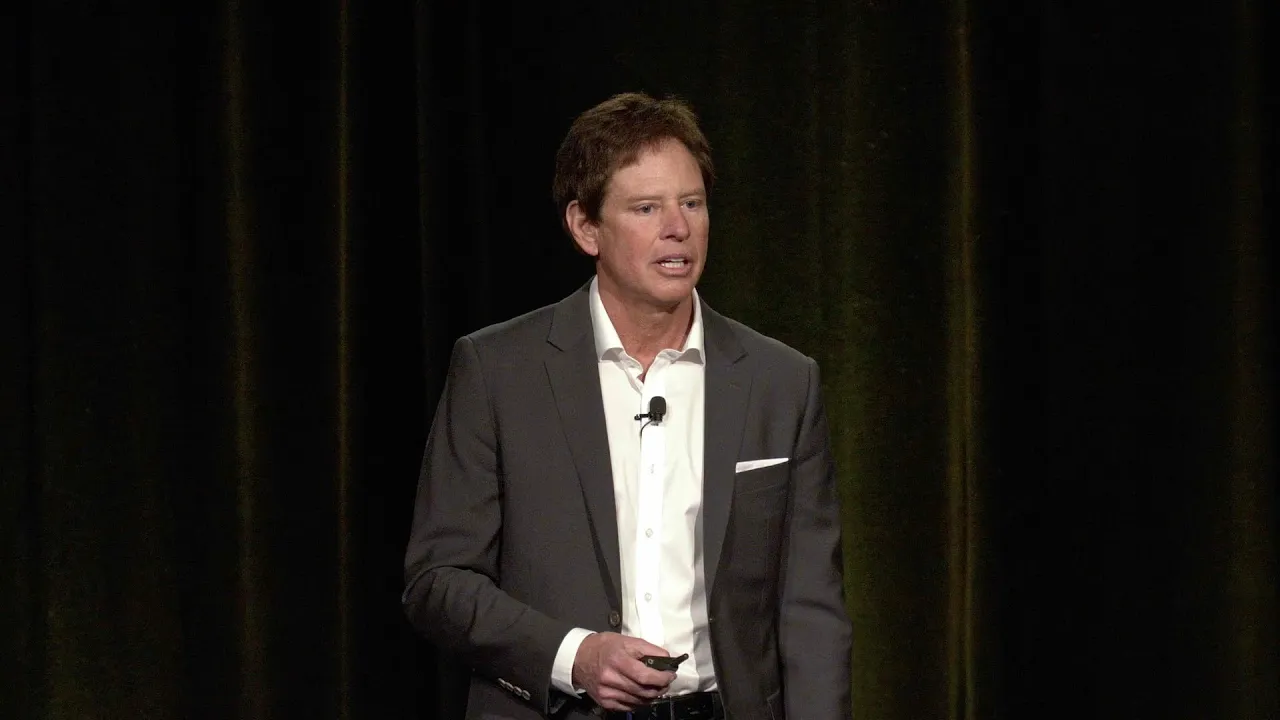
Dr. Chris Knobbe - 'Diseases of Civilization: Are Seed Oil Excesses the Unifying Mechanism?' — Low Carb Down Under

Low Carb Down Under

Excess omega-6 linoleic acid from industrial seed oils drives cellular mitochondrial failure and accounts for 80% of modern chronic disease, disproving standard dietary warnings against saturated fat.

AI-assisted summary of Dr. Chris Knobbe - 'Diseases of Civilization: Are Seed Oil Excesses the Unifying Mechanism?' — original source. Check the original for full context.

Source published:

Key ideas

  • Dr. Chris Knobbe argues that industrial seed oils—not saturated fats or total carbohydrates alone—are the primary unifying driver behind modern chronic degenerative diseases like heart disease, diabetes, obesity, and age-related macular degeneration. (0:21)
  • Daily vegetable oil consumption in the United States surged from roughly 2 grams per day in 1865 to 80 grams (720 calories, or 32% of total daily energy) by 2010, driving linoleic acid intake from under 1% of calories to nearly 12%. (15:54)
  • Adipose tissue biopsies demonstrate that linoleic acid concentrations in American body fat escalated from 9.1% in 1959 to 21.5% in 2008, compared to an ancestral baseline of just 3.8% measured in traditional Tokelau islanders. (24:06)
  • In controlled isocaloric animal trials, diets high in soybean or safflower oil caused massive body fat accumulation, cardiac failure, fatty liver disease, severe insulin resistance, and cancer-gene dysregulation compared to equal-calorie saturated fat diets. (33:36)

Detailed notes

## Background This presentation was delivered by ophthalmologist and Cure AMD Foundation founder Dr. Chris Knobbe, published on YouTube by the channel Low Carb Down Under on June 13, 2020. According to the video description, Dr. Knobbe explores whether excessive omega-6 seed oil consumption acts as the unifying driver behind age-related macular degeneration (AMD) and other chronic degenerative diseases of civilization.

## TL;DR Dr. Chris Knobbe presents a historical and biochemical indictment of industrial seed oils, arguing they represent the primary biological poison fueling modern chronic illness, obesity, and macular degeneration. He contrasts ancestral populations—who consumed under 2% of their energy as omega-6 linoleic acid and exhibited virtually zero degenerative disease—with modern societies ingesting unprecedented amounts of unstable vegetable oils. Through controlled rodent trials and biochemical pathways, Knobbe demonstrates that excess linoleic acid bioaccumulates in adipose tissue, destabilizes cardiolipin in the mitochondrial membrane, induces cellular insulin resistance, and generates cytotoxic aldehydes. He concludes by attributing roughly 80% of modern metabolic disease to seed oils and trans fats, urging a complete return to ancestral fat sources.

## Atmosphere & style The presentation carries the urgency and indignation of an iconoclastic medical whistleblower dismantling a century of dietary orthodoxy. Dr. Knobbe speaks with dry, emphatic conviction, pairing detailed biochemical diagrams with historical epidemiological charts and archival photographs of early feeding trials. Watching the lecture feels like witnessing a relentless forensic audit of modern nutrition, moving from incredulity at official health guidelines to a stark, provocative challenge to the audience's fundamental assumptions about dietary fat.

## Bulletin - [00:21](https://www.youtube.com/watch?v=7kGnfXXIKZM&t=21s) Dr. Chris Knobbe argues that industrial seed oils—not saturated fats or total carbohydrates alone—are the primary unifying driver behind modern chronic degenerative diseases like heart disease, diabetes, obesity, and age-related macular degeneration. - [15:54](https://www.youtube.com/watch?v=7kGnfXXIKZM&t=954s) Daily vegetable oil consumption in the United States surged from roughly 2 grams per day in 1865 to 80 grams (720 calories, or 32% of total daily energy) by 2010, driving linoleic acid intake from under 1% of calories to nearly 12%. - [24:06](https://www.youtube.com/watch?v=7kGnfXXIKZM&t=1446s) Adipose tissue biopsies demonstrate that linoleic acid concentrations in American body fat escalated from 9.1% in 1959 to 21.5% in 2008, compared to an ancestral baseline of just 3.8% measured in traditional Tokelau islanders. - [33:36](https://www.youtube.com/watch?v=7kGnfXXIKZM&t=2016s) In controlled isocaloric animal trials, diets high in soybean or safflower oil caused massive body fat accumulation, cardiac failure, fatty liver disease, severe insulin resistance, and cancer-gene dysregulation compared to equal-calorie saturated fat diets.

## Key takeaways - [02:53](https://www.youtube.com/watch?v=7kGnfXXIKZM&t=173s) Between 63% and 74% of the modern American diet consists of processed foods composed of just four ingredients: vegetable oils, trans fats, refined sugar, and refined wheat flour. - [04:35](https://www.youtube.com/watch?v=7kGnfXXIKZM&t=275s) Coronary heart disease, diabetes, obesity, and age-related macular degeneration were medical rarities in the 19th and early 20th centuries, exploding in prevalence only after industrial food processing took hold. - [13:11](https://www.youtube.com/watch?v=7kGnfXXIKZM&t=791s) Unlike animal fats and dairy, industrial vegetable and seed oils contain zero fat-soluble vitamins A, D, and K2, leaving modern diets severely micronutrient-depleted. - [15:54](https://www.youtube.com/watch?v=7kGnfXXIKZM&t=954s) The industrial shift in dietary fats has replaced traditional animal fats (butter, lard, tallow), which made up 99% of added fats in 1865, with vegetable oils, which accounted for 86% by 2005. - [18:04](https://www.youtube.com/watch?v=7kGnfXXIKZM&t=1084s) While coronary heart disease exploded throughout the 20th century, total saturated fat consumption remained virtually unchanged, contradicting the saturated fat hypothesis of cardiovascular disease. - [20:37](https://www.youtube.com/watch?v=7kGnfXXIKZM&t=1237s) Traditional cultures like the Maasai (66% animal fat) and Tokelauans (53% total fat, mostly saturated coconut oil) remained entirely free of heart disease, diabetes, and obesity on diets containing roughly 1% to 1.7% omega-6 linoleic acid. - [25:56](https://www.youtube.com/watch?v=7kGnfXXIKZM&t=1556s) The Tukisenta of Papua New Guinea ate a diet composed of 94.6% carbohydrates with negligible fat (2.4%) and minimal omega-6 (0.6%), yet exhibited virtually no obesity, diabetes, heart disease, or macular degeneration, challenging pure carbohydrate-insulin models. - [27:12](https://www.youtube.com/watch?v=7kGnfXXIKZM&t=1632s) Across diverse ancestral diets, macronutrient splits vary widely (17% to 95% carbohydrate, 2.4% to 66% fat), but omega-6 linoleic acid is universally constrained between 0.6% and 1.7% of total energy. - [28:51](https://www.youtube.com/watch?v=7kGnfXXIKZM&t=1731s) Excess linoleic acid accumulates in cardiolipin in the inner mitochondrial membrane, inducing a lipid peroxidation cascade that impairs the electron transport chain and triggers cellular energy starvation. - [28:51](https://www.youtube.com/watch?v=7kGnfXXIKZM&t=1731s) Mitochondrial damage and oxidative stress shut down fatty acid beta-oxidation, forcing cells to reject nutrients (causing cellular insulin resistance) and direct unburned lipids into adipose tissue and ectopic liver fat. - [28:51](https://www.youtube.com/watch?v=7kGnfXXIKZM&t=1731s) Lipid peroxidation generates highly toxic, mutagenic, and atherogenic aldehydes such as 4-HNE, malondialdehyde (MDA), acrolein, and oxidized linoleic acid metabolites (OXLAMs). - [33:36](https://www.youtube.com/watch?v=7kGnfXXIKZM&t=2016s) Controlled isocaloric rodent feeding trials show that switching the fat source from beef tallow to safflower or soybean oil drives dramatic adipose accumulation, fatty liver disease, and heart failure without any increase in total caloric intake. - [38:16](https://www.youtube.com/watch?v=7kGnfXXIKZM&t=2296s) A 19% soybean oil diet in mice triggered severe insulin resistance and frank diabetes, while an isocaloric high-fat diet rich in coconut oil combined with fructose protected against diabetic derangement. - [40:13](https://www.youtube.com/watch?v=7kGnfXXIKZM&t=2413s) Long-term consumption of a 10% linoleic acid soybean oil diet dysregulated 31 cancer-associated genes in mice, upregulating 5 oncogenes and deactivating 6 tumor suppressors. - [41:44](https://www.youtube.com/watch?v=7kGnfXXIKZM&t=2504s) Dr. Knobbe attributes roughly 80% of modern chronic degenerative disease to industrial seed oils and trans fats, 15% to refined sugars, and 5% to refined wheat flour, calling for an elimination of seed oils to return to ancestral omega-6 baselines.

## Detailed walkthrough ### [00:21](https://www.youtube.com/watch?v=7kGnfXXIKZM&t=21s) Audacity to Question the Consensus: Seed Oils as Biological Poisons

Dr. Chris Knobbe opens his presentation with a direct and provocative challenge to conventional nutritional wisdom: could industrial seed oils be the primary driver behind the modern explosion of chronic degenerative diseases? He lists the conditions that define the health crisis of the modern era—heart disease, hypertension, stroke, cancers, type 2 diabetes, metabolic syndrome, obesity, Alzheimer’s disease, and age-related macular degeneration (AMD). He highlights the supreme irony that the very products marketed to the public as “heart-healthy vegetable oils” might actually be the primary cause of heart disease and the unifying root of modern sickness.

Displaying a front-page article from Harvard, Dr. Knobbe acknowledges the sheer audacity required for a clinician to stand up against entrenched medical and public health authorities. He directly names the Harvard T.H. Chan School of Public Health, the Department of Nutrition at Tufts University, the Mayo Clinic, and the American Heart Association. Invoking Paracelsus’s foundational toxicological dictum that *the dose makes the poison*, Dr. Knobbe stresses that humanity is consuming these pro-oxidative, pro-inflammatory, toxic seed oils in unprecedented, massive quantities. The consumption has expanded globally, leaving populations everywhere overweight, obese, and sick. He emphasizes with empathy that this health crisis is not the fault of everyday people who followed official advice. Addressing his personal stakes, Dr. Knobbe discloses his roles as an author, researcher, and the founder and president of the non-profit Cure AMD Foundation, noting with dry humor that because he takes no compensation for these positions, he technically has no financial conflicts—aside from the fact that he, too, still likes to eat.

> “My charge to you today is that while processed foods are driving virtually all of this chronic disease, of the processed food components—and there’s basically only four—it is the seed oils that are the primary drivers because they are the biological poisons; they are poisons plain and simple, and today I’ll try to show you how and why.” — Dr. Chris Knobbe

---

[02:53](https://www.youtube.com/watch?v=7kGnfXXIKZM&t=173s) Processed Food: The Dual Driver of Nutrient Deficiency and Toxicity

Dr. Knobbe asserts that obesity and chronic disease stem from two primary mechanisms: severe nutrient deficiency and pervasive toxicity. Crucially, both mechanisms originate from a single culprit: processed food. While the general harms of processed diets are familiar to low-carb audiences, Dr. Knobbe argues that mainstream medicine fails to take either the deficiency or the toxicity seriously enough.

Examining dietary data, Dr. Knobbe reveals that as of 2009, between 63% and 74% of the standard American diet consists entirely of processed food. Stripped to its fundamentals, modern processed food is manufactured from just four basic ingredients: vegetable oils, trans fats, refined sugar, and refined wheat flour. When alcohol is factored in, it claims another 7% of caloric intake. This leaves a mere 29% of the diet to supply every single essential vitamin, mineral, and micronutrient required for human physiological function. Compounding this stark micronutrient void is the direct biochemical toxicity introduced by the processed items themselves, particularly the high concentrations of polyunsaturated fatty acids (PUFAs) in vegetable oils, industrial trans fats, and the fructose component of added sugars.

```mermaid flowchart TD accTitle: The Composition and Impact of the Modern Processed Diet accDescr: A diagram illustrating how processed food components displace micronutrients and introduce toxicity into the human body.

subgraph Inputs["The Modern American Diet"] A["Processed Food: 63%–74%<br/>• Seed / Vegetable Oils<br/>• Trans Fats<br/>• Added Sugar<br/>• Refined Wheat Flour"] B["Alcohol: ~7%"] C["Whole / Nutrient-Dense Foods:<br/>Only ~29% Remaining"] end

subgraph Mechanisms["Pathological Mechanisms"] D["Severe Micronutrient Deficiency<br/>(Depleted Vitamins & Minerals)"] E["Direct Biological Toxicity<br/>(PUFA Peroxidation, Trans Fats, Fructose)"] end

subgraph Outcome["Clinical Endpoints"] F["Diseases of Civilization<br/>(Obesity, Heart Disease, Diabetes, AMD, Cancer)"] end

A --> D A --> E B --> D C -.->|"Insufficient volume to compensate"| D D --> F E --> F ```

- **The Four Pillars of Processed Food:** Industrial vegetable/seed oils, trans fats, added sugar, and refined wheat flour. - **The Micronutrient Squeeze:** With up to ~81% of calories coming from nutrient-devoid processed foods and alcohol, the remaining ~29% of whole food is statistically insufficient to meet baseline micronutrient requirements. - **Dual Burden:** The human body is starved of cellular building blocks and antioxidants while simultaneously flooded with pro-oxidative toxins.

---

[04:35](https://www.youtube.com/watch?v=7kGnfXXIKZM&t=275s) The Historical Explosion of Chronic Disease (1800–Present)

Reflecting on his medical education between 1986 and 1990, Dr. Knobbe notes that in just four minutes of historical analysis, he can provide more perspective on medicine and health trends than he received in four years of medical school. He points out the standard narrative: after the introduction of the 1980 U.S. Dietary Guidelines, Americans increased their caloric intake by roughly 250 calories per day, carbohydrates climbed, and total fat fell. While conventional wisdom blames this shift purely on carbohydrates, Dr. Knobbe urges caution: the specific *composition* of the dietary fat was undergoing a drastic, destructive transformation.

Citing a 2011 paper by Jones, Dr. Knobbe highlights that in 1900, the top three causes of death were all infectious—pneumonia, tuberculosis, and gastrointestinal infections. By 2010, seven of the top ten causes of death were chronic degenerative diseases like cardiovascular disease, cancer, stroke, Alzheimer’s disease, and type 2 diabetes. Dr. Knobbe then walks through the dramatic epidemiological changes of specific diseases over the past two centuries:

- **Heart Disease:** In 1811 Boston, medical records listed zero deaths from coronary heart disease; 25 sudden deaths were documented, but these were almost certainly cardiac valvular problems. In the entire 19th century, the global medical literature contains only eight reported cases of heart disease. In 1897, Johns Hopkins physician Sir William Osler reviewed 21 years of hospital records and found just six cases of angina, having never witnessed an acute myocardial infarction (heart attack). Even by 1900, when 12.5% of deaths were classified as heart-related, they were driven by valvular pathologies like endocarditis, syphilis, and rheumatic fever—not coronary atheroma. The first clinical case of an acute myocardial infarction documented with autopsy evidence in the United States was published by Dr. James B. Herrick in 1912, and the medical community barely took notice for a decade. Yet by the 1930s, coronary heart disease had exploded into the leading cause of death in America, and by 2010, it accounted for 32% of all American deaths—nearly one in three. - **Cancer:** In 1811 Boston, cancer accounted for 1 in 188 deaths. By 1900, the U.S. rate had climbed to 1 in 17. By 2010, cancer caused 31.1% of all deaths—representing an astounding 62-fold relative increase over 200 years. Dr. Knobbe dismantles the objection that this increase is merely an artifact of an aging population: historical infant and child mortality (e.g., 36.2% of children not surviving past age five in 1900) and maternal childbirth mortality drastically dragged down the statistical life expectancy at birth, masking the fact that adults who survived childhood frequently lived into old age without modern cancer rates. - **Type 2 Diabetes:** Virtually non-existent throughout the 19th century, diabetes prevalence stood at 0.37% in 1935. By 2015, it reached 9.4%—a 25-fold increase in just 80 years. - **Obesity:** 19th-century records from Texas and Nebraska state prisons showed an obesity prevalence of only 1.2% in men aged 18 to 80. By 1960, even before the modern obesity epidemic was formally recognized, adult obesity had jumped tenfold to 13%. By 2015, obesity affected 39.8% of the adult population (a 33-fold increase over 115 years), with projections published in *JAMA* forecasting a 50% obesity rate in American adults by 2030. - **Age-Related Macular Degeneration (AMD):** The retina became inspectable with the invention of the ophthalmoscope in 1851. Between 1851 and 1930, fewer than 50 cases of macular degeneration were documented in the entire global literature, despite active examination by ophthalmologists. By 2020, AMD affected approximately 196 million people worldwide (projected to reach 288 million by 2040), affecting roughly 29% of people over age 65 since 1990.

> “And then the next thing that often is said is: as you can see, carbs went up, fat went down, carbs are the problem, right? Not so fast: the fat composition here are still changing, and that is going to be the crux of what I’ll try to show you today.” — Dr. Chris Knobbe

---

[10:36](https://www.youtube.com/watch?v=7kGnfXXIKZM&t=636s) 200 Years of Dietary Disruption and the Forgotten Warnings

Dr. Knobbe frames the dietary shifts of the last two centuries as a massive, uncontrolled global experiment on the human species conducted without informed consent. He maps the chronological arrival of the four processed food pillars:

1. **Refined Sugar (1822–1999):** Sugar consumption skyrocketed 17-fold over this period, flooding the food supply with empty calories devoid of vitamins and minerals. 2. **Cottonseed Oil (1866–1867):** Introduced immediately following the American Civil War, cottonseed oil marked the true beginning of the novel human experiment with industrial seed oils. 3. **Refined White Flour (1880):** The advent of roller mill technology allowed the industrial separation of the wheat germ and bran, producing shelf-stable, micronutrient-depleted white flour (which now represents roughly 85% of wheat products consumed). 4. **Hydrogenated Trans Fats / Crisco (1911):** Procter & Gamble commercialized Crisco, introducing artificially hydrogenated industrial fats directly into home kitchens.

By 1911, every fundamental component of the modern processed diet was firmly entrenched, setting the stage for the modern explosion of non-communicable disease. Today, over 600,000 commercial food products exist in the United States, overwhelmingly assembled from variations of these four base ingredients. Dr. Knobbe points out that pioneer researcher Weston A. Price connected these exact processed foods to physical degeneration and Western diseases in his seminal work during the 1930s and 1940s, yet his findings were largely ignored by mainstream authorities—even though current USDA data acknowledge that these four ingredients make up approximately 63% of the modern American diet.

To illustrate how early nutritional researchers understood the destructive nature of these fats, Dr. Knobbe highlights the 1918 work of Elmer V. McCollum, detailed in his classic textbook *The Newer Knowledge of Nutrition*. McCollum and his contemporaries performed thousands of controlled feeding trials in animals to understand dietary fundamentals. In one striking experiment, two groups of young rats were weaned at 25–26 days of age onto identical diets, differing solely in their fat source:

| Experimental Group | Dietary Fat Source | Physical Growth | Average Lifespan | Physiological Condition | |:--- |:--- |:--- |:--- |:--- | | **Group A (Seed Oil)** | 5% Cottonseed Oil | Stunted: grew to only 60% of normal size | 555 days | Weak, fragile, sickly | | **Group B (Animal Fat)** | 1.5% Butterfat | Normal, robust growth | Full normal lifespan | Healthy and vital |

Despite receiving over three times the total fat, the rats fed industrial cottonseed oil experienced catastrophic growth impairment and physical frailty compared to those fed a tiny amount of natural dairy butterfat, foreshadowing the profound biological hazards of seed oils that modern medicine has forgotten.

[13:11](https://www.youtube.com/watch?v=7kGnfXXIKZM&t=791s) The Vitamin Deficiency of Plant Oils and the Nature of Seed Oils

Dr. Chris Knobbe contrasts animal fats with vegetable oils by recalling early twentieth-century nutritional experiments on rodents. Rats raised on butterfat thrive, growing to normal adult size and surviving for 1,020 days, whereas rats fed vegetable fats remain sickly and stunted. Butterfat-fed rats grow to nearly twice the size, live twice as long, and maintain far superior health. Posing the question of why this occurs to the audience, Knobbe identifies the critical missing elements: the fat-soluble vitamins A, D, and K2. These vitamins do not exist in vegetable oils or in plant-derived fats—not even in revered options like coconut oil, palm oil, palm kernel oil, avocado oil, or authentic extra virgin olive oil.

To ground this historical insight, Knobbe cites the pioneering biochemist E.V. McCollum from 1918. McCollum observed that human and animal diets require two as-yet-unidentified substances: fat-soluble vitamins and water-soluble vitamins. McCollum highlighted that the fat-soluble compounds are concentrated in butterfat, egg yolks, and glandular organ meats such as liver and kidneys, while completely absent from fats of vegetable origin. He identified the growth-promoting factor in butterfat alongside the trace substance extracted from wheat germ (the B vitamins) as indispensable for vitality. Knobbe emphasizes that these micronutrients are not mere developmental necessities for growing children; adults and the elderly require them continuously to maintain biological resilience and resist chronic decay. He laments that contemporary dietary dogma continually overlooks these essentials by obsessing over generic macronutrient splits.

Knobbe then clarifies the confusing terminology surrounding these novel industrial fats, noting how marketing language obscures their nature. Whether labeled vegetable oils, seed oils, polyunsaturated fatty acids (PUFA), edible oils, omega-6 oils, or the modern industry euphemism “plant oils,” they represent the same hazardous category. At the chemical core of these oils is linoleic acid, an 18-carbon omega-6 polyunsaturated fatty acid that constitutes up to 80% of their total fatty acid profile. Knobbe lists the primary industrial culprits responsible for modern chronic disease—soybean, corn, canola, cottonseed, rapeseed, grapeseed, sunflower, safflower, and rice bran oils—warning the audience: “These are the ones that are particularly dangerous.”

```mermaid flowchart TD accTitle: Nutrient Profile of Dietary Fats accDescr: Comparison between animal/fruit fats and industrial seed oils regarding vitamins and linoleic acid content.

subgraph TraditionalFats["Traditional Fats (Animal Fats & Select Fruit Oils)"] A["Butterfat, Egg Yolks, Tallow, Lard, Organ Meats"] A --> B["Rich in Fat-Soluble Vitamins A, D, K2"] A --> C["Low Linoleic Acid (Omega-6 ~1-3%)"] end

subgraph IndustrialSeedOils["Industrial Seed Oils ('The Hateful Eight')"] D["Soybean, Corn, Canola, Cottonseed, Sunflower, Safflower, Grapeseed, Rice Bran"] D --> E["Zero Fat-Soluble Vitamins A, D, K2"] D --> F["High Linoleic Acid (Omega-6 up to ~80%)"] end

B --> G["Promotes Longevity & Mitochondrial Integrity"] C --> G E --> H["Mitochondrial Dysfunction & Chronic Disease"] F --> H ```

- **E.V. McCollum's 1918 Finding**: Diets require fat-soluble vitamins found in animal fats and glandular organs, which are completely lacking in vegetable fats. - **The "Hateful Eight" Seed Oils**: Soybean, corn, canola, cottonseed, rapeseed, grapeseed, sunflower, safflower, and rice bran oils. - **Linoleic Acid Chemistry**: An 18-carbon omega-6 polyunsaturated fatty acid that makes up approximately 80% of the fatty acids in these industrial oils. - **Macronutrient Distraction**: Focusing strictly on broad carbohydrate, protein, and fat ratios conceals the massive biological differences between animal fats and refined seed oils.

---

[15:54](https://www.youtube.com/watch?v=7kGnfXXIKZM&t=954s) The Explosion of Seed Oil Consumption in America and the World

Presenting data from his published scientific work, Knobbe traces the timeline of vegetable oil consumption in the United States. Between 1866 and approximately 1909, Americans consumed roughly 2 grams of vegetable oil per day. Following the introduction of refined cottonseed and soybean oils, consumption expanded rapidly, reaching an astonishing 80 grams per day by 2010. Knobbe points out that while researchers such as Tanya Blasbalg documented a thousandfold rise in soybean oil intake specifically between 1909 and 1999, the jump from virtually zero vegetable oil in 1865 to 80 grams per day today represents an mathematically infinite increase.

At 80 grams daily, vegetable oils provide 720 calories per day, which accounts for fully 32%—nearly one-third—of total American caloric intake. Knobbe underscores the sheer artificiality of this shift: “A third of our diet is coming out of factories that make these oils.” In 1865, 99% of all added dietary fats were sourced from traditional animal fats: lard, butter, beef tallow, and suet. By 2005, vegetable oils constituted 86% of added fats, while animal fats had collapsed to a marginal fraction. When the U.S. Dietary Guidelines were published in 1980 advising citizens to cut saturated fat, Americans followed instructions by decreasing animal fat and raising carbohydrates, yet vegetable oil consumption continued its relentless climb.

This nutritional transition was not confined to North America. Between 1963 and 2003, vegetable oil consumption doubled across developed countries and tripled throughout developing nations. In Japan, intake increased 4.5-fold, while in China it exploded nearly eightfold over the same four-decade period. Knobbe notes that this historical dietary transformation has imported Western degenerative diseases across the globe, stating that “the Asians are getting as sick as we are.”

```mermaid flowchart LR accTitle: Historical Shift in American Added Fats accDescr: Comparison of added dietary fat sources in the United States from 1865 to 2005.

subgraph Year1865["1865 Added Fats"] direction TB A1["Animal Fats: 99% (Butter, Lard, Tallow, Suet)"] A2["Vegetable Seed Oils: ~0% (Trace ~2 g/day)"] end

subgraph Year2005["2005 Added Fats"] direction TB B1["Animal Fats: 14%"] B2["Vegetable Seed Oils: 86% (~80 g/day = 720 kcal/day)"] end

Year1865 ==>|"Industrial extraction & Dietary Guidelines"| Year2005 ```

- **Daily Vegetable Oil Intake**: Climbed from approximately 2 grams per day in 1865–1909 to 80 grams per day by 2010. - **Caloric Proportion**: 80 grams of vegetable oil equates to 720 calories, representing 32% of total daily energy intake for the average American. - **Shift in Added Fats**: In 1865, animal fats made up 99% of added fat; by 2005, industrial vegetable oils comprised 86%. - **Global Expansion (1963–2003)**: Seed oil intake doubled in developed nations, tripled in developing nations, grew 4.5-fold in Japan, and surged nearly 8-fold in China.

---

[18:04](https://www.youtube.com/watch?v=7kGnfXXIKZM&t=1084s) Linoleic Acid Accumulation and the Myth of Saturated Fat and Heart Disease

Knobbe breaks down the biochemical composition of added fats to highlight the fundamental shift in dietary fatty acid profiles. Traditional animal and tropical fats—coconut oil, butter, palm oil, and lard—are dominated by saturated fatty acids. In butter, lard, and beef tallow, omega-6 linoleic acid accounts for a modest 3%, 2%, and 2% of total fat content, respectively. By contrast, industrial vegetable oils, starting from cottonseed oil downwards, are dominated by omega-6 linoleic acid. In 1865, when traditional pasture-raised animal fats made up roughly 40% of dietary intake, Americans consumed a mere 2.2 grams of linoleic acid per day, representing less than 1% of total energy.

Knobbe details how this changed over the ensuing century and a half: linoleic acid climbed to 2% of calories in 1909, reached 18 grams per day (7% of calories) by 1999, and climbed to 29 grams per day (11.8% of total calories) by 2008. This represents a twelvefold increase in omega-6 linoleic acid consumption in roughly 145 years. Knobbe warns that this shift is biologically destabilizing because the human body is not adapted to burn polyunsaturated fats as primary metabolic fuel: “You're gonna see why this is so important because we can't burn these for fuel properly; they're meant to be stored and used as signaling and structural molecules, particularly in the mitochondria, and they're not meant to be burned as fuel.” When consumed in massive excess, these unstable, oxidation-prone fats build up in cell membranes and organelle structures.

Knobbe contrasts this dietary transformation against historical heart disease mortality curves. Plotting epidemiological data across the twentieth century reveals an exact correlation between the rise of vegetable seed oils and the explosion of cardiovascular fatalities. Meanwhile, saturated fat consumption remained virtually unchanged, fluctuating by only about 5 grams across the entire century. Ridiculing the mainstream hypothesis that saturated fat drives cardiovascular disease, Knobbe remarks that anyone seeing a causal link there “would also believe that Arnold Schwarzenegger and Danny DeVito are indeed twins.”

| Historical Era | Daily Omega-6 Linoleic Acid | Percentage of Caloric Intake | Primary Sources of Fat | |:--- |:--- |:--- |:--- | | **1865** | ~2.2 g/day | < 1.0% | Traditional animal fats (butter, lard, beef tallow) | | **1909** | ~4.5 g/day | ~2.0% | Animal fats with nascent cottonseed oil production | | **1999** | 18.0 g/day | 7.0% | Industrial seed oils (predominantly soybean oil) | | **2008** | 29.0 g/day | 11.8% | Industrial seed oils, fried foods, processed foods |

- **Omega-6 Escalation**: A 12-fold increase in daily linoleic acid intake from 2.2 grams in 1865 to 29 grams in 2008. - **Saturated Fat Stability**: Saturated fat consumption shifted by only about 5 grams over the twentieth century while heart disease rates exploded. - **Biological Role of PUFA**: Polyunsaturated fatty acids function structurally and as signaling molecules, rather than clean-burning substrates for bulk ATP generation.

---

[20:37](https://www.youtube.com/watch?v=7kGnfXXIKZM&t=1237s) Ancestral Paradoxes: The Masai and Tokelauans

To test conventional dietary dogmas, Knobbe examines ancestral populations renowned for complete freedom from coronary heart disease. The first case study is the pastoralist Masai tribe of Kenya and Tanzania, investigated by George Mann and colleagues in the early 1970s. The Masai warrior diet consists almost exclusively of whole raw milk, meat, and blood from their cattle. Warriors drink between three and five quarts of whole milk daily, ingesting roughly 3,000 calories despite weighing an average of only 128 pounds. Animal fat accounts for 66% of their daily energy intake, with saturated fat providing 33% to 45% of total calories. Carbohydrates make up roughly 17%, while omega-6 linoleic acid accounts for a minuscule 1.7% of calories. Out of 50 post-mortem autopsies and approximately 350 clinical electrocardiograms (EKGs), Mann found zero evidence of heart disease or myocardial infarction, apart from one possible silent event.

Knobbe contrasts this clinical reality with American Heart Association (AHA) recommendations, which mandate restricting saturated fat to no more than 5% to 6% of daily calories: “American Heart Association would just say it's another paradox, right? Conventional medicine would say this: fools, don't you know animal fat would kill you, right? They would say this: you must eat more healthy polyunsaturated oils like Americans.” He points out the absurdity of viewing the Masai—who are lean, athletic, and free from arterial disease on an animal-fat-rich diet—as an inexplicable exception.

Moving to the South Pacific atolls of Tokelau, Knobbe cites studies conducted between the 1960s and 1980s on a population living on coconut, fish, starchy tubers, and fruit. Between 54% and 62% of Tokelauan calories derive from coconuts, which are composed of 91% to 94.5% saturated fatty acids. Overall, their diet is 53% fat, with 48% of total calories coming from saturated fat—giving them the highest saturated fat intake from tropical oils in the world, just as the Masai hold the record for animal fats. Polyunsaturated fat accounts for just 2% of their diet, and because half of that originates from marine fish, their omega-6 intake sits at roughly 1% of total calories. A 1982 cardiovascular survey of Tokelauan men aged 40 to 69 revealed no heart attacks, virtually no obesity, and an absence of type 2 diabetes.

```mermaid flowchart LR accTitle: Saturated Fat vs. Linoleic Acid in Ancestral Diets accDescr: Dietary composition of the Masai and Tokelau populations showing very high saturated fat and very low omega-6 intake.

subgraph MasaiDiet["Masai Tribe (Pastoralist Diet)"] direction TB M1["Total Fat: 66% of calories"] M2["Saturated Fat: 33%–45%"] M3["Carbohydrates: ~17%"] M4["Omega-6 Linoleic Acid: 1.7%"] M5["Cardiovascular Health: Zero Heart Disease"] end

subgraph TokelauDiet["Tokelau Islanders (Tropical Diet)"] direction TB T1["Total Fat: 53% of calories"] T2["Saturated Fat: 48%"] T3["Coconut-derived calories: 54%–62%"] T4["Omega-6 Linoleic Acid: ~1.0%"] T5["Cardiovascular Health: Zero Heart Attacks"] end ```

- **Masai Diet Profile**: 3,000 calories per day; 66% total fat; 33%–45% saturated fat; 17% carbohydrate; 1.7% omega-6 linoleic acid. - **Masai Clinical Outcomes**: 50 autopsies and ~350 EKGs showed zero heart disease or clinical heart attacks among individuals consuming enormous amounts of saturated dairy fat. - **Tokelau Diet Profile**: 53% total fat; 48% saturated fat; 54%–62% of calories from coconut; ~1% omega-6 linoleic acid. - **Tokelau Health Status**: 1982 examination of men aged 40–69 showed no heart attacks, no diabetes, and negligible obesity.

---

[24:06](https://www.youtube.com/watch?v=7kGnfXXIKZM&t=1446s) The Bioaccumulation of Linoleic Acid in Human Adipose Tissue

Knobbe turns to Stephan Guyenet’s meta-analysis of 37 adipose tissue biopsy studies to reveal how these dietary changes alter human tissue chemistry. In 1959, omega-6 linoleic acid made up an average of 9.1% of the fatty acids stored in American adipose tissue, while adult obesity stood at 13%. By 2008, linoleic acid levels in body fat more than doubled to 21.5%, mirroring a surge in adult obesity to 34%. Knobbe points out that while dietary omega-6 accounted for 11.8% of daily calories in 2008, its concentration in adipose tissue reached nearly double that figure. This disparity reflects the body's tendency to store polyunsaturated fats rather than efficiently burning them for energy. When packed into cellular and mitochondrial membranes, these fragile polyunsaturated bonds oxidize readily, triggering extensive metabolic damage.

Seeking a historical baseline for human biology, Knobbe searched the medical literature for three years to uncover adipose biopsy data from people eating an unrefined, ancestral diet. He found the answer in the Tokelau islanders: their adipose tissue contained just 3.8% linoleic acid. This stands in sharp contrast to the 21.5% found in modern Americans, reflecting their traditional omega-6 intake of approximately 1% of calories. Pointing to this 3.8% benchmark, Knobbe tells the audience: “This is where we should be and this is what keeps you healthy right here.” He then transitions to Papua New Guinea, introducing the traditional horticulturalists of Tukisenta to illustrate health outcomes on another ancestral dietary pattern.

| Group & Historical Period | Dietary Omega-6 Linoleic Acid | Adipose Tissue Linoleic Acid | Population Obesity Rate | |:--- |:--- |:--- |:--- | | **Traditional Tokelauans** | ~1.0% of calories | **3.8%** | Virtually non-existent | | **Americans (1959–1960)** | ~3.0%–4.0% of calories | **9.1%** | 13% | | **Americans (2008)** | 11.8% of calories | **21.5%** | 34% |

- **Bioaccumulation Ratio**: Dietary linoleic acid roughly doubles in human adipose tissue due to preferential storage over oxidation. - **American Fat Shifts (1959 vs. 2008)**: Linoleic acid in body fat surged from 9.1% to 21.5%, while obesity climbed from 13% to 34%. - **Ancestral Human Baseline**: Tokelauans consuming an ancestral diet maintained an adipose linoleic acid level of only 3.8%. - **Mitochondrial Risk**: High concentrations of stored linoleic acid within cell membranes and mitochondrial structures leave them vulnerable to unchecked lipid peroxidation.

[25:56](https://www.youtube.com/watch?v=7kGnfXXIKZM&t=1556s) The Tukisenta Contradiction: Extreme Carbohydrates and Zero Degenerative Disease

Examining ancestral diets that run counter to prevailing nutritional beliefs, Dr. Chris Knobbe turns to the Tukisenta of the Papua New Guinea highlands, studied between 1966 and 1968. Over 90% of their caloric intake came exclusively from sweet potatoes—cultivating and subsisting on more than a thousand different varieties. While they were known as pork hoarders who kept pigs, they feasted on pork and chicken only occasionally and rarely ate their own livestock. Their macronutrient breakdown revealed an astonishing 94.6% carbohydrates, a mere 3% protein, and only 2.4% total fat. Crucially, their omega-6 intake measured just 0.6% of calories. Despite consuming what modern dietetics would consider an impossibly high-carbohydrate, insulin-spiking diet, field studies documented that the population was lean, physically fit, and in excellent nutritional health. Obesity, hypertension, diabetes, and gout were nonexistent, ischemic heart disease was extraordinarily rare or entirely absent, and an examination of 340 individuals over the age of 40 revealed not a single case of age-related macular degeneration.

This finding poses a fundamental challenge to the carbohydrate-insulin model of adiposity. Dr. Knobbe challenges the audience directly on this paradox: “Absence of obesity if we think that carbs Drive insulin and insulin drives fat, how do we explain this?” The shared denominator across healthy indigenous groups is not a particular carbohydrate or fat ratio, but rather what their diets completely lacked: no refined sugar, no refined wheat flour, no industrially processed foods, and zero vegetable oils.

- Tukisenta diet (1966–1968): 94.6% carbohydrates, 3% protein, 2.4% fat, and 0.6% omega-6 linoleic acid. - Health status: Complete absence of obesity, hypertension, diabetes, and gout; ischemic heart disease virtually absent; zero cases of macular degeneration among 340 people aged 40 and older. - Common denominator across ancestral populations: Complete absence of modern refined foods and seed oils, rather than uniform macronutrient ratios.

---

[27:12](https://www.youtube.com/watch?v=7kGnfXXIKZM&t=1632s) Macronutrient Ratios vs. the Omega-6 "Elephant in the Room"

Comparing diverse traditional cultures demonstrates that macronutrient percentages vary wildly without producing chronic disease, provided an ancestral diet is consumed. Total carbohydrate intake ranged from 17% in the Maasai to approximately 95% among the Tukisenta. Total dietary fat was as low as 2.4% in the Tukisenta and as high as 66% (predominantly animal fat) in the Maasai. Saturated fat intake spanned from roughly 1% in the Tukisenta to 45% in the Maasai and 48% in the islanders of Tokelau. Similarly, monounsaturated fat accounted for about 1% of energy in the Tukisenta, yet reached 53% to 65% in the Maasai. Every single one of these cultures remained remarkably lean, fit, and free of cardiovascular disease.

The true biological differentiator between ancestral health and modern chronic illness lies in omega-6 polyunsaturated fatty acid (PUFA) consumption. Traditional diets consistently yielded an omega-6 linoleic acid range between 0.6% and 1.7% of total energy. By sharp contrast, contemporary westernized populations ingest vast amounts of seed oils, with omega-6 comprising 7% to 12% or more of daily calories. Historically, the United States was near 7% in 1999, reached 11.8% by the late 2000s, and continues to climb higher. Emphasizing the disparity on his presentation slide, Dr. Knobbe remarks: “This is the elephant in the room. I know people talk about this, but what should it be? 0.6 to 1.7 percent. I couldn't make the font any bigger than that. I tried.”

| Traditional Population / Group | Carbohydrate (%) | Total Fat (%) | Saturated Fat (%) | Monounsaturated Fat (%) | Omega-6 PUFA (%) | |:--- |:--- |:--- |:--- |:--- |:--- | | **Tukisenta** | ~95% | 2.4% | ~1% | ~1% | 0.6% | | **Maasai** | 17% | 66% | 45% | 53–65% | Ancestral (Low) | | **Tokelau** | Moderate | High (Coconut) | 48% | Low–Mod | Ancestral (Low) | | **Ancestral Baseline Range** | Variable (17–95%) | Variable (2.4–66%) | Variable (1–48%) | Variable (1–65%) | **0.6% – 1.7%** | | **Modern Westernized Diets** | Variable | Refined seed oils | Variable | Variable | **7% – 12%+** |

---

[28:51](https://www.youtube.com/watch?v=7kGnfXXIKZM&t=1731s) The Pro-Oxidative Cascade: Mitochondrial Failure and Cellular Energy Starvation

Excessive omega-6 consumption initiates a two-part pathological process: pro-oxidative stress followed by toxic aldehyde generation. In a westernized setting characterized by high linoleic acid and micronutrient shortfalls, dietary polyunsaturated fats accumulate inside cellular membranes and organelle structures—most critically within the inner mitochondrial membrane phospholipid, cardiolipin. Linoleic acid reacts with endogenously generated reactive oxygen species (ROS), such as the estimated $1 \times 10^{20}$ hydroxyl radicals produced per human body daily. This triggers a catastrophic lipid peroxidation cascade that oxidizes cardiolipin, precipitating the structural and enzymatic failure of the electron transport chain (ETC) and oxidative phosphorylation. Because the electron transport chain generates roughly 90% of cellular ATP, its degradation produces profound mitochondrial dysfunction.

```mermaid flowchart TD accTitle: The Omega-6 Mitochondrial Peroxidation Cascade accDescr: Flowchart illustrating how excess omega-6 linoleic acid causes cardiolipin damage, reactive oxygen species leakage, insulin resistance, and degenerative disease pathways.

subgraph INITIATION ["Membrane Overload & Peroxidation"] A["Excess Dietary Omega-6 Linoleic Acid"] --> B["Incorporation into Membranes & Cardiolipin"] B --> C["Reaction with Endogenous ROS (Hydroxyl Radicals)"] C --> D["Catastrophic Lipid Peroxidation Cascade"] end

subgraph ETC_FAILURE ["Mitochondrial Collapse"] D --> E["Electron Transport Chain & OxPhos Failure"] E --> F["Mitochondrial Dysfunction: >90% Energy Loss"] E -->|"ROS Leakage: Hydroxyl & Superoxide"| D end

subgraph DOWNSTREAM ["Pathological Sequelae"] F --> G["Cellular Insulin Resistance: Glucose/Fat Rejection"] F --> H["Impaired Fatty Acid Beta-Oxidation: Glycolysis Dependency"] F --> I["DNA Damage, Apoptosis & Aldehyde Toxicity"] G --> J["Metabolic Syndrome & Type 2 Diabetes"] H --> K["Intracellular Lipid Storage & Obesity"] I --> L["Cancers, AMD, Heart Failure & Neurodegeneration"] end ```

When the electron transport chain fails, it leaks massive quantities of superoxide and hydroxyl radicals, feeding back directly into the lipid peroxidation chain. As cellular distress compounds, the cell mounts a defensive response by shuttering nutrient uptake. Explaining this onset of cellular insulin resistance, Dr. Knobbe illustrates the cell's desperate posture: “Because this is what's happening the cell there's so much reactive oxygen species that and the electron transport chain is failing and the cell gets sick and it puts up at stop signs and it says, 'Oh look, I don't want glucose. I don't want fatty acids. I don't want anything. I'm sick in bed. I can't do this. I can't work, right?' So now I'm insulin resistant.” Rather than carbohydrate consumption over-stuffing healthy cells with energy, insulin resistance develops primarily as an energetic shutdown, preceding measurable ectopic lipid accumulation.

With electron transport crippled, fatty acid beta-oxidation shuts down. Cells lose the ability to oxidize fats for fuel and become entirely dependent on cytosolic glycolysis for baseline energy. Incapable of burning ingested fatty acids, the body channels them into adipose stores and ectopic lipid droplets within the liver, driving progressive obesity. At the same time, severe ATP depletion and persistent oxidative stress inflict DNA mutations within both nuclear and mitochondrial genomes, promoting oncogenesis. Cell death via apoptosis and necrosis ensues, driving degenerative conditions like age-related macular degeneration, Alzheimer's, and Parkinson's disease. Simultaneously, oxidized linoleic acid degenerates into bioactive lipid hydroperoxides that cleave into cytotoxic aldehydes, including: - 4-hydroxy-2-nonenal (4-HNE) - Malondialdehyde (MDA) - Oxidized linoleic acid metabolites (OXLAMs), such as 9-HODE and 13-HODE - Acrolein - Carboxyethylpyrrole (CEP)

Together, these breakdown products act as cytotoxic, genotoxic, mutagenic, carcinogenic, atherogenic (inducing atherosclerosis), thrombogenic (inducing blood clots and ischemic strokes), and obesogenic agents across vascular and organ systems.

---

[33:36](https://www.youtube.com/watch?v=7kGnfXXIKZM&t=2016s) Animal Feeding Trials: Isocaloric Diets, Adiposity, and Rapid Heart Failure

Dr. Knobbe examines three controlled animal feeding studies demonstrating that omega-6 fats drive severe pathology independent of caloric intake. The first trial evaluated three cohorts of rats fed strictly isocaloric, high-fat (59% fat) diets for three weeks. Caloric intake, protein, carbohydrates, and omega-3 fatty acids were held entirely identical across all groups; the only variable was the source of dietary fat, which shifted the omega-6 concentration: - Beef tallow group: 4.4% omega-6 (elevated due to supplemental linseed oil added by researchers to balance omega-3s) - Olive oil group: 7.7% omega-6 - Safflower oil group: 36.6% omega-6

At the end of three weeks, despite identical calorie consumption, body fat in the high-safflower oil cohort escalated dramatically to 54.5%. Compared to the beef tallow control group, the olive oil rats gained 9.6% more total weight (equivalent to a 14.8-pound gain in a human adult), while the safflower group gained 15.6% more weight (equivalent to 24 pounds of excess human weight). When assessed against their own starting baselines, the beef fat plus linseed group gained 27.6%, the olive oil group gained 37.2%, and the safflower oil group surged by 43.2%—a staggering human equivalent of gaining 66.5 pounds in three weeks solely due to omega-6 concentration. Pure tallow without linseed oil would have sat at roughly 1.4% linoleic acid, which Knobbe posits would have prevented excessive weight gain entirely.

A second study investigated cardiac function under high versus low PUFA diets. One cohort was fed standard laboratory chow enriched with 20% sunflower oil—an omega-6 exposure lower than the proportion consumed by many modern Americans—while the control cohort received standard chow alone. Within four weeks, rats consuming the sunflower oil developed overt heart failure, displaying a 32% collapse in cardiac output under high afterload conditions at normal systolic pressures of around 138 mmHg.

A third 32-week trial placed mice on an isocaloric 40% fat regimen with zero refined sugar, utilizing clean complex starches (maltodextrin and cornstarch). The mice were divided into three groups: - Standard chow: 1.2% linoleic acid - 4% soybean oil: 2.2% linoleic acid - 19% soybean oil: 10% linoleic acid

Despite the absence of dietary sugar, mice consuming the 19% soybean oil diet accumulated massive adipose mass, ending the trial weighing 55% more than the controls maintained on standard chow. Seed oil concentration alone dictated cellular dysfunction, metabolic deceleration, and tissue deterioration across every controlled isocaloric model.

[38:16](https://www.youtube.com/watch?v=7kGnfXXIKZM&t=2296s) The Metabolic Havoc of Soybean Oil in Equal-Calorie Feeding

Dr. Chris Knobbe translates the staggering rodent feeding data into human terms over a 32-week timeframe. Using his own weight as a baseline, he explains that a standard-chow diet would leave a 190-pound man unchanged, whereas an isocaloric diet containing 19% soybean oil—delivering 10% linoleic acid, which is actually less than what the average American consumes today—would swell that same individual to an astonishing 294 pounds in just seven and a half months. Crucially, the animals consuming the 4% versus the 19% soybean oil diets were eating identical caloric quantities, shattering the notion that weight gain is purely a function of caloric surplus.

```mermaid flowchart TD accTitle: Dietary Fat Comparison and Metabolic Outcomes accDescr: Flowchart illustrating the divergent metabolic paths between coconut oil and soybean oil diets over 32 weeks.

subgraph Diets["Dietary Exposures (Isocaloric)"] A["19% Soybean Oil Diet<br>(10% Linoleic Acid)"] B["40% Fat Diet<br>(36% Coconut Oil + 4% Soy) + 25% Fructose"] end

subgraph LiverPath["Hepatic Outcomes"] C["Fatty Liver Disease<br>(16 Weeks)"] D["NAFLD with Hepatic Ballooning<br>(32 Weeks)"] end

subgraph MetabolicPath["Systemic Metabolic Outcomes"] E["Severe Insulin Resistance"] F["Frank Diabetes<br>(Impaired Glucose Tolerance)"] G["31 Cancer-Associated Genes<br>Dysregulated"] end

A --> C --> D A --> E A --> F A --> G B -.->|"No Diabetes or Marked Resistance"| H["Metabolically Protected Profile"] ```

Knobbe then presents the intraperitoneal glucose tolerance testing, demonstrating that the soybean oil diet rapidly induces overt diabetes. While a diet combining soybean oil with 25% fructose also provoked marked hyperglycemia, a high-fat control group consuming 40% fat—made up of 36% coconut oil, a tiny 4% soybean oil, and 25% fructose—did not trigger diabetes at all. On insulin tolerance testing, the pure 19% soybean oil diet provoked the most severe insulin resistance of all tested groups, proving even worse than the combination of soybean oil and fructose. Knobbe marvels candidly at the paradoxical findings, remarking: “Incredibly the 25% fructose was protective in some way; I don't know how that works, but it was.”

- **Caloric Equivalence**: Animals on the 4% and 19% soybean oil regimens consumed identical total calories, yet experienced radically divergent body weights. - **Human Weight Projection**: Translates to a 190-pound adult ballooning to 294 pounds within seven and a half months on human-equivalent linoleic acid levels. - **Glucose and Insulin Tolerance**: Marked insulin resistance and frank diabetes occurred on the 19% soybean oil diet, whereas a coconut-oil-dominated fat matrix with fructose prevented diabetic derangement.

---

[40:13](https://www.youtube.com/watch?v=7kGnfXXIKZM&t=2413s) Hepatic Ballooning, Cancer Gene Dysregulation, and the Trial Finale

Turning to liver histology, Dr. Knobbe illustrates the progressive destruction of hepatic tissue under the influence of seed oils. While standard rodent chow yields pristine liver architecture, introducing just 4% soybean oil alongside 36% coconut oil begins the onset of fatty liver. Stepping up to 19% soybean oil causes frank fatty liver disease by week 16, and by week 32, the tissue displays advanced non-alcoholic fatty liver disease characterized by severe hepatic ballooning degeneration.

The damage extends straight into oncological genetics. In that same 32-week window, the 10% linoleic acid soybean oil diet disrupted 31 cancer-associated genes: five distinct cancer-promoting genes were upregulated, while six cancer-suppressing genes were deactivated. Summarizing the trial's catastrophic finale, Knobbe emphasizes that an oil diet reflective of typical Western intakes drove visceral obesity, profound insulin resistance, glucose intolerance, frank diabetes, severe liver injury, and widespread genetic deregulation, proving more harmful in isolation than when paired with pure fructose.

- **Histological Progression**: Standard chow maintains healthy liver cells; 4% soybean oil initiates fatty liver; 19% soybean oil produces fatty liver at 16 weeks and ballooning liver injury by 32 weeks. - **Oncological Genetic Impact**: Dysregulation of 31 cancer-linked genes, comprising the upregulation of 5 oncogenic promoters and the suppression of 6 tumor suppressors. - **Metabolic Cluster**: A diet lower in linoleic acid than standard American intake was sufficient to induce the full spectrum of metabolic syndrome and frank organ degeneration.

---

[41:44](https://www.youtube.com/watch?v=7kGnfXXIKZM&t=2504s) Refineries, Toxic Waste, and the True Drivers of Modern Chronic Disease

Surveying the industrial landscape of oil manufacturing, Dr. Knobbe expresses outright disbelief that modern nutritional authorities consider seed oils interchangeable with traditional animal fats. Showing an image of an operational vegetable oil plant, he remarks on its eerie resemblance to heavy petrochemical infrastructure: “I can't tell them apart from petroleum oil refineries, you know, they look the same.” He rejects the idea that these chemically processed extractions are food, declaring: “This is what I would say, this is toxic waste coming out of vegetable oil refineries, this is extraordinarily dangerous to us.”

Building on this critique, Knobbe proposes a clear breakdown of how processed food components drive modern obesity and degenerative disease. Rather than placing the bulk of the blame on carbohydrates or sugar, he attributes fully 80% of the metabolic destruction to industrial vegetable oils and their inherent trans-fat byproducts. He assigns roughly 15% of the blame to refined sugars, leaving the final 5% to refined wheat flour. Reversing this trajectory requires lowering omega-6 polyunsaturated fatty acid consumption back to ancestral baselines of roughly 1% of total energy. Achieving that benchmark demands an uncompromising total elimination of seed oils, factory-made processed foods, and conventional fast-food dining, where fryers run almost exclusively on canola and soybean oils.

- **Refinery Reality**: Industrial vegetable oil facilities use heavy chemical refining and deodorization processes identical to petrochemical refineries. - **Knobbe's Chronic Disease Attribution Model**: - **80%**: Vegetable seed oils and associated trans fats. - **15%**: Refined sugars. - **5%**: Refined wheat and starches. - **Actionable Threshold**: Achieving the ancestral omega-6 target (~1% of calories) requires zero consumption of commercial seed oils, fast foods, and ultra-processed products.

---

[43:14](https://www.youtube.com/watch?v=7kGnfXXIKZM&t=2594s) The Grand Nutritional Dichotomy

To conclude his presentation, Dr. Knobbe lays out an absolute, scientifically grounded dichotomy regarding human fat consumption, inviting the audience to consider the long-term biological consequences of both extremes in un-supplemented diets. On the ancestral side, an individual who derives 100% of their dietary fat from traditionally pastured land animals, marine life, or freshwater fish—wholly free of modern processed ingredients—will flourish. Knobbe predicts such an eater will be lean, robust, and free from chronic degeneration: “You're gonna probably look like a Maasai warrior and if you're not that way now eat like that, you'll start getting that direction.”

By stark contrast, he describes the physiological fate of relying on industrial polyunsaturated vegetable oils for one's fat intake. Under that nutritional paradigm, systemic sickness, severe metabolic collapse, stunted childhood growth, adult obesity, and drastically shortened lifespans are virtually guaranteed. Emphasizing that these biochemical consequences are neither speculative nor novel, Knobbe underscores the century-old foundation of these findings before leaving his audience with a final, provocative question:

> “This is a scientifically proven mathematical certainty and it has been known for over a hundred years. So I ask you, which fats do you think are healthy?”

- **Ancestral Fat Profile**: Diets centered on wild or traditionally pastured animal fats consistently support lean body composition, metabolic resilience, and long-term vitality. - **Industrial PUFA Profile**: Diets centered on vegetable seed oils drive rapid sickness, severe metabolic dysfunction, growth impairment, and premature mortality across all demographics. - **Historical Longevity of the Science**: The toxicological and metabolic liabilities of excessive polyunsaturated fatty acids have been systematically documented in nutritional literature for over a century.

## Mentioned Dr. Chris Knobbe, Cure AMD Foundation, Harvard T.H. Chan School of Public Health, Department of Nutrition at Tufts University, Mayo Clinic, American Heart Association, Paracelsus, Sir William Osler, Dr. James B. Herrick, Weston A. Price, Elmer V. McCollum, The Newer Knowledge of Nutrition, Crisco, Procter & Gamble, Tanya Blasbalg, George Mann, Stephan Guyenet, Masai, Tokelauans, Tukisenta

## Video description Dr. Chris Knobbe is an ophthalmologist and Associate Clinical Professor Emeritus, formerly of the University of Texas Southwestern Medical Center, in Dallas, Texas. He is also the founder and president of Cure AMD Foundation, a nonprofit organisation dedicated to the prevention of vision loss from age-related macular degeneration (AMD).

Dr. Knobbe has a deep interest in general nutrition, particularly as it relates to chronic degenerative disease, though his primary area of expertise is with the disorder AMD. AMD is the leading cause of irreversible vision loss and blindness in people over the age of 65, currently affecting approximately 196 million people worldwide.

Dr. Knobbe’s research efforts and revolutionary hypothesis for the nutritional basis of AMD have resulted in a published scientific paper, a book – Ancestral Dietary Strategy to Prevent and Treat Macular Degeneration – a website, CureAMD.org, and a second book currently in the making. Knobbe’s current research focuses substantially on omega-6 seed oil consumption as a major unifying driver of the chronic degenerative diseases of civilization, including AMD.

[Source](https://www.youtube.com/watch?v=7kGnfXXIKZM)

中文简报

诺布指责种子油而非糖导致慢性病激增 来自工业种子油的过量omega-6亚油酸导致细胞线粒体衰竭,并造成80%的现代慢性疾病,反驳了针对饱和脂肪的常规饮食警告。 克里斯·诺布(Chris Knobbe)博士从历史和生化角度对工业种子油发起控诉,认为它们是推动现代慢性疾病、肥胖症和黄斑变性的主要生物毒素。他将祖先人群——其摄入的omega-6亚油酸不足能量的2%,且几乎未表现出任何退行性疾病——与摄入前所未有数量的不稳定植物油的现代社会进行了对比。通过受控啮齿动物试验和生化途径,诺布论证了过量的亚油酸会在脂肪组织中生物蓄积,破坏线粒体膜中心磷脂的稳定性,引发细胞胰岛素抵抗,并产生细胞毒性醛。他最后总结认为,大约80%的现代代谢疾病归因于种子油和反式脂肪,并呼吁彻底回归祖先的脂肪来源。 克里斯·诺布博士认为,工业种子油——而非单独的饱和脂肪或总碳水化合物——是心脏病、糖尿病、肥胖症和年龄相关性黄斑变性等现代慢性退行性疾病背后的主要统一驱动因素。 (0:21) 美国人每日植物油消费量从1865年的约2克激增至2010年的80克(720卡路里,即每日总能量的32%),导致亚油酸摄入量从不足卡路里的1%上升至近12%。 (15:54) 脂肪组织活检显示,美国人体脂肪中的亚油酸浓度从1959年的9.1%攀升至2008年的21.5%,相比之下,传统托克劳岛民测得的祖先基线仅为3.8%。 (24:06) 在受控等热量动物试验中,与等热量的饱和脂肪饮食相比,富含大豆油或红花籽油的饮食导致了大量的体脂蓄积、心力衰竭、脂肪肝、严重的胰岛素抵抗以及癌症基因失调。 (33:36)

Reading summary

Dr. Chris Knobbe argues that the modern epidemic of chronic degenerative diseases is primarily driven by the excessive consumption of industrial seed oils rich in omega-6 linoleic acid, rather than carbohydrate or saturated fat intake. He contends that these novel fats trigger systemic pathology by displacing essential micronutrients, inducing mitochondrial breakdown, and generating toxic lipid peroxidation products. Historical Surge in Seed Oil Consumption (15:54) Dr. Knobbe contrasts the historical rarity of non-communicable degenerative diseases in the nineteenth century with their modern prevalence. Medical records show coronary heart disease, type 2 diabetes, obesity, and age-related macular degeneration were virtually nonexistent or exceedingly rare in the 1800s. While public health messaging has frequently blamed saturated fats or rising carbohydrates for the modern surge, Knobbe points out that American saturated fat consumption fluctuated by only about 5 grams across the twentieth century. Instead, the dramatic shift occurred in added fats: in 1865, animal fats constituted 99% of added dietary fats, whereas by 2005, industrial vegetable oils accounted for 86%. Between 1865 and 2010, per capita vegetable oil intake in the United States surged from roughly 2 grams per day to 80 grams per day, supplying 720 calories—nearly one-third of total daily energy intake. Consequently, linoleic acid consumption rose from 2.2 grams daily (<1% of calories) in 1865 to 29 grams daily (11.8% of calories) by 2008. Knobbe notes that this nutritional transition was exported globally, with vegetable oil intake doubling in developed countries and tripling in developing nations between 1963 and 2003. Ancestral Diets and Adipose Baselines (20:37) To evaluate conventional dietary advice, Dr. Knobbe highlights ancestral populations that remained completely free from modern degenerative conditions while consuming diets conflicting with standard dietary guidelines. The pastoralist Maasai derived 66% of their daily energy from fat—predominantly saturated animal fat from milk, meat, and blood—while consuming just 1.7% of calories from linoleic acid, demonstrating zero clinical heart disease. Similarly, Tokelau islanders consumed 48% of their calories as saturated fat from coconuts and roughly 1% linoleic acid, remaining free from heart attacks, diabetes, and obesity. Conversely, the Tukisenta consumed 94.6% of calories from sweet potato carbohydrates and only 0.6% linoleic acid, yet exhibited no obesity, diabetes, or macular degeneration. Knobbe identifies the unifying factor across these populations as a very low linoleic acid intake (0.6% to 1.7% of total calories) alongside the complete absence of processed seed oils. In contrast to traditional Tokelauans, whose adipose tissue contained only 3.8% linoleic acid, biopsy data show American adipose tissue concentrations rose from 9.1% in 1959 to 21.5% in 2008, mirroring the population's rising obesity rate. Cardiolipin Oxidation and Cellular Energy Failure (28:51) Biochemically, industrial seed oils lack the fat-soluble vitamins A, D, and K2 found in traditional animal fats. When consumed in excess, fragile omega-6 linoleic acid incorporates into cellular membranes and organelle structures, particularly cardiolipin within the inner mitochondrial membrane. When exposed to endogenous reactive oxygen species, cardiolipin undergoes a destructive lipid peroxidation chain reaction that damages the electron transport chain, which is responsible for producing approximately 90% of cellular ATP. According to Knobbe, this mitochondrial failure leaks further reactive oxygen species and prompts the cell to enter a defensive state of insulin resistance, refusing glucose and fatty acids. Because impaired mitochondria can no longer execute beta-oxidation, the body shifts toward glycolytic energy production and funnels unburned fats into storage, promoting visceral obesity and hepatic steatosis. Concurrently, oxidized linoleic acid degrades into cytotoxic, mutagenic aldehydes—including 4-HNE, malondialdehyde, acrolein, and oxidized linoleic acid metabolites (OXLAMs)—which promote atherogenesis, DNA mutations, and apoptotic cell death. Isocaloric Rodent Feeding Trials (33:36) Dr. Knobbe cites multiple controlled animal feeding studies demonstrating that high linoleic acid intake produces metabolic dysfunction independent of total calories. In one isocaloric trial comparing high-fat diets, rats consuming safflower oil (36.6% omega-6) accumulated 54.5% body fat and gained substantially more weight than cohorts fed isocaloric beef tallow (4.4% omega-6) or olive oil. In another study, rats fed chow enriched with 20% sunflower oil developed heart failure within four weeks, experiencing a 32% reduction in cardiac output under elevated afterload. In a 32-week isocaloric mouse trial, an intake of 19% soybean oil (10% linoleic acid) without refined sugar led to 55% greater body weight compared to standard chow controls, alongside severe insulin resistance, glucose intolerance, and non-alcoholic fatty liver disease with hepatic ballooning degeneration. Furthermore, this diet dysregulated 31 cancer-associated genes, upregulating five oncogenic promoters and suppressing six tumor suppressors. An isocaloric diet dominated by coconut oil with added fructose did not induce this diabetic derangement. Dr. Knobbe attributes 80% of modern chronic degenerative disease to industrial vegetable seed oils and their trans-fat byproducts, assigning 15% to refined sugars and 5% to refined flour. He asserts that regaining metabolic health requires lowering dietary linoleic acid back to ancestral levels of roughly 1% of total calories, which necessitates eliminating commercial seed oils, processed foods, and conventional fried foods.

精炼阅读摘要

Chris Knobbe 医生提出,现代慢性退行性疾病爆发的根源并非传统的饱和脂肪或单纯的碳水化合物摄入,而是工业种子油中过量欧米伽-6(Omega-6)亚油酸引发的系统性生物毒性与脂质过氧化。他指出,工业种子油造成了严重的脂溶性维生素匮乏与线粒体能量衰竭,是驱动现代“文明病”的核心机制。 疾病谱的历史转变与加工食品的双重负担 (4:35) Knobbe 回顾了过去两个世纪的流行病学变化。1900年美国前三大死因均为肺炎、结核病和胃肠道感染等传染病;而到2010年,心血管疾病、癌症、中风和2型糖尿病等慢性退行性疾病已占据前十大死因中的七席。心血管疾病在19世纪极其罕见,直到1912年才出现美国首例有尸检证据的心肌梗死报告,但到2010年已占总死亡人数的32%;癌症死亡率在200年内上升了约62倍;成人肥胖率由19世纪末的约1.2%激增至2015年的近40%。Knobbe 强调,将这一演变纯粹归咎于人口老龄化是站不住脚的,因为历史上的低预期寿命主要是由极高的新生儿和儿童死亡率所拉低。 他指出,现代饮食的63%至74%由加工食品构成,主要由植物油、反式脂肪、精制糖和精制白面粉四大支柱构成。加计酒精后,现代饮食仅剩约29%的天然全食物来提供人体所需的全部微量营养素。此外,以工业种子油为主的植物脂肪完全缺乏动物脂肪和内脏中富含的脂溶性维生素(A、D和K2),使机体陷入严重的必需微量营养素匮乏与促氧化毒性化合物过载的双重困境。 种子油消费激增与体内亚油酸的生物蓄积 (15:54) 数据显示,1865年美国人摄入的添加脂肪中99%来自牛油、猪油和黄油等传统动物脂肪,植物油日均摄入量仅约2克;而到2005年,植物油在添加脂肪中的占比攀升至86%,日均摄入量在2010年达80克(提供720千卡能量,占每日总热量的32%)。在此期间,全美饱和脂肪消费量全世纪仅波动约5克,而极易氧化的欧米伽-6亚油酸摄入量则从1865年的每日2.2克(占总热量不足1%)跃升至2008年的29克(占总热量的11.8%),增长超过12倍。全球范围内,发展中国家和亚洲国家的植物油摄入量也呈现数倍增长。 Knobbe 援引37项人体脂肪组织活检荟萃分析指出,由于人体不能有效将多不饱和脂肪酸作为常规燃料燃烧,过量亚油酸会被优先储存于机体组织。美国人脂肪组织中的亚油酸浓度从1959年的9.1%攀升至2008年的21.5%,这一变化与肥胖率的激增曲线高度吻合。与之相对,保持未加工传统饮食的托克劳岛原住民,其脂肪组织亚油酸浓度仅为3.8%,这构成了Knobbe 所主张的人类生物学健康基准线。 原住民饮食悖论打破宏量营养素教条 (20:37) 针对主流营养学将肥胖与心脏病归咎于饱和脂肪或碳水化合物的观点,Knobbe 列举了多个人类学调查案例。肯尼亚与坦桑尼亚的马赛族战士以全脂生奶、鲜肉和牛血为主食,动物脂肪占总热量的66%,饱和脂肪占33%至45%,但尸检与临床心电图显示他们完全没有动脉粥样硬化或心脏病;南太平洋托克劳岛居民逾半数热量来自椰子,其饮食中饱和脂肪高达48%,冠心病和糖尿病同样近乎绝迹。更具颠覆性的是巴布亚新几内亚高地的图基森塔(Tukisenta)人,其饮食中94.6%的热量来自红薯碳水化合物,蛋白质仅占3%,脂肪仅占2.4%,但该族群身材紧致匀称,完全不存在肥胖、糖尿病、高血压或黄斑变性。 这些健康原住民的宏量营养素比例差异极大(碳水化合物在17%至95%之间,脂肪在2.4%至66%之间),但其共同特征是欧米伽-6亚油酸摄入极低(仅占总热量的0.6%至1.7%),且完全不接触精制糖、精制面粉和工业种子油。Knobbe 据此认为,健康的关键并非宏量营养素的具体比例,而是排除种子油及工业加工成分。 亚油酸过氧化引发线粒体衰竭与代谢崩溃 (28:51) 在生物化学层面上,Knobbe 阐明了高亚油酸摄入引发病理级联反应的具体机制。当大量亚油酸掺入细胞膜及线粒体内膜的关键磷脂——心磷脂(Cardiolipin)时,极易受到人体内源性活性氧(ROS)的攻击而发生脂质过氧化。心磷脂的损伤导致电子传递链(ETC)和氧化磷酸化酶系结构崩溃。由于电子传递链供应了细胞约90%的ATP,其受损不仅引发机体深层能量匮乏,还会加剧超氧阴离子和羟自由基的泄漏,形成恶性循环。 Knobbe 提出,细胞在电子传递受阻且承受巨大氧化压力时,会主动关闭营养转运通道以求自保,从而产生细胞水平的胰岛素抵抗,拒绝摄入葡萄糖和脂肪酸;同时,脂肪酸β-氧化受阻迫使细胞转而依赖糖酵解,未被氧化的脂肪酸则被迫转入脂肪组织和肝脏异位堆积,导致进行性肥胖与脂肪肝。此外,氧化的亚油酸会裂解产生4-羟基-2-壬烯醛(4-HNE)、丙二醛(MDA)等一系列剧毒醛类,这些产物具有细胞毒性、基因毒性和致癌性,诱发广泛的DNA损伤、动脉硬化及血栓形成。 等热量动物实验证据与慢性病归因模型 (33:36) Knobbe 引用多项严格控制热量的动物喂养实验,证明病理损伤独立于总热量摄入。在大鼠等热量喂养实验中,在热量和主要常量营养素完全一致的条件下,高红花籽油组(36.6%亚油酸)大鼠体脂率飙升至54.5%,体重增幅显著高于牛油对照组;在另一项为期32周的小鼠实验中,摄入含19%大豆油(10%亚油酸,低于现代美国人平均水平)等热量饮食的小鼠,其体重比常规饲料对照组高出55%,并在16周和32周时先后出现典型脂肪肝与重度气球样变性,且伴发显著胰岛素抵抗与糖尿病,同时有31个癌症相关基因发生异常调控。更值得注意的是,添加20%葵花籽油的实验室饲料在4周内便使大鼠出现心力衰竭,心输出量骤降32%。 基于历史、生化与实验证据,Knobbe 提出了现代慢性疾病诱因的归因估算:工业植物油及其伴生反式脂肪应承担约80%的责任,精制糖占15%,精制小麦及淀粉占5%。他主张工业种子油加工设施在本质上类似于石油化工厂,产出的油脂属于高度变质的促炎物质;恢复健康的唯一途径是彻底摒弃工业种子油和加工食品,将亚油酸摄入比例降回远古基准(约占热量的1%)。 Knobbe 总结认为,传统天然动物脂肪与工业植物种子油之间存在不可调和的健康鸿沟。他主张食用草饲放牧动物脂肪和天然未加工全食物能够提供充分的脂溶性营养并维持代谢韧性,而依靠高度加工的种子油则必然引发氧化应激、线粒体衰退及全身性慢性退行性病变。尽管主流公共卫生和心脏病学机构依然推荐植物油以降低心血管风险,Knobbe 坚持认为毒理学规律无法违背,呼吁医学界重新审视将种子油视为“心脏健康食品”的指导方针。

Detailed notes — zh

## Background 该视频由 YouTube 频道 Low Carb Down Under 于 2020 年 6 月 13 日发布。视频内容为眼科医生兼治愈黄斑变性基金会(Cure AMD Foundation)创始人克里斯·诺比(Dr. Chris Knobbe)的演讲,页面简介指出,其研究聚焦于富含欧米伽-6 的种子油过量摄入,并将其视为导致包括年龄相关性黄斑变性(AMD)在内的现代文明慢性退行性疾病的主要核心推手。 ## TL;DR 诺比医生在演讲中大胆质疑主流公共卫生权威,提出工业精炼种子油(富含欧米伽-6 亚油酸)是驱动心血管疾病、癌症、2型糖尿病、肥胖及视网膜黄斑变性等现代“文明病”的根本元凶。他梳理了过去两百年的人类饮食变迁,指出种子油消耗量从几乎为零暴增至占日常总热量的近三分之一,并结合马赛族、托克劳人及图基森塔人等原始原生态族群的极低欧米伽-6 摄入特征,反驳了“饱和脂肪有害”的传统教条。通过生化病理机制分析与严密的等热量动物实验,他揭示了亚油酸如何诱发剧烈的脂质过氧化、破坏线粒体心磷脂与电子传递链,并直接导致细胞性胰岛素抵抗、严重脂肪肝与促癌基因失调。他最终得出结论,加工食品危害的 80% 应归咎于植物油与反式脂肪,呼吁公众彻底杜绝种子油以重返代谢健康。 ## Atmosphere & style 整场演讲充满批判锋芒与颠覆性张力,诺比医生的叙事风格兼具严谨的学术论辩与激进的演说感染力。他以直面学术建制的无畏姿态开场,将现代饮食变迁斥为一场“未经知情同意的全球人体实验”,并在展示工厂精炼储罐与病理切片时流露出强烈的道德紧迫感与痛惜。现场既有条分缕析的历史数据对比与生化通路拆解,又穿插着对营养学教条辛辣讽刺的幽默感,带给听众一种层层撕开百年医学认知盲区、重新审视餐盘油脂的震撼与顿悟感。 ## Bulletin - [02:53](https://www.youtube.com/watch?v=7kGnfXXIKZM&t=173s) 现代加工食品已占据美国人日常饮食能量的63%至74%,其中植物种子油与反式脂肪对慢性退行性疾病与肥胖的驱动作用高达80%,精制糖占15%,精制小麦仅占5%。 - [15:54](https://www.youtube.com/watch?v=7kGnfXXIKZM&t=954s) 美国植物油日摄入量从19世纪中叶的近乎为零(约2克)暴增至2010年的80克,占总能量摄入的32%,推动人体脂肪组织中的亚油酸浓度从1959年的9.1%攀升至2008年的21.5%。 - [20:47](https://www.youtube.com/watch?v=7kGnfXXIKZM&t=1247s) 传统人群如马赛人(66%脂肪供能、高达45%饱和脂肪)和托克劳人(48%饱和脂肪供能)几乎全无冠心病与代谢病,其共同特征是将欧米伽-6膳食供能比严格控制在1%左右。 - [38:16](https://www.youtube.com/watch?v=7kGnfXXIKZM&t=2296s) 严格等热量动物实验证实,19%大豆油饮食(10%亚油酸)可在32周内诱导小鼠重度肥胖、显性糖尿病、伴随气球样坏死的重症脂肪性肝病,并引发31个癌症相关基因表达紊乱。 ## Key takeaways - [00:21](https://www.youtube.com/watch?v=7kGnfXXIKZM&t=21s) 克里斯·诺比医生挑战主流营养学与哈佛等权威机构的建议,提出富含欧米伽-6亚油酸的精炼种子油是现代慢性退行性文明病的根本诱因。 - [02:53](https://www.youtube.com/watch?v=7kGnfXXIKZM&t=173s) 现代肥胖与慢性病的病理根源在于工业加工食品引发的微量营养素匮乏(空热量)以及种子油促氧化分解物的外源性代谢毒性积聚。 - [05:40](https://www.youtube.com/watch?v=7kGnfXXIKZM&t=340s) 历史流行病学数据显示,冠心病在19世纪极度罕见,1912年才确诊美国首例心梗,随后心血管死亡率随植物油消费激增呈镜像级上升,而同期饱和脂肪摄入量基本持平。 - [09:43](https://www.youtube.com/watch?v=7kGnfXXIKZM&t=583s) 年龄相关性黄斑变性(AMD)在1930年前的文献中不足50例,如今成为全球近2亿老年人致盲的首因,是整个人类未获知情同意的工业化饮食实验的受害典型。 - [13:11](https://www.youtube.com/watch?v=7kGnfXXIKZM&t=791s) 现代精炼植物种子油完全缺乏脂溶性维生素A、D和K2,而埃尔默·麦科勒姆早于1918年的动物实验就已证实缺乏动物脂肪会导致发育迟缓与寿命大幅缩短减半。 - [14:57](https://www.youtube.com/watch?v=7kGnfXXIKZM&t=897s) 大豆油、玉米油、菜籽油等富含欧米伽-6亚油酸的工业油脂,在人体内无法被当作常规燃料高效燃烧,被迫大量异常蓄积于细胞和线粒体膜结构中。 - [20:47](https://www.youtube.com/watch?v=7kGnfXXIKZM&t=1247s) 传统马赛族和托克劳人的高饱和脂肪饮食与近乎零心血管疾病的现实,彻底击碎了传统医学界“饱和脂肪诱发心脏病”的心脏饮食假说。 - [25:56](https://www.youtube.com/watch?v=7kGnfXXIKZM&t=1556s) 生活在巴布亚新几内亚的图基森塔人依靠高达94.6%的高碳水化合物饮食依然极其健康精瘦且无糖尿病,证明致病核心并非碳水化合物或脂肪宏量比例,而是极低的欧米伽-6摄入(仅0.6%)。 - [28:51](https://www.youtube.com/watch?v=7kGnfXXIKZM&t=1731s) 过量亚油酸易被活性氧(ROS)自由基攻击,引发灾难性脂质过氧化,损害线粒体内膜的心磷脂并使电子传递链崩溃,从而诱发全身线粒体功能障碍与胰岛素抵抗。 - [28:51](https://www.youtube.com/watch?v=7kGnfXXIKZM&t=1731s) 亚油酸氧化后迅速降解为4-HNE、MDA和HODE等高毒性醛类副产物,具备严重的细胞毒性、致突变性、促血栓性与致动脉粥样硬化性。 - [33:43](https://www.youtube.com/watch?v=7kGnfXXIKZM&t=2023s) 在总卡路里完全相同的等热量动物喂养对比中,高亚油酸的红花籽油组大鼠体脂率飙升至54.5%,体重增幅显著超出牛油组,粉碎了单纯“卡路里进出”决定肥胖的传统观念。 - [38:16](https://www.youtube.com/watch?v=7kGnfXXIKZM&t=2296s) 高大豆油饮食会在极短时间内引发重度胰岛素抵抗和非酒精性脂肪性肝炎(NASH),而以饱和脂肪(椰子油)为基础的高脂饮食并不会诱导糖尿病表型。 - [40:51](https://www.youtube.com/watch?v=7kGnfXXIKZM&t=2451s) 要想将机体欧米伽-6摄入量恢复到符合人类进化适应的约1%健康安全基线,唯一且必须遵循的准则是彻底杜绝所有工业种子油、加工食品与快餐油炸食品。 ## Detailed walkthrough ### [00:21](https://www.youtube.com/watch?v=7kGnfXXIKZM&t=21s) 质疑权威:种子油是否是现代“文明病”的根本推手? 克里斯·诺比(Dr. Chris Knobbe)医生开门见山地向台下观众抛出了一记重磅炸弹:那些被官方推荐、贴着“有益心脏健康”标签的植物油/种子油,有没有可能恰恰是心脏病乃至各种现代文明病的元凶?在当今社会,高血压、中风、癌症、2型糖尿病、代谢综合征、肥胖症、阿尔茨海默病、黄斑变性等慢性退行性疾病席卷全球,而人们通常被告知要用植物油替代动物脂肪。诺比医生直接展示了一篇来自哈佛大学的头版文章,并直言不讳地反问自己是否有胆量挑战学术与医学权威: > “Now dare I have the audacity to question the Harvard School of Public Health and the nutrition department of Tufts University and the nutrition department of Mayo Clinic and the American Heart Association? Yet that is exactly what I will do today and this is exactly the hypothesis that I will present and defend today because I believe in it.”(我是否真有这种胆量去质疑哈佛大学公共卫生学院、塔夫茨大学营养系、梅奥诊所营养系以及美国心脏协会?但这正是我今天要做的事,也是我今天将要提出并全力捍卫的假说,因为我对此深信不疑。) 诺比医生指出,帕拉塞尔苏斯的名言揭示了毒理学的核心——“剂量决定毒性”(the dose makes the poison)。如今人类正在以极其庞大的剂量消耗这些极具促氧化性、促炎性且具有生物毒性的种子油,这种饮食消费模式已蔓延到全世界,导致全球人群普遍超重、肥胖且百病缠身。他特别强调,这绝非普通大众的过错,因为工业加工食品充斥了日常生活的每一个角落。尽管加工食品是慢性病的总体推手,但在加工食品的四大核心要素中,唯有种子油是真正致命的生物毒素。 在切入正题前,诺比医生幽默地交代了自己的财务利益披露:作为一名图书作者、独立医学研究者以及治愈黄斑变性基金会(Cure AMD Foundation)的创始人兼总裁,他在这些职位上不领取任何报酬,看起来毫无利益冲突,“但这并不完全是真的,因为我们毕竟还是要吃饭的”。 - **核心受害疾病谱**:冠心病、中风、高血压、癌症、2型糖尿病、阿尔茨海默病、年龄相关性黄斑变性(AMD)以及病态肥胖。 - **两大病理特征**:过量摄入多元不饱和脂肪酸引发的高度促氧化(pro-oxidative)与促炎症(pro-inflammatory)级联反应。 - **责任归属**:大众生病不是因为自制力不足或个人过失,而是因为整个食品工业环境投喂了有毒成分。 --- ### [02:53](https://www.youtube.com/watch?v=7kGnfXXIKZM&t=173s) 加工食品的四大支柱:营养匮乏与外源毒性的死结 诺比医生提出,现代肥胖和慢性退行性疾病的根源可以简化为两个基本机制:**微量营养素缺乏**(nutrient deficiency)与**毒性积聚**(toxicity)。这两者的唯一源头就是工业加工食品。他直言: > “What I will submit to you is that there are really two primary drivers of obesity and chronic disease, yes obesity and chronic disease, that it's nutrient deficiency and toxicity, but there's only a single source for this and it's processed foods.”(我要向各位提出的观点是,肥胖和慢性疾病真正的主要驱动因素只有两个——营养缺乏与毒性,但这二者只有一个共同的源头,那就是加工食品。) 从美国人的膳食构成演变来看,截至2009年,加工食品已经占据了美国人日常饮食能量的63%到74%(图表中触目惊心的大片红色区域)。如果拆解加工食品的物理成分,会发现它们本质上仅由四种东西混合而成:**植物油/种子油、反式脂肪、精制糖、精制小麦粉**。如果再算上占摄入量约7%的酒精,这意味着人们日常饮食中高达70%~80%的热量完全不含任何人体必需的微量营养素(维生素与活性矿物质极度匮乏)。人体被迫仅靠剩余约29%的食物热量来勉强维持所有营养素供给。更致命的是,多元不饱和植物油的氧化分解物、氢化反式脂肪以及精制糖中的果糖成分,正在向人体源源不断地泵入毒素。 诺比医生回忆道,自己在1986年至1990年就读医学院,但他向听众保证:“在接下来的四五分钟里,我将向你们传授比我在四年医学院学到的还要多的医学历史。”许多主流营养学者在回顾1980年美国膳食指南发布后的数据时,常指出总能量摄入在接下来的十年里每天增加了约250大卡,且碳水化合物占比上升、脂肪占比微降,因而草率得出“全是碳水化合物惹的祸”的结论。诺比医生对此反驳道:“别急着下定论(Not so fast)”,因为在这几十年间,**脂肪摄入的内在构成已经发生了颠覆性的裂变**。 ```mermaid flowchart TD accTitle: 加工食品驱动现代疾病的病理模型 accDescr: 展示四大加工食品成分如何通过微量营养素匮乏与慢性代谢毒性两条通路导致现代文明病。 subgraph ProcessedComponents["加工食品四大核心支柱(占饮食摄入 > 63%)"] A["种子油 / 精炼植物油"] B["氢化反式脂肪"] C["精制糖(高果糖)"] D["精制小麦粉"] end subgraph BiologicalImpacts["两大生理病理后果"] E["微量营养素极度匮乏\n(几乎无维生素与矿物质)"] F["内源性/外源性代谢毒性\n(促氧化分解物、果糖毒性、细胞损伤)"] end subgraph DiseaseOutcomes["现代文明病终点"] G["肥胖与代谢综合征"] H["心血管疾病与心肌梗死"] I["2型糖尿病"] J["癌症与年龄相关性黄斑变性"] end A --> F B --> F C --> F C --> E D --> E A --> E E --> G E --> H F --> G F --> H F --> I F --> J ``` --- ### [05:40](https://www.youtube.com/watch?v=7kGnfXXIKZM&t=340s) 疾病谱的百年剧变:心脏病、癌症、糖尿病与肥胖的暴增 根据大卫·琼斯(David Jones)2011年发表在《新英格兰医学杂志》上的里程碑研究,1900年美国人的前三大致死原因全部是感染性疾病(肺炎、肺结核和胃肠道感染);而到了2010年,前十大死因中有七个全变成了慢性退行性疾病。诺比医生梳理了过去200年主要慢性病的发病史: **心血管疾病**在19世纪罕见到令人震惊的地步。1811年波士顿全年的死亡记录中,没有任何一例记录为冠心病死亡(仅有25例猝死,且极可能源于心脏瓣膜病变)。约翰·霍普金斯大学传奇医学大师威廉·奥斯勒爵士(Sir William Osler)在1897年回顾自己长达21年的临床执业生涯时,总共仅遇到约6例心绞痛,终其一生从未见过一例心肌梗死(心内科急症心绞痛在当时极为罕见)。1900年虽然有12.5%的死亡被归为心脏相关,但几乎全是梅毒感染、心内膜炎、风湿热所致的瓣膜问题,根本不是动脉粥样硬化性冠状动脉疾病。直到1912年,约翰·赫里克(John Herrick)医生才首次通过尸检证实并发表了美国首例心肌梗死病例,而这篇论文发表后整整十年都未引起医学界重视。然而到了1930年代,心血管疾病一跃成为美国头号致死原因;及至2010年,高达32%(几乎三分之一)的美国人死于心脏病。 关于心血管疾病在历史上的罕见性,诺比医生指出: > “In the entire 19th century there's eight worldwide papers reports essentially of heart disease extraordinarily rare disorder.”(在整个19世纪,全世界关于心脏病的文献报告基本只有8篇,那在当时是一种极其罕见的疾病。) **癌症与寿命悖论**:1811年的波士顿,每188名死者中仅有1人死于癌症;1900年该比例上升至十七分之一;到了2010年,癌症致死率飙升至31.1%,同样约占全美死亡人数的三分之一。这意味着在两个世纪内癌症死亡率暴增了62倍。面对主流观点“这只是因为现代人活得更长了”的说辞,诺比医生严正驳斥称这完全站不住脚。他援引真实历史人口数据解释:在1840年,高达33%的儿童活不到5岁;1900年依然有36.2%的儿童在5岁前夭折,同时有4%的孕妇死于难产。正是这些极其惨烈的新生儿夭折与产妇死亡,将当年的统计平均预期寿命下拉到了四十岁左右,这绝不等于19世纪活到成年的老人都不会得慢性病。 **代谢性疾病与肥胖的爆炸式蔓延**:在19世纪,任何类型的糖尿病都极度罕见。1935年美国糖尿病发病率仅为0.37%,而到2015年已攀升至9.4%,在短短80年内激增了25倍。肥胖率的数据更为惊人:根据内布拉斯加州和德克萨斯州监狱19世纪对18至80岁成年男性的身体测量记录,肥胖率仅为1.2%;1960年全美肥胖率达13%(已增长十倍);而到了2015年,肥胖率直冲39.8%(约115年间增长了33倍)。《美国医学会杂志》(JAMA)最新预测表明,到2030年,全美将有一半人口陷入肥胖。 - **心脏病死亡率演变**:1811年0例记录 $\rightarrow$ 1912年首现尸检确诊心梗 $\rightarrow$ 1930年代跃居第一死因 $\rightarrow$ 2010年占全美死亡总数的32%。 - **癌症增长曲线**:1811年(1/188) $\rightarrow$ 1900年(1/17) $\rightarrow$ 2010年(31.1%),200年间增长62倍。 - **2型糖尿病激增**:1935年(0.37%) $\rightarrow$ 2015年(9.4%),80年间暴增25倍。 - **肥胖率攀升**:19世纪末(1.2%) $\rightarrow$ 1960年(13%) $\rightarrow$ 2015年(39.8%),正奔向2030年的50%大关。 --- ### [09:43](https://www.youtube.com/watch?v=7kGnfXXIKZM&t=583s) 眼科绝症黄斑变性与“未获知情同意的全球人体实验” 作为眼科医学专家,诺比医生把目光转向了自己的专精领域——年龄相关性黄斑变性(AMD)。眼底镜发明于1851年,人类自此获得了直接窥视视网膜黄斑结构的技术手段。然而,在眼底镜问世后的80年间(1851年至1930年),全球所有眼科文献中记录的黄斑变性病例总共不超过50例。眼科医生们当年绝非没有去寻找该病,翻阅当时所有经典教科书便能发现,这在19世纪是万中无一的罕见状况。然而到了2020年,黄斑变性已成为65岁以上老年人不可逆失明与视力丧失的首要病因,全球患病人数达1.96亿,预计2040年将突破2.88亿;自1990年以来,部分老年人群的受影响比例甚至逼近29%。 这种疾病爆发的背后,是整个人类饮食体系在过去200年经历的剧烈异化: > “Now we're gonna hit 200 years of dietary history which was is really a global human experiment as the way I look look at this without informed consent, right? Because nobody chose this.”(现在我们来看看这200年的饮食变迁史。在我看来,这本质上是一场未经任何知情同意的全球人体实验,不是吗?因为根本没有人主动选择过承受这一切。) 这场未获知情同意的实验有着清晰的时间线: 1. **精制糖的爆发**:从1822年到1999年,美国人的人均糖摄入量暴涨了17倍,带来了巨大的纯热量空洞与营养匮乏。 2. **棉籽油的引入(关键转折点)**:美国南北战争结束后的1866至1867年左右,棉籽油(一种原本属于纺织工业废弃物的副产品)首次被当作食用油引入人类饮食,真正的“人体毒理实验”由此正式启幕。 3. **精制白面粉的普及**:1880年,工业滚轴磨粉机技术(roller mill technology)诞生,剥离了麦胚和麸皮中的所有维生素与矿物质,造成占全球口粮20%的小麦在美国有85%沦为极度缺乏微量营养素的精制白面。 4. **氢化反式脂肪的量产**:1911年,宝洁公司(Procter & Gamble)推出了划时代的Crisco人造起酥油,工业反式脂肪大举攻占千家万户。 至此,现代加工食品的四大有毒要素在1911年全部集结完毕。当今美国市场上售卖的60万种包装食品,绝大部分就是这四种原料重新排列组合的产物。早在1939年和1945年,先驱学者韦斯顿·A·普莱斯(Weston A. Price)就发表调查警告称,正是这些工业加工食品彻底摧毁了原住民的健康并引发了现代西方疾病,但主流医学界对此置若罔闻。就连美国农业部(USDA)自己的统计也承认,这四类食物占据了当今美国人63%的饮食结构。 为了证实植物种子油的早期毒害证据,诺比医生回顾了现代营养学奠基人埃尔默·麦科勒姆(Elmer V. McCollum)在1918年出版的里程碑著作《营养的新知识》(*The Newer Knowledge of Nutrition*)。该书汇集了数千项旨在探寻健康驱动机制的动物实验。在其中一项极具震撼力的对比实验中,刚断奶(25至26天大小)的大鼠被分为两组,两组饲料的所有营养配比完全相同,唯一的变量是脂肪来源: - **对照组**仅摄入极少量的脂肪——**1.5%的黄油脂肪(动物乳脂)**; - **实验组**摄入**5%的棉籽油**。 实验结果令人不寒而栗:摄入棉籽油的大鼠发育严重受阻,体型只能长到正常体型的60%,平均寿命仅有555天,通体病弱、骨骼脆弱不堪;而摄入微量天然动物脂肪的大鼠则健康茁壮。这项百年前的经典动物实验,以无比纯粹的方式提前宣告了种子油对哺乳动物机体发育与生理代谢的毁灭性摧残。 ### [13:11](https://www.youtube.com/watch?v=7kGnfXXIKZM&t=791s) 脂溶性维生素与埃尔默·麦科勒姆的早期发现 克里斯·诺比(Dr. Chris Knobbe)医生回顾了一组经典的动物营养学实验:食用植物油的幼鼠病弱瘦小,而喂食乳脂(butterfat)的大鼠则发育完全、体格健壮,寿命达到了 1020 天——后者的体型几乎是前者的两倍,寿命也延长了一倍,且健康状况具有压倒性的优势。面对听众,诺比医生发问道:“为什么?”答案正是脂溶性维生素 A、D 和 K2。这些关键维生素在任何种类的植物油中都完全不存在。 诺比医生展示了现代营养学先驱埃尔默·麦科勒姆(Elmer McCollum)在 1918 年发表的经典论述。麦科勒姆当时指出,饮食中必须包含两种尚未明确的物质:一种是脂溶性维生素,另一种是水溶性维生素。麦科勒姆写道,前者存在于特定脂肪中,在乳脂、蛋黄脂肪以及肝脏、肾脏等内脏器官脂肪中尤为丰富,但绝不存在于任何植物来源的脂肪或油类中——即便是在椰子油、棕榈油、棕榈仁油、牛油果油或真正的纯正橄榄油中,也完全找不到维生素 A、D 和 K2。麦科勒姆指出,促进生长的乳脂与从小麦胚芽酒精提取物中发现的物质(即水溶性 B 族维生素),对促进生长和维持健康都是不可或缺的。诺比医生对此强调,人类不仅在生长发育期需要这些维生素,在成年及老年期同样需要它们来维持机体健康;然而,现代营养学在过度关注宏量营养素时,往往彻底忽视了这一事实。 麦科勒姆在 1918 年写下的论断被诺比医生全文引用: > “Both the growth-promoting fat which is butter and the trace of unidentified substance in the alcoholic extract of wheat germ, which was the B vitamins, are necessary for the promotion of growth or the preservation of health.” --- ### [14:57](https://www.youtube.com/watch?v=7kGnfXXIKZM&t=897s) 现代植物油的面具与亚油酸的本质 进入现代语境后,植物油被赋予了琳琅满目的商业和科学称谓,从“种子油”(seed oils)、“多不饱和植物油”(polyunsaturated vegetable oils / PUFA),到“食用油”(edible oils),再到近来极具误导性的委婉新称呼“植物系油脂”(plant oils)。诺比医生指出,这些称谓本质上指代的就是富含欧米伽-6(Omega-6)脂肪酸的油脂,其核心代表成分是 18 碳的欧米伽-6 多不饱和脂肪酸——亚油酸(Linoleic Acid)。在这些植物种子油中,亚油酸占据了总脂肪酸的绝大部分,比例往往高达约 80%。 诺比医生情绪鲜明地罗列了一份“极其危险的油脂清单”:大豆油、玉米油、菜籽油(Canola oil)、棉籽油、低芥酸菜籽油/油菜籽油(Rapeseed oil)、葡萄籽油、葵花籽油、红花籽油以及米糠油。诺比医生直言:“如果说这话我讲过一次,那我已经重复过上百万次了——这些油格外危险。” 针对植物油在术语包装下的渗透,诺比医生严肃指出: > “These are the ones that are particularly dangerous.” --- ### [15:54](https://www.youtube.com/watch?v=7kGnfXXIKZM&t=954s) 美国植物油消费量的爆炸性激增 诺比医生展示了其团队最新发表的学术论文数据,回顾了美国有史以来的植物油消费变迁史。在 1866 年至 1909 年左右,美国人每天摄入的植物油仅约 2 克;但随着精炼大豆油等工业化油脂的大规模问世,曲线呈现垂直式飞跃,至 2010 年这一数字已飙升至惊人的每天 80 克。诺比医生指出,从 1865 年几乎为零的水平暴增至每日 80 克,在统计学与历史上无异于一种“无限倍的增长”。 很多人曾引用塔尼亚·布拉斯巴尔格(Tanya Blasbalg)的研究,指出从 1909 年到 1999 年间,仅大豆油的消费量就激增了整整 1000 倍。然而诺比医生强调,每天 80 克植物油相当于 720 千卡热量,已占据全美总能量摄入的 32%。“我们整整三分之一的饮食直接来自生产这些油脂的工业化工厂,”他感叹道,“我无法向你们充分形容这究竟有多么危险。” 数据的结构性倒转触目惊心: - 在 1900 年前后,全美 99% 的添加脂肪来自传统动物脂肪,即猪油、黄油、牛油(beef tallow)和羊脂(suet)。 - 到了 2005 年,全美 86% 的添加脂肪已完全被植物油取代。 - 1980 年美国《膳食指南》颁布后,官方提倡低脂高碳,导致动物脂肪摄入持续被压缩,而工业植物油消费量反而逆势上升。 - 这一灾难并非仅限于美国:1963 年至 2003 年间,发达国家的植物油消费翻了一番,发展中国家翻了三倍;日本增长了 4.5 倍,中国则出现了接近 8 倍的暴增,随之而来的是亚洲人群慢性病发病率向西方看齐。 诺比医生警示道: > “A third of our diet is coming out of factories that make these oils.” --- ### [18:04](https://www.youtube.com/watch?v=7kGnfXXIKZM&t=1084s) 脂肪构成的结构性转变与心脏病相关性 对比现代脂肪与传统脂肪的生物化学构成,椰子油、黄油、棕榈油和猪油均以饱和脂肪酸为主(图表中的红色部分),这是人类数百万年演化中赖以生存的健康脂肪。而自棉籽油以下的各类种子油,则充斥着大量的多不饱和欧米伽-6 亚油酸(图表中的蓝色部分)。在 1865 年及之前的整个人类历史中,全球脂肪几乎完全依赖黄油、猪油与牛油,其中欧米伽-6 脂肪酸的占比仅分别约为 3%、2% 和 2%。 根据诺比医生尚未正式发表的最新推算模型:在 1865 年,即便饮食中有 40% 的热量来自传统散养动物脂肪,全天摄入的欧米伽-6 脂肪酸也仅有 2.2 克,占总热量不足 1%。而到了 1909 年,这一比例微升至 2%;1999 年跃升至 7%(每日 18 克);到了 2008 年,欧米伽-6 占比已高达总热量的 11.8%,绝对摄入量攀升至每日 29 克。在短短 145 年的时间里,欧米伽-6 摄入量激增了 12 倍以上。 诺比医生指出,人体无法正常将过量的欧米伽-6 脂肪酸当作常规燃料燃烧代谢,它们原本的功能是在细胞与线粒体膜结构中充当微量的信号传递与结构分子;正因无法被有效当作燃料消耗,这些多不饱和油脂被迫大量蓄积于人体组织中。 ```mermaid flowchart LR accTitle: 膳食脂肪变迁与心血管疾病关联 accDescr: 对比传统动物脂肪与现代种子油摄入量对心脏病死亡率的历史关联 subgraph Historical["历史基线 (1865-1909)"] A["传统动物脂肪<br/>(黄油/猪油/牛油)"] --> B["欧米伽-6摄入极低<br/>(< 2.2g/天, < 1% 热量)"] B --> C["心脏病死亡率<br/>(极罕见)"] end subgraph Modern["工业化转变 (1909-2010)"] D["工业种子油暴增<br/>(大豆油/玉米油等)"] --> E["欧米伽-6摄入暴增<br/>(29g/天, 11.8% 热量)"] E --> F["心脏病死亡率呈<br/>镜像级垂直上升"] end ``` 当诺比医生将历史心血管疾病死亡率与两类脂肪摄入曲线重叠展示时,差异令人震撼:植物油摄入量曲线(黑线)与心脏病死亡率曲线(红线)呈现出惊人的一致吻合;而全美过去整整一个世纪以来的饱和脂肪摄入量(紫线)几乎是一条绝对平直的横线,百年内的浮动不过 5 克左右。诺比医生幽默地调侃道,如果有人硬要在饱和脂肪与心脏病之间看出因果关联,“那你们大概也会相信阿诺德·施瓦辛格和丹尼·德维托是一对亲孪生兄弟。” 诺比医生概括这一代谢悲剧时指出: > “They're meant to be stored and used as signaling and structural molecules, particularly in the mitochondria, and they're not meant to be burned as fuel.” --- ### [20:47](https://www.youtube.com/watch?v=7kGnfXXIKZM&t=1247s) 传统人群的心脏健康悖论:马赛族 为了反驳主流营养学关于“饱和动物脂肪导致心脏病”的假说,诺比医生列举了全球多个人类传统族群的生活方式,并重点剖析了生活在东非肯尼亚与坦桑尼亚的马赛族(Maasai)。作为游牧民族,典型的马赛战士身材精瘦、体魄健壮、肌肉分明。乔治·曼(George Mann)及其团队在 1970 至 1972 年间对马赛族进行了极其严谨深入的医学追踪调查。 马赛战士的日常饮食近乎完全依赖他们饲养的牛群:生全脂牛奶、牛肉与牛血。一名成年战士每天饮用 3 到 5 夸脱(约合 2.8 至 4.7 升)富含高饱和脂肪的原生生牛奶,每日摄入热量高达 3000 千卡,而他们的平均体重仅有 128 磅(约 58 公斤): - 其总热量的 66% 来自传统动物脂肪。 - 其中 33% 到 45% 的总热量为饱和动物脂肪。 - 碳水化合物仅占总热量的约 17%。 - 其饮食中的欧米伽-6 脂肪酸仅占总热量的 1.7%。 当乔治·曼团队对他们进行了 50 例尸检和 350 例心电图(EKG)检查后,结果发现整个族群几乎不存在冠心病或心肌梗死(仅发现 1 例可能存在未察觉的静默心梗)。然而,美国心脏协会(AHA)制定的指南却严禁公众摄入超过 5% 至 6% 的饱和脂肪。诺比医生反讽道,面对马赛人高达 45% 的饱和脂肪摄入与零心血管病的事实,传统医学体系只会将其归类为所谓的“悖论”,甚至像现代专家一样荒谬地说教:“愚蠢的人啊,难道你们不知道动物脂肪会要了你们的命吗?你们必须像美国人一样多吃健康的‘植物油’!” 诺比医生对主流教条发出了尖锐的反问: > “So how do these guys get away with consuming up to 45 percent saturated fat?” --- ### [22:53](https://www.youtube.com/watch?v=7kGnfXXIKZM&t=1373s) 托克劳群岛与人体脂肪组织中的亚油酸蓄积 随后,诺比医生将目光转向南太平洋的托克劳群岛(Tokelau)。在 1960 至 1980 年代,研究人员对这处环礁上的居民进行了长期观察。托克劳人的食谱极其单纯:椰子、海鱼、富含淀粉的块茎和水果。他们每日总热量的 54% 到 62% 直接来自椰子与椰子油,而椰子油脂中的饱和脂肪比例高达 91% 至 94.5%。托克劳人的膳食总脂肪供能比为 53%,其中饱和脂肪供能比高达 48%。如果说马赛族保持着全球最高比例动物饱和脂肪摄入的纪录,托克劳人则摘得了全球热带植物饱和脂肪摄入比例的桂冠。 尤为关键的是,托克劳人膳食中多不饱和脂肪酸(PUFA)的总量仅占 2%,这 2% 中还包含了海鱼所提供的欧米伽-3 脂肪酸。据此推算,他们食物中欧米伽-6 的摄入占比仅仅只有大约 1%。在 1982 年针对 40 至 69 岁托克劳男性的专项医疗检查中,研究人员未发现任何心肌梗死病例,整个群体中几乎见不到肥胖和糖尿病。 为了揭示工业油脂对人体的实质侵蚀,诺比医生对比了斯蒂芬·居耶内(Stephan Guyenet)汇总的 37 项全美人体脂肪活检研究。1959 年,美国人体脂肪组织(Adipose tissue)中的亚油酸占比平均为 9.1%,彼时全美肥胖率仅为 13%;而到了 2008 年,美国人体脂肪中的亚油酸占比飙升到了 21.5%,肥胖率同步暴涨到了 34%。诺比医生指出,2008 年美国饮食中欧米伽-6 的摄入比例是 11.8%,而体内脂肪中的亚油酸浓度直接翻倍累积到了 21.5%——这些未经代谢的过量多不饱和脂肪酸深植于人体细胞与线粒体膜中,成为极易发生脂质过氧化反应的体内毒素。 诺比医生耗费三年时间,在海量文献中搜寻遵循传统原生态饮食人群的脂肪组织活检数据,最终在托克劳人身上找到了答案: - 托克劳人人体脂肪活检中的亚油酸含量仅为 **3.8%**。 - 这一数值处于令人难以置信的健康极低水平,与他们摄入 1% 左右的欧米伽-6 膳食高度吻合。 - 诺比医生强调,3.8% 才是人类机体演化适应的真实基线,正是这极低的亚油酸蓄积构筑了传统人群百病不生的基石。 诺比医生指着托克劳人的脂肪数据激动地总结道: > “This is where we should be and this is what keeps you healthy, right here.” 在演讲的尾声,诺比医生顺势将话题引向了下一个极具说服力的经典原生对照群体——生活在巴布亚新几内亚高地上的图基森塔(Tukisenta)原住民。 ### [25:56](https://www.youtube.com/watch?v=7kGnfXXIKZM&t=1556s) 图基森塔人的饮食启示与宏量营养素迷思 巴布亚新几内亚的图基森塔(Tukisenta)人在 1966 年至 1968 年间的生活状态呈现出极端的营养结构。红薯构成了他们超过 90% 的卡路里来源,他们种植并依赖上千种不同的红薯生存。尽管当地人偶尔会猎捕猪肉和鸡肉打牙祭,但由于猪肉极具象征价值,他们通常囤积而不轻易食用。他们的宏量营养素比例极其悬殊:高达 94.6% 的碳水化合物、仅 3% 的蛋白质、2.4% 的脂肪,而欧米伽-6(Omega-6)多不饱和脂肪酸的供能占比仅有 0.6%。 研究人员对这一人群的体检结果令人震撼:当地居民身材精瘦、体能极佳且营养状态优良;人群中完全见不到肥胖症和高血压;痛风、糖尿病和缺血性心脏病即便不能说绝迹,也极其罕见;对 340 名 40 岁以上的人进行眼底检查,竟没有发现一例黄斑变性(AMD)。面对这种高碳水饮食却极度健康的现实,传统的“碳水刺激胰岛素,胰岛素导致脂肪堆积”理论遇到了巨大挑战。Knobbe 医生犀利地提问道:“Absence of obesity if we think that carbs Drive insulin and insulin drives fat, how do we explain this?”(在缺乏肥胖的情况下,如果我们认为碳水化合物驱动胰岛素,而胰岛素驱动脂肪堆积,我们该如何解释这一点?) 这背后的核心共性在于:不论是高脂肪还是极高碳水,这些原始健康族群都从未摄入精制糖、精制白面粉、加工食品,以及最关键的植物种子油。 | 族群名称 | 饮食风格 | 碳水化合物占比 | 总脂肪占比 | 饱和脂肪占比 | 单不饱和脂肪占比 | 欧米伽-6 占比 | |:--- |:--- |:--- |:--- |:--- |:--- |:--- | | **图基森塔人 (Tukisenta)** | 极高碳水 / 极低脂 | 94.6% | 2.4% | ~1% | ~1% | 0.6% | | **马赛人 (Masai)** | 极高脂 / 低碳水 | ~17% | 66% (主要为动物脂) | 45% | 53% ~ 65% | 极其低量 | | **托克劳人 (Tokelau)** | 高饱和脂肪 (椰子) | 中等 | 高脂 | 48% | 中等 | 极低 | | **现代西方人群** | 西方高度加工膳食 | 变动不居 | 变动不居 | 视具体饮食而定 | 视具体饮食而定 | **7% ~ 12%** | 对比清晰表明,在原始传统饮食的前提下,碳水比例、总脂肪量乃至饱和脂肪与单不饱和脂肪的比例均不是致病的决定因素;房间里真正被忽视的大象是欧米伽-6 脂肪酸(亚油酸)。健康族群的欧米伽-6 占比仅在 0.6% 到 1.7% 之间,而现代西方人在 1999 年已达到 7%,到 2008 年达到 11.8%,如今更高达 12% 以上。 --- ### [28:51](https://www.youtube.com/watch?v=7kGnfXXIKZM&t=1731s) 亚油酸过量驱动线粒体崩溃与代谢疾病级联反应 Knobbe 医生强调,欧米伽-6 种子油过量消费引发的根本病理机制具有两大特征:强促氧化性(Pro-oxidative)与毒性(Toxic)。西方饮食在造成微量营养素匮乏的同时,多不饱和脂肪酸在体内细胞、细胞膜乃至线粒体膜内大肆蓄积。人体每人每天会内生性产生约 $1 \times 10^{20}$ 个羟基自由基等活性氧组分(ROS),这些高活性的自由基撞击极不稳定的多不饱和脂肪酸,立即引爆灾难性的脂质过氧化级联反应。 线粒体内膜特有的心磷脂(Cardiolipin)富含脂肪酸侧链,当其被过氧化的亚油酸替代并损坏后,会导致氧化磷酸化与电子传递链(ETC)彻底失灵。由于人体 90% 的能量依赖电子传递链生成,其功能衰竭必然引发全身性的线粒体功能障碍。这正是心脏病、动脉粥样硬化、2型糖尿病、黄斑变性乃至癌症等现代文明病背后惊人一致的病理基础。 ```mermaid flowchart TD accTitle: 亚油酸诱导线粒体功能障碍与代谢病理机制 accDescr: 展示过量欧米伽-6摄入如何引发脂质过氧化、损害线粒体、诱导胰岛素抵抗并导致多种文明病 subgraph INTAKE ["脂质摄入与氧化"] A["过量摄入 Omega-6<br/>(亚油酸蓄积于细胞与线粒体膜)"] --> B["活性氧 (ROS) 自由基撞击<br/>(引发灾难性脂质过氧化)"] end subgraph MITOCHONDRIA ["线粒体衰竭"] B --> C["心磷脂 (Cardiolipin) 受损"] C --> D["电子传递链 (ETC) 失灵<br/>与线粒体功能障碍"] D -->|"恶性正反馈"| E["爆发出大量 ROS 自由基<br/>(羟基自由基/超氧化物)"] E --> B end subgraph DYSFUNCTION ["细胞保护性停摆"] D --> F["脂肪酸 β-氧化受阻<br/>(转为依赖糖酵解,储存脂肪)"] D --> G["细胞级胰岛素抵抗<br/>(拒收葡萄糖与脂肪酸)"] end subgraph CLINICAL ["终端疾病表型"] F --> H["肥胖与脂肪肝形成"] G --> I["代谢综合征与 2 型糖尿病"] D --> J["DNA 突变导致癌症"] D --> K["心肌损伤导致心力衰竭"] D --> L["细胞凋亡/坏死<br/>(黄斑变性/阿尔茨海默病)"] end ``` Knobbe 医生解释称,传统观点常把“细胞装满营养”当作胰岛素抵抗的起点,但事实恰恰相反:是线粒体崩溃与过量活性氧暴发首先发生,细胞在重病状态下竖起“暂停招牌”,拒绝接收葡萄糖和脂肪酸以防自毁,从而在细胞水平直接产生胰岛素抵抗。“Because this is what's happening the cell there's so much reactive oxygen species That and the electron transport chain is failing and the cell gets sick and it puts up at stop signs and it says oh look I don't want glucose. I don't want fatty acids. I don't want anything. I'm sick in bed. I can't do this. I can't work, right So now I'm insulin reasons” Knobbe 医生生动地描绘了细胞因病态抗拒能量摄入而进入胰岛素抵抗的过程。 随之而来的病理分支迅速铺开: - **脂肪酸 β-氧化阻滞**:由于电子传递链失效,线粒体无法正常燃烧脂肪,能量供应被卡死在胞质糖酵解层面,患者被迫极度依赖碳水,多余脂质大量在肝脏与组织中囤积为脂滴,形成肥胖。 - **细胞与基因损伤**:长期的能量匮乏直接造成核 DNA 与线粒体 DNA 突变,点燃致癌通路;心肌细胞线粒体损伤直接诱发心衰;严重的细胞凋亡与坏死(Apoptosis and Necrosis)则直指视网膜黄斑变性、帕金森病与阿尔茨海默病。 - **高毒性醛类副产物生成**:脂质过氧化物会迅速降解为 4-羟基壬烯酸(4-HNE)、丙二醛(MDA)、氧化亚油酸代谢物(9-HODE 和 13-HODE)、丙烯醛(Acrolein)以及羧乙基吡咯(CEP)等。这些物质集细胞毒性、基因毒性、致突变性、致癌性、致动脉粥样硬化性(Atherogenic)、促血栓性(Thrombogenic)及促肥胖性于一身。 --- ### [33:43](https://www.youtube.com/watch?v=7kGnfXXIKZM&t=2023s) 严密动物对照实验:等热量摄入下的种子油致肥与心衰 为了用坚实的实证数据佐证上述病理假说,Knobbe 医生剖析了多组变量严格控制的高质量动物实验。第一组研究在三组大鼠中进行了为期三周的等热量(Isocaloric)喂养对比。大鼠被给予卡路里、蛋白质、总脂肪(59% 高脂)和碳水化合物完全一致的饲粮,唯一的自变量就是脂肪来源所决定的欧米伽-6(亚油酸)浓度:牛油组(Beef Tallow)、橄榄油组(Olive Oil)以及红花籽油组(Safflower Oil)。 实验数据呈现出令人窒息的梯度差异。由于实验设计在牛油中额外混入了亚麻籽油以补充欧米伽-3,使牛油对照组的欧米伽-6 比例略高至 4.4%(若纯牛油原本仅为 1.4%),橄榄油组为 7.7%,而高多不饱和脂肪酸的红花籽油组则高达 36.6%。仅仅喂养三周: - **体脂率飙升**:红花籽油组大鼠的体脂率暴增至惊人的 54.5%。 - **相对增重巨大**:在总热量完全等同的情况下,橄榄油组比牛油组多增重 9.6%(折算为人类等效体重相当于多长了 14.8 磅);红花籽油组则比牛油组多增重 15.6%(相当于人类多长 24 磅)。 - **与基线体重对比**:牛油+亚麻籽油组比实验前基线体重增加 27.6%;橄榄油组增重 37.2%;红花籽油组大鼠体重更是惊人地暴增了 43.2%。“that is sixty six and a half pounds human equivalent for a man in three weeks and The only difference is the omega-6. They will consume the same calories” Knobbe 医生指着图表惊叹,在短短三周内,仅因为欧米伽-6 这一项成分差异,等热量摄入的大鼠竟吃出了相当于成年男性暴增 66.5 磅体重的惊人结果。 第二项关于心力衰竭的研究同样直截了当。实验仅设两个组:一组喂食常规实验室饲料,另一组在基础饲料中加入 20% 的葵花籽油(Sunflower Oil)——这一欧米伽-6 摄入比例甚至低于现今许多美国人的日常摄入水准。实验仅持续四周,喂食葵花籽油的大鼠在高后负荷(相当于收缩压达到 138 mmHg)状态下,心输出量(Cardiac Output)骤降了 32%。仅仅喂食欧米伽-6 植物油一个月,这批大鼠就出现了临床级别的心力衰竭。 第三项是一项长达 32 周(约 7.5 个月)的等热量、40% 脂肪饮食小鼠研究。饲粮完全杜绝精制糖,仅采用麦芽糊精和天然淀粉等复杂碳水,纯粹对比不同大豆油添加水平的影响: - **常规饲料组(Chow)**:亚油酸占比 1.2%; - **4% 大豆油组**:亚油酸占比 2.2%; - **19% 大豆油组**:亚油酸占比 10%(极其贴近当代西方人类社会的实际饮食结构)。 实验终点的数据毫无歧义:在热量和营养素基准完全锁死的前提下,食用 19% 大豆油的小鼠最终体重比吃标准对照饲料的小鼠整整高出了 55%。种子油中富集的亚油酸自身具备极强的促肥胖毒性,彻底粉碎了“卡路里进、卡路里出”即为肥胖全貌的传统认知。 ### [38:16](https://www.youtube.com/watch?v=7kGnfXXIKZM&t=2296s) 大豆油动物实验:热量相同下的惊人肥胖与代谢崩溃 Dr. Chris Knobbe 将小鼠实验数据转化为人类等效数值来阐明种子油对体重的恐怖影响。他以自己 190 磅(约 86 公斤)的体重作为标准饲料组对照;而在摄入 19% 大豆油(提供 10% 亚油酸,这一比例甚至低于当今普通美国人的实际摄入水平)的饮食下,经过 32 周(相当于人类约 7.5 个月),体重的等效增幅相当于一个人暴增至 294 磅(约 133 公斤)。极为关键的是,4% 大豆油组与 19% 大豆油组所摄入的总卡路里完全一样,然而仅仅是油脂成分的改变,便导致了剧烈的肥胖差异。 接着展示的葡萄糖耐量试验(GTT)与胰岛素耐量试验(ITT)揭示了大豆油对糖代谢系统的迅速摧毁。腹腔注射葡萄糖后的血糖曲线显示,单纯 19% 大豆油组迅速诱发了典型糖尿病,位列图表最顶端;紧随其后的是 19% 大豆油搭配 25% 果糖组。令人意想不到的是,由 36% 椰子油、仅 4% 大豆油加 25% 果糖组成的 40% 高脂对照饮食(绿线所示),却完全没有引发糖尿病。在胰岛素耐量试验中,19% 大豆油饮食诱发了极其严重的胰岛素抵抗,其恶劣程度甚至超过了叠加 25% 果糖的组别。Knobbe 困惑又幽默地感叹道:“Incredibly the 25% fructose was protective in some way. I don't know how that works, but it was.” 事实表明,在富含饱和脂肪的椰子油背景下,即使同时摄入 40% 脂肪与 25% 果糖,动物也不会产生糖尿病或明显的胰岛素抵抗。 肝脏病理切片则展示了大豆油对肝细胞的进行性器质性破坏。标准饲料喂养的小鼠拥有健康的肝脏组织架构;而摄入 36% 椰子油加 4% 大豆油仅微量种子油即可诱发轻度脂肪肝;当摄入 19% 大豆油达到 16 周时,脂肪肝已非常显著;到了 32 周,切片显示已发展为严重的脂肪肝伴肝细胞气球样变(hepatic ballooning injury),这是非酒精性脂肪性肝炎(NASH)走向重度肝损伤的标志性特征。 ```mermaid flowchart TD accTitle: 种子油饮食诱发的系统性代谢崩溃流程 accDescr: 展示19%大豆油摄入如何在32周内导致肥胖、胰岛素抵抗、肝损伤及癌症相关基因失调。 subgraph INTAKE["饮食干预(32 周等热量)"] A["19% 大豆油饮食<br>(含 10% 亚油酸)"] end subgraph METABOLIC["代谢与器质性病变"] B["等效体重剧增<br>(190 磅暴增至 294 磅)"] C["重度胰岛素抵抗<br>& 显性糖尿病"] D["非酒精性脂肪肝<br>& 气球样变性损伤"] end subgraph GENETIC["基因组毒性"] E["31 个癌症相关基因紊乱<br>(5 个促癌上调,6 个抑癌下调)"] end A --> B A --> C A --> D A --> E ``` - **人类体重折算对比**:标准饲料组 190 磅 vs. 19% 大豆油组在 7.5 个月内等效飙升至 294 磅(摄入总热量完全相同)。 - **葡萄糖与胰岛素耐量**:19% 大豆油诱发的糖尿病与胰岛素抵抗程度甚至高于“大豆油 + 25% 果糖”组。 - **饱和脂肪的保护效应**:36% 椰子油搭配 25% 果糖的高脂饮食并未引起糖尿病或严重胰岛素抵抗。 - **肝脏病理演变**:16 周即出现肉眼可见的脂肪肝,32 周恶化为伴随气球样坏死的重症脂肪性肝病。 --- ### [40:51](https://www.youtube.com/watch?v=7kGnfXXIKZM&t=2451s) 癌症基因紊乱与加工食品三大杀手的真实比例 除了代谢崩溃与器官损伤,高亚油酸饮食对癌症相关基因的表达构成了直接冲击。Knobbe 指出,小鼠食用 19% 大豆油(10% 亚油酸)饮食仅 32 周,体内便有 31 个与癌症相关的基因发生失调——其中 5 个促进癌症发展的基因被显著上调,6 个抑制癌症的基因遭到抑制。Knobbe 随即对这项 32 周的研究做出了全面宣判:内脏脂肪蓄积性肥胖、重度胰岛素抵抗、葡萄糖耐量受损、显性糖尿病、伴有气球样变的非酒精性脂肪肝,以及 31 个癌症基因紊乱。 面对工业化植物油精炼厂的管道与储罐照片,Knobbe 情绪激动地驳斥了“所有脂肪在营养学上都一样”的流行论调:“This is what I would say, this is toxic waste coming out of vegetable oil refineries, this is extraordinarily dangerous to us.” 工业植物油精炼厂从外观上看与石油炼油厂毫无二致,从这些精炼炉中流淌出来的根本不是健康食材,而是对人体极度危险的毒性废弃物;与之形成鲜明对比的则是被主流妖魔化、但人类食用了千百年的天然动物脂肪。 针对现代加工食品导致慢性病与肥胖的归因,Knobbe 给出了清晰的量化定论:他提出,加工食品对肥胖和慢性退行性疾病的驱动作用中,植物油与反式脂肪占到了整整 80%(由于工业精炼油中普遍伴生反式脂肪,两者往往如影随形);精制糖贡献了约 15%;而精制小麦等精细碳水化合物占剩下的 5%。想要将体内欧米伽-6 多不饱和脂肪酸的摄入量重新降至约 1% 的安全基线,唯一的解决途径就是对所有种子油实施零容忍:彻底拒绝精炼植物油、杜绝工业加工食品,并远离几乎全由大豆油和菜籽油烹饪的快餐店。 - **基因层面的促癌毒性**:32 周内诱导 31 个癌症基因紊乱,包括 5 个促癌基因上调和 6 个抑癌基因下调。 - **慢病致病因子贡献率**: - 植物油与反式脂肪(Vegetable oils & Trans fats):80% - 精制糖(Sugar):15% - 精制小麦/碳水化合物(Refined wheat):5% - **重返 1% 欧米伽-6 摄入法则**:零种子油、零加工食品、远离以大豆油/菜籽油为基础的快餐连锁。 --- ### [43:14](https://www.youtube.com/watch?v=7kGnfXXIKZM&t=2594s) 两种饮食命运的终极对决:传统动物脂肪 vs. 工业植物油 在演讲尾声,Knobbe 诚挚地向全场听众致谢,并表示自己此行的目的是播下一颗能够生根发芽的怀疑与探究之种,让大家开始重新审视自己盘中的油脂。为了给大众留下不可磨灭的警示,他在不添加人工维生素补充剂的自然食物前提下,基于百年来的科学证据,构建了一组鲜明而极端的营养学二元对比: 如果一个人的膳食脂肪 100% 来自传统方式养殖的陆地动物、海产或淡水水产,且完全不摄入加工食品,那么这个人极大概率会保持极致精瘦、精力充沛并享有长寿健康的人生。Knobbe 形象地比喻道:“You're gonna probably look like a Maasai warrior and if you're not that way now eat like that, you'll start getting that direction.” 无论眼下的身体状态如何,只要回归这种天然饮食,身体就会不可逆转地朝向强健体魄迈进。 相反,如果一个人的膳食脂肪 100% 取自多不饱和植物油,其生理机能将在极短时间内急剧恶化:严重的代谢紊乱、儿童期生长发育迟缓、成年期不可避免的超重与病态肥胖,并最终面临寿命的大幅腰斩。Knobbe 语气凝重而坚决地总结道:“This is a scientifically proven mathematical certainty and it has been known for over a hundred years.” 这种灾难性的早亡宿命与年龄毫无关系,无论个体是一个月大的婴儿还是九十岁的老人都会同样被摧毁。在全场经久不息的掌声中,Knobbe 留下了发人深省的最终质问:“So I ask you, which fats do you think are healthy?” | 对比维度 | 100% 传统动物脂肪(陆地、海洋、淡水) | 100% 工业多不饱和植物油 | |:--- |:--- |:--- | | **体型表型** | 极度精瘦、健壮,接近马赛战士(Maasai warrior)体魄 | 儿童发育迟缓(stunted growth),成年极高概率超重与重度肥胖 | | **代谢状态** | 细胞膜完整、代谢极佳、无慢性退行性病变 | 严重代谢紊乱(metabolically deranged)、显性胰岛素抵抗 | | **寿命结局** | 长期健康的高质量长寿 | 寿命被大幅截断,极度过早死亡(premature death) | | **科学确定性** | 契合人类千万年演化史,经过演化生物学验证 | 经过超百年的科学实验与数学确定性(mathematical certainty)实证其毒性 | ## Notable quotes > [02:53](https://www.youtube.com/watch?v=7kGnfXXIKZM&t=173s) What I will submit to you is that there are really two primary drivers of obesity and chronic disease, yes obesity and chronic disease, that it's nutrient deficiency and toxicity, but there's only a single source for this and it's processed foods. — Dr. Chris Knobbe ## Mentioned Dr. Chris Knobbe, Cure AMD Foundation, University of Texas Southwestern Medical Center, Harvard School of Public Health, Tufts University, Mayo Clinic, American Heart Association (AHA), David Jones, The New England Journal of Medicine, Sir William Osler, John Herrick, Procter & Gamble, Crisco, Weston A. Price, United States Department of Agriculture (USDA), Elmer V. McCollum, The Newer Knowledge of Nutrition, Tanya Blasbalg, George Mann, Stephan Guyenet, Maasai, Tokelau, Tukisenta, Journal of the American Medical Association (JAMA) ## Video description Dr. Chris Knobbe is an ophthalmologist and Associate Clinical Professor Emeritus, formerly of the University of Texas Southwestern Medical Center, in Dallas, Texas. He is also the founder and president of Cure AMD Foundation, a nonprofit organisation dedicated to the prevention of vision loss from age-related macular degeneration (AMD). Dr. Knobbe has a deep interest in general nutrition, particularly as it relates to chronic degenerative disease, though his primary area of expertise is with the disorder AMD. AMD is the leading cause of irreversible vision loss and blindness in people over the age of 65, currently affecting approximately 196 million people worldwide. Dr. Knobbe’s research efforts and revolutionary hypothesis for the nutritional basis of AMD have resulted in a published scientific paper, a book – Ancestral Dietary Strategy to Prevent and Treat Macular Degeneration – a website, CureAMD.org, and a second book currently in the making. Knobbe’s current research focuses substantially on omega-6 seed oil consumption as a major unifying driver of the chronic degenerative diseases of civilization, including AMD. [Source](https://www.youtube.com/watch?v=7kGnfXXIKZM)

Source quotes

[2:53] Dr. Chris Knobbe: What I will submit to you is that there are really two primary drivers of obesity and chronic disease, yes obesity and chronic disease, that it's nutrient deficiency and toxicity, but there's only a single source for this and it's processed foods.

Original transcript

[0:21] Ladies and gentlemen, could the seed oils? [0:26] Be the primary cause of the diseases of civilization [0:30] heart disease hypertension stroke cancers type-2 diabetes metabolic syndrome obesity [0:37] Alzheimer's disease macular degeneration, the list goes on and on and [0:41] Could these so-called? [0:43] heart healthy [0:44] vegetable oils actually and ironically be the primary cause of heart disease and the major cause of [0:52] All these other diseases of civilization as well [0:56] Take a look at this front page of an article from Harvard if you would [1:04] Now dare I have the audacity to question the Harvard School of Public Health [1:12] And [1:13] the nutrition department of Tufts University and [1:18] The nutrition department of Mayo Clinic and the American Heart Association [1:26] Yet that is exactly [1:27] What I will do today and this is exactly the hypothesis that I will present and defend today because I believe in it [1:34] So, why would I think this? [1:37] Paracelsus dictum [1:39] States that the dose makes the poison and we're consuming these highly Pro oxidative pro-inflammatory [1:46] toxic seed oils in massive doses and consumption has spread all around the world and [1:52] The entire world is becoming overweight obese and sick [1:57] and [1:59] It's not their fault [2:01] my charge to you today is [2:04] that while processed foods are driving virtually all of this chronic disease of [2:09] the processed food components and there's basically only four it is the seed oils that are the [2:15] Primary drivers because they are the biological [2:18] Poisons they are poisons plain and simple and today. I'll try to show you how and why [2:26] so [2:28] My financial disclosures first, I'm a book author. I'm a researcher and [2:34] I'm the founder and president of cure AMD Foundation. I [2:37] Accept no compensation for any of these roles. So I I I [2:43] Apparently have no financial interests [2:46] That's not really true though, because we still like to eat [2:51] So anyway, all right [2:53] what I will submit to you is that there are really two primary drivers of [2:59] Obesity and chronic disease. Yes obesity and chronic disease that it's nutrient deficiency and [3:04] Toxicity, but there's only a single source for this and it's processed foods. So I [3:10] Know this is not news to you [3:12] But this is so fundamentally and critically important I believe and if you if you think about this if you flip this on its head [3:21] Processed foods are the sole driver of nutrient deficiency and toxicity and we're not paying nearly enough attention [3:28] I don't believe [3:29] To nutrient deficiency or toxicity either one [3:33] now if you look at processed food as a percentage of the American diet all this in the red you see [3:41] As of 2009 63 to 74 percent of the American diet [3:46] It's made up of processed food and processed food is just four things. Best of oil trans fats sugar and refined wheat flour, right? [3:55] all right, and if you add in alcohol that adds another 70% so what this means is this [4:04] None of that has virtually any [4:07] Micronutrients right you don't get vitamins out of that and and it's really mineral deficient as well [4:12] So that means you've got 29 percent of your light of your diet left to give you [4:18] all of your [4:19] nutrients right and we haven't even gotten into the toxicity of the processed foods, and you can have a lot of toxicity with [4:28] Polyunsaturated vegetable oils trans fats and at least the fructose component of sugar. All right now I [4:35] Went to medical school [4:36] 1986 to 1990 and I'm going to give you more history [4:40] About medicine in the next four or five minutes that what I got in four years of medical school. I promise you [4:46] All right. So because I think this is critically important and when we look at this and then we correlate it to the diet [4:53] It's powerful. Okay. So here's what we usually see right the world is getting heavier. The United States leads the way [5:00] all right, we're winning this race and [5:03] Here's where the US dietary guidelines were introduced 1980 [5:08] All right, and we know total energy intake over the next decade went up about [5:15] 250 calories a day, right? Everybody's probably seen this and [5:19] And then the next thing that often, you know, as said is as you can see carbs went up fat went down [5:26] Carbs are the problem, right? [5:29] Not so fast [5:30] The fat composition here are still changing and that is going to be the crux of what I'll try to show you today [5:37] now [5:40] This is Jones paper from [5:42] 2011 and what he shows is is that in 1900 the top three causes of death were all infectious disease [5:49] It was pneumonia tuberculosis GI infections, right? Whereas by 2010 [5:55] seven of the top ten causes of disease are all chronic disease heart disease cancer stroke Alzheimer's [6:02] Disease type 2 diabetes all that right? [6:05] So let's walk through heart disease over the last 200 years [6:09] So from Jones paper, we know that in Boston in the town of Boston in 1811 [6:15] There were no heart disease deaths listed. All right, there was 25 sudden deaths [6:21] Probably most of those were cardiac valvular. All right in the entire 19th century [6:26] there's eight worldwide papers reports essentially of [6:30] heart disease extraordinarily rare disorder [6:34] 1897 Sir William Osler famed physician of Johns Hopkins. He recounts his previous 21 years of [6:42] Hospital history about six cases of angina never seen an mi never seen a heart attack [6:48] 1900 Jones paper tells us 12 and a half percent of people died of [6:52] Heart-related disease but it was virtually all cardiac valvular. There was syphilis endocarditis [6:58] Rheumatic fever. Well, it wasn't coronary artery disease related, right? [7:04] 1912 John Harry publishes the first known case of heart attack in the United States documented and documented with autopsy evidence [7:13] Tonight [7:15] 1930s though [7:17] Heart disease becomes the leading cause of death [7:21] Virtually unknown 30 years earlier. All right [7:24] In fact when John Herrick published the paper about the mi it wasn't even taken seriously for about a decade [7:30] All right advance forward to 2010 32 percent of Americans dying of heart disease virtually one in three. All right [7:38] So the increase looked something like that red line right there [7:42] cancer [7:43] Boston 1811 one in a hundred and eighty-eight people died of cancer [7:48] 1900 it's rising one in seventeen in the u.s [7:51] 2010 thirty one point one percent of people die of cancer [7:54] Right that's almost again one and three so the increase looks something like this and what I hear all the time is is yeah [8:01] But we're getting over I'm telling you that does not explain this [8:05] So let me tell you very quickly and I've written on this I'm spoken on this [8:08] Let me give you two quick statistics in the year [8:12] 1840 3.3 percent of children did not live to see their fifth birthday in 1900 [8:17] It wasn't much better thirty six point two percent of children did not live to see their fifth birthday and four percent of women died [8:22] In childbirth that drops the life expectancy down drastically and that's why that's so low [8:28] So back to cancer here 62 fold increase in cancer in two hundred years, right? [8:35] How about type-2 diabetes we know in the 19th century diabetes of any type was rare and presumably rare for all of history prior [8:43] 1935 it's rising [8:45] 0.37% this continues to rise [8:48] And we're at nine point four percent by 2015. This is a 25 fold increase in type 2 diabetes in [8:56] 80 years [9:00] How about obesity [9:01] 19th century we know that obesity was 1.2 percent in men aged 18 to 80 in [9:09] Texas and and [9:11] Nebraska prisons, right? Okay. Look at this by 1960 were 13% obesity. That was a tenfold increase [9:19] Already right when we thought we were lean. So this continues to rise and and by [9:25] 2015 were thirty nine point eight percent obesity, right? [9:27] This is a thirty three-fold increase in obesity in about a hundred and fifteen years and we are on target to be at [9:35] Fifty percent of Americans of obese by 2030 that was published in JAMA just a few weeks ago. Okay [9:43] age-related macular degeneration my area of expertise [9:48] 1851 was when this disease was first discoverable between 1851 and 1930 [9:52] There was no more than 50 cases of macular degeneration [9:55] Which is the leading cause of? [9:57] Irreversible vision loss and blindness in people over the age of 65 no more than 50 cases in all the world's literature [10:03] Yet today this year [10:06] 2020 [10:08] 196 million people affected worldwide on target to be [10:12] 288 million by 2040 so what this means back in the 19th century? [10:18] One in many thousands of people affected and I'm telling you they were looking I've read all the textbooks [10:23] Today again almost one and three 29% affected since 1990 [10:30] Okay, there's the increase essentially. All right. Now we're gonna hit 200 years of dietary history [10:36] Which was is really a global human experiment as the way I looked look at this without informed consent [10:43] Right because nobody chose this [10:47] sugar [10:48] 1822 to 1999 sugar went up 17 fold we know sugar is a nutrient deficient diet a nutrient deficient food, right? [10:57] Next and the most important thing of all cottonseed oil introduced right after the American Civil War about [11:02] 1866 1867 is when we first began to consume this and [11:06] This is where the human experiment really began [11:10] Alright and well and you'll see why [11:12] 1880 we get roller mill technology which gives us refined white wheat flour now wheat is 20% of the the world's diet? [11:19] At least in the United States 85% of those refined so it's nutrient deficient [11:24] 1911 Procter & Gamble gives us Crisco trans fats [11:27] Right. There we go. That's processed food. That's it. That's all of it right there. We had all the processed foods in place essentially [11:35] By 1911 and then they just took off. So today in the United States 600,000 foods available and the bulk of them are made [11:42] right out of that now 1939 and 1945 Western price can [11:47] connected all of this together and [11:50] And made us all aware that Western diseases were driven by people consuming these foods [11:56] But nobody listened and if you look at this the the far right slide there from the our own USDA [12:02] They recognized this those four foods make up [12:06] 63% of the American diet, right? They know that they know this is the problem [12:12] So diseases of civilization the the docks right there look something like that. Okay. Let's go back to 1918 for a minute [12:19] This is Elmer V McCollum nutrition researcher. This is the book he wrote the newer knowledge of nutrition and this is extraordinary covers [12:27] Thousands of animal studies because they really wanted to know what was going on with diet [12:31] They wanted to understand what it was. It was driving health and I'm gonna give you an example here and there's extraordinary studies [12:39] This is just one of one of many. All right, so they take diets now [12:42] these rats [12:43] Rats are usually weaned at about 25 26 days [12:46] And then they put these two these two sets of rats on identical diets, except for one thing the fat source [12:51] All right. So the rats on the Left get 5% cottonseed oil the rats on the right [12:57] One-and-a-half percent butterfat. That's all the fat. They got one and a half percent. Here's what happens to them the rats on the cottonseed oil [13:05] Grow to sixty percent of normal size and live five hundred and fifty five days on average. They're weak fragile [13:11] Sickly little rats the rats on the butterfat. They are healthy they grow to normal size and they live a thousand and twenty days [13:18] So they grow to almost twice the size [13:21] Live twice as long and are infinitely more healthy. Why? [13:26] Anybody why [13:30] Fat-soluble vitamins A D and K - right [13:33] Those are not in any kind of vegetable oil any kind of oil at all. In fact that comes from plants [13:39] You're gonna see this next so McCallum says this in 1918 1918. Just look at the part [13:44] I have underlined here the diet must contain two [13:47] as-yet-unidentified [13:48] Substances or groups of substances one was fat soluble vitamins the other water soluble [13:52] He says one of these is associated with certain fats and is especially abundant in butter fat egg [13:58] Yolk fats and the fats of the glandular organs such as the liver and kidney [14:02] That's all the fantastically healthy foods. Right right there. He says but is not [14:09] found in any fats or oils of vegetable origin, even the healthy oils coconut palm palm kernel [14:16] Avocados oil a real true olive oil. They don't have vitamins A D and K - right. They're not there [14:24] He continues mccollum 1918, he says both the growth-promoting fat which is butter and [14:31] the trace of unidentified substance in the alcoholic extract of wheat, germ, which was the B vitamins are [14:37] necessary for the promotion of growth or the preservation of health [14:42] We don't just need these vitamins to grow people we need them in [14:46] Adulthood and old age in order to sustain us in good health [14:50] And this is what we continually overlook especially when we focus on macronutrients, I believe [14:56] Okay [14:57] So let's get on the same page here because vegetable oils have a lot of names these days [15:02] Right, but the but vegetable oils seed oils also known as polyunsaturated [15:07] Vegetable oils PUFA or polyunsaturated fatty acids edible oils now the newest euphemism plant oils [15:14] I think you know men to just confuse us [15:17] Omega-6 oils and then linoleic acid now linoleic acid. If you don't know is the 18 carbon omega-6 fat is sort of exemplary [15:25] It's the the primary fatty acid of [15:28] these [15:29] Vegetable oils. All right, it counts for about 80% of the of the fatty acids. All right [15:35] Now here is the here's the dreadful ones [15:38] All right, the hypo foil soybean corn Cano cottonseed rapeseed grapeseed sunflower safflower and rice bran there [15:46] I've said it if I've said it once I've said it a million times [15:49] These are the ones that are particularly dangerous. I'm sorry on time. We have to move pretty quickly [15:54] All right. So this is our from our paper recently and this is vegetable oil consumption in the United States [16:02] for essentially all of history [16:04] notice [16:05] 1866 to about 1909 [16:07] We're like 2 grams a day and then it just takes off as all we start getting soybean oil and all these other oils [16:13] Right and so by 2010 were at 80 grams a day. Okay, so we went from 0 in [16:20] 1865 [16:21] For all the world and for essentially all of history pretty much to 80 grams a day now [16:28] Let me just say this is an infinite increase in vegetable oil consumption [16:32] a lot of people talk about tonya blahs bones research where soybean oil went up a thousandfold between 1909 to [16:38] 1999 which indeed it did [16:41] but all this vegetable oil is an infinite increase 80 grams a day folks is [16:48] 720 calories worth that's 32 percent of us caloric intake a [16:54] Third of our diet is coming out of factories that make these oils. I [17:00] Can't tell you how dangerous this is so [17:04] 1999 percent of our fats came from animal fat lard butter beef tallow and suet essentially but by 2005 [17:12] 86% of added fats came from vegetable oils and noticed the vegetables are still going up right now take a look at this [17:19] Here's where the dietary guidelines were introduced [17:22] right 1980 and [17:24] Remember, our fat consumption was going down and our carb consumption is going up. So guess what? [17:29] Our animal fat consumption is still trending down and our vegetable oil consumption still going up [17:36] Didn't just happen in the US here's developed countries doubled in a period between 1963 and 2003 [17:43] This is all around the world developed countries doubled developing countries tripled [17:49] Japan for example Ford half fold [17:52] China almost an Eightfold increase and this this ended 17 years ago this data. Where are we today? The Asians are? [18:00] Getting as sick as we are, right [18:04] Okay. So here's the dietary fats essentially that are added to our diet, right? [18:09] Coconut oil butter palm and large the top four see all the red. That's all the saturated fat [18:15] That's what's healthy now from cottonseed oil down all that blue [18:19] That's all these vegetable oils and that all that blue is the omega-6 linoleic acid just that that's what that is right there [18:27] if you've transplant yourself back to 1865 and and for all of history and for all the world, essentially [18:36] This is where all the fats came from butter lard and beef tallow at 3 2 and 2% omega-6 fat. So in other words [18:45] Here's where we are today. All that blue all that omega-6 [18:49] Here's where we were in 1865. So what did this do to us? [18:54] 1865 I calculated this this is what our omega-6 consumption would have been in [18:59] 1865 with 40% animal fat from traditionally raised animals [19:04] 2.2 grams per day less than 1% of our calories [19:09] And then that you can see this is increasing by 1909. It's we're about to 2% of our calories [19:16] 1999 were at 7 percent of calories and 18 grams a day and 2008 [19:22] 11.8% of our calories and 29 grams a day. We went from 2.2 grams to 29 grams a day [19:29] You're gonna see why this is so important because we can't burn these for fuel [19:35] Properly they're meant to be stored and used as signaling and structural molecules [19:40] Particularly in the mitochondria and and they're not meant to be burned as fuel [19:44] So that's why we accumulate these this I want to make notice here [19:48] This 2.2 grams is not yet published data, that will be in our next scientific paper [19:52] But this is a 12 fold increase in [19:56] Omega-6 in about a hundred and forty five years 12 fold [20:01] Okay, what'd it do to us here's heart disease and this is our published data as well look at the vegetable oil in black [20:08] the heart disease deaths in red [20:11] Right, everybody see a remarkable correlation [20:15] How about saturated fat in the purple versus heart disease anybody see any correlation there at all [20:21] Saturated fat practically flat for the whole a century changed five grams, right? [20:25] In fact, I would submit if you see a correlation between saturated fat here and heart disease [20:31] You would also believe that Arnold Schwarzenegger and Danny DeVito are indeed twins [20:37] Okay, so there's a bunch of populations around the world but we know don't have heart disease [20:42] Right, and I'm not even gonna name all these but they all have very similar things in common [20:47] So let's talk about a three of them very quickly the Maasai tribe of Kenya and Tanzania now the just so you know [20:54] This is where Kenyan tanzania are in eastern Africa, and I'm just going to say this is what that this is [21:01] What all these Maasai warriors all the Masai look like this lean healthy chiseled fenton? [21:08] Fantastically healthy people right? Well, anyway George man and colleagues in [21:13] 1970 around 1970 1972 [21:17] Extensively studied them. Now. What are the Messiah eat milk meat and blood from the cattle. They heard their pastoralists [21:22] They'd the typical warrior drinks three to five quarts of raw whole milk per day and their milk has a lot of saturated fat [21:31] Okay, 3,000 calories a day [21:33] These guys only weigh about 128 pounds on average a piece their diet is 66 percent animal fat [21:40] 33 to 45 percent of that is saturated animal fat. It's about 17 percent carb [21:46] 1.7 percent omega-6 fats the number I want you to pay attention to this whole time if you would. All right [21:53] Well, what did George Man find they did 50 autopsies, and they did I think it was 350 EKGs [21:59] No, heart disease no heart attacks, except one possible silent mi in the entire group yet. Our American Heart Association says [22:07] No more than five to six percent saturated fat, right? [22:12] So how do these guys get away with consuming up to forty five percent saturated fat? [22:17] well [22:19] American Heart Association would just say it's another paradox, right? [22:23] Conventional medicine. Let's say this fools don't you know animal fat would kill you, right? [22:28] They would say this you must eat more healthy polyunsaturated oils like Americans [22:36] So this is an animal fat diet this is polyunsaturated fat diet and will fat [22:44] Polyunsaturated fat how many times should I do this? Okay [22:53] Let's move down to Tokelau in the South Pacific kind of midway between Hawaii and Australia [22:57] Three little islands down there eight holes. The the toka loans were studied [23:03] 1960 70s and 80s very interesting because here's their diet coconut fish starchy tubers and fruit. That's it's very simple [23:10] 54 to 62% of their calories come from coconut coconut oil [23:15] 91 to 94 and a half percent saturated [23:18] Their diet is 53% fat high fat diet 48 percent saturated [23:23] So while the Masai? [23:24] Hold the honours for the most saturated animal fat in the world at up to forty five percent the toka loans have the most saturated [23:32] tropical oil fat in the world that forty eight percent [23:36] Guess what two percent of their diet is PUFA now that's total PUFA that's omega-6 and omega-3 together. Well, [23:43] So, where are they getting their PUFA from fish and coconut? [23:46] That means that about half of that was the omega-3. So their poop omega-6 poop is about one percent [23:52] Again, that's the number I want you to pay attention to if you would 1982 they studied men 40 to 69 years of age [23:58] No heart attacks [24:01] Virtua know obesity no diabetes in this population. They are fantastically healthy, okay [24:06] Now this will look like a diversion but it's not this is the omega-6 linoleic [24:12] acid in our adipose tissue in Americans [24:15] 1959 to 2008 stefan DNA collated 37 studies where they had biopsy the fat of americans now look where our [24:23] Omega-6 linoleic acid was on average in 1950 [24:28] 99.1 percent [24:29] Okay, this is in our fat. And do you know what our obesity was in 1959 1960? [24:37] 13% Okay in 2008 our [24:41] linoleic acid in our fat 21 and a half percent and you remember I showed you that in in [24:47] 2008 or [24:48] Omega-6 in our diet was eleven point eight percent [24:50] in other words it approximately doubles in your fat because we accumulate these and they accumulate your cells and in your [24:58] Mitochondria, and this is where they wreak havoc because it's polyunsaturated and they're the ones that oxidize. Alright, so [25:05] 2008 you know what our obesity was [25:09] 34 percent [25:10] Now the next thing I'm going to show you I searched for for three years to find this [25:17] You know what? I wanted to know. What was the omega-6 fat in anybody's adipose who was on an ancestral diet [25:24] Anybody in the world I finally found it toko Allen's [25:29] Right here [25:32] 3.8 percent it is off the chart low. Remember I said their omega-6 of their diet was roughly 1% [25:41] 3.8 percent people. This is where we should be and this is what keeps you healthy [25:46] Right here. Okay, one more population to Cosenza, Papua New Guinea the to [25:51] Papua New Guineans and this study work were evaluated extensively [25:56] 1966 to 68 sweet potatoes account for more than 90% of their calories they live off of over a [26:04] Thousand different kinds of sweet potatoes. This is one of their harvests. They occasionally feast on pork and chicken [26:09] They are poor quarters, but would rarely eat their pork [26:13] So here's their diet 1966 to 68 [26:17] 94.6% carb 3 percent protein [26:20] 2.4 percent fat [26:23] Omega-6 there's that number again 0.6% [26:28] Now would they find about them? [26:30] Here's what they say in the studies population was lean physically fit and in good nutritional state absence of obesity and hypertension [26:38] No diabetes or got was found as schemee cartons heart disease was rare if not absent [26:44] No macular degeneration [26:46] 340 people over age 40 none now [26:51] Absence of obesity if we think that carbs Drive insulin and insulin drives fat, how do we explain this? [26:59] Okay, I'm just gonna move on now here [27:02] What are these healthy populations not have no sugar? No refined wheat? [27:07] No processed foods and no vegetable oils, of course, right? [27:12] Alright, so let's talk about the macronutrient rate [27:16] ratios [27:17] Did the car percent matter in these populations? Assuming you're consuming an ancestral diet? Did it matter? [27:23] No, it was 17% in the Masai about 95 percent into Crescenta [27:28] How about the fat percent did it matter? [27:32] Also, don't about 2.4 percent total fat and took Ascenta sixty-six percent animal fat in the sigh [27:40] How about the fat composition did saturated fat seem to matter in any of this [27:46] Doesn't matter about one percent tuka Senta forty five percent than the sine 48 percent in Tokelau [27:53] How about monounsaturated fat? [27:56] Also doesn't matter [27:58] About one percent took Ascenta fifty three to 65% in the Messiah all of them [28:04] fantastically lean healthy and without heart disease [28:08] Now the big question, what about the omega-6 hufa? [28:13] Right. This is the elephant in the room. I know people talk about this, but what should it be? [28:19] 0.62 1.7 percent I couldn't make the font any bigger than that. I tried [28:27] It's bigger than ninety three or whatever it as big as it'll go [28:31] Okay now compare this to westernized [28:36] Populations, they'll make a six seven to twelve percent today in our diets. Remember we were at seven percent in nineteen [28:43] Ninety nine now, we're at twelve or we were twelve percent by 2000 a 11.8% now, I don't know where we are [28:49] I mean we're higher than that [28:51] okay, so let me explain what I think is going on here rubriz said this is the problem is pro oxidative and then [28:59] Toxic right? Here's the pro oxidative part. So when you consume omega-6 to excess which is going to be a westernized diet [29:06] It'll have nutrient deficiencies [29:07] But what matters is is it combines with reactive oxygen species like hydroxyl radicals? [29:12] which we produce one times twenty to the tenth per day and [29:17] every person [29:19] Okay, so this begins a catastrophic lipid peroxidation? [29:22] Cascade these polyunsaturated fats are accumulating your cells accumulate in your membranes accumulate in your mitochondria [29:28] And they cause a peroxidation reaction. All right [29:31] Now I won't be able to go go through all the biochemistry here. But if you want to watch my ancestral health symposium [29:37] lecture or a presentation from 2019 last year I go through this biochemistry, but this devastates a [29:45] Cardiolipin and this leads to electron transport chain and oxidative phosphorylation [29:49] Failure electron transport chain is where we create 90% of our area our energy. So when this happened we have mitochondrial dysfunction [29:57] so we lose energy production and [30:00] This is why every single one of these disorders [30:04] You know from heart disease to atherosclerosis [30:07] To type-2 diabetes to macular degeneration and cancer all have the same thing. They all have mitochondrial dysfunction [30:14] this is why now the very first thing that happens when the electron transport chain fails in this [30:22] Scenario is that it starts shooting out reactive oxygen species [30:26] These are hydroxyl radicals and superoxide and this took me years to understand to try to understand this [30:33] and [30:35] That creates a catastrophic lipid part or it feeds back to the lipid peroxidation [30:40] then the next thing that happens is [30:43] insulin resistance at the cellular level [30:48] Because this is what's happening the cell there's so much reactive oxygen species [30:53] That and the electron transport chain is failing and the cell gets sick and it puts up at stop signs and it says oh look [31:01] I don't want glucose. I don't want fatty acids. I don't want anything. I'm sick in bed. I can't do this. I can't work, right [31:07] So now I'm insulin reasons [31:09] and [31:11] so, you know that ends up leading to [31:13] metabolic syndrome type 2 diabetes and so forth [31:16] but what I will submit to you is it's not that we're consuming carbs and you start filling up the [31:21] The cell and all that I will submit to you [31:23] Even if we can't measure it the very first thing that's happening in this scenario is the insulin resistance comes first [31:30] Then then you start [31:34] developing lipid [31:36] Droplets and so forth in your in your cells in your in your liver and so forth [31:45] Okay, what's next reduce fatty acid beta oxidation because the electron transport chains not working [31:51] Well, so now you're not burning fat for fuel properly [31:54] so the person gaining weight and getting sick in this regard is now carb dependent their [31:59] Glycolysis is working but they're like their Krebs cycle and electron transport chain are working to burn fat for fuel properly [32:05] All right. So now there's start storing the fat right? So this leads to obesity [32:12] Now [32:13] Loss of energy leads directly to nuclear mitochondrial DNA mutations and what we get out of that cancers [32:22] Next heart failure you're gonna see this in just a minute in just a few minutes [32:26] I'll go through this minor control this function leads directly to heart failure and directly because of high omega-6 and it'll do it in three [32:33] weeks and rats [32:35] Okay [32:36] Next apoptosis and necrosis cell death and this leads to diseases like macular degeneration Alzheimer's Parkinson's, uh, putting your upper left [32:44] this catastrophic lipid peroxidation [32:46] Cascade leads to toxic aldehydes and I'm gonna hit this right away next. You're gonna see this, okay [32:52] So here's what happens most of this linoleic acid when it pur oxidizes it develops lipid [32:58] hydroperoxides and then these rapidly degenerate into [33:02] All of these things four hydroxy, no neuronal Mallen dialdehyde [33:07] Oxidized linoleic acid metabolites with like nine and thirteen hoed acrolein carboxy ethyl pyrole. Here's what these do collectively [33:16] Cytotoxic genotoxic [33:18] mutagenic carcinogenic atherogenic thrombogenic and obese genic and just in case you're not aware atherogenic means [33:25] Inducing atherosclerosis and thrombogenic means inducing clots [33:30] You know that that right there can cause this can be a cause for strokes [33:36] Okay, so that leads to all the diseases of civilization. So we're look at three studies. I believe it is [33:43] This is a study with isocaloric diets. Okay all the same [33:48] calories three groups of rats for three weeks identical amounts of calories protein fat and carbs and [33:55] Omega-3 fats only one single variable in this study and this is a very well defined [34:01] Design study I believe [34:04] Omega-6 only variable [34:05] Three groups beef tallow olive oil and safflower oil group and you can see the omega-6 going from four point four to seven point seven [34:12] To the safflower oil group is the really high [34:15] 36.6% [34:17] Omega-6. Alright here. You can see you see that beef olive in southla are all calories the same high-fat diet at fifty nine percent [34:25] Here's the omega-6. I'm circled but the interesting part, you know, four point four percent in the beef fat group [34:31] verses thirty six point six percent in the safflower oil group [34:34] Look how high their body fat went in the safflower oil group in three weeks two fifty four and a half percent [34:41] So what is this now make a point of this? [34:44] this four point four percent is too high and I'll show you why because they added it linseed oil is [34:50] What they really did but here's that here's what happened to these these rats in three weeks now, they all gained weight [34:57] But relative to the beef fat group the olive oil group gained nine point six percent more weight [35:02] which is fourteen point eight pounds human equivalent the South Laurel oil group gained fifteen point six percent or [35:09] twenty four pounds human equivalent [35:11] more [35:12] Right. How's this possible? They're on the same calories. They're all consuming the same calories, right? [35:19] Okay. Now I had a problem with this because why did the beef fat gain weight? [35:24] Here's why now if you look on the far left of this [35:28] That group wasn't included which would have been beef fat only one without linseed oil [35:32] They put linseed oil in here to try to give them megha three [35:35] well [35:35] They didn't need to that with beef fat it already has it [35:38] So we don't know that but that group would have been one point four percent linoleic acid [35:43] But we don't know what that would happened there the group that's next in the blue the beef fat plus the linseed oil [35:50] That's four point four percent omega-6 and look how much weight they gain twenty seven point six percent more than where they were initially [35:57] The olive oil group was seven point seven percent [36:00] omega-6 and they gained thirty seven point two percent more than that what they weighed initially and then look at they'll make it the [36:07] the safflower oil group [36:10] Gained forty three point two percent more than their initial weight [36:13] that is the that is sixty six and a half pounds human equivalent for a man in three weeks and [36:21] The only difference is the omega-6. They will consume the same calories [36:30] Okay, here's the study about heart failure [36:32] It's very simple. Very simple just two groups a high PUFA group that got normal lab child with 20% sunflower oil [36:39] That's less that's less omega-6 than what Americans are consuming today on average [36:45] Then there's a low poofer group that got normal lab Chow for weeks this study [36:49] Look what happens in four weeks the group that got the sunflower oil [36:54] They have thirty two percent reduction in their cardiac output at high after loads, which means they're at at systolic blood pressure [37:02] Which is like 138 in [37:04] Four weeks of feeding. These rats have heart failure [37:12] Okay, one more here's an isochoric forty percent fat diet [37:17] Chawla versus four percent so oil versus 19 percent soy oil, okay [37:22] This is a thirty two week study basically seven and a half months now [37:26] They had the far left [37:27] You can see that was the child the standard Chow [37:29] Which is one point two percent in the red at the bottom is the linoleic acid the omega-6 linoleic acid one point two percent [37:37] the next group is [37:39] the four percent soy oil which is two point two percent linoleic acid and the third group is [37:45] 19 percent soil and that's omega-6 ten percent linoleic acid, okay [37:51] 0% sugar what they used good carbs in here at they used multiple dextran and starch so no sugar good clean duck study [38:00] and [38:01] So here's here's what you can see the weight that they gained. Alright, but [38:07] Let me just get to the point the mice on the 19% soybean oil weighed [38:12] 55% more than mice on Chow [38:16] Ok, this was in 32 weeks now, let me give you the [38:21] Human equivalent, this is the human equivalent of a hundred ninety pound man, which I just used my weight [38:27] Versus the I mean that for the chow part versus the nineteen percent soy oil [38:34] 10% linoleic acid which is less than Americans are consuming today. That would have been the equivalent of a 294 pound man in [38:43] Seven and a half months of eating this way [38:47] They're eating the same calories that the 4% in the nineteen percent soy oil the exact same calories [38:55] Okay. Now this is the same study. I didn't include all the categories. This is so confusing to do quickly [39:01] But here's the glucose tolerance test the shows that the soybean oil diet rapidly induces diabetes. That's the top one there [39:10] you can see that that [39:13] after it [39:14] Intrapreneur Tennille glucose challenge look at their glycaemia. They're diabetic [39:17] And then the next one down is soybean oil plus 25% fructose. They're also diabetic [39:24] but the green line is [39:28] Also 40% fat which was made up of 36 6% coconut oil and 4% soybean oil and [39:35] 25 percent fructose that did not cause diabetes and [39:40] Then here is there an insulin tolerance test and you can see the very top one is the 19% soybean oil diet [39:47] which induced marked insulin resistance even worse than the the [39:53] 19% soybean oil plus 25% fructose [39:56] Incredibly the 25% fructose was protective in some way [40:01] I don't know how that works, but it was [40:03] But that and then they did a 25% high high-fat diet again [40:08] 40% fat and 25% fructose did not induce diabetes or influence [40:13] Okay, how about their liver? You see the standard Chow in the upper left? [40:20] Healthy liver and then in B upper, right? [40:23] That's 36% Coconut oil plus just 4% soybean oil. They're getting liver fatty liver disease [40:30] Then go to the one below that in F right lower [40:34] 19% soybean oil for 16 weeks fatty liver disease and then in your [40:40] lower left soybean oil for 32 weeks now, they've got [40:44] Fatty liver and hepatic balloon injury. This is really sick liver disease [40:51] Okay, what about vegetable and cancer the 19% soybean oil diet which 10% la less than Americans are consuming now [40:59] In 32 weeks caused thirty-one cancer associated genes to be dysregulated five cancer promoting genes upregulated [41:06] six cancer inhibiting genes suppressed [41:09] and here's the here's the finale here 32 weeks on a [41:13] 19% soybean oil 10% linoleic acid diet did this obesity [41:20] Visceral obesity insulin [41:22] resistance glucose intolerance [41:25] diabetes Frank diabetes [41:27] non-alcoholic fatty liver teas disease with balloon injury [41:31] 31 cancer genes dysregulated and incredibly the 19% soybean oil diet was worse than 19% soybean oil and [41:39] 25% fructose [41:44] This is what I want to say really [41:48] These oils or the these these paths are the same are you kidding me? I [41:53] Mean that the fats coming out of these vests is a real vegetable oil refinery [41:57] This is what they I can't tell them apart from petroleum oil refineries. You know, they look the same [42:03] This is what I would say, this is toxic waste coming out of vegetable oil refineries, this is extraordinarily dangerous to us and [42:13] The other one is, you know, the animal fats finally healthy [42:16] so I would submit to you that this is how I propose the contribution of [42:21] Processed foods to obesity and and chronic disease I would submit to you 80% of it is driven by [42:29] Vegetable oils and trans fats and they are they run together because the trans fats are in the oils [42:35] Sugar I would say is about 15% and refined wheat the other the other five [42:40] All right [42:41] so [42:41] How can we consume only about 1% omega-6 polyunsaturated fat and you already know the answer, right? [42:50] No seed oils [42:52] None, no vegetable oils. None of these kind of oils no processed foods because they're there in all the processed foods and [43:00] You know, no fast food restaurants almost all cook in soybean oil and canola oil and they are disastrous [43:10] So [43:14] Ladies and gentlemen first I just want to say it's been an honor and a pleasure to speak to you today [43:19] and I want to say I hope that I've been able to [43:23] plant a seed that will take root and you'll begin to consider this and [43:28] Evaluate this further for yourself [43:30] I want to end by painting a picture of a nutritional [43:34] dichotomy that I'd like for you to consider and this is entirely based in science and [43:40] And and for the moment consider diets were that our unsub limited with vitamins, all right, so if you consume [43:48] 100 percent of [43:50] Your fats from traditionally raised animals where they they'd be on land at sea or from freshwater and you consume no processed foods [43:59] You are likely to be extremely lean healthy and live a long and healthy good life [44:06] You're gonna probably look like a Maasai warrior and if you're not that way now eat like that [44:10] You'll start getting that direction. You'll move that direction on the other hand if [44:16] You consume? [44:18] 100 percent of your fats [44:21] from the polyunsaturated vegetable oils [44:24] You will rapidly become ill [44:26] severely metabolically deranged [44:29] stunted growth in childhood [44:31] almost certainly overweight and [44:34] obese in adulthood and [44:37] your life [44:40] Will be cut extremely short you'll meet your end [44:44] Extremely prematurely and it won't matter if you're one month old or 90 years old [44:53] this is a [44:54] scientifically proven [44:57] mathematical certainty and [44:59] It has been known for over a hundred years [45:03] So I asked you which fats do you think are healthy [45:09] Thank you