Lessig Urges Article V Convention to Break Donor Grip on US Congress
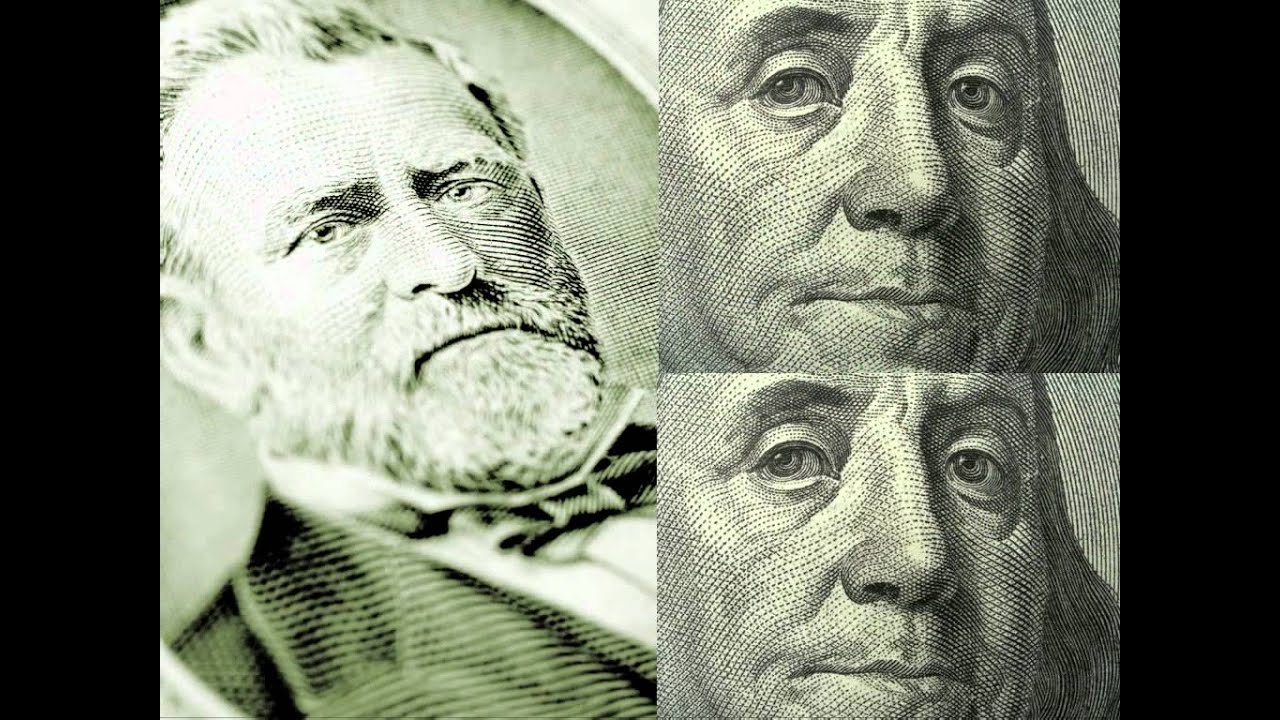
Republic, Lost (my favorite version) — lessig

lessig

Congress now answers to an elite 0.05% donor base rather than the electorate, leaving state-driven constitutional conventions and public vouchers as the only remedies to restore self-governance.

AI-assisted summary of Republic, Lost (my favorite version) — original source. Check the original for full context.

Source published:

Key ideas

  • Lawrence Lessig diagnoses American political paralysis as institutional 'dependence corruption,' where lawmakers spend 30% to 70% of their time fundraising from an elite 0.05% donor base rather than remaining dependent upon the people alone. (15:11)
  • Empirical studies, including Martin Gilens' analysis of 887 policy disputes, demonstrate that when preferences diverge, federal policy reflects the top 10% of income earners while having virtually zero correlation to low- or middle-income citizens. (19:26)
  • To sever donor dominance, Lessig proposes the 'Grant and Franklins Project,' allocating a $50 tax rebate voucher to each voter alongside a $100 private donor ceiling, creating up to $6 billion in clean campaign funds. (26:01)
  • Because over 40% of departing lawmakers transition into lucrative K Street lobbying roles, Lessig argues traditional statutory reform is impossible, advocating an Article V constitutional convention led by the states to force structural reform. (30:25)

Detailed notes

## Background Published on YouTube by Lawrence Lessig on November 1, 2011, this video captures his October 26, 2011 book talk in Berkeley, California, as part of the Berkeley Arts and Letters series. In the description, Lessig notes that of all the presentations he has given about his book *Republic, Lost*, this particular talk was his personal favorite.

## TL;DR Lawrence Lessig diagnoses the systemic institutional decay of the United States government, arguing that Congress has abandoned its constitutional mandate to be dependent upon the people alone in favor of a corrupting dependence on the top 0.05% of campaign funders. Across issues ranging from copyright extension and Wall Street bailouts to environmental oversight, he shows how the relentless pursuit of private campaign cash paralyzes governance and destroys public trust. To break this dynamic, Lessig proposes the 'Grant and Franklins Project'—a system of $50 voter-directed democracy vouchers coupled with small-dollar donor caps. Emphasizing that conventional politicians and lobbyists will never reform a status quo that enriches them, he calls on citizens to abandon passive bystander behavior, unite across ideological divides, and pursue bold remedies such as an Article V constitutional convention.

## Atmosphere & style The presentation carries the urgent, intellectual gravity of an academic lecture blended with the moral conviction of a civic revival sermon. Lessig speaks with sharp, rhythmic cadence, moving seamlessly from analytical breakdowns of political science and constitutional history to poignant personal anecdotes and historical parables. The mood shifts from quiet indignation over institutional dysfunction to an impassioned, challenging plea for audience accountability, leaving the listener feeling both sobered by the depth of systemic corruption and stirred toward active democratic participation.

## Bulletin - [15:11](https://www.youtube.com/watch?v=AxCo2bE9Gtk&t=911s) Lawrence Lessig diagnoses American political paralysis as institutional 'dependence corruption,' where lawmakers spend 30% to 70% of their time fundraising from an elite 0.05% donor base rather than remaining dependent upon the people alone. - [19:26](https://www.youtube.com/watch?v=AxCo2bE9Gtk&t=1166s) Empirical studies, including Martin Gilens' analysis of 887 policy disputes, demonstrate that when preferences diverge, federal policy reflects the top 10% of income earners while having virtually zero correlation to low- or middle-income citizens. - [26:01](https://www.youtube.com/watch?v=AxCo2bE9Gtk&t=1561s) To sever donor dominance, Lessig proposes the 'Grant and Franklins Project,' allocating a $50 tax rebate voucher to each voter alongside a $100 private donor ceiling, creating up to $6 billion in clean campaign funds. - [30:25](https://www.youtube.com/watch?v=AxCo2bE9Gtk&t=1825s) Because over 40% of departing lawmakers transition into lucrative K Street lobbying roles, Lessig argues traditional statutory reform is impossible, advocating an Article V constitutional convention led by the states to force structural reform.

## Key takeaways - [00:00](https://www.youtube.com/watch?v=AxCo2bE9Gtk&t=0s) Citing Henry David Thoreau's Walden, Lessig argues that citizens routinely hack at the superficial symptoms of societal dysfunction rather than striking directly at the systemic root cause. - [02:53](https://www.youtube.com/watch?v=AxCo2bE9Gtk&t=173s) The United States suffers from institutional paralysis, leaving both conservatives and liberals acutely aware that the republic has lost the capacity to steer and govern itself. - [05:01](https://www.youtube.com/watch?v=AxCo2bE9Gtk&t=301s) Retrospective copyright term extensions, such as the Sonny Bono Act, serve zero prospective public interest and passed solely due to millions in entertainment industry campaign spending. - [07:04](https://www.youtube.com/watch?v=AxCo2bE9Gtk&t=424s) The 2008 financial crisis was enabled by a toxic mix of deregulating derivatives while guaranteeing public bailouts, culminating in Wall Street spending vast sums to ensure institutions remained 'too bigger to fail.' - [12:22](https://www.youtube.com/watch?v=AxCo2bE9Gtk&t=742s) A poll for Republic, Lost showed 75% of Americans believe money buys results in Congress, collapsing public institutional trust down to historically unprecedented single digits. - [15:11](https://www.youtube.com/watch?v=AxCo2bE9Gtk&t=911s) The Framers designed representative democracy in Federalist No. 52 to be dependent upon the people alone, but that has been supplanted by dependency on campaign donors. - [15:11](https://www.youtube.com/watch?v=AxCo2bE9Gtk&t=911s) Modern congressional corruption rarely involves illegal bribes; rather, it functions as legal 'dependence corruption' driven by the 0.05% of citizens who max out campaign donations. - [19:26](https://www.youtube.com/watch?v=AxCo2bE9Gtk&t=1166s) Empirical research by Clayton Peoples and Martin Gilens refutes claims by corruption deniers, proving legislative votes and agendas systematically align with affluent donors over the public. - [23:44](https://www.youtube.com/watch?v=AxCo2bE9Gtk&t=1424s) The congressional agenda is largely determined by which disputes—such as the debit card swipe fee fight—generate the maximum flow of campaign cash from competing corporate interests. - [26:01](https://www.youtube.com/watch?v=AxCo2bE9Gtk&t=1561s) The proposed 'Grant and Franklins Project' would provide every voter a $50 Democracy Voucher, capping participating candidates' private donations at $100 and generating $6 billion in clean money. - [30:25](https://www.youtube.com/watch?v=AxCo2bE9Gtk&t=1825s) Congress functions as a farm league for K Street, with 50% of former Senators and 42% of House members becoming lobbyists, ensuring lawmakers will not willingly reform the system. - [30:25](https://www.youtube.com/watch?v=AxCo2bE9Gtk&t=1825s) An Article V constitutional convention called by two-thirds of state legislatures offers a viable mechanism to bypass congressional self-interest and enact anti-corruption amendments. - [35:05](https://www.youtube.com/watch?v=AxCo2bE9Gtk&t=2105s) Activist efforts like Occupy Wall Street dilute their political impact when presenting hundreds of disparate demands rather than unifying around the shared root cause of corrupt dependency. - [39:54](https://www.youtube.com/watch?v=AxCo2bE9Gtk&t=2394s) Arnold Hiatt's 1997 confrontation with Bill Clinton demonstrates that meaningful systemic overhaul will never originate from self-interested political leaders, but only from mobilized citizens. - [43:18](https://www.youtube.com/watch?v=AxCo2bE9Gtk&t=2598s) Like the crew of the Exxon Valdez who stayed silent while an impaired captain ran aground, the American public shares responsibility for permitting the republic to drift through passive bystander behavior.

## Detailed walkthrough ### [00:00](https://www.youtube.com/watch?v=AxCo2bE9Gtk&t=0s) Striking at the Root

Lawrence Lessig opens his talk by expressing his delight at returning to the Berkeley area, where he and his wife spent nine wonderful years. He notes that this evening marks his sixth talk in three days—the final stop before traveling to Los Angeles. To frame his lecture, he introduces a single sacred text from Henry David Thoreau's 1854 book *Walden*:

> “There are a thousand hacking at the branches of evil to one who is striking at the root.” — Lawrence Lessig quoting Henry David Thoreau

To illustrate the human tendency to focus on symptoms rather than underlying causes, Lessig asks the audience to imagine a letter written by a young woman growing up in an abusive, alcoholic home. In her household, two clocks dictated daily life: the clock on the wall and the one in the bottle. Mornings were peaceful because the father slept late, allowing the children to play freely. Once he woke up and opened the bottle, however, fear took over. While he was cheerful just before dinner—the only brief window where she felt she had a loving father—he grew increasingly irritable, and by 9:00 p.m., violent. She endured physical abuse until he attempted something worse, forcing her to run away and never return.

Lessig highlights the tragic paradox of her family's struggle: they fought constantly to keep food in the pantry, keep the cold out, and keep the house itself, yet they never once discussed getting him to stop drinking. The bottle had simply become an accepted, unchangeable fact of life. Humans naturally adapt to intolerable circumstances until a breaking point arrives; only then can they achieve the Thoreauvian insight needed to stop hacking at superficial branches and strike directly at the root.

[02:53](https://www.youtube.com/watch?v=AxCo2bE9Gtk&t=173s) A Republic Unable to Govern

Turning to the state of the nation, Lessig argues that a deep anxiety has taken hold across the United States. It is not an apocalyptic dread that immediate doom awaits, but a pervasive sense that the historic American presumption of inevitable cultural, economic, and political greatness has vanished. A generation ago, Ronald Reagan rallied Americans against Jimmy Carter's warning of national malaise—an effort Lessig confesses he supported at the time, still believing Reagan was right.

Today's crisis, however, is fundamentally different. It does not stem from a loss of potential among the American people, but from the institutional decay of the Republic itself. After more than two centuries of venerating the Constitution, the capacity for democratic self-governance has deteriorated to the point where government has become an embarrassment, utterly paralyzed when faced with vital decisions.

> “And slowly it dawns upon us that a ship that cannot be steered is a ship that will sink.” — Lawrence Lessig

Lessig emphasizes that this disillusionment is entirely multi-partisan. Citizens on both the political left and the right watch policies systematically stall due to institutional dysfunctions that both sides clearly recognize. His stated mission for the evening is to reorient the audience's perspective—to "brainwash" them into recognizing this systemic root cause rather than fighting isolated policy battles.

[05:01](https://www.youtube.com/watch?v=AxCo2bE9Gtk&t=301s) Copyright and the Sonny Bono Act

Lessig illustrates this systemic failure through his own entry into political activism. On October 27, 1998, President Bill Clinton signed the Sonny Bono Copyright Term Extension Act into law, an event that shifted Lessig's focus toward copyright reform. The statute granted a 20-year retrospective extension to existing copyright terms.

Under basic economic theory, copyright serves the public good by offering a limited monopoly to incentivize creators to produce new works. However, incentives can only function prospectively. As Lessig dryly observes, no act of Congress can incentivize a deceased composer like George Gershwin to write another note. When Lessig challenged the constitutionality of the statute before the Supreme Court, he assembled an amicus brief signed by seventeen prominent economists, including five Nobel laureates. Among them was the conservative economist Milton Friedman, who agreed to join the brief only on one condition.

> “...Milton Friedman, right-wing Nobel prize-winning economist who said he would only join the brief if the word 'no-brainer' was in the brief...” — Lawrence Lessig

Despite the overwhelming consensus that extending existing copyrights served zero public interest, Congress passed the legislation without opposition. The explanation lay not in sound public policy, but in financial influence: over $6 million in campaign contributions poured in from the Walt Disney Corporation and related entertainment companies seeking to protect their valuable expiring properties.

[07:04](https://www.youtube.com/watch?v=AxCo2bE9Gtk&t=424s) Wall Street Deregulation and the Bailout Architecture

The 2008 financial collapse offers an even more devastating example of government failure. Drawing on the book *13 Bankers* by Simon Johnson and James Kwak, Lessig explains that the catastrophe arose from a toxic combination of both too little government and too much government:

```mermaid flowchart TD accTitle: Wall Street Failure Cycle accDescr: Diagram showing how deregulation and government guarantees created systemic financial collapse and bailout dependency.

subgraph Causes ["Root Causes (1990s–2000s)"] A["Too Little Government: Deregulation of Derivatives"] B["Too Much Government: Implicit Bailout Guarantee"] end

subgraph Mechanism ["Shadow Banking & Bubble"] C["New Deal Exchange Rules Bypassed<br>(90% of assets unregulated by 2008)"] D["Socialized Risk & Privatized Profit<br>(Banks take high risks for private gain)"] end

subgraph Outcome ["Crisis & Aftermath"] E["2008 Financial Meltdown"] F["Congress Blackmailed into Bailouts;<br>Banks Become 'Too Bigger to Fail'"] end

A --> C B --> D C --> E D --> E E --> F ```

1. **Too Little Government (Deregulation):** Throughout the 1990s, financial innovators devised complex derivatives that were systematically exempted from New Deal-era regulations requiring transparency, public exchange trading, and anti-fraud protections. Lessig cites his Harvard colleague Frank Partnoy: in 1980, 98% of traded financial assets complied with standard New Deal rules; by 2008, 90% operated entirely within an opaque, unregulated shadow banking system. 2. **Too Much Government (Moral Hazard):** Simultaneously, Washington signaled an implicit guarantee that major institutions would be bailed out if their bets failed. Lessig condemns this arrangement as the most perverse form of socialism ever conceived: the public absorbed the downside risks while private financiers pocketed the upside profits.

This structural dysfunction worsened after the crash. Despite the severe economic fallout, and despite former Federal Reserve Chairman Alan Greenspan's admission before Congress that he was mistaken to assume banks would prioritize the public good over private gain, Wall Street leveraged its influence to avoid structural reform. The resulting legislative response left the underlying architecture untouched, leaving institutions that were "too big to fail" in 2008 merely "too bigger to fail" thereafter. This regulatory capitulation was underwritten by money: since the 1990s, the securities and investment sector has been the fastest-growing source of campaign contributions, culminating in 2010 when finance and insurance stood as the single largest industry funding congressional races.

[11:16](https://www.youtube.com/watch?v=AxCo2bE9Gtk&t=676s) Environmental Oversight and Deepwater Horizon

Lessig presents a final parallel in environmental regulation through the 2010 BP Deepwater Horizon oil spill. While clean energy projects face grueling bureaucratic hurdles—such as an offshore wind initiative in Massachusetts that required nine years of review and a 10,000-page impact study—the experimental ultra-deepwater drilling rig was permitted to operate on a meager 17-page environmental assessment before receiving an exemption from standard safety demonstrations. When the disaster unfolded, members of Congress publicly performed shock and outrage over the regulatory failure, conveniently ignoring that their own legislative actions and cozy ties to industry lobbyists had created the very exemptions that allowed it to happen.

- Clean energy project review: 9 years, 10,000 pages of environmental impact analysis. - BP Deepwater Horizon review: 17 pages of environmental impact analysis prior to regulatory exemption.

[12:22](https://www.youtube.com/watch?v=AxCo2bE9Gtk&t=742s) How Special-Interest Cash Destroys Public Trust and Voter Participation

No matter one's political philosophy, whether liberal, libertarian, or conservative, no respectable thinker can defend laws resulting from endless campaign cash driving fast-track approvals and corrupt statutory carve-outs. While political scientists hedge and claim that legislative politics is enormously complex, regular citizens cut straight to the obvious core: they see the money and know it is the root cause. A survey conducted for the book revealed that 75% of Americans agree with the proposition that money buys results in Congress. While slightly more Democrats than Republicans held that view at the time, that dynamic routinely flips depending on who controls the Capitol. Across political divides, the overwhelming consensus remains that cash dictates congressional outcomes.

This widespread conviction triggers a catastrophic collapse in institutional trust. Gallup tracking found public confidence in Congress hovering between 11% and 12%, with a *New York Times* report from that very morning pegging it at a dismal 9%. Historically, more American colonists supported the British Crown during the American Revolution than modern citizens believe in their own Congress.

```mermaid flowchart TD accTitle: The Cycle of Institutional Disillusionment accDescr: How campaign money erodes public trust and suppresses voting participation.

A["Endless Campaign Cash"] --> B["Belief: 'Money buys results in Congress' (75%)"] B --> C["Collapse of Public Trust (Confidence drops to 9-12%)"] C --> D["Erosion of Voter Participation"] D --> E["Disillusioned Electorate: 'Corporate interests prevent real change'"] ```

In turn, that lack of trust cripples democratic participation. Rock the Vote—the organization credited with mobilizing historic youth turnout that helped elect Barack Obama—polled its members in 2010 to understand why so many intended to sit out the midterm elections. The leading explanation, outpolling the runner-up reason two to one, was that corporate interests would retain total power and block real reform regardless of who won the election.

- In a poll conducted for *Republic, Lost*, 75% of Americans agreed that “money buys results in Congress.” - Gallup measured public confidence in Congress at 11% in 2010 and 12% in 2011; a contemporary *New York Times* poll showed it falling to 9%. - The dominant reason given by Rock the Vote youth voters for sitting out the 2010 election was: “no matter who wins corporate interests will still have too much power and prevent real change.”

---

[15:11](https://www.youtube.com/watch?v=AxCo2bE9Gtk&t=911s) The Framers' Republic vs. "Dependence Corruption"

Shifting into constitutional law professor mode, Lessig turns to what the government was originally designed to be. In Federalist No. 52, the framers defined our republic as a representative democracy designed to have a branch that would be “dependent upon the people alone.” In a healthy constitutional architecture, this relationship operates like a marionette, maintaining a direct, clear, and exclusive dependence between the governed and the government.

Instead, an entirely competing dependency has replaced it: members of Congress are forced to spend anywhere from 30% to 70% of their working hours begging private donors for the cash required to secure re-election or keep their party in majority control. This relentless fundraising creates an instinctive survival mechanism. Lawmakers develop an internal sixth sense about how every policy position impacts their wallet, transforming them into political "shape-shifters" who calibrate their stances—not necessarily on high-profile front-page fights, but across issues 11 through 500—to appease deep-pocketed donors. Former Virginia Congresswoman Leslie Byrne captured this reality when she recounted a veteran colleague warning her to “always lean to the green,” clarifying that “he was not an environmentalist.”

```mermaid flowchart TD accTitle: Intended vs Corrupted Dependency accDescr: Contrasting the Framers' designed dependency on the people with modern dependence on the 0.05% of campaign funders.

subgraph FramersDesign["Framers' Intent (Federalist 52)"] P1["The People Alone"] -->|"Exclusive Dependency"| G1["Congress / Representative Democracy"] end

subgraph ModernReality["Modern Reality: Dependence Corruption"] P2["The People (99.95%)"] -.->|"Broken Access"| G2["Congress (Spends 30-70% time fundraising)"] F["The Funders (0.05% maxed out donors)"] ==>|"Dominant Dependence / Sixth Sense"| G2 end ```

This structural shift constitutes deep institutional corruption. It is not the 19th- or 20th-century spectacle of lawmakers finding paper bags stuffed with bribes to lock inside desk safes; criminal bribery of that sort is practically gone, leaving Capitol Hill in a technical sense as clean as it has ever been. Rather, it is "dependence corruption"—the systemic diversion of an institution away from its constitutionally intended dependence upon the people alone, and toward an elite 0.05% donor base who max out their political contributions. Occupy Wall Street's famous "We are the 99%" slogan was, in Lessig's eyes, an instance of bad marketing: the citizens shut out of real access are actually the 99.95%. As Lessig underscores:

> “Framers of our constitution gave us as conservatives like to remind us a republic but what they meant by a republic was a representative democracy and what that meant according to Federalist 52 was a democracy with a branch that would be quote dependent upon the people alone.”

- Lawmakers spend between 30% and 70% of their working time raising campaign cash. - In 2010, only 0.05% of Americans contributed the maximum allowable individual amount to a congressional campaign cycle. - Rather than outright illegal bribes, modern corruption operates legally as systemic "dependence corruption."

---

[19:26](https://www.youtube.com/watch?v=AxCo2bE9Gtk&t=1166s) The Substance of Influence: How the 0.05% Dictates Policy

Assessing the concrete consequences of dependence corruption requires examining both legislative substance and legislative agendas. Within academic circles, the impact of money on policy remains stubbornly debated, with apologists insisting that hard empirical evidence proving purchased votes is scarce. During a radio debate, former Federal Election Commission chairman Bradley Smith made this startling assertion:

> “The evidence is pretty overwhelming that the money does not play much of a role in what goes on in terms of legislative voting patterns and legislative Behavior the consensus about that among people who have studied it is roughly the same as the consensus among scientists that global warming is taking place.”

Lessig recounts being so astounded by Smith's dismissal that he live-tweeted during the broadcast, earning blowback for his hashtag while branding Smith a full-fledged "corruption denier."

A growing mountain of data refutes this denialism. Sociologist Clayton Peoples evaluated 7,000 legislative votes and discovered statistically significant contributor influence in seven of the eight legislative sessions examined between 1991 and 2006 (the lone exception being the session that passed the Bipartisan Campaign Reform Act, also known as the McCain–Feingold Act).

Even more damning is the landmark research by Princeton professor Martin Gilens. Gilens reviewed 1,700 public opinion surveys and isolated 887 specific instances where the policy preferences of the top 10% of wealthy Americans diverged directly from those of the bottom 90%. Looking at the resulting policies, Gilens found that when high- and low-income preferences clash, government actions align almost entirely with the preferences of the affluent elite, demonstrating virtually zero statistical correlation to what low- or middle-income citizens want. As Lessig notes, this is not a matter of deference to the most educated—since educational attainment does not neatly track massive private wealth—but rather the cold reality of a broken system where personal riches translate directly into legislative leverage. Beyond pure voting outcomes, money profoundly warps the congressional agenda itself, directing attention away from pressing national crises like simultaneous foreign wars, staggering unemployment, ballooning deficits, or unchecked climate change, and refocusing it on the pet priorities of elite bankrollers.

- Clayton Peoples found statistically significant donor influence in 7 out of 8 congressional sessions between 1991 and 2006. - Martin Gilens studied 887 policy clashes between the top 10% and bottom 90% of income earners, showing that adopted policies consistently favor the affluent while ignoring the majority. - Former FEC Chairman Bradley Smith claimed academic consensus views campaign contributions as irrelevant to voting patterns, comparable to the consensus behind climate science.

[23:44](https://www.youtube.com/watch?v=AxCo2bE9Gtk&t=1424s) The Bank Swipe Fee Controversy and Campaign Cash

Rather than tackling pressing national crises like unemployment or lingering questions around healthcare reform, Congress spent an overwhelming amount of its legislative time on an obscure regulatory battle: the bank swipe fee controversy. The dispute centered entirely on the interchange fees that banks charge merchants every time a customer swipes a debit card—specifically, whether those fees could increase or had to be lowered. While the fight was of critical financial interest to giant banks on one side and mega-retailers on the other, it held virtually no importance for ordinary Americans.

To explain why legislative attention was directed toward this fight instead of the broader economy, Lawrence Lessig cites an anonymous United States Senator, who was too embarrassed to put his name on the record, speaking to Zach Carter and Ryan Grim for *The Huffington Post*. As Lawrence Lessig recounts from the article: “The fights down here can be put into two or three categories: the big greedy bastards against the big greedy bastards, the big greedy bastards against the little greedy bastards, and in some cases even the other little greedy bastards against the other little greedy bastards.” The reporters went on to write what Lessig terms the critical “money quote”: the clock never ticks down to zero in Washington, because one year’s law becomes the next year’s repeal target, leaving politicians showered with cash from card companies and giant retailers alike as they bounce back and forth between camps, handsomely paid for their shifting allegiances.

This dynamic reveals a terrifying recognition that becomes painfully obvious once observed: the congressional agenda is not set by public urgency, but by which issues will flush the maximum amount of campaign cash into political coffers. As Lawrence Lessig sharply observes: “Turns out unemployment doesn’t pay so well in that way.”

- **The Swipe Fee Dispute**: Pitted Wall Street banks against major retail conglomerates over fee caps on debit card transactions. - **The Huffington Post Report**: Authored by Zach Carter and Ryan Grim, documenting how lawmakers reap steady campaign donations by keeping corporate disputes constantly in play. - **The Distorted Agenda**: Issues affecting ordinary citizens without deep lobbying pockets are sidelined in favor of controversies that generate lucrative political fundraising cycles.

---

[26:01](https://www.youtube.com/watch?v=AxCo2bE9Gtk&t=1561s) The Grant and Franklins Project: Funding Without Faust

To break the corrupting dependence on private funders, Lessig argues that the system must make the American people the sole funders of congressional campaigns by giving lawmakers a way to fund their races without selling their souls. The only viable path forward is publicly funded elections. Drawing on existing small-dollar experiments in Arizona, Maine, and Connecticut—where candidates opt into contracts to accept only small donations that are then amplified by state matching funds—Lessig details his own proposal from *Republic, Lost*, known as the "Grant and Franklins Project."

Under this plan, the first $50 that every American already contributes to the federal treasury (whether through wage, income, sales, or excise taxes) is rebated back as an earmarked "Democracy Voucher." Citizens can assign this $50 voucher to congressional candidates of their choice. To accept these vouchers, candidates must voluntarily agree to cap all other private campaign donations at no more than $100 per citizen—an idea borrowed from former Louisiana Governor Buddy Roemer. If a voter chooses not to allocate their voucher, the funds flow to their political party, or back into supporting general democratic infrastructure. At $50 per voter across the entire electorate, the system would inject approximately $6 billion into an election cycle—dwarfing the $1.8 billion total spent in the 2010 midterms. This ensures plenty of clean money so candidates never need to solicit giant checks from wealthy interests again.

```mermaid flowchart TD accTitle: The Grant and Franklins Project Architecture accDescr: Flow showing how a 50 dollar tax rebate voucher and 100 dollar citizen contributions fund candidates who agree to reject large donors.

subgraph Taxpayer ["American Taxpayer"] T["Taxes Paid to Treasury"] --> V["$50 Democracy Voucher Rebate"] C["Optional Personal Donation\n(Max $100)"] end

subgraph Allocation ["Voucher Decision"] V -->|"Assigned to candidate"| Cand["Opt-In Candidate"] V -->|"Unassigned"| Default["Political Party or\nDemocracy System Fund"] C -->|"Direct contribution"| Cand end

subgraph CandidateRules ["Clean Funding Rules"] Cand --> Rules["Restrictions:\n- Only Democracy Vouchers accepted\n- Individual donations capped at $100\n- Zero large-dollar donations allowed"] end ```

By removing the reliance on major donors, public perception of legislative failure would shift from cynicism to ordinary political disagreement. As Lawrence Lessig puts it: “If we had a Congress where members, the vast majority of members, funded their campaigns with small dollar contributions only, then we could believe, as we all want to believe, that when Congress did something stupid, it might be because there are too many Democrats or too many Republicans or because they don’t know anything about what they’re talking about, but not because of the money.” By severing the financial link, citizens could finally evaluate congressional decisions on their merits and restore public trust to a body currently held in lower esteem than King George III.

- **Voucher Amount**: $50 per registered voter, funded out of existing federal tax revenues. - **Private Contribution Ceiling**: Hard limit of $100 per individual donor for participating candidates. - **Funding Scale**: Generates up to $6 billion per cycle, completely eclipsing the $1.8 billion total raised and spent across all congressional races in 2010. - **Legislative Alternatives**: Parallel mechanisms include the Fair Elections Now Act and state-level clean election systems in Maine, Arizona, and Connecticut.

---

[30:25](https://www.youtube.com/watch?v=AxCo2bE9Gtk&t=1825s) A Farm League for K Street and the Article V Convention

Diagnosing the problem and drafting a public funding blueprint are straightforward; the almost impossibly hard part is building the political movement required to enact it. The core obstacle was described to Lessig by long-serving Tennessee Democratic Representative Jim Cooper, who noted that Capitol Hill has degenerated into a farm league for K Street. Congressional members, staffers, and executive bureaucrats now operate under a shared post-government business model, anticipating lucrative lobbying careers where they routinely earn two to four times their public salaries. Public Citizen calculated that between 1998 and 2004, 50% of departing U.S. Senators and 42% of departing House members became registered lobbyists—proportions that have only climbed since. Because everyone inside the machinery benefits from the existing arrangements, Congress will never willingly vote to overhaul itself.

Recognizing that conventional statutory reform through Congress is virtually impossible, Lessig explores three unorthodox strategies, giving special focus to an Article V constitutional convention. Anticipating the danger that Congress might someday become hopelessly self-interested, the Framers embedded an alternative mechanism into the Constitution: two-thirds of the state legislatures can compel Congress to call a convention to propose constitutional amendments. Any amendment emerging from that convention must still be ratified by three-fourths of the states (38 states). Because a bloc of just 13 states can veto any proposal, and the nation divides neatly into at least 13 solid-red and 13 solid-blue states, no hyper-partisan measure could ever pass; only broad-based, universally supported anti-corruption reforms could succeed.

Lessig emphasizes that extraordinary crises demand a departure from ordinary, passive civic life. As Lawrence Lessig declares: “I think we’ve entered a time when we have to recognize ordinary means are not appropriate in extraordinary times; instead, what we need now is the capacity to do something that we’ve actually not done in a very long time: to build a politics that is different from this politics, that is different from a passive, consuming politics that listens to the commands on a television broadcast and reacts, instead an active and engaged politics where we reclaim the politics for ourselves, away from the control of the professional politicians.”

- **The Revolving Door**: 50% of Senators and 42% of House members who left office between 1998 and 2004 transitioned directly into K Street lobbying jobs. - **Article V Mechanism**: Allows two-thirds of state legislatures (34 states) to bypass Congress and initiate a convention for proposing amendments. - **Ratification Threshold**: Requires approval by three-fourths of the states (38 states), granting any coalition of 13 states the power to block partisan or runaway amendments.

[35:05](https://www.youtube.com/watch?v=AxCo2bE9Gtk&t=2105s) Clarity, the Occupy Movement, and Striking the Root Cause

Lessig reflects on the immense challenge of motivating a broad-based popular movement. Politics has become intensely professionalized, breeding deep public cynicism, which leaves little obvious evidence that everyday citizens can reclaim the system. Yet he insists that any path forward must begin with what he calls "the clarity of Thoreau, the clarity of the root striker." To illustrate the challenge, he points to Occupy Seattle, noting with gentle humor that they have "the coolest website" packed with social organizing tools. However, their site features a "demands" section listing literally hundreds of disparate policy priorities up for a vote—ranging from environmental protection to ending the prison-industrial complex.

```mermaid flowchart TD accTitle: Connecting Disparate Political Frustrations to the Root Cause accDescr: Visual flow showing how left and right wing grievances trace back to a broken dependency on the people.

subgraph Grievances["Different Political Frustrations"] L["Left-Wing Concerns<br/>• Healthcare<br/>• Global Warming<br/>• Financial Reform"] R["Right-Wing Concerns<br/>• Bailouts<br/>• Complex Tax Code<br/>• Financial Reform"] end

subgraph CoreIssue["The Root Problem"] Root["Broken Dependency<br/>Government no longer exclusively<br/>dependent upon the people"] end

L -->|"Connect the Dots"| Root R -->|"Connect the Dots"| Root ```

Lessig argues that presenting an endless catalog of hundreds of demands creates nothing more than "noise to the political process." Instead, the movement must focus sharply on what unites a wide range of Americans. Rather than urging people to dilute or abandon their core beliefs—declaring as a liberal that "we've seen nothing but compromise about our principles for the last 30 years and that's enough"—he calls for finding common ground without policy surrender. Speaking genuinely for the 99% sets an exceptionally high bar; it requires finding common enemies rather than requiring identical goals. By connecting the dots between disparate partisan grievances, both sides can see that their core frustration stems from the exact same structural defect. As Lessig summarizes the fundamental institutional failure:

> “The root cause is a democracy or a republic where the people are no longer the intended beneficiary exclusively, where the government is no longer exclusively dependent upon them.”

- Occupy Seattle hosted hundreds of unsorted platform demands, ranging from environmental defense to dismantling the prison-industrial complex. - Lessig cautions against compromise for its own sake, arguing that clarity demands finding a single shared enemy across divergent political philosophies. - Partisan flashpoints share the same underlying root cause: healthcare, global warming, and Wall Street regulation on the left, alongside bailouts, complex tax codes, and financial reform on the right.

---

[39:54](https://www.youtube.com/watch?v=AxCo2bE9Gtk&t=2394s) Courage: Arnold Hiatt's Challenge to Bill Clinton

Beyond clarity, the second indispensable requirement is courage. To demonstrate what this demands, Lessig shares the story of his friend Arnold Hiatt, a soft-spoken Boston businessman and former president of The Stride Rite Corporation. Hiatt was a dedicated Democrat and stood as the party's second-largest financial contributor in 1996. Consequently, in 1997, President Bill Clinton invited Hiatt alongside roughly thirty other top donors to a private dinner at the Mayflower Hotel in Washington, D.C., designed specifically for these prominent benefactors to instruct the president on what his administration should prioritize during his second term.

```mermaid flowchart LR accTitle: The Mayflower Hotel Dinner Contrast accDescr: Contrasting Hiatt's call for presidential action with the reality of citizen-led reform.

A["Mayflower Dinner (1997)<br/>Hiatt challenges Clinton to wage war against Fat Cat system"] --> B["Clinton's Rebuff<br/>Slashes Hiatt to pieces in front of peers"] B --> C["The Realization (14 Years Later)<br/>Reform will never come from politicians"] C --> D["Citizen Root Strikers<br/>Must wage the nonviolent fight ourselves"] ```

When it came his turn, Hiatt stood up, looked Clinton in the eye, and invoked Franklin Delano Roosevelt in 1940, who had to persuade a reluctant public to enter a war to rescue democracy. Hiatt told Clinton that he faced a similar historical imperative: not a military war against fascists abroad, but a domestic war against a political system beholden to fat cats. He challenged the premise that wealth should entitle anyone to dictate public policy or buy private access to the presidency. Following an uncomfortable silence, Clinton rose and, as contemporary accounts recorded, verbally tore Hiatt to shreds, humiliating him before his peers. Fourteen years later, Lessig observes that while Hiatt was morally correct about the necessity of the fight, he looked to the wrong savior:

> “Where Arnie Hiatt was wrong was in his belief that it would be politicians that would wage that war; it's not going to be politicians, it's going to be citizens, it's going to be us, it's going to be root strikers, it's going to be you.”

- Arnold Hiatt served as head of Stride Rite (makers of Keds) and was the second-largest Democratic donor during the 1996 campaign cycle. - The 1997 Mayflower Hotel gathering included approximately 30 elite donors advising President Bill Clinton on his second-term agenda. - Hiatt directly challenged Clinton to wage a non-violent war against donor supremacy, drawing a parallel to FDR's leadership leading up to World War II.

---

[43:18](https://www.youtube.com/watch?v=AxCo2bE9Gtk&t=2598s) The Exxon Valdez, the Bystanders, and Keeping the Republic

Lessig closes with the 1989 disaster in Prince William Sound, when the *Exxon Valdez* supertanker ran aground under Captain Joseph Hazelwood and spilled 11 million gallons of crude oil. Hazelwood's sobriety became the subject of bitter legal disputes; though he claimed to have consumed only four vodkas and escaped conviction for intoxication, his blood alcohol level suggested he had been six times the legal limit. Exxon had treated him for alcoholism in 1985, yet by 1988 his driver's license had been revoked twice for driving under the influence. At the exact moment Hazelwood stood at the helm of a massive supertanker, state law prohibited him from legally driving a Volkswagen Beetle.

The core lesson, Lessig insists, is not Hazelwood's personal failure, but the silence of those around him—the officers and crew who watched a compromised captain take the helm and never picked up a telephone to stop him. Lessig draws a direct parallel between those silent bystanders and the American public today. Confronted by pressing national crises, the political system sits completely distracted and paralyzed. Rather than deflecting blame exclusively onto corrupt lobbyists, the true fault rests with the decent, privileged citizens whose collective passivity permitted the system to collapse:

> “The most outrageous part of the story I've told tonight is that while the Corruptions here were primed by the most privileged, they were also permitted by the passivity of the most privileged as well.”

Invoking the famous 1787 exchange on the streets of Philadelphia—where Benjamin Franklin was asked what form of government the Constitutional Convention had produced and replied, “A republic, madam, if you can keep it”—Lessig warns that this representative democracy has slipped away, leaving it entirely up to active citizens to wage the fight and win it back.

## Notable quotes > [35:05](https://www.youtube.com/watch?v=AxCo2bE9Gtk&t=2105s) The root cause is a democracy or a republic where the people are no longer the intended beneficiary exclusively, where the government is no longer exclusively dependent upon them. — Lawrence Lessig

## Mentioned Lawrence Lessig, Henry David Thoreau, Walden, Ronald Reagan, Jimmy Carter, Constitution of the United States, Bill Clinton, Sonny Bono Copyright Term Extension Act, George Gershwin, Milton Friedman, Walt Disney Corporation, 13 Bankers, Simon Johnson, James Kwak, Frank Partnoy, Alan Greenspan, BP, Deepwater Horizon, Gallup, The New York Times, Rock the Vote, Barack Obama, Federalist No. 52, Leslie Byrne, Occupy Wall Street, Bradley Smith, Federal Election Commission, Clayton Peoples, Bipartisan Campaign Reform Act (McCain–Feingold Act), Martin Gilens, Zach Carter, Ryan Grim, The Huffington Post, Grant and Franklins Project, Buddy Roemer, Fair Elections Now Act, Jim Cooper, Public Citizen, Article V, Occupy Seattle, Arnold Hiatt, The Stride Rite Corporation, Mayflower Hotel, Franklin Delano Roosevelt, Exxon Valdez, Joseph Hazelwood, Benjamin Franklin

## Video description October 26, 2011, Berkeley, CA: My book talk at the Berkeley Arts and Letters series. Of all the talks I've given, I was happiest about this. If there's one you listen to in this series, this should be the one.

[Source](https://www.youtube.com/watch?v=AxCo2bE9Gtk)

中文简报

莱斯格敦促召开宪法第五条公约以打破金主对美国国会的控制 国会如今只对0.05%的精英金主负责而非选民,使得由州主导的制宪公约和公共代金券成为恢复自治的唯一救济途径。 劳伦斯·莱斯格指出了美国政府制度性的系统性衰退,认为国会背弃了仅对人民负责的宪法使命,转而以腐败的方式依赖于占人口0.05%的顶级竞选出资人。从版权期限延长、华尔街救助到环境监管,他展示了对私人竞选资金的无休止追求如何瘫痪了治理并摧毁了公众信任。为打破这一动态,莱斯格提出了“格兰特与富兰克林计划”——这是一套将50美元选民直投民主代金券与小额捐款上限相结合的制度。他强调,传统政客和游说者绝不会改革让他们获利的现状,因此呼吁公民抛弃被动的旁观态度,跨越意识形态分歧团结起来,寻求诸如召开宪法第五条制宪公约等大胆的救济手段。 劳伦斯·莱斯格将美国政治瘫痪诊断为制度性的“依赖腐败”,议员将30%到70%的时间花在从仅占0.05%的精英捐款人中筹集资金,而非仅仅依赖于人民。 (15:11) 包括马丁·吉伦斯对887起政策争议的分析在内的实证研究表明,当偏好出现分歧时,联邦政策反映的是收入前10%人群的诉求,而与中低收入公民的偏好几乎零相关。 (19:26) 为斩断金主的支配地位,莱斯格提出了“格兰特与富兰克林计划”,向每位选民发放50美元的退税代金券,并设置100美元的私人捐款上限,以此产生多达60亿美元的廉洁竞选资金。 (26:01) 由于超过40%的离任议员转型进入高薪的K街游说岗位,莱斯格认为传统的法定改革已不可能,因此主张由各州主导召开宪法第五条制宪公约,以强制推行结构性改革。 (30:25)

Reading summary

Lawrence Lessig argues that the American republic has succumbed to "dependence corruption," trading its constitutional reliance on the people for an institutional dependence on the 0.05% of wealthy campaign funders. He contends that this systemic defect paralyzes governance and distorts public policy, and can only be resolved if citizens bypass political elites to enact structural election reforms. The Mechanism of Dependence Corruption (15:11) Lessig contrasts the constitutional blueprint established in Federalist No. 52—a legislative branch designed to be "dependent upon the people alone"—with the modern reality where lawmakers spend 30% to 70% of their working hours soliciting campaign funds. This shift does not operate like 19th-century criminal bribery; instead, it functions as legal "dependence corruption," conditioning politicians to develop a sixth sense for appeasing the 0.05% of Americans who contribute the maximum allowable donations. This structural diversion produces a profound collapse in institutional trust. In a survey conducted for Lessig's book, 75% of Americans agreed that money buys results in Congress, while Gallup and contemporary polls tracked public confidence in Congress between 9% and 12%. In turn, voter participation drops significantly; Lessig notes that Rock the Vote members cited the unchecked influence of corporate interests as the leading reason for sitting out the 2010 midterm elections. Distorted Agendas and Legislative Capture (19:26) Rejecting claims by campaign-finance apologists like former FEC chairman Bradley Smith, Lessig highlights empirical studies documenting widespread contributor influence. Sociologist Clayton Peoples identified statistically significant donor impact in seven of eight congressional sessions between 1991 and 2006. Even more starkly, Princeton professor Martin Gilens analyzed 887 policy clashes between the top 10% and bottom 90% of income earners, demonstrating that government decisions align almost exclusively with the preferences of the affluent elite, showing virtually zero correlation with the desires of the majority. This financial dynamic warps not just votes, but the congressional agenda itself. Lessig cites the retrospective Sonny Bono Copyright Term Extension Act, passed after $6 million in entertainment contributions despite no prospective economic rationale, alongside pre-2008 financial deregulation that allowed 90% of traded assets to bypass New Deal transparency rules. Rather than addressing unemployment, healthcare, or financial stability, Congress focuses sustained legislative energy on narrow, cash-generating battles like debit card swipe fees, where giant retailers and Wall Street banks shower competing lawmakers with donations. The Grant and Franklins Funding Blueprint (26:01) To sever the link between private wealth and public policy, Lessig advocates for the "Grant and Franklins Project," a system of universal small-dollar public campaign financing. Under this framework, the first $50 of federal taxes already paid by every citizen is returned as a "Democracy Voucher" earmarked for congressional candidates of their choice. To qualify for these vouchers, candidates must voluntarily agree to reject large donors and cap all other private contributions at $100 per citizen. At full participation, the model would inject approximately $6 billion into an election cycle, completely eclipsing the $1.8 billion spent across all congressional races in 2010. Lessig asserts that this mechanism would provide candidates with abundant clean money, removing the imperative to court wealthy benefactors and restoring public confidence that congressional decisions are based on competing political visions rather than cash. Bypassing Capitol Hill via Article V (30:25) Conventional statutory reform is structurally blocked, Lessig argues, because Capitol Hill has become a "farm league for K Street." Citing Public Citizen data, he notes that between 1998 and 2004, 50% of departing U.S. Senators and 42% of House members became registered lobbyists, capitalizing on a revolving door that multiplies their salaries. Recounting how President Bill Clinton publicly humiliated major donor Arnold Hiatt in 1997 for urging a domestic war against donor influence, Lessig warns that politicians will never voluntarily overhaul the system that empowers them. Instead, Lessig advocates for an Article V constitutional convention, a constitutional mechanism permitting two-thirds of state legislatures (34 states) to bypass Congress and propose amendments. Because ratification requires approval by three-fourths of the states (38 states), a coalition of 13 states can block runaway or hyper-partisan measures, ensuring that only broad-based, structural anti-corruption reforms can succeed. Lessig concludes that real change requires citizens to move beyond passive consumption and stop diffusing energy across hundreds of fragmented grievances, as seen in movements like Occupy Seattle. Drawing an analogy to the crew of the Exxon Valdez who stood by as an impaired captain ran aground, Lessig cautions that representative democracy will be lost unless engaged citizens strike directly at the root cause of financial dependence.

精炼阅读摘要

Lawrence Lessig 认为,美国代议民主制的根本危机源于制度性的“依赖性腐败”:国会议员被迫依赖仅占人口 0.05% 的巨额献金提供者,背离了建国者确立的“仅依赖于人民”的宪政初衷,导致国家治理全面陷入僵局并引发公众信任崩溃。 资本献金驱动的治理失灵与信任危机 (5:01) Lessig 指出,美国当前的体制困局并非源于公民潜力的衰退,而是公共立法已被利益集团的政治献金深度绑架。在版权领域,国会无视 17 位经济学家(包括保守派学者 Milton Friedman)关于延长既有版权无法提供创作激励的共识,全票通过《桑尼·博诺版权期限延长法案》,其关键推力是来自华特迪士尼等娱乐公司超过 600 万美元的献金游说。在金融监管层面,2008 年金融危机源于金融衍生品在 1990 年代起被系统性免除透明监管,结合政府隐性兜底所制造的道德风险,最终使华尔街在危机后凭借雄厚资金影响力免于结构性重整,反使金融与保险业成为国会最大的献金来源。类似反差亦见于能源监管:深水地平线钻井平台仅凭 17 页环评即获开采豁免,而清洁能源项目却需经历 9 年审查与万页报告。 这种以金钱换取政策豁免的模式彻底摧毁了公民对制度的信任。《Republic, Lost》开展的民意调查显示,75% 的受访美国人认定金钱直接决定了国会的立法结果。多项同期民调显示,公众对国会的信任度已滑落至 9% 至 12% 的历史低位;青年选民动员组织 Rock the Vote 的调查也表明,年轻人选择放弃投票的最主要原因,正是认定无论谁赢得选举,企业利益集团仍将全面主导权力并阻挠实质变革。 依赖性腐败如何扭曲国家政策议程 (15:11) 依据《联邦党人文集》第 52 篇,代议制共和国的设计原则在于立法分支必须“仅依赖于人民”。然而 Lessig 强调,现代国会议员需耗费 30% 至 70% 的工作时间向私人募资以维持连任,而在 2010 年仅有 0.05% 的极少数人群能够顶格捐助。这种结构催生了“依赖性腐败”——它不同于非法的公文包现金贿赂,而是一种合法的制度异化,促使政客对核心金主的诉求形成本能迎合。社会学家 Clayton Peoples 对 1991 至 2006 年间 7,000 次立法投票的分析证实,8 个国会会期中有 7 个存在显著的捐助者影响力;普林斯顿学者 Martin Gilens 对 887 项政策冲突的研究更表明,当高收入者与中低收入群体诉求对立时,政府决策几乎完全遵从前 10% 富裕阶层的偏好,与大众意志几乎毫无统计关联。 更为严重的是,竞选资金的追逐彻底扭曲了国会的轻重缓急排序。Lessig 援引国会议员私下披露的信息指出,国会耗费大量宝贵会期反复纠缠于大银行与大型零售巨头之间的借记卡刷卡费上限争端,却将失业救济、全民医疗与气候危机等国家核心议题边缘化,其根本原因在于服务两造商业巨头的博弈能够换来源源不断的献金流入,而解决普遍民生困境却无法为议员带来政治募款收益。 格林特与富兰克林计划的资金重组 (26:01) 为解除议员对巨额私人资金的生存依附,Lessig 在《Republic, Lost》中提出了以公共资金重塑竞选生态的“格兰特与富兰克林计划”。该方案提议,将每位美国纳税人已缴纳的前 50 美元税款以“民主代金券”形式返还给选民,公民可自由将其定向指派给支持的国会候选人;若选民未做选择,资金则沉淀回公共政党或民主支持基金。自愿接受代金券的候选人必须签署具有约束力的协议,承诺除代金券外,对每位公民的私人竞选捐款设立 100 美元的严格上限,完全拒收大额企业与富豪资助。 以全美选民人口测算,该机制每届选举周期可向政治体系注入约 60 亿美元的清洁资金,其规模数倍于 2010 年中期选举全美 18 亿美元的总支出。Lessig 论证道,小额资助机制能够修复受损的宪政信任:一旦切断了立法与金钱的利益绑架,公众对国会失误的评价将回归理性的政策或意识形态分歧,而不必再普遍怀疑决策背后存在腐败操控。 游说旋转门困境与宪法第五条路径 (30:25) 推动竞选财务改革的最大障碍来自于国会既得利益体制。众议员 Jim Cooper 曾向 Lessig 直言,国会山早已退化为华盛顿 K 街游说产业的“后备农场”。倡导组织 Public Citizen 的数据表明,1998 至 2004 年间离任的参议员中有 50%、众议员中有 42% 直接转岗成为职业游说客,换取数倍于公职薪资的优厚回报。鉴于政客、幕僚与官僚已在现行体系中形成了稳固的离任变现机制,寄望国会通过常规法案进行自我革新在政治上几无可能。 面对常规机制的失效,Lessig 主张依据美国宪法第五条,由三分之二的州议会(34 个州)直接绕开国会召集宪法会议提出修正案。由于任何宪法修正案均需四分之三的州(38 个州)核准才能生效,这意味着仅需 13 个州结盟即可否决任何提案,在全美政治版图明确划分为红蓝阵营的现实下,具有党派偏见的极端修宪议案注定流产,唯有聚焦于根除金钱政治这一超越党派分歧的基础反腐方案,才具备跨越门槛的制度可行性。 Lessig 援引 1989 年埃克森·瓦尔迪兹号油轮海难指出,灾难不仅缘于船长个人的酗酒失职,更根源于全体船员知情却保持集体沉默;同理,现代美国代议民主的沦陷不仅是少数特权者的谋利结果,更是广大具有特权的公众长期政治冷漠与妥协所致。他强调反腐运动必须摒弃发散且杂乱的政策清单,直击私有资金垄断公权力这一制度根源,由公民自身发起主动抗争以践行富兰克林当年关于“守住共和国”的嘱托。

Source quotes

[35:05] Lawrence Lessig: The root cause is a democracy or a republic where the people are no longer the intended beneficiary exclusively, where the government is no longer exclusively dependent upon them.

Original transcript

[0:00] [Applause] [0:03] thank you it's it's wonderful to be here [0:05] uh my wife and I spent nine glorious [0:08] years in this area um and I haven't been [0:12] back in a while and this is my sixth [0:14] talk in three days uh the last before I [0:17] have to go to Los Angeles but it's [0:19] really wonderful to end this trip here [0:21] it's such a wonderful venue in an [0:23] extraordinary place so thank you for [0:25] coming out tonight so I have just one [0:28] sacred text [0:31] there are a thousand [0:32] hacking at the branches of [0:36] evil Henry David thoro 1846 on Walden [0:40] there are a thousand hacking at the [0:42] branches of evil to one who was striking [0:46] at the [0:49] root so imagine a letter written by a [0:52] young [0:53] woman there were two clocks regulating [0:56] our life the one on the wall [1:00] and the one in the [1:02] bottle we built our life around those [1:05] clocks he slept late so mornings were [1:08] Bliss we could play and laugh without [1:11] fear but at some point he would awake [1:14] and soon after he woke the bottle was [1:17] opened and then the older the day grew [1:20] the more terrifying life became he was [1:23] happy at first just before dinner the [1:26] most happy that's the only time I spoke [1:28] to him a moment to pretend I had a [1:30] father who had a feeling of Love he'd [1:33] smile he'd laugh but soon he'd grow [1:35] irritated and by the end of dinner he [1:37] was angry and if we were not gone [1:40] usually just hiding in our room by 9ine [1:42] he would be violent and he hid me more [1:44] than [1:45] once once he tried to do something worse [1:48] than hitting me and I left and I never [1:50] went [1:51] back we struggled to do many things then [1:55] in that house we struggled to keep food [1:58] in the house to keep the winter out of [2:01] the house to keep the [2:04] house but we never even spoke about [2:07] getting him to stop I don't know why the [2:11] bottle was just part of our life we [2:13] learned to live with it anything more [2:16] just seemed [2:19] impossible now the thing about us about [2:22] us humans is that we learn to [2:24] adapt we learn to adjust we learn to [2:27] live with it until we can't [2:31] and then a certain fever breaks out and [2:33] if we're lucky we have a thorian [2:37] Insight we learn to stop hacking at [2:40] branches of [2:42] evil we learn to strike at the root we [2:44] learn to become a root [2:49] Striker so here's my [2:53] argument I think there's a feeling today [2:56] among too many [2:57] [Music] [2:58] Americans that we just might not make [3:02] it not that the end is near or that Doom [3:05] is around the corner but that a [3:07] distinctly American feeling of [3:09] inevitability of greatness culturally [3:13] economically politically is [3:16] gone that we have become Britain or Rome [3:19] or [3:21] Greece a generation ago Ronald Reagan [3:24] rallied the nation to deny a similar [3:26] charge by Jimmy Carter Jimmy Carter's [3:28] fear that we had fallen into a state of [3:30] malaise and I confess I was one of those [3:33] so rallied and I still believe Reagan [3:36] was [3:37] right but the feeling I'm talking about [3:39] today is [3:41] differ not that we as a people have lost [3:45] anything of our [3:47] potential but that we as a republic [3:50] have that our capacity for [3:53] governing the product of a constitution [3:56] we have revered for more than two [3:57] centuries has come to an end that the [4:00] thing we were once most proud of this [4:04] our Republic is the one thing we all [4:07] have learned to ignore government is an [4:10] embarrassment it has lost the capacity [4:12] to make the most essential [4:15] decisions and slowly it Dawns upon us [4:18] that a ship that cannot be steered is a [4:20] ship that will [4:22] sink this is not a Democratic or [4:24] republican point this is a [4:26] multi-partisan [4:28] frustration view that this government [4:30] doesn't work is fed by many cues on both [4:34] the left and the right as policies get [4:36] blocked systematically blocked in ways [4:39] that each side recognizes and when that [4:43] happens we need to practice a skill to [4:47] seek for this the roian [4:51] route so my objective is to brainwash [4:54] you a little bit [4:56] tonight about what that thorian root [4:59] might be [5:01] let me give you some [5:02] examples so the first begins with the [5:04] life I had before I started this work I [5:08] focused in the area of [5:09] copyright on October 27th 1998 I became [5:13] a copyright [5:15] activist when Bill Clinton signed into [5:17] law statute honoring this great [5:21] American the sunny Bono copyright term [5:25] extension act now this was a statute [5:28] that extended the term of existing [5:30] copyrights by 20 years and the question [5:33] Congress was to ask when it passed the [5:35] statute was did it Advance the public [5:38] good to extend the term of existing [5:41] copyrights by 20 years now a copyright [5:44] is supposed to work by giving people an [5:45] incentive to create great new work we [5:48] give you a monopoly you get that [5:50] Monopoly in exchange for creating great [5:51] new work but the thing about [5:53] incentives in this universe maybe not [5:56] Star Trek's universe but this universe [5:58] is that incentives are [6:01] prospective not even the United States [6:03] Congress can get George gerswin to [6:05] produce anything [6:07] more so it's obvious that extending the [6:10] term of an existing copyright's not [6:12] going to increase any incentives The [6:14] Works has already been created so when [6:16] we challenged this Statute in the [6:18] Supreme Court we had a brief sign by 13 [6:21] economists including five Nobel prize [6:23] winning economists including this [6:25] leftist economist wait I'm sorry that's [6:27] Milton Friedman right-wing Nobel [6:29] prizewinning Economist who said he would [6:31] only join the brief if the word [6:33] no-brainer was in the [6:36] brief so obvious was it that extending [6:39] the term of an existing copyright could [6:41] not Advance the public good but [6:43] apparently there were no brains in this [6:45] place when Congress unanimously extended [6:48] the term of the existing copyright what [6:50] there was was more than $6 million in [6:53] campaign contributions from the Disney [6:55] Corporation and related companies all [6:57] eager to see their copyright extend Ed [7:00] the public good be [7:01] damned it's another example think about [7:04] Wall [7:04] Street we' just seen extraordinary [7:07] collapse in our economy triggered by a [7:09] collapse on Wall Street what explains [7:11] that [7:12] collapse well according to Simon Johnson [7:14] and James quack in this really great [7:17] book what explains it is a kind of [7:19] perverse mix of both too little [7:22] government and too much [7:24] government to little governments in the [7:27] form of [7:28] deregulation of course course in the [7:30] 1990s the financial innovators innovated [7:33] in extraordinary ways in producing new [7:35] financial instruments primarily what we [7:38] call [7:39] derivatives but different those [7:42] Innovations were invisible to the [7:45] market because a series of regulatory [7:47] changes begun in the 1990s deregulated [7:51] those financial instruments and made it [7:53] so they did not have to satisfy the [7:56] standard rules exchange-based rules that [7:59] applied every other Financial instrument [8:01] since the New Deal exchange-based rules [8:04] that required trades be on a public [8:06] exchange transparent and subject to [8:08] antifraud [8:10] requirements so in 1980 my colleague FR [8:13] partner calculates 98% of assets traded [8:16] were traded subject to those New Deal [8:19] rules but by 2008 90% of the assets [8:24] traded in our economy were Exempted from [8:27] those New Deal rules traded without any [8:29] transparent requirement traded not on [8:31] any public exchange nobody knew anything [8:33] about what there was in this economy it [8:35] was a shadow banking economy which [8:38] encouraged the bubble which when it [8:41] burst brought our economy [8:43] down but Johnson and quat say that alone [8:46] isn't enough to explain this in addition [8:49] you've got to see how there was too much [8:51] government throughout the 1990s the [8:54] government sent a clear Beacon to Wall [8:57] Street that there was was in effect a [9:00] government guarantee so that when this [9:02] Bubble Burst there would be in effect a [9:04] bailout on the other end producing the [9:08] dumbest form of Socialism ever invented [9:11] by man we socialized the risk but [9:14] privatized the benefit they got the [9:17] upside we paid the [9:19] downside now I apologize I understand [9:21] this isn't a room of lawyers and this is [9:23] a technical legal term but this is an [9:25] insanely stupid way [9:29] to set up a financial market and all of [9:32] that stupidity is the one before 2008 it [9:35] gets worse after 2008 we have the uh [9:39] insult here added to injury because [9:42] after [9:43] 2008 after we had suffered the worst [9:46] financial crisis since the depression [9:48] after all who were independent of Wall [9:50] Street had concluded that a significant [9:53] cause of that crisis was the [9:56] misregulation of Wall Street after the [9:59] dean of deregulation the Aon Randy and [10:02] Allen Greenspan testified to Congress [10:04] that he had been quote mistaken in his [10:06] assumption that the banks would act in [10:08] the public interest rather than in their [10:10] own private interest all of that after [10:13] all of that Wall Street still had the [10:17] power to Blackmail our Congress into [10:21] giving them effectively a get out of [10:22] jail free card and not changing at all [10:26] the basic architecture that led to the [10:28] instability ility that brought our [10:30] economy over the cliff if the banks were [10:33] too big to fail in 2008 they've only [10:36] become too bigger to fail after 2008 [10:40] because of the quote Financial reform [10:42] that we have passed since 2008 now what [10:46] explains the consistent inability of us [10:49] to regulate sensibly in this context [10:52] well there are lots of possible answers [10:54] but here's the one thing we can point to [10:56] with confidence since the 1990s the fact [10:59] fastest growing sector for campaign [11:01] contributions has been the financial and [11:04] security sector and in the 2010 election [11:07] the largest sector of contributions to [11:10] congress's campaigns came from finance [11:13] and the insurance industry or one more [11:16] example here I'm sure many of you when [11:18] you saw these horrible images of the [11:21] deep water Horizon thought to yourself [11:23] how is it [11:25] exactly that such an experimental [11:27] drilling technology [11:30] could be launched without extensive [11:32] environmental impact and risk [11:35] studies I mean after all where I come [11:37] from we've just spent nine years and [11:40] 10,000 pages of environmental impact [11:43] studies to allow us to build this clean [11:47] energy technology so exactly what was [11:50] required before they were permitted to [11:53] drill this experimental deep waterer [11:55] Horizon [11:57] platform and the answer here is 17 pages [12:01] of environmental impact analysis before [12:03] it was Exempted from any further [12:06] obligation to demonstrate its safety and [12:09] when Congress heard this Congress was of [12:10] course [12:11] shocked shock shocked [12:14] [Applause] [12:19] by yet of course it had been Congress [12:22] that had required these FastTrack [12:24] approval processes and why did Congress [12:26] do that well lots of possible reasons [12:28] but the one thing we know is the endless [12:30] campaign cach that drove to that [12:32] conclusion now here's the point no [12:35] respectable liberal or libertarian or [12:39] conservative could defend these cases [12:44] each of them is an Abomination from each [12:46] of these three theories of government so [12:48] how is it that these Abominations become [12:51] our law now political scientists are a [12:54] little uncertain they say the politics [12:57] is complex [12:59] but here's the thing we can be certain [13:02] of you believe you [13:04] know all I had to do is to point to [13:08] money and you believe you know the root [13:10] cause of the craziness in each of these [13:13] cases and my claim is number one it is [13:17] because of cases like this that [13:18] Americans believe quote money buys [13:21] results in Congress in a poll we [13:24] conducted for this book 75% of Americans [13:27] said money buys results in con Congress [13:29] a few more Democrats than Republicans [13:31] but I can guarantee when the Democrats [13:33] controlled Congress the numbers were [13:35] just reversed so whether it's 23 or 34s [13:39] here is the one thing we all agree about [13:42] as Americans that money buys results in [13:45] Congress and that leads to number two [13:48] this belief erodes trust trust in our [13:52] institution so Gallup calculated last [13:55] year that 11% of Americans have [13:58] confidence in Congress things are a [14:00] little bit better according to Gallup [14:01] this year it was [14:02] 12% New York Times this morning reported [14:05] this reported this morning that now it's [14:07] only 9% of Americans have confidence in [14:10] Congress we should put this in some [14:12] context it's certainly the case that [14:15] there were more Americans who believed [14:17] in the British crown at the time of the [14:19] Revolution than who believe in our [14:22] Congress [14:24] today and that leads to number three low [14:27] trust in this institution erods [14:32] participation so Rock the vote the Youth [14:34] Organization that registers and turns [14:36] out people to vote and turned out the [14:38] largest number of young people to vote [14:40] in the last presidential election quite [14:42] plausibly handing the election to Barack [14:45] Obama found that in 2010 many of their [14:47] voters their members were not going to [14:49] vote so they pulled them they wanted to [14:50] know why and the number one reason by [14:52] far two to one over the second highest [14:54] reason was quote no matter who wins [14:57] corporate interests will still have too [15:00] much power and prevent real change and [15:03] it's not just kids vast majority did not [15:06] vote in this last election at least in [15:07] part because of precisely this belief [15:11] now this where I shift into law [15:14] professor mode here's my Blackboard it [15:16] wasn't supposed to be this [15:18] way framers of our constitution gave us [15:21] as conservatives like to remind us a [15:24] republic but what they meant by a [15:27] republic was a represent ative [15:30] democracy and what that meant according [15:33] to Federalist 52 was a democracy with a [15:36] branch that would be quote dependent [15:39] upon the people [15:41] alone right so here's a model of [15:43] government we have the people we have [15:45] the government I do my own slides that's [15:47] really cool the way that bounces [15:48] right okay people in the government this [15:51] marionette relationship dependency clear [15:54] simple and [15:56] exclusive but the problem is Congress [15:58] has evolved the different dependence not [16:00] a dependence upon the people [16:02] increasingly a dependence upon the [16:05] funders as members of Congress spend [16:07] between 30 and 70% of their time raising [16:12] money to get back to Congress or to get [16:14] their party back into power they like [16:17] all of us would develop a sixth sense a [16:21] constant awareness about how what they [16:24] do might affect their ability to raise [16:27] money they become in the words of the X [16:29] Files shape shifters as they constantly [16:32] adjust their views not about the top 10 [16:34] issues but Issue 11 to 500 in light of [16:38] what they know will raise the money [16:40] lesle burn a Democrat from Virginia [16:42] describes that when she went to the [16:44] house she was told by a colleague quote [16:46] always lean to the green and then to [16:49] clarify she went on he was not an [16:54] environmentalist now the point is this [16:56] is a dependence too [17:00] a dependence [17:02] too but it's a different and conflicting [17:05] dependence from the dependence upon the [17:07] people alone because surprise surprise [17:11] the funders are not the people indeed if [17:16] you're ever inside Congressional [17:17] elections you recognize that the funders [17:19] who have the real attention of the [17:20] candidates are those that max out in [17:23] contributions so in 2010 what percentage [17:26] of Americans maxed out [17:29] 2010 [17:31] 0.05% of Americans maxed out in at least [17:34] one cycle in the congressional election [17:37] campaign contributions [17:40] 05% so the occupied Wall Street people [17:43] are really proud of their slogan we are [17:44] the 99% bad marketing bad marketing they [17:47] are the [17:50] 99.95% who have no equivalent access to [17:53] the [17:54] 05% merely because the 05% are the most [17:58] significant most reliable most important [18:01] funders of [18:03] campaigns now this is Supreme Court [18:06] doesn't get this yet but they will [18:07] eventually this is [18:10] corruption it's not the corruption of [18:13] money secreted and brown paper bags to [18:16] members of Congress that was of course [18:19] the problem in the 19th century and [18:21] through much of the 20th century members [18:23] of Congress had safes in their office [18:26] you think gez I didn't know they paid [18:28] members of Congress in cash they didn't [18:30] it's just members of Congress would find [18:32] bags of cash on their desk and they [18:34] needed a place to keep it safe so they [18:36] put it in their safes in their desk but [18:39] that kind of corruption is long gone [18:43] from our federal government in that [18:45] sense our federal government is the [18:46] cleanest Congress that we have ever had [18:49] I'm not talking about any criminal [18:51] activity here all of the corruption I'm [18:53] talking about is perfectly legal this is [18:56] not a problem of multiple Rob is racing [19:00] around Capitol Hill this is a [19:03] corruption because it's a Corruption of [19:06] the intended dependence our framers had [19:10] they intended this dependence that [19:12] dependence has been perverted and it is [19:15] therefore dependence corruption because [19:17] we have the wrong corrupt uh dependence [19:20] inside of our Core Democratic [19:23] institution so what does this corruption [19:26] do well we can think about it in two [19:28] Dimensions one is substance so exactly [19:32] how does the money bend the [19:35] results and I know you're going to be a [19:37] little impatient with this but it turns [19:39] out this is controversial among [19:43] academics many wonder whether we can [19:46] actually show that money affects the [19:48] results many [19:51] believe maybe we don't have to worry [19:53] because though there's billions spent in [19:56] lobbying and billions in Camp [19:59] contributions we don't have good data to [20:01] demonstrate that it actually changes any [20:03] results so the former chairman of the [20:07] federal elections commission talk about [20:09] Fox guarding the hen house former [20:12] chairman of the federal elections [20:13] commission Bradley Smith in a debate [20:15] with me said this the evidence is pretty [20:18] overwhelming that the money does not [20:20] play much of a role in what goes on in [20:22] terms of legislative voting patterns and [20:24] legislative Behavior the consensus about [20:27] that among people who have studied it is [20:30] roughly the same as the consensus among [20:32] scientists that global warming is taking [20:36] place now this former chairman of the [20:38] Federal Election Commission is not a [20:40] global warming denier he is a corruption [20:43] denier and I was so astonished when he [20:45] said this I had to tweet in the middle [20:47] of the radio show and then I got in [20:49] trouble for my hashtag but that just [20:51] means Bradley Smith that's all [20:54] I okay so then what is the evidence that [20:57] the results are being driven by the well [20:58] there's an increasing range of [21:00] statistical evidence that's [21:01] demonstrating exactly why we should [21:03] believe because we have the numbers what [21:06] we believe because we're all humans that [21:08] the money is driving the results so my [21:10] favorite recent study is Clayton peoples [21:13] who put together 7,000 different votes [21:16] and was able to conclude that there was [21:18] a statistically significant contributor [21:20] influence in seven of the Eight houses [21:22] that he study between 1991 and 2006 the [21:25] one house where he couldn't find it was [21:27] the one house that passed the me fine [21:29] gold campaign Reform Act but more [21:31] interesting to me is this study by [21:33] Martin gin professor at [21:35] Princeton so Guin collected 1,700 [21:39] surveys of attitudes of Americans about [21:42] what the government should do and he [21:44] picked out of those 1700 [21:47] 887 where the top 10% of Americans the [21:50] richest 10% had a view about what [21:53] America should do that was different [21:54] from the bottom [21:56] 90% so the top 10 wanted to to go one [21:59] way the bottom 90 wanted us to go the [22:01] other way and then he asked the question [22:03] what happens when the top 10 want us to [22:06] go one way and the bottom 90 want us to [22:08] go the other way what policy does the [22:10] government adopt what he found was when [22:14] Americans with different income levels [22:16] differ in their policy preferences [22:18] actual policy outcomes strongly reflect [22:21] the preferences of the most affluent but [22:24] bear virtually no relationship to the [22:27] preferences of the poor or middle inome [22:29] Americans there is a vast discrepancy he [22:32] describes between what the government [22:34] would be doing if it were following the [22:36] will of the people and what the [22:38] government does given it follows the [22:40] will of the tiny selection of people who [22:43] happen to fund our campaigns now you [22:45] might think well the wealthy are just [22:47] the educated and I'm sorry to disappoint [22:50] you it turns out the wealthy are not the [22:52] most educated the most educated are not [22:55] the most wealthy um as a professor it's [22:57] a sad fact to confess but so we're not [22:59] talking about the wise policy makers or [23:02] the people who know something about what [23:04] should happen we're talking about the [23:05] people with the most influence because [23:08] they have the most wealth that gets [23:09] diverted into a political system where [23:12] wealth is power okay that's substance [23:15] but think about agenda because Bradley [23:17] Smith also said that there's no evidence [23:19] that affects legislative behavior and [23:22] this I think is completely baseless so [23:25] here's just one example if I asked you [23:27] what was the number one issue that [23:31] Congress addressed in the first four [23:33] months of this year right we're in the [23:35] middle of two Wars huge unemployment [23:38] problem um uh huge budget deficit issue [23:43] we still haven't address global warming [23:44] at all we have lots of questions about [23:47] Healthcare to work through so what was [23:48] the issue they spent most of their time [23:52] on no not [23:55] abortion they're yeah they spent most of [23:59] their time on the bank swipe fee [24:04] controversy Bank swipe fee controversy [24:08] dominated the Congressional agenda now [24:10] what is the bank swipe fee controversy [24:12] well when you use your debit card if you [24:14] use a debit card the banks charge a [24:16] certain amount every time you swipe it [24:18] and the fight was whether that amount [24:20] could go up or whether it had to go down [24:23] really critical issue of national [24:25] importance I mean to those two interests [24:28] the banks and the retailers but to [24:31] America not very important really at all [24:35] so what explains Congress directing [24:36] their attention to that rather than [24:38] unemployment or any of these other [24:39] issues well as a senator commented [24:43] anonymously he was too embarrassed to [24:45] say this publicly for the article [24:47] written by Zack Carter and Ryan Grim for [24:49] The Huffington Post quote the fights [24:51] down here can be put into two or three [24:53] categories the big greedy bastards [24:55] against the big greedy bastards the big [24:58] grey GRE bastards against the little [24:59] greedy bastards and some cases even the [25:02] other little greedy bastards against the [25:03] other little greedy [25:06] bastards this is the dynamic of how [25:08] Washington works and here's the critical [25:10] money quote I don't even think that they [25:12] quite realized how significant was when [25:14] they wrote it the clock never ticks down [25:16] to zero in Washington one year's law is [25:19] the next year's repeal Target [25:22] politicians showered with cash from card [25:24] companies and giant retailers alike have [25:26] been moving back and forth between camps [25:29] paid handsomely for their shifting [25:33] allegiances and he slowly Dawns on you [25:35] this kind of terrifying recognition [25:37] which is obvious once you see it the [25:40] agenda of what Congress pays its [25:43] attention to is driven at least in part [25:47] by the recognition of what issues will [25:49] flush the most money into the political [25:52] campaign process so why don't we deal [25:55] with unemployment turns out unemployment [25:57] doesn't pay so well in that way okay now [26:01] I think we need to change [26:04] this I think we need to fix this [26:07] dependence if the problem here is that [26:08] the funders are not the [26:10] people the solution is a system to make [26:14] the funders the people the solution is [26:17] to give them away that's two words I [26:19] don't mean give Congress a away I mean [26:21] give Congress a way give them a way to [26:25] fund without faou to fund without [26:27] selling their soul and thereby [26:30] alienating [26:32] America and one way and increasingly I [26:35] think the only way to do this is to [26:37] finally commit to publicly funding [26:40] public [26:43] [Applause] [26:46] elections now there are lots of flavors [26:48] of Public Funding but the one I want to [26:50] push here is one that tries to [26:51] substitute large dollar funded campaigns [26:54] with small dollar funded campaigns and [26:57] we have examples and experiments of this [27:00] in the states Arizona and Maine and [27:03] Connecticut all have small dollar funded [27:05] systems for their state legislatures [27:08] these are systems where candidates opt [27:10] into a contract where they take small [27:13] dollar contributions only but those [27:15] small contributions are then Amplified [27:17] by the state to make it possible to fund [27:20] their campaigns in a way that makes them [27:22] competitive without ever asking for the [27:24] large contributions that otherwise they [27:27] would have to request and there are many [27:29] ways to do this in my book I introduce a [27:32] slight ver variation on this of course [27:34] it's much better than the other ones but [27:35] here it is let me lay it out for you [27:37] here I call it the Granton Franklin's [27:39] project so the way the Granton Franklin [27:42] project works you first have to [27:43] stipulate that um every voter in [27:46] America contributes at least $50 to the [27:50] federal [27:51] treasury whether it's through income tax [27:54] or gasoline tax or uh um um [27:58] um sales tax or wage tax or you know tax [28:01] on um uh employment all of these are [28:04] ways in which we contribute to the [28:05] treasury all of us at least contribute [28:07] 50 all right so under this plan we [28:11] rebate the first $50 that you contribute [28:14] in the form of a democracy voucher you [28:16] get a democracy voucher for [28:18] $50 and with that democracy voucher for [28:21] $50 you can give it to candidates for [28:25] Congress and candidates can accept it [28:27] and spend that money if they agree to [28:31] limit their source of funds to democracy [28:35] vouchers and contributions of up to $100 [28:39] per citizen so they have two ways to get [28:42] money democracy vouchers or $100 [28:45] contributions I steal that from Buddy [28:47] romer's $100 limit if people don't [28:50] allocate their voucher then the money [28:51] goes to the political parties or if [28:53] they're not allied with a political [28:55] party then back to the system to support [28:57] democracy functions but the thing to [28:59] think about here is if it's $50 per [29:01] voter that's $6 billion in an election [29:05] cycle the total amount in raised and [29:07] spent in 2010 was $1.8 billion so this [29:11] is real money that makes is made [29:14] available in a way that requires no [29:17] candidate ever to ask for large [29:19] contributions again now whether it's my [29:22] system or the main system or another [29:24] version of this like the fair elections [29:25] now act here's the thing to consider if [29:27] we had a congress where members the vast [29:31] majority of members funded their [29:32] campaigns with small dollar [29:34] contributions [29:36] only then we could believe as we all [29:40] want to believe that when Congress did [29:43] something stupid it might be because [29:45] they're too many Democrats or too many [29:47] Republicans or because they don't know [29:49] anything about what they're talking [29:50] about but not because of the money [29:53] because this essential component to the [29:56] cynicism of our current current view of [29:58] Congress would have been removed and we [30:01] would have an ability to view their [30:03] actions on the merits and criticize [30:05] their actions on the merits now this is [30:08] a way I believe to address the competing [30:12] dependencies and to restore a single [30:15] dependency and possibly to restore some [30:18] of the confidence so our Congress is [30:20] liked at least as much as King George [30:23] okay now that's the argument here's the [30:25] hard part how do we get there [30:29] because I don't think it's hard to see [30:30] the problem you all believed you saw the [30:32] problem before you came in tonight and I [30:35] don't think it's hard to describe a [30:37] solution to the problem I've done a [30:39] little bit here and much more in the [30:41] book what's hard and maybe impossibly [30:45] hard is to imagine the political [30:48] movement that brings about this [30:51] reform and the reason that is so hard [30:54] was signal to me in a conversation I had [30:57] with an extraord Ary Congressman Jim [30:59] Cooper Democrat from Tennessee man who's [31:01] been in Congress as long as all but [31:03] about 20 other members of Congress [31:06] interview he said to me the problem with [31:08] Congress now is that Capitol Hill has [31:10] become a quote farm league for K stre K [31:14] Street the street where lobbyists live [31:17] and his point is that members and [31:19] staffers and bureaucrats have an [31:21] increasingly common business model [31:23] business model focused on their life [31:25] after government their life as lobbyists [31:29] where they will be paid two to three to [31:30] four times the amount they get paid as a [31:33] government servant so public citizen [31:36] calculator between 1998 and 2004 50% of [31:40] members of the Senate left to become [31:42] lobbyist 42% of members of the House [31:45] those numbers have only grown so this is [31:47] a system where everybody [31:50] depends on the currently corrupt system [31:54] surviving so that they have a future [31:56] after their time as a government service [31:58] ends servant ends and so the question is [32:01] in a world where they all depend on the [32:03] system surviving how are we ever going [32:05] to change this [32:09] system so again I in my book I outlined [32:12] four ideas one of them is the ordinary [32:14] idea a statute passed by Congress [32:18] creating something like the Democracy [32:20] voucher system I set up and I'm sorry to [32:23] say the more I think about this the more [32:25] I think that the ordinary strategy the [32:28] conventional game is Just impossible [32:31] that this entity is not about to [32:33] radically change the way in which it [32:35] lives and does its business and protects [32:38] its future so that forces me to begin to [32:41] consider three insane ideas for how we [32:45] might bring about this change and I [32:47] think these are actually only improbable [32:48] not impossible and the third of these [32:51] ideas the one that I think ultimately [32:52] might be the most effective is to use [32:55] the strategy our framers had for dealing [32:57] with precisely this problem in the [33:00] Constitution Article 5 describes how the [33:03] Constitution gets [33:04] amended and the ordinary way to amend is [33:07] that Congress proposes amendments and [33:09] then three4 of the states have to ratify [33:11] the amendment but the question was asked [33:13] of the convention what if Congress is [33:15] the problem they're not going to propose [33:17] an amendment to fix themselves so what [33:20] do we do and this the answer was we'll [33:23] create an alternative path for amending [33:24] the [33:25] Constitution so this alternative path [33:28] gives the states the power to say to [33:30] Congress you must constitute a [33:32] convention and the convention's job is [33:34] simply to propose amendments which [33:37] themselves have to be passed in the same [33:39] way with three4 of the states ratifying [33:41] the amendment so 38 States meaning 13 [33:44] states can block any Amendment and in [33:46] our country there are plainly 13 solid [33:49] red States and 13 solid blue States [33:51] meaning the only amendment that could [33:53] ever get through this process is one [33:54] that had broad-based Universal support [33:58] but the thing about all three of these [33:59] insane ideas is that they are all way [34:03] around what is now I think we should see [34:06] the cancer that is at the center of our [34:09] government that makes it impossible for [34:12] that entity itself to address the [34:14] problems in a way it ordinarily was [34:16] intended to address and this is the key [34:17] here I think we've entered a time when [34:20] we have to recognize ordinary means are [34:22] not appropriate in extraordinary times [34:26] instead what we need now is the Capac [34:27] capacity to do something that we've [34:30] actually not done in a very long time to [34:34] build a [34:36] politics that is different from this [34:39] politics that is different from a [34:41] passive [34:43] consuming politics that listens to the [34:46] commands on a television broadcast and [34:49] reacts instead a active an Engaged [34:52] politics where we reclaim the politics [34:56] for ourselves a way from the control of [35:00] the professional [35:03] politicians now I don't actually think [35:05] we [35:06] know whether we have the capacity to do [35:10] that there not a lot of [35:13] evidence that we can do it so [35:16] professionalized has our politics become [35:18] so cynical Have We Become in reaction to [35:21] that professional politics that it's [35:24] hard to imagine how we actually motivate [35:27] the broad [35:28] based reaction against that but I do [35:32] think we know how that politics [35:36] starts and it starts first with a [35:38] certain kind of [35:40] clarity the clarity of thorough the [35:43] clarity of the root [35:46] Striker so it might not be surprising [35:49] that occupy Seattle is the Occupy [35:52] Movement with the coolest [35:54] website all sorts of social tools to [35:57] organize people and do stuff and they [35:59] have this demand section of their [36:01] website which lists all the demands that [36:04] occupy Seattle is interested in pursuing [36:07] and they're going to vote to see which [36:08] are the most important but literally [36:10] hundreds of Demands from protect the [36:13] environment to my favorite and the [36:15] industrial prison complex which is [36:18] important to many states like California [36:20] too but one of a list of [36:23] hundreds now I think the clarity that's [36:27] required [36:28] here needs to cue us to an obvious fact [36:33] that this list this endless list is [36:36] noise to the political process that we [36:40] have to find a way to focus these [36:43] demands in a way that can connect with [36:45] the widest range of [36:47] Americans and that happens by us first [36:50] celebrating the diversity of America and [36:54] our political views recognizing there [36:57] are people on the left and people on the [36:59] right and nothing we should do should [37:03] demand anybody give up their principles [37:05] and as someone from the left as a [37:07] liberal I in particular insist we not [37:11] compromise on our principles we've seen [37:13] nothing comp but compromise about our [37:15] principles for the last 30 years and [37:17] that's enough no more [37:20] compromising but without compromising on [37:24] our [37:25] principles we can see whether there is [37:28] Common [37:28] Ground among people with very different [37:33] views we can see whether despite not [37:36] having a common goal we all might have a [37:40] common enemy indeed if we want to speak [37:43] for the [37:45] 99% that's a very high bar to cross to [37:50] be able to say something that the 99% [37:53] actually all could stand up and say yes [37:56] I agree with you [37:58] I think this requires almost a kind of [38:00] exercise imagine getting people together [38:02] and saying okay we on the left believe [38:04] these [38:05] things and then another group says we on [38:07] the right believe these [38:08] things but then can we describe the [38:11] things that all of us [38:13] believe the things that all of us [38:15] believe are problems that we must [38:18] address distinct from the things we on [38:20] the left and the right believe but that [38:22] Define us As Americans and my belief is [38:24] that if we focus that inquiry in that [38:27] way and got people to reflect on all the [38:30] issues that drive them nuts on the left [38:32] and the right and get them to begin to [38:34] connect the dots between those very [38:37] different issues and ask what is it [38:40] that's [38:41] explaining the frustration in all of [38:43] these issues whether it's health care [38:45] for the left or government bailouts for [38:48] the right whether it's global warming [38:50] for the left or complex tax systems for [38:52] the right whether it's Financial reform [38:54] for the left or financial reform for the [38:56] right whatever the issue is we can get [38:59] them to see that there is here a root [39:02] cause to the frustration that all of us [39:05] are feeling and the root cause is this [39:08] picture the root cause is a democracy or [39:12] a [39:14] republic where the people are no longer [39:18] the intended beneficiary exclusively [39:22] where the government is no longer [39:24] exclusively dependent upon them if we [39:27] can become root Strikers in this [39:30] process focusing on this underlying [39:33] cause and getting the people to see [39:37] it then I think there's hope for [39:39] motivating a movement that is much more [39:43] than the factions that now seem to [39:45] Define these extraordinarily important [39:48] po important populist movements that we [39:50] see breaking out all across the country [39:52] that's number one Clarity number two [39:54] maybe equally important is courage [39:58] so my friend Arnold hayatt is a very shy [40:00] man he lives in Boston this is the [40:02] biggest picture I have found of him on [40:04] the [40:06] internet he was the president of strid [40:08] right they make great shoes like KS he's [40:10] also a loyal [40:12] Democrat 1996 he was the second largest [40:15] contributor to the Democratic [40:17] party so in [40:19] 1997 Bill Clinton invited him and 30 [40:22] other large contributors to a dinner at [40:24] the Mayflower [40:25] Hotel a dinner for these Fat Cats to sit [40:28] there and tell the [40:30] president what the President should be [40:32] doing for the remaining four years of [40:34] his [40:36] term and we don't have pictures of the [40:38] events but uh um I kind of Envision it [40:41] sort of like this Arie is the last one [40:43] to stand up and talk and he stands and [40:45] looks at the president straight in the [40:46] eye and he says Mr President I know [40:49] you're an admirer of Franklin Delano [40:53] Roosevelt so I want you to put yourself [40:56] in Roosevelt shes in [41:00] 1940 when Roosevelt reluctantly came to [41:04] recognize that he needed to convince a [41:06] reluctant Nation to wage a war to save [41:13] democracy because he said Mr President [41:15] you too must convince a reluctant Nation [41:18] to wage a war to save [41:21] democracy not a war against fascists [41:28] but a war against a system that [41:31] privileges Fat [41:33] Cats a war against a system where the [41:37] rich believe merely because they are [41:40] wealthy they are entitled to direct [41:42] government policy merely because they're [41:45] successful in the market they have the [41:47] right to have dinner with the president [41:50] people who have convinced America that [41:53] democracy does not [41:55] work I want you to think a little bit [41:58] about the kind of Courage it would take [41:59] to say that among your friends and the [42:02] president and imagine the silence that [42:05] was greeted uh Arie as he finished and [42:08] people a little bit of discomfort [42:10] shuffling in their seats and the [42:12] president stood up and spoke and as the [42:14] only recorded account characterizes it [42:17] Clinton's response effectively slashed H [42:20] to Pieces humiliating him in front of [42:23] the [42:25] group now 14 years ler later I think [42:27] it's time we all recognize that it was [42:29] Arnold hayatt that night who was right [42:31] that we do need to convince a reluctant [42:33] Nation to wage a war no guns but a war [42:38] to save [42:40] democracy but where AR Hyatt was [42:43] wrong was in his belief that it would be [42:46] politicians that would wage that war [42:49] it's not going to be politicians it's [42:52] going to be citizens it's going to be us [42:55] it's going to be root Strikers it's [42:56] going to to be you it's our job it [43:00] requires our courage for it's our [43:03] Republic here that has been lost ours [43:06] not [43:07] theirs they took it [43:10] away but we let them take it [43:15] away I'm end with one more story I'm [43:18] sure most of you remember this tragic [43:20] event in 1989 when a ship under the [43:22] command of Ja Captain Joseph [43:24] Hazelwood ran ground in the prince [43:27] William sound and dumped 11 million [43:29] gallons of oil into the [43:31] ocean this is Captain Hazelwood calling [43:34] in the disaster [44:13] uh if you want so you're notified [44:16] over I'm sure many of you are wondering [44:20] a question that was asked immediately [44:21] after the event was Captain Hazelwood [44:25] intoxicated when he was captaining a [44:27] super [44:28] tanker he said he had only had four [44:31] vodkas before he got on the ship his [44:33] blood level alcohol indicated he must [44:35] have been at least six times the legal [44:37] limit when he got on the ship there was [44:40] a huge fight his lawyers said he wasn't [44:43] intoxicated in fact they concluded that [44:45] they didn't have enough evidence to find [44:47] him intoxicated so he was not convicted [44:50] so let's say there was doubt about [44:52] whether he was [44:53] drunk what there was no doubt about was [44:57] it he had a problem with [44:58] alcohol his mother testified he had a [45:01] problem with alcohol 1985 4 years before [45:04] the accident Exxon treated him for his [45:07] alcohol problem after the accident [45:10] exxon's president said they thought he [45:11] had mastered the problem but in 1986 his [45:14] driver's license was revoked for a DUI [45:17] and in 1988 his driver's license was [45:20] revoked for a DUI at the time he was [45:23] captaining a super tanker he was not [45:25] allowed to drive a v W [45:28] Beetle right now forget for a moment [45:31] Captain Hazelwood I want you to think [45:33] about those around [45:37] him I want you to think about the other [45:40] officers the people could have picked up [45:42] a [45:43] phone while a drunk was driving a super [45:46] tanker I want you to think about the [45:47] people who did [45:48] nothing what do we think about [45:52] them as I asked this question because [45:55] the more I think about where we are the [45:58] more I think we are [46:02] they our nation faces these critical [46:05] problems requiring serious attention but [46:07] we have institutions incapable of that [46:09] attention [46:11] distracted unable to focus and who is to [46:15] blame for that who is [46:18] responsible it's too easy to point to [46:21] the Rob liches to the evil people and [46:25] hold them responsible of of course [46:27] they're responsible for [46:30] part but more important are the good [46:33] people the decent people the people who [46:36] could have picked up a phone [46:38] us we the most privileged are [46:44] responsible because the most outrageous [46:46] part of the story I've told tonight is [46:48] that while the Corruptions here were [46:50] primed by the most [46:52] privileged they were also permitted by [46:55] the passivity of the most privileged as [46:58] well [47:02] permitted when Franklin was carried from [47:04] the Constitutional Convention in 1787 he [47:06] was stopped on the Streets of [47:07] Philadelphia by a woman who said Mr [47:09] Franklin what have you wrought and [47:11] Franklin [47:12] replied a republic Madame if you can [47:16] keep [47:18] it a [47:20] republic a representative [47:23] democracy a democracy dependent upon the [47:26] people people [47:29] alone we have lost that [47:34] Republic and all of us have to act now [47:37] to get it back thank you very much [47:40] [Applause] [47:57] d [48:00] [Applause]