Why our generals were more successful in World War II than in Korea, Vietnam or Iraq/Afghanistan
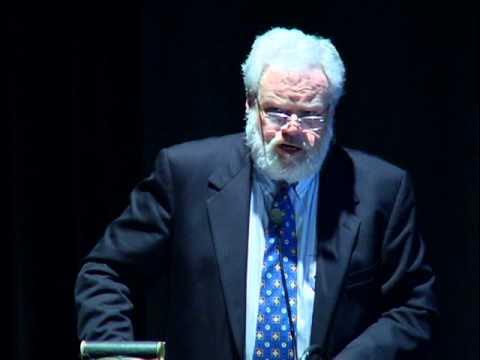
UC Berkeley Events
AI-assisted summary of Why our generals were more successful in World War II than in Korea, Vietnam or Iraq/Afghanistan — original source. Check the original for full context.
Source published:
Key ideas
- During World War II, relieving division and corps commanders was a standard management tool rather than career suicide, with 16 out of roughly 165 combat division commanders replaced for underperformance and several later restored to subsequent division commands. (18:27)
- The institutional practice of relieving battlefield commanders collapsed following the Korean War due to domestic political sensitivities and the introduction of fixed one-year combat rotation tours, disincentivizing superiors from firing ineffective officers. (37:29)
- Post-Vietnam military reforms spearheaded by General William DePuy rebuilt tactical doctrine, training, and equipment, but deliberately avoided reforming generalship, leaving strategic command accountability untouched. (53:18)
- The elimination of performance-based reliefs bred systemic risk aversion and managerial conformity among flag officers, leaving modern four-star dismissals almost exclusively in the hands of civilian authorities. (40:34)
Detailed notes
## Background Published on YouTube by UC Berkeley Events on March 23, 2011, this video presents the 27th annual Chester W. Nimitz Memorial Lecture. It features Pulitzer Prize-winning military journalist and author Thomas E. Ricks, then a Senior Fellow at the Center for a New American Security (CNAS) and contributing editor for Foreign Policy.
## TL;DR Thomas E. Ricks investigates why American generalship succeeded in World War II but struggled in Korea, Vietnam, Iraq, and Afghanistan. He argues that George C. Marshall established a decisive system of ruthless accountability where underperforming commanders were routinely relieved without career-ending stigma, enabling rapid adaptation and bold risk-taking. In contrast, post-WWII reforms, one-year combat rotations, and institutional defensiveness fostered risk aversion, conformist managerial cultures, and an unwillingness to fire failing generals. Consequently, modern strategic failures were allowed to persist until civilian leaders were forced to intervene.
## Atmosphere & style The lecture carries an engaging, analytical, and provocative tone, driven by Ricks's investigative curiosity and dry wit. Rather than delivering a dry academic paper, Ricks speaks with the candid storytelling of a seasoned combat reporter, peppering sharp institutional critiques with vivid historical anecdotes. The audience Q&A sharpens this edge, creating an atmosphere of sober reflection on military accountability, strategic failure, and the human cost borne by enlisted troops when senior leaders are shielded from scrutiny.
## Bulletin - [18:27](https://www.youtube.com/watch?v=AxZWxxZ2JGE&t=1107s) During World War II, relieving division and corps commanders was a standard management tool rather than career suicide, with 16 out of roughly 165 combat division commanders replaced for underperformance and several later restored to subsequent division commands. - [37:29](https://www.youtube.com/watch?v=AxZWxxZ2JGE&t=2249s) The institutional practice of relieving battlefield commanders collapsed following the Korean War due to domestic political sensitivities and the introduction of fixed one-year combat rotation tours, disincentivizing superiors from firing ineffective officers. - [53:18](https://www.youtube.com/watch?v=AxZWxxZ2JGE&t=3198s) Post-Vietnam military reforms spearheaded by General William DePuy rebuilt tactical doctrine, training, and equipment, but deliberately avoided reforming generalship, leaving strategic command accountability untouched. - [40:34](https://www.youtube.com/watch?v=AxZWxxZ2JGE&t=2434s) The elimination of performance-based reliefs bred systemic risk aversion and managerial conformity among flag officers, leaving modern four-star dismissals almost exclusively in the hands of civilian authorities.
## Key takeaways - [09:09](https://www.youtube.com/watch?v=AxZWxxZ2JGE&t=549s) General George C. Marshall modernized the U.S. Army by expanding it from 190,000 to approximately 9,000,000 personnel while prioritizing the ruthless weeding out of unpromising senior leaders. - [11:50](https://www.youtube.com/watch?v=AxZWxxZ2JGE&t=710s) Marshall pre-emptively retired around 200 senior colonels and generals before U.S. entry into WWII because they lacked the physical vigor and stamina required for modern mechanized warfare. - [14:02](https://www.youtube.com/watch?v=AxZWxxZ2JGE&t=842s) Marshall established seven core leadership traits in 1920, placing a premium on cheerfulness and optimism to counteract the inevitable setbacks of an unprepared democracy entering war. - [18:27](https://www.youtube.com/watch?v=AxZWxxZ2JGE&t=1107s) Relief in WWII was not treated as a career-ending humiliation; commanders were frequently reassigned or given second commands once they refreshed or fit a different operational need. - [22:50](https://www.youtube.com/watch?v=AxZWxxZ2JGE&t=1370s) Inter-service parochialism and poor teamwork were the fastest routes to immediate dismissal under Marshall and Dwight Eisenhower's coalition warfare doctrine. - [28:06](https://www.youtube.com/watch?v=AxZWxxZ2JGE&t=1686s) Eisenhower's command philosophy paired broad operational autonomy for field commanders with zero tolerance for failure, replacing unsatisfactory subordinates rather than micromanaging them. - [31:28](https://www.youtube.com/watch?v=AxZWxxZ2JGE&t=1888s) Even victorious commanders like Terry Allen at Troina were relieved when their operational style or unit discipline clashed with higher command's broader strategic framework. - [37:29](https://www.youtube.com/watch?v=AxZWxxZ2JGE&t=2249s) Fixed one-year combat tours introduced during the Korean War and expanded during Vietnam caused command churn and led superiors to simply wait out incompetent leaders instead of firing them. - [37:29](https://www.youtube.com/watch?v=AxZWxxZ2JGE&t=2249s) During the Vietnam War, only one Army division commander was formally relieved, signaling a major institutional shift toward protecting the careers of flag officers over operational efficacy. - [40:34](https://www.youtube.com/watch?v=AxZWxxZ2JGE&t=2434s) The collapse of commander accountability produced an unimaginative operational culture prone to brute-force frontal assaults while neglecting post-conflict stabilization. - [40:34](https://www.youtube.com/watch?v=AxZWxxZ2JGE&t=2434s) Modern general officer dismissals occur almost entirely via civilian intervention rather than internal military accountability mechanisms, as seen with Stanley McChrystal and Douglas MacArthur. - [43:20](https://www.youtube.com/watch?v=AxZWxxZ2JGE&t=2600s) Command failures in the post-9/11 era, such as the operational dysfunction at Abu Ghraib under Ricardo Sanchez, went uncorrected because the military refused to replace struggling three-star leaders. - [53:18](https://www.youtube.com/watch?v=AxZWxxZ2JGE&t=3198s) The military establishment after Vietnam adopted a defensive narrative blaming politicians and the press, thereby shielding flawed generalship from necessary audit and reform. - [55:19](https://www.youtube.com/watch?v=AxZWxxZ2JGE&t=3319s) Without the threat of relief for failure, modern officers lack incentives to take bold operational risks, fostering safe mediocrity across senior command.
## Detailed walkthrough ### [00:11](https://www.youtube.com/watch?v=AxZWxxZ2JGE&t=11s) Introduction by Captain Phil Roos
Captain Phil Roos, Director of Military Affairs at UC Berkeley and Commanding Officer of the Naval ROTC unit—a role he calls “the best job in the Navy”—opens the 27th annual Chester W. Nimitz Memorial Lectureship. Established by endowment in 1983, the lecture series brings nationally recognized public figures to campus to educate students and the wider community on critical national security issues, reflecting what Roos describes as a shared civic obligation to maintain an informed public.
Roos introduces the 2011 lecturer, author and journalist Thomas E. Ricks. Originally from Massachusetts, Ricks grew up in New York, attended the American International School in Kabul, graduated from Yale, taught for two years in Hong Kong, and served as an assistant editor at *The Wilson Quarterly*. He then spent 17 years at *The Wall Street Journal*, ultimately serving as its Pentagon correspondent, before joining *The Washington Post* from 2000 to 2008 as its military correspondent. Over his journalism career, Ricks shared two Pulitzer Prizes: one in 2000 with the *Journal* for coverage of military adaptation to 21st-century defense needs, and another in 2002 with the *Post* for reporting on the beginnings of the post-9/11 counter-offensive against terrorism. He is also a Senior Fellow at the Center for a New American Security (CNAS), writes *The Best Defense* blog for *Foreign Policy*, and is the author of several influential military studies, including *Making the Corps*, *Fiasco: The American Military Adventure in Iraq*, and *The Gamble: General David Petraeus and the American Military Adventure in Iraq, 2006–2008*.
- **Lecture Series**: 27th Annual Chester W. Nimitz Memorial Lectureship, endowed in 1983. - **Speaker**: Thomas E. Ricks (Senior Fellow at CNAS, contributing editor and blogger for *Foreign Policy*). - **Key Works**: *Making the Corps*, *Fiasco*, and *The Gamble*. - **Honors**: Two Pulitzer Prizes for national reporting (2000 with *The Wall Street Journal*; 2002 with *The Washington Post*).
---
[03:35](https://www.youtube.com/watch?v=AxZWxxZ2JGE&t=215s) The Writer’s Drive: Questions, Not Answers
Taking the podium, Ricks jokes about the persistent California rain that had greeted him since his arrival on Sunday, remarking that given the weather, he wasn't sure he would have come out to hear himself speak. He surveys the audience by a show of hands—asking who belongs to the military, who is affiliated with the university, and who represents the general public—before projecting an unidentified photograph on the screen and promising that by the end of the evening, everyone in the hall will recognize the man pictured.
Ricks reflects on his craft, explaining that he is in the middle of his fifth book. He describes book writing not as an exercise in delivering predetermined conclusions, but as an all-consuming detective novel driven by unsolved mysteries. He admits to waking up in the dead of night from vivid dreams about obscure historical conferences—such as a spring 1970 meeting between General William Westmoreland and General Creighton Abrams—compelling him to climb out of bed and scribble notes. As Ricks explains his underlying philosophy of research:
> “I don’t write books because I have answers at least at the beginning of them; I write books because I have questions.”
---
[05:42](https://www.youtube.com/watch?v=AxZWxxZ2JGE&t=342s) The Sicily Revelation: Why Don’t Modern Generals Get Fired?
The central mystery of his new book crystallized for Ricks after covering the Iraq War. Having published two critical volumes on the conflict, he found himself haunted by how senior American military leaders could have gotten the war so fundamentally wrong. The intellectual fuse had been lit earlier, in the summer of 2005, while attending a military staff ride in Sicily studying the July–August 1943 Allied invasion.
Standing on the battlefield of Troina, just north of the town of Enna in central Sicily, Ricks listened to a retired colonel recount the culminating engagement of the campaign. Major General Terry de la Mesa Allen Sr. had led the 1st Infantry Division to victory against stubborn German resistance. Yet immediately after prevailing in that battle, Allen—the U.S. Army's most successful division commander in the European theater during the first year of the war—was abruptly relieved of command by Lieutenant General Omar Bradley. Ricks was stunned by the contrast:
> “Here I was just coming from Iraq in ’05; we had generals who were screwed it up to a fare-thee-well, nobody was firing them; why in World War II would a successful general have been fired when nowadays nobody got fired?”
Ricks stresses that the issue with modern generalship was never a lack of character or basic talent. The flag officers he encountered were hardworking, determined, courageous, and smart. While reporting, Ricks had even been the first journalist permitted to attend the Army's "Charm School" at Fort Leavenworth—a week-long orientation for newly promoted brigadier generals from the active duty, Reserve, and National Guard. Initially, the attendees gave the lone journalist a wide berth, leaving empty chairs on either side of him. But midway through the first day, Army Chief of Staff General Dennis Reimer entered, greeted Ricks warmly by name, and sat directly beside him. The icy isolation instantly vanished into eager networking during the next coffee break. Among Ricks’s classmates at that session was Raymond T. Odierno, who later rose to four-star rank and commanded Multi-National Force – Iraq. These officers were impressive, dedicated public servants, yet their generation of military leadership presided over profound strategic failures, convincing Ricks that the breakdown lay in the military institution's systemic accountability rather than individual incompetence.
```mermaid flowchart TD accTitle: The Accountability Contrast accDescr: Diagram contrasting command accountability in World War II with accountability in modern conflicts like Iraq.
subgraph WWII["World War II System"] A["Gen. Terry Allen leads 1st ID"] --> B["Wins Culminating Battle at Troina (1943)"] B --> C["Relieved by Gen. Omar Bradley"] C --> D["Accountability for organizational friction / fresh leadership"] end
subgraph Modern["Modern System (e.g., Iraq War)"] E["Generals oversee strategic failures"] --> F["Zero public accountability / firings"] F --> G["Culture protects 'good guys' and peer relationships"] end ```
---
[09:09](https://www.youtube.com/watch?v=AxZWxxZ2JGE&t=549s) George C. Marshall and the Transformation of the US Army
Searching for the roots of high command performance, Ricks traced the modern American generalship standard back to General George C. Marshall. Marshall is largely remembered today only for the postwar Marshall Plan—crafted during his subsequent tenure as Secretary of State—which earned him the Nobel Peace Prize as the first professional soldier ever to receive the honor. Yet his most remarkable accomplishment lay in the preceding decade of military stewardship.
Marshall was sworn in as Army Chief of Staff on September 1, 1939—the very day Nazi Germany invaded Poland to spark World War II. Though Marshall had served as acting chief of staff for several months and anticipated the crisis, he inherited what he later termed a severely neglected force. The United States Army, which then encompassed the Army Air Forces, numbered just 190,000 personnel. It possessed a meager collection of tanks and largely antiquated bombers, making it numerically smaller than the Bulgarian military. Recalling Marshall’s bleak assessment of the nation's readiness on the day he took command:
> “He later wrote that the military he commanded was, quote, ‘not even a third-rate military power.’”
By the time Marshall stepped down at the end of the war, he had overseen an unprecedented institutional transformation, expanding the U.S. Army into a 9-million-man fighting force and turning a fourth-rate military establishment into the preeminent superpower on Earth. Marshall designed the mobile, mechanized doctrine and force structure that still underpins modern American arms—down to durable hardware like the.50-caliber M2 Browning machine gun, which Ricks notes remains an infantry favorite. Above all, Marshall's defining preoccupation was generalship: obsessively studying, testing, selecting, and holding commanders accountable.
- **Date Marshall took office**: September 1, 1939 (the day Nazi Germany invaded Poland). - **Initial size of the US Army**: 190,000 troops (smaller than the army of Bulgaria). - **Peak size under Marshall**: Approximately 9,000,000 troops. - **Key focus**: Selecting, cultivating, evaluating, and ruthlessly weeding out division and corps commanders.
[11:50](https://www.youtube.com/watch?v=AxZWxxZ2JGE&t=710s) Marshall Prepares for War and Purges the Peacetime Officer Corps
Examining historical documents, including papers marked with George S. Patton’s handwriting and pencil tactical maps from the Tunisia and Sicily campaigns, sheds light on how George C. Marshall methodically prepared to assume the role of Army Chief of Staff. Knowing that World War II was approaching and that the United States would inevitably enter on its heels, Marshall boarded the cruiser USS *Nashville* in May 1939 for a voyage to South America. His objective was to secure critical lines of communication across the South Atlantic, anticipating that direct entry into Europe would initially be blocked.
Marshall brought along a smart young officer he admired for his managerial and leadership skills: Colonel Matthew Ridgway. For ten days as the ship steamed toward Rio de Janeiro, Marshall sat on the bow of the *Nashville* detailing his vision to Ridgway. Marshall had observed during World War I that General John J. Pershing, the commander of the American Expeditionary Forces in France, spent far too much time relieving ineffective generals in the field. Marshall resolved to weed out unsuitable commanders before they ever left the United States. He appeared gentle on the surface, but he had an iron interior. As he told Ridgway on that voyage, he intended to clean house immediately by retiring approximately 200 senior colonels and generals, telling them directly that while their interest in national defense was appreciated, they were simply too old to lead troops into modern combat.
Beyond this initial purge, Marshall instituted a second screening mechanism: generals could train divisions at home, but they were not guaranteed to lead them overseas. Overseas theater commanders retained absolute veto authority over all incoming division leaders. Both Dwight D. Eisenhower and Douglas MacArthur exercised this right repeatedly, rejecting nominees and even striking down Marshall’s personal protégés.
```mermaid flowchart TD accTitle: Marshall's Two-Stage Commander Selection Process accDescr: Diagram showing how George C. Marshall screened, trained, and filtered division commanders prior to combat deployment.
subgraph Phase1["Screening & Retirement (1939)"] A["Peacetime Senior Officers"] -->|"Marshall's initial purge (~200 colonels & generals retired)"| B["Retained Cadre"] end
subgraph Phase2["Training & Veto"] B --> C["Division Training in U.S."] C --> D{"Overseas Theater Veto<br/>(Eisenhower / MacArthur)"} D -->|"Rejected"| E["Reassigned Stateside"] D -->|"Approved"| F["Combat Command Overseas"] end ```
---
[14:02](https://www.youtube.com/watch?v=AxZWxxZ2JGE&t=842s) The 1920 List: Essential Qualities of an American General
A persistent myth suggests that Marshall maintained a little "black book" tracking promising candidates for high command. Historical research disproves this; Marshall had no need for a secret ledger because the peacetime army was small enough that he already knew the talent intimately. During his tenure running the Infantry School at Fort Benning, his staff included Joseph "Vinegar Joe" Stilwell as the tactics expert and Omar Bradley teaching machine guns. However, Marshall did maintain an authentic, overlooked set of criteria for senior leadership. Marshall famously refused to write a World War II memoir, even rejecting a $1,000,000 offer from Time Inc. publisher Henry Luce because he felt telling the full story would embarrass too many colleagues. Yet, during idle moments in November 1920, Marshall documented what he had learned as a rising staff colonel and aide-de-camp to Pershing, creating a explicit list of the essential qualities of a general:
- Good common sense - Professionally educated - Physically strong - Cheerful and optimistic - Energetic - Extreme loyalty - Determined
This list was deliberately non-Clausewitzian. While Carl von Clausewitz emphasized intuitive battlefield vision (*coup d'œil*), Marshall tailored his requirements to the specific strategic realities of the United States. Marshall recognized that unlike Britain—which maintained a large navy and a small army, requiring generals to conserve their forces and avoid unnecessary engagements—America would perpetually pursue a "policy of unpreparedness for war." Marshall believed officers had to accept this reality rather than complain about it, treating national unpreparedness as an unalterable condition like the weather.
Because American troops would inevitably enter conflicts ill-trained and poorly equipped, leading to demoralizing early setbacks, Marshall concluded that the army required a specific temperament to endure and overcome initial shock. “The dashing, optimistic, and resourceful type, quick to estimate, with relentless determination, and who possessed in addition a fund of sound common sense, which operated to prevent gross errors due to rapidity of decision and action.” Conversely, pessimistic officers who anticipated defeat were viewed as a toxic liability. Marshall warned that such men must be excised like a cancer, noting that when put in charge, they “quickly infected their units with the same spirit and grew ineffective, unless a more suitable commander is found and given charge.”
---
[18:27](https://www.youtube.com/watch?v=AxZWxxZ2JGE&t=1107s) The Missing Mechanism: Relief Without Career Ruin
While Marshall's leadership template remains famous, the modern U.S. military has abandoned its central operational engine: swift relief. During World War II, successful commanders were retained and elevated, while unsuccessful ones were promptly relieved and reassigned. When an institution ceases to punish failure, it effectively stops rewarding genuine success. Retaining underperforming leaders fosters a culture of mediocrity where officers aim for the safe middle rather than the top. When failure incurs no removal, officers avoid risk-taking and keep their heads down. This dynamic was exacerbated by the individual officer rotation policies introduced late in the Korean War and maintained through Vietnam, Iraq, and Afghanistan—producing an officer corps designed for operational stalemate rather than decisive victory.
```mermaid flowchart LR accTitle: The Operational Divergence in Command Accountability accDescr: Flowchart contrasting the dynamic WWII relief system with the modern rotation system that leads to mediocrity.
subgraph WWII["World War II System"] W1["Combat Command"] --> W2{"Operational Performance"} W2 -->|"Success"| W3["Retained & Promoted"] W2 -->|"Failure"| W4["Swift Relief & Reassignment"] W4 -->|"Rehabilitated"| W1 end
subgraph Modern["Post-Korea / Modern System"] M1["Combat Command"] --> M2{"Risk Aversion / Mediocrity"} M2 -->|"No Relief for Failure"| M3["Protected Tenures"] M3 -->|"Timed Rotation"| M4["Stalemate-Oriented Officer Corps"] end ```
World War II commenced with a sweeping purge that would shock modern observers. Within two weeks of the attack on Pearl Harbor, Admiral Husband E. Kimmel and Lieutenant General Walter Short were sacked. Kimmel was replaced in late December 1941 by Admiral Chester W. Nimitz, while Major General Frederick Martin, Short's air commander, was also removed. In North Africa, following the initial clashes with German forces, Major General Lloyd Fredendall was unceremoniously relieved as senior American tactical commander. Back in Washington, Marshall's winnowing continued. Of all the senior generals who led the army during the 1930s and directed the Louisiana Maneuvers, only Walter Krueger survived to hold a combat command in the war (aside from Douglas MacArthur, who was serving in the Philippines outside the regular army establishment).
- Out of roughly 165 men who commanded U.S. Army divisions in combat during World War II, 16 division commanders were relieved for performance after having already cleared the rigorous pre-war selection screens. - Another four to five corps commanders were relieved in the field. - Relief was rarely a permanent career ender; it served as a temporary reset. At least four division commanders relieved in the European theater were given command of another division within twelve months. - Brigadier General Robert "Hanging Sam" Williams was relieved, demoted to colonel, yet managed to rise again and ultimately retired as a lieutenant general (three-star). - Another colonel was marched off the battlefield in Normandy under armed escort and still managed to conclude his military career as a major general (two-star).
---
[22:50](https://www.youtube.com/watch?v=AxZWxxZ2JGE&t=1370s) The Ultimate Disqualification: Disrupting the Team
While Marshall expected commanders to embody energy, common sense, and optimism, the quickest route to immediate relief was failing to be a team player. Marshall held zero tolerance for personal vanity or inter-service squabbling, repeatedly emphasizing that operations were about institutional mission, not individual egos.
This principle was tested early in the war through the eccentric behavior of Brigadier General Simon Bolivar Buckner Jr., then commanding the military forces in Alaska. Buckner wrote a poem mocking the U.S. Navy, alleging that it was terrified of operating in the stormy waters of the Bering Sea. Buckner unwisely read the verses aloud directly to his local Navy counterpart. Outraged, the naval commander forwarded the poem up the chain to Admiral Ernest J. King in Washington. King stormed into Marshall's office, confronting the Chief of Staff over the insult. Marshall took the incident deadly seriously, viewing such behavior as an intolerable violation of joint service cohesion.
[23:52](https://www.youtube.com/watch?v=AxZWxxZ2JGE&t=1432s) The Merry-Go-Round of Reliefs: From the Aleutians to Okinawa
After deciding against firing Simon Bolivar Buckner Jr. in the Aleutians, superior commanders left him in place and later promoted him. The relief carousel continued when an admiral subsequently relieved Army Major General Albert E. Brown, replacing him with Eugene M. Landrum—who was himself relieved roughly a year later in Normandy. Buckner moved on to the Pacific theater, where he was tasked with investigating one of the war’s most infamous inter-service controversies: the sacking of Army Major General Ralph C. Smith (commander of the 27th Infantry Division) by Marine Lieutenant General Holland M. "Howlin' Mad" Smith. Buckner’s Army board naturally concluded that Howlin' Mad Smith was in the wrong, though in reality the Marine general was dead right: the 27th Division had simply moved too slowly.
Buckner carried an extraordinary military pedigree and a bizarre personal fate. His father, Confederate General Simon Bolivar Buckner Sr., had surrendered Fort Donelson to Ulysses S. Grant during the Civil War. When Buckner Sr. inquired about surrender terms, Grant famously issued the blunt ultimatum that earned him the moniker "Unconditional Surrender": no terms except immediate and unconditional surrender, proposing to move upon his works immediately. Buckner Sr. replied that Grant was no gentleman, to which Grant answered with gunfire. Decades later, Buckner Jr. became the highest-ranking American officer killed by enemy fire during World War II. While standing on an observation ridge on Okinawa, he was warned by a Marine officer to remove his shiny, three-starred helmet because it invited enemy fire. Buckner scoffed, “Nonsense,” only to be killed instantly when an artillery shell struck next to him. To fill his post, the Army called in Joseph "Vinegar Joe" Stilwell, who had himself been relieved of command in China in October 1944.
```mermaid flowchart TD accTitle: Pacific and European Relief Merry-Go-Round accDescr: Sequence of reliefs and reassignments among US commanders in World War II.
subgraph Aleutians ["Aleutians & Normandy"] Brown["Maj. Gen. Albert E. Brown (Relieved)"] --> Landrum["Maj. Gen. Eugene Landrum"] Landrum --> NormandyRelief["Relieved 1 Year Later (Normandy)"] end
subgraph PacificChain ["Pacific Theater"] HMSmith["Lt. Gen Holland 'Howlin Mad' Smith (USMC)"] -->|"Relieves for slow pace"| RSmith["Maj. Gen. Ralph Smith (27th ID)"] Buckner["Lt. Gen. Simon Bolivar Buckner Jr."] -->|"Investigates & defends Army"| RSmith Buckner -->|"Killed on Okinawa (1945)"| Stilwell["Gen. Joseph Stilwell (Previously relieved China, 1944)"] end ```
- **Fort Donelson Connection:** Simon Bolivar Buckner Jr.’s father surrendered to Ulysses S. Grant in February 1862. - **Highest-Ranking Combat Death:** Buckner was killed by Japanese artillery shrapnel on Okinawa on June 18, 1945. - **The Carousel Dynamic:** Commanders cycled repeatedly; Stilwell assumed Tenth Army command on Okinawa despite his high-profile removal from China eight months earlier.
---
[26:10](https://www.youtube.com/watch?v=AxZWxxZ2JGE&t=1570s) The Eisenhower Anomaly and the High Stakes of Coalition Command
Anticipating questions about why Dwight D. Eisenhower was never sacked despite early mistakes, the speaker explains that Eisenhower was a distinct anomaly. In the spring of 1940, Eisenhower was still an obscure lieutenant colonel serving as executive officer (XO) of an infantry regiment in Washington state. George C. Marshall catapulted him forward because he foresaw an overseas coalition war requiring a collaborative team player who could suppress his fiery temper and work effectively with allies. Marshall recognized that widespread anti-British sentiment inside the officer corps would derail alliance cohesion, whereas Eisenhower possessed the diplomatic patience to hold a disparate coalition together.
Even Eisenhower was not completely immune to relief anxiety. In late 1942 and early 1943 during the North African campaign, he weathered intense political fallout from the Darlan Affair—a pragmatic deal made with the Vichy French Admiral François Darlan, who had actively collaborated with Nazi Germany. The arrangement provoked public outrage back in Washington, prompting Eisenhower to write to his son that he might well be removed, advising him not to worry because personal careers were secondary to the larger cause. Ultimately, senior commanders holding three- or four-star rank enjoyed far greater security, primarily because the military simply lacked qualified replacements capable of filling massive theater-level positions.
```mermaid flowchart LR accTitle: Eisenhower Rise and Coalition Command accDescr: Eisenhower's rapid advancement under Marshall based on temperament for coalition warfare.
LtCol["Spring 1940: Lt. Col. & Regimental XO"] --> MarshallChoice["Selected by Gen. George C. Marshall"] MarshallChoice --> KeyTrait["Required Traits: Suppress temper, team player, counter anti-British bias"] KeyTrait --> SupremeCmd["Theater & Coalition Commander"] SupremeCmd --> Crisis["1942-1943 Darlan Affair Crisis (Near-relief)"] ```
---
[28:06](https://www.youtube.com/watch?v=AxZWxxZ2JGE&t=1686s) Coalition Accountability: Orlando Ward and Eisenhower’s Relief Doctrine
Operating inside a genuine coalition—unlike modern operations where foreign partners often serve as political window dressing—demanded dual accountability. American field officers had to satisfy both their domestic superiors and British high command. When Major General Orlando Ward, commander of the 1st Armored Division in North Africa and a favored former secretary of Marshall's General Staff, drew the ire of British leadership, Eisenhower fired him the very next day. Yet the system did not destroy Ward; he was reassigned, commanded the 20th Armored Division by 1944, and briefly led V Corps before war's end.
Reflecting on the hard-fought victory in Tunisia in the spring of 1943—the first major Allied overland victory against Axis forces—Eisenhower articulated a definitive philosophy regarding the necessity of rapid relief. He saw immediate removal not as a bureaucratic punishment, but as the indispensable prerequisite for decentralized mission command:
> “Immediate and continuous loyalty to the concept of unity and Allied commanders is basic to victory. The instant such commanders lose the confidence of either government or of the majority of their principal subordinates, they must be relieved.”
> “The American doctrine has always been to assign a theater commander a mission, to provide him with a definite amount of force, and then to interfere as little as possible in the execution of his plans. If results obtained by the field commander become unsatisfactory, the proper procedure is not to advise, admonish, and harass him, but to replace him.”
- **The Battlefield Clock:** In World War II, a frontline combat division commander had approximately 60 to 90 days to succeed, be killed, or be relieved. - **Mission Command Trade-off:** Autonomy and the prevention of micromanagement required ruthless accountability; commanders who failed to produce results were removed outright rather than coached.
---
[31:28](https://www.youtube.com/watch?v=AxZWxxZ2JGE&t=1888s) The Sacking of "Terrible Terry" Allen
The friction between the Marshall-Bradley template of corporate managers and old-school fighters came to a head with Major General Terry de la Mesa Allen, known as "Terrible Terry," commander of the legendary 1st Infantry Division (the "Big Red One"). Born in an Old West military fort, Allen was a hard-drinking, dice-shooting cavalryman who once beat a civilian cowboy in a heavily publicized cross-Texas horse endurance race from San Antonio to Dallas. Allen was fundamentally out of step with the buttoned-down, cautious managerial mold championed by Omar Bradley, whose guiding operational instinct was caution.
Allen repeatedly demonstrated brilliance in combat. In Tunisia, ordered to attack at dawn, he attacked at midnight instead, seizing all his objectives early. When George S. Patton arrived and began screeching in his high-pitched, squeaky voice—demanding to know why Allen was idling instead of attacking—Allen calmly pointed out that his troops had already taken all assigned positions. During the invasion of Sicily, German panzers counterattacked to within a kilometer of the invasion beaches, forcing American infantrymen to crouch in foxholes as tanks rolled over them. Allen halted the counteroffensive by preemptively assaulting the assembling German armor at 4:00 a.m. instead of waiting for daylight.
Despite leading the 1st Division through six weeks of brutal combat and winning the battle of Troina, Allen was summarily relieved by Bradley in August 1943. Bradley replaced him with Major General Clarence R. Huebner, a classic corporate-style soldier who had himself just been fired as deputy chief of staff to British General Harold Alexander. In keeping with the era's operational logic, Allen was not banished from the service; he returned stateside, trained the 104th Infantry Division ("Timberwolves"), and commanded it from Normandy across Western Europe into Germany.
- **Cavalry Stigma:** Senior infantry leaders in the European theater deeply distrusted cavalry officers, citing J.E.B. Stuart’s ride away to Carlisle during the Gettysburg campaign as proof that cavalrymen abandoned coordinated lines. - **Patton's Escape:** The enduring puzzle of the Sicilian campaign was not the dismissal of Terry Allen, but how Patton avoided being cashiered himself after the hospital slapping incidents, saved largely by his long-standing personal relationship with Eisenhower.
[35:14](https://www.youtube.com/watch?v=AxZWxxZ2JGE&t=2114s) Eisenhower’s Management of Patton and the Culture of World War II Reliefs
George S. Patton Jr. maintained a complex view of command, simultaneously mocking his superiors for their frequent sackings while ruthlessly applying the axe himself. Dwight D. Eisenhower kept Patton in place because he recognized Patton's unique operational value: although Patton was deficient in defense and poor at broad coordination, he was peerless in the pursuit. By mid-1942, Eisenhower foresaw that Allied forces would eventually spend two to three years chasing German armies across Europe, making Patton indispensable despite his volatility. While Patton ridiculed Eisenhower and Omar Bradley for constantly relieving subordinates—insisting they were far too quick to sack officers—Patton did not spare his own men. In late 1944, he dismissed John S. Wood, the widely respected and admired commander of the 4th Armored Division, bluntly telling him he was sick and ordering him home.
Removals occurred throughout World War II at a staggering rate. John P. Lucas was relieved after Anzio, and Normandy saw an extraordinary turnover: Terry de la Mesa Allen Sr. was replaced, Roscoe B. Woodruff lasted mere days, and commanders like Eugene M. Landrum and Leroy H. Watson were cashiered weeks later. Meanwhile, two prominent commanders who arguably deserved relief went untouched: Douglas MacArthur and Bernard Montgomery. Eisenhower even drafted a cable in late 1944 demanding Montgomery’s removal, though he circulated it among colleagues rather than sending it, knowing the political impossibility of sacking the British field marshal.
The defining characteristic of this wartime doctrine was that relief functioned as a routine, practical administrative instrument rather than a career-ending condemnation. Because it happened so frequently, removal did not carry the stigma of cowardice or personal failure; it simply indicated an officer was out of step with his superiors, the strategic environment, or allied partners. Crucially, relief was rarely terminal, as officers were routinely reassigned to alternative positions or given second chances elsewhere.
“The point here though to remember, the takeaway, is that relief was very common; the more common it was, the less extreme it seems — it becomes a normal management tool.” — Thomas E. Ricks
- **George S. Patton Jr.**: Preserved by Eisenhower specifically for operational pursuit across Germany despite poor defensive skills. - **John S. Wood**: Relieved by Patton from command of the 4th Armored Division in late 1944 under the guise of medical exhaustion. - **Normandy Casualties**: Extensive leadership turnover among division commanders shortly after entering combat (e.g., Landrum, Watson). - **Montgomery & MacArthur**: Major senior theater commanders whose political stature shielded them from deserved dismissal.
---
[37:29](https://www.youtube.com/watch?v=AxZWxxZ2JGE&t=2249s) The Erosion of Accountability: Rotation, Churn, and the Demise of Relief
The institutional custom of removing underperforming field commanders—a standard practice spanning the American Revolution, Abraham Lincoln's search for battlefield leadership in the Civil War, World War I, and World War II—rapidly collapsed following the Korean War. Although Matthew Ridgway relieved five division commanders in early 1951 upon taking charge of the Eighth Army, dismissals ground to a halt by the end of the conflict. This shift stemmed from two core dynamics: the domestic political friction of sacking commanders during unpopular wars, and the introduction of institutional troop rotation policies in 1951–1952. In World War II, soldiers and officers remained for the duration—encapsulated by the adage that "the road home went through Berlin"—giving commanders a vested interest in fixing leadership deficiencies immediately. Under fixed-length tours, superiors adopted an attitude of running out the clock, choosing to wait out an ineffective officer's impending rotation rather than undergoing the unpleasant administrative ordeal of a formal sacking.
```mermaid flowchart TD accTitle: Impact of Rotational Tours on Command Climate accDescr: Diagram tracing how one-year tours and six-month command rotations led to officer churning, lack of trust, and micromanagement.
subgraph Policies ["Personnel Policies"] A["One-Year Rotational Tours<br>(Introduced 1951-1952)"] B["Westmoreland's 6-Month<br>Command / Staff Splits"] end
subgraph Effects ["Tactical & Institutional Outcomes"] C["High Turnover & Rapid Churning<br>(e.g., Americal Division)"] D["Erosion of Relief as an<br>Administrative Tool"] E["Commanders Do Not Know<br>or Trust Subordinates"] F["Systemic Micromanagement<br>(Helicopter Hovering)"] end
A --> D A --> C B --> C C --> E E --> F D --> F ```
This personnel rotation was heavily exacerbated in the Vietnam War by William Westmoreland's policy of splitting one-year combat tours into six months of command and six months of staff duty. Compounded by combat casualties, wounds, and rapid promotions, this generated severe churning across the ranks. In units such as the troubled Americal Division, an infantry company could cycle through seven distinct company commanders in the span of six months. This rapid turnover destroyed trust between officers and their subordinates, fostering rampant micromanagement, typified by battalion and brigade commanders hovering in helicopters over engagements to direct low-level maneuvers.
The definitive collapse of commander relief arrived within the 1st Infantry Division in 1966. Its commander, William E. DePuy, aggressively purged failing subordinates, relieving 11 battalion commanders or their equivalents within a single calendar year. This prompted Army Chief of Staff Harold K. Johnson to visit DePuy's hooch at Christmas to reprimand him for sacking officers instead of mentoring them.
“Harold Johnson says, ‘Why are you firing all my battalion commanders? You're supposed to train them.’ The assistant division commander pipes up and says, ‘Funny, I thought we were supposed to fight them.’” — Thomas E. Ricks
- **The Rotation Paradigm**: Commenced in Korea in 1951, replacing the "duration of the war" service model and disincentivizing formal removals. - **Westmoreland's Split Tours**: Six months in command followed by six months on staff produced institutional instability. - **Americal Division Example**: Severe organizational turnover resulted in an average of seven company commanders over a single six-month stretch. - **DePuy's Dismissals**: 11 battalion-level commanders relieved in 1966, provoking pushback from Army Chief of Staff Harold K. Johnson. - **Vietnam General Officer Immunity**: Only one division commander was relieved during the entire Vietnam War; the commander overseeing the division responsible for the My Lai massacre was promoted to superintendent of West Point before facing charges.
---
[40:34](https://www.youtube.com/watch?v=AxZWxxZ2JGE&t=2434s) Modern Consequences: Risk Aversion and Civilian Intervention
The abandonment of relief transformed the institutional culture of the officer corps, fostering risk-averse, conformist managers rather than bold operational thinkers. A direct intellectual lineage runs from Omar Bradley's frontal assault on Omaha Beach, through Norman Schwarzkopf’s early plans for the 1991 Gulf War, to Tommy Franks's operational plan for the 2003 invasion of Iraq. All three exhibited an unimaginative approach that can be summarized as "hey diddle diddle, straight up the middle," obsessing over the mechanics of initial breach while neglecting post-assault strategic consolidation.
Because military hierarchies refuse to hold their own senior ranks accountable through administrative relief, four-star generals are now relieved almost exclusively by civilian authorities. General Douglas MacArthur's firing by Harry S. Truman in the Korean War established this dynamic at the exact moment the military ceased disciplining its own general officers. To restore operational vigor, modern armed forces must reclaim the historic tradition of relief as an internal instrument of professional standards.
“My concluding thought is, if the Army won't fire generals, civilians will.” — Thomas E. Ricks
Following the conclusion of the lecture, the host opened the floor to audience questions while clarifying logistics regarding the post-event reception at the Faculty Club. Ricks invited direct critiques, humorously remarking that his career as an investigative reporter provided him with thick skin against personal offenses.
- **Conformist Officer Corps**: The elimination of performance sackings selected for cheerful, risk-averse managers over creative tacticians. - **Frontal Assault Mentality**: Bradley, Schwarzkopf, and Franks shared a fixation on initial kinetic thrusts over planning for downstream stabilization. - **Four-Star Accountability**: Modern general officer dismissals are executed almost exclusively by civilian executives rather than uniform leadership.
---
[43:20](https://www.youtube.com/watch?v=AxZWxxZ2JGE&t=2600s) Q&A: Stanley McChrystal, Abu Ghraib, and Ricardo Sanchez
In the opening question of the Q&A session, an attendee named Ronald Winter asked whether General Stanley McChrystal had engineered his own dismissal in Afghanistan through deliberate insubordination or if he was relieved due to basic incompetence. Ricks assessed that while McChrystal was not seeking an exit, he suffered from a fatal lack of political acumen. While matching or exceeding David Petraeus in technical warfighting competence, McChrystal completely lacked Petraeus's sophistication in dealing with the press. McChrystal allowed a reporter from *Rolling Stone* open, alcohol-fueled access while traveling through Paris without setting strict ground rules, reflecting severe operational indiscipline among his inner circle and a catastrophic failure by his public affairs staff to vet the reporter.
“I always thought that McChrystal had all the war-fighting ability of David Petraeus and more, but none of the political savvy.” — Thomas E. Ricks
The discussion turned to the institutional failures surrounding the Abu Ghraib scandal. When critics suggest that officers are still fired by citing Brigadier General Janis Karpinski, Ricks countered that Karpinski was an outsider: a female Army Reserve officer serving in a non-combat branch. The true failure of accountability lay with the active-duty chain of command, notably Lieutenant General Ricardo Sanchez. Ricks asserted that Sanchez was fundamentally miscast as the senior commander in Iraq, a judgment shared by senior military leaders prior to the deployment.
“I know of one senior Army general who went to John Abizaid and said, ‘Don't put Sanchez in there; he's a lightweight, he's the most junior three-star in the Army, he is not capable of this job’ — an opinion, by the way, I utterly endorse.” — Thomas E. Ricks
Ricks recalled his personal experience being embedded with Sanchez's headquarters during the invasion of Iraq. Sitting through daily morning briefings, Ricks viewed Sanchez as an out-of-depth, "jumped-up battalion commander" who fixated on minutiae and took pride in berating junior staff over trivial logistical accounting—such as discrepancy counts of missing tires—rather than grasping the strategic and operational catastrophe unfolding around him.
- **Stanley McChrystal**: Possessed elite operational warfighting skills but lacked political awareness; undone by basic public affairs failures and poor ground rules with *Rolling Stone*. - **Janis Karpinski**: Singled out for public discipline at Abu Ghraib due to her status as an institutional outsider (female, Reserve, non-combat branch). - **Ricardo Sanchez**: Promoted beyond his competence as the most junior three-star general; cautioned against by senior peers to CENTCOM Commander John Abizaid. - **Micro-Focused Leadership**: Sanchez's command style centered on public browbeating over small logistical errors rather than addressing broader counterinsurgency dynamics.
[47:06](https://www.youtube.com/watch?v=AxZWxxZ2JGE&t=2826s) Alternate History: Relieving Commanders and the WWII Parallel of Joe Collins
Reflecting on the early mismanagement in Iraq, Thomas E. Ricks describes an officer micromanaging minor logistics—obsessing over whether two tires were found—and thinking, “My God, this is not the way you take over a country.” That task belonged to a brigade executive officer, marking the leadership approach as a profound mistake from the beginning. In an alternate universe where the U.S. military still practiced rapid relief without political embarrassment, Ricks envisions how different the spring of 2004 could have been. In World War II, senior leaders would have surveyed the division commanders in theater and asked who was actually doing a decent job. The obvious answer was the commander up north, David Petraeus. Yet institutional peers resented him, viewing him with suspicion: he was an intellectual with a Princeton Ph.D. who liked reporters—which amounted to “three strikes, man.”
Ricks points out that World War II leadership handled talent far differently, pointing to J. Lawton "Lightning Joe" Collins. Collins had performed exceptionally well on Guadalcanal, but General Douglas MacArthur insisted he was too young for corps command. Collins immediately flew to Washington, walked into General George C. Marshall’s office, and declared: “Get me out of the Pacific; I ain't working for MacArthur.” Marshall, who understood MacArthur’s temperament and could barely stand him either, reassigned Collins to the European theater. There, Collins became the premier corps commander the Allied command leaned on, famously spearheading the breakout at Saint-Lô during Operation Cobra and eventually rising to Army Chief of Staff after Omar Bradley. Ricks argues that had the military possessed the flexibility to elevate Petraeus in a similar manner in 2004, the course of the war would have changed dramatically. However, the existing structure was too rigid, viewing rapid reassignments as destabilizing turbulence rather than merit-based adaptation.
```mermaid flowchart TD accTitle: WWII Merit-Based Command vs Iraq War Inflexibility accDescr: Comparison of WWII talent management via Joe Collins versus the rigid personnel system during the Iraq War.
subgraph WWII["World War II Model (J. Lawton Collins)"] A["Collins excels on Guadalcanal"] --> B["MacArthur blocks promotion: 'too young'"] B --> C["Marshall transfers Collins to Europe"] C --> D["Breakthrough at Saint-Lô & Army Chief of Staff"] end
subgraph Iraq["2004 Iraq War Model (David Petraeus)"] E["Petraeus excels in northern Iraq"] --> F["Establishment distrusts him (Intellectual/Ph.D.)"] F --> G["Rigid promotion structure prevents rapid elevation"] G --> H["Institutional inertia prolongs war"] end ```
[49:08](https://www.youtube.com/watch?v=AxZWxxZ2JGE&t=2948s) The Failure of Command at Abu Ghraib and Clausewitz’s Dictum
When an audience member asks about the officer sent to reform detention operations, Ricks recalls how officials foolishly assumed that importing interrogation techniques from Guantánamo Bay would solve systemic failures. What Abu Ghraib actually needed was basic, thoughtful oversight. The prison sat directly on the vulnerable seam between the 82nd Airborne Division's area of operations to the west and another unit's sector to the east. It was guarded by an under-resourced Army Reserve military police unit that possessed no heavy firepower, failed to patrol its own exterior perimeter, and lacked both mobility and security. Insurgents repeatedly walked right up to the perimeter to fire mortars and small arms at the base, leaving the garrison terrified and overwhelmed.
Although Ricks has reservations about Major General Charles H. Swannack Jr., then commanding the 82nd Airborne, he credits Swannack with driving out to the prison one day and asking the commander, Brigadier General Janis Karpinski, what was going on. When Karpinski admitted she was getting hammered, Swannack pushed out combat patrols and cleared the seam. The broader scandal, Ricks emphasizes, was born of profound high-level inattention and wishful thinking—the false assumption that if everyone just holds hands and pretends conditions are good, reality will follow. This neglect violated the foundational rule of strategy: “Clausewitz says the first and really only task of the commander is to understand the nature of the conflict as in which he was engaged.” Ricks concludes that American forces on the ground failed to achieve that fundamental understanding until December 2006, a delay of nearly four years—longer than the entire duration of U.S. involvement in World War II.
[50:50](https://www.youtube.com/watch?v=AxZWxxZ2JGE&t=3050s) Q&A: Navy vs. Army Traditions of Relieving Commanders
During the question-and-answer period, a UC Davis midshipman asks why the U.S. Navy frequently relieves ship commanding officers while the Army appears reluctant to fire commanders. Ricks clarifies that while his core research has focused on Army generals over the past decade, the Navy has historically maintained a distinct and rigorous tradition regarding command accountability. In past eras, facing disciplinary action did not automatically destroy a career. During World War II, two members of the Joint Chiefs of Staff—General Alexander Vandegrift of the Marine Corps and Admiral Ernest King—had both been court-martialed in their youth, as had Admiral William Halsey. An official reprimand was a setback an officer took in stride before moving forward.
Ricks strongly defends commander reliefs as an ethical necessity for protecting troops, contrasting it with bureaucratic career preservation. Whenever members of Congress badgered General George C. Marshall about why a particular division commander had been relieved during World War II, Marshall made his duty explicit: “Marshall when somebody comes and like some congressman complains constantly... he writes back again and again, 'This is a democracy, and the enlisted count for more in my mind than the officer corps; I am not going to let soldiers get killed just to help some officer's career along.'” While Ricks respects the Navy’s ongoing willingness to remove underperforming commanding officers, he adds an asterisk: the vast majority of dismissals occur within the Surface Warfare community. He cautions that this practice risks reflecting the toxic culture encapsulated by the naval adage "SWOs eat their young," rather than healthy operational accountability.
[53:18](https://www.youtube.com/watch?v=AxZWxxZ2JGE&t=3198s) Q&A: Why the Post-Vietnam Army Never Reformed Generalship
An audience member asks whether the modern Army is adapting its leadership practices and becoming more open to relieving senior commanders in Iraq and Afghanistan. Ricks answers directly: “The short answer is no, I don't.” He explains that after Vietnam, the Army engineered a magnificent rebuilding campaign, overhauling how the force was trained, equipped, and ethically oriented. However, the post-Vietnam reform movement deliberately neglected the top brass: “The one thing they did not do—and I blame William DePuy for this—they did not revise generalship; they basically built this powerful new body and slapped a rotten old head on it.”
Rather than confronting the strategic failures of its leadership in Southeast Asia, the post-Vietnam military establishment embraced a defensive myth: they argued that the armed forces had performed brilliantly, only to be undermined by the press, civilian politicians, and anti-war activists. Because the Army never honestly audited its senior command performance in Vietnam, it carried those same unexamined flaws into Iraq and Afghanistan. Compounding the issue today, a decade of endless deployments has left senior officers utterly exhausted. Officers attend senior service colleges not to cultivate critical thinking, but simply to catch their breath, repair strained marriages, and spend time with their families before being deployed back into combat rotations.
- General William E. DePuy led the post-Vietnam doctrine overhaul via TRADOC, reforming junior officer tactics and equipment while leaving general-officer accountability untouched. - Institutional myth-making shielded Vietnam-era commanders from scrutiny by blaming external institutions rather than strategic command failures. - War College-level professional military education (PME) has deteriorated into a recuperation period for battle-weary officers rather than a rigorous crucible for strategic leadership.
[55:19](https://www.youtube.com/watch?v=AxZWxxZ2JGE&t=3319s) Q&A: Why the Absence of Firings Breeds Risk Aversion
Midshipman 2nd Class Ray from UC Berkeley asks the final question, pointing out what seems like a contradiction: wouldn't firing more generals make officers overly cautious and afraid of sticking their necks out? Ricks quips that "counterintuitive" is just Berkeley talk for "wrong," but concedes the premise is natural. In practice, however, the exact opposite occurs: “When nobody gets fired, there's no incentive to take risk.” If an officer can quietly complete a tour without making waves and receive the exact same promotion and accolades as someone who takes bold, necessary risks, the institutional incentive directs everyone toward safe mediocrity.
Ricks recounts extensive discussions with David Petraeus while writing *The Gamble*. Petraeus frequently ordered his subordinates in commander conferences to “take some freaking risk around here.” Petraeus stressed that taking risks had to be a collective mandate across all commands; if only one commander stuck his head out like a solitary nail, that officer would get hammered down and defeated in detail. This unified risk-taking defined the 2007 Surge, which was distinguished less by troop numbers than by an aggressive tactical mindset. That shift came at a steep human cost; spring 2007 was the bloodiest phase of the entire war, with U.S. forces losing 215 soldiers in May 2007 alone.
Recalling an interview during that brutal month, Ricks describes Petraeus looking haggard, worn out, and visibly drawn—unaware at the time that he was also battling prostate cancer. Under the crushing pressure of escalating casualties, Petraeus lost his temper and threw Ricks out of his office, marking the only time that happened throughout the reporting of the book. Ricks later reviewed the general's schedule and told the staff: “Please do not schedule my one-hour interviews with Petraeus between a one-hour VTC with the president and a one-hour VTC with Admiral Fallon; this is just not a good time slot in his life.” Ricks wraps up the lecture by reiterating that without tangible institutional incentives for taking bold risks, officers simply will not take them.
[58:03](https://www.youtube.com/watch?v=AxZWxxZ2JGE&t=3483s) Prudential Risk-Taking and the Patton Model
Concluding his thoughts on military command, Thomas E. Ricks reflects on the institutional need to foster calculated boldness among senior commanders. He clarifies that the military should not encourage reckless gambling, but rather build an organizational culture and structure geared toward prudential risk-taking. To illustrate this distinction, he points to General George S. Patton Jr., noting that while Patton possessed well-documented personal eccentricities, his battlefield approach was far from reckless. As Ricks observes, “Patton was crazy in a lot of ways but he was not a crazy warfighter except at the end of the war when he did this goofy mission to rescue his son-in-law and got a battalion wiped out.”
Setting aside that late-war misstep, Ricks emphasizes that Patton’s genius lay in his deep comprehension of operational dynamics and the psychology of the opposing force. Patton recognized that the adversary is almost always experiencing the exact same exhaustion, fear, and friction as one's own troops. By pushing past that threshold of fatigue and committing to aggressive, calculated action, a commander can break the stalemate. As Ricks concludes before thanking the audience to warm applause, “He understood his enemy and he took a lot of risk and he understood the enemy is almost always going to be as tired as you if you go the extra mile frequently that's the measure that wins you victory.”
- **Prudential vs. reckless risk**: Effective command requires calculated, informed operational risk rather than wild aggression. - **Patton's combat doctrine**: Outside of the controversial raid to rescue his son-in-law (Task Force Baum at Hammelburg), Patton operated on a clear-eyed assessment of enemy vulnerabilities and fatigue. - **The decisive edge**: Pushing troops the "extra mile" when both sides are exhausted is frequently the decisive factor that secures military victory.
## Notable quotes > [55:19](https://www.youtube.com/watch?v=AxZWxxZ2JGE&t=3319s) When nobody gets fired, there's no incentive to take risk. — Thomas E. Ricks
> [28:06](https://www.youtube.com/watch?v=AxZWxxZ2JGE&t=1686s) If results obtained by the field commander become unsatisfactory, the proper procedure is not to advise, admonish, and harass him, but to replace him. — Dwight D. Eisenhower
> [50:50](https://www.youtube.com/watch?v=AxZWxxZ2JGE&t=3050s) This is a democracy, and the enlisted count for more in my mind than the officer corps; I am not going to let soldiers get killed just to help some officer's career along. — George C. Marshall
> [40:34](https://www.youtube.com/watch?v=AxZWxxZ2JGE&t=2434s) My concluding thought is, if the Army won't fire generals, civilians will. — Thomas E. Ricks
> [28:06](https://www.youtube.com/watch?v=AxZWxxZ2JGE&t=1686s) The American doctrine has always been to assign a theater commander a mission, to provide him with a definite amount of force, and then to interfere as little as possible in the execution of his plans. — Dwight D. Eisenhower
## Mentioned Thomas E. Ricks, Captain Phil Roos, Chester W. Nimitz, George C. Marshall, Dwight D. Eisenhower, Douglas MacArthur, Omar Bradley, George S. Patton Jr., Terry de la Mesa Allen Sr., William Westmoreland, Creighton Abrams, Raymond T. Odierno, Matthew Ridgway, John J. Pershing, Joseph Stilwell, Carl von Clausewitz, Husband E. Kimmel, Walter Short, Frederick Martin, Lloyd Fredendall, Walter Krueger, Robert Williams, Simon Bolivar Buckner Jr., Ernest J. King, Albert E. Brown, Eugene M. Landrum, Ralph C. Smith, Holland M. Smith, Simon Bolivar Buckner Sr., Ulysses S. Grant, François Darlan, Orlando Ward, Clarence R. Huebner, Harold Alexander, John S. Wood, John P. Lucas, Roscoe B. Woodruff, Leroy H. Watson, Bernard Montgomery, William E. DePuy, Harold K. Johnson, Norman Schwarzkopf, Tommy Franks, Harry S. Truman, Stanley McChrystal, David Petraeus, Janis Karpinski, Ricardo Sanchez, John Abizaid, J. Lawton Collins, Charles H. Swannack Jr., Alexander Vandegrift, William Halsey, William J. Fallon, The Wall Street Journal, The Washington Post, Center for a New American Security (CNAS), Foreign Policy, Rolling Stone, Making the Corps, Fiasco: The American Military Adventure in Iraq, The Gamble: General David Petraeus and the American Military Adventure in Iraq, 2006–2008, 1st Infantry Division, Americal Division, 82nd Airborne Division, Task Force Baum
## Video description The Fleet Admiral Chester W. Nimitz Memorial Lecture
Thomas E. Ricks is a Senior Fellow at the Center for a New American Security (CNAS). Concurrently with his duties at CNAS, Ricks writes an online blog for ForeignPolicy.com called, "The Best Defense," serves as contributing editor for Foreign Policy.
http://nimitz.berkeley.edu/
[Source](https://www.youtube.com/watch?v=AxZWxxZ2JGE)