Lecture 1: Introduction to Power and Politics in Today’s World
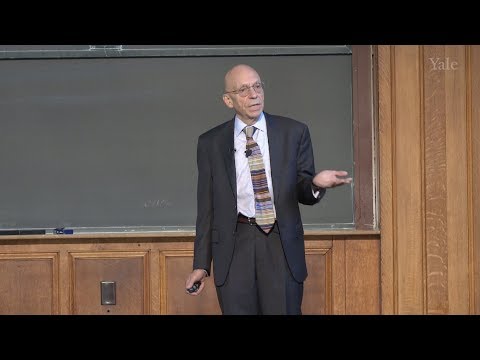
Lecture 1: Introduction to Power and Politics in Today’s World — YaleCourses

YaleCourses

AI-assisted summary of Lecture 1: Introduction to Power and Politics in Today’s World — original source. Check the original for full context.

Source published:

Key ideas

  • Professor Ian Shapiro opens the DeVane Lecture series by contrasting the stability of the 1945–1989 postwar era with the volatile thirty years between 1989 and 2019, an era marked by rapid institutional and political upheaval across advanced democracies. (0:08)
  • The course investigates how post-Cold War euphoria and Francis Fukuyama's 'end of history' thesis collapsed into the current politics of fear, resentment, and establishment fragmentation, exemplified by the rise of the AfD in Germany and anti-system parties across Europe. (6:04)
  • Shapiro critiques abstract political theory that produces unworkable mandates, such as Thomas Piketty's proposed 4% global wealth tax, advocating instead for marrying normative goals with political feasibility and coalitional strategy. (27:02)
  • The course is divided into five thematic phases: the fall of communism, the rise of neoliberalism and the Washington Consensus, the breakdown of the unipolar order, the post-2008 politics of insecurity, and prospective democratic realignments. (32:38)

Detailed notes

## Background Published by YaleCourses on YouTube on September 17, 2019, this video captures the opening lecture of the DeVane Lecture series course "Power and Politics in Today’s World" taught by Sterling Professor of Political Science Ian Shapiro. According to the page description, the course examines political dynamics and institutions across the tumultuous quarter-century following the Cold War, charting how global politics shifted from post-communist euphoria to contemporary insecurity, authoritarianism, and resentment.

## TL;DR Professor Ian Shapiro opens the course by establishing the historical boundary of 'today's world' as the thirty-year span from the fall of the Berlin Wall in 1989 to 2019. Contrasting the post-Cold War era with the relative domestic stability of the preceding four decades, he investigates how the triumphant liberal optimism of the 1990s gave way to contemporary political fragmentation, populist surges, and institutional breakdown across Western democracies. Shapiro outlines a methodological framework combining empirical social science with normative political theory to evaluate major turning points such as NATO expansion, the War on Terror, and the response to the 2008 financial crisis. He then details the five-part structure of the semester—tracing the collapse of communism, the rise of neoliberalism, the end of 'the end of history,' the politics of economic insecurity, and institutional reforms—before concluding with logistical guidelines on readings, exams, and classroom policies.

## Atmosphere & style The session balances academic rigor with dry, approachable humor, creating an engaging atmosphere that bridges the gap between undergraduate students and auditing community members. Shapiro’s delivery is conversational yet authoritative, punctuated by self-deprecating remarks about political theorists, quips about public surveillance via classroom microphones, and vivid historical anecdotes. Watching the lecture evokes a palpable shift in mood—moving from the nostalgic, euphoric archival broadcasts of 1989 Berlin to the somber, anxious reality of modern populist breakthroughs and coalition crises across Europe.

## Bulletin - [00:08](https://www.youtube.com/watch?v=BDqvzFY72mg&t=8s) Professor Ian Shapiro opens the DeVane Lecture series by contrasting the stability of the 1945–1989 postwar era with the volatile thirty years between 1989 and 2019, an era marked by rapid institutional and political upheaval across advanced democracies. - [06:04](https://www.youtube.com/watch?v=BDqvzFY72mg&t=364s) The course investigates how post-Cold War euphoria and Francis Fukuyama's 'end of history' thesis collapsed into the current politics of fear, resentment, and establishment fragmentation, exemplified by the rise of the AfD in Germany and anti-system parties across Europe. - [27:02](https://www.youtube.com/watch?v=BDqvzFY72mg&t=1622s) Shapiro critiques abstract political theory that produces unworkable mandates, such as Thomas Piketty's proposed 4% global wealth tax, advocating instead for marrying normative goals with political feasibility and coalitional strategy. - [32:38](https://www.youtube.com/watch?v=BDqvzFY72mg&t=1958s) The course is divided into five thematic phases: the fall of communism, the rise of neoliberalism and the Washington Consensus, the breakdown of the unipolar order, the post-2008 politics of insecurity, and prospective democratic realignments.

## Key takeaways - [00:08](https://www.youtube.com/watch?v=BDqvzFY72mg&t=8s) The 1945–1989 postwar era provided advanced capitalist democracies with exceptional domestic stability and predictable economic growth, contrasting sharply with the accelerated political volatility of the post-1989 era. - [02:50](https://www.youtube.com/watch?v=BDqvzFY72mg&t=170s) Archival footage of the fall of the Berlin Wall in November 1989 bridges the generational gap between older observers who lived through it and younger students who view it as distant history. - [06:04](https://www.youtube.com/watch?v=BDqvzFY72mg&t=364s) The collapse of the Eastern Bloc, coupled with breakthroughs in South Africa, Northern Ireland, and the Oslo Accords, solidified Francis Fukuyama's thesis that liberal democratic capitalism was the unchallenged final form of human governance. - [09:50](https://www.youtube.com/watch?v=BDqvzFY72mg&t=590s) The rise of the far-right Alternative for Germany (AfD) in the 2017 federal elections shattered German coalition norms, forcing an uneasy grand coalition to prevent snap elections where the far right was projected to surge further. - [15:04](https://www.youtube.com/watch?v=BDqvzFY72mg&t=904s) Across Western Europe, traditional center-left and center-right parties are shedding voters to ideological fringes, echoing the parliamentary fragmentation that preceded the collapse of the Weimar Republic. - [17:28](https://www.youtube.com/watch?v=BDqvzFY72mg&t=1048s) The 2016 Brexit referendum and Donald Trump's presidential victory exposed deep vulnerabilities in establishment politics, matching insurgent trends in Austria, Belgium, Italy, and Sweden. - [21:47](https://www.youtube.com/watch?v=BDqvzFY72mg&t=1307s) The geopolitical shock of 1989 created an unprecedented natural experiment for political scientists, disproving linear modernization theories through cases like China and Vietnam, which adopted state capitalism without democratizing. - [27:02](https://www.youtube.com/watch?v=BDqvzFY72mg&t=1622s) Political philosophy frequently resembles 'directions to Dublin' by prescribing ideal solutions without practical pathways, illustrated by Thomas Piketty's ungrounded call for an international wealth tax without an enforcement mechanism. - [29:44](https://www.youtube.com/watch?v=BDqvzFY72mg&t=1784s) The class examines critical counterfactuals and unchosen historical paths, including François Mitterrand's suggestion to dismantle NATO rather than expand it to Russia's borders, and alternatives to the post-9/11 War on Terror. - [31:25](https://www.youtube.com/watch?v=BDqvzFY72mg&t=1885s) Effective political analysis must bridge the divide between idealistic policy wonks and descriptive political scientists by studying how to build political coalitions to pass sound measures and block destructive ones. - [32:38](https://www.youtube.com/watch?v=BDqvzFY72mg&t=1958s) The post-Cold War era established a US-led unipolar order accompanied by the Washington Consensus, which promoted worldwide deregulation, privatization, and free trade alongside supranational doctrines like the International Criminal Court and Responsibility to Protect. - [38:39](https://www.youtube.com/watch?v=BDqvzFY72mg&t=2319s) Military interventions in Iraq, Libya, and Syria, coupled with aggressive Russian foreign policy and Chinese state capitalism in Africa, dismantled the assumption of inevitable liberal democratic expansion. - [40:04](https://www.youtube.com/watch?v=BDqvzFY72mg&t=2404s) The 2008 financial crisis fueled widespread political insecurity not merely due to economic distress, but because governments prioritized elite bailouts while neglecting long-term working-class precarity. - [41:21](https://www.youtube.com/watch?v=BDqvzFY72mg&t=2481s) Elite political establishments misdiagnosed working-class vulnerability and introduced institutional reforms that intensified political polarization, leaving democratic systems structurally misaligned. - [44:40](https://www.youtube.com/watch?v=BDqvzFY72mg&t=2680s) Classroom policies include an electronics ban to maintain pedagogical engagement, physical and digital reading reserves accommodating community auditors, and filmed office-hour recaps to synthesize recurring student questions.

## Detailed walkthrough ### [00:08](https://www.youtube.com/watch?v=BDqvzFY72mg&t=8s) The DeVane Lectures: Thirty Years of Tumultuous Change

Professor Ian Shapiro opens the DeVane Lecture series by welcoming both matriculated Yale students taking the course for credit and members of the general public. Setting the chronological scope of the course, he defines “today’s world” as the thirty years spanning from 1989 to 2019. This three-decade stretch, Shapiro stresses, has been an extraordinarily volatile and tumultuous epoch, representing a sharp break from the historical rhythm that came before it.

To illustrate how unusual the post-1989 era is, Shapiro contrasts it with the four decades following World War II. For the advanced capitalist democracies, that postwar window was marked by remarkable domestic and economic stability. Rebuilding devastated European nations with Marshall Plan assistance ushered in widespread prosperity, bolstered by demographic factors that reinforced political predictability. On the geopolitical stage, the Cold War created a tense yet stable bipolar order. While flashpoints like the Cuban Missile Crisis and the Vietnam War broke through the surface, the ideological struggle was primarily waged through distant proxy conflicts. For ordinary citizens living inside Western democracies, daily life remained broadly insulated from seismic geopolitical shocks.

Since 1989, however, historical time has radically accelerated. Three decades have witnessed compressed, foundational shifts in political institutions, party systems, and global order. As Shapiro notes when contrasting the postwar era with the present: “From the point of view of the citizens of the Western democracies, except for those who are actually fighting in Vietnam, it was a far-off war that didn't have a great impact on the stability of people's lives and that is very different from what has been experienced since 1989; time, if you like, has speeded up a great deal.”

- **Post-WWII Period (ca. 1945–1989):** Characterized by sustained economic growth, Marshall Plan reconstruction, demographic stability, and localized proxy conflicts outside core Western homelands. - **Post-Cold War Period (1989–2019):** Marked by systemic turbulence, rapid institutional upheaval, and high domestic political volatility across advanced democracies.

---

[02:50](https://www.youtube.com/watch?v=BDqvzFY72mg&t=170s) 1989 in Berlin: Reliving the Collapse of the Wall

Shapiro highlights a central pedagogical hurdle in teaching modern political history: the wide generational divide in the room. For older participants, the events of 1989 and the decades that followed remain vivid and personal, feeling as though they unfolded yesterday. For younger college students, who were born years after the turn of the millennium, 1989 is abstract history in the same category as the aftermath of World War II. To bridge this gap, Shapiro resolves to anchor the course in archival footage so that those who were not yet alive can experience the visceral shock of those moments, while those who lived through them can recall nuances they may have forgotten.

He plays an archival broadcast of the *CBS Evening News* from November 1989, featuring Dan Rather reporting live in front of Berlin’s Brandenburg Gate amid cheering crowds. Rather recounts the emotional scenes as East German border guards actively dismantled portions of the concrete barrier to let citizens flood through, while the East German regime conceded that citizens could cross freely without special travel documents. In the footage, Rather interviews former West German Chancellor Willy Brandt standing among the jubilant crowds. Brandt reflects on the deep family trauma wrought by decades of physical division, expressing cautious optimism about German and European integration. Turning back to the lecture hall, Shapiro asks if anyone recognizes the elderly statesman, identifying him as Willy Brandt and noting that he passed away just three years later.

Reflecting on the emotional resonance of that night, Willy Brandt told Dan Rather: “My feeling is that we are very close to an end of the artificial division of Berlin and I also believe we are close to the point where the parts of Germany will become much closer together.”

---

[06:04](https://www.youtube.com/watch?v=BDqvzFY72mg&t=364s) The Global Democratic Wave and Fukuyama’s "End of History"

The collapse of the Berlin Wall encapsulated a much broader systemic collapse across the Eastern Bloc throughout 1989. Citizen resistance movements had surged across Central and Eastern Europe, while a weakened Soviet Union proved unable and unwilling to deploy military force to prop up its satellite regimes. Across the region, countries shook off totalitarian governance for the first time in generations. Although China took a starkly different path in June 1989 with the violent suppression of demonstrations in Tiananmen Square—a divergent trajectory Shapiro reserves for the following week’s lecture—the broader international consensus concluded that democracy was marching inexorably forward.

Throughout the 1990s, that optimism appeared continuously vindicated by breakthroughs in long-standing, seemingly intractable disputes around the world: - **South Africa:** Emerged from decades of bitter apartheid conflict and repression to establish a multiracial democracy in the early 1990s under Nelson Mandela. - **Northern Ireland:** Reached a historic diplomatic breakthrough with the signing of the Good Friday Accords in 1997. - **Israel and Palestine:** The Oslo Accords brought the Israeli government and the Palestine Liberation Organization (PLO) to the negotiating table, creating widespread anticipation of a lasting peace until Prime Minister Yitzhak Rabin was assassinated in November 1995.

This cascade of transitions fueled Francis Fukuyama’s influential thesis on the “end of history,” which posited that liberal democratic capitalism represented the final, unchallenged endpoint of human political evolution. By the dawn of the twenty-first century, a statistical milestone was passed: for the first time in modern history, a majority of the world’s sovereign states qualified as democracies under standard metrics. Summarizing the triumphant intellectual mood of that era, Shapiro explains: “Enormous confidence in democratic capitalism and enormous confidence in the idea that many people were gonna be lifted out of poverty and that the world was heading for a kind of benign equilibrium, as an economist would say, Fukuyama's end of history idea.”

---

[09:50](https://www.youtube.com/watch?v=BDqvzFY72mg&t=590s) The Rise of the AfD and Germany's Grand Coalition Crisis

Fast-forwarding thirty years, Shapiro presents a starkly different video clip from Germany to show how dramatically the political atmosphere soured. The footage shows leaders of the Alternative for Germany (Alternative für Deutschland, or AfD)—a far-right, anti-immigrant, anti-system party—euphorically celebrating their breakthrough in the 2017 federal elections. Under Germany's electoral law, a political party must clear a 5% nationwide threshold to enter the Bundestag; having previously fallen short, the AfD crossed the line with ease, securing a powerful parliamentary foothold and unsettling the established democratic order.

```mermaid flowchart TD accTitle: German 2017 Coalition Gridlock accDescr: The electoral dilemma following the AfD breakthrough in 2017, leading to the collapse of Jamaica talks and a reluctant Grand Coalition renewal.

subgraph Election["2017 Federal Election"] A["AfD breaches 5% threshold<br/>Mainstream parties refuse to govern with AfD"] B["SPD enters opposition<br/>(Refuses new Grand Coalition)"] end

subgraph FailedOption["Merkel's First Coalition Attempt"] C["'Jamaica' Coalition Talks<br/>CDU/CSU + Greens + FDP"] C --> D["Ideological clash:<br/>Greens (environmental rules)<br/>vs. FDP (deregulation)"] D --> E["Negotiations Collapse (6 Months)"] end

subgraph Dilemma["The Impasse & Resolution"] E --> F{"Risk of New Elections?<br/>Polls show AfD rising"} F -->|"High Risk"| G["President urges against new vote"] G --> H["SPD relents after major concessions<br/>(6 ministries including Finance)"] H --> I["Grand Coalition re-established<br/>CDU/CSU + SPD"] end

A --> C B --> C ```

Shapiro details the grueling political paralysis that ensued after the 2017 vote. For years, Germany had been governed by a "grand coalition" between the center-right Christian Democratic Union (CDU), led by Chancellor Angela Merkel, and the center-left Social Democratic Party (SPD). Having suffered devastating electoral erosion from governing in Merkel's shadow, the SPD initially vowed to go into opposition to rebuild. Because the AfD was universally treated as a political pariah with whom no party would govern, Merkel spent six months attempting to negotiate a "Jamaica coalition" combining the CDU/CSU with the Green Party and the Free Democratic Party (FDP)—a pro-business party Shapiro equates to Rand Paul libertarians. The talks fell apart over irreconcilable regulatory differences: the Greens insisted on strict environmental rules, while the FDP demanded broad deregulation.

With coalition talks deadlocked, Germany faced the prospect of fresh snap elections. However, public polling throughout those six months indicated that renewed voting would trigger an even larger surge for the AfD. Desperate to avert that outcome, German President Frank-Walter Steinmeier pressured the SPD to reconsider. The Social Democrats ultimately capitulated, agreeing to rejoin Merkel in government after wringing out major concessions, including six cabinet seats and control of the powerful Finance Ministry. Even with the grand coalition reassembled, stability proved elusive; by the following year, Merkel announced that she would step down from the CDU leadership and retire as Chancellor at the end of her term in 2021.

Describing the existential dread that forced the SPD’s reversal, Shapiro underscores: “So terrified were they of the prospect of another election in which the far right would do even better.”

[15:04](https://www.youtube.com/watch?v=BDqvzFY72mg&t=904s) The Rise of the Far Right in Germany and Europe

A contemporary news broadcast reports on the Christian Democratic Union (CDU) suffering a disappointing performance in a key regional election in the German state of Hesse. The anti-migrant, far-right Alternative for Germany (AfD) party claimed more than a dozen seats in Hesse’s parliament for the first time, giving the party representation across all 16 German state parliaments, in addition to the national Bundestag and the European Parliament. Professor Ian Shapiro points out that this followed a similar collapse in Bavaria, where the CDU hemorrhaged around 10 percent of its vote to the AfD. The center-left Social Democratic Party (SPD) suffered a parallel decline, losing its base of support to the Greens. Across Europe, traditional center-left and center-right establishment parties are shrinking and weakening, while parties on the political fringes grow increasingly dominant.

```mermaid flowchart TD accTitle: European Political Realignment accDescr: Visual diagram showing the collapse of establishment parties toward political fringes across Europe.

subgraph Center["Collapsing Center"] CDU["Center-Right (e.g., CDU)"] SPD["Center-Left (e.g., SPD)"] end

subgraph Fringes["Expanding Fringes"] Right["Far-Right Populists\n(AfD, Vlaams Belang, League)"] Left["Alternative Left\n(e.g., Green Parties)"] end

CDU -->|"Hemorrhages votes"| Right SPD -->|"Hemorrhages votes"| Left ```

This sudden resurgence of fringe extremism inevitably recalls the political turbulence of the Weimar Republic in the 1920s and 1930s. A historical newsreel clip notes that following the German elections of July 1932, the Nazi Party emerged as the largest faction in parliament with 37 percent of the vote. Shapiro emphasizes that the rapid succession of elections reflected a deeply unstable system that ultimately culminated in Adolf Hitler coming to power 18 months later. In contemporary Germany, citizens and observers anxiously ask whether this dynamic represents a terrifying replay of history: “If you go to Germany, you hear very anxious people talking about is this back to the future?”

- In Hesse, the AfD won more than a dozen seats, cementing its presence across all 16 state legislatures in Germany. - In Bavaria, the conservative establishment lost roughly 10 percent of its traditional vote share to the AfD. - The SPD experienced parallel losses, bleeding substantial voter blocks to the Greens.

---

[17:28](https://www.youtube.com/watch?v=BDqvzFY72mg&t=1048s) Global Shocks to the Establishment

The collapse of political orthodoxies extends far beyond Germany. In 2016, Western politics absorbed two monumental shocks: the unexpected Brexit referendum outcome in the United Kingdom and Donald Trump’s disruptive populist capture of the United States presidency. Both developments blindsided mainstream political figures, commentators, and establishment pollsters. Shapiro illustrates that identical patterns of fragmentation have rapidly taken hold across Western and Eastern Europe:

In Austria’s 2016 presidential election, establishment figures felt temporary relief when the Green candidate defeated the far-right contender in the runoff by a margin of 54 percent to 46 percent. However, the subsequent 2017 legislative elections told a different story: the far-right Freedom Party surged into third place with 51 seats, while the traditional ruling parties were relegated to fourth and fifth place, and the Greens dropped below the electoral threshold entirely. In Belgium, despite the center-right retaining power, the far-right Flemish nationalist party Vlaams Belang gained significant ground, capturing nearly 12 percent of the vote. In Italy, power shifted away from the center-left as the right-wing populist League surged, securing 17 percent of the popular vote and over 100 parliamentary seats.

Similar structural erosion has appeared across places once celebrated as resilient models of social democracy, such as Sweden, as well as in Turkey and Latin America. In these diverse environments, insurgent parties that challenge established norms—often crossing the threshold into anti-system politics—continue to advance through democratic institutions. The contrast between the optimism of 1989 and the anxious polarization since 2016 could not be sharper. Despite this bleak picture, Shapiro cautions the audience: “And in some ways, it's a big downer, but my first thing I wanna say is don't get too depressed.”

---

[20:39](https://www.youtube.com/watch?v=BDqvzFY72mg&t=1239s) Three Central Questions and Methodological Approach

Shapiro outlines the core agenda of the course, which is structured around three overarching questions: 1. How did the world travel from the euphoria of 1989 to the fractured politics of the present? 2. What are the immediate challenges and structural prospects going forward? 3. How can societies redirect themselves toward a more functional, stable political settlement?

To address these questions, Shapiro articulates his methodological strategy: combining empirical political science with normative political theory, while relying on real-world historical realities to keep both disciplines grounded. As Shapiro formulates it: “I'm going to be studying history with the tools of political science and political theory on the one hand, but also using history to keep political science and political theory honest.”

---

[21:47](https://www.youtube.com/watch?v=BDqvzFY72mg&t=1307s) The 1989 Natural Experiment and Testing Conventional Wisdom

From the perspective of empirical political scientists, the geopolitical rupture of 1989 served as a massive, exogenous shock that functioned as an unprecedented natural experiment. Prior to the collapse of the Soviet bloc, scholars of European democracy had spent roughly four decades cycling variations of the same theories through an unchanging, closed data set. This cyclical loop often led to what statisticians refer to as "just-so stories"—constructing post-hoc theories tailored neatly to fit static historical curves rather than genuinely evaluating predictive power. The sudden birth of multiple new parliamentary regimes across Central and Eastern Europe created an entirely new, real-time data stream, allowing scholars to subject foundational assumptions to rigorous testing:

- **Modernization Theory:** The long-held thesis that economic development reliably produces democratic governance faces serious challenges. While market transformations occurred in parts of the former Soviet bloc, nations such as China and Vietnam transitioned into forms of state capitalism while explicitly preserving authoritarian rule. - **Economic Systems and Democracy:** Political science long asserted that competitive democracy is fundamentally incompatible with state-run economies, a premise that demands reexamination in light of contemporary hybrid regimes. - **Conditions for Democratic Stability:** The post-1989 landscape allows social scientists to isolate what truly sustains democratic institutions: does stability depend purely on the economy, or do the beliefs, values, and norms of everyday citizens and elite actors play decisive roles? - **Tripartite Relations (Business, Labor, and Government):** With state socialism removed as a viable macroeconomic alternative, the bargaining leverage between organized labor, corporate enterprise, and the state shifted fundamentally. - **Electoral Systems and Public Goods:** Long-standing assumptions regarding how specific voting structures shape economic inequality, universal public provisions, and environmental regulations can now be evaluated across emerging and established democracies alike.

---

[27:02](https://www.youtube.com/watch?v=BDqvzFY72mg&t=1622s) Grounding Political Theory: Avoiding Dublin Directions

Reflecting on his primary disciplinary background as a political theorist, Shapiro provides a critique of abstract normative philosophy. Political theorists often construct elaborate visions of how the world ought to look, while ignoring real-world political realities, logistical feasibility, and power dynamics. He illustrates this disconnect with an Irish anecdote: “The confession I need to make about my home discipline is that it reminds me of the story about the fella who goes up to a farmer in Donegal and says how do I get to Dublin, and the answer that comes back is well, I wouldn't start from here, sonny.”

Shapiro applies this criticism to contemporary policy proposals, pointing to economist Thomas Piketty’s argument in *Capital in the Twenty-First Century* for an international 4 percent wealth tax. While logically consistent on paper, the proposal ignores the institutional architecture necessary for enforcement: “Who's gonna implement a 4% global wealth tax?” Instead, Shapiro emphasizes examining practical institutional pathways that could realistically achieve desired political and social outcomes. This requires interrogating historical paths not taken, such as the post-Cold War expansion of NATO following the collapse of the Soviet Union.

[29:44](https://www.youtube.com/watch?v=BDqvzFY72mg&t=1784s) Paths Not Taken: NATO Expansion, the War on Terror, and the Financial Crisis

Professor Shapiro turns to the historical turning points where alternative choices were available, beginning with the eastward expansion of NATO. Following the collapse of the Soviet Union, NATO expanded to encompass most, and eventually all, of the former Soviet-bloc nations, alongside overtures to former Soviet republics such as Georgia and Ukraine. Shapiro points out that discussions of Georgia and Ukraine joining NATO were intimately tied to Russia's eventual aggression in Ukraine. At the Cold War's conclusion, alternative visions existed; French President François Mitterrand, for instance, argued that NATO should simply be dismantled because it was fundamentally a defensive alliance that had outlived its original raison d'être. Shapiro notes that the course will examine whether Mitterrand’s proposal was realistic and how the geopolitical landscape might look today had that path been pursued.

A parallel counterfactual inquiry applies to the aftermath of September 11, 2001, and the launch of the Global War on Terror. The class will assess whether politically viable alternatives existed to the US-led invasions of Afghanistan and Iraq—routes that might have pointed global affairs in a radically different direction. Similarly, the course will investigate the policy responses to the 2008–2009 global financial crisis, probing whether political leaders overlooked or discarded options that were both politically feasible and far more effective at resolving systemic distress.

- **NATO Expansion & Backlash**: Overtures to incorporate former Soviet states like Georgia and Ukraine into NATO served as a major factor precipitating Russian military aggression in Ukraine. - **The Mitterrand Counterfactual**: French President François Mitterrand maintained that NATO had lost its defensive purpose and ought to be shut down after the Cold War. - **Post-9/11 Interventions**: The course examines whether alternatives to the invasions of Afghanistan and Iraq could have commanded viable political support. - **Crisis Management in 2008–2009**: The lecture series will re-evaluate the overlooked policy alternatives that could have mitigated long-term social and economic fallout.

---

[31:25](https://www.youtube.com/watch?v=BDqvzFY72mg&t=1885s) Marrying Policy Wonkery with Political Feasibility

These historical crossroads illustrate the third defining feature of Shapiro's pedagogical framework: bridging the divide between idealistic public policy design and hardheaded political analysis. Public policy discourse typically suffers from a persistent bifurcation. On one side stand the "policy wonks," who dwell exclusively on abstractly optimal designs without considering real-world implementation. On the other side sit political scientists, who specialize in explaining why particular systems adopt certain policies while rejecting others, yet rarely focus on prescriptive strategy.

Shapiro stresses that academic literature regularly overlooks the practical mechanics of how to build coalitions for constructive measures or how to effectively derail destructive ones. When evaluating proposed institutional and economic innovations in the latter stages of the term, the class will concentrate squarely on wedding technical policy soundness to political viability. As Shapiro summarizes his pedagogical stance: “There's very little discussion of what is the effective political way of achieving a good policy or the effective political way of blocking a bad policy and so when I talk about innovations in the last part of the course, it's very much going to be in a way that marries considerations of politics to considerations of good public policy.”

---

[32:38](https://www.youtube.com/watch?v=BDqvzFY72mg&t=1958s) Course Structure: Collapse of Communism, Neoliberalism, and the New Global Order

Shapiro lays out the five-part architecture of the course. The first part examines the collapse of communism and its immediate aftermath, reviewing events in Eastern Europe, Russia, China, and Vietnam. This transition transformed a bipolar Cold War world—which, despite severe proxy wars across Asia, Africa, and Latin America, maintained great-power stability through nuclear standoff—into a unipolar order dominated by the United States. The course will explore how unipolar hegemony fundamentally restructured the boundaries of international politics.

```mermaid flowchart TD accTitle: Five Sections of the Course accDescr: A structural flow diagram detailing the five main sections of the lecture course.

subgraph Phase1["Part 1: Post-Cold War Shift"] A["1. Collapse of Communism<br/>(Eastern Europe, Russia, China, Vietnam)"] B["Rise of Unipolar Order<br/>(US Hegemony replaces Bipolar Standby)"] A --> B end

subgraph Phase2["Part 2: Economic & Global Order"] C["2. Neoliberalism & Washington Consensus<br/>(Deregulation, Privatization, Free Trade)"] D["The New Global Order<br/>(Democratization waves, ICC, R2P Doctrine)"] C --> D end

subgraph Phase3["Parts 3 to 5: Backlash & Solutions"] E["3. End of the 'End of History'<br/>(War on Terror, State Capitalism, Resurgent Russia/China)"] F["4. New Politics of Insecurity<br/>(Post-2008 bailouts, working-class vulnerability)"] G["5. What Is to Be Done?<br/>(Misdiagnosed electorates, systemic political reform)"] E --> F F --> G end

B --> C D --> E ```

The second section investigates the domestic and international economic orthodoxy that arose from the vacuum left by communism's fall. Domestically, this manifested as neoliberalism, built upon three pillars: comprehensive trade deregulation, the dismantling of internal regulatory constraints, and the large-scale privatization of state assets. Exported abroad through the conditional lending programs of the International Monetary Fund (IMF) and the World Bank, this framework was christened the "Washington Consensus." This economic paradigm was accompanied by the optimistic belief that liberal democracy was marching forward in successive waves: following the first wave of franchise expansion in early democracies and the second wave of post-WWII decolonization, a third wave had swept 1989–1991, with hopes that a fourth wave was underway through the end of Apartheid in South Africa, peace accords in Northern Ireland, and the Arab Spring. Simultaneously, international institutions claimed supranational authority, from the International Criminal Court (ICC) prosecuting authoritarian human rights abusers to the United Nations adopting the "Responsibility to Protect" (R2P) doctrine after atrocities in Rwanda and Kosovo—formally asserting the right to violate state sovereignty to halt humanitarian catastrophes.

As Shapiro explains regarding the ideological hegemony of that moment: “And so the post-communist era is marked by this massive confidence in the capacity of unregulated or mildly regulated free-market capitalism to deliver the best results for every country in the world.”

---

[38:39](https://www.youtube.com/watch?v=BDqvzFY72mg&t=2319s) The End of the "End of History" and the Politics of Insecurity

The third section, titled "The End of the End of History," charts the collapse of this post-Cold War optimism, initiated by September 11 and the ensuing Global War on Terror. Interventions in Afghanistan, Iraq, and Libya, alongside the descent of Syria into catastrophic civil war, shattered the notion that human history was progressing along a benign, inevitable trajectory toward liberal democracy. This period saw the vigorous resurgence of state capitalism, China's expanding footprint across Africa, Russia's assertive re-emergence in the Middle East and beyond following its post-Soviet retreat, and the increasingly influential, often destabilizing role of corporate enterprise in global conflicts.

The fourth section examines "The New Politics of Insecurity." Shapiro argues that this climate was triggered less by the 2008 financial shock itself than by the political establishment's handling of it. Decades of unaddressed economic precarity within the working classes of advanced industrial democracies were laid bare when governments rushed to salvage financial elites while offering virtually no relief to vulnerable citizens. As Shapiro summarizes the fallout: “The financial crisis threw into sharp relief the fact that most governments were not doing much about it if anything at all and in fact that they ended up bailing out the elites, while doing nothing much for the people who have been most harmed in the crisis.”

- **Geopolitical Reversals**: Prolonged quagmires in Iraq, Libya, and Syria disproved the thesis that liberal democracy had permanently triumphed. - **Rival Models**: The resurgence of state capitalism challenged Western free-market orthodoxy, propelled by Chinese investment across Africa and aggressive Russian foreign policy. - **Corporate Power**: Large multinational corporations assumed prominent, complicated, and often harmful roles in international disputes. - **Elite Bailouts**: Post-2008 recovery packages protected the financial establishment while leaving working-class precarity unmitigated across major democracies.

---

[41:21](https://www.youtube.com/watch?v=BDqvzFY72mg&t=2481s) "What Is to Be Done?" and Course Logistics

The final segment of the syllabus borrows Vladimir Lenin's classic formulation: "What is to be done?" Here, the course investigates how political establishments and party leaders fundamentally misdiagnosed public sentiment. Instead of addressing the structural insecurity impoverishing millions of workers, elites championed electoral and institutional reforms that actively worsened political polarization and instability. The course concludes by synthesizing how these failed economic and political strategies collided, offering concrete arguments on how democratic institutions can be realigned going forward across the remaining 25 lectures.

Concluding the opening session, Shapiro turns to classroom logistics. He alerts the audience that the university's Office of Public Affairs is filming and recording all class sessions, complete with circulating floor microphones for student participation. He dryly jokes about the public recording: “You should know that this is all being tape recorded and so anything you say can be taken down and used in evidence against you.” Shapiro then introduces Christina Seyfried, the course's head teaching fellow, who will supervise grading for enrolled students and assist with running community office hours. Finally, he outlines his own office hour availability, scheduled from 10:00 a.m. to 12:00 p.m. on Wednesdays and Fridays in Rosenkranz Hall, Room 201.

[44:40](https://www.youtube.com/watch?v=BDqvzFY72mg&t=2680s) Office Hours Logistics and Filmed Recaps

Professor Ian Shapiro outlines the office hours arrangements for both Yale students and community members attending the DeVane Lecture series. Walk-in office hours (no appointment necessary) are scheduled for Fridays from 10:00 to 12:00 in Room 201 of Rosenkranz Hall, located right across the street from the new colleges. Shapiro notes that Yale students have priority during the first hour, while community members have priority during the second, humorously remarking, “Who knows if anyone will show up, but that’s the way it’ll work.” In addition, teaching fellow Christina will hold dedicated office hours for community members on Thursdays from 5:00 to 7:00 at a location to be announced.

Rather than letting office hour discussions disappear into thin air, Shapiro and Christina plan to film five recap sessions throughout the semester to synthesize the major themes, questions, and discussions emerging from both their own office hours and those held by the other teaching fellows. These filmed discussions will be posted directly to the course website. Shapiro mentions adopting this method from his Coursera online course, where it proved highly valuable for clarifying recurring student questions and synthesizing debate.

[46:12](https://www.youtube.com/watch?v=BDqvzFY72mg&t=2772s) Reading Access, Copyright Limits, and Exam Scheduling

Shapiro turns to course logistics, addressing syllabus readings, copyright constraints, and final exams. Anyone with a Yale ID can access nearly all readings digitally through Canvas. Due to strict copyright limitations, three books excerpted too extensively could not be uploaded to Canvas; these are available on physical reserve in the library. For community auditors who do not have access to Canvas, the teaching staff placed two complete sets of course books in the New Haven Public Library.

The official final exam is scheduled for the last afternoon of the Yale exam period, a date that inevitably conflicts with travel plans for students who have already booked flights. To resolve this, the course provides two alternate exam slots: one on Wednesday, December 11th—primarily arranged to accommodate Yale School of Management (SOM) students due to their elective exam schedule, tentatively held at SOM—and another alternate exam on Friday, December 13th.

- Reading access: Canvas for Yale students; physical reserve in Yale libraries for copyright-restricted books. - Community access: Two complete book sets placed at the New Haven Public Library. - Alternate exam dates: December 11 (at SOM, open to all) and December 13.

[47:51](https://www.youtube.com/watch?v=BDqvzFY72mg&t=2871s) Classroom Technology Policy and Lecture Slides

Shapiro establishes a strict ban on in-class electronics, prohibiting laptops, tablets, screens, and smartphones. Reflecting on his transition to this rule a few years earlier, he notes that it has made a noticeable positive difference in the classroom environment. As he explains:

> “It’s just too tempting to be doing that Amazon shopping for your grandmother’s birthday present that you forgot about, and it’s very distracting not only for the people around you but it’s also distracting for me to teach.”

To ensure students do not need to take frantic, detailed notes off the screen, all lecture slides will be published on Canvas and the public course webpage following each lecture. Shapiro clarifies a technical quirk regarding video playback: slides viewed in the standard Canvas browser preview appear flattened into a static PDF where embedded videos will not play. To view embedded multimedia clips, students must download the slide deck directly to their machines, allowing the video components to play properly.

[49:24](https://www.youtube.com/watch?v=BDqvzFY72mg&t=2964s) Q&A: Copyright Rules, European Union Coverage, and Cold War History

During the question-and-answer period, a community member asks about accessing online materials. Shapiro elaborates on the legal rationale behind public access limits, emphasizing that university policies are dictated by intellectual property statutes rather than institutional stinginess:

> “So we can take more than 10% from a book and put it up on Canvas if it’s only available to Yale students, but if we made them available to the general public, Yale would be violating copyright laws.”

Under educational fair use, universities may reproduce substantial portions of books for enrolled students behind password protection, but public dissemination of that volume requires commercial licensing fees.

Another audience member asks whether the course will cover the European Union. Shapiro confirms that the EU's post–Cold War expansion will be explored starting in the very next lecture. However, he clarifies the historical boundaries of the syllabus. Because Yale recently recruited prominent Cold War historians David Engerman and Arne Westad to teach European history from World War II through 1989, Shapiro has deliberately focused this DeVane course on the post-1989 era. He will briefly survey the initial formation of the European Union solely to explain the structural roots of its contemporary crises, leaving mid-twentieth-century Cold War geopolitics to his colleagues.

```mermaid flowchart TD accTitle: Course Historical Division of Labor accDescr: Diagram illustrating how historical coverage is split between the Cold War courses and Professor Shapiro's post-1989 course.

subgraph ColdWar["Cold War & Post-WWII Europe"] A["1945 to 1989 Geopolitics"] --> B["David Engerman & Arne Westad Courses"] end

subgraph DeVaneCourse["Power and Politics in Today's World"] C["1989: Fall of Communism"] --> D["EU Expansion & Current Crises"] C --> E["Post-Soviet Transition & Oligarchy"] C --> F["Contemporary Democratic Turmoil"] end ```

[52:40](https://www.youtube.com/watch?v=BDqvzFY72mg&t=3160s) Q&A: Course Structure, Expectations, and Next Class

Students ask several logistical questions regarding course requirements, section meetings, enrollment limits, and teaching fellows:

- **Discussion sections:** There are no breakout discussion sections; to compensate for this format, the course meets for extended 75-minute lectures rather than standard 50-minute blocks. - **Paper prompts and research expectations:** Essay topics will be distributed two weeks before deadlines, offering four or five prompt choices. Shapiro emphasizes: “This is not a research course, so you can write a first-rate paper based on reading the material on this syllabus. You are not expected to go beyond the syllabus.” - **Graduate student requirements:** Graduate students take the course under the exact same expectations as undergraduates: two written papers and a final exam. - **Enrollment cap:** The lecture is completely uncapped. Shapiro anticipates that class size will stabilize after Yale's shopping period, allowing everyone to stay in the current auditorium. - **Lecture interactivity:** Shapiro promises that the course will not simply be him speaking uninterrupted for 75 minutes. Starting the following session, handheld microphones will circulate through the auditorium to support interactive debates and cold calls. - **Teaching Fellows:** Six teaching fellows, alongside head TF Christina, will host weekly office hours to discuss reading concepts, lecture arguments, and essay drafts. Their insights will feed into the five filmed recap videos.

To conclude the inaugural meeting, Shapiro announces the subject of the upcoming Tuesday lecture: examining the aftermath of the collapse of the Soviet Union, tracing the transition from Soviet Communism to Russian gangster capitalism.

## Notable quotes > [20:39](https://www.youtube.com/watch?v=BDqvzFY72mg&t=1239s) I'm going to be studying history with the tools of political science and political theory on the one hand, but also using history to keep political science and political theory honest. — Ian Shapiro

> [32:38](https://www.youtube.com/watch?v=BDqvzFY72mg&t=1958s) The post-communist era is marked by this massive confidence in the capacity of unregulated or mildly regulated free-market capitalism to deliver the best results for every country in the world. — Ian Shapiro

## Mentioned Ian Shapiro, Dan Rather, Willy Brandt, Francis Fukuyama, Nelson Mandela, Yitzhak Rabin, Angela Merkel, Frank-Walter Steinmeier, Rand Paul, Adolf Hitler, Donald Trump, Thomas Piketty, François Mitterrand, Vladimir Lenin, Christina Seyfried, David Engerman, Arne Westad, Alternative für Deutschland, Christian Democratic Union, Social Democratic Party of Germany, Free Democratic Party, Alliance 90/The Greens, Freedom Party of Austria, Vlaams Belang, Lega, Palestine Liberation Organization, International Criminal Court, International Monetary Fund, World Bank, North Atlantic Treaty Organization, United Nations, Yale University, Yale School of Management, New Haven Public Library, CBS Evening News, Capital in the Twenty-First Century, Good Friday Accords, Oslo Accords, Marshall Plan

## Video description Professor Ian Shapiro introduces the class “Power and Politics in Today’s World.” This course provides an examination of political dynamics and institutions over this past tumultuous quarter century, and the implications of these changes for what comes next. Among the topics covered are the decline of trade unions and enlarged role of business as political forces, changing attitudes towards parties and other political institutions amidst the growth of inequality and middle-class insecurity, the emergence of new forms of authoritarianism, and the character and durability of the unipolar international order that replaced the Cold War.

How did we get from the huge euphoria that followed the fall of communism in the early 1990s to our present politics of fear and resentment, and what are the prospects going forward? This DeVane Lecture series course entitled “Power and Politics in Today’s World” with Professor Ian Shapiro answered some of those questions. This course in the fall of 2019 was open to Yale students and the general public.

Ian Shapiro is the Sterling Professor of Political Science and Global Affairs at Yale University. He has written widely and influentially on democracy, justice, and the methods of social inquiry. The DeVane Lecture series was established in 1969 to honor William Clyde DeVane, dean of Yale College from 1939 to 1963.

To view all the lectures in this course, please visit this playlist link. https://www.youtube.com/playlist?list=PLh9mgdi4rNeyViG2ar68jkgEi4y6doNZy

To view and download the syllabus and lecture material, please visit the link below. You can also find more information about Professor Shapiro’s book ‘After the Fall’ which is based on the course. https://yaleedu.sharepoint.com/:f:/s/PoorvuCenter-TeachingStudios/IgBbRGjjODrKRpzBhEaEYt-bAZOdYiaQH0tIi5mSDQ05LPs?e=b27fBS

To view the Office Hours of this course, visit https://www.youtube.com/playlist?list=PLh9mgdi4rNewXXh3Yej7icrFY35qDmGT5

[Source](https://www.youtube.com/watch?v=BDqvzFY72mg)

中文简报

第1讲:当今世界的权力与政治导论 Ian Shapiro教授在开篇中将“当今世界”的历史界限定为从1989年柏林墙倒塌至2019年的三十年间。通过将冷战后时代与此前四十年的相对国内稳定性进行对比,他探究了1990年代胜利主义的自由主义乐观情绪如何逐步演变成西方民主国家当下的政治分裂、民粹主义激增以及制度崩溃。Shapiro提出了一个将经验社会科学与规范政治理论相结合的方法论框架,用以评估诸如北约东扩、反恐战争以及对2008年金融危机的应对等重大转折点。随后,他详细介绍了本学期的五部分结构——追溯共产主义的崩溃、新自由主义的兴起、“历史终结论”的终结、经济不安全感的政治学以及制度改革——最后以阅读材料、考试和课堂政策等教学安排作结。 Ian Shapiro教授开启了DeVane讲座系列,将1945至1989年战后时期的稳定性与1989至2019年这动荡的三十年进行了对比,后一时期的特征是发达民主国家经历了快速的制度与政治剧变。 (0:08) 本课程探究了冷战后的盲目乐观情绪以及弗朗西斯·福山的“历史终结论”是如何瓦解并演变成当前充满恐惧、怨恨和建制派分化的政治局面的,德国选择党(AfD)的崛起以及欧洲反体制政党的涌现便是明证。 (6:04) Shapiro批评了产生不切实际要求的抽象政治理论(例如托马斯·皮凯蒂提出的4%全球财富税方案),转而主张将规范性目标与政治可行性及联盟策略相结合。 (27:02) 本课程分为五个主题阶段:共产主义的瓦解、新自由主义与华盛顿共识的兴起、单极秩序的破裂、2008年后的不安全感政治学,以及未来的民主重组。 (32:38)

Detailed notes — zh

## Background 本视频由耶鲁大学官方频道(YaleCourses)于 2019 年 9 月 17 日在 YouTube 平台发布,记录了斯特林政治学与全球事务教授伊恩·夏皮罗(Ian Shapiro)主讲的 DeVane 系列讲座第一课。课程题为《当今世界的权力与政治》,面向耶鲁师生及社会公众开放,旨在深入探讨自 1989 年柏林墙倒塌以来的三十年间,国际政治如何从冷战结束后的极度乐观演变为当下的恐惧、怨恨与政治极化。 ## TL;DR 夏皮罗教授将 1989 年柏林墙倒塌至 2019 年的三十年界定为一个极具动荡性的时期,并将其与二战后相对平稳的四十年进行鲜明对比。他借助珍贵历史录像回溯了 1990 年代初福山提出“历史的终结”时的制度自信,随后话锋一转,通过解析 2016 年以来的英国脱欧、特朗普胜选以及德国选择党(AfD)等极右民粹势力的崛起,揭示出全球建制派政党的衰落与中间阵营的瓦解。夏皮罗提出要用真实历史经验来“让政治学理论保持诚实”,并系统梳理了贯穿全学期的五大板块架构,涵盖苏联解体、新自由主义扩张、反恐战争、2008 年金融危机后的新型不安全感政治以及制度改革的反思。 ## Atmosphere & style 整堂导论课节奏张弛有度,既有耶鲁顶级学者深邃冷峻的学术洞察,又洋溢着风趣幽默的讲台魅力。夏皮罗教授以富有戏剧张力的历史影像对比打破沉闷,用爱尔兰问路笑话和辛辣自嘲拆解纯理论的乌托邦幻象,现场互动轻松热烈。面对当下欧美政治动荡的沉重现实,他一边告诫学生“切莫过分消沉”,一边以严密的实证关怀激发听众批判思考,展现出一种清醒而富有建设性的学术气场。 ## Bulletin - [00:08](https://www.youtube.com/watch?v=BDqvzFY72mg&t=8s) 本课程以 1989 年柏林墙倒塌为核心分水岭,系统复盘随后三十年间全球政治格局如何从对自由民主胜出的狂欢,滑向如今遍布发达国家的恐惧、民粹主义与怨恨政治。 - [15:04](https://www.youtube.com/watch?v=BDqvzFY72mg&t=904s) 欧洲与美国政治生态正遭遇剧烈震荡,传统建制派大党得票率持续萎缩,而边缘极右翼及反建制政党在多国议会与选举中迅猛崛起。 - [22:04](https://www.youtube.com/watch?v=BDqvzFY72mg&t=1324s) 1989 年苏东剧变为社会科学提供了一场极为罕见的“自然实验”,用全新现实彻底打破了以往仅依赖旧数据集构建的现代化理论与制度共识。 - [29:44](https://www.youtube.com/watch?v=BDqvzFY72mg&t=1784s) 课程倡导将政治可行性与优良政策设计相融合,批判脱离现实的纯规范政治哲学,着重探讨历史上未被采纳的政策替代路径与制度教训。 ## Key takeaways - [00:08](https://www.youtube.com/watch?v=BDqvzFY72mg&t=8s) 二战后的四十年是一个由马歇尔计划重建、经济繁荣与两极核威慑共同维系的相对高稳定期,国际冲突多局限于遥远的局部代理人战争。 - [03:51](https://www.youtube.com/watch?v=BDqvzFY72mg&t=231s) 1989 年柏林墙倒塌掀起了席卷全球的乐观主义浪潮,福山提出“历史的终结”论断,伴随南非转型与巴以《奥斯陆协议》,自由民主体制看似不可逆转。 - [09:50](https://www.youtube.com/watch?v=BDqvzFY72mg&t=590s) 三十年后德国政局陷入前所未有的撕裂,极右翼反移民的德国选择党(AfD)首次进入联邦议院并渗透全部 16 个州议会,迫使主流政党艰难组建大联合政府。 - [15:04](https://www.youtube.com/watch?v=BDqvzFY72mg&t=904s) 整个欧洲乃至西方成熟民主体制出现共同困局:传统中间建制派大党持续萎缩衰弱,而左右两翼具有反体制倾向的边缘政党日益强大。 - [17:28](https://www.youtube.com/watch?v=BDqvzFY72mg&t=1048s) 2016 年英国脱欧公投及特朗普赢得美国大选标志着全球民粹主义海啸爆发,奥地利、意大利、比利时等国政坛格局均被边缘力量颠覆。 - [20:39](https://www.youtube.com/watch?v=BDqvzFY72mg&t=1239s) 课程确立了核心三问:世界如何从乐观狂欢滑向怨恨政治、当前面临何种前景挑战,以及各国如何寻求制度突破走向更好的未来。 - [20:39](https://www.youtube.com/watch?v=BDqvzFY72mg&t=1239s) 伊恩·夏皮罗教授倡导以真实历史事实作为检验工具,让政治学与政治哲学理论保持诚实,避免闭门造车式地迎合既有数据集。 - [22:04](https://www.youtube.com/watch?v=BDqvzFY72mg&t=1324s) 1989 年剧变打破了“经济现代化必然带来民主”的传统假设,中国与越南的国家资本主义模式展示出非民主体制与经济发展的复杂共存。 - [26:39](https://www.youtube.com/watch?v=BDqvzFY72mg&t=1599s) 纯规范政治哲学常陷入脱离现实的乌托邦陷阱(如皮凯蒂提议的 4% 全球财富税),现实制度改革必须聚焦于“如何具体落实”。 - [29:44](https://www.youtube.com/watch?v=BDqvzFY72mg&t=1784s) 政策研究必须反思历史上的“未竟之路”,例如后冷战时期北约持续东扩的必然性、反恐战争的发动以及 2008 年金融危机救助政策的得失。 - [32:38](https://www.youtube.com/watch?v=BDqvzFY72mg&t=1958s) 新自由主义与“华盛顿共识”以贸易自由化、国内去规管和大规模私有化为支柱,在缺乏替代经济体系的背景下主导了冷战后的全球秩序。 - [38:39](https://www.youtube.com/watch?v=BDqvzFY72mg&t=2319s) “9·11”事件、反恐战争受挫以及中俄国家资本主义崛起,终结了对历史良性演进的盲目乐观,国际社会重回复杂的大国博弈。 - [38:39](https://www.youtube.com/watch?v=BDqvzFY72mg&t=2319s) 新型不安全感政治的根源在于数十年劳工经济焦虑的累积,而 2008 年政府优先救助金融精英的政策偏差彻底激化了底层民众的信任危机。 - [38:39](https://www.youtube.com/watch?v=BDqvzFY72mg&t=2319s) 政治精英与政党领袖严重误判了选民的真实诉求,不仅未解决工人的经济安全隐患,反而推行了进一步加剧政治极化与制度撕裂的改革。 - [46:54](https://www.youtube.com/watch?v=BDqvzFY72mg&t=2814s) 课堂实行严格的“无电子设备”守则,禁止使用笔记本电脑与智能手机,以减少外界干扰并提升沉浸式思考与课堂互动质量。 ## Detailed walkthrough ### [00:08](https://www.youtube.com/watch?v=BDqvzFY72mg&t=8s) 导论:动荡的三十年与冷战后的相对稳定 Ian Shapiro 教授向听众致意,并介绍了耶鲁大学著名的 DeVane 讲座(DeVane Lectures)。该系列课程兼具双重性质:既是耶鲁本校学生可以选修学分的常规课程,同时也对社会公众完全开放。本学期讲座的主题是“当今世界的权力与政治”(Power and Politics in Today's World)。Shapiro 明确指出,他所指的“当今世界”,指的是自 1989 年以来的整整三十年。回顾历史,1989 年至今的三十年是一个极具动荡性、发生巨大变迁的时期。正如 Ian Shapiro 所指出的:“自 1989 年以来的三十年是一个令人难以置信的动荡且发生巨大变迁的时期。”(“And the 30 years since 1989 are and have been an incredibly tumultuous period of very great change.”) 若将这三十年与二战后发达资本主义民主国家经历的四十年相对比,反差尤为鲜明。二战后的四十年是一个相对高度稳定的时期,大多数国家迎来了繁荣时代;即便像欧洲这样刚从二战废墟中走出的地区,也在马歇尔计划(Marshall Plan)的援助下得以重建。加上当时的人口结构因素,对于在那段时期成长的人来说,国内政治具有高度的稳定性。在国际层面上,冷战同样维系了一种特殊的稳定结构。虽然其间经历了古巴导弹危机和越南战争等震荡,但正如越战所展示的那样,冷战期间的大多数冲突都是在世界其他地区以“代理人战争”(proxy wars)的形式展开的。对于西方民主国家的普通民众而言,除非本人亲赴越南参战,否则那只是一场遥远地平线上的战争,并没有对他们日常生活的稳定产生颠覆性冲击。 然而,1989 年以来的世界截然不同。用 Shapiro 的话来说,时间仿佛大大加速了,短短三十年内发生了不可思议的沧桑巨变。这也给教学带来了一个有趣的挑战:教室内的一部分听众对这三十年刻骨铭心,仿佛就发生在昨天,是亲历者;但现场还有许多年轻学生出生在冷战结束很久之后,对他们而言,无论是战后的四十年还是六十年,都只是课本上的“历史”。因此,Shapiro 强调,整个课程的一项核心任务就是带领大家重返历史现场,让未曾经历过的人切身体会当时的氛围,同时也提醒亲历者去重温那些可能已被遗忘的细节。 ```mermaid flowchart TD accTitle: 战后四十年与1989年后三十年历史特征对比 accDescr: 对比二战后40年与1989年后30年国际国内政治与生活节奏的变化 subgraph PostWar["二战后四十年(约1945—1989)"] PW1["国内:马歇尔计划重建、经济繁荣、人口红利与政治稳定"] PW2["国际:冷战两极格局、危机局限于局部代理人战争"] end subgraph PostColdWar["1989年以后的三十年(1989—2019)"] PCW1["时间急剧加速、全球政治经济格局剧烈震荡"] PCW2["从后冷战狂欢滑向不安全感与政治极化"] end PostWar -->|"历史断裂点:1989年柏林墙倒塌"| PostColdWar ``` --- ### [03:51](https://www.youtube.com/watch?v=BDqvzFY72mg&t=231s) 1989 年柏林墙倒塌与“历史的终结”的乐观浪潮 为了让听众重温那个时代的脉搏,课堂上播放了一段 1989 年 CBS 晚间新闻的现场录像。画面中,传奇主播 Dan Rather 站在柏林勃兰登堡门前报道:“柏林墙,曾经将东方与西方隔开,如今正逐渐变成历史的陈迹。”(“The Berlin Wall, once it divided East from West, now on its way to becoming an artifact of history.”)录像记录了成千上万德国人狂欢庆祝柏林墙象征性倒塌的景象,东德边防卫兵甚至主动拆除部分墙体,方便东德公民自由出入西柏林。当时已步入暮年、三年后去世的前西德总理维利·勃兰特(Willy Brandt)在现场受访时动情地表示,回首过去多年家庭所遭受的苦难,如今看到亲人团聚令人无比感动,人工分裂柏林的时代终于走到了尽头。 这段珍贵影像展示了 1989 年底席卷世界的震撼与狂喜。彼时,苏联正全面丧失对东欧的控制力,且显然无力进行军事干预。整个 1989 年,东欧各地爆发了大规模的抵抗运动,几十年来首次摆脱极权控制。虽然那一年也有沉重的例外——例如同年 6 月中国天安门广场的示威遭遇了完全不同的结局(这将在后续课程中专门探讨)——但对当时世界上绝大多数地方而言,民主似乎正势如破竹、高歌猛进。 随后数年间,全球范围内的乐观情绪迅速累积: - 东欧原苏联盟友国家全面开启民主化转型。 - 长期深陷种族残酷冲突的南非,在 1990 年代初顺利过渡为多种族民主政体。 - 困扰英国与爱尔兰数十年的北爱尔兰问题,最终在 1997 年通过《贝尔法斯特协议》(Good Friday Agreement)达成和平。 - 就连世界上最顽固的巴以冲突,在 1990 年代初也显露曙光;巴勒斯坦解放组织(PLO)与以色列政府签署了《奥斯陆协议》,直到 1995 年 11 月以色列总理伊扎克·拉宾(Yitzhak Rabin)遇刺身亡,和平进程才走向瓦解。 在 1990 年代初,这种对变革的热情怎样形容都不为过。弗朗西斯·福山(Francis Fukuyama)提出了著名的“历史的终结”论断,断言自由民主制度将横扫全球。到 21 世纪之交,按照大多数公认的衡量标准,世界上民主国家的数量有史以来首次超过了非民主国家。西方世界对民主资本主义抱有空前的信心,坚信贫困将被消除,世界正不可逆转地走向一种良性均衡。 --- ### [09:50](https://www.youtube.com/watch?v=BDqvzFY72mg&t=590s) 三十年后德国的政治困局与民粹主义右翼崛起 Shapiro 接着将镜头快进三十年,依然聚焦于德国,展示了一段截然相反的当代政治录像。视频中,极右翼、反移民、反建制的德国选择党(Alternative for Germany, AfD)党魁在集会上兴奋庆祝,台下支持者欢声雷动。他们所庆祝的,是该党在 2017 年联邦大选中突破了 5% 的得票率门槛,历史上首次在德国联邦议院赢得席位并站稳脚跟。 ```mermaid flowchart TD accTitle: 2017年德国大选后艰难的组阁博弈 accDescr: 展示默克尔在面对极右翼AfD崛起时,在牙买加联盟失败后被迫重组大联合政府的过程 A["2017大选:极右翼AfD跨过5%门槛进入国会"] --> B["中左翼社民党 (SPD) 惨败拒绝入阁<br/>宣布进入反对党席位重组"] B --> C["默克尔耗时6个月尝试牙买加联盟<br/>联盟党 + 绿党 + 自民党 (FDP)"] C -->|"环保规管与自由放任立场不兼容"| D["谈判彻底破裂"] D --> E["民调显示重选将导致AfD得票更高"] E --> F["总统施压与重大妥协(让出财政部等6部门)"] F --> G["SPD违背基层意愿,勉强重回大联合政府"] ``` 这一局面的出现引发了德国政坛的深层震荡。2017 年大选前,德国一直由中左翼的社会民主党(SPD)与安格拉·默克尔(Angela Merkel)领导的中右翼基督教民主联盟(CDU)组成“大联合政府”(Grand Coalition)。长期充当联合执政次席让社民党付出了巨大的选票代价,民调持续走低。大选后,精疲力竭的社民党宣布坚决不再参与大联合政府,决定退居反对党以重振旗鼓。 由于所有主流政党都视 AfD 为不可接触的异类,无人愿意与其组阁,默克尔只得耗费整整六个月时间,试图与绿党(Die Grünen)和自民党(FDP,即自由民主党,立场类似美国的兰德·保罗式自由意志主义者,极力主张小政府和全面去规管)谈判组建“牙买加联盟”。然而,绿党的核心诉求是强化环保法规,而自民党的核心诉求则是彻底废除或减少规管,二者水火不容,谈判最终崩盘。 在此僵局下,各项民调显示 AfD 的民意支持率还在继续攀升。德国总统极力反对解散议会重新大选,因为所有人都清楚,若在此时举行新一轮大选,AfD 只会斩获更多选票。在极度恐慌与反复拉锯之后,社民党迫于压力被迫让步,在默克尔让渡了包括财政部在内的六个关键内阁部长的重大妥协后,社民党违背了许多党员的意愿,硬着头皮再次组成了大联合政府。正当外界以为德国政局暂且告一段落时,2018 年风云突变:连续掌舵德国 13 年的默克尔正式宣布将辞去党首职务,并宣布在 2021 年总理任期结束后彻底不再参选。从 1989 年拆毁柏林墙时的欢腾自信,到三十年后主流政党面对民粹极右翼崛起时的狼狈退守,构成了巨大的历史讽刺。 ### [15:04](https://www.youtube.com/watch?v=BDqvzFY72mg&t=904s) 德国建制派政党的溃败与20世纪30年代的阴影 德国黑森州的一场关键地方选举给基民盟(CDU)带来了令人沮丧的惨败,而极右翼的德国选择党(AfD)首次在该州议会斩获十几个席位。至此,这支主打反移民旗号的新兴政党不仅进驻了德国联邦议院和欧洲议会,更已全面渗透并占据了德国全部16个联邦州的州议会。伊恩·夏皮罗教授进一步指出,此前在巴伐利亚州选举中也出现了相同的惨状:基民盟损失了大约10%的选票,几乎全盘流向了选择党;而作为传统中左翼盟友的社民党(SPD)同样苦不堪言,其基本盘被绿党大肆蚕食。 面对这种边缘力量崛起、中间主流萎缩的政治地震,人们不得不将目光投向历史的阴影。夏皮罗播放了一段关于魏玛共和国时期的历史影像——1932年7月的选举中,纳粹党一跃成为德国第一大党,拿下37%的得票率,随之而来的政治极化与动荡最终导致阿道夫·希特勒在仅仅18个月后登台执政。他指出,当你置身于当下的德国,会真切听到许多焦虑的声音在探讨这究竟是不是一种“重返未来”(Back to the Future)的重演:2017年和2018年极端边缘势力的壮大,是否预示着历史正在重蹈20世纪30年代的覆辙?夏皮罗在这里极其犀利地概括了当前整个欧洲大陆的共同困境:“建制派政党正在缩水并变得衰弱,而边缘政党正在成长并变得更加强大。”(“The establishment parties are shrinking and becoming weaker and the parties on the fringes are growing and becoming stronger.”) - **德国传统大党的流失流向**:基民盟选票向右翼极端势力(选择党)大举流失约10%;社民党支持率则大面积流向左翼生态主义政党(绿党)。 - **历史警示与政局不稳**:1932年7月选举后魏玛体制陷入多轮不稳定的反复选举,最终在18个月内由纳粹党夺取政权。 --- ### [17:28](https://www.youtube.com/watch?v=BDqvzFY72mg&t=1048s) 2016年以来的民粹海啸:从欧美蔓延至全球的政治动荡 这种边缘化与民粹主义的反弹绝非德国一国的偶发现象。2016年,西方主流建制派遭遇了两场举世震惊的重击:英国公投决定脱欧,以及唐纳德·特朗普以民粹主义海啸之姿横扫美国总统大选——这两场震荡此前几乎被所有主流政客、建制派政党与时事评论员排除在预期之外。放眼全球,类似的裂变在各个成熟民主政体接连上演:在2016年奥地利总统大选中,绿党候选人在决选中以54%对46%艰难险胜极右翼,曾让外界暂时松了一口气;但到了2017年的国民议会选举,极右翼的自由党一跃成为拿下51席的强劲第三大党,而长期把持政坛前两席的传统建制派竟沦落至第四和第五位,绿党甚至因未过门槛而席位全无。 在比利时,中右翼政党虽名义上保住了多数,但极右翼的弗拉芒利益党(Vlaams Belang)得票率跃升至近12%,席位激增;在意大利,中左翼将政权拱手让给中右翼联盟,而该联盟的核心票仓正是萨尔维尼领导的极右民粹政党“联盟党”(Lega),该党斩获17%的普选票和上百个议席。夏皮罗感慨道,自己完全可以再放上七八张乃至九张幻灯片,因为无论西欧还是东欧,甚至连曾被奉为文明社会民主与政治稳定典范的瑞典,以及土耳其和拉美地区,反建制甚至带有“反体制”倾向的边缘政党都在议会攻城略地。对比1989年的普遍乐观,2016年以来的世界现状无疑是一记沉重打击,但夏皮罗随即提醒台下听众:“我要说的第一件事就是不要太消沉。当然,并非一切都必须走向绝望。”(“So if you think about the contrast between the videos of 1989 and where the world has been since 2016, it couldn't be more dramatic and in some ways, it's a big downer but my first thing I wanna say is don't get too depressed.”) ```mermaid flowchart TD accTitle: 2016年以来欧美民粹海啸与政治格局裂变 accDescr: 展示英美黑天鹅事件与欧洲多国极右翼边缘政党崛起的全球性裂变过程 subgraph AngloShock["2016年核心黑天鹅事件"] UK["英国脱欧公投通过"] US["特朗普赢得美国总统大选"] end subgraph ContinentalShift["欧洲大陆建制派瓦解"] Austria["奥地利自由党跃居议会第三<br/>传统执政大党沦为第四第五"] Italy["意大利极右翼联盟党席位暴涨<br/>颠覆中左翼传统格局"] Belgium["比利时弗拉芒利益党激增至12%"] Nordic["传统社会民主堡垒瑞典等<br/>极右势力全面崛起"] end AngloShock --> ContinentalShift ContinentalShift --> Trend["反建制/反体制政党扩张<br/>多国中间派陷入瓦解危机"] ``` --- ### [20:39](https://www.youtube.com/watch?v=BDqvzFY72mg&t=1239s) 本课程的核心三问与“用历史检验理论”的研究方法 面对从1989年的历史狂欢滑向如今的恐惧与怨恨政治,夏皮罗为整个学期的课程确立了三大核心支柱: 1. 我们究竟是如何从当年的乐观顶点一步步走到今天这步田地的? 2. 在通往未来的道路上,我们面临哪些严峻挑战与现实前景? 3. 最重要的是,在课程后半部分,我们要探讨身处动荡中的诸多国家究竟如何才能走向一个更好的境地? 为了剖析这些课题,夏皮罗亮出了自己的治学路径:他将以政治学与政治哲学的分析工具来剖析历史经验,但更关键的是用真实发生的历史事实来检验并反制理论的傲慢。针对这种研究范式,夏皮罗掷地有声地总结道:“关于这种方法,我要说的第一点是,一方面我将用政治学和政治理论的工具来研究历史,但另一方面,我也在用历史来让政治学和政治理论保持诚实。”(“And the first thing I would say about this approach is that I'm going to be studying history with the tools of political science and political theory on the one hand but also using history to keep political science and political theory honest.”)他明确表示,虽然这绝非唯一的观察视角,但这将是本课程一以贯之的分析框架;在聚焦范围上,课程虽以美国政治为重要个案,但绝不仅限于美国。 --- ### [22:04](https://www.youtube.com/watch?v=BDqvzFY72mg&t=1324s) 1989年巨变作为社会科学的“绝佳自然实验” 夏皮罗阐释道,对于社会科学家而言,1989年的历史剧变其实是一场可遇不可求的“绝佳自然实验”(terrific natural experiment)。在1989年之前,研究欧洲民主制度的学者们几乎陷入了某种学术内卷——他们在长达四十年的时间里,翻来覆去地用同一批陈旧的数据集去套弄层出不穷的新理论,因为系统中始终没有出现颠覆性的外生冲击(exogenous change)。然而,苏东剧变如同一场巨大震荡,西欧与东欧骤然涌现出一大批新生的议会民主制国家,这使得学者们第一次能够摆脱在产生理论的旧数据上反复打转的弊端,真正用全新的实时现实来检验既有成见。 统计学上最忌讳的是通过迁就既有数据去编造“恰好如此的故事”(just-so stories),而1989年后的世界彻底打破了这种闭门造车: - **现代化理论的检验**:学界长期盛行“经济现代化必然催生民主”的现代化理论(Modernization Theory),然而剧变以来的真实进程却给出了极为复杂的图景——一些后共产主义国家走向了市场与民主,但中国和越南等国在构建国家资本主义经济模式的同时,政治体制依然保持着非民主特征。 - **民主稳定的制度土壤**:长期以来的老生常谈认为民主制度与国家主导型经济水火不容,那么民主的巩固究竟单纯取决于“傻瓜,关键是经济”(the economy stupid),还是取决于普通民众的价值认同,亦或是政治精英的核心信念?这些假说在新兴民主国家中得到了大相径庭的实证结果。 - **政企劳关系的重组**:在冷战时代,政治经济学家积累了大量关于商业资本、政府与劳工三方关系的定论;而当共产主义作为一种替代性经济制度被彻底移出历史桌面后,这种劳资政三角关系被连根拔起并发生了翻天覆地的重构。 - **选举制度与公共产品供给**:不同类型的民主选举制度如何影响贫富不平等、环保立法以及公共产品的供给?用1989年前后的对照数据重新审视这些问题,学者们将不得不修正大量旧有的共识。 --- ### [26:39](https://www.youtube.com/watch?v=BDqvzFY72mg&t=1599s) 政治哲学的乌托邦陷阱与聚焦“未竟之路”的现实关怀 在谈及规范性政治理论时,夏皮罗坦率地交代了自己的学术老底:“首先坦白交代以示诚实,我的本行是个政治理论家,我是在政治哲学的世界里摸爬滚打成长起来的。”(“So political theory, I should confess, truth in advertising by my first profession, if extended is a profession is I'm a political theorist. I cut my teeth in the world of political philosophy.”)他自嘲道,政治哲学长期沉迷于“应当发生什么”与“理想世界应如何构建”的纯规范思辨,而对“现实世界究竟如何运转”的经验研究漠不关心。这种脱离现实的倾向,宛如一个经典的爱尔兰笑话:一个外乡人向多尼戈尔(Donegal)的农夫问路:“我该怎么去都柏林?”农夫打量了他半天,慢条斯理地回答:“年轻人,要是换作我,我可绝不会从这里出发。” 夏皮罗借这个幽默故事尖锐地讽刺了当今学界的乌托邦倾向:许多哲学家和学者炮制出来的规范理论,完全无视人类当前的现实处境,在实际世界中根本毫无落地的可行性。他以托马斯·皮凯蒂(Thomas Piketty)的名著《21世纪资本论》为例,皮凯蒂在书中大声疾呼应当在全球范围内征收4%的财富税,夏皮罗对此报以一声冷笑:“好吧,祝他好运。到底由谁去落实这4%的全球财富税?”正因如此,本课程讨论的规范问题必须建立在可行性之上,聚焦于那些我们认为值得追求的目标究竟该“如何落实”。夏皮罗宣布,在接下来的讲座中,他将着重探讨那些历史上“未被选择的道路”(paths not taken)与可能产生不同结局的历史契机——首当其冲的,便是在下周即将深入剖析的议题:苏联解体之后北约(NATO)联盟长达数十年的东扩进程。 ### [29:44](https://www.youtube.com/watch?v=BDqvzFY72mg&t=1784s) 未竟之路:北约扩张、反恐战争与政策制定的盲区 在回顾后冷战格局的演变时,Ian Shapiro 教授指出,北约(NATO)的逐步东扩最终囊括了几乎所有前苏联阵营国家,甚至向格鲁吉亚和乌克兰等前苏联加盟共和国抛出橄榄枝。乌克兰和格鲁吉亚当时都在探讨加入北约的可能性,这正是俄罗斯后来对乌克兰展开军事干预的重要背景之一。针对这一转折点,课程将探讨历史上是否存在一条“未曾走过的道路”(path not taken)。例如,冷战结束时法国总统弗朗索瓦·密特朗(François Mitterrand)曾认为北约应当被解散,因为它作为一项防御性同盟已经失去了存在目标。 除了北约的去留,这种对“替代方案”的审视同样适用于“9·11”事件后的反恐战争(先后入侵阿富汗与伊拉克),以及 2008 至 2009 年的全球金融危机应对策略。Shapiro 强调,在应对这些危机时,是否存在既在政治上切实可行、又在政策效果上更为优越的备选方案,却被决策者忽视或遗漏了?这也引出了本课程方法论的核心特征:传统的公共政策讨论要么由政策专家主导,一味空谈“什么是最佳政策”;要么由政治学家主导,仅仅解释“为何特定制度会采纳特定政策”。两者之间存在断层,极少有人研究如何通过有效的政治手段促成一项良政,或阻止一项恶政。正如 Ian Shapiro 所指出的: > “And so when I talk about innovations in the last part of the course, it's very much going to be in a way that marries considerations of politics to considerations of good public policy.” ```mermaid flowchart TD accTitle: 传统政策研究与本课程方法的对比 accDescr: 对比传统政策专家和传统政治学家的局限性,展示本课程如何将政治可行性与优良政策设计相融合。 subgraph Traditional["传统割裂视角"] A["政策专家 (Policy Wonks)<br/>仅探讨什么是理论上的最优政策"] B["政治学家 (Political Scientists)<br/>仅解释既有制度为何通过某些政策"] end subgraph Integrated["本课程的核心进路"] C["政治可行性与良政设计的结合<br/>探索推动良政、阻击恶政的有效政治策略"] end A -.->|"脱离政治现实"| C B -.->|"缺乏行动建构"| C ``` --- ### [32:38](https://www.youtube.com/watch?v=BDqvzFY72mg&t=1958s) 课程架构前两部分:共产主义崩溃、单极世界与新自由主义全球化 Shapiro 教授系统梳理了整门课程的五大板块架构。第一部分从下周一讲起,聚焦于“共产主义的崩溃及其余波”。课程不仅会考察东欧和俄罗斯的剧变,还将探讨中国和越南的体制演变及其他相关国家。伴随 1989 年柏林墙倒塌而来的,是国际格局从两极向单极的根本转变。在 1989 年之前,美苏两极格局虽在亚洲、非洲和拉丁美洲打代理人战争,但在大国之间依靠核威慑维持了实质上的长期均势与稳定;而冷战后的单极霸权则彻底重塑了国际政治的运行逻辑。 紧接着,课程将转向经济维度的政治演进——国内“新自由主义”(Neoliberalism)的兴起与面向海外的“华盛顿共识”(Washington Consensus)。在失去资本主义替代方案的历史背景下,以轻度监管或不受监管为特征的新自由主义占据了统治地位。该理念主要包含三大支柱:贸易自由化(消除贸易壁垒)、废除国内规制,以及对国有资产进行大规模私有化。当这一套主张被世界银行(World Bank)与国际货币基金组织(IMF)作为向发展中国家贷款的附加条件时,它便演化为席卷全球的华盛顿共识。 第二部分探讨新全球秩序下的民主与制度扩张。学界曾将现代民主化归纳为三大浪潮: - 第一波:较早建立民主的国家逐步扩大选举权; - 第二波:二战后亚洲、非洲和拉丁美洲的去殖民化进程; - 第三波:1989 年至 1991 年苏东剧变引发的民主转型。 随着南非种族隔离制度终结、北爱尔兰达成和平协议,乃至后来的“阿拉伯之春”,人们一度争论是否正在迎来“第四波民主化浪潮”。与此同时,全球性制度也经历了剧烈变革,例如国际刑事法院(ICC)的设立打破了独裁者免受追责的特权,联合国通过的“保护的责任”(Responsibility to Protect, R2P)原则,更是基于 1994 年卢旺达大屠杀和 1999 年科索沃危机的沉痛教训,宣告若主权国家在其境内犯下严重侵犯人权的罪行,联合国将进行军事干预,这标志着传统国家主权神圣不可侵犯原则的重大松动。 --- ### [38:39](https://www.youtube.com/watch?v=BDqvzFY72mg&t=2319s) 课程后三部分:历史终结论的终结、不安全感政治与后冷战制度反思 第三部分被冠以“历史终结论的终结”(The End of the End of History)。Shapiro 教授指出,这一转折的根源始于“9·11”事件及随之而来的全球反恐战争——从阿富汗、伊拉克、利比亚的军事行动,到叙利亚的局势崩溃,历史正朝向良性方向演进的乐观设想逐渐破灭。与此同时,世界见证了国家资本主义的再度复兴:中国在非洲大陆拓展足迹,而曾在 1990 年代和 2000 年代初陷入战略被动的俄罗斯也重新作为全球性力量强势崛起,深度介入中东等地事务。商业资本在跨国冲突中扮演的角色愈发庞杂,有时怀揣善意,但更多时候导致了更为混乱棘手的政治僵局。 第四部分探讨“新型不安全感政治”(The New Politics of Insecurity)。这种政治氛围的形成不仅源于金融危机本身,更源于各国政府应对危机的手段。在发达民主国家,普通劳动群体的不安全感实际上已潜伏累积了数十年,而 2008 年金融危机像一记聚光灯,残酷揭示出绝大多数政府不仅长期对此无动于衷,甚至在危急关头动用公权力与财政去“救助精英阶层”,反观承受危机最沉重打击的底层民众却被抛在一边。 ```mermaid flowchart LR accTitle: 新型不安全感政治的形成机制 accDescr: 展现从长达数十年的工人经济不安全感累积,到金融危机救助政策偏差,最终导致民意误判与制度恶化的链条。 subgraph Structural["长期结构性矛盾"] D1["数十年劳工阶层<br/>经济不安全感累积"] end subgraph CrisisResponse["危机应对失当 (2008)"] D2["金融危机爆发"] D3["救助金融与精英阶层<br/>底层受害者缺乏保障"] end subgraph PoliticalFailure["政治反馈与恶化"] D4["政治精英误判选民诉求"] D5["推行负效政治改革<br/>加剧不安全感与撕裂"] end D1 --> D2 D2 --> D3 D3 --> D4 D4 --> D5 ``` 课程的第五部分引用了列宁的著名口号——“怎么办?”(What is to be done?),着重反思两大相互交织的议题: - 政治精英与政党领袖对选民真实诉求的严重误诊:他们不仅未能回应数千万工人的经济焦虑,反而推行了让局面雪上加霜的政治改革; - 制度改革与经济政策的反思:过去十五到二十年间施行的体制改革究竟怎样使问题进一步恶化,以及未来应当如何重构政治思维。 正如 Ian Shapiro 在剖析精英失职时严厉指出的: > “They were actually implementing political reforms that were likely to make things worse.” --- ### [43:02](https://www.youtube.com/watch?v=BDqvzFY72mg&t=2582s) 课堂行政事务与办公时间安排 在结束本次导论课之前,Shapiro 教授交代了若干具体的课程行政事务。首先是录音录像公告:耶鲁大学公共事务办公室正在现场摄影并录制课堂全过程,课上配有麦克风以便师生互动。Shapiro 教授对此风趣地提醒在场所有人: > “And so anything you say can be taken down and used in evidence against you.” 随后,Shapiro 教授向大家介绍了本门课程的首席助教(Head Teaching Fellow)Christina Seyfried。Christina 将负责为选修学分的学生统筹成绩评定工作,并将与教授共同面向社区公众开展答疑辅导。最后,教授公布了具体的办公时间(Office Hours)安排:每周三和周五上午 10:00 至 12:00,地点位于 Rosenkranz 楼 201 室。 ### [44:40](https://www.youtube.com/watch?v=BDqvzFY72mg&t=2680s) 答疑时间安排、视频录制与课程阅读材料获取 Ian Shapiro 教授详细说明了本学期的答疑时间(Office Hours)安排。他的个人答疑时间设在每周五上午 10:00 至 12:00,地点位于新住宿学院正对面的罗森克兰茨楼 201 室(201 Rosenkranz Hall)。这些是免预约的随时到访答疑(walk-in office hours);其中耶鲁学生优先,但社区旁听人士同样欢迎前来,教授风趣地调侃道:“虽然谁知道会不会有人真的来,但机制就是这么定的。”助教 Christina 则会在每周四下午 5:00 至 7:00 专门为社区公众安排答疑,具体地点后续公布。 为了让答疑讨论的价值最大化,Shapiro 强调这些讨论不会随风消散:“答疑时间不会就这么凭空消失在以太里,Christina 和我将在学期期间录制五次视频对谈,梳理我们在答疑中探讨的核心问题,并发布到课程网站上。”这项机制借鉴自教授此前开设 Coursera 公开课的成功经验。届时,学生与助教(Teaching Fellows)之间的交流问题也会被汇总并在视频中得到回应。 关于阅读材料的获取,持有 Yale ID 的学生可以直接在 Canvas 平台上找到绝大部分文献;仅有两三本书因版权法规定摘录比例过高而无法上传全文,但耶鲁图书馆均有纸质馆藏,无需学生自费购买。针对无法登录 Canvas 的社区旁听公众,课程组特地在纽黑文公共图书馆(New Haven Public Library)放置了多套课程所需用书供大家查阅或复印。 ```mermaid flowchart TD accTitle: 课程答疑与阅读资源体系 accDescr: 展示学生与社区公众如何获取答疑支持与课程阅读材料的流程图 subgraph OfficeHours["答疑支持 (Office Hours)"] direction TB ProfOH["教授答疑 (周五 10-12点)<br/>201 Rosenkranz Hall<br/>学生优先 / 社区可参与"] TAOH["助教 Christina 答疑 (周四 17-19点)<br/>专门面向社区公众"] TFOH["其他 6 位助教答疑<br/>面向学生日常论文与问题"] ProfOH & TAOH & TFOH --> VideoRec["录制 5 期答疑精选视频<br/>发布至课程网站"] end subgraph Readings["阅读资源渠道"] direction TB YaleGroup["耶鲁在校师生"] --> CanvasAccess["Canvas 平台电子文献<br/>(受更宽松的大学版权保护)"] YaleGroup --> LibraryAccess["耶鲁校内图书馆纸质馆藏"] CommunityGroup["社区旁听公众"] --> PublicLib["纽黑文公共图书馆<br/>放置 2 套完整课程纸图书籍"] end ``` ### [46:54](https://www.youtube.com/watch?v=BDqvzFY72mg&t=2814s) 期末考试时间协调与严格的“无电子设备”课堂守则 关于选课修学分的学生考核,官方期末考试原定在考试周最后一天的下午进行。考虑到不少学生可能已经提前订好了回家的机票,同时为了配合耶鲁管理学院(Yale School of Management, SOM)独特的选修课考试周期,课程组决定设置两场备选考试时间(alternate exams):一场定在 12 月 11 日(若协调顺利将设在管理学院考场,其他学生亦可参加),另一场则设在 12 月 13 日(周五),以便学生根据个人日程弹性选择。 在课堂纪律方面,Shapiro 宣布本课程推行严格的“无屏幕”规定:禁止携带笔记本电脑、禁止看平板屏幕、禁止使用 iPhone。谈及这一规定的初衷,Shapiro 幽默且直白地指出:“如果开着电脑,你难免会忍不住去亚马逊给你早就忘了准备生日礼物的祖母挑礼物,这不仅会严重干扰你周围的同学,也会让我分心、无法专心讲课。”他早在几年前就开始推行这一禁令,事实证明教学效果显著提升。 针对不能使用电脑做笔记的顾虑,Shapiro 安抚大家无需疯狂抄录课件: - 课后所有幻灯片都会完整上传到 Canvas 和公开课程主页。 - 课件在 Canvas 预览界面看似静态 PDF,但只要将原始文件下载到本地,其中内嵌的教学视频就可以正常解码播放。 - 课堂上的所有板书和展示内容都唾手可得,大家只需专注于听讲与思考。 ### [49:24](https://www.youtube.com/watch?v=BDqvzFY72mg&t=2964s) 现场问答:版权规则限制与冷战后欧洲一体化定位 进入提问环节时,由于现场尚未配备扩音麦克风,提问学生必须大声喊出问题(教授承诺下次课会准备好手持话筒)。一位社区观众询问为何校外人员不能直接访问 Canvas 上的阅读扫描件。Shapiro 澄清这并非“耶鲁小气故意刁难”,而是受制于两套截然不同的联邦版权法律体系: - 商业复印或对公众分发图书章节时,通常只能免费引用书籍内容的 10% 以内,超过比例必须购买整书。 - 大学系统在对内提供教学科研用途时享有宽泛得多的特许豁免权,能够将单本书超过 10% 甚至更多比例的内容上传供注册学生使用。 - 一旦把这些超比例扫描件向公众公开,耶鲁大学就会触犯联邦版权法;因此解决办法是由课程组直接出资购买两套完整教材实体书,存放在纽黑文公共图书馆供市民免费查阅。 随后,有学生提问本课程是否会探讨欧盟的发展。Shapiro 回应道,课程确实会讨论欧盟自冷战结束以来的东扩与演变,甚至在下一讲就会涉及。然而他明确划定了课程的历史分水岭:“本课程严格聚焦于 1989 年之后的世界。”他向大家介绍,耶鲁大学历史系新引进了 David Engerman 和 Odd Arne Westad 两位顶尖的冷战史学家,他们未来会在耶鲁学院开设专门讲授二战至冷战结束期间欧洲历史的课程;因此他特意避开这一时期,仅简要梳理欧盟的制度起源对其今日困境的根源性影响,核心精力完全放在 1989 年后的历史走向。 ### [52:40](https://www.youtube.com/watch?v=BDqvzFY72mg&t=3160s) 现场问答:课程论文、不限选课人数与互动式讲授模式 针对课程具体考核形式与规模,Shapiro 教授逐一回答了台下学生的细节提问: - **无讨论课(Sections)设置**:本课程不设单独的讨论研讨小组,这也是为什么每次大课时长安排为一个小时十五分钟(75分钟),而非普通的 50 分钟短课。 - **期中/期末论文要求**:所有论文选题将在截止日期前两周提前公布,每次提供约 4 到 5 个备选题目供学生自由挑选。“这并不是一门专门的学术研究课,因此你完全可以仅凭阅读课程教学大纲(Syllabus)上的材料写出一篇极其出色的一流论文,大家绝不需要去阅读大纲以外的内容。” - **研究生选课要求**:选修该课程的研究生与本科生要求完全一致,同样需要完成两篇论文和一次期末考试。 - **无选课人数上限(Uncapped Course)**:针对学生关于是否有选课名额限制的顾虑,Shapiro 明确表示本课程绝不设限,任何想上课的学生都可以加入。虽然现场座无虚席,但他预计随着“试听选课期”(shopping period)推进,听课人数通常会减少而非增加,大家无需担心教室容量问题。 - **课堂互动与助教支持体系**:针对大课是否会流于死板说教的疑虑,Shapiro 笑着回应:“以前上过我的课的人都知道,我的讲课风格是高度互动式的。”他绝对不会一个人从头讲到尾,后续课堂会配备流动麦克风,设置大量提问与探讨环节。此外,除 Christina 之外,课程组还配备了多达 6 位研究生助教(Teaching Fellows)开设答疑辅导,全面协助学生打磨论文思路。 在整节课的尾声,Shapiro 教授向全场预告了下周二的正式讲题:“周二,我们将深入剖析苏联的解体——探讨这个国家如何从苏维埃共产主义急速堕入俄罗斯黑帮资本主义(Russian gangster capitalism)。”随后在轻快的退场音乐中宣布下课。 ## Notable quotes > [15:04](https://www.youtube.com/watch?v=BDqvzFY72mg&t=904s) The establishment parties are shrinking and becoming weaker and the parties on the fringes are growing and becoming stronger. — Ian Shapiro > [00:08](https://www.youtube.com/watch?v=BDqvzFY72mg&t=8s) And the 30 years since 1989 are and have been an incredibly tumultuous period of very great change. — Ian Shapiro ## Mentioned Ian Shapiro, Dan Rather, Willy Brandt, Francis Fukuyama, Angela Merkel, Adolf Hitler, Matteo Salvini, Donald Trump, Thomas Piketty, François Mitterrand, Vladimir Lenin, Christina Seyfried, David Engerman, Odd Arne Westad, Yitzhak Rabin, Rand Paul, Yale University, CBS, Alternative for Germany (AfD), Christian Democratic Union (CDU), Social Democratic Party of Germany (SPD), Alliance 90/The Greens, Free Democratic Party (FDP), Freedom Party of Austria (FPÖ), Vlaams Belang, Lega, NATO, World Bank, International Monetary Fund (IMF), International Criminal Court (ICC), United Nations, Yale School of Management (SOM), Coursera, Canvas, Amazon, New Haven Public Library, Rosenkranz Hall, Good Friday Agreement, Oslo Accords, Marshall Plan, Capital in the Twenty-First Century, After the Fall ## Video description Professor Ian Shapiro introduces the class “Power and Politics in Today’s World.” This course provides an examination of political dynamics and institutions over this past tumultuous quarter century, and the implications of these changes for what comes next. Among the topics covered are the decline of trade unions and enlarged role of business as political forces, changing attitudes towards parties and other political institutions amidst the growth of inequality and middle-class insecurity, the emergence of new forms of authoritarianism, and the character and durability of the unipolar international order that replaced the Cold War. How did we get from the huge euphoria that followed the fall of communism in the early 1990s to our present politics of fear and resentment, and what are the prospects going forward? This DeVane Lecture series course entitled “Power and Politics in Today’s World” with Professor Ian Shapiro answered some of those questions. This course in the fall of 2019 was open to Yale students and the general public. Ian Shapiro is the Sterling Professor of Political Science and Global Affairs at Yale University. He has written widely and influentially on democracy, justice, and the methods of social inquiry. The DeVane Lecture series was established in 1969 to honor William Clyde DeVane, dean of Yale College from 1939 to 1963. To view all the lectures in this course, please visit this playlist link. https://www.youtube.com/playlist?list=PLh9mgdi4rNeyViG2ar68jkgEi4y6doNZy To view and download the syllabus and lecture material, please visit the link below. You can also find more information about Professor Shapiro’s book ‘After the Fall’ which is based on the course. https://yaleedu.sharepoint.com/:f:/s/PoorvuCenter-TeachingStudios/IgBbRGjjODrKRpzBhEaEYt-bAZOdYiaQH0tIi5mSDQ05LPs?e=b27fBS To view the Office Hours of this course, visit https://www.youtube.com/playlist?list=PLh9mgdi4rNewXXh3Yej7icrFY35qDmGT5 [Source](https://www.youtube.com/watch?v=BDqvzFY72mg)

Source quotes

[15:04] Ian Shapiro: The establishment parties are shrinking and becoming weaker and the parties on the fringes are growing and becoming stronger. [0:08] Ian Shapiro: And the 30 years since 1989 are and have been an incredibly tumultuous period of very great change.

Source quotes

[20:39] Ian Shapiro: I'm going to be studying history with the tools of political science and political theory on the one hand, but also using history to keep political science and political theory honest. [32:38] Ian Shapiro: The post-communist era is marked by this massive confidence in the capacity of unregulated or mildly regulated free-market capitalism to deliver the best results for every country in the world.

Original transcript

[0:08] - Hello everybody and welcome. [0:10] How is everybody today? [0:13] Great. [0:14] Well, I'm delighted to have the opportunity [0:17] to be giving the DeVane Lectures. [0:20] And the DeVane Lectures, as you can tell, [0:23] from looking around you double as being [0:27] a regular Yale course for credit [0:30] that students can take for credit [0:32] and lectures that are open to the general public. [0:37] These lectures are going to deal with power and politics [0:41] in today's world and by today's world, [0:44] I'm gonna mean the 30 years since 1989 [0:50] and the 30 years since 1989 are [0:53] and have been an incredibly tumultuous period [1:01] of very great change. [1:03] And that's for xxx unusual. [1:08] For instance, if you compare it to the previous 40 years [1:11] in most of the advanced capitalist democracies, [1:15] they were a period of relative stability [1:18] after World War II. [1:19] In most countries, it was an era of great prosperity [1:24] even countries recovering from World War II [1:27] like the countries of Europe were being rebuilt [1:31] with Marshal Plan aid and it was a period, [1:35] partly for demographic reasons, [1:37] of very great political stability [1:40] for people who grew up in that period. [1:43] Internationally, as well, it was a period [1:46] of very great stability because partly, [1:53] because of the Cold War. [1:54] It's true we had episodes like the Cuban Missile Crisis [1:58] and the Vietnam War but as the Vietnam War indicates, [2:03] most of the conflicts within the Cold War [2:06] were played out as you like, as proxy wars [2:09] in other parts of the world. [2:12] From the point of view of the citizens [2:14] of the Western democracies, [2:16] except for those who are actually fighting in Vietnam, [2:20] it was a far-off war that didn't have a great impact [2:24] on the stability of people's lives [2:29] and that is very different from what has been experienced [2:34] since 1989; time, if you like, has speeded up a great deal. [2:39] We've seen incredible change in three decades. [2:44] And those are the three decades [2:45] that I am going to be exploring. [2:50] One pedagogical challenge that presents [2:55] is that for some of us in this room, [2:59] the last three decades are etched into our minds [3:02] as like it was yesterday. [3:05] We experienced them in real time [3:09] but there are many people in this room [3:11] who were never born until long after that. [3:16] For them, whether it's the last 40 years [3:20] or the last 60 years, 40 years or the 60 years [3:25] after World War II, it's all history. [3:29] One of the first things I need to do [3:32] and I'm gonna try and make this a regular practice [3:35] during the course is I need to take everybody back [3:39] and to make people understand who weren't there [3:43] what it was like and then to remind people [3:46] who've lived through it of things [3:49] that they might have forgotten. [3:51] So let's just go back to 1989 in Berlin. [3:57] - The Berlin Wall, once it divided East from West, [4:01] now on its way to becoming an artifact of history. [4:05] (upbeat music) [4:07] This the CBS Evening News. [4:10] Dan Rather, reporting tonight from in front [4:12] of the Brandenburg Gate in Berlin, Germany. [4:14] Good evening. [4:16] These are the sights and sounds [4:17] of the continuing celebration of Germans [4:21] about the symbolic, not the literal, at least, not yet [4:24] but the symbolic tearing down of the Berlin Wall. [4:27] It's impossible to completely describe [4:29] how deeply Germans feel about what's happened here. [4:34] East German border guards tonight [4:36] were literally tearing down portions of the wall itself, [4:39] not the whole wall but portions of the wall [4:41] to make it easier for East Germans to come into West Berlin [4:45] and as the joyous hordes of Berliners [4:48] were still streaming through the wall, [4:50] the East German communist government said [4:52] they can come and go permanently, [4:54] they can come into West Berlin, have a look [4:56] and then come back home again [4:58] with no special documents required. [5:00] Today, what goes through your mind and heart? [5:03] - Well, of course, I look back to all those years [5:06] of hardship for the families even more than [5:10] for the country as a whole and it's moving [5:13] to see families getting together again. [5:16] My feeling is that we are very close [5:19] to an end of the artificial division of Berlin [5:22] and I also believe we are close to the point [5:24] where the parts of Germany will become much closer together. [5:30] This, of course, [5:31] only within the reasonable European framework. [5:36] Anyone know who that was? [5:39] Xxx Billy Braun, the former Chancellor of Germany [5:41] who actually would die a couple of years, [5:44] three years after that, [5:46] so he was one of the celebratory crowd at that time. [5:51] So that might give you a little sense of the shock [5:55] and the enthusiasm that people experienced [5:59] in the latter days of 1989. [6:04] This had been a period in which the Soviet Union [6:07] was clearly losing its grip on Eastern Europe. [6:11] It wasn't just Germany. [6:14] Right across Eastern Europe, all through 1989, [6:19] there had been these massive resistance movements developing [6:23] and the Soviet Union was losing, [6:26] it was clearly not in a position to intervene [6:30] in these countries. [6:31] And they were shedding totalitarian control [6:37] for the first time in decades. [6:42] Of course, the great exception [6:43] which we will be talking about next week was in China [6:47] where demonstrations in Tiananmen Square [6:53] that June had come out, meant a very different result [6:57] but in most of the world, after 1989, [7:00] it seemed like democracy was on the March. [7:05] We saw the democratization of all [7:09] of the former Soviet Union bloc countries in Eastern Europe [7:16] even places like South Africa which had been mired [7:22] in a bitter conflict for decades transitioned in [7:27] the early 1990s to a multi-racial democracy. [7:33] The problems in Northern Ireland finally settled [7:36] with the Good Friday Accords in 1997. [7:41] Even Israel-Palestine which had been one [7:45] of the most intractable conflicts for decades and decades [7:53] seemed to be moving towards a resolution in the early 1990s. [7:58] There were the Oslo Accords, the PLO [8:01] and the Israeli government were negotiating a settlement. [8:05] Anyone who was in Israel or the West Bank [8:08] at that time anticipated that there was going [8:11] to be a settlement until the assassination [8:15] of one of the key protagonists, Yitzhak Rabin [8:18] in November of 1995. [8:21] And that would lead to an unraveling [8:25] of that potential settlement but in the early 1990s, [8:29] it's really I think difficult to overstate [8:33] the enthusiasm for change. [8:35] This is the period when Francis Fukuyama [8:38] was talking about the end of history [8:41] by which he meant that liberal democracy [8:44] was sweeping the world. [8:46] In fact, at the turn of the 21st century, [8:49] we finally went from a world in which most countries [8:54] in the world were not democracies by most standard measures [8:57] to a world in which most countries were democracies [9:01] by most standard measures. [9:04] So it's not surprising that one would have had the kind [9:09] of enthusiasm that Fukuyama had at that time [9:12] and that was almost, [9:20] what's the word? [9:21] Just snowballing across so much of the developed world. [9:25] Enormous confidence in democratic capitalism [9:29] and enormous confidence in the idea [9:31] that many people were gonna be lifted out of poverty [9:35] and that the world was heading [9:37] for a kind of benign equilibrium, [9:42] as an economist would say, Fukuyama's end of history idea. [9:50] now let's fast-forward three decades [9:52] and let's stay in Germany and here's a very different thing [9:59] to look at. [10:06] (speaking in foreign language) [10:08] (audience cheering) [10:11] (speaking in foreign language) [10:54] So he's a leader of the Alternative for Deutschland, [10:58] far-right anti-immigrant, [11:00] anti-system political party and what he is celebrating [11:05] is that they have crossed the 5% threshold. [11:10] This is the AFP here on this graph. [11:13] Germany has a 5% threshold to get seated [11:16] in the parliament so if you don't get 5%, you get no seats, [11:20] they hadn't gotten 5% before and now they had won 5% [11:26] and so they saw themselves as getting a foothold [11:29] in German electoral politics for the first time. [11:35] Germany, in 2017 was coming out of a situation [11:41] in which there had been a grand coalition [11:44] between the SPD which is the left [11:47] of said Social Democratic Party and the right of center CDU, [11:53] Christian Democratic Party led by Angela Merkel. [11:57] And the SPD were very unhappy, [12:02] they had been in this grand coalition for a long time [12:05] and they found that they were paying a huge price [12:07] with their supporters. [12:09] They were getting less and less of the vote [12:10] for reasons we'll talk about later in the course [12:14] and they announced that they were not gonna participate [12:17] in a grand coalition again and they were gonna go [12:21] into opposition and rebuild themselves. [12:25] Angela Merkel then spent the next six months, [12:30] Alternative for Deutschland were and still [12:33] are seen as beyond the pale, [12:36] nobody will form a government with them. [12:40] So she spent the next six months trying [12:42] to put together a coalition [12:44] with the Green Environmentalist Party [12:47] and the so-called Free Democrats. [12:49] The Free Democrats would be what we would think of as, [12:53] in this country, as Rand Paul libertarians. [12:56] They are for small government, low regulation [13:00] across the board. [13:02] It's not surprising that she couldn't do it [13:08] because the greens want green regulation. [13:11] They want environmental regulation. [13:12] That's their raison d'etre and the Free Democrats [13:15] want no regulation or certainly, less regulation. [13:18] So they stumbled along in and out of negotiations [13:24] but they weren't able to form a coalition. [13:28] However, over the course of that six months, [13:32] all the opinion polls showed that the AFD, [13:37] the Alternative for Deutschland [13:39] was actually rising in popularity. [13:41] And so the German president was very against [13:46] having another election in the face of the stalemate [13:50] with the Social Democrats refusing [13:53] to join in a grand coalition on the one hand [13:56] and Merkel's inability to construct [13:58] a different coalition on the other. [14:01] They all knew that if they went for another election, [14:04] the AFD would do even better. [14:08] So finally, after much hand-wringing, [14:11] the SPD was persuaded after extracting [14:17] a very big set of concessions, including six ministries [14:23] and the Finance Ministry. [14:24] They were persuaded to go back into a grand coalition [14:28] even though a lot of their membership didn't want it. [14:31] So terrified were they of the prospect of another election [14:35] in which the far right would do even better. [14:41] So we thought German politics was kind of settling down [14:44] at this point but the following year, [14:48] this is what you see happening. [14:50] - [Presnter] German Chancellor, Angela Merkel, [14:52] who's led Germany for 13 years has offered to step down [14:55] as her party's leader and said she won't run [14:58] for office again after her term ends in 2021. [15:02] Her announcement came a day after her party, [15:04] the Christian Democratic Union, [15:06] saw a disappointing performance in a key regional election [15:10] in the state of Hesse. [15:11] The far-right, Alternative for Germany party [15:14] claimed more than a dozen seats in Hesse's Parliament [15:16] for the first time. [15:17] The entire migrant party now controls seats [15:19] in all 16 of Germany's state Parliament's [15:23] plus the National Bundestag and European Parliament. [15:27] - So there it is. [15:28] They had also done very poorly [15:30] in the Bavarian regional elections. [15:33] They had hemorrhaged about 10% of their vote to the AFD [15:37] in these regional elections and by the way, [15:40] the SPD wasn't very happy either [15:42] because they were hemorrhaging support to the greens. [15:48] And this is something we'll see playing out [15:50] in many European countries. [15:52] The establishment parties are shrinking and becoming weaker [15:56] and the parties on the fringes are growing [15:59] and becoming stronger. [16:01] And it was impossible not to start thinking [16:04] about the past and thinking particularly [16:07] about the 1920s and 30s. [16:11] (speaking in foreign language) [16:33] - [Presenter] As a result of the elections of July, 1932, [16:36] the Nazis became the biggest party in Germany [16:38] with 37% of the vote. [16:43] - So if you wanna go back to the 1930s, [16:46] you can see that that video was about the July 1932 election [16:52] and you can see what happened in the subsequent elections [16:57] that it was a very unstable system. [16:58] They were having multiple elections and of course, [17:03] 18 months later, Hitler came to power. [17:07] And if you go to Germany, [17:10] you hear very anxious people talking about [17:14] is this back to the future? [17:16] Is 2017 and 2018 some kind of replay of the empowerment [17:23] of extremist parties and of course, [17:28] it wasn't just Germany. [17:30] In 2016 we had massive shocks delivered [17:34] to establishment parties with the Brexit result [17:37] in the UK and Donald Trump's populist stampede [17:42] to the presidency in the US, [17:44] both widely unanticipated outcomes by most [17:49] of the establishment parties, pundits and politicians. [17:54] And you could go around the world. [17:55] In the Austrian elections of 2016, [17:58] people are very relieved that in the runoff, [18:01] the Green candidate actually defeated the far-right [18:06] quite handsomely by 54 to 46% [18:10] but if you look at the legislature, [18:12] again, you see the far-right gaining ground, [18:15] the establishment parties coming in fourth and fifth [18:19] in the 2017 legislative elections. [18:22] These are the parties that would normally [18:24] have come in first and second [18:27] while the far-right party increased its vote, [18:32] putting them a close third with 51 seats, [18:35] while the Greens fell below the threshold and won nothing [18:40] or if you look at Belgium, you see a center-right party [18:47] retains its majority but if you drill down a little bit, [18:51] you can see that there was an increase of support [18:54] for the far-right Flemish Vlaams Belang [18:56] which received almost 12% of the vote gaining seats. [19:02] If you look at Italy, you can see [19:04] the center-left party ceding power to the center-right [19:10] but many of the votes for the center-right party [19:13] are coming from the league, so-called, [19:16] again, a far right-wing populist party [19:19] which ends up with 125 seats [19:23] and 17% of the popular vote, of 109 seats [19:31] and I could put up another seven or eight or nine slides [19:34] of different countries that basically tell the same stories [19:39] in country after country across Europe [19:42] both Eastern Europe and Western Europe, [19:45] including countries that we thought of as bastions [19:48] of civil social democratic stability like Sweden. [19:52] You see these far-right parties doing well, [19:55] Turkey, Latin America, elsewhere, [19:58] where anti-establishment parties that sometimes [20:01] also verge on being anti-system parties [20:06] are gaining ground in many legislatures. [20:11] So if you think about the contrast [20:13] between the videos of 1989 and where the world [20:18] has been since 2016, it couldn't be more dramatic [20:23] and in some ways, it's a big downer [20:28] but my first thing I wanna say is don't get too depressed. [20:33] It's not all of course, for depression. [20:39] The central questions of this course are three. [20:43] How did we get from there to here? [20:47] What are the challenges and prospects going forward? [20:51] And most importantly, in the last part of the course, [20:55] how could we get to a better place [20:58] in many of the countries that we're talking about? [21:01] We'll spend a lot of time on the US [21:03] but not exclusively in the US. [21:08] I should say a little bit about the distinctive approach [21:11] that I'm gonna be taking in these lectures, [21:16] not to say it's the best approach; [21:17] there are many ways to look at this kind of material [21:20] but it is the approach that I'm going to be using. [21:25] And the first thing I would say about this approach [21:28] is that I'm going to be studying history [21:31] with the tools of political science [21:33] and political theory on the one hand [21:36] but also using history to keep political science [21:41] and political theory honest. [21:45] So what do I mean by that? [21:47] Well, one thing that is remarkable about the events of 1989 [21:56] is that they supply us with a terrific natural experiment [22:01] from the point of view of social scientists. [22:04] If you look at the literature, for example, [22:06] of people who studied European democracies, [22:11] before 1989, they were essentially cycling endless numbers [22:15] of theories through the same old data set [22:17] that everybody had had for four decades. [22:21] And they didn't have any a big exogenous change. [22:26] 1989 is a big shock to the system and suddenly, [22:31] we have, for instance, in Western Europe, [22:33] in Eastern Europe, the addition [22:36] of a whole lot of new parliamentary democracies. [22:40] That creates possibilities of thinking [22:44] about long-established conventional wisdom, [22:47] testing theories against new data [22:51] which is the gold standard for social science [22:54] rather than testing theories on data [22:57] out of which the theories have been developed, [23:00] which tend to result in what statisticians call [23:04] just-so stories, fitting the curve to the data. [23:08] Suddenly we have all this new data, [23:11] coming along in real time. [23:14] If you think about and we're gonna talk some about [23:17] some of the standard theories in political science [23:20] like modernization theory, which is a theory [23:24] about how as economies modify, [23:28] certain kinds of political changes become more likely. [23:33] It was long held that modernization produces democracy. [23:37] There were many variants of modernization theory. [23:40] And we will talk about some of the differences among them [23:44] but now we have new data and whether modernizing economies [23:48] will produce democracy. [23:51] It is long been conventional wisdom that democratic systems [23:55] are incompatible with state-run economies. [23:59] If we look at what's happened since 1989, [24:03] we've gone to market economies [24:05] in some of the post-communist systems but others [24:08] like China and Vietnam have become state capitalist systems [24:16] of a certain kind while retaining non democratic politics. [24:21] So we'll have cause to think about theories [24:24] of that general sort. [24:27] There's been a lot of conventional wisdom [24:30] about the conditions for stable democracy [24:34] that suddenly can be put to the test [24:36] on a whole slew of new democracies. [24:39] Is it all the economy stupid [24:41] or do beliefs of citizens matter? [24:45] And what kinds of beliefs matter [24:48] and what about the beliefs of elites? [24:51] All of these things, we can look at again, [24:54] in new contexts. [24:56] So we have lots of new data to think about them, [24:59] provided by this dramatic break of 1989. [25:07] There's a lot of conventional wisdom [25:09] about the relations between business, government [25:12] and labor that has built up among political economists [25:16] and political scientists over the last several decades [25:20] before 1989. [25:22] We now have big power shifts partly because communism [25:28] as an economic system has been taken off the table. [25:32] Well if communism, as an economic system, [25:34] is taken off the table, how does that restructure relations [25:39] between business government and labor? [25:43] It turns out it really has a big impact [25:46] on those relationships. [25:48] So that's another of the topics we will be looking at. [25:54] How do electoral systems affect things like inequality, [25:58] provision of environmental legislation [26:02] and public goods? [26:04] A lot of conventional wisdom there [26:06] about which types of democracies are more likely [26:10] to do that and which are less likely to do that [26:13] start to look before and after 1989 [26:18] and we're gonna discover [26:20] that some of the conventional wisdom needs rethinking. [26:25] So on the one hand we're bringing the tools [26:30] of political science and the theories of political science [26:33] to bear on the data that's thrown up [26:35] by this last 30 years of history. [26:39] On the other hand, we're using that data [26:43] to keep the political scientists honest, [26:47] precisely because we have this whole smorgasbord [26:55] of new results as a social scientist would put it [26:59] but then I also said I'm gonna use the tools [27:02] of political theory. [27:05] So political theory, I should confess, truth in advertising [27:09] by my first profession, if extended is a profession [27:18] is I'm a political theorist. [27:19] I cut my teeth in the world of political philosophy. [27:25] I'm in normative things about what should happen, [27:27] how the world should be organized, [27:29] rather than empirical work on how it is organized. [27:37] We are definitely gonna be thinking [27:39] about normative questions here as well as we go along, [27:43] what should happen, what might have happened [27:46] but the confession I need to make about my home discipline [27:51] is that it reminds me of the story about the fella [27:56] who goes up to a farmer in Donegal [27:59] and says how do I get to Dublin [28:02] and the answer that comes back is well, [28:05] I wouldn't start from here, sonny. [28:09] That is to say much of political philosophy [28:13] develops theories that take no account [28:18] of where we actually are and how the theories [28:22] that people argue about in the journals [28:25] and in the literature actually could be implemented [28:27] in the world, if at all. [28:29] And this spills over into normative arguments [28:32] made by other scholars. [28:35] Thomas Piketty in his book, [28:39] Capital in the Twenty-First Century, [28:41] argues for a 4% global wealth tax. [28:48] Well, good luck with that. [28:50] Who's gonna implement a 4% global wealth tax. [28:54] So when I think about normative questions, [28:59] it's gonna be from the perspective [29:02] of how might the goals that we think are desirable [29:06] actually be achieved. [29:09] I am going to spend, as we go along, [29:12] through the different topics that we're gonna be discussing. [29:17] I am gonna be focusing on paths not taken, [29:20] things that might have been done differently [29:23] and here the sorts of things I'm gonna be talking about [29:28] are things like NATO expansion, after the collapse [29:34] of the Soviet Union, the NATO alliance, [29:40] we'll talk about this next week [29:42] which was expanded over the next several decades [29:44] to include most, eventually, [29:46] all of the former Soviet bloc countries [29:50] and there were overtures, [29:51] also to including former Soviet states like Georgia and [30:04] several others. [30:06] I'll, talk about this Ukraine, Georgia and Ukraine were [30:10] both talking about, joining NATO that part of [30:14] the reason the Soviet Union invaded Ukraine. [30:20] So we will talk about whether there was a path [30:22] not taken at that time French president Francois Mitterrand [30:26] thought that NATO should be shut down [30:28] at the end of the Cold War it was a defensive alliance [30:31] that had lost its purpose. [30:33] How realistic was that? [30:35] how might the world have been different had that happened [30:39] we're going to be talking about [30:42] the Global War on Terror I [30:44] should in after 9/11 when, [30:48] we invaded first Afghanistan and then Iraq. [30:52] Was there another path [30:54] that would have been politically viable that would have led [30:57] the world in a different direction. [31:01] We will talk about the response to [31:03] the financial crisis of 2008 in 2009, again [31:07] what were their possibilities that, [31:10] were, ignored or overlooked that might have been [31:16] both politically feasible and more polished effective [31:22] in the sense of policy and so that brings me [31:25] to underscore the third feature of [31:28] the approach that I am going to take in this [31:32] course which is when you look at, people [31:34] who talk about public policy, [31:37] it tends either to be policy wonks who just go on [31:41] about what would be, the best policy [31:44] or political scientists who talk about [31:46] why some policies get adopted in some [31:48] systems and not in other systems [31:51] but there's very little discussion of what [31:55] is the effective political way of [31:58] achieving a good policy or [32:00] the effective political way of blocking [32:03] a bad policy and so when I talk about innovations in [32:08] the last part of the course, it's very much going [32:12] to be in a way that marries considerations [32:14] of politics to considerations of good public policy [32:21] so, that that is the flavor [32:24] of what we're going to be doing here [32:27] and as I said it's not the only way one might study [32:32] these materials ,but it's the way that we're going [32:35] to be doing it in this course. [32:38] Let me talk a little bit about the shape of the course. [32:42] It falls into five, sections. [32:45] The the first one is going to starting [32:48] on Monday deal with the collapse of communism [32:51] and its aftermath. [32:54] There we going to look at collapse of communism [32:58] in Eastern Europe in Russia, [33:01] in China and in Vietnam. Although I will talk [33:05] about some other countries along the way. [33:09] We're going to talk about the rise of a unipolar world, [33:13] until 1989, we had a bipolar world in which, [33:18] as I said a lot of actual stability, [33:21] that came about as a byproduct of the Cold War [33:22] at least among the the major powers [33:26] even if they maintained this stability, [33:30] partly by, acting out their conflicts [33:34] in proxy wars in, Asia, Africa and [33:39] at America but it by and large [33:41] the great powers were the nucleus standoff worked [33:47] and we didn't have a major conflict between them. [33:51] Now we have gone to a unipolar world dominated, [33:55] by a single power ,after 1989. [33:59] How does that restructure politics and [34:02] the possibilities for politics that will be [34:05] also part of our concern. [34:08] And then I'm going to talk about the, politics [34:11] of the economics. [34:16] What I'm going to call the rise of neoliberalism at home [34:20] and the Washington Consensus abroad [34:23] and this is put on this is basically [34:27] it comes to, exist because of [34:32] the collapse of an alternative to capitalism, [34:35] the disappearance of communism as a viable, political system [34:40] as a viable economic system and so you [34:44] have this idea that's often called neoliberalism [34:47] that basically has three elements. [34:50] Its trade deregulation, trade deals getting rid [34:53] of restraints on trade, getting rid of internal regulation [34:58] within countries, and massive privatization [35:01] of formerly state assets [35:03] that was called, the neoliberal approach [35:06] to political public political economy. [35:12] And when it's translated into a set [35:16] of recommendations or requirements [35:19] for countries in the developing world, [35:21] it was called the Washington Consensus, [35:23] was essentially adopted by the World Bank [35:26] by the IMF as a condition for giving loans [35:29] to developing countries and it, [35:33] was essentially taking neoliberalism global. [35:38] And so the, post communist era is marked [35:43] by, this massive confidence in, the [35:51] the capacity of unregulated [35:54] or mildly regulated free-market capitalism, [35:58] to deliver the best results, for every country in [36:03] the world then we're going to talk about [36:07] the new global order, that is ushered in by this. [36:10] We're going to look at whether democracy really [36:15] was on the march the people thought [36:17] about a potential we had talked again [36:20] the conventional wisdom in political science was that [36:24] the democratization had preceded in three waves. [36:27] The first wave being the gradual expansion of [36:32] the franchise in what we think of today as [36:34] the older democracies, [36:35] the second wave being decolonization in [36:38] Africa and Asia and Latin America after World War II. [36:43] The third wave coming in 1989 to 1991 [36:49] and people started to wonder whether there's [36:51] a fourth wave now with democratization of South Africa [36:55] with settlements in places like Northern Ireland, [37:00] initially with the Arab Spring people wondered whether [37:04] we were going to start to see more democracy as part of [37:07] this new global order. [37:11] Then we're going to look at the international institutions [37:16] that developed in this global order, [37:19] we'll talk about things like, [37:21] the International Criminal Court [37:23] which for the first time would hold dictators to account [37:28] for their activities of repression. [37:33] There was the creation and of something called a doctrine [37:36] at the United Nations called the responsibility to protect. [37:40] Responsibility to protect, says that this [37:43] was in the wake of, things like the Rwanda genocide [37:52] of 1994 and what happened in Kosovo, in 1999 eventually [37:58] we got responsibility to protect where the UN [38:01] was said all governments are going to [38:03] be held accountable for severe human rights violations [38:08] within their own territories and if they don't respect them, [38:16] the UN is going to intervene, militarily this is you know a [38:20] big change we're saying we're not going [38:23] to respect the sovereignty of Nations [38:26] so the new international order seems to be, [38:32] affecting not only relations among countries [38:35] but relations within them. [38:39] The third part of the course I'm calling [38:41] the end of the end of history and this is really, [38:48] has its ultimate roots with 9/11 [38:50] and the emergence of the global war on terror. [38:55] The invasion of Afghanistan, Iraq, Libya [38:58] and eventually the collapsing Syria [39:03] we're going to see that the idea that history [39:07] was heading in some benign direction, [39:11] was getting harder and harder for people to hold on to. [39:17] we're going to look at the resurgence of state capitalism. [39:24] we're going to look at what China was, has been [39:28] and is doing in Africa. [39:30] We are going to be looking at Russia's resurgence [39:35] as a global power, they had been back on their heels, [39:38] for much of the 1990s and early 2000 [39:42] but now they became actively involved, in, the Middle East [39:47] and elsewhere, we're going to, look at, [39:52] the new role of business in many political conflicts around [39:58] the world sometimes with benign purposes in mind, [40:02] but often not and so we're going to start to see [40:05] a much messier politics. [40:08] The fourth part of the course, is about [40:11] the new politics of insecurity. [40:14] This is really ushered in not so much by [40:17] the financial crisis itself, but by the way [40:21] in which governments responded to the financial crisis [40:25] and this will be one of the areas [40:26] where we will be looking at paths not taken but, [40:30] we will see that there was, growing insecurity [40:37] in the workforces of many of the advanced democracies [40:41] that had been building up for decades, [40:45] and the financial crisis, [40:51] threw into sharp relief [40:53] the fact that most governments were not doing much [40:56] about it if anything at all [40:59] and in fact that they ended up bailing out the elites, [41:03] while doing nothing much, [41:06] for the people who have been most harmed in the crisis [41:10] and so we will look at the response to, [41:13] the financial crisis [41:15] in a number of countries particularly in the US [41:21] and then we will all in the last part of the course, [41:26] what is to be done that great Leninists slogan, [41:30] we will be looking at, two things really. [41:34] First how the, voter sentiment in [41:39] these countries was, so poorly misdiagnosed [41:44] by so many, political elites [41:47] and people in control of political parties, misdiagnosed [41:51] to the point where not only did they fail to respond, [41:54] to the growing economic insecurity, [41:57] that was experienced by many, many millions of workers [42:03] within their own countries. [42:05] They were actually implementing political reforms [42:08] that were likely to make things worse. [42:12] And so the last part of the course will be looking at [42:16] those two interacting issues. [42:19] What sorts of economic policies were pursued [42:22] or failed to be pursued. [42:25] What kinds of policies might have been pursued [42:28] and how did the reform of political systems over [42:32] the last 15 or 20 years, [42:36] make the problem worse and that will lead me, [42:39] to make some arguments, about how we should, think about, [42:43] politics going forward. [42:48] So, that is what we're going, to be doing. [42:51] It's a big menu, we have, you know [42:54] we have 26 now soon to be 25 lectures in [42:59] which to explore it. [43:02] I'm going to, before breaking today, [43:06] I'm going to talk about a few logistical matters. [43:10] One is that I have been asked to announce but [43:12] you can see for yourself, [43:16] that the Office of Public Affairs is, [43:18] taking pictures and these lectures are going [43:23] to be videotaped. [43:25] And this will include, we will have microphones so we [43:29] can have questions from the floor and interaction [43:35] but you should know that, [43:37] this is all being tape recorded and [43:40] so anything you say can be taken down [43:42] and used in evidence against you. [43:46] So, a couple of other logistical things. [43:51] One is I want to introduce Christina Seyfreid. [43:54] Christina, she's the head teaching fellow [43:58] for the course so for she will be overseeing [44:02] the grading of students who are taking the course, [44:05] for, credit and she will also be working with me, [44:11] in, running office hours for people from the community, [44:16] which we're both going to be doing. [44:19] I'll say a little bit more about [44:21] that in a minute but, you will see more [44:23] of Christina as we go along. [44:28] Office hours I'm gonna be having [44:31] office hours in Rosenkranz room 201 [44:35] from 10:00 to 12:00 on Wednesdays and Fridays. [44:38] The presumption there is that [44:40] from 10:00 to 12:00, Yale students have priority. [44:45] These are walk-in office hours not by appointment [44:47] and on 10:00 to 12:00 on Fridays, people from [44:50] the community have priority but who knows [44:53] if anyone will show up but that's the way it'll work [44:58] 201 Rosenkranz Hall which is right opposite, [45:02] the new colleges up the street. [45:06] Christina is going to have office hours [45:08] for people from the community on Thursdays, [45:11] from 5:00 to 7:00 at a place [45:14] yet to be announced and one thing we're going to do, [45:20] the office hours are not just going to vanish into the ether [45:25] we're going to, Christina and I are going [45:27] to film five sessions over the course of [45:32] the semester, where she and I will discuss what's come up [45:37] in the office hours and we will post that, [45:40] on the course website. [45:42] I do this with my Coursera course [45:44] and it proves to be quite helpful. [45:48] So, we will get questions [45:50] that have come up in the office hours [45:52] both in our office hours and in office hours, [45:55] between the students and the Teaching Fellows, [45:58] that they will be participating as well and we will publish [46:02] those videos of the office hours [46:06] on the course website. [46:12] Access to reading. [46:14] Anyone who has a Yale ID can get almost all of [46:18] the readings on Canvas, [46:21] there's a few, I think three of [46:23] the book, we're using too much [46:26] for copyright reasons to put them on Canvas [46:29] but they're all in the library [46:31] for anyone who doesn't want to buy any. [46:36] The, people from the community we have, made available [46:40] in the New Haven Public Library if you don't have access [46:42] to Canvas us a couple of sets, of the books [46:47] that we're being using in the course [46:51] or you can get them that way. [46:54] Those who are taking, the students who are taking the course [46:57] for credit the official exam is [47:01] the last afternoon of the last day of exams, [47:06] which I'm sure some of you have already bought plane tickets [47:09] that are, inconsistent with that. [47:12] So actually we're going to have to alternate exams. [47:15] One on December 11th and this is primarily [47:20] to accommodate SOM students because, [47:23] of the timing of the SOM elective, exam period [47:27] and that exam will, if we can arrange it [47:30] be held at SOM, and then there'll be, [47:33] but others can take it then as well if they want. [47:38] And then there'll be an another alternate exam on Friday [47:41] the 13th so there'll be different times [47:44] at which people can take the exam. [47:51] Policy here will be no laptops, no screens, no iPhones. [47:58] I came to this policy a couple of years ago. [48:01] It definitely works better. [48:03] It's just too tempting to be doing that Amazon shopping [48:07] for your grandmother's birthday present [48:10] that you forgot about and it's very distracting [48:17] not only for the people around you but it's [48:20] also distracting for me, to teach. [48:25] We will post the slides on Canvas and on [48:30] the course web page off the lectures [48:32] so people will have access, to the slides. [48:36] What you'll find is if you go and you look at [48:38] the slides on Canvas, [48:42] they'll look like they'd been turned into a PDF [48:44] and the video will not play. [48:47] If you want to play the video, you have to download [48:49] the slides and then it will read, it will regurgitate [48:54] as playable videos, [48:55] so it is possible to play the video, [49:01] yes so no laptops, no screens, no phones [49:08] and everything, everything I put up here will be available [49:14] to you, so you don't have to take copious notes [49:18] of what appears on slides. [49:24] Comments, questions. [49:33] Yes, sir, you're gonna have to yell. [49:34] We will have microphones here starting next time. [49:38] (student speaking faintly) [49:46] You can't. [49:47] So that's why we put a set of the reasonings [49:49] in a New Haven library and the reason for it, [49:52] it's not just Yale being mean. [49:55] It turns out there're two sets of copyright rules [49:58] so if you are photocopying chapters from a book, [50:06] you are allowed to take up to 10% of the book, [50:10] otherwise you have to buy the book [50:11] if you're using it but universities, for their students, [50:16] have a more permissive rule. [50:18] So we can take more than 10% from a book. [50:21] I've forgotten what the exact number is [50:23] but it's much more than 10%. [50:24] We can take more than 10% from a book [50:27] and put it up on Canvas if it's only available [50:31] to Yale students but if we made them available [50:35] to the general public, [50:37] Yale would be violating copyright laws. [50:40] So that's why we have bought two complete sets of the books [50:44] and put them in a New Haven Public Library, [50:47] from which we have been xeroxing most of this stuff. [50:50] So you should be able to get the vast majority [50:54] of the readings if you wanna go down there [50:56] and get them. [51:04] Other questions, comments, observations? [51:07] If there's a question in your mind, [51:08] it's probably in the mind of 30 other people [51:10] so they'll be grateful if you ask it. [51:12] Yeah, you just have to yell. [51:15] (student speaking faintly) [51:20] Are we gonna look at the European Union as well as what? [51:23] (student speaking faintly) [51:31] We're certainly gonna look at the growth [51:33] of the European Union and the expansion [51:36] of the European Union since, in fact, [51:38] we're gonna talk about it next class. [51:42] We're gonna look at the expansion of the European Union [51:46] since the Cold War. [51:48] I'll talk very briefly about the early, [51:51] this course is really post 1989. [51:56] We've just hired David Engerman and Arne Westad, [52:00] who are both cold war historians [52:02] who are gonna be teaching courses on the Cold War. [52:05] So if you really wanna deal with the post-war Europe [52:10] from into war Europe II to the end of the Cold War, [52:17] these are the guys who are gonna be teaching [52:19] that stuff going forward in Yale College. [52:22] So I'm very consciously not doing that. [52:26] So I will talk about the way in which the European Union [52:32] was formed which has had a lot to do [52:35] with its current troubles but mostly, [52:37] I'm gonna focus on since 1989. [52:40] Yeah, pardon? [52:44] (student speaking faintly) [52:45] There are no sections in this course. [52:47] This is why we have an hour and a quarter lecture [52:49] rather than a 50-minute lecture. [52:52] Yeah. [52:53] (student speaking faintly) [52:56] The topics for the papers will be posted two weeks [53:00] before the papers are due and we will give, [53:04] I should say a couple of things about that. [53:07] This is not a research course [53:09] so you can write a first-rate paper based on reading [53:14] the material on this syllabus. [53:16] You are not expected to go beyond the syllabus. [53:21] And we will post, two weeks before the papers are due, [53:26] a list of topics of and it will be, [53:31] there will be very significant amount of choice on it [53:35] so we'll probably give you four or five possible topics [53:39] to write about. [53:41] Yes, sir. [53:44] What is the expectation for graduate students? [53:49] The same course requirements, two papers and a final exam. [53:55] Yeah. [53:58] Yes, sir. [54:01] Pardon. [54:02] - [Student] Is there a limit for (mumbles) students [54:04] to join the class? [54:05] - No, there's no limit. [54:07] This is an uncapped course. [54:10] I'm hoping we can stay in this room, it looks like it. [54:14] Numbers tend to go down rather than up [54:16] during shopping period. [54:21] It's not a capped course. [54:24] Yeah. [54:26] (student speaking faintly) [54:36] People have taken courses with me before know [54:38] that I have a pretty interactive lecturing style. [54:42] So yes, there will be microphones [54:44] and there will be questions. [54:47] I'm not planning to talk for an hour and a quarter [54:49] every Tuesday and Thursday. [54:52] So there will be significant amount of interaction. [54:58] Yes sir. [55:00] (student speaking faintly) [55:03] Yeah, we currently, I believe, have six [55:07] in addition to Christina's Teaching Fellows, [55:10] all of whom will be holding office hours. [55:14] They'll be available and you will be able to go [55:17] and talk to them about what's come up in the class, [55:21] about your papers and so on. [55:23] And the conversations you have with those teaching fellows, [55:28] we will also address then in the videotaped office hours [55:31] that we post. [55:37] Okay. [55:41] So any other questions, comments, reactions? [55:50] So on Tuesday, we're gonna talk about [55:55] the collapse of the Soviet Union from Soviet Communism [55:58] to Russian gangster capitalism. [56:01] I will see you then. [56:04] (music)