Ted Nelson Calls Modern Text Editing a Crime Against Humanity
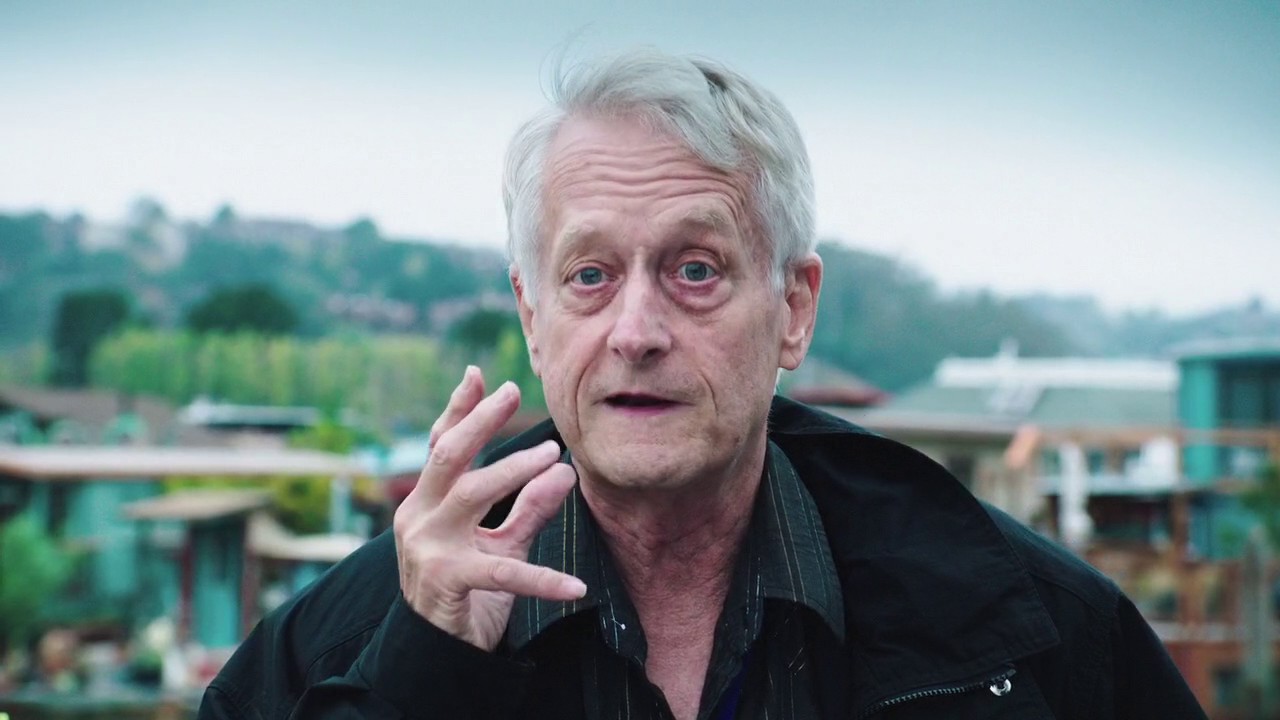
TheTedNelson
Personal computing crippled human expression by flattening interconnected knowledge into linear sequences rather than preserving visible, active source links.
AI-assisted summary of Ted Nelson in Herzog's "Lo and Behold" — original source. Check the original for full context.
Source published:
Key ideas
- Internet visionary Ted Nelson traces his philosophy of digital interconnection to an epiphany at age five, when trailing his hand through lake water revealed the universe as an ever-shifting system of fluid relationships. (0:00)
- Nelson critiques conventional writing as an illicit, wrongful compression of multidimensional tapestries into linear sequences, arguing that modern software like copy-paste fundamentally ruined human writing tools. (1:23)
- Nelson showcases an alternative computing interface featuring parallel document displays that preserve live, visible links back to original source materials across virtual space. (1:23)
- Addressing critics who labeled his decades of unrelenting advocacy for his system as madness, Werner Herzog counters with the deadpan verdict that Nelson is the only clinically sane person in the computing field. (3:01)
Detailed notes
## Background Published on YouTube by TheTedNelson on December 29, 2016, this video presents an excerpt from Werner Herzog’s 2016 documentary *Lo and Behold*, shared with the filmmaker's permission. The channel description highlights this appearance as Nelson's big-screen debut, celebrating Herzog's seamless editing of his interconnected philosophy and the director's surprising conclusion that Nelson is the only sane mind in the computer field.
## TL;DR In this documentary interview, computing pioneer Ted Nelson explains how trailing his fingers in water as a child revealed the universe as a dynamic tapestry of relationships. He critiques conventional writing and modern software conventions for executing a reductive, 'wrongful compression' of thought, directly criticizing Larry Tesler's mainstream text-editing tools. Nelson demonstrates an alternative parallel document architecture that preserves visible, active connections linking quotations directly to source materials such as the King James Bible and the Alphabet of Ben Sira. Although mainstream computing bypassed his ambitious system, Werner Herzog deadpans that Nelson appears to be the only clinically sane person in technology, prompting delighted laughter.
## Atmosphere & style The clip blends Werner Herzog's characteristically grave, philosophical narration with Ted Nelson's lively, earnest, and slightly eccentric storytelling. It shifts smoothly from poetic childhood nostalgia and sharp polemics against modern computing into an affectionate, candid camaraderie between filmmaker and subject. Watching it feels like witnessing an idiosyncratic visionary finally receive warm validation, culminating in a charming moment of shared humor.
## Bulletin - [00:00](https://www.youtube.com/watch?v=Bqx6li5dbEY&t=0s) Internet visionary Ted Nelson traces his philosophy of digital interconnection to an epiphany at age five, when trailing his hand through lake water revealed the universe as an ever-shifting system of fluid relationships. - [01:23](https://www.youtube.com/watch?v=Bqx6li5dbEY&t=83s) Nelson critiques conventional writing as an illicit, wrongful compression of multidimensional tapestries into linear sequences, arguing that modern software like copy-paste fundamentally ruined human writing tools. - [01:23](https://www.youtube.com/watch?v=Bqx6li5dbEY&t=83s) Nelson showcases an alternative computing interface featuring parallel document displays that preserve live, visible links back to original source materials across virtual space. - [03:01](https://www.youtube.com/watch?v=Bqx6li5dbEY&t=181s) Addressing critics who labeled his decades of unrelenting advocacy for his system as madness, Werner Herzog counters with the deadpan verdict that Nelson is the only clinically sane person in the computing field.
## Key takeaways - [00:00](https://www.youtube.com/watch?v=Bqx6li5dbEY&t=0s) In the early 1960s, long before personal computers emerged, Ted Nelson formulated an ambitious model for an interconnected information network. - [00:00](https://www.youtube.com/watch?v=Bqx6li5dbEY&t=0s) Nelson's foundational philosophy originates from a childhood rowboat memory in Chicago, where moving water demonstrated dynamic, constantly opening and closing relationships. - [00:00](https://www.youtube.com/watch?v=Bqx6li5dbEY&t=0s) Generalizing fluid dynamics to the broader cosmos, Nelson concluded that reality itself is an interwoven system of ever-changing structures rather than isolated data points. - [01:23](https://www.youtube.com/watch?v=Bqx6li5dbEY&t=83s) Traditional writing is categorized by Nelson as a 'wrongful compression' that forces an expansive, multi-directional tapestry into a single, flat linear sequence. - [01:23](https://www.youtube.com/watch?v=Bqx6li5dbEY&t=83s) Nelson holds computing pioneer Larry Tesler responsible for corrupting document editing paradigms, arguing that the resulting tools deprived humanity of decent writing mechanisms. - [01:23](https://www.youtube.com/watch?v=Bqx6li5dbEY&t=83s) Mainstream digital text severed quotations from their provenance, abandoning the rich web of relational context that Nelson's designs sought to preserve. - [01:23](https://www.youtube.com/watch?v=Bqx6li5dbEY&t=83s) Nelson demonstrates an interactive parallel software system where excerpted passages remain visibly bridged to their complete source texts, such as the King James Bible. - [01:23](https://www.youtube.com/watch?v=Bqx6li5dbEY&t=83s) A live interface demonstration shows a quote regarding Adam and Lilith actively anchored to its origins within the medieval text The Alphabet of Ben Sira. - [01:23](https://www.youtube.com/watch?v=Bqx6li5dbEY&t=83s) Pulling back the interface reveals layered pages suspended in virtual space, maintaining persistent visual ribbons that connect quotations directly to original sources. - [03:01](https://www.youtube.com/watch?v=Bqx6li5dbEY&t=181s) Mainstream computing never adopted Nelson's permanent two-way linking model, prompting some contemporary critics to dismiss his unrelenting persistence as insanity. - [03:01](https://www.youtube.com/watch?v=Bqx6li5dbEY&t=181s) Nelson rejects the proverb defining insanity as doing the same thing while expecting different outcomes, choosing instead to live by the creed of trying until achieving success. - [03:01](https://www.youtube.com/watch?v=Bqx6li5dbEY&t=181s) Werner Herzog directly contradicts mainstream perceptions by telling Nelson from behind the camera that he appears to be the only clinically sane person in the computer world.
## Detailed walkthrough ### [00:00](https://www.youtube.com/watch?v=Bqx6li5dbEY&t=0s) The Chicago Rowboat Epiphany and the Nature of Interconnection
Werner Herzog opens with a look back at the early 1960s, long before the arrival of the first Apple personal computer, when speculative concepts of an interconnected world were first taking shape. In those early days, thinker Ted Nelson conceived his own radical vision for a computer network. Although the modern World Wide Web ultimately took a very different path, Herzog observes that Nelson’s original ideas remain dormant rather than obsolete.
Nelson traces the philosophical foundation of his life's work back to a sensory memory from childhood. Around the age of five, while out in a rowboat in Chicago with his grandparents, he trailed his hand through the water. He watched closely as the fluid moved around his fingers, opening up on one side and closing on the other, forming a fluid system of relationships where everything appeared similar yet constantly altered. Generalizing that fluid movement outward, he realized that the entire universe operates as a dynamic, interwoven structure. As Ted Nelson describes it, “and just generalizing that to the entire universe that the world is a system of Ever Changing relationships and structures struck me as a vast truth which it is.”
```mermaid flowchart TD accTitle: Ted Nelson's View of Interconnection versus Traditional Writing accDescr: Diagram illustrating Nelson's philosophy of water-like relational structures, how traditional writing forces them into a narrow sequence, and how his parallel system restores the original tapestry.
subgraph WorldView ["Nelson's Foundational Model"] A["Dynamic Reality<br/>(Water trailing fingers)"] --> B["Tapestry of Interconnection"] end
subgraph Traps ["Conventional Computing & Writing"] B -->|"Wrongful compression"| C["Narrow Linear Sequence<br/>(Sequential text)"] C -->|"Distorted tools"| D["Shallow Cut & Paste<br/>(Severed original contexts)"] end
subgraph Vision ["Nelson's Parallel Architecture"] B --> E["Parallel Connected Views"] E --> F["Quotation visibly tied to King James Bible"] E --> G["Quotation visibly tied to Alphabet of Ben Sira"] end ```
[01:23](https://www.youtube.com/watch?v=Bqx6li5dbEY&t=83s) Wrongful Compression, Larry Tesler, and Visible Source Links
Expressing and making visible this intricate web of relationships became the central focus of all Nelson’s thinking and computer designs, especially regarding text and literature. He views traditional writing as an unnatural, reductive medium because it forces a sprawling multidimensional tapestry into a flat, one-dimensional line. As Ted Nelson puts it, “and writing is the process of reducing a tapestry of interconnection to a narrow sequence and this is in a sense illicit this is this is this is a wrongful compression of what should spread out.”
Nelson argues that modern computing fundamentally betrayed this structure by corrupting the mechanisms of editing. He takes sharp issue with the software industry's implementation of basic document tools, laying blame directly on one of personal computing's pioneers. As Ted Nelson insists, “so a guy named Larry tesler whom I consider to be a good friend nevertheless changed those words and I consider that to be a crime against humanity and he doesn't understand why because Humanity has no decent writing tools in any case this is the problem of interconnection and representation and sequentialization all similar to the issue of water.”
Demonstrating his alternative software interface, Nelson reveals a parallel presentation screen designed to preserve visible, active connections back to source texts rather than severing them: - The display matches an excerpted phrase—“In the beginning God created the heaven and the earth”—with a visible line connecting directly across to its full original context within the King James Bible. - Stepping down through the text, another quotation—“Adam and Lilith immediately began to fight”—is shown visibly anchored to its origin in the medieval Jewish text *The Alphabet of Ben Sira*. - Pulling back the camera perspective reveals successive pages layered in virtual space, maintaining live visible paths connecting excerpted passages directly to their source materials.
[03:01](https://www.youtube.com/watch?v=Bqx6li5dbEY&t=181s) "The Only One Around Clinically Sane"
Herzog notes in narration that Nelson’s ambitious system of permanent, two-way visible links never materialized in mainstream computing, and that some people labeled Nelson insane for spending decades clinging stubbornly to his idiosyncratic model. Nelson acknowledges the conflicting cultural attitudes toward persistence: one common adage defines insanity as repeating the exact same action while expecting a different outcome, while another urges, "If at first you don't succeed, try, try again." Nelson embraces the second motto, explaining, “I prefer the latter because I I don't want to be remembered as the guy who didn't.”
Herzog then offers an unexpected and deadpan assessment from behind the camera. As Werner Herzog tells him, “now to to us you appear to be the only one around clinically sane.” Nelson bursts into surprised laughter, remarking, “no one has ever said that before usually I hear the the opposite.” The interview closes in high spirits as Nelson warmly thanks the film crew, calling the interaction marvelous and joking about what a great team they make before cheerfully passing the floor back to Herzog.
## Notable quotes > [01:23](https://www.youtube.com/watch?v=Bqx6li5dbEY&t=83s) writing is the process of reducing a tapestry of interconnection to a narrow sequence and this is in a sense illicit this is this is this is a wrongful compression of what should spread out. — Ted Nelson
## Mentioned Ted Nelson, Werner Herzog, Larry Tesler, Apple, Lo and Behold, King James Bible, The Alphabet of Ben Sira, World Wide Web
## Video description Here is Ted on the big screen for the first time-- interviewed by the great film-maker Werner Herzog for his 2016 movie about the Internet and its consequences.
The interview is brilliantly edited to present a seamless train of thought selected from Ted's sweeping complex of ideas.
Amazingly, Herzog concludes that Ted is the only sane person in the computer field.
Put on Youtube by permission of Werner Herzog.
[Source](https://www.youtube.com/watch?v=Bqx6li5dbEY)