OpenAI Models Uncover New Math Proofs to Speed Up AGI Research
OpenAI
Training AI on the rigorous, zero-tolerance logic of advanced mathematics builds the generalized long-timeline reasoning required to achieve artificial general intelligence.
## Background
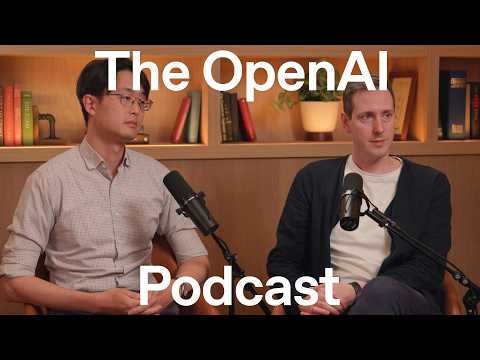
Published on April 28, 2026, on YouTube by OpenAI, this episode of the OpenAI Podcast features researchers Sébastien Bubeck and Ernest Ryu joining host Andrew Mayne. They discuss the rapid progress of AI's mathematical capabilities, reflecting on how ChatGPT helped solve a 42-year-old open problem and what happens when AI can work over longer timelines.
## TL;DR
The podcast explores the rapid and surprising evolution of AI from struggling with basic arithmetic to solving complex, research-level mathematical proofs. The researchers share first-hand experiences, including solving a 42-year-old open optimization problem and generating brand-new solutions to Erdős problems. They discuss the concept of 'AGI time'—the ability of models to reason autonomously over days and weeks—and how AI will transform the role of human scientists by acting as an ultimate collaborative partner and tutor rather than replacing them.
## Atmosphere & style
The conversation is intellectually stimulating, optimistic, and deeply academic yet accessible. There is a palpable sense of wonder and excitement as the researchers recount breakthroughs that they themselves thought were impossible just years prior. The dynamic between the host and guests is collaborative and lighthearted, filled with insider jokes about academic milestones like Erdős numbers, balancing the profound philosophical questions about human intelligence with genuine scientific enthusiasm.
## Key takeaways
- [01:26](https://www.youtube.com/watch?v=9-TVwv6wtGQ&t=86s) AI's progress in mathematics has been incredibly rapid, transitioning from failing basic ledger calculations to assisting Fields Medalists in just a few years.
- [03:00](https://www.youtube.com/watch?v=9-TVwv6wtGQ&t=180s) Ernest Ryu successfully collaborated with ChatGPT over 12 hours to solve a 42-year-old open problem in optimization theory regarding the Nesterov accelerated gradient method.
- [09:20](https://www.youtube.com/watch?v=9-TVwv6wtGQ&t=560s) Mathematics serves as the ultimate benchmark for AGI because problems are unambiguous, easy to verify, and require a zero-tolerance, long chain of logical reasoning.
- [17:16](https://www.youtube.com/watch?v=9-TVwv6wtGQ&t=1036s) OpenAI's models successfully resolved several open Erdős problems, initially through deep literature synthesis and subsequently by generating entirely new, publishable solutions.
- [21:27](https://www.youtube.com/watch?v=9-TVwv6wtGQ&t=1287s) The frontier of AI reasoning is shifting toward 'AGI time,' moving from seconds of thinking to autonomous reasoning over weeks or months to act as an 'automated researcher.'
- [24:07](https://www.youtube.com/watch?v=9-TVwv6wtGQ&t=1447s) To overcome the finite context window limit, models are beginning to mirror human workflows by summarizing thoughts and maintaining repositories of notes.
- [28:17](https://www.youtube.com/watch?v=9-TVwv6wtGQ&t=1697s) AI will not make human mathematicians obsolete; instead, it will free them from the slow grind of proof verification and open up entirely new branches of mathematics.
- [35:52](https://www.youtube.com/watch?v=9-TVwv6wtGQ&t=2152s) There is a risk of intellectual dependency and mental atrophy if students and researchers rely blindly on AI instead of doing the hard work to build deep understanding.
- [38:53](https://www.youtube.com/watch?v=9-TVwv6wtGQ&t=2333s) AI can act as the ultimate personalized tutor, allowing anyone to catch up on complex scientific fields and demystify advanced concepts through interactive dialogue.
## Detailed walkthrough
### [00:00](https://www.youtube.com/watch?v=9-TVwv6wtGQ&t=0s) The Miraculous Leap to Olympiad-Level Math
The progress of artificial intelligence over the last few years has been "nothing short of miraculous." Only a few years ago, the idea of large language models (LLMs) solving complex mathematical proofs was almost laughable. Today, researchers are looking at a future where LLMs can solve problems requiring more than 50 pages of rigorous logical thinking. Mathematics has served as the ultimate, perfect benchmark to measure and evaluate AI progress over the last four years.
Host Andrew Mayne introduces guests Sebastian Bubeck and Ernest Ryu, both researchers at OpenAI with deep roots in academia.
* Sebastian Bubeck has worked in mathematics for nearly 20 years, specializing in optimization and machine learning theory. He was a professor at Princeton University before moving to Microsoft, and eventually joining OpenAI to study how AI can assist in solving difficult mathematical problems.
* Ernest Ryu recently joined OpenAI after serving as a professor of mathematics at UCLA, where he worked as an applied mathematician focusing on optimization and machine learning theory.
[01:26](https://www.youtube.com/watch?v=9-TVwv6wtGQ&t=86s) The Astounding Speed of Progress
There is a common public perception that language models are inherently bad at math because they are, by definition, "language models." However, the pace of change has been staggering. Just two years ago, AI did not even have reasoning models, let alone systems capable of proving difficult mathematical theorems. Today, these models are sophisticated enough to assist Fields Medalists in their day-to-day research.
This rapid evolution caught even the experts off guard. Sebastian shares an anecdote from a conference workshop a year and a half ago, where he participated in a debate on whether scaling LLMs could help resolve major open mathematical problems. At the start of the session, an audience poll showed that roughly 80% of the mathematicians in attendance believed it was "impossible." By the end of the hour-long debate, the room was split 50-50. Yet, even that newly acquired optimism was far too conservative in hindsight; a mere eight months later, AI models were already beginning to perform research-level mathematics.
[03:00](https://www.youtube.com/watch?v=9-TVwv6wtGQ&t=180s) Solving a 42-Year-Old Open Problem
The summer of 2025 marked a major milestone when ChatGPT achieved a gold-medal-level performance at the International Math Olympiad (IMO), matching the capabilities of the world's top high school contestants. While impressive, competition math consists of "canned problems" with relatively short, existing solutions designed to be solved within a few hours. It is not novel, research-level mathematics.
This distinction prompted Ernest to test ChatGPT on his own research domain to see if it could handle genuinely unsolved problems. He chose a classical open problem in optimization theory regarding the Nesterov accelerated gradient method. While the algorithm is widely known to converge and behave well in most cases, it was a 42-year-old open question whether a worst-case scenario existed that could cause the algorithm to diverge.
Ernest tackled this problem during his evening free hours—the four-hour window between his son's 8:00 p.m. bedtime and his own midnight bedtime. Over the course of three days, totaling 12 hours of interaction, Ernest collaborated with ChatGPT to find the answer:
* The process was highly interactive; Ernest acted as the "verifier," correcting the model whenever it made a mistake and steering the conversation toward novel approaches.
* Together, they produced a mathematically rigorous proof showing that the algorithm could indeed diverge in worst-case scenarios.
* After Ernest and ChatGPT both double-checked the proof, Ernest decided that instead of writing a traditional academic paper, the most fun way to publicize this breakthrough was to post it directly to Twitter (X).
* The post went viral, representing one of the earliest instances of a genuinely open mathematical problem being solved through human-AI collaboration.
[06:21](https://www.youtube.com/watch?v=9-TVwv6wtGQ&t=381s) From Ledger Splitting to High-Level STEM
To illustrate the sheer scale of progress, Ernest compares the model's current capabilities to its performance in early 2023. Back then, ChatGPT struggled with basic, day-to-day "math-ish" tasks. For example, if three friends went camping and needed to split an unevenly distributed ledger of 17 different items, the model would consistently fail the calculation. Similarly, if three people in different time zones—such as California, Paris, and Seoul—needed to schedule a Zoom meeting, early models could not reliably calculate a suitable time slot.
Today, the landscape has completely shifted. Unless you are a professional mathematician trying to invent entirely new branches of mathematics, ChatGPT can handle virtually all the high-level math you throw at it.
* It can seamlessly solve complex applied mathematics, including differential equations and differential geometry.
* For 99% of the population—including physicists, chemists, and engineers who use advanced math as a tool rather than a research subject—the model's mathematical capabilities are fully sufficient, though users should still exercise caution and run simulations to double-check the output.
[09:20](https://www.youtube.com/watch?v=9-TVwv6wtGQ&t=560s) Why Math is the Ultimate Catalyst for AGI
The breakthrough in mathematical capability was not merely a result of "scaling up" existing models, nor was it solely due to integrating external tools like calculators. It required deep, innovative research into the models' intrinsic reasoning capabilities.
Sebastian points out that four years ago, in the pre-ChatGPT era, Google released a mathematics model called Minerva. At the time, Sebastian was incredibly impressed that the model could take the coordinates of points on a plane and successfully calculate the line passing through them—a task that seems trivial today.
Mathematics is a uniquely powerful domain for training and benchmarking AI for several reasons:
1. **Unambiguous Questions:** The problems are clear, and everyone agrees on what is being asked.
2. **Easy Verification:** Unlike subjective tasks, a mathematical answer is either objectively correct or incorrect, making it easy to evaluate model progress.
3. **Zero Tolerance for Error:** Solving a complex math problem requires a long, highly consistent chain of reasoning. A single mistake at any point destroys the entire argument, even if every subsequent step is logical.
This "long thinking" and self-correcting property is exactly what researchers want to develop in reasoning models. Just as humanity trains children in mathematics to cultivate logical, structured thinking that they can apply to other areas of life, training AI on math helps build generalized reasoning capabilities that will transfer to other complex domains.
[13:35](https://www.youtube.com/watch?v=9-TVwv6wtGQ&t=815s) The Erdos Problems and AI Literature Search
As an AI researcher with a background in pure mathematics, Sebastian views part of his role as educating the broader scientific community about these rapid advancements. One of the most exciting testing grounds for these models has been the open problems left behind by Paul Erdos.
Paul Erdos was one of the 20th century's most prolific and eccentric mathematicians, co-authoring over 1,500 papers. He lived a nomadic lifestyle, traveling from university to university with no permanent home, constantly posing mathematical questions to collaborators. This gave rise to the famous "Erdos number," which measures a mathematician's collaborative distance from Erdos himself.
* Sebastian proudly notes that his Erdos number is two, meaning he co-authored a paper with someone who worked directly with Erdos.
* Ernest's Erdos number is three, prompting a lighthearted joke from Sebastian that the difference "says something about our respective age."
Today, mathematician Thomas Bloom maintains a dynamic website tracking roughly a thousand Erdos problems that remain open or have complex statuses. When OpenAI researchers decided to test their models on these problems, they were surprised to find the model successfully resolving questions marked as open.
In one instance from late last year, the model solved an open Erdos problem by performing a "deep literature search." It scanned thousands of papers across unrelated fields and discovered that the answer to the Erdos problem had actually been solved elsewhere, even though the original authors of that paper had no idea they had solved an open Erdos problem.
### [17:16](https://www.youtube.com/watch?v=9-TVwv6wtGQ&t=1036s) Solving the Erdős Problems and the Acceleration of AI
The team's initial success with ChatGPT was highly ad hoc, relying on manual prompts in the standard interface to bridge two entirely different mathematical languages. Once they saw it work, team member Mark Selke decided to take a more systematic approach. He tested the model against a series of open math problems, and it returned solutions to 10 Erdős problems. At the time, a dynamic debate was raging in the AI community about whether these models could actually discover or invent new mathematics. Sebastian Bubeck tweeted about the 10 solutions, which sparked an infamous misunderstanding; many believed he was claiming the AI had discovered entirely new, unreleased solutions to incredibly difficult open problems. In reality, the model had performed a deep literature search, connecting existing pieces of knowledge—a result that even led to a brief feud with Demis Hassabis at Google over how to properly frame such achievements.
The real punchline came just a few months later. While those initial 10 Erdős solutions were already hidden in the literature, the team has since obtained more than 10 entirely new, original solutions that are publishable in top combinatorics journals, generated by ChatGPT and internal Microsoft models. This rapid transition from literature synthesis to genuine mathematical discovery highlights the sheer acceleration of the technology. It proves that what once sounded like a ridiculous claim is now happening in real time.
- **Key Figure:** Mark Selke, a member of the research team who systematically tested the Erdős problems.
- **The Erdős Milestone:** The model initially solved 10 Erdős problems by synthesizing existing literature, and has since generated over 10 entirely new, publishable solutions.
- **The Debate:** The achievement initially sparked tension with Google's Demis Hassabis regarding how AI-generated mathematical breakthroughs should be communicated.
### [19:33](https://www.youtube.com/watch?v=9-TVwv6wtGQ&t=1173s) Recombination vs. Sparks of Genius
The progress of AI forces researchers to confront fundamental questions about the nature of human intelligence and scientific discovery. A central debate is whether scientific progress is merely the act of putting different pieces of information together and applying a layer of reasoning, or if it truly requires "brilliant sparks of insight." While people often point to Albert Einstein's theory of relativity as a prime example of a unique human spark, even Einstein credited others for the visualization methods he built upon.
The speakers suggest that humanity often romanticizes discovery with "tiny little stories" of isolated genius, when the reality is far more collaborative and cumulative. The jury is still out on whether this process of recombination and incremental thinking can expand human knowledge indefinitely, or if there is an upper limit that only human genius can breach. Regardless, these advanced mathematical capabilities are not being built using niche, math-specific training; the training techniques are highly general and are expected to accelerate progress across all sciences, including biology and material science.
### [21:27](https://www.youtube.com/watch?v=9-TVwv6wtGQ&t=1287s) The "Automated Researcher" and AGI Time
Currently, human interaction with AI resembles a professor-student dynamic. The human professor assigns a problem, ChatGPT (the student) goes away, thinks, and returns with an answer, compressing timelines that would normally take a human researcher weeks or months down to mere hours. To move beyond this paradigm and achieve true scientific breakthroughs—such as solving longstanding research problems or directing wet-lab biology experiments—AI must transition into an "automated researcher" that can work autonomously over long periods.
This concept is closely tied to "AGI time," which measures how long an AI can continuously mimic human-level thinking. Four years ago, models could only mimic a high school student thinking for a few seconds or minutes. Today, they can mimic a researcher thinking for hours or days, with the current state of the art hovering around the "days to one week" mark. The frontier of AI research is pushing this capability to weeks and eventually months.
- **The Timeline Compression:** Ernest spent over 40 hours failing to solve a problem on his own, but resolved it in just 12 hours of collaborative interaction with ChatGPT.
- **AGI Time Scale:** AI reasoning capacity has consistently scaled over the last four years:
- *Past:* Seconds to minutes (high school level).
- *Present:* Hours to days/one week (researcher level).
- *Future Goal:* Weeks to months of autonomous reasoning.
### [24:07](https://www.youtube.com/watch?v=9-TVwv6wtGQ&t=1447s) Overcoming the Context Window Limit
A major bottleneck for mathematicians using ChatGPT is the finite context window, which is roughly equivalent to 50 pages of a math paper. Because groundbreaking mathematics often requires hundreds of pages of dense reasoning, this limit prevents deep breakthroughs. However, users of Codex know that it is possible to have incredibly long work sessions. Codex manages this by compactifying past conversations and maintaining a massive repository of code, which is analogous to a mathematician's working notes.
Human mathematicians do not write a 30-page paper in one sitting; they think for a day, summarize their ideas into notes, and return to them over months. AI is beginning to mirror this workflow, allowing LLMs to manage huge repositories of thoughts and solve problems that require far more than 50 pages of active thinking. This "literal acceleration" allows researchers to spin up tools on the fly. For instance, during a weekend project, one speaker used Codex to generate a custom benchmark dataset in five minutes—a task that normally would have taken days or caused them to give up entirely.
### [28:17](https://www.youtube.com/watch?v=9-TVwv6wtGQ&t=1697s) The Future Role of the Human in Science
As AI models begin to surpass humans by finding errors in published papers and asking questions so profound that humans want to write papers about them, the question arises: what is the role of the human? Sebastian argues that the goal of science is not simply to write ten times more papers than one's neighbor, but to deeply understand our environment, cure diseases, and build a better world. Because "the AI doesn't care about curing disease" but humans do, the human's role will be to guide and control these systems toward the problems that actually matter to humanity.
Rather than putting mathematicians out of work, AI will make mathematics incredibly fun, rich, and interconnected. Historically, when physical computers emerged in the 1940s and 1950s, some feared mathematics would be solved and everyone would have to move to physics. Instead, computation birthed entirely new branches of math. AI will do the same by acting as an intellectual bridge. It will read niche, forgotten papers and surface vital connections to researchers decades later, making the entire body of human mathematical knowledge instantly accessible and verifiable.
[34:18](https://www.youtube.com/watch?v=9-TVwv6wtGQ&t=2058s) Accelerating the Slow Grind of Mathematical Verification
The traditional process of verifying mathematical proofs is notoriously slow, often taking years of painstaking effort. It is not enough for a single peer to review a paper; many researchers must read it, attempt to extend its findings, and scrutinize every minor detail. During this protracted cycle, "fatally incorrect proofs are published" and initially accepted by the mathematical community, only to be discovered as completely unsalvageable years down the line.
AI is poised to massively accelerate this filtering and verification process. While current models are not yet perfect at verifying complex mathematics, they are already highly capable and possess "much more patience than humans." Testing has revealed that a significant portion of published mathematics contains minor errors, and many papers even contain major ones. AI verification promises a future of rapid feedback and absolute certainty. Instead of waiting five years to build upon a newly published paper, researchers could receive a reliable verification within a single week. This shift will make mathematics more interconnected, highly trusted, and ultimately "much more fun," freeing mathematicians to focus on solving harder and more fascinating problems.
---
[35:52](https://www.youtube.com/watch?v=9-TVwv6wtGQ&t=2152s) The Danger of Handing the Keys to the Castle
While the integration of AI into mathematics is exciting, it introduces a profound risk of intellectual dependency. There is a very real danger of "handing the keys to the castle, to the AIs," where humans begin to trust these systems blindly and stop doing the grueling, patient work required to hone their own skills. Deeply understanding a complex mathematical result often requires sitting quietly for hours, days, or even weeks. If students and researchers rely on ChatGPT to simply explain everything in easier terms, they risk developing a "shallower understanding of things."
Human expertise remains more valuable than ever. The only reason top researchers are currently able to squeeze groundbreaking results out of ChatGPT is because of their years of rigorous training and deep subject-matter expertise. Without that foundation, pushing the state of the art is impossible. This is already evident on social media, where non-mathematicians attempt to use AI tools to prove complex theorems, resulting in "many tens of pages of proof" that ultimately turn out to be completely incorrect.
---
[37:44](https://www.youtube.com/watch?v=9-TVwv6wtGQ&t=2264s) Mental Atrophy, Coding, and the Indispensable Scientist
This threat of "mental sort of atrophy" is not unique to mathematics; it is already highly visible in computer science. In the past, learning to code required wrestling directly with a debugger—a frustrating but vital rite of passage. Today, students can bypass this struggle entirely within their university curricula, which poses a dangerous threat to their foundational skills. This ease of use has led some optimistic onlookers to suggest that society will no longer need human scientists.
The speakers vehemently reject this notion, calling it "terrible" and urging the public to avoid such line of thinking. "We need more scientists than ever," they argue. While AI will make scientists vastly more productive and powerful, those scientists must still be exceptionally good at their craft. Because AI companies cannot solve every problem alone, existing academic institutions must step up, understand the rapid pace of technological progress, and "reclaim their role in that process."
---
[38:53](https://www.youtube.com/watch?v=9-TVwv6wtGQ&t=2333s) AI as the Ultimate Tutor for the Next Generation
Despite the risks of intellectual laziness, AI has the potential to draw a massive wave of new talent into the sciences. Because ChatGPT acts as "the greatest tutor in the world," anyone who decides later in life to pursue a scientific field can easily catch up if they are dedicated. This is especially true with the addition of visual explanation tools in ChatGPT. However, achieving high scores on a benchmark does not mean the work is finished. There is always a next level of complexity that will require human ingenuity.
This technology will allow the younger generation to get up to speed in science far more quickly than previous generations. Sebastian recalls staring at Maxwell's equations as a teenager, completely baffled by what they meant and how they were derived. Today, a curious teenager can simply ask ChatGPT, and the model will explain the concepts beautifully. Even so, the fundamental rule of intellectual growth remains unchanged: "you still need to do the hard work on top of it."
---
[39:56](https://www.youtube.com/watch?v=9-TVwv6wtGQ&t=2396s) Combating Bad Proofs with AI Verification and Reputation
The ease of generating content with AI has raised concerns among scientific journals and code repositories, which are being flooded with low-quality submissions and incorrect "fixes." To combat this, publishers and maintainers can deploy AI agents on the receiving end of the pipeline. Rather than fully outsourcing editorial decisions to machines, these AI agents can scan submissions and flag specific, highly suspect areas for human review, significantly reducing the manual verification workload.
Additionally, the social structure of these fields must adapt to enforce accountability. The human who initiates a code commit or submits a paper must take ultimate responsibility for the output. In the mathematical community, putting out an incorrect proof severely damages a researcher's professional reputation. Preserving and strengthening this culture of personal reputational risk is essential to keeping the literature clean.
---
[41:19](https://www.youtube.com/watch?v=9-TVwv6wtGQ&t=2479s) Demystifying Math Through Collaborative Dialogue
For anyone curious about mathematics who feels intimidated by the subject, the best starting point is simply to "Go chat with ChatGPT." Even at the elite research level, mathematicians frequently abandon dense, impenetrable Wikipedia pages after 30 seconds to ask ChatGPT follow-up questions. This allows them to receive highly tailored explanations that target their specific knowledge gaps.
A learner can explain their exact background and the books they have read to ChatGPT, then ask the model to generate open, understandable math questions suited to their level. This interactive loop transforms mathematics from a lonely, solitary struggle in a room into a highly collaborative, social endeavor.
- **Playful "toy problems" to spark mathematical curiosity:**
- "How many M&Ms can you fit in your bathtub?"
- "How many words did you read last year?"
## Notable quotes
> [00:00](https://www.youtube.com/watch?v=9-TVwv6wtGQ&t=0s) nothing short of miraculous. — Andrew Mayne
> [28:17](https://www.youtube.com/watch?v=9-TVwv6wtGQ&t=1697s) the AI doesn't care about curing disease — Sébastien Bubeck
> [34:18](https://www.youtube.com/watch?v=9-TVwv6wtGQ&t=2058s) fatally incorrect proofs are published — Sébastien Bubeck
> [34:18](https://www.youtube.com/watch?v=9-TVwv6wtGQ&t=2058s) much more patience than humans. — Sébastien Bubeck
> [35:52](https://www.youtube.com/watch?v=9-TVwv6wtGQ&t=2152s) handing the keys to the castle, to the AIs, — Sébastien Bubeck
> [35:52](https://www.youtube.com/watch?v=9-TVwv6wtGQ&t=2152s) shallower understanding of things. — Sébastien Bubeck
> [35:52](https://www.youtube.com/watch?v=9-TVwv6wtGQ&t=2152s) many tens of pages of proof — Sébastien Bubeck
> [37:44](https://www.youtube.com/watch?v=9-TVwv6wtGQ&t=2264s) mental sort of atrophy — Sébastien Bubeck
> [37:44](https://www.youtube.com/watch?v=9-TVwv6wtGQ&t=2264s) We need more scientists than ever, — Sébastien Bubeck
> [38:53](https://www.youtube.com/watch?v=9-TVwv6wtGQ&t=2333s) the greatest tutor in the world, — Sébastien Bubeck
> [38:53](https://www.youtube.com/watch?v=9-TVwv6wtGQ&t=2333s) you still need to do the hard work on top of it. — Sébastien Bubeck
> [41:19](https://www.youtube.com/watch?v=9-TVwv6wtGQ&t=2479s) Go chat with ChatGPT. — Sébastien Bubeck
## Mentioned
OpenAI, Sébastien Bubeck, Ernest Ryu, Andrew Mayne, ChatGPT, Fields Medal, International Math Olympiad, Nesterov accelerated gradient method, Minerva, Google, Paul Erdős, Thomas Bloom, Mark Selke, Demis Hassabis, Albert Einstein, Codex, Maxwell's equations
OpenAI模型发现新数学证明,加速AGI研究
利用高等数学严密且零容错的逻辑训练AI,可构建实现通用人工智能所需的通用长周期推理能力。
该播客探讨了AI从难以应对基础算术到解决复杂研究级数学证明的惊人飞速演进。研究人员分享了一手经验,包括解决了一个悬而未决达42年的优化问题,以及为埃尔德什(Erdős)问题生成全新的解决方案。他们还探讨了“AGI时间”这一概念——即模型在数天乃至数周内自主推理的能力——并讨论了AI将如何作为终极合作伙伴与导师而非取代者,从而改变人类科学家的角色。
AI 在数学推理领域进展惊人,从无法计算账单迅速跨越至协助菲尔兹奖得主研究,因问题明确且容错率为零,数学已成为衡量 AGI 通用推理能力的终极基准。 (1:26)
OpenAI 研究员 Ernest Ryu 与 ChatGPT 密集协作 12 小时,成功证明了优化理论中关于 Nesterov 加速梯度法在最坏情况下可能发散这一长达 42 年的未解数学难题。 (3:00)
团队利用模型攻克了多项 Erdős 猜想,不仅完成了跨学科文献的深度合成,还生成了 10 余个可在顶级组合数学期刊发表的原创新证明。 (17:16)
AI 推理能力正迈向“AGI 时间”演化,通过借鉴笔记沉淀与代码库总结机制突破上下文窗口限制,推动模型从短时思考升级为能持续自主推理数周至数月的“自动化研究员”。 (21:27)
学者指出盲目依赖 AI 存在思维惰化与知识理解浅薄化的风险,科学研究仍需人类专家把握现实价值导向,并通过个人学术声誉确保论证严谨性。 (35:52)
Reading summary
OpenAI researchers Sebastian Bubeck and Ernest Ryu argue that artificial intelligence has advanced from basic computation to solving genuine research-level mathematical problems, functioning as a primary catalyst for generalized machine reasoning while elevating the necessity of rigorous human oversight.
Advancing from Competition Benchmarks to Research Discoveries (3:00)
While early models struggled with simple arithmetic and schedule coordination as late as 2023, ChatGPT achieved gold-medal-level performance on canned problems at the International Math Olympiad by summer 2025. The technology quickly expanded into novel academic research. Ernest Ryu collaborated with ChatGPT over three days—totaling 12 hours of interactive testing and verification—to resolve a 42-year-old open problem regarding the worst-case divergence of the Nesterov accelerated gradient method, publishing the proof directly to social media.
AI has similarly cracked problems posed by the prolific mathematician Paul Erdős. Research team member Mark Selke tested the model against tracked Erdős problems, initially uncovering solutions to 10 problems by synthesizing obscure findings across unrelated disciplines. Following that literature synthesis milestone, the team generated more than 10 entirely original solutions publishable in top combinatorics journals using ChatGPT and internal Microsoft models.
Mathematics as the Crucible for Machine Reasoning (9:20)
According to Bubeck, mathematics provides an ideal training benchmark for artificial general intelligence because questions are unambiguous, solutions are objectively verifiable, and proofs exhibit zero tolerance for error—a single logical failure invalidates an entire chain of thought. Developing long-horizon thinking in mathematical models cultivates structured, generalized reasoning that transfers across scientific domains such as biology and materials science.
This capacity is closely tracked by "AGI time," which measures how long a model can autonomously sustain coherent human-level reasoning. Four years after models could only emulate high school thinking for minutes, frontier systems now mimic researcher-level thinking for days up to a week, with researchers targeting autonomous reasoning across weeks or months. To bypass context window limits equivalent to 50 pages of dense mathematics, systems are adopting development workflows similar to Codex, compactifying past reasoning steps into structured repositories.
Accelerating Verification and Unifying Fragmented Literature (34:18)
Traditional mathematical peer review often requires years of scrutiny, and fatally flawed proofs are occasionally published and accepted before community members detect unsalvageable errors. Ryu and Bubeck assert that AI models possess significantly more patience than human reviewers, allowing them to rapidly cross-examine proofs, detect subtle bugs, and potentially compress verification cycles from five years down to a single week.
AI also serves as an automated research synthesizer by unearthing forgotten results buried in niche archives. Because models can read and correlate disconnected mathematical subdisciplines, they can connect dormant solutions to active questions whose original authors were unaware of their broader relevance.
The Hazards of Intellectual Atrophy and Misattribution (35:52)
The researchers warn against "handing the keys to the castle to the AIs," noting that uncritical reliance on conversational explanations risks causing intellectual atrophy and shallow comprehension among students and scientists. Top researchers extract groundbreaking results from AI only because their deep subject-matter expertise enables them to guide the system and catch errors; untrained users frequently produce dozens of pages of flawed proofs that fail basic rigor.
To manage the influx of low-quality, AI-generated submissions to journals and codebases, the speakers propose deploying automated review agents to flag suspicious passages for human evaluation. However, they emphasize that professional accountability must remain with human authors, arguing that preservation of personal reputational risk is critical to maintaining scientific integrity.
Bubeck and Ryu conclude that rather than rendering mathematicians obsolete, AI will automate tedious technical grinds and foster new fields of study, provided human researchers retain deep foundational expertise to direct models toward problems of genuine scientific and societal value.
## Background
本期内容由 OpenAI 官方频道于 2026 年 5 月 3 日发布在 YouTube 平台。节目由 Andrew Mayne 主持,邀请了 OpenAI 研究员 Sébastien Bubeck 和 Ernest Ryu,围绕 AI 在数学能力上的飞跃、利用 ChatGPT 攻克 42 年未决难题的历程,以及长程推理对未来科学研究与 AGI 的深远意义展开深度探讨。
## TL;DR
两位前顶尖数学家出身的 OpenAI 研究员回顾了 AI 如何在短短几年内从基础算术跃升至奥林匹克竞赛金牌水平,并深入探讨了模型攻克 42 年未决难题以及独立证明埃尔德什猜想的突破细节。他们阐述了数学作为零容错、严密长思维链基准对发展 AGI 的核心价值,并展望了未来能够自主进行数周至数月长程推理的“全自动研究员”(Automated Researcher)。同时,嘉宾们也严肃告诫学界需警惕因过度依赖工具而导致“浅层理解”和思维萎缩的隐患,强调人类专业素养与引导价值依然不可替代,并鼓励大众将 ChatGPT 当作随时激发灵感的数学探索伙伴。
## Atmosphere & style
整场对话洋溢着前沿科研者特有的兴奋感与理性质感的交织。两位嘉宾既有数学家严谨审慎、警惕认知偷懒的学术底色,又充满亲历技术指数级爆发时的震撼与豪情,主持人的穿针引线更让沉重的数学推演变得通俗生动。听感兼具深度思想交锋与轻松的学术沙龙氛围,既展现了技术突破带来的高频多巴胺,又留有对人类科学本质追求的深刻哲学反思。
## Bulletin
- [03:01](https://www.youtube.com/watch?v=9-TVwv6wtGQ&t=181s) OpenAI 研究员 Ernest Ryu 在 ChatGPT 的协同下,仅用 12 小时便成功构造出应用数学优化理论中悬而未决 42 年的“涅斯捷罗夫加速梯度法”发散反例。
- [09:21](https://www.youtube.com/watch?v=9-TVwv6wtGQ&t=561s) 数学能力已成为评估推理模型进化的黄金基准,但技术突破并非单纯依靠算力扩展(Scaling),而是源自底层长链条自我纠错算法与架构的深度创新。
- [13:35](https://www.youtube.com/watch?v=9-TVwv6wtGQ&t=815s) 在解决埃尔德什猜想(Erdős Problems)时,模型已从早期的跨学科“深度文献检索”跨越至产出十余个达到顶级组合数学期刊标准的完全原创解法。
- [21:26](https://www.youtube.com/watch?v=9-TVwv6wtGQ&t=1286s) 针对深奥数学研究的未来演进,AI 正在从导师与研究生的交互协作模式转向能进行数周至数月长程推理的自主“自动研究员”(Automated Researcher)。
## Key takeaways
- [01:36](https://www.youtube.com/watch?v=9-TVwv6wtGQ&t=96s) 从仅能拟合二维直线到在 IMO 摘金并参与研究级数学推导,AI 推理能力在短短几年内完成了指数级的代际飞跃。
- [03:01](https://www.youtube.com/watch?v=9-TVwv6wtGQ&t=181s) Ernest Ryu 与 ChatGPT 协作攻克涅斯捷罗夫算法收敛悬案,展示了人类扮演严格验证者与方向引导者、AI 负责长链推导的新型科研协作范式。
- [06:22](https://www.youtube.com/watch?v=9-TVwv6wtGQ&t=382s) 除少数需要开创全新数学体系的顶尖纯数学家外,现有大模型已基本能包揽其余 99% 从业者(如物理学家、化学家)所需的高阶数学推演与计算需求。
- [09:21](https://www.youtube.com/watch?v=9-TVwv6wtGQ&t=561s) 将模型数学能力的爆发单纯归因于算力扩展(Scaling)是片面的,OpenAI 在模型内生复杂推理算法上的系统性创新才是根本动力。
- [10:46](https://www.youtube.com/watch?v=9-TVwv6wtGQ&t=646s) 数学之所以是迈向 AGI 的核心基准,在于其零容错率与无歧义性,这种严苛环境迫使模型必须掌握长思维链保持与自我纠错能力,并能迁移至全学科科研。
- [13:35](https://www.youtube.com/watch?v=9-TVwv6wtGQ&t=815s) 在攻坚埃尔德什问题的过程中,模型证明了自己不仅能打通不同学科文献的同构表达,更具备独立构建崭新证明链条的原创突破能力。
- [23:01](https://www.youtube.com/watch?v=9-TVwv6wtGQ&t=1381s) 未来的终极科研形态是全自主运作的“自动研究员”,其核心瓶颈在于拓展“AGI 时间”——即 AI 维持人类高强度深度思考的认知续航上限。
- [24:07](https://www.youtube.com/watch?v=9-TVwv6wtGQ&t=1447s) 借鉴 Codex 在代码工程中的对话紧缩机制,大模型通过对推导笔记的定期归纳与沉淀,有望彻底挣脱有限上下文窗口对长篇数学研究的束缚。
- [26:23](https://www.youtube.com/watch?v=9-TVwv6wtGQ&t=1583s) 真实科研加速的核心价值在于将研究摩擦力降到最低,把原本可能因繁琐工具链而中途放弃的探索转变为可行路径。
- [28:19](https://www.youtube.com/watch?v=9-TVwv6wtGQ&t=1699s) 当前模型不仅能主动阅读文献进行查错纠偏,还展现出了提出具备学术发表价值的高质量原创科研命题的能力。
- [30:44](https://www.youtube.com/watch?v=9-TVwv6wtGQ&t=1844s) AI 不具备内在关切与生存痛感,人类始终必须坐在驾驶座上,决定哪些关乎自身福祉的重大科学问题才真正值得探索。
- [31:56](https://www.youtube.com/watch?v=9-TVwv6wtGQ&t=1916s) 大模型打破了传统数学高度细分导致的学术孤岛,能够将常年沉睡于预印本库中的冷门成果重新激活并跨学科赋能。
- [33:52](https://www.youtube.com/watch?v=9-TVwv6wtGQ&t=2032s) AI 凭借无限耐心正在重构漫长的同行审议流程,有望将厚达数百页长篇证明的严谨验证周期从数年压缩至数天或数周。
- [36:00](https://www.youtube.com/watch?v=9-TVwv6wtGQ&t=2160s) 学者警告需高度警惕“浅层理解”陷阱与思维萎缩,人类若丧失刻苦钻研底层内核的专业素养,将无法在人机协作中把握知识城堡的钥匙。
- [40:46](https://www.youtube.com/watch?v=9-TVwv6wtGQ&t=2446s) 为应对低质 AI 学术内容的泛滥,学术界需构建 AI Agent 审稿前哨进行逻辑初筛,但最终的学术声誉担保与责任必须牢牢绑定在人类作者身上。
- [41:19](https://www.youtube.com/watch?v=9-TVwv6wtGQ&t=2479s) 将 ChatGPT 视作平等的探讨伙伴并明确告知自身知识边界,能定制难度适中的开放性问题,彻底消解传统数学自学的孤立感。
## Detailed walkthrough
### [00:00](https://www.youtube.com/watch?v=9-TVwv6wtGQ&t=0s) 开场与嘉宾背景:从纯粹数学家到前沿 AI 研究者
主持人 Andrew Mayne 在节目开篇便抛出了核心议题:AI 在数学领域的表现是如何在短短几年内从“近乎荒唐可笑”跃升至“奥林匹克竞赛级别”,以及为什么数学是通往通用人工智能(AGI)不可或缺的基石。在过去的认知中,大语言模型(LLM)往往被视为单纯处理文字语言的工具,然而近年来的进展却被评价为“不折不扣的奇迹”。如今的模型不仅能够协助顶尖数学家应对极其深奥的问题,甚至有望解决需要展开长达 50 多页复杂推演的数学难题,这使得数学成为了近四年来衡量模型能力跃升最完美的基准线。
两位嘉宾在加入 OpenAI 之前均是深耕多年的理论与应用数学学者。Sébastien Bubeck 在数学领域沉浸了近 20 年,早先专注于优化理论与机器学习理论,曾任普林斯顿大学助理教授,随后在微软研究院工作多年,如今作为 OpenAI 的核心研究员,全心专注于探索 AI 如何赋能数学研究并攻克高难度数学难题。Ernest Ryu 则是近期加入 OpenAI 的应用数学家,此前担任加州大学洛杉矶分校(UCLA)数学系教授,同样长期聚焦于优化与机器学习理论。
- Sébastien Bubeck:拥有近 20 年数学研究背景,曾任普林斯顿大学教授及微软研究院研究员,现专注于 AI 攻克高难度数学难题的能力评测与方法探索。
- Ernest Ryu:加入 OpenAI 前为 UCLA 数学系教授,主要从事应用数学、凸优化算法及机器学习理论研究。
### [01:36](https://www.youtube.com/watch?v=9-TVwv6wtGQ&t=96s) 意料之外的技术跃升与那场“胜负逆转”的学术辩论
面对大众对“语言模型算不好数学”的固有偏见,Sébastien Bubeck 强调,整个学术界和业界都被近期的爆发式进展震惊了,包括一线研究人员自己。在短短两年前,AI 领域甚至连成熟的推理模型(Reasoning Models)都尚未出现,更遑论证明深奥的数学定理;而仅仅两年之后,这些模型已经开始进入菲尔兹奖得主的日常研究工作流程,提供实质性协助。
Sébastien 分享了一个极具戏剧性的亲身经历:大约一年半前,他在一个专业数学会议的工作坊上参加了一场学术辩论,议题正是“单纯扩展大语言模型(Scaling LLMs)是否能够帮助人类攻克重大的数学未决难题”。辩论开场前的现场投票显示,约有 80% 的数学家断然认为“绝无可能”。经过一小时激烈的辩论与阐释,支持与反对的比例拉平到了 50-50。然而站在事后诸葛亮的角度来看,当时的争论依然远远低估了技术的进化速度——仅仅八个月后,AI 模型就已经开始涉足并解决真正研究级别的数学问题。
### [03:01](https://www.youtube.com/watch?v=9-TVwv6wtGQ&t=181s) 耗时 12 小时的协作突破:用 ChatGPT 攻克 42 年未决难题
转折性的突破节点出现在 2025 年夏天,ChatGPT 在国际数学奥林匹克竞赛(IMO)中斩获了相当于人类顶尖高手的金牌成绩。尽管这证明了 AI 在竞赛数学层面上已比肩全球最顶尖的高中生,但在专业数学家眼中,竞赛题与真正的学术研究仍有本质区别:竞赛题是人为设计的封闭题目,通常几个小时内就能得出相对简短的解,缺乏原创科研的探索性与开放性。这引发了学术圈的广泛质疑:ChatGPT 真的能做学术前沿的研究级数学吗?面对社交网络上的众说纷纭,Ernest Ryu 决定不听信他人的断言,亲自拿自己领域内的一道悬案下场实测。
Ernest 挑选了应用数学优化理论中一个长达 42 年悬而未决的经典难题——著名的“涅斯捷罗夫加速梯度法”(Nesterov Accelerated Gradient Method)在最坏情况下是否必然收敛,还是可能存在发散反例。长期以来,学界虽熟知该算法在绝大多数情况下表现极佳,但始终无人能证明其是否存在恶劣情况下的发散实例。Ernest 充分利用了每晚陪儿子 8 点入睡到自己午夜就寝之间的 4 个小时私人时间,连续攻坚了 3 个夜晚,总计仅用了 12 个小时便与 ChatGPT 协同推导出了这一发散反例。
```mermaid
flowchart TD
accTitle: Human-AI Collaborative Proof Workflow
accDescr: Ernest Ryu using ChatGPT over 12 hours to solve the 42-year-old Nesterov divergence problem.
subgraph UserSide["人类数学家(Ernest Ryu)"]
A["设定初始研究命题与边界"]
B["扮演严格验证者:指出逻辑漏洞与计算错误"]
C["启发式引导:提示 ChatGPT 探索全新思路路径"]
end
subgraph AISide["推理模型(ChatGPT)"]
D["生成中间数学步骤与候选证明结构"]
E["根据纠错反馈修正推导路径"]
F["产出完整反例构造与数学证明"]
end
A --> D
D --> B
B --> E
C --> E
E --> F
F --> G["双向交叉校验:人类审阅 + AI 自检确认正确无误"]
```
在整个过程中,人机互动绝非简单的“输入 Prompt 就能直接吐出正确答案”。Ernest 扮演了极其关键的“验证者”与“方向引导者”:当模型出现跳步或计算谬误时立刻予以纠正,并在陷入死胡同时代为指引具有原创性的潜在数学路径。最终,证明逻辑成型,经过人类细致复核与让模型进行自我双重交叉验证,确认该证明完全正确。为了让这个成果以更有趣的形式面世,Ernest 没有立刻按部就班地撰写传统学术论文,而是直接发布到了社交媒体 Twitter 上,瞬间引发了广泛轰动,成为历史上最早由 AI 实质性协助解决前沿未决数学难题的经典案例之一。
### [06:22](https://www.youtube.com/watch?v=9-TVwv6wtGQ&t=382s) 从生活算账到全能科研辅助:99% 用户数学需求的全面覆盖
从 2023 年 ChatGPT 刚问世一直到 2025 年初,大语言模型在处理现实复杂数学时其实频频受挫。Ernest 举了两个极具生活质感的例子:
1. **多人物品账单平摊**:三个人结伴去露营,各自垫付了不同物品的花费,如果购买了 17 件杂乱商品想要在事后把账本彻底结清并平均分摊费用,早期模型根本算不清楚。
2. **跨时区日程协调**:若分别身处韩国的 Ernest、身处巴黎的 Sébastien 以及身处加州的 Andrew 想要约一个合适的三方 Zoom 会议时间,模型在计算跨时区重叠时间段时也屡屡碰壁。
然而在 2025 年中,能力曲线迎来了令人难以置信的陡峭跃升。模型不仅能轻松化解上述生活琐事,甚至横扫了 IMO 难题并叩开了前沿科研的大门。Ernest 对当前模型能力的边界给出了明确的基准校准:除非你是需要“开辟全新数学疆域、发明原创数学概念”的职业数学家,否则对于其余 99% 的人群——包括需要频繁运用高深微积分、常偏微分方程、微分几何等高难度数学工具的物理学家或化学家而言,ChatGPT 已经完全有能力包揽其所需的全部高阶数学推导与计算。尽管严谨的科研仍需人类保持审慎并辅以数值模拟双重验证,但高门槛数学对普通理工科研究者的壁垒已被基本击穿。
### [09:21](https://www.youtube.com/watch?v=9-TVwv6wtGQ&t=561s) 破除“单纯模型扩展”迷思与 Minerva 带来的最初震撼
针对主持人关于“模型究竟是靠外挂计算器等工具还是自身产生了根本跃迁”的追问,Sébastien Bubeck 纠正了公众乃至此前学术辩论中常见的一种错误归因逻辑——“单纯增加参数与算力扩展(Scaling alone)就能奇迹般带来数学科研突破”。他直言这种将一切归功于 Scaling 的视角是错误的。OpenAI 在模型演进过程中进行了大量深层的算法创新与多维度的前沿探索,模型是在没有依赖外部工具辅助的情况下,其核心本身内生性地具备了高度复杂的数学推理能力,这是众多系统性研究突破协同并进的结果。
回忆起这项技术的演进轨迹,Sébastien 感慨万千:两年前人类甚至还没有专用的推理模型,而如果将视线拉回到四年前那个 ChatGPT 尚未诞生的时代,谷歌在当时推出了专注于数学推导的模型 Minerva。在那个年代,Minerva 仅仅能够准确理解二维平面坐标系中的点坐标并进行初步推演,就已经让他“震惊得直接从椅子上跌落下来”。从当年为平面坐标识别而欢呼,到如今能够解决 42 年未决难题并在 IMO 摘金,AI 数学能力在这几年的跨越,生动展现了技术范式迭代的惊人加速度。
### [10:46](https://www.youtube.com/watch?v=9-TVwv6wtGQ&t=646s) AI 数学能力的跃迁与通用智能的基准
对模型早期能力的记忆正在迅速消退。就在不久前,让模型拟合出一条穿过特定点集的直线还曾是一项令人惊叹的技术成就,而现在人们对此已经习以为常,甚至会困惑“这有什么好大惊小怪的”。这种认知惯性让大众忽视了技术发展的真正速度。Ernest Ryu 此前认为,除非是要发明全新的数学,否则现有模型的能力已经足够应对绝大多数数学问题;但 Sébastien Bubeck 指出,现在甚至已经出现了模型参与发明全新数学的初见端倪。
面对主持人关于“除了数学家做证明,这为什么对整体科学和 AGI 至关重要”的提问,Sébastien 深入阐释了数学在 AI 演进中的核心地位:
```mermaid
flowchart TD
accTitle: 数学能力对推理模型的通用泛化路径
accDescr: 展示了数学从早期作为评估基准,到后来培养严密长程推理能力并最终泛化至通用领域的逻辑链路。
subgraph Benchmarking["阶段一:确定性基准(已趋饱和)"]
A["问题边界清晰<br/>(毫无歧义,全员共识)"] --> B["答案验证明确<br/>(非黑即白,易于自动评判)"]
end
subgraph Reasoning["阶段二:严密长程推理(当前核心)"]
C["长时间持续思考<br/>(数日、数周乃至数年)"] --> D["全局一致性验证<br/>(单点逻辑错误即毁掉全局)"]
D --> E["自我纠错能力<br/>(Self-Correction)"]
end
subgraph Generalization["阶段三:通用泛化(AGI 目标)"]
F["跨学科复杂科研推理"]
G["通用智能与严谨逻辑迁移"]
end
Benchmarking --> Reasoning
Reasoning --> Generalization
```
在过去四年的研发中,数学一直是最理想的评估基准(Benchmark)。原因在于两点:第一,问题定义清晰严密、毫无歧义,所有人都明确题目在问什么;第二,在进入前沿研究级(Research Level)之前,解法的对错极易验证,不存在模棱两可的评价空间。如今,作为基础评估基准的数学能力已经基本饱和,更关键的是第二阶段的价值——解决数学问题需要模型保持长期的严密思考(Long Thinking)。数学论证具有“一损俱损”的脆弱性:在冗长的推理链中,只要出现一处逻辑断裂,即使后续推导全部正确,整个论述也会瞬间崩塌。因此,模型必须具备在长链条中不犯错以及能够“自我纠错”(Self-Correction)的底层能力。正如人类社会通过数学来训练高阶逻辑思维一样,AI 从数学中习得的严谨推理能力,终将无缝迁移到其他更为广泛的科学与通用智能领域。
- **确定性基准的饱和**:数学题目的无歧义性和可判别性,使其在过去四年成为衡量 LLM 进展的黄金标尺,如今基础层面的评测已近饱和。
- **长思维链与容错特性**:数学论证要求数日甚至数周的连贯思考,容错率为零,这种严苛条件是逼迫模型掌握“自我纠正”的最佳演练场。
- **人类与机器训练的共通逻辑**:人类社会系统性训练下一代学数学并非只为了让大家做数学家,而是为了塑造严谨的逻辑推理范式,AI 的训练逻辑亦然。
---
### [13:35](https://www.youtube.com/watch?v=9-TVwv6wtGQ&t=815s) 保罗·埃尔德什问题与文献重组的边界
Sébastien 谈到,作为兼具前数学家与前沿 AI 研究员双重背景的人,他将向学术界普及和解释 AI 最新进展视为自己的责任,而社交媒体(如 X/Twitter)正是追踪这一极速变化领域的窗口。为了说明研究范式的转变,他将话题引向了著名的“埃尔德什猜想/问题”(Erdős Problems)。
匈牙利数学家保罗·埃尔德什(Paul Erdős)是上个世纪最高产的数学家之一,一生发表了约 1,500 篇学术论文。他特立独行、居无定所,常年提着箱子穿梭于全球各大高校,一边寻找新的合作者,一边源源不断地抛出数学猜想。“埃尔德什数”(Erdős Number)便由此诞生,用来衡量学者与他的合作距离——Sébastien 的埃尔德什数是 2(曾与埃尔德什的合著者共同发表论文),而现场另一位同仁的数字是 3,两人打趣这纯粹反映了彼此的“年龄差距”。数学家托马斯·布鲁姆(Thomas Bloom)建立了一个著名的追踪网站,汇集了大约 1,000 个未解决的埃尔德什问题,该网站允许全球学者自由交流、更新每个问题的最新状态。
随着 GPT 具备解决研究级数学问题的潜力,这个数据库成了绝佳的试验田。OpenAI 团队最初在 ChatGPT 界面中手动尝试,令人震惊的是,模型迅速对一些标记为未解决(Open)的问题给出了答案。Sébastien 曾公开发文分享该突破,但这引发了学术界的误解与争议:
| 阶段 / 成果维度 | 深度文献检索与跨域整合(Deep Literature Search) | 纯原创数学突破(Original Mathematical Discovery) |
|:--- |:--- |:--- |
| **突破机制** | 扫描数以千计的论文,在完全不相关的领域中找到匹配解法并完成数学语言转译 | 模型脱离已有文献直接构建出全新的证明链条,未借助既有成果映射 |
| **经典案例** | 团队成员 Mark Selke 系统性遍历后,模型给出了 10 个埃尔德什问题的答案 | 仅数月后,内部模型及 ChatGPT 发现了 10 多个完全全新的可发表解法 |
| **学术界反馈与争议** | 引发争议(包括与 Google 的 Demis Hassabis 展开论战),被质疑“仅是搜集而非原创” | 产出达到组合数学顶级期刊(Top Journals in Combinatorics)的发表标准 |
| **本质认知** | 打破跨学科术语壁垒,识别“异构表达下的同构本质” | 挑战“AI 无法诞生真正的顿悟灵感(Spark of Genius)”这一传统定论 |
Sébastien 澄清道,第一批所谓的解决实质是极其强大的“深度文献检索”(Deep Literature Search)。模型在数以千计的文献海啸中穿梭,在完全不相关的数学分支中捕捉到了答案。原作者在撰写那篇论文时根本不知道自己在解决埃尔德什问题,其表述形式与数学语境完全不同,而模型跨越了语言与学科屏障,将两端拼接在了一起。随后,团队成员 Mark Selke 展开了更系统化的自动化尝试,一口气筛选出 10 个埃尔德什问题的解法。尽管此举引发了外部关于“这是不是在玩文字游戏宣称攻破难题”的批评甚至与 Demis Hassabis 的争辩,但事情的发展速度超出了所有人的预料:仅仅几个月后,OpenAI 的内部模型与 ChatGPT 便走出了文献检索的藩篱,真正独立演算出了 10 余个**文献中从未存在过的、全新的埃尔德什问题解法**,这些成果完全达到了组合数学顶级期刊的发表门槛。
面对这一跨越,Sébastien 提出了一个关于科学认知本质的深层哲学反思:科学界长久以来所崇尚的进步,究竟在多大程度上只是“不同知识碎片的重新拼接再辅以少许推理”,又在多大程度上依赖于人类特有的、不可替代的“灵光一闪”(Sparks of Genius)?即使像爱因斯坦提出相对论这样的公认奇迹,其背后的可视化物理图景也深受前人启发并承认了他人的思想贡献。如果知识重组与逻辑链条的延伸足以无限拓展人类认知边界,那么人类独占的“天才顿悟”是否真的存在,目前依然悬而未决。
### [20:31](https://www.youtube.com/watch?v=9-TVwv6wtGQ&t=1231s) 通用训练技术与科学研究的普遍加速
数学上的飞跃往往被大众当成一个个戏剧性的小故事,但背后的现实要庞大而复杂得多。当被问及更强大的数学 AI 工具将如何波及生物学、材料科学等其他学科时,塞巴斯蒂安·布贝克(Sébastien Bubeck)明确指出,OpenAI 并没有为数学开发任何“极其特殊”的专用工具。其底层训练技术具有高度的通用性,可以一视同仁地应用于一切领域;数学之所以率先展现出惊人突破,很大程度上是因为它极易设定基准评测(benchmark),进展能够被直观、量化地看清。
这种推理能力的泛化潜力巨大。当模型能够极为严谨地执行“若 A 为真,则 B 必然为真”这类长序列链式逻辑推演时,它在整个自然科学界的各个角落都将具备广阔的应用前景。
### [21:26](https://www.youtube.com/watch?v=9-TVwv6wtGQ&t=1286s) 从“导师-学生交互”到“自动研究员”
```mermaid
flowchart TD
accTitle: 从师生交互到自动研究员的演进
accDescr: 对比当前的师生交互模式与未来的全自动长期研究员模式。
subgraph S1["当前模式:师生互动交互"]
A["人类教授提出初始问题"] --> B["AI 学生尝试推导"]
B --> C["即时讨论并反馈调整"]
C --> D["短周期压缩成果"]
end
subgraph S2["未来模式:全自动研究员 (Automated Researcher)"]
E["输入高阶长期探索目标"] --> F["多模型/智能体自主协作"]
F --> G["长程推理与湿实验室实验交互"]
G --> H["跨越数周至数月的重大科学突破"]
end
```
谈及备受瞩目的“自动研究员”(Automated Researcher)构想,布贝克解释了当前人机协作模式与未来终极愿景的质的飞跃。目前科学家使用 ChatGPT 的方式本质上是一种“导师与研究生”的互动模式:人类扮演教授提出初始命题,模型像个聪明的学生前去钻研并汇报进展,双方就细节推敲一番,学生再离开推演一周后带着新思路回来。这种模式最大的价值在于压缩研发时间——例如欧内斯特·柳(Ernest Ryu)此前尝试解决一个难题,在没有 AI 辅助前苦思了 40 多个小时依然无功而返,换作以往可能要耗费一个月,而在模型协助下仅用 12 小时便成功攻破。
然而,这种短周期的师生互动存在天花板,它很难直接催生真正的划时代突破。无论是要解决那些旷日持久的数学世纪难题,还是在生物学中指导长周期的湿实验室(wet lab)反复试错,都需要研究体系具备长期持续工作的能力。真正的“自动研究员”应当是一个或一组能完全自主、不知疲倦地持续运转漫长时间的模型集群,唯有跨越至长程时间线,AI 才能真正跨入核心科学发现的殿堂。
### [23:01](https://www.youtube.com/watch?v=9-TVwv6wtGQ&t=1381s) “AGI 时间”的尺度跨越:从秒级走向周与月
布贝克特别推崇一个评估模型智力跨度的新维度——“AGI 时间”(AGI time)。这个概念衡量的不是物理世界的绝对计算耗时,而是“AI 能够模仿人类深度思考的持续时间上限”。回顾过去四年的技术演进,模型的认知续航经历了一场极其连贯且震撼的指数级跨越:
- **两年前**:模型只能模拟一个思考几分钟的高中生,解决短平快的题目;
- **过去至现在**:能力标尺以肉眼可见的速度,从“秒级”稳步迈向“分钟级”、“小时级”,进而达到“天级”;
- **当前水平**:模型已大致能够胜任持续数天乃至一周连续思考的研究员角色;
- **下一步目标**:向数周乃至数月的不间断自主长程推理挺进。
这一跨越属于高度开放的前沿科研疆域,全球尚无任何人掌握确切的实现法则。但布贝克强调,随着 OpenAI 在架构创新上的层层推进,技术发展脉络始终沿着拓展“AGI 时间”的轴线稳步向前,这正是孵化全自主研究员的必由之路。
### [24:07](https://www.youtube.com/watch?v=9-TVwv6wtGQ&t=1447s) 上下文窗口限制与类似 Codex 的长程知识归约
欧内斯特·柳从数学家的日常实操痛点切入,剖析了当前大模型在深奥数学面前的局限与曙光。许多数学同行将 ChatGPT 当作单次会话工具,但哪怕支持几十页篇幅的上下文窗口(约折合一篇 50 页的数学长文),也远远无法支撑重大突破。因为一篇仅 10 到 30 页的精炼论文背后,人类往往倾注了数个数量级以上的思考草稿与试错轨迹,有限的单次上下文在深邃思想面前显得捉襟见肘。
但转机已经在编程领域率先上演——熟练使用 Codex 的工程师都知道,长周期会话已成为现实:
- 用户可以源源不断地追加代码指令,项目代码库本身就相当于数学家卷帙浩繁的推导手稿;
- Codex 表现出极高的能动性,它会在推进过程中定期对对话历史进行“紧缩化与提炼”(compactifies its conversations);
- 这种机制让它演化为一个能够跨越庞大代码库与超长会话跨度的复合智能体。
欧内斯特断言,这种范式必将复刻在数学研究中。真正的数学家工作从来不是一气呵成的:今天围绕一个问题思考一整天,将思维火花浓缩记录进笔记;数天或一周后再回到笔记前继续推演。经过数月甚至数年的持续反思与高度结构化提炼,最终才凝结为一篇 30 页的论文。未来的大语言模型一旦学会这种归纳、沉淀笔记并跨越长周期反复调用的机制,就将彻底挣脱上下文窗口的束缚,处理需要海量脑力沉淀的庞大命题。
### [26:23](https://www.youtube.com/watch?v=9-TVwv6wtGQ&t=1583s) 科学加速的真实体验与降低跨界门槛
安德鲁·梅恩(Andrew Mayne)分享了一个亲身经历的生动例证:他在周末尝试让一个微型 LLM 解数学题,期间需要评测基准,查到了一篇名为 EasyMath 的相关论文,但缺乏现成数据。于是他直接在 Codex 界面中随口吩咐:“你能在这里帮我生成属于我自己的评测基准并产出数据吗?”仅过了短短五分钟,完整的数据集便自动构建完成并在后台安静运行。这让梅恩感到不可思议,因为按以往流程,自己必须停下手头核心工作,花几个小时编写数据生成器,而这种摩擦力往往会让人半途放弃。
这种体验完美呼应了布贝克团队此前发表的论文《GPT-5 加速科学发现的早期实验》(*early experiments in science acceleration with GPT-5*)中所阐述的核心思想——真实的“科学加速”:
- **将“放弃”变为“可行”**:它直接消除了科研中的隐形阻力。如果面对繁琐的先决工具链,许多人往往在开头就选择放弃("I would have given up");
- **赋予数学家编程超能力**:绝大多数纯数学家并不擅长写代码,过去他们必须到处物色“可怜的研究生”帮忙跑模拟实验,而现在 Codex 让数学家可以单枪匹马在极短时间内完成所有数值验证;
- **降低领域跨界门槛**:反过来,其他学科的科学家借助 ChatGPT,能够轻松调用原本晦涩难懂的高阶数学工具。梅恩还提到,自己曾手把手向以太网发明者鲍勃·梅特卡夫(Bob Metcalfe)演示如何用 Codex 编写 R 语言脚本,让一位顶级头脑无需耗费心力啃冷门语法,直接跨入数据分析。
### [28:19](https://www.youtube.com/watch?v=9-TVwv6wtGQ&t=1699s) 人类的未来角色与科学探索的本质目的
面对 AI 展现出的澎湃势能,主持人引导两位学者探讨一个终极命题:当模型能力持续逼近并反超人类时,人类在科学世界中究竟该处于何种位置?
布贝克坦言,自己的理性与感性在这一问题上相互拉扯。从理性的客观事实来看,过去四年能力的持续递增没有任何放缓迹象——按照这条逻辑弧线推断,一年之内系统将能独立思考数周,两年之内将能不间断思考数年。更关键的是,在某些研究维度上,AI 已经在全方位超越人类:
- **主动挑错与勘误**:OpenAI 内部部署的智能体已能自主阅读前人发表的学术论文,直接指出“这一处论证是错误的”,并给出正确的解答方案;
- **主动提出高质量科学问题**:人们常误以为 AI 只能被动接招作答,但经过算法创新,模型如今极其擅长提出富有洞见的全新研究命题,以至于人类学者看到后都会由衷惊叹:“这个提问太棒了,我完全可以以此为题写一篇学术论文。”
在一年或两年内,AI 理论上能够胜任人类专职研究员所做的绝大部分日常工作。在此背景下,人类做科学的真正意义究竟何在?布贝克指出,科学探索的终极旨归绝不是为了纯粹解题的智力优越感,更不是为了像下竞技国际象棋一样,攀比谁能比同行多灌水写出十倍数量的论文。人类追逐科学的核心动力在于“理解”(understanding)——我们渴望看清宇宙运行的深层底层规律,这种对深邃真理的渴望与领悟体验,才是人类不可替代的精神内核。
### [30:44](https://www.youtube.com/watch?v=9-TVwv6wtGQ&t=1844s) 人类的引导意图与数学史的历史镜像
讨论从人类对 AI 的掌控延伸开来。Sébastien Bubeck 强调,人类之所以要推进技术,本质上是为了更好地掌控生存环境、攻克致命疾病,以及构建更坚固、更高效、更强大的现实世界。然而,AI 本身并不具备天然的关切与诉求——模型自身不会罹患人类的绝症,因此它根本不在乎疾病是否能被治愈。正因如此,人类必须始终坐在驾驶座上,牢牢握住控制权,去指引 AI 聚焦于那些真正关乎人类福祉的重要问题。只要人类保持对问题价值的判断与引导,等待着学术界与人类社会的就将是一个极为光明的未来。
主持人 Andrew Mayne 随即拉出了一段生动的历史对照:在 20 世纪 40 到 50 年代第一批现代电子计算机诞生时,“计算机”一词正从原先指代专门进行人工计算的职员,转变为执行运算的物理机器。当时学术界曾弥漫着一种悲观论调,认为既然机器能够解决所有复杂的算术与数学问题,数学将不再存在任何硬核难题,所有数学家或许都该被迫转行去搞物理学。然而历史证明,这一预言彻底落空了,计算科学的爆发反而开拓出了无比辽阔的全新数学分支。正如当年的算力革命一样,如今坐在高中课堂里的数学新星,在三十年后面临的绝非学科的消亡,而是一个由 AI 赋能的、前所未有的黄金时代。
- **核心价值导向**:AI 缺乏内在动机与痛感,人类的不可替代性首先体现在确立“什么问题真正重要”的价值坐标系。
- **历史周期的启示**:1940-1950 年代计算机诞生时引发的“数学终结走向物理”的恐慌,最终被计算数学与交叉学科的繁荣证伪;当前的 AI 浪潮正在重演这种拓展学科边界的进程。
---
### [31:56](https://www.youtube.com/watch?v=9-TVwv6wtGQ&t=1916s) 高频多巴胺与被 AI 重新激活的冷门知识网络
Ernest Ryu 描绘了 AI 为纯数学研究带来的颠覆性乐趣。在传统数学研究模式下,数学家往往需要对着一个孤立问题苦思冥想数月之久;虽然解出难题时那一瞬间的多巴胺激增令人沉醉,但整个过程伴随着极度的痛苦与煎熬。随着 AI 大幅压缩推演与搜索周期,那种攻克难关的"多巴胺激增"将以更高的频次爆发,让数学探索变得有趣得多。更为关键的是,数学学术体系将从割裂的孤岛走向深度的互联。
Ernest 指出,现代数学的前沿研究已经极度细分化(hyper niche),一名学者耗费数年心血写就的深奥论文,在发表的当下“全世界可能只有五个活着的人会在意并读懂它”。这篇论文在被同行评阅后,往往在二十年内沉寂在预印本服务器 arXiv 的某个角落,再无人问津。但在 AI 时代,大模型通读并内化了所有被人类遗忘的文献碎片,一旦未来的某项研究需要这块拼图,AI 就能瞬间跨越领域隔阂将它打捞出来,甚至在百年之后重新赋予其生命。不仅如此,数学家即便面对从未涉足的陌生子领域,也能在 AI 的指引下准确定位关键工具并迅速跟进学习,彻底打破以往因知识壁垒而无法跨学科调用的局限。
```mermaid
flowchart TD
accTitle: AI 驱动的数学成果互联与重构
accDescr: 展示学术成果从传统的发表沉睡到 AI 时代跨领域激活与加速验证的路径转换
subgraph Traditional["传统学术孤岛路径"]
A["学者产出高门槛极小众成果"] --> B["全球仅少数同行阅读关注"]
B --> C["沉睡于预印本库与档案中"]
end
subgraph AIAssisted["AI 全局知识图谱整合"]
C -.-> D["AI 消化并建立全球文献深层关联"]
D --> E["跨学科检索与工具推荐"]
E --> F["数学家跨界攻关 / 百年后成果激活"]
end
```
---
### [33:52](https://www.youtube.com/watch?v=9-TVwv6wtGQ&t=2032s) 终结长达数年的学术审核:AI 证明验证的加速革命
数学界长期以来面临着一道极其隐蔽的信任鸿沟:验证一项复杂的数学成果往往比构想证明本身更加艰难。Ernest 举例道,如果一位享有极高声誉的知名学者撰写了一篇长达 300 页的重磅论文,宣称攻克了一项举世瞩目的重大猜想,且表面逻辑看起来完全自洽,学术界如何判定其真伪?在过往,这一同行审议与检验过程往往需要数年时间,不仅需要多批学者逐行推导,还得尝试在此基础上推广推论、反复寻找破绽。在此期间,甚至有些包含致命逻辑硬伤的证明会被学界暂时误信发表,直到数年之后才被发现不可挽回,不得不经历漫长而痛苦的清洗过程。
AI 的介入正在彻底扭转这种旷日持久的困境。虽然眼下的 ChatGPT 等大模型在严谨数学验证上尚未达到绝对完美,但它们已经表现出了极高水准的审查能力,并且具备人类无可比拟的优势——“远超人类学者的无限耐心”。在实际测试中,研究人员已经利用大模型捕捉到了大量已发表顶会或期刊论文中的微小瑕疵乃至重大实质性错误。未来,数学界将建立起高效的 AI 辅助验证机制,一篇一周前刚挂出的论文可能在几天内便能完成严谨的逻辑初筛与形式化核验,使得后续学者能够放心大胆地在其基础上继续构筑理论大厦,而无需耗费五年青春去悬空等待一项证明的真实性确认。
- **传统审稿痛点**:300 页量级的超长证明需要国际同行投入数年时间复核,容错成本极高。
- **现实学术现状**:已发表的学术文献中广泛充斥着小错误甚至部分包含致命缺陷,AI 模型的耐受度与细致度在排查逻辑漏洞上优势显著。
- **反馈周期变革**:学术反馈循环将从以“年”为单位骤降至以“天”或“周”为单位。
---
### [36:00](https://www.youtube.com/watch?v=9-TVwv6wtGQ&t=2160s) 警惕“浅层理解”陷阱:不可让渡的城堡钥匙与思维萎缩
在前景一片大好的乐观情绪中,Sébastien 表达了强烈的警惕与担忧。他提醒大家不要误以为可以彻底把“城堡的钥匙直接拱手让给 AI”。真正的危险在于:当人们习惯了轻而易举地让 ChatGPT 用平实简短的语言解释深奥概念,年轻一代可能会丧失坐穿冷板凳的学术定力,不再愿意花费数天、数周甚至数月的时间去耐心深挖一个数学结果的底层内核。这种认知上的偷懒将不可避免地导致对学科本质产生“极度浅薄的理解”(shallower understanding)。
Sébastien 郑重指出:“专业素养在今天比以往任何时候都更加宝贵。”研究团队之所以能从当前的尖端模型中压榨出突破性的数学洞见,完全归功于他们多年刻苦训练所积淀的极深理解力;如果缺乏这种根基,根本不可能推动人类知识的前沿极限。如今在社交媒体上,已经屡屡出现外行利用大模型炮制出数十页所谓宏大定理的证明,但经行家审视全是一堆看似光鲜实则漏洞百出的废话。Ernest 对此深有共鸣,他补充道,这种“思维萎缩”(mental atrophy)在软件编程领域同样已成普遍隐患——过去计算机系学生必须亲自同调试器(debugger)反复肉搏折磨,而现在随着自动生成代码的普及,学生在本科教学中甚至可以跳过底层排错的硬核训练,这对于严谨思维的培养是极其危险的。
> "专业素养在今天比以往任何时候都更加宝贵。我们之所以能够从 ChatGPT 中压榨出那些突破性成果,完全得益于多年来艰苦训练所换来的深刻理解。" —— Sébastien Bubeck
---
### [38:07](https://www.youtube.com/watch?v=9-TVwv6wtGQ&t=2287s) 基础科学的扩军与学术守门人机制的演进
面对外界“AI 进步将导致科学界不再需要人类科学家”的荒谬言论,Sébastien 旗帜鲜明地予以痛斥:“这是绝对糟糕透顶的误解,我们比以往任何时候都更需要科学家。”未来的科学家借助 AI 杠杆将变得前所未有地高产与强大,但前提是他们必须彻底精通自己的专业技艺。单靠 OpenAI 这样的商业公司无法解决教育与认证的全部问题,传统学术机构与高校必须迅速觉醒,深刻理解技术变革速度的同时,重构自身的教学与引导使命。
Andrew Mayne 乐观地展望,AI 作为“全世界最出色的全天候私人导师”,实际上大幅拉低了半路出家投身科研的补课门槛;加上 ChatGPT 新加入的视觉直观原理解释等功能,年轻人汲取高深科学概念的速度将快得惊人。Sébastien 回忆起自己少年时代第一次面对麦克斯韦方程组时的震撼与茫然:“这到底是什么意思?前人究竟是怎么凭空构想出这种理论的?”而在今天,学生可以让 AI 从各个直观维度给出精彩绝伦的拆解。针对当前开源社区和学术期刊被平庸乃至错误的 AI 生成内容泛滥污染的隐忧,讨论指出防御之道恰恰依然在于 AI:
- **设立 AI 审稿前哨**:构建专职审查的 AI Agent 阵列,对涌入的代码提交、数学推演和预印本论文进行底层一致性扫描与逻辑过滤。
- **人机协同守门**:绝不能让 AI 拥有最终决定权,而是由 AI 充当高效过滤器,负责精准高亮并标记出“疑似存在严重逻辑跳跃或自相矛盾的具体段落”。
- **聚焦人类精力**:通过机器初筛,将期刊编辑与同行专家的宝贵注意力从繁冗的代码排错与粗浅民科推演中解放出来,集中火力裁决真正的颠覆性学术突破。
### [40:46](https://www.youtube.com/watch?v=9-TVwv6wtGQ&t=2446s) 论文署名与责任:AI 时代数学界的声誉机制
随着 AI 工具在证明与代码生成中的能力日益增强,人类研究者需要亲自从头验证的工作量显著减少,整体研究节奏也因此大幅提速。然而,这种效率的飞跃也对数学界乃至软件工程领域的社会协作结构提出了全新考验——无论是点击代码提交(commit)的人,还是在后台操控自主智能体(Agent)的学者,都必须对最终产出的正确性负全责。
在传统数学研究界,早已形成了一套极其严苛的同行评价与声誉机制:如果你公开发表了一篇包含错误证明的论文,你的学术声誉将遭受重创。每一位学者在论文上签下自己名字的那一刻,实际上都是在以自身的学术信誉作担保("putting your reputation on the line")。与会学者强调,在模型接管越来越多具体推导的未来,这种将人类声誉与研究结果深度绑定的责任伦理不仅不能被稀释,反而比以往任何时候都更加不可或缺。
### [41:19](https://www.youtube.com/watch?v=9-TVwv6wtGQ&t=2479s) 将 ChatGPT 视为探索伙伴:打破数学学习的孤立感
面对那些对数学心怀好奇、却一直觉得自己“没有数学天赋”而望而却步的听众,研究人员给出的核心建议十分直接:“直接去和 ChatGPT 聊聊吧。”("Go chat with ChatGPT.")即便是处于前沿层面的专业研究者,在接触陌生数学领域时也常常面临信息壁垒。以往人们习惯去查阅 Wikipedia,但上面的数学条目往往异常晦涩高深,通常看上三十秒就会让人陷入信息过载。而转向 ChatGPT 时,学习者不仅能获得即时解答,还能通过多轮追问让模型根据自己的思维断层定制回答,精准补齐缺失的知识拼图。
更具启发性的用法是把自己的知识边界明确告知模型。例如向 ChatGPT 详述自己读过哪些教材、掌握了哪些数学工具,然后让它设计一个“既具有开放性、又能凭借当前知识储备理解和着手尝试”的专属数学问题。研究人员指出,外界目前普遍低估了大语言模型提出高质量问题的能力("LLMs are able to come up with good questions")。当你在房间里独自钻研时,AI 扮演了一个随时在线的讨论搭子:你们可以共同推演解法、讨论变体、由浅入深地衍生出下一个新课题。这种交互彻底消解了传统自学的闭塞与苦闷,让数学重新回归其本质——一项充满思想碰撞与交流乐趣的社会性探索("a social endeavor")。
- **突破信息壁垒**:告别晦涩难懂的百科长篇术语,通过上下文追问快速获取针对个人知识盲区定制的解说。
- **定制化问题设计**:输入个人已掌握的数学背景与阅读清单,促使模型提炼出难度适宜且引人入胜的探索性开放问题。
- **重塑学习心理**:即便独自一人身处房间,多轮对话也能带来仿佛置身研讨室的协作感,让数学探索不再是一段孤立无援的苦旅。
### [43:04](https://www.youtube.com/watch?v=9-TVwv6wtGQ&t=2584s) 从“浴缸装 M&M 豆”开始:激发日常的数学思考
主持人 Andrew Mayne 补充建议,初学者完全可以从一些极富趣味性的“玩具问题”(Toy problems)或费米估算题切入。比如一个看似荒唐却极具启发性的问题:“你的浴缸里究竟能塞进多少颗 M&M 豆?”("How many M&Ms can you fit in your bathtub?")又或者去探究:“你去年一年总共读了多少个单词?你会设计怎样的思路去测算出来?”
这些看似天马行空的日常疑问,恰恰是构建严谨数学思维的绝佳入口。只要与 AI 展开抽丝剥茧般的层层探讨,原本简单的常识推算就会自然而然地演进为更为深邃、复杂的数学建模,让人切实体会到数学逻辑对认知世界的深远影响。最后,Andrew 向嘉宾 Sébastien Bubeck 和 Ernest Ryu 致以真诚感谢,在轻松愉快的道别声中为本期对 AI 与数学未来的深度探讨画上了圆满句号。
## Notable quotes
> [26:23](https://www.youtube.com/watch?v=9-TVwv6wtGQ&t=1583s) early experiments in science acceleration with GPT-5 — Andrew Mayne
> [26:23](https://www.youtube.com/watch?v=9-TVwv6wtGQ&t=1583s) I would have given up — Andrew Mayne
> [36:00](https://www.youtube.com/watch?v=9-TVwv6wtGQ&t=2160s) 专业素养在今天比以往任何时候都更加宝贵。我们之所以能够从 ChatGPT 中压榨出那些突破性成果,完全得益于多年来艰苦训练所换来的深刻理解。 — Sébastien Bubeck
> [38:07](https://www.youtube.com/watch?v=9-TVwv6wtGQ&t=2287s) 这是绝对糟糕透顶的误解,我们比以往任何时候都更需要科学家。 — Sébastien Bubeck
> [40:46](https://www.youtube.com/watch?v=9-TVwv6wtGQ&t=2446s) putting your reputation on the line — Sébastien Bubeck
> [41:19](https://www.youtube.com/watch?v=9-TVwv6wtGQ&t=2479s) Go chat with ChatGPT. — Ernest Ryu
> [41:19](https://www.youtube.com/watch?v=9-TVwv6wtGQ&t=2479s) LLMs are able to come up with good questions — Ernest Ryu
> [41:19](https://www.youtube.com/watch?v=9-TVwv6wtGQ&t=2479s) a social endeavor — Ernest Ryu
> [43:04](https://www.youtube.com/watch?v=9-TVwv6wtGQ&t=2584s) How many M&Ms can you fit in your bathtub? — Andrew Mayne
## Mentioned
Andrew Mayne, Sébastien Bubeck, Ernest Ryu, OpenAI, ChatGPT, Codex, Minerva, GPT-5, Paul Erdős, Thomas Bloom, Mark Selke, Demis Hassabis, Bob Metcalfe, Nesterov Accelerated Gradient Method, IMO, EasyMath, arXiv, Wikipedia, X/Twitter
## Video description
Math is one of the clearest ways to see how far AI has come in a short span. OpenAI researchers Sébastien Bubeck and Ernest Ryu join host Andrew Mayne to explain what changed and what it could mean for the future of research. They reflect on how Ernest used ChatGPT to help solve a 42-year-old open problem, the difference between deep literature search and original mathematical discovery, and what changes when AI can work over longer timelines.
Chapters
01:27 The surprising progress of AI’s math capabilities
03:01 Solving an open problem with ChatGPT
06:57 How models went from basic math to research level
11:32 Why math matters for AGI
14:26 AI and the Erdős problems
21:26 Building an automated researcher
28:19 The role of humans as models improve
33:52 Verifying proofs with AI
36:00 The risk of shallow understanding
41:19 Advice for learning math with ChatGPT
[Source](https://www.youtube.com/watch?v=9-TVwv6wtGQ)
Source quotes
[26:23] Andrew Mayne: early experiments in science acceleration with GPT-5
[26:23] Andrew Mayne: I would have given up
[36:00] Sébastien Bubeck: 专业素养在今天比以往任何时候都更加宝贵。我们之所以能够从 ChatGPT 中压榨出那些突破性成果,完全得益于多年来艰苦训练所换来的深刻理解。
[38:07] Sébastien Bubeck: 这是绝对糟糕透顶的误解,我们比以往任何时候都更需要科学家。
[40:46] Sébastien Bubeck: putting your reputation on the line
[41:19] Ernest Ryu: Go chat with ChatGPT.
[41:19] Ernest Ryu: LLMs are able to come up with good questions
[41:19] Ernest Ryu: a social endeavor
[43:04] Andrew Mayne: How many M&Ms can you fit in your bathtub?
Source quotes
[0:00] Andrew Mayne: nothing short of miraculous.
[1:26] Sébastien Bubeck: impossible.
[13:35] Sébastien Bubeck: says something about our respective age.
[28:17] Sébastien Bubeck: the AI doesn't care about curing disease
[34:18] Sébastien Bubeck: fatally incorrect proofs are published
[34:18] Sébastien Bubeck: much more patience than humans.
[35:52] Sébastien Bubeck: handing the keys to the castle, to the AIs,
[35:52] Sébastien Bubeck: shallower understanding of things.
[35:52] Sébastien Bubeck: many tens of pages of proof
[37:44] Sébastien Bubeck: mental sort of atrophy
[37:44] Sébastien Bubeck: We need more scientists than ever,
[38:53] Sébastien Bubeck: the greatest tutor in the world,
[38:53] Sébastien Bubeck: you still need to do the hard work on top of it.
[41:19] Sébastien Bubeck: Go chat with ChatGPT.
Original transcript
[0:00] Hello, I'm Andrew Mayne, and this is the
OpenAI podcast.
[0:03] Today, our guests are researchers
Sebastian Bubeck and Ernest Ryu,
[0:07] and we're going to talk about math,
[0:09] how it went from almost laughable to
Olympiad level,
[0:11] and why you need math to reach AGI.
[0:14] The progress of the last few years has
been nothing short of miraculous.
[0:18] We will be able to have LLMs be able to
solve problems
[0:22] that require more than 50 pages of
thinking.
[0:24] Mathematics was just the perfect benchmark
[0:27] to see the model making progress during
the last four years.
[0:34] Sebastian, Ernest, I'd love to know more
about you.
[0:36] So how would you explain your roles?
[0:38] Yeah, sure.
[0:39] So I have been working in mathematics for
almost 20 years now.
[0:44] I used to work in optimization and theory
of machine learning.
[0:49] I was a professor at Princeton for a few
years before moving to Microsoft.
[0:53] And now I'm a researcher at OpenAI.
[0:56] And in the last few years,
[0:58] I've been really trying to understand how
AI can help mathematics and to really
[1:03] evaluate the progress that we're making in
terms of solving difficult math problems
[1:07] with AI.
[1:08] Ernest, how about you?
[1:09] Yeah, so I've recently joined OpenAI as a
researcher.
[1:13] But before that,
[1:14] I was an applied mathematician working on
optimization and machine learning theory.
[1:20] And in my previous job,
[1:21] I worked as a professor of mathematics at
the UCLA math department.
[1:26] So I think a lot of people have this
perception that these models aren't good
[1:30] at math, literally called language models.
[1:32] And how has that changed? What's gone on?
[1:35] Yeah,
[1:36] I think the progress of the last few years
has been nothing short of miraculous.
[1:42] It's important to remember that two years
ago, we didn't even have reasoning models,
[1:46] let alone models that could prove, you
know, difficult mathematical theorems.
[1:50] Today, two years later,
[1:52] the models are able to help Fields
Medalists in their day-to-day work.
[1:57] So really the jump is just simply
astounding.
[2:00] And maybe if I can build a little bit more
on that,
[2:05] something which is important to understand
is that everybody has been surprised by
[2:09] this progress, including us.
[2:11] So to tell you a story, a year and a half
ago,
[2:15] I was at a workshop at a conference with
other fellow mathematicians,
[2:19] and there was a debate that I participated
in on whether LLMs, scaling LLMs,
[2:24] will help us resolve major open problems.
[2:27] So this was a debate, you know, a year and
a half ago.
[2:30] And the room was very divided.
[2:32] In fact, they did a poll at the beginning,
and I think it was like 80% said no,
[2:36] impossible that this would happen.
[2:38] So then the debate unfolded.
[2:39] And by the end of the debate, it was more
like 50-50.
[2:42] So pretty good progress during that hour.
[2:45] This obviously was just so wrong in
hindsight.
[2:47] Like just mere eight months later,
[2:49] the model was starting to be able to do
research level mathematics.
[2:53] What was the breakthrough moment for you
realizing that there was a really good
[2:58] intersection between AI and mathematics?
[3:00] So summer of '25,
[3:02] the big news was ChatGPT was able to
achieve a top human level performance
[3:08] at the International Math Olympiad, a gold
medal performance.
[3:12] So that was amazing news. And that
[3:14] demonstrated that, well, at least for the
competition level mathematics,
[3:17] the models are
[3:19] very highly capable, only on par with the
top human high school contestants.
[3:26] But, well, competition
[3:28] problems are canned problems.
[3:29] They have relatively short solutions
because they are meant to be solved
[3:33] within a few hours. And they're not novel
because, well, somebody came up with it,
[3:37] there's a solution. So it's not
research-level math.
[3:39] So then I got curious, and a lot of people
[3:42] got curious, can ChatGPT do research-level
mathematics?
[3:45] And there was a lot of debate
[3:47] online. And then I thought to myself, I
should try it on my own problems.
[3:51] Maybe I'll try it for
[3:52] myself and make up my own mind as opposed
to listening to what other people say,
[3:57] because
[3:58] a mathematician myself.
[4:00] So I took a classical open problem in
optimization theory, which is a
[4:07] branch of applied mathematics that I work
in.
[4:10] And the question specifically is there's a
famous
[4:14] algorithm called the Nesterov accelerated
gradient method.
[4:16] And does this have this convergent
behavior
[4:19] or is it possible that in certain bad
cases,
[4:23] can there be a certain divergent behavior?
[4:26] This question was genuinely open in the
sense that people know that in most cases,
[4:32] the algorithm
[4:33] behaves well, it's convergent, but people
really did not know,
[4:36] is there a bad instance?
[4:38] Does it, in the worst case, could it
diverge? The answer turned out to be yes.
[4:43] And the way I
[4:45] discovered it is I remember it distinctly.
[4:47] So my bedtime for my son is 8 p.m. and
then I try not
[4:52] to stay awake after midnight.
[4:54] So I had four hours of usually evening
hours to myself if I want to
[4:59] focus on something.
[4:59] So I decided, okay, I'm going to spend a
few days working on this. So over the
[5:03] course of three days, so that's 12 hours
total,
[5:06] I interacted with ChatGPT on this
question.
[5:08] It wasn't as simple as me just putting in
the prompt and getting a solution.
[5:12] I played the role
[5:13] of the verifier. I told whenever the model
made a mistake, I corrected it.
[5:19] I also tried to point
[5:21] the conversation into areas that I felt,
approaches that I felt were novel.
[5:26] And after a while,
[5:28] the proof, there was a proof and I checked
it.
[5:31] I also asked ChatGPT to double check it
and it was
[5:35] correct. And that's how this 42-year-old
open problem got resolved.
[5:40] And once I got this
[5:44] solution, I thought to myself, what would
be the most fun thing for me,
[5:49] fun way for me to
[5:50] publicize this because I could just write
a paper and that would be,
[5:53] but that'd be less fun.
[5:55] So I decided, let me go to Twitter and
talk about this.
[6:02] but, well, I had a lot of fun. Yeah.
[6:05] So it was, I think one of the earliest
[6:08] instances of a genuinely open problem,
[6:10] mathematical open problem being solved by
AI and yeah,
[6:15] I mean, people ate it up and it was a lot
of fun.
[6:21] It is interesting as you brought that up
that we've seen sometimes people said,
[6:24] hey, I found
[6:24] something cool or novel.
[6:25] And then sometimes it gets torn apart.
[6:27] Sometimes it stands up.
[6:28] And going into social media can be kind of
scary,
[6:30] but it sounds like we do need these
[6:32] kind of feedback cycles.
[6:33] I think part of the challenge for a lot of
us is we hear terms, you know,
[6:36] we hear like
[6:36] the International Math Olympiad and we're
trying to figure out like, okay,
[6:40] what does that mean
[6:41] from like a scale of a problem?
[6:43] You know, I can understand addition,
subtraction, multiplication.
[6:46] Could you give me an example of
understanding, like, where we went from,
[6:49] from, like, you know, first ChatGPT, which
could kind of sort of use it,
[6:52] then it could do math, it could use a
tool,
[6:55] but then the model sort of implicitly
understanding that.
[6:57] When ChatGPT, you know, just entered the
scene in early '23,
[7:03] I started testing them.
[7:05] I was very curious about how the model
would perform fair on sort of common math
[7:11] problems.
[7:12] So these would include math problems that
you would see in the high school level,
[7:16] but also day-to-day math-ish problems.
[7:19] So for example,
[7:20] imagine a scenario where the three of us
went camping together and then I paid for
[7:24] this, I paid for this, and then Andrew,
you paid for whatever.
[7:28] And then we want to clear the ledger and
we want to split things evenly at the end.
[7:32] Can ChatGPT do the calculations for us?
[7:35] And this is moderately complicated if you
have like 17 items that we've purchased.
[7:39] In 23, 24, and also in early 25, I
remember, the models couldn't do this.
[7:45] Another example would be, I'm in, let's
say, in Korea,
[7:51] Seb's in Paris, Andrew, you're in
California,
[7:52] and want to set up a Zoom meeting.
[7:54] What would be a good hour to do so?
[7:57] Again, in early 25, the models couldn't do
this.
[8:01] But then just suddenly things just
changed.
[8:04] And I wasn't in OpenAI at the time, so I'm
not at all,
[8:07] I'm not quite privy to what exactly you
did,
[8:11] but suddenly the models started solving
IMO problems.
[8:14] And then furthermore, it started solving
research problems.
[8:17] And the way I sort of calibrate this right
now is that unless you are a professional
[8:24] mathematician trying to discover new
mathematics,
[8:27] If you are somebody who's, let's say,
[8:30] a physicist or a chemist who uses
relatively complicated mathematics,
[8:34] like differential equations, differential
geometry, things like this,
[8:38] but you're not inventing new math,
[8:40] then ChatGPT can do all of the math that
you would need.
[8:45] So any basically user of high-level
mathematics from STEM can now use ChatGPT
[8:51] to basically have their math taken care
of.
[8:55] You want to exercise some degree of
caution, you know,
[8:58] check whether things are right, you know,
run simulations just to double check.
[9:01] The models can make mistakes.
[9:03] But now any math problem that you would
want to solve, most people,
[9:07] for 99% of the population, the models can
do it.
[9:10] When I worked on the release of GPT-4, I
used scheduling as one of those examples.
[9:13] And I could put three people into a
schedule and have it figure out time
[9:16] slots.
[9:17] But pushing it beyond that, that was
really hard.
[9:20] Why was there a change?
[9:22] So Ernest just talked about noticing all
of a sudden it got better.
[9:24] Now we know one thing was tool used.
[9:26] You could let the model use a calculator.
[9:28] But something else happened with the
models themselves.
[9:31] So going back to the debate that I just
told you about,
[9:35] the framing was really about can scaling
alone,
[9:38] scaling of LLMs alone bring you to solving
research breakthroughs in mathematics.
[9:45] And
[9:45] this is a wrong framing.
[9:47] What we do at OpenAI, we do a lot of
research, innovative research.
[9:52] It's not just about scaling the model.
[9:54] So when you ask what happened, or when
you're asking what
[9:57] happened middle of last year when suddenly
the model were able to solve math
[10:01] problems, well,
[10:01] a lot of things happen.
[10:03] We do a lot of research and all of this
has to progress at the same time.
[10:06] So I can't really point to a single
element.
[10:10] But it was able to do it itself, though,
without the tools.
[10:13] Yeah.
[10:14] So I think it's really,
[10:16] really important to just double down on
what Ernest was saying
[10:21] about the progress and the scheduling
problems that the model wasn't able to do
[10:25] back then.
[10:26] I said that two years ago, we didn't have
reasoning models.
[10:29] Well, think about four years ago.
[10:31] Four years ago, so this is pre-ChatGPT.
[10:33] And I remember Google came out with a
mathematics model called Minerva at the
[10:37] time.
[10:38] And I fell from my chair.
[10:40] I was so impressed.
[10:41] What was I impressed by?
[10:43] That the model, I could give it the
coordinates of points in the plane,
[10:46] and it would give me
[10:48] a line that goes through those points.
[10:50] Like when I say that, you know, now it's
almost hard to understand.
[10:53] What are you talking about?
[10:54] Obviously, a model can do that.
[10:56] So I think we have kind of forgotten how
quickly things have happened.
[11:01] And now, yeah, you know,
[11:02] Ernest was saying that it's basically at
the point where unless you're trying to
[11:06] invent new mathematics, it's kind of at
the right level already.
[11:10] I would say we're already seeing glimmers
that even to invent new mathematics,
[11:15] it's getting there.
[11:16] Could you break down, though,
[11:18] aside from somebody who's interested in
developing new fields of mathematics or
[11:22] just making new proofs, what does this
affect everything else?
[11:26] What is the impact of this going to be on
science?
[11:29] What is the impact of the rest of what
you're working on?
[11:33] Why is this really important and not just,
oh, cool, it does math?
[11:35] So I think the, oh, cool, it does math
part,
[11:39] what did matter as we were developing
those
[11:42] models as a good way to benchmark the
progress?
[11:45] The nice thing about mathematics is that
the questions are very clear,
[11:49] non-ambiguous.
[11:50] You know, everybody agrees on what the
question is asking.
[11:52] So that's point number one.
[11:53] Point number two, you can verify the
answer.
[11:56] So once a model can give an answer,
everybody will agree.
[11:58] Was it correct or was it not correct?
[12:00] Although you can put a pin on that because
we will talk about, you know,
[12:04] in research level, it's not that simple
anymore to evaluate.
[12:07] But before research level, it's very easy
to evaluate.
[12:09] So mathematics was just the perfect
benchmark to see the model making progress
[12:13] during the last four years.
[12:16] Now, we'd say we have kind of saturated
that aspect.
[12:20] And you can ask, okay, now, okay, fine.
[12:22] The models do mathematics.
[12:23] We have understood.
[12:25] What about the next steps?
[12:27] And for the next step,
[12:28] I would say that having our models be good
at mathematics is going
[12:31] to be good for many, many other things.
[12:33] And let me explain why.
[12:35] A key feature of mathematics is that to
resolve a problem,
[12:37] you have to think for a long time,
[12:40] be it days, weeks, sometimes years.
[12:44] So this long thinking, not only do you
have to think for a long time,
[12:48] but you also have
[12:48] to think consistently for a long time.
[12:51] If at some point in your chain of
reasoning, there is a mistake,
[12:54] this will kill the entire
[12:55] argument.
[12:55] It doesn't matter if everything after that
is correct.
[12:58] If there is one single failure point,
[13:01] the entire argument is destroyed.
[13:03] So this property makes it that
[13:05] this is what you want out of reasoning
models,
[13:07] that if they make mistakes,
[13:09] they will be able to correct themselves.
[13:11] So we are hoping that this property
[13:12] that they acquire through mathematics
[13:15] will generalize to other domain,
[13:17] which by the way,
[13:18] is exactly the same thing with human
beings.
[13:20] Why do we train human beings in
mathematics?
[13:22] I mean, it's a very fun topic.
[13:23] I love it.
[13:24] We did it professionally.
[13:25] Maybe we still do some of it a little bit.
[13:29] But why do we train humans in mathematics?
[13:31] Exactly for the same reason.
[13:32] It gives you this kind of very logical
thinking.
[13:35] Do we need to think about new ways to talk
about these discoveries?
[13:39] Yeah.
[13:39] So I personally view it a little bit as
part of my role to try to educate the
[13:46] research community about the recent
advances.
[13:49] because I have this dual background
[13:52] of both being a former mathematician
[13:54] and now working on the frontier of AI.
[13:56] And indeed, like Twitter and social media
[13:58] is a great place to try to explain what is
the progress
[14:01] in particular because this progress is so
fast.
[14:04] So, you know, for example,
[14:07] maybe we can talk a little bit about the
Erdos problems,
[14:09] you know, and some of the controversies
[14:12] that happen around that.
[14:14] So there was a first example.
[14:16] So there was first, you know, Ernest
example
[14:19] And there were a few other problems that
were solved.
[14:20] You just want to explain Paul Erdos though
too,
[14:22] just so I think people would love to know
[14:23] who he is and why his problems are sort of
interesting.
[14:26] Yeah, of course.
[14:26] So Paul Erdos is one of the most prolific
mathematicians of the last century.
[14:32] He has written, I think, 1,500 research
paper.
[14:35] He was a very iconoclastic figure.
[14:38] You know, he didn't have a house or an
apartment.
[14:40] He was just traveling from one university
to the next,
[14:43] trying to find new collaborators.
[14:45] And every time he would go to a place and
basically ask questions.
[14:48] He was very, very, very gifted at asking
questions.
[14:51] Not all the questions that he asked were
interesting.
[14:53] Let me just say that right away.
[14:55] But still, it was very productive.
[14:57] And the research community wrote a lot of
papers with him.
[15:00] There is even this concept of an Erdos
number,
[15:03] which is how far away are you in the chain
of collaborators
[15:07] from having also a paper with Erdos.
[15:10] My Erdos number is two.
[15:12] I have co-authored a paper with someone
who co-authored with Erdos.
[15:15] Wow.
[15:16] Yeah, I'm pretty happy about that.
[15:18] My number's three.
[15:20] The joke was, you know, you could be on a
train ride with him.
[15:23] And then by the end of the train ride,
[15:25] you'd maybe work on a paper with him and
have your name.
[15:27] Absolutely.
[15:28] Absolutely.
[15:28] I think the two versus three basically
says something about our respective age.
[15:33] That's actually what it says.
[15:34] So anyway, so Erdos has, you know, all of
this problem.
[15:37] And there is a very nice website by Thomas
Bloom,
[15:40] who is keeping track of all the Erdos
problems that are still open.
[15:46] So I think there is like a thousand
problem or something like that on that
[15:49] website.
[15:50] And Thomas himself has done the work of
trying to find,
[15:53] he's an expert in combinatorics.
[15:54] So he can kind of say, okay, this is open.
[15:57] This is resolved.
[15:59] This has some complicated status for every
problem.
[16:04] Of course, he doesn't necessarily know the
answer to all of them.
[16:07] So if there is a paper which is marked
open,
[16:10] it is not necessarily true that nobody
knows
[16:12] how to solve it.
[16:13] But it is also a very interactive website
where people can go on it and, you know,
[16:18] add comments to every problem and explain
whether there is a solution, et cetera.
[16:22] So it's a very dynamic, great website.
[16:25] So, of course, once we started to have GPT
be able to solve research math problems,
[16:29] this sounded like a treasure trove of
problems to try our models on.
[16:33] And we tried a couple.
[16:36] And to our great surprise,
[16:37] the model came back with answers to some
of them that were marked as open.
[16:42] So we got really excited about this.
[16:44] The first one, you know, that I tweeted
about, I don't remember when it was,
[16:49] maybe it was in October or something like
that last year.
[16:53] It was a deep literature search result. So
let me explain what that means.
[16:57] It means that what GPT did is that it did
a vast literature search, trying to scan,
[17:03] you know, thousands of papers.
[17:05] And it found in some unrelated field, the
answer to the question.
[17:09] Now, it's really important to understand
that it's not like in that, you know,
[17:13] unrelated field, the person said, okay,
I'm solving an Erdos problem.
[17:16] It was written in a completely different
language. It was different mathematics.
[17:19] You have to do work to connect the two
pieces and GPT did that.
[17:23] So that was kind of amazing. And this was
very ad hoc.
[17:27] Like, you know, we just tried by hand
basically in the ChatGPT interface.
[17:31] Once we saw that, Mark Selke, who is in
our team also,
[17:36] decided to have a more systematic
[17:38] approach of trying all of the problems.
[17:41] And he tried that, and the model came back
with solutions to 10 Erdos problems.
[17:46] And this was, you have to remember, at
that point, there was still, I think,
[17:49] a very dynamic
[17:49] discussion about whether those models
could go beyond the state of the art and
[17:54] discover,
[17:55] invent new mathematics.
[17:56] So I got very excited about this result
and I tweeted about it.
[18:01] And, you know,
[18:03] it's kind of an infamous tweet because
people misunderstood it as kind of saying
[18:07] it really found the solution to 10 open
problems that are very hard.
[18:12] And the solution is completely new and did
not exist in the literature.
[18:15] But that's not what happened.
[18:16] It was connected, of course,
[18:17] to the previous case where it is a deep
literature search.
[18:20] So there was some, you know, feud with
Google about, you know,
[18:24] with Demis about whether, you know,
[18:26] this is the right way to talk about such
results.
[18:30] But now the punchline is kind of amazing,
which is a few months later.
[18:35] So again,
[18:36] I said 10 solutions to open problems and
these were solutions in the literature.
[18:40] And then the question is, can you find
solutions that are not in the literature?
[18:44] By now, we have more than 10 actual
solutions that are completely new,
[18:49] that are publishable in top journals in
combinatorics, completely obtained by,
[18:53] you know, some by ChatGPT and some by our
internal models.
[18:58] So just within, again, this really speaks
to the acceleration.
[19:03] In the span of just a few months, we went
to,
[19:06] it's kind of a ridiculous statement to say
that there would be 10 solutions to Erdos
[19:10] problems.
[19:11] it's actually happening for real and it's
accelerating.
[19:15] Yeah, it's interesting because it seems
like step one is have models be able to do
[19:18] really
[19:19] good literature research.
[19:20] And there have been major papers and
awards done,
[19:23] given to people who've just done
literature
[19:26] searches and found the solution was solved
here and it actually applies elsewhere.
[19:29] So it's neat that it does that as the
first step,
[19:32] but now that it's actually doing original.
[19:33] I mean, you know,
[19:34] one thing that I really like about AI
research is that it forces us to
[19:38] confront big questions about intelligence
and about, you know,
[19:42] research and progress and how
[19:44] do we discover new things.
[19:46] In particular, there is this question of
whether the progress that we're
[19:50] seeing in science, is it just putting
together different pieces and, you know,
[19:55] doing a little
[19:56] bit of reasoning on top of it?
[19:58] Or are there those brilliant, you know,
sparks of insight? Everybody,
[20:01] of course, points to Einstein's, you know,
relativity. I'm not even sure that really
[20:06] counts, to be honest.
[20:07] So I think the jury is still out on
whether this process of just recombination
[20:12] and a little bit of thinking, whether you
can kind of increase, you know,
[20:16] human knowledge with no
[20:17] limit, or do you really need the sparks of
genius that would be somehow only human?
[20:23] Well, even he credited, I forgot who it
was, but who came up with the, you know,
[20:26] the analogy, the visualization
[20:27] method, you know, he said it wasn't his,
we pointed out who did it,
[20:29] and he kind of took it to the next
[20:31] step further, obviously.
[20:31] And I think that we sometimes, we love
these tiny little stories when
[20:35] it's a lot more complex than that.
[20:37] Yeah, absolutely.
[20:38] What will it mean for scientists in
general
[20:40] if we have better mathematical tools in
AI?
[20:43] How does it affect other things,
[20:45] biology, material science?
[20:46] Yeah, so again,
[20:47] how it affects the rest of science?
[20:49] Well, the point is,
[20:51] I think it's really important
[20:52] for everybody to understand.
[20:54] It's not like we're doing something
[20:55] very, very special for mathematics.
[20:57] Our techniques,
[20:58] our training techniques are very general.
[21:00] They are applied to everything.
[21:01] So our expectation is that
[21:03] we are seeing more progress
[21:06] Well, one reason is because it's very easy
to benchmark.
[21:09] It's very easy to see that progress.
[21:12] But we have full expectation that this is
going to happen in all sciences.
[21:16] It's not going to be limited to
mathematics.
[21:18] Yeah, it seems like something that's very
good at going, if this is true,
[21:20] and then this is true,
[21:21] and going through a long sequence of those
kinds of statements has a lot of
[21:26] applications elsewhere.
[21:27] We've heard the term auto-researcher.
[21:29] Do you want to unpack that a bit?
[21:31] Right now, the way we work is exactly what
Ernest described.
[21:35] which is really an interaction.
[21:36] It's kind of a professor-student
interaction
[21:39] where ChatGPT is a student
[21:41] and the professor is kind of, you know,
[21:42] giving a first problem
[21:44] and the student comes back
[21:45] and then they talk a little bit.
[21:47] The student goes away for another week,
[21:49] comes back.
[21:50] One point, of course,
[21:51] is that it's compressing those timelines
greatly.
[21:54] In the story, you know,
[21:55] of solving this problem in 12 hours.
[21:58] I mean, I don't know,
[21:58] without ChatGPT,
[21:59] how long would it have taken you?
[22:01] Well, I have spent more than 40 hours
[22:03] failing without AI. And I don't know,
maybe a month.
[22:08] Right. So exactly. So, you know, there is
this thing of just compressing timelines.
[22:13] Now, when we talk about the automated
researcher,
[22:16] that's a slightly different vision where
the
[22:18] model or maybe a collection of model would
work autonomously for a long period of
[22:24] time.
[22:25] This is kind of needed if we want to go
beyond the current level.
[22:29] The current level of interaction,
[22:30] the professor-student interaction
[22:32] where the student comes back after a week,
[22:33] it's going to be very hard
[22:35] with that mode of interaction
[22:36] to do real breakthroughs,
[22:38] to solve actually longstanding research
problems
[22:42] or to make progress in very difficult
fields in biology
[22:46] where you need to interact with the wet
lab
[22:48] and do all kinds of experiments.
[22:49] So once you want to go towards the real
breakthrough,
[22:53] we will need to work over longer
timelines.
[22:56] And this is where the automated researcher
comes in.
[22:59] Maybe let me say it in a slightly
different way.
[23:01] One concept that I'm a big fan of is this
concept of AGI time.
[23:06] So you can have AGI seconds, minutes,
hours, days, and so on.
[23:10] So that really means you have an AI and it
can mimic human thinking,
[23:14] but for how long?
[23:16] So as Ernest was saying, two years ago,
[23:19] maybe models were mimicking a high school
student
[23:22] who thinks for a few minutes on a problem.
[23:24] Now we can mimic a researcher who can
think for hours, maybe a few days.
[23:29] We really want to go towards, and this
progress has been going on for now,
[23:33] very consistently
[23:34] for four years, where we went literally
from seconds to minutes to hours to days.
[23:40] And now we are roughly at days slash one
week.
[23:43] We want to go to weeks, if not months.
[23:47] This is open research.
[23:49] I don't think anyone on the planet knows
exactly how to do it.
[23:54] But this goes back to, we are doing a lot
of research, a lot of innovation.
[23:58] And I think once everything will be put
together,
[24:00] we're just seeing this arc of progress
where we keep making progress in AGI time.
[24:04] But this is the direction of the automated
researcher.
[24:07] So the people, the other mathematicians
that I talk to,
[24:11] their mode of using AI is they open up
ChatGPT and then they talk to ChatGPT
[24:16] within that context window.
[24:17] And you can have multiple sessions, but
each session has a finite context length.
[24:23] And roughly on the order of like 50 pages
of a math paper.
[24:28] And that's not long enough to make true
deep math,
[24:34] groundbreaking math breakthroughs,
[24:36] because a lot of math papers are longer
than 50 pages.
[24:39] And also, the human thought that went into
[24:42] to produce, let's say, a 10 or 30 page
paper is usually, well,
[24:45] much orders of magnitude longer
[24:46] than the final output.
[24:49] So there's a limitation with the limited
context window. But people who've
[24:56] use Codex will know that you can actually
have very long work sessions with Codex.
[25:01] So you just
[25:02] keep giving instructions as to what kind
of code you want to write.
[25:05] And then the code itself that
[25:07] you're working on, the repository of your
code, which in the math sense,
[25:11] the analogy would be
[25:12] that would be analogous to like math notes
that you write down.
[25:15] That can be very, very, very long.
[25:18] But Codex is pretty good at dealing with
that.
[25:21] Once in a while, it compactifies its
conversations
[25:25] And it has its way of becoming this really
amazing agent that can do really complex
[25:32] jobs over huge repositories of code over a
really long context of conversation.
[25:40] And this, I believe, is going to happen
with mathematics research as well.
[25:45] So we will be able to have LLMs be able to
solve problems that are longer than just,
[25:50] you know, that require more than 50 pages
of thinking.
[25:53] And that's what human mathematicians do.
[25:55] People think for a day on a certain
problem,
[25:58] and then we kind of summarize our ideas
and then put it into notes.
[26:03] The next day or the next week, we come
back to it.
[26:07] And then over several months, we've
thought for so long,
[26:10] but it's sort of summarized,
[26:12] it's sort of organized in a way that
becomes manageable. And in the end,
[26:17] the final output becomes a 30-page paper
summarizing the thoughts over many,
[26:21] many months or even years.
[26:23] so yeah i think that's gonna happen i was
working on a very very laughable problem
[26:28] to you guys over
[26:29] the weekend and using an LLM to try to do
it to figure out like how to use a
[26:33] really small LLM to
[26:34] do math in the middle of it i needed a
benchmark and i came across easy math
[26:38] which is a benchmark
[26:39] for small LLMs and problems just a paper
on it there wasn't really like a lot of
[26:43] data and I just
[26:44] in the middle of codex ago can you create
my own benchmark here and just generate
[26:48] the data for that
[26:49] And five minutes later, I had it.
[26:52] And that was magical to me because I'm in
the middle of working on the tool that
[26:56] would have involved me all of a sudden,
[26:58] okay, I got to spend a few hours, go do a
generator, go produce this sort of stuff.
[27:02] Absolutely.
[27:02] And it runs in the background.
[27:03] I can't imagine what it's like for you
guys doing grown-up problems.
[27:07] Yeah.
[27:07] I mean, what you describe is really, you
know,
[27:11] what we went after when we published the
paper whose title was early experiments in
[27:17] science acceleration with GPT-5.
[27:19] Like we, what you have experienced is
literal acceleration.
[27:23] Like this is something that would have
taken you before,
[27:25] I don't know, maybe a few days of work or
something.
[27:27] I would have given up.
[27:28] Yeah.
[27:29] Yeah.
[27:29] So that's actually a great point.
[27:32] You know, I would have given up.
[27:33] This really enables scientists everywhere.
[27:37] Like for example, mathematicians to be
able to use code.
[27:40] Most of our friends, they don't code, you
know?
[27:42] And now suddenly they have codex.
[27:44] They can do all the experiments that, you
know,
[27:46] before they were trying to find the poor
grad student
[27:49] do the experiment for them. Now they can
do all of these experiments very easily.
[27:53] The
[27:54] flip side is of course, like that
scientists in all the disciplines,
[27:57] they can also use
[27:58] more advanced mathematics now, thanks to
ChatGPT.
[28:01] I sat down with Bob Metcalf and showed him
how to use Codex to do R because he was
[28:05] working
[28:05] on a project and R was new to him and he
wanted to learn that.
[28:08] And that was kind of a fun
[28:10] experience to take somebody who's got a
great mind and say, oh, here's,
[28:12] instead of spending
[28:13] a lot of time having to figure this out,
there's the tool for you.
[28:17] But of course, now, as you alluded to
before,
[28:19] we should talk about the role of the human
in all of this.
[28:23] What is the place for the human?
[28:25] Especially if we start to think about, you
know,
[28:27] let's think a little bit about the future.
[28:29] I'm not a big fan of trying to predict the
future.
[28:31] I like to explain what other...
[28:32] But what do you think will happen?
[28:36] I think, you know, there is what my heart
tells me and there is the rational aspect.
[28:42] So what my head tells me is, look,
[28:46] the progress has been happening very
consistently for the last four years.
[28:52] From being able to solve math problems
that would take you seconds, to minutes,
[28:55] to hours, to days.
[28:57] There is no reason.
[28:59] Anybody would look at the situation would
say, okay, a year from now,
[29:02] you will have systems that can think for
weeks.
[29:05] Two years from now, systems that can think
for years.
[29:09] Not only that, but already today, we're
finding that our models,
[29:13] they are able to really surpass
[29:15] humans in the sense that they can find
mistakes in papers.
[29:19] You know, we had system,
[29:20] we had agents internally that have been
able to come up with, to find
[29:25] papers and say, hey, actually this is
wrong.
[29:27] Here is the correct answer.
[29:29] Not only that,
[29:29] but people tend to think that AI is only
good at answering questions.
[29:35] Actually, no, it's also pretty good at
asking questions.
[29:37] Of course, you need to be, you know,
again,
[29:39] you need some research innovation there,
which we had.
[29:43] And now our models are very good at asking
questions.
[29:46] So good, in fact, that humans are looking
at those questions and saying, hey,
[29:49] maybe I should write a paper based on this
question.
[29:52] So this is, you know, really, really
already happening now.
[29:55] So I think what I'm trying to say is that
in a year, in two years, yes,
[30:01] models could do basic, more or less
everything that human researchers do.
[30:06] So now what?
[30:07] What is the role of humans?
[30:09] Well, why is it that we're doing science?
[30:11] What's the point?
[30:12] You know, the point is not to, I mean,
[30:15] it shouldn't be to just solve problems for
the fun of solving problems.
[30:20] We're solving problems because we're
trying to understand something.
[30:23] The understanding piece is key.
[30:26] We're not solving problems to write
papers, to show, to say that we can write,
[30:30] you know, 10 times more papers than our
neighbor.
[30:33] That's not the point.
[30:34] You can do competitive chess if that's
your kind of deal.
[30:38] We're trying to really understand deeper
things.
[30:42] And why are we trying to understand deeper
things?
[30:44] Because we want to have better control
over our environment.
[30:49] We want to be able to cure diseases.
[30:51] We want to be able to build things better,
faster, more robust, more solid,
[30:56] all of those things.
[30:57] So I think there is a chance that we're
looking at a very,
[31:02] very bright future using those tools as
long as the human stays in control and
[31:07] guides what are the problems that matters.
[31:10] Problems that, you know, the AI doesn't
care about curing disease.
[31:13] I mean, you know, they will not suffer
from the same disease as we do,
[31:16] but we do care.
[31:18] So we have to control them and to guide
them towards those problems.
[31:21] At the time of the advent of the first
computers,
[31:23] when the computer went from being a person
that did the math to an actual machine
[31:27] that did it,
[31:28] you saw some people looking at maybe we
all have to move from math to physics
[31:32] because that's where the hard problems are
going to be.
[31:34] And there's not going to be any more hard
problems in mathematics because computers
[31:38] resolve that.
[31:39] Now it was the 1940s and 1950s.
[31:41] And it turned out that that's not the
case,
[31:43] that computation opened up a whole new
branch of that.
[31:46] And that's what's going to continue,
[31:47] that we're just going to see that the
mathematician that's in high school today
[31:51] is going to have a very exciting future 30
years from now because of what's
[31:55] happening here.
[31:56] I think math is going to be so much fun.
[32:00] So, okay, so math is, so mathematicians
enjoy solving problems.
[32:06] But, you know, pre-AI, you know, we would
think for months to solve a problem.
[32:11] And that's, there's enjoyment in that, but
there's, it's quite grueling.
[32:15] That is pain.
[32:15] There is pain too.
[32:16] There is a lot of pain.
[32:18] And there is a huge,
[32:19] like there is a surge of dopamine when you
actually find the solution.
[32:24] That's going to be accelerated.
[32:25] So, you know, more solutions, more fun.
[32:27] But also,
[32:28] I think math is going to become much more
richer because it's going to be much more
[32:33] interconnected.
[32:35] Because there is a lot of, at research
level, a lot of math is hyper niche.
[32:39] And when you write the paper,
[32:41] you know that there are only five living
humans right now that will care about this
[32:46] paper.
[32:46] But you like the results, so you put it
out,
[32:49] and then the five other people appreciate
it, so they read it.
[32:52] But then 20 years later, it's going to be
in the archive somewhere,
[32:56] and nobody will read it.
[32:58] But now that we have AI, the AI will have
read it.
[33:01] And if there is a useful connection, as
Sebastian mentioned, it will surface it.
[33:08] And then people 100 years down the line
will discover it and use it for whatever
[33:13] they want to use.
[33:14] So I would now have much more confidence
that my results that are just put out
[33:19] there will be used if there is a use in
the future.
[33:24] And also, I'm now able to access the
mathematics in a much broader way.
[33:28] There are fields that I've not studied,
but if a result comes up,
[33:31] then I would still have to study that
field to be able to use that particular
[33:35] result in my research.
[33:36] But there is no way I could have found
that result without the assistance of AI.
[33:41] But now it's accessible.
[33:43] The model tells me, hey, you can use this
to solve your problem.
[33:45] And then, well, OK, I'll go and try to use
that.
[33:49] So math is going to be a much more
interconnected enterprise.
[33:53] And also, verifying correctness of
mathematics is actually quite non-trivial.
[33:58] Because imagine there's a proof written by
somebody that's 300 pages long.
[34:06] And it claims to solve a really important
problem.
[34:10] And this person is a very reputable
person.
[34:12] So like there's there and the paper at
surface looks plausible.
[34:18] How do you know?
[34:18] Well, I mean, this is a process that takes
years to verify.
[34:23] And it's also not enough that one person
reads it.
[34:26] Many people need to read it and then try
to extend it and then look into the
[34:30] details.
[34:31] This is a process that takes years.
[34:33] And sometimes, like, fatally incorrect
proofs are published.
[34:38] So that's also a very slow process where
the field initially accepts a result,
[34:42] but later
[34:43] on discovers that it's unsalvageable.
[34:45] So then it needs to get filtered out.
[34:48] This is going to be so much more
accelerated with AI.
[34:51] So right now,
[34:52] our chat GPT and our AI models are not
perfect at verifying mathematics,
[34:57] but it's very good.
[34:59] And also, it has much more patience than
humans.
[35:02] Yes.
[35:02] So the truth is so much of the published
mathematics have minor mistakes and a lot
[35:07] of them do have major mistakes.
[35:09] And we know because we have tested these
things with our models.
[35:13] But now I think the more richer future of
mathematics is that this will be through
[35:19] AI verification.
[35:20] We will have much more certainty as to
which results are correct,
[35:25] which results are incorrect.
[35:26] And we'll have a much faster feedback on
this.
[35:29] paper published, put out a week ago, we
could get a verification on that.
[35:33] And then we could trust
[35:34] and build on that as opposed to waiting
for five years to really ascertain the
[35:38] correctness.
[35:39] So overall, math is going to be much more
fun.
[35:42] It's going to be much more interconnected.
[35:48] We'll be able to trust the results more.
We'll be able to move faster.
[35:50] And the mathematicians will solve harder
and more interesting problems.
[35:52] So maybe one thing that I want to add, so
I totally
[35:57] agree with everything that you just said.
[35:59] It's going to be a lot of fun, but I want
also to
[36:02] look about one potential danger of the
current progress,
[36:06] which would be that we kind of hand
[36:09] the keys to the castle, to the AIs,
[36:11] and that humans just start to trust the
system a lot more,
[36:16] and that they don't do the hard work that
we kind of did to own our skills and to
[36:21] own our skills to
[36:22] to be able to verify and to sit patiently
for hours,
[36:25] many days in a row or many weeks in a row
[36:29] to try to understand deeply a result.
[36:31] And instead just kind of ask ChatGPT to
explain it to us
[36:34] in simpler terms.
[36:36] So basically I'm worried about potentially
having a shallower understanding of
[36:41] things because we rely too much on the
tool.
[36:43] So I think it's really important for the
audience,
[36:46] for everyone listening to us to understand
that expertise is even more valuable than
[36:52] it ever was.
[36:54] The reason why we are able to squeeze out
those results from ChatGPT is because of
[36:58] all of those
[36:59] years of training and our deep
understanding of the subject.
[37:02] If it wasn't for that, we would not
[37:04] be able to push the state of the art. And
we're seeing it.
[37:07] It's not like we're seeing thousands
[37:09] of people, like non-mathematicians
suddenly being able to prove new results.
[37:12] In fact, if anything,
[37:14] We have seen recent examples in social
media where non-mathematicians have tried
[37:18] to use those tools to prove theorem and
come up with,
[37:21] you know, many tens of pages of proof.
[37:24] And then it turns out to be just wrong.
[37:26] So this is a danger that we have to
grapple with.
[37:29] It seems like that's going to be a problem
in a lot of things.
[37:33] You see people spend, you know,
[37:35] using current models that often just
reinforce things you want to hear.
[37:38] And that can be kind of, you know,
[37:40] I'm going to come up with some sort of
unified theory or whatever.
[37:42] Like, well, guess what?
[37:43] That's going to be a lot harder.
[37:44] Yeah, I mean, this sort of issue of mental
sort of atrophy, if you will, is also,
[37:48] I think, very prominent in coding as well.
[37:51] So, I mean, I'm not a, you know, I wasn't
a computer science major,
[37:55] but I took some computer science courses
and I did, I coded myself.
[37:58] I wrestled with the debugger and most
people of my age did.
[38:02] But nowadays, you don't have to do that in
your university curriculum.
[38:05] And I think that's very dangerous.
[38:07] I've heard some people in the sciences who
look at the progress are very optimistic,
[38:10] like, well, we're not going to need
scientists.
[38:12] We're not going to need this anymore.
[38:13] No.
[38:14] Yeah, no.
[38:14] Wow.
[38:15] This is terrible.
[38:16] So really, I want to make sure anybody
listening, please do not say that.
[38:20] This is the opposite of what we need.
[38:22] We need more scientists than ever.
[38:24] Those scientists are going to be more
productive, more powerful.
[38:27] They will do better things.
[38:29] But we need them to be really, really good
at their craft.
[38:32] And I think this is where, you know,
obviously, OpenAI cannot do everything,
[38:36] you know, just to say it out loud.
[38:39] And this is where the existing
institutions have a very big role to play.
[38:43] So academia needs to both understand the
rate of progress and, you know,
[38:47] how fast this is going, but also to kind
of reclaim their role in that process.
[38:53] Yeah, my hope and expectations,
[38:55] we're going to see more people go into the
sciences because if you decide later on
[38:59] in life that you want to get into this,
[39:01] it's easier to catch up if you're
dedicated because you have the greatest
[39:04] tutor in the world.
[39:05] OpenAI just added to the ChatGPT has a
visual explanation tool now that helps you
[39:10] explain things.
[39:11] And I think that people, you know,
[39:13] just because all of a sudden an AI model
is able to, you know, completely top out,
[39:18] you know, a benchmark doesn't mean you go,
OK, we're done.
[39:21] We solved grade school math.
[39:23] Congratulations, everybody.
[39:25] AI is done.
[39:26] It's like, no,
[39:26] there's a next level and the next level
and you're going to need people.
[39:30] No, I think it will help.
[39:31] I mean,
[39:32] the young generation to get up to speed in
science like so much more quickly.
[39:36] That's for sure.
[39:36] Like I cannot imagine if I had ChatGPT,
you know, as a teenager.
[39:40] I mean, I remember looking at Maxwell
equation and being like,
[39:43] what does it really mean?
[39:45] How did they come up with this stuff?
[39:47] Now you can just ask it and it will
explain it to you so beautifully.
[39:51] It's a big deal, but you still need to do
the hard work on top of it.
[39:56] Though with a lot more people trying to
create mathematical proofs who don't know
[39:59] what they're doing and aren't really maybe
putting the right scholarship to make
[40:02] sure of that.
[40:03] We've seen areas of code repos and whatnot
and people contributing fixes that aren't
[40:07] real fixes and things like this.
[40:09] How do you solve for that?
[40:10] If I'm somebody who's involved in
mathematics or a journal right now,
[40:13] I'm a little bit terrified.
[40:15] Yeah.
[40:15] So I think what Ernest said is that, you
know, AI can help also for that.
[40:20] So we can have on the other side of it, of
those systems,
[40:23] to have AI agents that are also going over
everything,
[40:26] trying to verify as much as possible.
[40:28] And then, again,
[40:29] we do not want to trust fully the AI to
verify and to accept a paper or to accept
[40:35] a comment.
[40:36] But we can have the AI agent flagging
specific potential issues.
[40:41] So kind of bringing to the front, okay,
hey, maybe this part,
[40:44] I'm not totally sure about it.
[40:46] So that will accelerate, that will help
the human to have less to verify,
[40:51] basically.
[40:51] And I think the sort of social structure
of mathematics or code,
[40:55] it has to change a little bit in a way
that the human doing the commit or human
[41:01] controlling the agent takes
responsibility.
[41:03] So in mathematics, there already is a
culture of, well,
[41:07] if you put out an incorrect proof, then,
well, that hurts your reputation.
[41:11] And you're putting your reputation on the
line when you put out a paper with your
[41:14] name.
[41:16] And that has to, I think we need more of
that.
[41:19] If you're mathematically curious and
somebody is watching this or listening,
[41:22] and they maybe have an interest in math,
[41:24] but maybe they didn't feel they were a
math person,
[41:26] but they're kind of curious to get
started, what would you tell them?
[41:29] Go chat with ChatGPT.
[41:32] If you are interested in learning, then
it's so helpful.
[41:36] Even at the research level, when I need to
learn a new concept,
[41:39] I would habitually go to Wikipedia, and
then it's just very dense.
[41:43] I'm like, okay, well, after like 30
seconds, I go, okay, let me ask ChatGPT.
[41:47] And then I ask it.
[41:48] And then I also ask follow-up questions.
[41:50] And when I do so,
[41:52] it gives me so much more helpful
information that is tailored to the
[41:57] parts of my knowledge that is missing
because I'm asking the questions tailored
[42:00] towards that.
[42:01] And you could imagine explaining to
ChatGPT your mathematical background,
[42:07] the books that
[42:09] you've read, the material that you've
learned,
[42:11] and then ask you to come up with a
question that
[42:15] would be open and also would be
understandable with your level of
[42:20] expertise. Sebastian mentioned
[42:22] this.
[42:22] I don't think people yet appreciate that
these LLMs are able to come up with good
[42:28] questions,
[42:29] but I think they can.
[42:32] So having this companion that you can talk
about math with and talk about
[42:38] questions. You could ask the model to help
you solve it.
[42:41] And once you have a solution, then you
[42:43] could keep talking and come up with the
next question, variations of this.
[42:48] It becomes a much
[42:50] more, even though you're still in your
room alone,
[42:53] it feels much less of a solitary process.
And
[42:57] that's what really makes mathematics fun.
[42:59] Because math, I think it really is a
social endeavor.
[43:04] I think toy problems would be fun.
[43:05] And I tell people, you can start with how
many M&Ms
[43:08] can you fit in your bathtub?
[43:10] It sounds silly.
[43:11] And you start to ask,
[43:12] then you go,
[43:12] how many words did you read last year?
[43:14] How would you figure this out?
[43:15] And then you can start to have
[43:16] this real wonderful conversation
[43:18] and start asking these questions.
[43:19] Next thing you know,
[43:19] you're starting to do
[43:20] more and more complex mathematics
[43:22] and realize how it should affect you.
[43:24] Gentlemen, this is great.
[43:25] Sebastian, Ernest,
[43:26] thank you very much.
[43:27] Thank you.
[43:27] Thank you for having us.