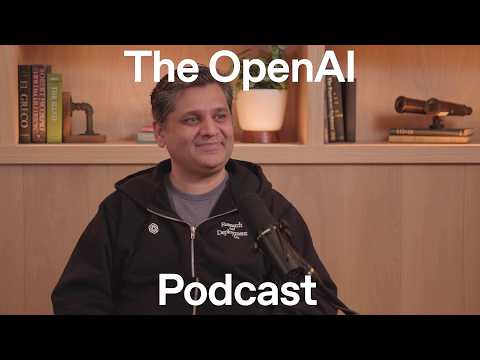
OpenAI Introduces ChatGPT Ads to Fund Free Access to Top Models
OpenAI
The company rejects a purely paid business model as an elitist approach that limits access to advanced artificial intelligence, choosing instead to protect user trust by keeping underlying models entirely blind to advertising data.
## Background
Published on YouTube by OpenAI on February 9, 2026, this episode features ad lead Asad Awan explaining the company's rationale for testing advertisements within ChatGPT. The page description outlines how these ads are designed to remain separate from model responses, protect user privacy from advertisers, and provide users with control over their experience.
## TL;DR
In this episode, host A.J. Maine and OpenAI's Asad Awan discuss the strategic rollout of an ad-supported model for free and 'gold' tier ChatGPT users, driven by the mission to fund high-performance AI access for a global audience. To preserve user trust, OpenAI is implementing a strict hierarchy prioritizing trust and privacy over revenue, ensuring that conversational data remains insulated from advertisers. The visual design enforces a clear separation between organic model answers and distinct ad banners, accompanied by robust user controls to clear history or opt out of personalization. Looking forward, the initiative aims to simplify advertising for small businesses via natural language prompting and evolve toward trustworthy, conversational product discovery.
## Atmosphere & style
The conversation carries a highly professional, transparent, and intellectually rigorous tone, reflecting OpenAI's academic and research-driven roots. The dynamic between host A.J. Maine and guest Asad Awan is conversational yet analytical, structured around direct questions and candid, uncompromising responses regarding public skepticism and commercial pressures. Listeners experience a narrative arc that moves from earnest ethical justification to practical product design, resulting in a vibe that feels like an intentional, strategic peek behind the curtain of a major tech decision.
## Key takeaways
- [00:29](https://www.youtube.com/watch?v=2agJo3Jf_O4&t=29s) OpenAI is introducing ads to ChatGPT to fund its core mission of democratizing access to high-performing models for its massive consumer base.
- [00:29](https://www.youtube.com/watch?v=2agJo3Jf_O4&t=29s) Ads will be strictly confined to the free and gold tiers, while pro, plus, and enterprise subscribers will remain completely ad-free.
- [01:35](https://www.youtube.com/watch?v=2agJo3Jf_O4&t=95s) A core principle is the strict structural and visual separation between ads and organic model responses to maintain objectivity.
- [01:35](https://www.youtube.com/watch?v=2agJo3Jf_O4&t=95s) User conversations remain completely private; OpenAI handles ad matching internally without sharing chat data with advertisers.
- [04:01](https://www.youtube.com/watch?v=2agJo3Jf_O4&t=241s) The underlying AI model has no awareness of what is displayed in the ad banner, and can only analyze an ad if a user explicitly clicks to ask about it.
- [05:43](https://www.youtube.com/watch?v=2agJo3Jf_O4&t=343s) OpenAI views user trust as its core business model rather than a secondary luxury, differentiating itself from engagement-focused content discovery platforms.
- [07:28](https://www.youtube.com/watch?v=2agJo3Jf_O4&t=448s) Introducing ads provides a practical way to fund significantly higher usage limits on the free tier, avoiding frustrating usage cliffs.
- [08:53](https://www.youtube.com/watch?v=2agJo3Jf_O4&t=533s) OpenAI operates under a strict hierarchical decision-making rubric that prioritizes User Trust above User Value, Advertiser Value, and Revenue.
- [11:07](https://www.youtube.com/watch?v=2agJo3Jf_O4&t=667s) To balance personalization with privacy, users will receive unprecedented controls, including the ability to clear ad history and turn off personalization entirely.
- [11:07](https://www.youtube.com/watch?v=2agJo3Jf_O4&t=667s) Advanced internal classification models will automatically flag and exclude sensitive verticals, such as health, politics, and violence, from triggering ads.
- [14:16](https://www.youtube.com/watch?v=2agJo3Jf_O4&t=856s) Ad design will lean conservative and highly separated initially, utilizing a prediction system to enforce strict policy checks before placement.
- [17:34](https://www.youtube.com/watch?v=2agJo3Jf_O4&t=1054s) OpenAI rejects a purely paid model because it creates an elitist view of AI access, choosing instead to serve a massive, diverse audience through an ad-supported tier.
- [20:26](https://www.youtube.com/watch?v=2agJo3Jf_O4&t=1226s) The vision for AI-driven ads is to democratize marketing for small businesses by replacing complex analytical tools with a simple conversational prompt.
- [20:26](https://www.youtube.com/watch?v=2agJo3Jf_O4&t=1226s) Smart targeting and discovery mechanisms are vital for helping unique, niche brands connect directly with their specific audiences.
- [23:26](https://www.youtube.com/watch?v=2agJo3Jf_O4&t=1406s) In the future, ads are envisioned to become conversational and agentic, where the AI organically and trustworthily suggests highly relevant products.
## Detailed walkthrough
### [00:00](https://www.youtube.com/watch?v=2agJo3Jf_O4&t=0s) Introducing Ads to ChatGPT
The OpenAI Podcast, hosted by A.J. Maine, opens with an introduction to Asaad Awon to discuss the highly anticipated and debated topic of integrating advertisements into ChatGPT. The conversation immediately addresses the core logistics of who will actually see these ads. They will be served to users on the free and "gold" tiers, while subscribers on the pro, plus, and enterprise tiers will remain completely ad-free. When asked why OpenAI is choosing to introduce ads now, Awon ties the decision directly back to the company's foundational mission of "bringing AGI to all of humanity and to benefit all of humanity."
With a massive consumer base of over 800 million active users, OpenAI faced a strategic crossroads. They could have taken what some might perceive as the "high road" by avoiding ads entirely, but doing so would have forced them to severely restrict usage limits or rely on less capable models for non-paying users. Instead, Awon explains that embracing an ad-supported model is the most proven method to democratize access, allowing OpenAI to offer its highest-performing models and generous usage limits to the widest possible audience.
[01:35](https://www.youtube.com/watch?v=2agJo3Jf_O4&t=95s) The Core Principles of ChatGPT Ads
To ensure that the introduction of advertising does not compromise the user experience, OpenAI established a set of core principles. The first and most critical principle is that ChatGPT's answers must remain entirely independent from the advertisements. This independence is both visual and structural; the underlying AI models are not trained on ad data, ensuring that users can always trust the objectivity of the assistant's responses.
The second principle guarantees that user conversations remain strictly private. Sensitive conversations will never trigger ads, and chat data is never shared directly with advertisers. Instead, any matching between a conversation and a relevant advertisement is handled entirely internally by OpenAI's systems. Additionally, the company is restructuring internal team incentives to focus on genuine user value rather than optimizing for "empty calorie time spent on the platform." Awon emphasizes that the goal is to prevent the negative side effects of traditional digital advertising by being upfront, testing cautiously, and operating as a "learning organization."
[04:01](https://www.youtube.com/watch?v=2agJo3Jf_O4&t=241s) Maintaining the Wall Between Model and Ads
A.J. Maine brings up a practical scenario to test the boundaries of this system: if a user is chatting with ChatGPT about wanting to start drinking smoothies, will the AI suddenly blurt out an ad for a blender? Awon flatly rejects this idea, explaining that the model itself has absolutely no awareness of what is being displayed in the ad space. If a user asks the model, "What is this ad saying?" the AI will genuinely reply, "I actually don't know."
Visually, the ad is kept completely distinct, appearing as a clearly marked bottom banner so users will not confuse promotional content with the model's organic response. However, the user remains in control; if they want to learn more about a displayed ad, they can manually click a button that says "ask ChatGPT about this ad." This action feeds the ad's context to the model, functioning exactly as if the user had pasted an external link from the internet. When Maine challenges Awon on whether this strict wall might slowly erode over the next decade as commercial pressures grow, Awon asserts that OpenAI's entire business model is fundamentally built on trust, making any drift away from these boundaries counterproductive.
[05:43](https://www.youtube.com/watch?v=2agJo3Jf_O4&t=343s) Trust as the Core Business Model
Awon passionately argues that trust is not an optional luxury for OpenAI, but rather its "core business." Unlike transactional search engines where a user inputs a query, gets an answer, and leaves, ChatGPT aims to be a deeply integrated personal assistant. For users to comfortably share their most sensitive and important information, they must have absolute confidence that their data will be handled with the utmost care.
This philosophy creates a stark contrast between OpenAI and traditional content discovery platforms where trust is secondary to engagement. Awon explains that because trust is the central pillar of their consumer, enterprise, and future hardware products, the company's internal incentives are naturally aligned to protect it. "You can't drift when the incentive is set up to be the best at this," Awon notes, emphasizing that every commercial decision must support, rather than compromise, this overarching principle.
[07:28](https://www.youtube.com/watch?v=2agJo3Jf_O4&t=448s) Ad Distribution and Funding the Free Tier
The discussion shifts to how ads will be distributed across ChatGPT's massive user base. Awon reiterates that ads are strictly limited to the free and gold tiers, while pro, plus, and enterprise users will experience a completely ad-free environment. This multi-tiered approach allows OpenAI to serve different user needs simultaneously, using enterprise and premium subscriptions to fund advanced features while using ads to keep the free tier robust.
A major driver behind this decision is the desire to avoid the frustrating limitations seen in other free software products. Awon points out how discouraging it is for users to "ask five questions and then it just stops." By introducing a thoughtful ad model, OpenAI can practicalize and fund much higher usage limits for free users, ensuring that the entry-level tier remains highly functional and valuable rather than a stripped-down, frustrating experience.
[08:53](https://www.youtube.com/watch?v=2agJo3Jf_O4&t=533s) The Decision-Making Rubric
Behind the scenes, the decision to introduce ads was not made lightly. Drawing from OpenAI's academic and research-driven DNA, the company engaged in rigorous internal debates and hosted hundreds of roundtables across various departments to stress-test their approach. These discussions culminated in a strict, hierarchical decision-making rubric: User Trust is valued above User Value, which is valued above Advertiser Value, which is ultimately valued above Revenue.
To illustrate how this rubric functions in practice, Awon shares a compelling example. If OpenAI showed a highly targeted ad that a user liked, clicked, and bought a product from, that would represent high "user value." However, if that same user later wondered, "Was this app listening to me and is the mic on?" that would be a catastrophic failure of "user trust." Awon summarizes this stance clearly: "Is creepy okay if it is good? It's not." This uncompromising rubric ensures that even bottom-up product decisions prioritize user peace of mind over short-term financial gain.
[11:07](https://www.youtube.com/watch?v=2agJo3Jf_O4&t=667s) Personalization, User Control, and Ad Frequency
For ads to be genuinely useful, a certain level of personalization is required. For instance, if a user plans a trip to Yosemite, seeing an ad for camping gear is highly relevant and helpful. To balance this personalization with user trust, OpenAI is introducing unprecedented transparency and control features. Users will be able to see exactly what data is being used for ads, clear their ad-related history, opt out of using past chats for targeting, or turn off personalization entirely.
Regarding ad frequency, Awon explains that the guiding principle is utility: "If it is not [useful], we'd rather not show you anything." During the initial rollout, users will see very few ads as the company takes a highly conservative approach to learn where they fit best. Finally, addressing how the system identifies sensitive topics that should never trigger ads, Awon highlights OpenAI's industry-leading precision in content classification. Using advanced internal models, the system can accurately detect and exclude sensitive verticals such as health, politics, and violence from any ad-matching processes.
- **The Decision Rubric:** User Trust > User Value > Advertiser Value > Revenue.
- **Excluded Verticals:** Sensitive topics like health, politics, and violence are automatically flagged by advanced models and excluded from ad targeting.
- **User Controls:** Users can clear their ad data, disable past chat history for ad targeting, turn off personalization entirely, or upgrade to paid tiers to remove ads completely.
[14:16](https://www.youtube.com/watch?v=2agJo3Jf_O4&t=856s) Policy Enforcement and Design Principles of Ads
The speaker explains that a dedicated team works rigorously to define ad policies, sharing them with both internal and external partners for thorough review. Once established, these policies are enforced by a prediction system that flags matches and prevents inappropriate placements. When designing the product, the team established a core principle: "the answers are separate from the model." The design process navigated a spectrum between making ads look native so they are not jarring, and clearly separating them out.
To balance these competing values, they opted for a conservative, highly separated design to start, allowing them to experiment and learn as they gather data. While the visual formats will likely evolve to become more useful over time, the foundational principle of keeping ads visually distinct and clearly separated from organic answers remains constant.
[15:54](https://www.youtube.com/watch?v=2agJo3Jf_O4&t=954s) Guardrails and Sensitive Contexts
Addressing how the system prevents inappropriate ad placements—such as pitching life insurance to someone expressing a fear of a trip—the speaker highlights the company's strict internal rubrics and governance. When product changes are proposed, they must pass a first-pass check against these established principles. Furthermore, the system completely filters out ads in sensitive contexts like health or politics, ensuring that user data from these sensitive conversations is never used for ad matching.
The ultimate goal is to show only the "one right ad" that is genuinely helpful and additive, rather than ruining the experience for users and wasting money for advertisers on random impressions. Leveraging their position as "one of the best AI companies," they aim to execute this highly targeted, non-intrusive approach exceptionally well.
[17:34](https://www.youtube.com/watch?v=2agJo3Jf_O4&t=1054s) Addressing the "No Ads" Skeptics
When asked to speak directly to commenters who demand "No ads. No ads. No ads," the speaker acknowledges that public suspicion is valid given how the online ad industry has evolved over its relatively short 20-year history. Comparing it to centuries-old industries, he notes we are only in the "third inning" of digital advertising. The company must earn user trust through transparency, user control, and delightful experiences, while still offering an upgrade path for those who prefer a completely ad-free experience.
The speaker contrasts their approach with competitors who mock the idea of ads. Because their mission is to "take AI to all of humanity," they must serve a massive, diverse consumer base alongside their ad-free enterprise and subscription tiers. Relying solely on a paid model creates an "elitist view" where only those who can pay get access to the best AI. By offering a free, ad-supported tier, they avoid this fork in the road and ensure equitable access.
- The online advertising industry is only about 20 years old.
- The company's business model is diversified across enterprise, subscriptions, and a massive free consumer base.
- Enterprise accounts will remain completely ad-free.
[20:26](https://www.youtube.com/watch?v=2agJo3Jf_O4&t=1226s) Empowering Small Businesses and the Allbirds Example
The conversation shifts to how ads can serve small and medium-sized businesses (SMBs). The speaker shares an anecdote about friends who started an e-commerce shoe company. While the founders managed manufacturing and logistics themselves, they had to hire three performance marketers just to run their ads because the existing systems are incredibly analytical, cumbersome, and risky for novices. The vision for AI-driven ads is to make the process as simple as prompting: "My goal is to sell these shoes more in the Midwest and go," with the AI acting as an agent that handles bidding, experimentation, and budget constraints.
Historically, complex ad auctions favored large companies with the resources to constantly optimize data. However, smart targeting can help unique brands find their footing. The speaker points to the shoe brand Allbirds as a prime example; they succeeded by realizing that tech designers in Silicon Valley would love their shoes, carving out a highly successful niche. AI has the potential to democratize this kind of niche distribution for all small businesses without requiring a dedicated marketing team.
[23:26](https://www.youtube.com/watch?v=2agJo3Jf_O4&t=1406s) Niche Discovery and the Future of Agentic Ads
To illustrate the power of niche discovery, the speaker shares a personal story about his love for a specific brand of vegan instant ramen—a product concept that sounds so unusual he wouldn't have believed it could succeed. Yet, effective discovery mechanisms allow these highly specific products to find their passionate audiences, enriching consumers' lives and helping SMBs grow even if they do not become multi-billion-dollar corporations.
Looking ten years into the future, the speaker envisions ads becoming deeply conversational and agentic. Instead of intrusive banners, an AI assistant like ChatGPT, having understood a user's preferences behind the scenes, might proactively find and suggest a product like vegan ramen. This creates a highly authentic, two-way marketplace where discovery is natural, controllable, and trustworthy. The host wraps up the discussion by thanking the speaker and expressing excitement for what lies ahead.
## Notable quotes
> [00:00](https://www.youtube.com/watch?v=2agJo3Jf_O4&t=0s) bringing AGI to all of humanity and to benefit all of humanity. — Asaad Awon
> [01:35](https://www.youtube.com/watch?v=2agJo3Jf_O4&t=95s) empty calorie time spent on the platform. — Asaad Awon
> [04:01](https://www.youtube.com/watch?v=2agJo3Jf_O4&t=241s) I actually don't know. — ChatGPT
> [04:01](https://www.youtube.com/watch?v=2agJo3Jf_O4&t=241s) ask ChatGPT about this ad. — Asaad Awon
> [05:43](https://www.youtube.com/watch?v=2agJo3Jf_O4&t=343s) You can't drift when the incentive is set up to be the best at this, — Asaad Awon
> [07:28](https://www.youtube.com/watch?v=2agJo3Jf_O4&t=448s) ask five questions and then it just stops. — Asaad Awon
> [08:53](https://www.youtube.com/watch?v=2agJo3Jf_O4&t=533s) Was this app listening to me and is the mic on? — Asaad Awon
> [08:53](https://www.youtube.com/watch?v=2agJo3Jf_O4&t=533s) Is creepy okay if it is good? It's not. — Asaad Awon
> [11:07](https://www.youtube.com/watch?v=2agJo3Jf_O4&t=667s) If it is not [useful], we'd rather not show you anything. — Asaad Awon
> [14:16](https://www.youtube.com/watch?v=2agJo3Jf_O4&t=856s) the answers are separate from the model. — Asaad Awon
> [15:54](https://www.youtube.com/watch?v=2agJo3Jf_O4&t=954s) one right ad — Asaad Awon
> [17:34](https://www.youtube.com/watch?v=2agJo3Jf_O4&t=1054s) No ads. No ads. No ads. — A.J. Maine
> [17:34](https://www.youtube.com/watch?v=2agJo3Jf_O4&t=1054s) third inning — Asaad Awon
> [17:34](https://www.youtube.com/watch?v=2agJo3Jf_O4&t=1054s) elitist view — Asaad Awon
> [20:26](https://www.youtube.com/watch?v=2agJo3Jf_O4&t=1226s) My goal is to sell these shoes more in the Midwest and go, — Asaad Awon
OpenAI plans to introduce advertising to ChatGPT's free and gold tiers to fund computational costs and expand access to its top models without restricting usage limits. Guest Asaad Awon maintains that maintaining user trust through strict technical separation and privacy controls is essential to the platform's core business model.
Subsidizing Broad Access Across User Tiers (0:00)
Facing a user base exceeding 800 million active consumers, OpenAI chose to adopt an ad-supported framework rather than degrading model quality or placing severe usage caps on non-paying users. Awon explains that the company rejected what some call the "high road" of remaining entirely ad-free because doing so would create an elitist product accessible only to paying customers, running counter to OpenAI's stated mission of delivering AGI to all of humanity.
Under this multi-tiered architecture, advertising is strictly confined to free and "gold" accounts, while Plus, Pro, and Enterprise tiers will remain completely ad-free. Awon argues that enterprise contracts and consumer subscriptions fund advanced features, whereas advertising revenue allows OpenAI to offer generous usage allowances and high-performance models to the entry-level tier, avoiding the frustrating experience of hard question caps.
Technical and Visual Separation of Promotional Content (4:01)
To preserve objectivity, OpenAI establishes a structural wall between the underlying AI models and the advertising system. ChatGPT's core models are neither trained on advertising data nor given awareness of the ad displayed on screen; if asked what an ad says, the assistant will state that it does not know. Advertisements are restricted to distinct visual bottom banners to prevent users from mistaking sponsored messaging for organic responses.
Interactions between the model and the advertisement occur only at the user's explicit request. By clicking an "ask ChatGPT about this ad" button, the user can manually pass the promotional context into the prompt, operating identically to an external web link pasted into the chat interface. Awon rejects the prospect that commercial pressures will erode this boundary over the coming decade, arguing that the company's value relies entirely on remaining a trusted personal assistant.
Governance Rubric, Sensitive Contexts, and Privacy Controls (8:53)
OpenAI evaluates advertising decisions against a four-tier hierarchical rubric: User Trust outranks User Value, which outranks Advertiser Value, which outranks Revenue. Awon illustrates this principle by stating that an ad causing a user to suspect the application is secretly recording them represents a failure of trust, summarizing the company's rule as "is creepy okay if it is good? It's not." Consequently, team incentives are directed away from optimizing for time spent on the platform.
User privacy is protected through internal matching systems that prevent user chat logs from being shared directly with third-party advertisers. Automated classification models flag and exclude sensitive verticals—including health, politics, and violence—from triggering promotions. For non-sensitive queries, users retain controls to inspect which data informs ad targeting, clear their ad history, opt out of using past conversations for personalization, or disable personalization entirely.
Small Business Tooling and Conversational Discovery Forecasts (20:26)
Awon argues that current digital advertising systems disadvantage small and medium-sized businesses by requiring specialized performance marketing teams to navigate complex bidding auctions. Using an example of an e-commerce shoe startup, he proposes that generative AI can level the playing field by acting as an autonomous marketing agent, executing campaigns across target regions based on straightforward natural language prompts.
Looking ten years ahead, Awon forecasts that digital advertising will transition from static banner placements to agentic, conversational discovery. In this model, an AI assistant with an understanding of individual user preferences could naturally introduce niche products—such as specialized vegan ramen or footwear brands like Allbirds—creating a targeted marketplace that Awon claims will feel useful rather than disruptive.
OpenAI acknowledges widespread consumer skepticism toward digital advertising after two decades of intrusive tracking across the web. While the company frames its conservative rollout, strict policy rubrics, and privacy controls as safeguards, the long-term challenge remains balancing commercial monetization against its commitment never to compromise user trust.
[0:00] Asaad Awon: bringing AGI to all of humanity and to benefit all of humanity.
[1:35] Asaad Awon: empty calorie time spent on the platform.
[4:01] ChatGPT: I actually don't know.
[4:01] Asaad Awon: ask ChatGPT about this ad.
[5:43] Asaad Awon: You can't drift when the incentive is set up to be the best at this,
[7:28] Asaad Awon: ask five questions and then it just stops.
[8:53] Asaad Awon: Was this app listening to me and is the mic on?
[8:53] Asaad Awon: Is creepy okay if it is good? It's not.
[11:07] Asaad Awon: If it is not [useful], we'd rather not show you anything.
[14:16] Asaad Awon: the answers are separate from the model.
[15:54] Asaad Awon: one right ad
[17:34] A.J. Maine: No ads. No ads. No ads.
[17:34] Asaad Awon: third inning
[17:34] Asaad Awon: elitist view
[20:26] Asaad Awon: My goal is to sell these shoes more in the Midwest and go,
Original transcript
[0:00] Hello, I'm A.J. Maine and this is the
[0:02] Open AI podcast. Today we're talking to
[0:04] Asaad Awon about ads in Chat GPT, how
[0:08] they'll look, who will see them, and how
[0:09] the company will preserve user trust.
[0:12] Ads are shown to people who are on the
[0:14] free and the gold tier. For pro and plus
[0:17] and for enterprise, there are no ads. Is
[0:19] creepy okay? If it is good, it's not. We
[0:22] are in the business of trust. So I think
[0:23] if we have to say what is our core
[0:24] business, it's like to win users' trust.
[0:29] So from a consumer point of view, why
[0:32] ads, why now? It goes [snorts] back to
[0:34] our mission, which is bringing AGI to
[0:36] all of humanity and to benefit all of
[0:39] humanity.
[0:40] So when you have a consumer product
[0:41] which like, you know, 800 million plus
[0:43] people were using this, then how do you
[0:45] take the best version of that product to
[0:47] everyone?
[0:49] And and ads is one of the most proven
[0:51] models to be able to do that for
[0:52] consumer products.
[0:54] And I think the other part of that
[0:56] mission is how do you benefit all of
[0:58] humanity, which is like you want to take
[0:59] the best model, you want to give the
[1:00] highest limits, usage limits to people.
[1:03] You want to
[1:04] for the ads to be actually helpful both
[1:06] to the users and the businesses as well.
[1:08] So so I think it's a very natural fit
[1:11] for a company whose ambition is actually
[1:13] to take the best AI to all of all of
[1:16] humanity. It's a very interesting
[1:17] decision because on one hand, you could
[1:20] say, "Hey, we're going to take what we
[1:22] perceive as the high road and say we're
[1:23] not going to do ads, but also we're not
[1:25] going to give a really good amount of
[1:26] usage for it and limit that and sort of
[1:28] maybe use not the most capable models,
[1:31] but sort of, you know, say take that
[1:32] approach versus embracing it." Yeah.
[1:35] Yeah, I think like if if if the goal is
[1:37] to truly democratize access, I think ads
[1:39] is a good model. I think maybe what is
[1:41] hidden in that statement is
[1:43] can ads be bad? And and the reality is
[1:46] how do we think about the principles of
[1:47] ads? How do we actually set a really
[1:50] high bar for what ads should be on this
[1:52] platform? How do we make them actually
[1:54] useful? So when we were starting off, we
[1:56] we thought like, "Hey, what would be the
[1:58] core principles that we would announce
[1:59] to the world that we would be proud of,
[2:01] that we would stand behind, and as a
[2:03] result, create a really great product?"
[2:05] So, so, just to give the example of the
[2:07] principles, it's like, number one, the
[2:09] answers need to be independent from the
[2:10] ads, both visually, but also in how the
[2:13] models are trained and how the system
[2:15] works,
[2:16] so that you can always trust the answer.
[2:18] Like, the whole product ChatGPT product
[2:20] is based on trust, so actually it needs
[2:22] to feed into that.
[2:23] >> [snorts]
[2:23] >> The second is, your conversations are
[2:25] private. If you have a sensitive
[2:27] conversation, that will never have ads
[2:28] in it.
[2:29] And and the conversations are never
[2:31] shared with advertisers. So, while we do
[2:32] the matching between the best ad that
[2:34] can be a useful thing in a conversation,
[2:37] the advertisers don't get to see that.
[2:38] We do that matching internally. And
[2:40] then, of course, like, you know, as as
[2:42] you introduce ads, a big question is,
[2:44] how did you know about this data? Like,
[2:46] that's the difference between the user
[2:47] trust and just like doing something
[2:48] which is relevant to the user.
[2:51] And our goal was, how do we make
[2:53] something which users can transparently
[2:55] understand, how can they control, and
[2:57] and we can go into that, because I do
[2:58] think there is a high bar to set over
[3:00] there, because you could have some
[3:02] transparency, some control, which most
[3:04] products have, but what would be a
[3:05] really good version of that is something
[3:07] that we've been thinking about. And
[3:08] finally, once you add ads, I think you
[3:10] have to set the incentives for the
[3:12] teams, for the company, in a way that
[3:14] actually continue to focus on user
[3:16] value. So, you don't want to just like
[3:18] get empty calorie time spent on the
[3:20] platform. You want to build a very
[3:22] useful product, and automatically, one
[3:25] good ad is good enough, actually. So, we
[3:27] don't optimize for time spent
[3:29] on on the platform and focus on the user
[3:31] value. So, these are the principles. So,
[3:32] I think like,
[3:33] so, connecting this back to your
[3:34] question, is like, how do you why why
[3:37] should we add ads and how to do it? I
[3:39] think a part of that is, take it to all
[3:41] of humanity, and that's the best
[3:42] business model to do that, but
[3:44] prevent all the negative things that can
[3:46] happen if you're not doing it
[3:47] thoughtfully, and I think being up front
[3:49] with our principles, being very clear
[3:50] with that,
[3:52] Um, is how we're starting and then how
[3:53] we will test, how we will improve, and
[3:56] how we become kind of a learning
[3:57] organization with respect to this. I
[3:59] think that's that's how it will go. So,
[4:01] you said basically there's going to be a
[4:02] separation. So, if I'm talking to
[4:05] Chat GPT about like, "Hey, I want to
[4:07] start drinking smoothies and stuff."
[4:09] It's not going to all of a sudden blurt
[4:10] out like, "Well, here's a blender you
[4:11] should buy." Absolutely. Yeah, I think
[4:13] it's a both in terms of what the model
[4:15] knows, the model doesn't know, whether
[4:16] an ad is there or not. If you ask it
[4:17] like, "Hey, what is this ad saying?"
[4:18] It'll say, "I actually don't know." Uh,
[4:21] but you can actually press some buttons
[4:22] and add it to the model if you want to
[4:24] ask the question. So, it's totally
[4:24] totally totally separate. Totally
[4:26] whatever is being displayed in the ad
[4:27] space, the model has no idea that's in
[4:29] it. That's right. And I think in in and
[4:31] both visually as well, so that the user
[4:33] can very quickly say, "Hey, this is the
[4:34] answer that I got from the model." And
[4:36] then there's a
[4:37] bottom uh, banner which has ad in it,
[4:40] uh, which is very clearly distinct. So,
[4:42] visually also you don't confuse that. Of
[4:43] course, we will learn how that
[4:44] experience evolves, but the goal is to
[4:47] both keep the system, the models very
[4:49] very separate, and ad is kind of
[4:51] downstream of. Okay, yeah, that's I
[4:52] think that's a very important
[4:53] distinction cuz I think some people have
[4:55] sort of kind of tried to sort of spin
[4:57] that there's some sort of collusion
[4:59] between the ad part and the model part,
[5:01] but you're saying the model is
[5:02] completely separate.
[5:02] >> Yeah. So, that's interesting. So, as I'm
[5:04] having a conversation, something might
[5:06] come up and I can then click and say,
[5:07] "Okay, tell the model, 'Hey, I saw
[5:10] this.'" Then it knows what's going on.
[5:11] >> That's right. Yeah, you have to go like
[5:12] in the in the first experience you like
[5:14] specifically have to press a button is
[5:15] like ask Chat GPT about this ad. And
[5:18] that would be as if you took a link from
[5:19] the internet and asked a question about
[5:21] it. So, it's almost the same. You don't
[5:22] want to make that experience harder. But
[5:24] but if you say, "Hey, what is this ad
[5:26] talking about?" It'll say, "I don't
[5:27] know." It's easy to start now and say,
[5:29] "Oh, yeah, we're going to do the great
[5:30] thing. We'll do it right." But 10 years
[5:32] later when there's an entire division in
[5:33] charge of ad revenue, you might say
[5:35] like, "Well, do we need the wall between
[5:37] the model and the ads?" Yeah. Yeah, I
[5:39] think like maybe there there there's
[5:41] multiple mul- multiple angles to this.
[5:43] So, one, we are in the business of
[5:44] trust. So, I think if we have to say,
[5:46] "What is our core business is like to
[5:47] win users' trust and give amazing
[5:50] answers to the question that they're
[5:51] asking. That's in the in the consumer
[5:53] product side. And of course on the
[5:54] enterprise side, trust is everything,
[5:56] which is like you're entrusting us with
[5:57] your most important data. We need to of
[6:00] course make maintain that. So, so
[6:02] because I think like that the ambition
[6:04] and the vision is so expansive, I think
[6:06] trust is the central point of it. We
[6:08] want to have devices which are helpful
[6:09] for you.
[6:10] If we truly want to be your best
[6:12] personal assistant, then you need to be
[6:13] able to share your most important
[6:17] information, but know that it will be
[6:22] dealt in a way which is like how you
[6:23] would treat it yourself. So, I think our
[6:26] business model is trust. This is very
[6:28] different than many other scenarios. If
[6:30] you're just doing like kind of a
[6:31] transactional stuff, like again, you you
[6:33] gave the question and answer came back
[6:34] and that's the end of it. Like a search
[6:36] query, I think that's that's okay, but
[6:39] it is not a long-term relationship. I
[6:41] think if you think of content discovery,
[6:43] certainly I I mean like it it is just
[6:46] pushing things
[6:47] and and trust is not a core component of
[6:50] that. For us, I think the whole product,
[6:52] whether it's enterprise, whether it's
[6:54] consumer, whether it's anything devices
[6:56] in the future, they're all centered
[6:58] around trust
[6:59] trust and
[7:01] so so so
[7:03] for us it's kind of imperative. For
[7:05] others, it could be optional. And I
[7:07] think different companies are known for
[7:08] different things and we do want to be
[7:10] known for trust. And so so I think like
[7:13] connecting this to the question is
[7:15] will be drift. I think you can't drift
[7:17] when the incentive is set up to be the
[7:19] best at this and this is the goal
[7:22] that we want to achieve. Everything else
[7:24] is is there to support that vision, but
[7:26] the over principle is trust.
[7:28] OpenAI has a very huge number of people
[7:30] using the free tier. And then there's
[7:32] also paid subscribers and people who do
[7:34] that pro users, whatever. How are ads
[7:37] going to play out across the platform?
[7:38] Yeah, so ads are shown to people who are
[7:40] on the free and the go to you. Mhm. Um
[7:43] and for pro and plus and for enterprise,
[7:46] there are no ads.
[7:47] >> Mhm. Um and and I think like that's
[7:49] that's an important thing like the
[7:50] context in which which the company
[7:52] operates is actually like multiple
[7:54] missions which come all together to
[7:55] bring bring AI to everyone, which is
[7:58] when enterprise use it, that's a very
[7:59] specific contact. There is no ads over
[8:01] there and there is a specific business
[8:02] model around that which is very
[8:04] powerful. Uh for subscribers who want
[8:06] like, you know, the best like, you know,
[8:07] highest limits and very advanced
[8:09] features. Mhm.
[8:10] >> that also works. But for a lot of
[8:12] people, a lot of consumers, the best way
[8:14] to do that is to have um have high
[8:16] limits and free usage uh and then add
[8:20] ads which are actually useful. Yeah.
[8:22] I've heard people talk about, you know,
[8:24] part of the goal of this is to avoid
[8:27] making the free tier just like the most
[8:29] limited thing available. Absolutely. I
[8:31] think like that that is that is the that
[8:33] is the most I think frustrating things
[8:34] for a lot of real users. Just like you
[8:36] ask five questions and then it just
[8:38] stops in in other businesses, right?
[8:41] We we I think like we want to grow that
[8:42] a lot more and I think it fits with our
[8:44] overall goal. Um that uh higher usage
[8:48] limits is better. Mhm. Uh and how do we
[8:50] fund that and be practical about it? So,
[8:53] going a little bit behind the scenes,
[8:54] how are these decisions made? Like who's
[8:56] in the room talking about this? Yeah, I
[8:57] think like this is a this is a good op-
[8:59] opportunity also to talk a little bit
[9:01] about like overall like there is a
[9:02] company culture and I think different
[9:04] companies have different cultures which
[9:05] results in different products and our
[9:07] our our company has like this DNA of our
[9:10] research team, right?
[9:11] Uh so so we have much more I think like
[9:14] rigorous debates, rigorous understanding
[9:16] of how should we make these principles,
[9:18] how does incentives work, how does the
[9:20] the model of this going to work in a way
[9:22] that it doesn't get corrupted later on.
[9:24] So, we have had both a lot of debates on
[9:26] that which actually resulted in these
[9:28] principles, which resulted in this
[9:29] rubric with like hundreds of round
[9:31] tables with like folks around the
[9:33] company on different areas, not just
[9:35] like working on ads, but everyone on
[9:37] every different part of the company uh
[9:39] giving feedback to create these
[9:41] principles. Then we can convert those to
[9:43] a very simple rubric. I think like the
[9:45] rubric is user trust is the most
[9:47] important thing. User trust more than
[9:49] user value, which is then more important
[9:51] than advertiser value, which is more
[9:52] important than revenue. And I think
[9:54] while this seems very straightforward,
[9:56] it's actually a very very very, I think,
[10:00] in-depth decision. So we can go into a
[10:02] little bit just like user trust more
[10:03] than user value. A good example of that
[10:06] is
[10:07] if I showed you a really good ad, but
[10:10] and you liked it, you clicked on it, you
[10:12] bought something. But later on you ask
[10:13] the question, was this app listening to
[10:15] me and is the mic on? That's not user
[10:18] trust. You probably did provide some
[10:19] value. So for us, our goal is like we we
[10:22] we cannot have that. The users need to
[10:24] believe and understand and control
[10:26] what's happening. So that's just one
[10:27] example, but I think once you set that
[10:29] right rubric up, then even bottom up,
[10:32] the team thinks like that.
[10:34] But of course like you know as we have
[10:35] different decisions at different level,
[10:36] I think we have a pretty rigorous
[10:38] process on how we discuss privacy within
[10:40] the company, how we discuss safety
[10:42] within the company, and there are very
[10:43] very clear forums for that. And then of
[10:46] course like as we as we make decisions
[10:47] at leadership level, we one go back to
[10:50] the simple rubric because although this
[10:51] rubric is simple, it's actually pretty
[10:53] pretty in-depth and actually is very
[10:55] discriminating if you think about these
[10:56] kind of questions. It's like, should the
[10:58] ad be so good but the users don't know
[11:00] where this data came from? Is creepy
[11:02] okay if it is good? It's not. So I think
[11:06] maybe it follows from that.
[11:07] What am I going to see on my end? What
[11:09] kind of controls do I have? How's
[11:10] personalization going to work? So I
[11:13] think like a big part of actually
[11:14] delivering really good ads is allow
[11:17] personalization so that is so when I say
[11:20] I want to
[11:21] go on a trip to Yosemite and then that
[11:23] shows me camping gear because that's
[11:24] what I'd like to do.
[11:26] But of course I think the flip side of
[11:27] that, how do you gain user trust is like
[11:29] how did you know about this? How did you
[11:31] learn about this? So one is transparency
[11:33] aspect which is like you can see what is
[11:34] the data that we have on you which is
[11:36] being used for ads. The second is the
[11:38] controls
[11:40] which which let you see say which part
[11:43] of the data from your past chats can be
[11:45] used. Of course, sensitive chats, those
[11:47] are never used.
[11:49] And but you can clear your data which
[11:52] actually nobody else does which is kind
[11:53] of a crazy concept is like you can clear
[11:55] your data so we don't know and we won't
[11:57] use that. You could
[11:59] say don't use my past chats if that's
[12:01] what you you care about or you could say
[12:03] turn off personalization fully.
[12:06] Of course, there there is the other
[12:07] extreme which is like I don't want ads.
[12:09] That's a form of control and that's
[12:11] where I think upgrading to the pro or
[12:12] plus version to completely stop ads is
[12:14] also there. So, I think all the way from
[12:16] the spectrum of like I really care about
[12:17] this. I don't think this is the right
[12:19] business model like pro and plus is the
[12:21] right business model
[12:23] for like hey, I I don't know what we
[12:26] were talking about yesterday. I'll just
[12:27] clear my history. Great, do that. Or
[12:31] it's like hey, I'm more comfortable with
[12:33] like you know, clicks on the ads being
[12:35] used but not my past conversations. You
[12:37] could actually do that as well. Of
[12:39] course, people will learn hopefully
[12:41] experience like how it improve their
[12:43] experience. We have a very high bar and
[12:44] how we use these things but in the end
[12:46] the users need to know and be able to to
[12:49] control that.
[12:50] What will be you know, the the kind of
[12:52] the expectation for how many ads I'm
[12:54] going to see or how often these would
[12:56] come up?
[12:57] Maybe the Uber principle still goes back
[12:59] to in that context is there a good ad to
[13:03] show which is useful. If it is not, we'd
[13:05] rather not show you anything. In fact,
[13:07] like you know, as we roll out this test,
[13:09] you'll see that there'll be very few ads
[13:11] because like you know, we want to be
[13:12] both conservative and we want to learn
[13:14] how to
[13:15] where to insert those. But but the the
[13:18] principle is little bit more around is
[13:20] it useful? Is it helpful? Does it add
[13:24] to to what the user is doing?
[13:26] And can we actually show a really good
[13:28] product as well. Um so so keep the
[13:31] quality of the the content very high as
[13:33] well. Keep the quality of the ad very
[13:34] high as well. Keep the relevance really
[13:35] high. If we can't find a good match,
[13:37] it's fine. You don't need to show an ad.
[13:39] You mentioned that sensitive
[13:41] conversations. How do you know what
[13:42] something is sensitive or not? So that's
[13:44] actually one of one of the big strengths
[13:47] of open AI is like both for our organic
[13:49] work and a lot of research in the
[13:51] company has gone into defining
[13:54] what's sensitive like it is health,
[13:55] politics, like violence, like many
[13:57] different kind of verticals.
[13:59] Um very very in-depth uh definitions of
[14:01] that. And then of course using some of
[14:03] the best models to actually predict and
[14:05] understand the conversation and saying
[14:07] marking it as sensitive or not. I think
[14:10] like I've actually never seen such high
[14:12] precision in any product so far in my
[14:14] career what we have been able to build
[14:16] over here by taking in those policies.
[14:18] There's a team which works on defining
[14:20] those policies very very rigorously
[14:23] um
[14:23] uh and then actually uh also um
[14:26] sharing them with internal external
[14:28] partners for review. And then of course
[14:30] the enforcement that comes from the
[14:32] prediction system that actually says,
[14:33] "Hey, like this is matching this policy,
[14:35] so don't do that." We've talked a little
[14:37] bit about this, but I'd like to touch
[14:38] back on this again, design. So where is
[14:41] that going to head? What are they going
[14:42] to look like? Um as we were designing
[14:44] this product, I think like of course we
[14:46] set up a very clear principle that the
[14:48] that um
[14:49] uh the answers are separate from the
[14:50] model. And then the question was like
[14:52] how does that actually look in the
[14:53] product? Um and on that spectrum on one
[14:56] side is like how do you make it look
[14:57] native so that it's not jarring?
[14:59] Um and on the other side there is a
[15:01] question which is like, "Hey, how can it
[15:03] be very clearly separated out?" Um and
[15:06] and I think you can debate with on both
[15:08] of them and there is values in both of
[15:09] them and we start we we wanted to kind
[15:12] of set up the experiment in a way which
[15:14] is um that we can learn as we go. So we
[15:17] take the conservative option and still
[15:20] keep that principle in mind. And as we
[15:22] learn through uh building the product to
[15:24] getting the data,
[15:26] evolve it. But But the idea still is how
[15:29] can we maintain that principle of the
[15:30] answers being very clearly separated
[15:32] from the
[15:34] from the ads
[15:36] and having a very clear
[15:37] understandability and visual
[15:38] distinction. I do think we will evolve
[15:40] the formats, and I think they will get
[15:42] even more useful and better over time,
[15:44] but that principle is constant, and
[15:46] within the options that we had, we
[15:48] started with something which is which is
[15:51] clearly separated out and conservative.
[15:54] So, you explained kind of a technical
[15:55] level how there's a separation, how the
[15:57] model doesn't see it, but also for
[15:58] guardrails and stuff. And I think you
[15:59] mentioned this before, but if I'm
[16:01] talking about, you know, you know,
[16:02] saying like, "Hey, I'm afraid of this
[16:03] trip." And it's like, "Well, hey, how
[16:04] about some life insurance?" You know,
[16:07] that's not going to happen, but how do
[16:08] you guys put in guardrails, and how do
[16:10] you decide what's appropriate ads and
[16:12] what's not? So, so maybe there's two
[16:14] questions in there, like what's
[16:15] appropriate ads or not and which context
[16:17] is a reasonable one.
[16:19] And the second is what are the controls
[16:21] in place so that, like, you know, over
[16:23] time this doesn't doesn't dissolve. So,
[16:25] I think maybe a part of announcing our
[16:27] principles and being very clear
[16:29] internally for a rubric was to actually
[16:31] set that up in the first place. Then
[16:33] automatically a lot of the governance
[16:35] within the company, how we make
[16:36] decisions follows from that
[16:38] onwards. So, it's like, "Hey, I want to
[16:40] make this change to the product." Do
[16:42] this fit with this principle? Do this
[16:43] fit with this rubric that we have
[16:44] already set up? That's the first pass. I
[16:47] think the sensitive context is is
[16:49] something that we take very seriously as
[16:50] well. Very simple things like, you know,
[16:52] conversations around health
[16:54] or politics or other contexts where
[16:56] where the ads don't fit, and that data
[16:59] is not going to be used for making ads,
[17:02] like, even even matching ads. You just
[17:05] filter it out. So, the first layer is
[17:07] really see does an ad belong here. If it
[17:10] does and it can be helpful and additive,
[17:12] then add it.
[17:13] I think like this goes back to the
[17:15] principle is like actually you don't
[17:16] ruin neither for users nor for
[17:19] businesses by showing many ads because
[17:21] you don't want advertisers to pay
[17:23] randomly for impressions. You don't want
[17:25] users to see too many ads. You want to
[17:26] share the one right ad and being one of
[17:29] like, you know, the
[17:30] best AI company, I think that's
[17:32] hopefully something we'll do really
[17:33] well. Every time we do an episode, we
[17:35] get a few people who go in the comments
[17:36] are like, "No ads. No ads. No ads." Now
[17:38] is your chance to talk to those people
[17:40] directly.
[17:41] Yeah, I think I think like in in some
[17:43] sense the when when people say no ads, I
[17:46] I feel like there is a perception and
[17:48] it's not wrong that
[17:50] uh because I think like maybe how how
[17:52] the industry has evolved that there is
[17:54] some suspicion around how this works.
[17:56] So, I do think it is kind of incumbent
[17:57] on us to come up with better principles,
[18:00] get a better clarity, better rules on
[18:03] how we're going to do this. I think
[18:04] there is like we like again this whole
[18:06] ad industry, if you think about the
[18:08] online ad industry is like maybe 20
[18:10] years old compared to many other
[18:11] industries which are hundreds of years
[18:13] old. So, I think maybe we are in the
[18:13] third inning of this where we are
[18:15] saying, "Okay, we have learned from all
[18:17] of these questions and problems that
[18:18] people have." I think when people say no
[18:20] ads, I do believe that they have valid
[18:22] questions and concerns around privacy.
[18:23] The it's on us to do a really good job
[18:26] to earn their trust uh through better
[18:28] transparency, through better control,
[18:30] through uh
[18:31] through building that is also
[18:32] delightful. Um
[18:34] uh I think there still be skeptics and
[18:36] then I think we have a way to upgrade
[18:38] because I think that's a valid choice as
[18:40] well. Uh but uh
[18:42] but enabling really good ads with good
[18:44] principles, I think it's possible. I
[18:46] think a big part of it is
[18:48] having really strong AI to power these
[18:50] ads also so that they are actually
[18:52] useful and then as a result bring this
[18:55] product to so many people without with
[18:56] with higher limits.
[18:58] Some of your competitors have been
[18:59] having a little bit of fun at the idea
[19:01] of ads. Yeah, I I think like um
[19:04] uh
[19:05] different different companies have
[19:06] different missions. Our mission is to
[19:07] take AI to all of humanity and and um of
[19:10] course we have different contexts. So,
[19:11] we have the enterprise business, we have
[19:13] uh you know, our subscription business,
[19:15] and we have a very very huge consumer
[19:16] base which is using our product. So, I
[19:18] think within that context, we need to
[19:20] serve each one of them. We will have a
[19:21] really robust enterprise business, and
[19:23] there will be no ads over there. And
[19:25] then, we'll have a very robust consumer
[19:26] business, and ads will help us grow uh
[19:29] within that. Uh so, I think if if that's
[19:31] not your mission, maybe it doesn't make
[19:32] sense, but our mission is to to actually
[19:35] build in all of these contacts, and we
[19:36] believe they're all actually related uh
[19:38] in in how we build the best AI, and then
[19:40] actually take it to everyone. And I
[19:42] think the good part is that we have
[19:43] different verticals in the business
[19:45] line. So, it's not just an ads company.
[19:47] There are some companies which are
[19:48] purely just ads companies, and there the
[19:50] incentives are actually different.
[19:52] >> Yeah. But, I think we have a much more
[19:53] holistic view on on this. And also, when
[19:55] you're not serving hundreds of millions
[19:56] of free users, it's easier to sort of
[19:58] say, "Hey, we don't have to do this." I
[20:00] don't think it's like a vision vision
[20:02] which is which is set in abstract. This
[20:03] is truly a vision which is like, how
[20:05] does AI actually help people? And if if
[20:09] there is like this elitist view that
[20:11] some people get to use it, and some
[20:12] don't get to use it based on who can
[20:14] pay, I think like that itself is a
[20:16] pretty big fork in the road in terms of
[20:18] how AI can be valuable to people.
[20:21] Uh and I think our position is pretty
[20:23] pretty much like everybody needs to have
[20:25] access to the best AI. I have friends
[20:27] that have small businesses, and they are
[20:29] always trying to figure out how to
[20:31] promote themselves and do that. Could
[20:33] you explain from that point of view like
[20:34] what it's going to be like for people
[20:35] who are actually trying to reach new
[20:37] audiences through ads?
[20:38] >> Yeah. Yeah, I think that this that's
[20:39] such a good question. Like, literally um
[20:42] uh
[20:42] I have a few friends who started this um
[20:45] e-commerce company um selling shoes, and
[20:48] uh
[20:49] they did almost everything on their own
[20:52] like the founders. They just like uh
[20:55] go to the factory, get this done, get
[20:56] the logistics done. But, when it came to
[20:58] ads, they actually have to had to hire
[21:00] like three performance marketers to do
[21:02] the work because it's so so cumbersome,
[21:05] so analytical. If you don't do it right,
[21:07] you could end up wasting a lot of money.
[21:09] So, I do think the vision has to be
[21:11] where almost as easy as you're prompting
[21:13] nowadays for questions, you could say,
[21:16] "Buy goal is sell these shoes more in
[21:19] Midwest and go." And then it comes back
[21:22] and it's like, "Hey, I tried some
[21:23] experiments and I think this is the
[21:25] right bid given your price point. This
[21:27] is the right way to do that. Do you want
[21:29] to spend more money on this?" And then
[21:30] you continue that conversation and
[21:31] almost become an agent for that. But
[21:34] today, literally, a small business has
[21:36] to hire performance marketers, which
[21:37] could be one of the biggest costs. In
[21:39] some sense, actually like, you know,
[21:41] just that cost of running ads through
[21:44] through that is actually one of the
[21:45] biggest costs in there.
[21:47] Um uh which which of course then makes
[21:49] things more expensive. So, I think the
[21:50] vision would be that it is as easy as
[21:53] just steering and telling what you need
[21:56] from your business or describing the
[21:57] what but not having to think about how
[21:59] it will work and how many campaigns and
[22:01] how much dollars and everything else was
[22:03] like, "Hey, I want to spend this much. I
[22:04] want to grow my business this much.
[22:06] These are the constraints and um and and
[22:08] ads are created and run to match your
[22:10] constraints in some sense." Yeah, it's
[22:12] it's a very interesting way to think
[22:13] about it because auctions were
[22:15] revolutionary. The idea that you just go
[22:17] in there, I want to put these words out
[22:18] there and pay for that to do it. But
[22:20] that created an entire ecosystem of all
[22:23] this sort of expertise and stuff that
[22:24] you have to do. And it's really hard for
[22:26] small businesses to try to play in that
[22:28] space.
[22:29] >> Yeah, I think as as as the competition
[22:31] on that increase, I think like the
[22:32] people who had more time and money to
[22:35] spend on optimizing that and analyzing
[22:37] the data and then running the best
[22:39] possible ad
[22:41] got the benefit from that versus like if
[22:43] I didn't know that like, "Hey, actually
[22:46] I think I give an example of an actual
[22:48] brand which is Allbirds." It competed
[22:50] with really big brands on shoes. But
[22:52] somehow they found that every designer
[22:54] in the tech company is going to love my
[22:56] shoe. And and finding that niche and
[22:58] then actually being able to create your
[23:01] creatives and your message to focus on
[23:03] that made them win in this like if you
[23:06] go in Silicon Valley you'll see all
[23:07] boards everywhere because of that. So I
[23:09] think like but that I think is not
[23:11] accessible to everyone if you're very
[23:13] analytical and you have a whole team of
[23:15] people who think about that you could do
[23:16] that but theoretically the best products
[23:18] can come to life if you can find out
[23:21] where the right niche distribution for
[23:23] it is and really go go for that.
[23:26] I think another story on this is like
[23:29] that there is this company which creates
[23:31] a vegan ramen instant ramen which I love
[23:34] because I don't have to feel bad about
[23:36] eating it.
[23:37] But it's such a weird concept vegan
[23:39] instant ramen. Like I if I was just
[23:42] thinking about it without knowing about
[23:43] this company I'm like this can't exist.
[23:45] Who will want this? But I think a really
[23:47] good product can help you find and
[23:49] discover those niche audience then you
[23:51] build a really good product. So I think
[23:53] it enriches everyone's life from that
[23:55] perspective by enabling creation of
[23:57] those products, selling of those
[23:58] products.
[23:59] Maybe it's not a multi-billion dollar
[24:00] company but that's great. That's still
[24:02] it's like a really big SMB
[24:05] which is growing and it serve these
[24:06] people who who care about that very
[24:08] specific problem.
[24:09] So I think it it really enriches people
[24:11] life if you are able to create products
[24:13] for these niches.
[24:14] What does this look like in the future
[24:16] where we're using things in a more
[24:19] agentic way?
[24:20] How do ads even work 10 years from now?
[24:23] I think
[24:24] next step would be more actual
[24:26] conversational ad where you could truly
[24:27] kind of understand what this product is
[24:29] about. The next version would be kind of
[24:30] work behind the scenes and actually
[24:32] aggregate the best discounts and best
[24:36] deals and the best version of the
[24:38] product. Like for example if I I know
[24:40] that I like ramen and let's say somehow
[24:43] chat GPT has understood that preference
[24:45] of mine then it could find that for me.
[24:48] I didn't even know that that product
[24:49] exists then in behind the scenes it
[24:51] could actually say oh actually I found
[24:52] this vegan ramen maybe that's something
[24:54] that's valuable and of course
[24:56] there is a marketplace where somebody
[24:57] could say, "Hey, help people who are
[24:59] like this to discover." Because Because
[25:02] discovery goes from both directions,
[25:03] right? Like, of course, I'm searching
[25:04] for something, and then people want me
[25:06] to discover something, and there's a
[25:07] match between those. So, so I think it
[25:09] will be more authentic but
[25:12] in the future,
[25:13] but at least the current modalities, I
[25:15] think we start from there, improve it,
[25:18] and make it relevant, make it
[25:20] controllable, understandable,
[25:21] trustworthy. And as I think the systems
[25:24] evolve, then native the organic products
[25:26] evolve, this will evolve as well with
[25:27] that. Excellent. Well, so I thank you
[25:29] for explaining this, and I look forward
[25:31] to seeing what's going to happen next.
[25:32] Awesome. Thanks for having me.