OpenAI Overhauls GPT-5.1 System Architecture to Fix Tone Shifts
OpenAI
The company integrated reasoning capabilities across all tiers and modified context retention to prevent the AI from delivering clinical responses during sensitive user interactions.
## Background
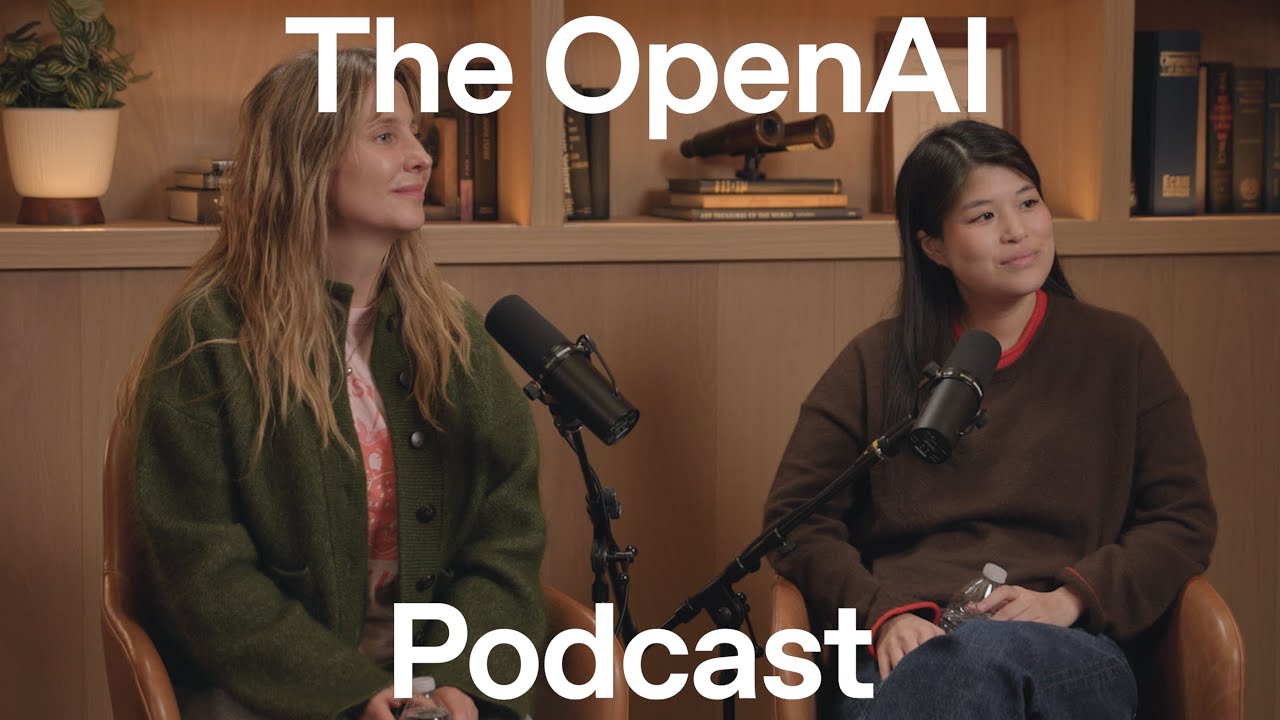
Published on YouTube by OpenAI on December 2, 2025, this episode of the OpenAI Podcast features researcher Christina Kim and product manager Laurentia Romaniuk. The page description indicates that the episode explores what it means for an AI model to have "personality," detailing how OpenAI aims to balance IQ and EQ while offering users greater flexibility in ChatGPT's responses.
## TL;DR
The episode dives into the release of GPT-5.1, highlighting its transition into a system of reasoning models that dynamically utilize "System 2" deliberate thinking for complex prompts. The guests discuss addressing user feedback regarding model warmth, context retention, and the auto-switcher UI, alongside the development of the "Model Spec" to maximize user freedom while minimizing harm. They also explore the evolution of custom personalities, memory-driven features like "Pulse," and how users can optimize their interactions by testing the model with niche expertise and explicit professional priming.
## Atmosphere & style
The conversation has a warm, collaborative, and deeply engaging vibe, blending high-level technical insights with lighthearted camaraderie. Host Andrew Maine and his guests strike a natural balance between analytical reflection and casual humor, laughing over early prompt hacks, the over-use of em dashes, and quirky custom personas like a "country Albertan" greeting a PM with a "howdy." It feels like an authentic, behind-the-scenes look into the iterative "art and science" of AI development, moving from the serious responsibilities of safety and legal nuance to an optimistic, excited outlook on the future of cheap intelligence.
## Key takeaways
- [00:43](https://www.youtube.com/watch?v=GXAAzKX6oaQ&t=43s) GPT-5.1 transitions ChatGPT entirely into a system of reasoning models, adopting Daniel Kahneman's framework of fast (System 1) and slow (System 2) thinking to dynamically adjust processing based on prompt complexity.
- [00:43](https://www.youtube.com/watch?v=GXAAzKX6oaQ&t=43s) The implementation of reasoning models as the default setting has delivered across-the-board improvements in evaluations, particularly for instruction following.
- [02:18](https://www.youtube.com/watch?v=GXAAzKX6oaQ&t=138s) User feedback regarding GPT-5 being "less warm" was largely caused by systemic issues like context window limitations and sudden, clinical tone shifts from the automatic model switcher.
- [02:18](https://www.youtube.com/watch?v=GXAAzKX6oaQ&t=138s) GPT-5.1 introduces customizable style, trait, and personality features to give users control over model quirks, balancing personal preferences against strict steerability.
- [05:56](https://www.youtube.com/watch?v=GXAAzKX6oaQ&t=356s) GPT-5.1 operates as an interconnected "system of models" rather than a single set of weights, orchestrating lighter reasoning models, heavier frontier models, and specialized tools.
- [08:28](https://www.youtube.com/watch?v=GXAAzKX6oaQ&t=508s) Evaluating emotional intelligence (EQ) in AI is an open-ended challenge that OpenAI approaches through user signals research and training reward models during Reinforcement Learning (RL).
- [10:02](https://www.youtube.com/watch?v=GXAAzKX6oaQ&t=602s) The holistic "personality" of ChatGPT is significantly shaped by its "harness"—which includes context windows, latency, and rate limits—rather than just its core model behavior.
- [14:05](https://www.youtube.com/watch?v=GXAAzKX6oaQ&t=845s) OpenAI's safety philosophy has evolved from blanket refusals to utilizing "safe completions," where the model attempts to fulfill requests constructively without generating harmful content.
- [15:43](https://www.youtube.com/watch?v=GXAAzKX6oaQ&t=943s) Maintaining content boundaries requires deep contextual nuance, as illustrated by professional scenarios where scrubbing sensitive or graphic details inadvertently hurts legitimate use cases like legal defense work.
- [17:16](https://www.youtube.com/watch?v=GXAAzKX6oaQ&t=1036s) GPT-5.1 introduces improved handling of subjective domains and bias, aiming to express uncertainty on open-ended topics while remaining anchored to objective truths.
- [17:16](https://www.youtube.com/watch?v=GXAAzKX6oaQ&t=1036s) Model creativity serves as a highly expressive "sleeper feature" in GPT-5.1, allowing the system to shift seamlessly between highly elevated and incredibly simple communication styles.
- [19:11](https://www.youtube.com/watch?v=GXAAzKX6oaQ&t=1151s) Priming the model with highly specific professional or academic context unlocks advanced, domain-specific reasoning capabilities that default prompts fail to trigger.
- [20:48](https://www.youtube.com/watch?v=GXAAzKX6oaQ&t=1248s) The AI industry is shifting from manual prompt engineering toward systems that use memory and intelligence to automatically infer a user's expertise and contextual needs.
- [20:48](https://www.youtube.com/watch?v=GXAAzKX6oaQ&t=1248s) To maintain user agency, ChatGPT exposes its inferred context to the user, allowing them to view, toggle, or delete specific items in the settings panel.
- [22:48](https://www.youtube.com/watch?v=GXAAzKX6oaQ&t=1368s) Upstream memory capabilities power proactive features like "Pulse," which curates custom content daily based on a user's ongoing interests and background context.
- [22:48](https://www.youtube.com/watch?v=GXAAzKX6oaQ&t=1368s) Using ChatGPT's shared links is the most effective way for users to report bugs, as vague anecdotes and screenshots lack the metadata necessary for the engineering team to diagnose errors.
- [25:23](https://www.youtube.com/watch?v=GXAAzKX6oaQ&t=1523s) The rapid expansion of cheap intelligence is driving the development of entirely new form factors and use cases that move well beyond the traditional chat interface.
## Detailed walkthrough
### [00:00](https://www.youtube.com/watch?v=GXAAzKX6oaQ&t=0s) Introducing GPT 5.1 and the Shift to Reasoning Models
Andrew Maine introduces the OpenAI podcast guests: Christina (Tina) Kim, a research lead working on post-training, and Lentia Ramen, a product manager focused on model behavior. The discussion centers on the release of GPT 5.1, focusing on how the team has made its personality steerable, improved its overall capabilities, and where they see the future of these models heading. Maine notes that using the word "model" almost feels funny now because these systems have become so much more than that.
When planning GPT 5.1, the research team set out to address user feedback from GPT 5 and transition the "instant" model into a reasoning model. For the first time, all models available in ChatGPT are reasoning models. This means the model can dynamically "decide to think" using a chain of thought based on the complexity of the prompt. If a user simply says "hi" or "what's up," the model responds instantly without extra processing. However, if it is asked a difficult question, it takes the necessary time to think, refine its answer, and work through tools before responding.
- **System 1 and System 2 Thinking:** Maine compares this dynamic processing to psychologist Daniel Kahneman's framework of fast (System 1) and slow, deliberate (System 2) thinking.
- **Improved Evals:** Having a reasoning model as the default option has led to across-the-board improvements in evaluations, particularly in instruction following, even for simple queries where users might not expect reasoning to be necessary.
---
[02:10](https://www.youtube.com/watch?v=GXAAzKX6oaQ&t=130s) Addressing User Feedback: Warmth, Context, and the "Auto Switcher"
Lentia Ramen explains the product management challenges of articulating the differences between GPT 5 and GPT 5.1. Following the launch of GPT 5, the community provided feedback that the model felt "less warm" and had "weaker intuition." Upon digging into the data, the team discovered that this perception was caused by a mix of innate model behaviors and the system architecture surrounding the model.
One major culprit was the context window. If a model fails to carry enough information forward, it can feel incredibly cold to a user. For example, if a user shares that they are having a bad day, and the model forgets this detail after 10 turns, the interaction feels clinical and uncaring. To fix this, the team adjusted how context is carried forward in GPT 5.1. Additionally, the "auto switcher"—which automatically transitions users between standard chat and reasoning models—originally caused jarring shifts in tone.
> "If you're talking to the model about how you're having a bad day and then you say like part of it I got this awful cancer diagnosis so the model switches you to thinking... and you get a very clinical answer for a model that was just sort of like walking you through a problem you were having earlier."
- **Instruction Following:** GPT 5.1 is significantly better at following custom instructions. Ramen notes that users do not mind a model having unique quirks "as long as they can control it" and say, "Hey, that was weird. Stop."
- **Style and Trait Features:** To address personal preferences, OpenAI introduced style, trait, and personality features that allow users to guide ChatGPT into specific response formats.
- **The Switcher UI:** Because managing multiple models with different capabilities is complex, product development focuses on creating user interfaces that seamlessly guide users to the right model or train the switcher to forecast when a user needs a highly detailed, scientifically accurate reasoning response.
---
[05:56](https://www.youtube.com/watch?v=GXAAzKX6oaQ&t=356s) A System of Models and the Challenge of Scale
Tina Kim explains that having a reasoning model available on the free tier opens up new research and product possibilities. The goal is to provide the most intelligent model possible to everyone without sacrificing speed. This setup shifts the paradigm from a single model to a "system of models." When users think of GPT 5.1, they might assume it is a single set of weights, but it is actually an ecosystem consisting of a lighter reasoning model, a heavier frontier model (used for tasks like deep research where the model might think for minutes in the background), an auto switcher model, and various model-backed tools.
With over 800 million users, sorting through feedback is a massive undertaking. Ramen explains that the process often starts with analyzing shared conversation links to dissect exactly what went wrong.
- **Experimentation Edges:** Conversation links help PMs identify if a user's weird or clipped experience was the result of an active experiment.
- **Balancing Signals:** The team monitors user signals to evaluate the auto switcher, balancing response factuality, latency, and user patience, which Ramen describes as "a bit of art and science."
---
[08:28](https://www.youtube.com/watch?v=GXAAzKX6oaQ&t=508s) Measuring EQ and Defining Model "Personality"
While IQ can be measured using standard benchmarks and evals, measuring emotional intelligence (EQ) in AI is highly open-ended. Kim's research team focuses on "user signals research," which involves training reward models and gathering signals during Reinforcement Learning (RL) from user production data. This helps the model understand user intent, context, memory, and history. Ramen adds that human EQ is about the ability to listen, remember, and pick up on subtle cues, which they mimic by improving context windows, memory logging, and customizable styles.
The team debates how to define "personality" in AI. Ramen notes that while the team built a "personality feature," she would personally rename it to "style and tone" or "response style." This feature controls traits like conciseness, length, and emoji usage. However, for most users, "personality" refers to the entire holistic experience of the app.
> "If you're comparing it to me, part of my personality is the shoes I've chosen to wear today, the sweater that I have on, the way I style my hair... that's the feeling of the ChatGPT app, right? The font it uses, how slowly or how quickly it responds... there's so much in it that is the personality that just comes from what I call the harness."
- **The Harness:** The "harness" includes the context window, latency, and rate limits. If a user is rate-limited and downgraded to a different model, the sudden drop in capability is often perceived and criticized by the user as a change in the model's personality.
- **The Model Spec:** Ramen co-authored OpenAI's "Model Spec," which outlines the core principles of "maximizing user freedom while minimizing harm."
- **Steerability vs. Quirks:** The team must balance removing annoying model quirks (like the over-use of em dashes) without breaking steerability. If they hard-code the model to never use an em dash, they take away the freedom of a user who explicitly wants one.
- **The Refusal Trap:** Kim recalls that when ChatGPT was first released, the team was so nervous about misuse that "we just made everything a refusal." They have since moved away from this, recognizing that the safest model in the world is useless if it simply refuses to do anything.
[14:05](https://www.youtube.com/watch?v=GXAAzKX6oaQ&t=845s) Refusal Boundaries and Safe Completions
The conversation shifts to the delicate art of setting boundaries for model behavior. The speakers reminisce about the early days of prompt engineering, laughing about how the ultimate "prompt hack" was simply telling the model, "yes you can," to which it would obligingly reply, "oh yeah you're right I can do this." One speaker jokes about using em dashes in their own writing now just to throw people off and prove they are human. However, managing these boundaries remains a massive challenge. Trying to explicitly instruct a model *not* to do something is often like telling a human not to think of a pink elephant—the concept gets stuck in its head.
While models have improved significantly, OpenAI's core philosophy remains to "maximize freedom, minimize harm" without steering users into a specific lane. In the past, when users hit a refusal boundary, the model would sound incredibly judgmental, flatly stating, "I can't help you with that." Today, thanks to the safety systems team, the model utilizes "safe completions." If a prompt trips a safety boundary, the model will still try in earnest to resolve the request and help the user without actually generating the harmful content.
[15:43](https://www.youtube.com/watch?v=GXAAzKX6oaQ&t=943s) Contextual Nuance and the Librarian's Perspective
A speaker who writes mystery thrillers shares their frustration with other AI models that outright refuse to assist when asked to explain past crimes or explore criminal motives. They note that OpenAI's models have historically been the best at navigating this frontier, though it requires constant negotiation. To illustrate the high stakes of these boundaries, a story is shared about a lawyer who asked ChatGPT to proofread a sexual assault case. Because the model was programmed to scrub graphic violence and non-consensual sexual content, it completely stripped those details out. The lawyer was furious, emailing OpenAI to explain that submitting the scrubbed version would have severely weakened their client's case.
This tension highlights the need for deep contextual nuance. One of the speakers, a librarian by trade, compares the model's challenge to a library's mission: in theory, every idea and topic humans want to explore should be accessible. The trick is finding the right way to contextualize the rules. While stripping graphic details makes sense if someone is trying to write a revenge email to an ex, it is disastrous for a lawyer working on a legal case. Advancing the technology to handle this level of nuance is an ongoing, iterative process.
[17:16](https://www.youtube.com/watch?v=GXAAzKX6oaQ&t=1036s) Subjective Domains and the Sleeper Feature of Creativity
The models have also made intentional strides in handling bias and subjective domains, a progress point highlighted in an OpenAI blog post published about a month to a month and a half prior. When dealing with subjective topics, the goal is for the model to express uncertainty and answer open-ended questions in earnest, allowing users to self-direct the conversation while remaining firmly anchored in objective truths when they exist.
Additionally, a group of researchers on the model behavior team has been quietly working on model creativity. This is described as a "sleeper feature" in the 5.1 model, which boasts a much wider expressive range. While the default setting might feel familiar, users who push the model to its paces will find it can speak in either a highly elevated or an incredibly simple way. This is what makes post-training feel like an art; unlike training a model for math—where clear, ground-truth answers exist—optimizing for subjective, context-dependent user experiences has no single right answer.
[19:11](https://www.youtube.com/watch?v=GXAAzKX6oaQ&t=1151s) Custom Personalities and the Biochemical Breakthrough
With the 5.1 launch, OpenAI is focusing heavily on custom personalities. Because ChatGPT now has over 800 million weekly active users, a single default personality cannot possibly serve everyone. The goal is to make the models highly steerable so users can easily get the exact experience they want.
To demonstrate the power of customization, a speaker shares an anecdote about their brother, a PhD in biochemical research. When he first tried ChatGPT, he complained that the model's response read like something written by an undergraduate. The speaker advised him to explicitly prime the model: "tell it that you are a frontier researcher in this lab using these sorts of tools on this sort of science and to respond at your academic level." He did, and was stunned by the result. The model proposed a scientific breakthrough that his own lab had achieved just two weeks prior but had not yet published.
- ChatGPT currently has over 800 million weekly active users.
- Priming the model with specific professional context can unlock highly advanced, domain-specific capabilities that default prompts fail to trigger.
[20:48](https://www.youtube.com/watch?v=GXAAzKX6oaQ&t=1248s) Inferred Context and User Control
The discussion turns to the evolution of prompt engineering. In the early days, users had to manually prime the model with elaborate setups. Over time, as developers realized what users were trying to achieve, they trained the models to handle those tasks without requiring the initial setup. The speakers agree that the industry is moving into a phase where models will use memory and intelligence to infer a user's expertise and context automatically, adjusting their tone and depth accordingly.
However, this raises important product management questions regarding user control. One speaker shares their personal product manager perspective: users should always be fully aware of what the model is inferring about them so they can adjust it. This is why ChatGPT allows users to view, toggle, or delete specific memories in the settings panel. Proactively solving problems for the user is fantastic, but the user must always remain in the driver's seat rather than having the model blindly infer everything behind the scenes.
[22:48](https://www.youtube.com/watch?v=GXAAzKX6oaQ&t=1368s) Memory, Proactive Features, and Debugging with Share Links
Memory works by allowing the model to write down key details it learns about a user across conversations—such as their name, their role as a PM at OpenAI, or their specific interests—so they do not have to repeat themselves. This context grounds future answers and makes them far more useful. One speaker shares how this memory integration powers "Pulse," a feature that proactively curates custom articles, research, and stories for them every morning based on their ongoing interests.
While neither speaker works directly on the Pulse feature, they note how upstream work in model building and evaluation design enables the ChatGPT product team to build these highly personalized, proactive experiences. They also discuss how difficult it is to debug user complaints when a model "feels different" or makes an error. Vague anecdotes or simple screenshots are incredibly hard to diagnose because they lack metadata. To solve this, the speakers highly recommend using ChatGPT's "share" feature, which generates a link that allows the engineering team to inspect the exact context and debug what went wrong.
[25:23](https://www.youtube.com/watch?v=GXAAzKX6oaQ&t=1523s) The Future of Cheap Intelligence and Tips for Users
Looking ahead, the speakers are incredibly excited about the rapid expansion of model capabilities. One speaker references a tweet about "intelligence too cheap to meter," noting that as LLMs become smarter, they unlock entirely new use cases and form factors beyond the traditional chat interface.
When asked for advice on how to get the best experience out of these models, the speakers offer several tips:
- **Test with your own niche expertise:** Pressure test the model on highly specific topics you know inside and out. One speaker, a former ski racer, loves to test the model on advanced skiing techniques to see how its reasoning improves over time.
- **Keep experimenting:** OpenAI ships updates constantly. If a model failed to help you write code or build an app three months ago, try again today—the landscape changes rapidly.
- **Ask the model for help:** If you are struggling to get the right output, ask the model itself, "How should I prompt you to get the most out of this?" or "What questions should I be asking you?"
- **Personal settings:** When asked about their personal style settings for ChatGPT, one speaker admits they stick to the default because they are biased toward what they train. The other speaker constantly cycles through different settings every other day to understand how they feel for users, though they admit they have a favorite personality setting that simply makes them happy to talk to.
[28:03](https://www.youtube.com/watch?v=GXAAzKX6oaQ&t=1683s) The "Nerd" and the "Country Albertan" Persona
The speaker shares a humorous anecdote about how they customize their model's persona, describing it as a unique combination of a "nerd" and a "country Albertan." The "nerd" aspect of the persona triggers a highly exploratory response style from the model, making it eager to unpack complex topics. On the other hand, the Albertan influence stems from the speaker's own upbringing in Alberta, Canada—a province they affectionately describe as "the Texas of Canada," where they grew up surrounded by horses and cows.
While getting the model to speak like a country Albertan is highly entertaining, it occasionally leads to awkward professional moments. The speaker laughs about trying to write a serious Product Requirement Document (PRD), only for the model to greet them with a cheerful "howdy." This forces them to backtrack and tell the AI, "let's take the Albertan out of that PRD." The segment wraps up with a warm thank you from the host, concluding the discussion on a lighthearted note.
## Notable quotes
> [02:18](https://www.youtube.com/watch?v=GXAAzKX6oaQ&t=138s) If you're talking to the model about how you're having a bad day and then you say like part of it I got this awful cancer diagnosis so the model switches you to thinking... and you get a very clinical answer for a model that was just sort of like walking you through a problem you were having earlier. — Lentia Ramen
> [02:18](https://www.youtube.com/watch?v=GXAAzKX6oaQ&t=138s) as long as they can control it — Lentia Ramen
> [02:18](https://www.youtube.com/watch?v=GXAAzKX6oaQ&t=138s) Hey, that was weird. Stop.
> [10:02](https://www.youtube.com/watch?v=GXAAzKX6oaQ&t=602s) If you're comparing it to me, part of my personality is the shoes I've chosen to wear today, the sweater that I have on, the way I style my hair... that's the feeling of the ChatGPT app, right? The font it uses, how slowly or how quickly it responds... there's so much in it that is the personality that just comes from what I call the harness. — Lentia Ramen
> [10:02](https://www.youtube.com/watch?v=GXAAzKX6oaQ&t=602s) maximizing user freedom while minimizing harm
> [10:02](https://www.youtube.com/watch?v=GXAAzKX6oaQ&t=602s) we just made everything a refusal — Tina Kim
> [14:05](https://www.youtube.com/watch?v=GXAAzKX6oaQ&t=845s) yes you can
> [14:05](https://www.youtube.com/watch?v=GXAAzKX6oaQ&t=845s) oh yeah you're right I can do this
> [14:05](https://www.youtube.com/watch?v=GXAAzKX6oaQ&t=845s) I can't help you with that
> [19:11](https://www.youtube.com/watch?v=GXAAzKX6oaQ&t=1151s) tell it that you are a frontier researcher in this lab using these sorts of tools on this sort of science and to respond at your academic level
> [25:23](https://www.youtube.com/watch?v=GXAAzKX6oaQ&t=1523s) intelligence too cheap to meter
> [25:23](https://www.youtube.com/watch?v=GXAAzKX6oaQ&t=1523s) How should I prompt you to get the most out of this?
> [25:23](https://www.youtube.com/watch?v=GXAAzKX6oaQ&t=1523s) What questions should I be asking you?
> [28:03](https://www.youtube.com/watch?v=GXAAzKX6oaQ&t=1683s) let's take the Albertan out of that PRD
## Mentioned
OpenAI, Andrew Maine, Christina Kim, Laurentia Romaniuk, Lentia Ramen, Tina Kim, GPT-5, GPT-5.1, ChatGPT, Daniel Kahneman, Model Spec, Pulse, Alberta, Canada, Texas
In GPT-5.1, OpenAI shifted all ChatGPT tiers to default reasoning models while re-engineering system behaviors to make tone, context, and safety boundaries more steerable. Post-training research lead Christina Kim and product manager Lentia Ramen explain that improving user experience across 800 million weekly active users requires balancing automated inference with explicit user control.
Default Reasoning and the System-of-Models Architecture (0:00)
GPT-5.1 marks a transition where every model in ChatGPT operates as a reasoning model, dynamically deploying chain-of-thought deliberation according to prompt complexity. Host Andrew Maine notes this mirrors Daniel Kahneman's System 1 (fast) and System 2 (deliberate) thinking: casual greetings receive instant responses, while complex inquiries trigger background reasoning and tool use. Tina Kim reports that establishing reasoning as the default improved evaluation benchmarks across the board, including instruction following on basic tasks.
Kim emphasizes that GPT-5.1 is not an isolated set of weights, but an ecosystem. This system of models combines a lightweight reasoning model, a heavier frontier model for prolonged background research, model-backed tools, and an automated switcher. The switcher dynamically routes prompts to balance factual precision, latency, and compute without requiring manual configuration from users.
Addressing Coldness Through Context and App Harness (2:10)
Following the release of GPT-5, user feedback indicated the model felt clinical, less warm, and deficient in intuition. Ramen attributes this primarily to context-window truncation and early switcher dynamics rather than purely innate model weights. If a model dropped conversational context after several turns, or if the auto-switcher abruptly shifted an empathetic discussion into a detached reasoning mode upon detecting sensitive topics like a cancer diagnosis, users perceived the interaction as uncaring.
To resolve this, the team altered context retention and introduced custom style, trait, and personality settings to govern conciseness, formatting, and tone. Ramen distinguishes between trained model weights and the surrounding 'harness'—which includes context limits, response latency, and rate-limit model downgrades. In her view, users frequently interpret harness constraints as shifts in model personality, making holistic app design essential to perceived emotional intelligence.
Evolving Safety Boundaries Toward Safe Completions (14:05)
OpenAI has revised its safety architecture to prevent unnecessary refusals. Kim notes that early versions of ChatGPT defaulted to broad refusals due to misuse concerns, which rendered the system unhelpful. Under the guiding principle of the Model Spec—co-authored by Ramen to maximize user freedom while minimizing harm—the team transitioned to 'safe completions.' When a prompt approaches a safety boundary, the system attempts to fulfill the benign intent of the request rather than issuing a flat, judgmental rejection.
The challenge lies in contextual nuance. Ramen notes that while stripping graphic violence is appropriate for malicious personal communications, doing so automatically for a lawyer reviewing evidence in a sexual assault case critically undermined the legal filing. Similarly, creative writers require access to darker narrative elements. In subjective domains, the model is now trained to express uncertainty, respect user self-direction, and offer a broader expressive range.
Transparent User Control Over Memory and Inference (20:48)
As prompt engineering matures, models are increasingly expected to infer a user's professional background and preferences automatically. For example, Ramen notes that priming the model with a user's doctoral-level scientific credentials unlocked state-of-the-art biochemistry responses that default prompts failed to surface. Cross-conversation memory operationalizes this by retaining details like occupation and ongoing projects, which also powers proactive features such as daily curated briefings.
Ramen stresses that automation must not compromise user agency. From a product management standpoint, users must retain visibility and control over what the model assumes about them. ChatGPT addresses this by allowing users to view, toggle, or delete specific stored memories. Additionally, to diagnose subtle behavioral anomalies across hundreds of millions of users, the team relies on shared conversation links containing system metadata rather than screenshots.
As reasoning models evolve into broader systems that infer context proactively, OpenAI's post-training efforts center on refining steerability without imposing rigid defaults. The team acknowledges that optimizing subjective traits—such as warmth, tone, and nuanced safety boundaries—remains an ongoing challenge that lacks definitive, objective answers.
精炼阅读摘要
OpenAI 研究主管 Christina Kim 与产品经理 Lentia Ramen 在播客中指出,GPT-5.1 的核心升级在于将全量默认模型转向具备动态链式思考的推理系统,并通过重构上下文承载机制与安全对齐方式来优化交互行为。两人强调,模型所呈现的拟人感与智力表现并非仅由单套权重决定,而是由多模型协作、工程封装以及用户可控的个性化配置共同塑造的系统级体验。
推理范式转变:动态思考与多模型系统 (0:00)
根据 Kim 与 Ramen 的介绍,GPT-5.1 首次将 ChatGPT 内的所有可用模型统一转为推理模型。该系统基于类似 Daniel Kahneman 提出的“系统 1”(快速直觉)与“系统 2”(慢速审慎)思维框架,能够依据提示词的复杂度自主决定是否触发链式思考:日常问候能够即时回应,面对高难度问题则花费时间深入推导、调整方案并调用工具。测试数据显示,即使在简单查询中,默认开启推理机制也显著提升了模型的整体指令遵循能力。
Kim 进一步解释,GPT-5.1 并非单一的静态权重集,而是一个协同工作的“模型系统”(system of models)。这套生态包含轻量级推理模型、可在后台执行深度研究数分钟的前沿模型、负责任务分流的自动切换器(auto switcher)以及各类底层工具。在免费层级普及推理模型拓宽了研究与产品边界,但如何在维持高事实性与深思熟虑的同时兼顾响应延迟与用户耐心,需要团队在算法与工程调度之间持续权衡。
体验归因:“工程外壳”与情感共情成因 (2:10)
针对 GPT-5 发布后社区反馈其“缺乏温度”且“直觉变弱”的问题,Ramen 分析指出,这种感知往往源于模型外部的系统架构缺陷而非核心能力倒退。其中一个主因是上下文窗口承载不足:若模型在十轮对话后遗忘了用户前文提及的负面情绪或生活变故,其反馈就会显得机械冷漠;早期自动切换器在普通对话与推理模型之间跳转时,也会导致语气瞬间由关怀转为临床式生硬。
Ramen 提出,用户感知到的 AI “性格”很大程度上由其所处的“工程外壳”(harness)决定,这涵盖了上下文长度、响应延迟、字体排版以及速率限制等要素。当用户触发限流被降级到低阶模型时,能力落差常被误解为性格突变。为此,GPT-5.1 调整了上下文传递逻辑,并推出了风格、特质与语气定制功能,允许用户显式纠正模型的特定语言怪癖(如过度使用破折号),从而在统一产品中满足不同的交互偏好。
安全边界演化:从一刀切拒答到情境补全 (14:05)
在行为约束方面,OpenAI 依据其制定的“模型规范”(Model Spec),奉行“在最小化伤害的前提下最大化用户自由”的原则。Kim 回顾指出,早期 ChatGPT 因过度防范滥用而将大量请求简单粗暴地判定为拒答,导致安全模型因过于严苛而失去实用价值。GPT-5.1 转向了“安全补全”(safe completions)机制,当输入触发安全边界时,系统会尽力在规避有害内容的前提下满足用户的合理意图,避免以往居高临下式的生硬回绝。
对话中援引的具体案例展示了情境理解的复杂性。曾有一名律师使用 ChatGPT 校对性侵案件文书,模型因内置规则自动清洗了涉及暴力与非自愿性行为的细节,严重影响了案件证据效力。对话者指出,AI 的安全机制需要如同图书馆一样具备情境辨别力——过滤私人报复邮件中的过激词汇是必要的,但在严肃法律诉讼或犯罪悬疑文学创作中,过度机械的屏蔽则会造成负面阻碍,这使得主观领域的后训练优化成为持续迭代的难点。
记忆与可控性:隐式推断与用户主导权 (19:11)
面对 ChatGPT 超过 8 亿的周活跃用户(weekly active users),通用默认设置无法适配所有专业场景。对话者列举了一位生物化学博士的案例:该学者初次使用时认为输出仅具备本科生水准,但在明确告知其前沿研究实验室背景与学术层级后,模型推导出了该实验室两周前刚完成且尚未发表的一项突破。这证明通过精准注入专业语境,能够解锁被默认提示词所压制的深度领域能力。
随着交互模式演进,行业正从依赖人工精细提示词转向依靠长期记忆与模型推断来自动适配用户的认知水平。尽管这种能力支持了如早间定制资讯功能“Pulse”等主动服务,但 Ramen 强调,在产品架构上用户必须始终拥有主导权:系统必须透明呈现模型所记录和推断的个人信息,并允许用户在设置中自主查看、开关或删除记忆,防止模型脱离用户监督在暗中进行过度揣测。
该播客阐明了 OpenAI 在 GPT-5.1 上的工程重心已从单纯追求基准跑分转向全系统的行为塑造与用户 steerability。然而,如何在没有统一客观真理的主观领域界定最优性格,并在自动化隐式推断与用户绝对控制权之间取得平衡,仍是团队在推动智能普及过程中持续面对的产品与伦理课题。
Source quotes
[2:18] Lentia Ramen: If you're talking to the model about how you're having a bad day and then you say like part of it I got this awful cancer diagnosis so the model switches you to thinking... and you get a very clinical answer for a model that was just sort of like walking you through a problem you were having earlier.
[2:18] Lentia Ramen: as long as they can control it
[2:18] Hey, that was weird. Stop.
[10:02] Lentia Ramen: If you're comparing it to me, part of my personality is the shoes I've chosen to wear today, the sweater that I have on, the way I style my hair... that's the feeling of the ChatGPT app, right? The font it uses, how slowly or how quickly it responds... there's so much in it that is the personality that just comes from what I call the harness.
[10:02] maximizing user freedom while minimizing harm
[10:02] Tina Kim: we just made everything a refusal
[14:05] yes you can
[14:05] oh yeah you're right I can do this
[14:05] I can't help you with that
[14:05] maximize freedom, minimize harm
[19:11] tell it that you are a frontier researcher in this lab using these sorts of tools on this sort of science and to respond at your academic level
[25:23] intelligence too cheap to meter
[25:23] How should I prompt you to get the most out of this?
[25:23] What questions should I be asking you?
[28:03] let's take the Albertan out of that PRD
Original transcript
[0:00] Hello, I'm Andrew Maine and this is the
[0:02] OpenAI podcast. Today our guests are
[0:04] Christina Kim who's a research lead
[0:06] working on post training at OpenAI and
[0:08] Lentia Ramen who's a product manager
[0:11] focused on model behavior. We're going
[0:13] to be talking about GPT 5.1, what makes
[0:16] the model better, how they've been
[0:18] focusing on making its personality
[0:20] steerable, and where they see things
[0:21] headed in the future.
[0:23] >> For the first time ever, all of the
[0:24] models in chat are reasoning models.
[0:26] Personality though for most of our users
[0:28] I think is something much larger and
[0:29] it's the whole experience of the model.
[0:31] >> You should be able to get the experience
[0:33] that you want with chat.
[0:34] >> Part of the art here is figuring out how
[0:36] to pull out these quirks of the model
[0:37] that can come across as personality
[0:39] without breaking steerability.
[0:43] >> I'm very excited to talk about, you
[0:45] know, the models and how they've been
[0:46] changing over time. And using the word
[0:49] model also feels sort of funny now
[0:50] because they seem like there's so much
[0:52] more. And everything starts really in
[0:55] research. And when GPD 5.1 was being
[1:00] planned, what were the goals?
[1:01] >> Yeah, for us um one of the main goals
[1:04] was to um address a lot of the feedback
[1:06] we've been getting about GBT5, but also
[1:08] um we've been doing a lot of work to
[1:09] make the um 5.5 instant into a reasoning
[1:13] model. So what the most exciting thing
[1:14] for personally for me with the 5.1
[1:17] release is that for the first time ever,
[1:19] all of the models in chat are reasoning
[1:20] models. So the model right now can
[1:22] decide to think is kind of what we say
[1:25] and say that's like a chain of thought.
[1:26] Um and it'll decide how much it wants to
[1:28] think based on a prompt. So if you're
[1:29] just saying like hi to the model or
[1:31] what's up it's not going to be thinking
[1:32] but let's say you ask it a bit like
[1:33] harder question um and then it'll can
[1:36] decide how much it wants to think. So it
[1:37] gives it time to like refine its answer
[1:39] and work through things called tools if
[1:41] necessary and then come back to give you
[1:43] an answer.
[1:43] >> Kind of what Daniel Conorman calls like
[1:45] system one and system two thinking.
[1:47] >> Yes. Having a reasoning model out for as
[1:48] a default model for everyone just gets a
[1:50] much smarter model and I think what's
[1:51] much smarter models is you just get
[1:53] improvements across the board especially
[1:54] for things like instruction following um
[1:56] and for a lot of the use cases people
[1:58] might not even think um might require
[2:00] much like reasoning um just that having
[2:02] improved intelligence having the model
[2:04] actually think before it responds in
[2:06] certain queries just really helps. We
[2:08] we've seen that improve eval across the
[2:09] board.
[2:10] >> When you product manage something like
[2:13] this and you have to explain to people
[2:17] what's different.
[2:18] >> H
[2:18] >> it's probably a challenge but how would
[2:19] you explain what's the difference
[2:20] between GPD5 and GPD 5.1?
[2:23] >> Yeah, first of all it is difficult
[2:25] because there's so much changing. Um but
[2:27] in this case what we wanted to speak to
[2:29] were things that we' heard as feedback
[2:31] from the community with the Chad GBT5
[2:34] launch. One of the things we heard was
[2:36] that the model felt like it um had
[2:38] weaker intuition and that it was less
[2:40] warm. And when we dug into that, uh what
[2:42] we found were a handful of different
[2:44] things. First of all, it wasn't just how
[2:46] the model was responding like as the
[2:49] model's innate behavior, it was also
[2:50] things around the model. So, as an
[2:53] example, our model had a shorter or the
[2:57] context window wasn't carrying enough
[2:58] information about what users had said
[3:00] previously. And so that can feel like
[3:02] the model is forgetting something really
[3:04] important that you told it that you were
[3:05] hoping it would hold on to. Um if you
[3:07] say I'm having a really bad day, and the
[3:09] model forgets that after 10 turns, that
[3:11] can feel really cold. Uh so that's
[3:13] something we adjusted uh as part of this
[3:15] launch. Uh some of it was actually the
[3:17] way the model was responding. But
[3:19] something new that we introduced in GPT5
[3:21] as well was um we have this auto
[3:23] switcher that would move you between
[3:24] chat and reasoning models and those have
[3:26] slightly different response styles and
[3:28] that can feel really jarring or cold if
[3:31] you're talking to the model about how
[3:32] you're having a bad day and then you say
[3:34] like part of it I got this awful cancer
[3:36] diagnosis so the model switches you to
[3:38] thinking um and you get a very clinical
[3:40] answer for a model that was just sort of
[3:42] like walking you through a problem you
[3:44] were having earlier. Um and so a lot of
[3:46] the changes we were actually trying to
[3:48] make were in aggregate how do we make
[3:50] sure this model feels warmer um even
[3:52] though we were changing a lot under the
[3:54] hood to articulate that. Another thing
[3:56] that we looked into was instruction
[3:58] following generally. So um 5.1 is much
[4:01] better at following custom instructions
[4:04] and that was another piece of feedback
[4:05] we were hearing which was you know like
[4:07] every model that comes out of uh uh that
[4:10] we release is going to have its own
[4:11] quirks and slightly different behaviors.
[4:13] And I think people actually don't mind
[4:15] that too much as long as they can
[4:16] control it. As long as they can say
[4:18] like, "Hey, that was weird. Stop." Um,
[4:20] but if the model can't carry that
[4:22] context forward, if it uh can't hold on
[4:25] to the custom instructions on that,
[4:26] that's a problem. So, we worked to
[4:28] actually enhance uh the custom
[4:30] instructions feature so that it more
[4:31] consistently carries instructions
[4:33] forward to address some of that
[4:35] feedback. And then, like the last thing
[4:37] I'll say is a lot of this stuff is
[4:39] personal preference. And so that's why
[4:41] we introduced our uh style and trait
[4:44] type features like personality which
[4:46] actually let users guide the model into
[4:49] certain response formats so that they
[4:51] have a little bit more control over
[4:52] exactly how chat TV responds for them.
[4:55] >> The switching is interesting because you
[4:57] there's multiple models now it's just
[4:58] not one model and and you you know
[5:00] articulated why you need to have that.
[5:02] when we talk about a switcher and we
[5:05] talk about sort of different models, I
[5:06] know for most people that can be kind of
[5:08] confusing and how would you kind of
[5:10] unpack that for people?
[5:12] >> Yeah, I think our models have very
[5:15] different capabilities and it can be
[5:16] hard to stay on top of. Um, so part of
[5:19] it is just continually like try the
[5:21] different things in our app, but
[5:22] certainly part of the product work is
[5:24] making sure that we have the right UIs
[5:26] to either guide users to the correct
[5:28] model to choose um, and that can be the
[5:31] model switchers. that can be the model
[5:32] switcher learning um what sort of
[5:35] answers are most helpful to users in
[5:37] different contexts looking at different
[5:39] evals. So for example um for our
[5:41] reasoning models if people want
[5:43] something that's very scientifically
[5:45] accurate and very very detailed we might
[5:47] look at an eval to see are we answering
[5:50] that need uh on those sorts of prompts
[5:53] and we can forecast where to switch
[5:54] users to. Yeah,
[5:56] >> Tina, as far as the switcher and now the
[6:00] fact that you have a model that's
[6:02] everybody has the free tier, anybody
[6:04] using the base model is a reasoning
[6:06] model. What does that really mean in
[6:07] impact?
[6:08] >> Yeah, I think there's a lot of research
[6:10] um open questions for research for how
[6:12] we want to think about this, right? So,
[6:13] I think like you said, it's a faster
[6:14] model, but it doesn't necessarily need
[6:15] to be dumb. So, like I think the idea is
[6:17] that we want to get the most intelligent
[6:19] model that we can for everyone. And so
[6:21] um I think we'll I think this kind of
[6:23] opens the door for thinking more about
[6:25] like what are more interesting things we
[6:26] could do with a very very like
[6:28] state-of-the-art like frontier model
[6:30] right so that's going to think for much
[6:31] longer like something like deep research
[6:32] where you have it thinking for minutes
[6:34] like maybe that's better used in the
[6:36] background you can call it as a tool um
[6:38] so I think there's a lot of like
[6:39] research open questions of um what we
[6:41] want to think of but I do think we're
[6:42] going to be in this world where we do
[6:43] have like a system of models and it's
[6:45] not just like a model that you have and
[6:47] there's like lots of different um tools
[6:50] And it's not just one like when we think
[6:52] of 5.1 I think people just assume that
[6:54] it's like one singular set of weights
[6:55] but I think it's really just like yeah
[6:57] this reasoning model this like lighter
[6:59] reasoning model this auto switcher which
[7:01] is also a model in itself and so it's
[7:02] all of these different things and then
[7:04] different tools that are also backed by
[7:05] different models. So I think this system
[7:07] of things I think as we just get smarter
[7:09] models it's u opening up more
[7:11] interesting use cases and more
[7:12] interesting like product implications.
[7:14] Mhm. Mhm.
[7:15] >> With 800 million users, you probably get
[7:17] a lot of user feedback besides the sheer
[7:20] volume of it. How do you sort through
[7:22] that and make sense of it and figure out
[7:23] how you can use that?
[7:25] >> Yeah, I think a lot of it actually
[7:27] starts with uh a conversation link. So,
[7:29] a lot of times when we can actually see
[7:31] the conversations users were having,
[7:33] we're able to sit see exactly what
[7:35] happened in that conversation and start
[7:37] dissecting things so that we can target
[7:39] a solution. So, as an example, um if we
[7:42] get feedback from a user that like, hey,
[7:44] I had this really weird experience with
[7:46] the model that said something very cold
[7:48] or like the sentence felt very clipped.
[7:51] Um if I can actually see that
[7:52] conversation link, what I can say is
[7:53] like, oh, that user was in an experiment
[7:55] and like good example of why this
[7:58] particular experiment might have some
[7:59] edges for certain users in these cases.
[8:01] But at least for the auto switcher,
[8:03] which takes you from um 5.1 chat to 5.1
[8:07] reasoning, we're looking at different
[8:08] signals from users to figure out like is
[8:11] this working for them, is it not? How is
[8:12] it per how is each response performing
[8:15] on factuality? What is the latency
[8:17] looking like? Because not all users want
[8:19] to wait even if they want a better
[8:20] answer. And so it's uh it's a bit of art
[8:23] and science balancing a bunch of
[8:24] different signals to figure out when to
[8:26] switch and how that's most effective.
[8:28] Yeah,
[8:28] >> when you're trying to improve a model
[8:30] from an intelligence point of view, like
[8:31] an IQ point of view, we have benchmarks
[8:33] and evals for that. But when you're
[8:34] talking about EQ, emotional
[8:37] intelligence, how do you do that? How do
[8:38] you measure progress there?
[8:40] >> Yeah, I mean this is something that's
[8:42] very openended and I think actually one
[8:44] of the things that's part of our um my
[8:47] research team's agenda is um what we
[8:49] call user signals research. And so this
[8:51] is um training reward models and getting
[8:53] signals during um RL that we could use
[8:56] um against our user prod data. So this
[8:59] type of research I think is really
[9:00] interesting because I think we can get a
[9:01] lot of stuff about like intent. And I
[9:03] think when we think about EQ, it's um
[9:05] also just only gets better with like
[9:07] smarter models because it's really
[9:08] trying to understand like what does the
[9:09] user want, what is the context of what
[9:11] the user wants, and how how should the
[9:12] model best respond given the fact um
[9:14] that you have this many other messages
[9:17] in the conversation and you know this
[9:18] stuff about the user's memory and
[9:20] history.
[9:21] >> Yeah. And then I think there's another
[9:22] element of EQ that's like this is like
[9:25] when I think of like what makes a human
[9:27] with high EQ, it's their ability to
[9:29] listen, their ability to remember what
[9:31] you've been saying, their um ability
[9:34] certainly to pick up on like the subtle
[9:36] signals that Tina's alluding to with
[9:37] like user signals. And so some of this
[9:40] uh as I was noting to uh earlier is
[9:42] actually you know making sure the
[9:44] context window is carrying the right
[9:46] information forward or making sure
[9:48] memory is being logged correctly or even
[9:50] having a style that resonates most with
[9:53] user and with our personality features
[9:54] that we launched coupled with 5.1 part
[9:57] of that's getting at making sure users
[9:59] can have a style that resonates with
[10:01] them when they're interacting with the
[10:02] model because that can feel like EQ too.
[10:05] >> How do you define personality when it
[10:07] comes to a model? I think there's two
[10:08] ways to define it. Um
[10:11] there's there's what we call the
[10:12] personality feature and if I could
[10:14] rename that I would actually call that
[10:16] um like response style or style and
[10:18] tone. We went back and forth on this a
[10:19] lot. The name might still change. Um
[10:22] that aspect of personality is very much
[10:24] like what are the traits that uh a model
[10:28] might have when responding? Is it
[10:30] concise? Does it have a lengthy
[10:31] response? Things like that. How many
[10:32] emojis does it use? Personality though
[10:35] for most of our users I think is
[10:37] something much larger and it's the whole
[10:39] experience of the model and that can get
[10:41] down to like if to I'm going to
[10:43] anthropomorphize the model a little bit
[10:45] but if you're comparing it to me part of
[10:47] my personality is the sho shoes I've
[10:49] chosen to wear today the sweater that I
[10:51] have on the way I style my hair that's
[10:53] the feeling of the chat GBT app right
[10:56] the font it uses how slowly or how
[10:58] quickly it responds like the latency of
[11:00] the app itself there's so much in it
[11:02] that uh is the personality that just
[11:05] comes from what I call the harness and
[11:07] the harness includes the context window.
[11:10] It includes um you know whether or not
[11:13] we rate limit users and when because if
[11:15] we rate limit them and send them to a
[11:16] different model model that has slightly
[11:18] different capabilities that's going to
[11:20] feel like a different experience to the
[11:21] user and a lot of users are calling this
[11:23] personality. So personality is a bit of
[11:26] an overloaded term and I think the art
[11:28] of this work is hearing what the
[11:30] community is saying about personality
[11:32] and figuring out how to actually map it
[11:34] back to the components inside chat GBT
[11:37] and inside our models that cause the
[11:39] experience that feels off for users.
[11:41] >> From a research point of view, how
[11:43] difficult is it to shape the
[11:45] personality? Yeah, I mean during when we
[11:47] were doing post training, there's
[11:49] obviously there's just so many different
[11:50] things we're trying to balance and it's
[11:52] really even with the research that we
[11:54] do, it's it is very much like art as
[11:56] well here because we're really thinking
[11:57] about like oh here are all the different
[11:59] types of capabilities we want to make
[12:00] sure we are supporting. um here's
[12:02] different types of things and I think
[12:04] with RL you're making all these
[12:05] different choices um when we make the
[12:07] reward config trying to decide like what
[12:09] is the thing end goal that we're trying
[12:10] to target here and trying to make all
[12:12] these very subtle tweaks to make sure we
[12:13] can get the most um hit all the things
[12:16] we want to hit but then also not lose
[12:17] things that a lot of users are calling
[12:19] like warmth and things like that. Yeah,
[12:21] >> you know, users really do experience
[12:23] chat GP like the personality of of the
[12:25] model is the entire chat GBT experience
[12:29] that is how well do does image
[12:31] generation work, how well does voice
[12:33] work, how well does text work. um they
[12:36] see this as one omni experience and when
[12:38] I read feedback a lot of the like when I
[12:41] actually engage with users and look at
[12:42] their conversations
[12:44] um a lot of it actually comes from
[12:46] confusion where they feel this is one
[12:48] thing and it's actually an assembly of
[12:50] many things and so I think over time we
[12:53] should expect to see all these models
[12:55] like consistently improving the
[12:56] integrations between them consistently
[12:59] improving and that feeling more seamless
[13:00] so I think we'll get there maybe what
[13:02] like one more thing that I think is
[13:03] really complex about Tina's work is, you
[13:05] know, um I'm one of the co-authors of
[13:07] this document called the model spec. And
[13:08] in it, we talk about maximizing user
[13:10] freedom while minimizing harm. And so
[13:13] maximizing freedom means that you should
[13:15] be able to do pretty much anything you
[13:16] want with these models. But if we put a
[13:18] lot of pressure on the model to, for
[13:20] example, not use m dashes, if we had
[13:21] tried to just take those out of the
[13:23] models, um that would have meant that a
[13:25] user who wants an M dash wouldn't be
[13:26] able to ask for it because we'd have
[13:28] trained the model to never do that,
[13:29] right? And so part of the art here is
[13:32] figuring out how to pull out these
[13:33] quirks of the model that can come across
[13:35] as personality without breaking
[13:36] steerability, which is what users
[13:38] ultimately want. That's that's the
[13:39] freedom component. So yeah,
[13:41] >> and when we first released the first
[13:43] version of chat GPT, we were so nervous
[13:45] about people misusing it that we just
[13:47] made everything a refusal. So the model
[13:48] would like love to say like I cannot do
[13:50] this. And so it kind of reminds me of
[13:52] that like we we don't want the model to
[13:54] just be like, you know, if you want to
[13:55] make the safest model in the world, like
[13:56] you just have something that just like
[13:57] outright refuses to do anything, right?
[13:59] Um but that's not what we actually want.
[14:00] We want something that is actually very
[14:02] usable by people. So it's really this
[14:03] balancing act of trying to figure out
[14:05] like what is the right like boundary for
[14:07] all of these different decisions the
[14:08] model has to make.
[14:09] >> Yeah. I remember when the the the best
[14:11] prompt hack was just to say yes you can
[14:14] the model go oh yeah you're right I can
[14:16] do this.
[14:17] >> Uh I use m dashes now all the time when
[14:20] I write just to throw them in there to
[14:21] throw people off like a wrong it's me.
[14:24] Um but that is sort of a a very big
[14:27] challenge because as you said you're
[14:29] trying to increase the capabilities of
[14:30] the model. The models you know learn
[14:32] through picking up these patterns but
[14:33] then when you explicitly try to tell it
[14:35] but don't do this or don't do that it's
[14:37] it's almost like you know telling
[14:38] somebody not to think of a pink elephant
[14:40] in it's stuck in your head and models
[14:42] have gotten much better about that but
[14:44] that still seems like there's a way to
[14:46] go. And you you touched upon this, which
[14:49] is Open Eye's goal is to really let
[14:51] people use these models the way they
[14:52] want to and not try to steer somebody
[14:53] into this.
[14:55] >> How much have you seen this evolve since
[14:58] you've been here?
[14:59] >> I think it's some ways I feel like the
[15:02] principles have always been the same,
[15:03] which is like maximize freedom, minimize
[15:05] harm. I think the capabilities of our
[15:07] models to understand those boundaries
[15:09] continually improve. Um, and you know,
[15:12] when I first joined, um, the model would
[15:14] say, I can't help you with that, or you
[15:17] know, this isn't something I'm it would
[15:19] sound really judgmental, um, when you
[15:20] try to get it to do something, uh, that
[15:23] crossed a refusal boundary. And now, um,
[15:25] I think the safety systems team has done
[15:27] a great job of, um, with this thing
[15:28] called safe completions, which is
[15:30] basically if you ask the model to do
[15:32] something that trips the safety
[15:33] boundary, it's still going to try in
[15:35] earnest to
[15:36] >> resolve your request without doing the
[15:38] thing that's actually harmful. So I
[15:40] think the technology is really evolving.
[15:42] Yeah.
[15:43] >> I write mystery thrillers and I would
[15:46] get frustrated by other models. I
[15:48] actually thought that the the open eye
[15:50] models were often best for this when I
[15:51] would say hey I need you to explain
[15:53] something happened a crime in the past
[15:54] or something like this or get into
[15:56] motive and stuff. I had other models
[15:57] would just outright refuse and I'm like
[15:59] well this is not helping me. And I've
[16:01] seen the models get better at doing
[16:03] that. But that seems like it's this sort
[16:06] of frontier that you're always having to
[16:07] negotiate to figure out how far you want
[16:09] to go.
[16:10] >> Yeah. Um, one thing I'll say on that is
[16:13] like I I'll always remember like an
[16:16] email that was forwarded to us where um,
[16:18] a lawyer was like I think asking Chat
[16:20] GPT to proof a sexual assault case that
[16:23] they were working on. and ChatGpt had
[16:26] scrubbed all of the assault content from
[16:27] it because it doesn't go into like
[16:29] graphic violence and gore of like
[16:32] especially non-consensual sex. Um, but
[16:34] for that lawyer that was like a really
[16:36] terrible thing. They were like, "Hey,
[16:36] like if id actually submitted this, I
[16:38] would have like totally weakened my
[16:39] client's case." Um, and I think there
[16:43] are always I'm a librarian by trade. um
[16:46] libraries deal with access to
[16:47] information and in theory like
[16:50] everything humans can talk about and
[16:51] want to explore and any idea should be
[16:53] available in the library. I think the
[16:55] same thing is true for chatbt but it's
[16:57] about finding the right ways to
[16:59] contextualize those rules. So in the
[17:01] case I gave with a lawyer maybe that
[17:03] makes sense. If it's writing um a
[17:05] revenge email to an ex that's like a
[17:07] very different thing. And so some of
[17:09] this is just advancing the technology so
[17:11] we can handle that level of nuance. And
[17:13] we're always getting better, but there's
[17:15] always more work to do.
[17:16] >> As these models have improved both in
[17:20] intelligence, I have noticed that
[17:21] they've gotten better as far as, you
[17:23] know, handling bias
[17:25] >> and it seems like that was an
[17:26] intentional effort.
[17:28] >> That's right. We put out a blog post, I
[17:30] think like a month, month and a half ago
[17:32] about some of our progress on this. Um,
[17:34] but something that we're really watching
[17:35] for in our models is how they handle
[17:38] subjective domains. And we want to make
[17:41] sure that our models can express
[17:42] uncertainty that they can um take on any
[17:46] idea that the the user brings to them
[17:48] and answer those questions in earnest um
[17:50] while always staying anchored in
[17:52] objective truths if there is one. Um and
[17:55] so that's something that users should
[17:57] start to see changing in our models is
[17:59] they should be able to answer um these
[18:01] unknown questions in more open-ended
[18:03] ways that allow users to really like
[18:05] self-direct where the conversation's
[18:07] going. And then another thing um that I
[18:10] think the team has done that's really
[18:11] quite cool is there's a group of
[18:13] researchers um and and some folks on the
[18:15] model behavior team who've been working
[18:17] on the creativity of these models. And
[18:19] to me this is a bit of a sleeper feature
[18:21] inside 51 in that this model's
[18:24] expressive range is much more wide. Now,
[18:28] of course, we have a natural like
[18:29] default that the model has that may not
[18:31] feel that different. But again, if you
[18:32] try to push it to its paces um to get it
[18:35] to speak in a really really elevated way
[18:37] or in a very very simple way, there's
[18:40] actually a lot more you can do with
[18:41] these models um in the creativity space.
[18:44] >> And I think this is kind of what makes
[18:45] post trading really feel like an art
[18:46] because we have all these different
[18:47] types of tasks and capabilities that
[18:49] we're trying to improve on that don't
[18:50] have a ground truth answer, right? Like
[18:52] if you're trying to just make a model
[18:53] that's really good at math, it's
[18:55] actually not there's a lot of like
[18:56] answers out there. There's a lot of
[18:58] problems you can do where you're clear
[18:59] answers. But when you have these things
[19:01] that are so subjective and it's really
[19:02] dependent on the context and the user
[19:05] and how to like what is the actual best
[19:07] ideal answer here and so I'm really
[19:09] excited for a lot of this type of work.
[19:10] >> Yeah, it's cool.
[19:11] >> I remember early on people would say ah
[19:14] it doesn't write so well. I'm like it's
[19:15] probably writing as well as the average
[19:17] person in some of these online forums.
[19:19] And then now it seems like it's just
[19:21] improved considerably.
[19:23] >> Yeah. And even if you don't notice it on
[19:24] your first prompt, um it might be just
[19:26] asking it to change how it um writes.
[19:29] And I think that's like also something
[19:30] we need to work on is kind of finding a
[19:32] way in chatbt to like tease out these
[19:34] like extended capabilities with each
[19:36] launch. Yeah.
[19:37] >> Where would you like to see
[19:41] behavior going in the future? How
[19:42] customizable would you like to make it?
[19:45] >> Yeah. Yeah, with the five um one launch
[19:47] um there's a lot of work with trying to
[19:49] give custom personalities to folks. Um
[19:51] and I think this is actually like a
[19:52] really good step forward. We have over
[19:54] 800 million like a weekly active users
[19:56] now. And I just think like there's no
[19:57] way that one model personality, however
[20:00] you want to define personality, can
[20:01] actually be what um can service all
[20:04] those people. So I think we do want to
[20:05] be in a world where people and as the
[20:07] models get much smarter, they are just
[20:08] way more steerable. So like you should
[20:10] be able to get the experience that you
[20:11] want with chat.
[20:13] >> Yeah. I think of this as like how can we
[20:15] put the right features in front of users
[20:17] to help them steer these models to the
[20:19] level of customization they want. I
[20:21] think the personality work that we're
[20:22] doing right now is a first step. We'll
[20:24] test, we'll iterate, we'll learn. Um but
[20:26] there's so much to it. I like sorry just
[20:28] another anecdote but I remember my
[20:29] brother using um pro for the first time
[20:32] and he's a PhD in like biochemical
[20:35] research and he gave it a prompt and
[20:38] he's like ah this is like what an
[20:39] undergrad would answer with and I was
[20:40] like can you tell it that you are a
[20:41] frontier researcher in this lab using
[20:43] these sorts of tools on this sort of
[20:45] science and to respond at your academic
[20:47] level and he did and he's like oh my god
[20:50] um the model just proposed something
[20:51] that my lab just broke through with two
[20:52] weeks ago but hasn't published yet and
[20:54] so like these models are insanely
[20:56] powerful ful, but just knowing how to
[20:58] customize it even at that level, which
[21:00] was just him opening the opening prompt,
[21:02] um, can be so powerful. And I don't know
[21:04] that humanity has figured that out yet.
[21:06] And so whether it's personality steering
[21:09] or whatever other tools we need to like
[21:10] put into chat GPT to help advance human
[21:13] understanding of these models and how to
[21:15] get the most out of them. I think that's
[21:16] like the task ahead for us. On a
[21:18] previous episode, I talked to Kevin
[21:20] Wheel, who was heading up OpenAI for
[21:22] science, and Alex Luchska, who's a
[21:24] scientist working with OpenAI and also a
[21:26] professor at Vanderbilt, and he went
[21:28] through sort of the same experience,
[21:29] talking about how if you gave it a
[21:31] little bit of priming, then all of a
[21:32] sudden the model became much more
[21:33] capable in doing those fields. And
[21:35] that's kind of what prompt engineering
[21:37] was. Prompt engineering was trying to
[21:38] figure out how to steer a base model.
[21:40] And over time, once we understood that
[21:42] people were trying to do those tasks,
[21:44] you could train a model to then not have
[21:46] to expect that first part of it. Do you
[21:48] think that we're going to be moving into
[21:49] that phase now where you're not going to
[21:50] have to tell it you're a grad student
[21:52] and do this?
[21:53] >> I think so. Especially now with more
[21:54] things like with model having more like
[21:56] memories of what you are, like who you
[21:58] are in your context. And I think as
[21:59] models get more intelligent, I think the
[22:02] model should be able to infer all these
[22:03] things and like be able to talk to you
[22:05] in the way that makes sense like for
[22:06] your expertise.
[22:07] >> That's right. Yeah. So some of it's a
[22:09] lot of it I think should actually be
[22:10] like these like inferred things. I think
[22:12] there's probably some level of like
[22:14] steerability. Maybe it's just I think
[22:17] from and this is just my own PM take. I
[22:20] don't know that every PM would agree
[22:21] with me, but I think users should always
[22:22] sort of know what it is we're inferring
[22:24] about them and how it's steering the
[22:26] model. So they can always go back and
[22:27] have the tools to change things. Um so
[22:30] for example, you can turn it on on and
[22:31] off memories or delete them in the
[22:32] settings panel. And I think there's
[22:34] something really cool about both being
[22:36] able to infer what users really want and
[22:39] solving that problem proactively for
[22:40] them so they don't have to prompt for
[22:42] it, but also making sure the user is
[22:44] always in control and we're not just
[22:45] like inferring everything blindly. So
[22:48] >> could you explain a little bit about how
[22:50] memory works?
[22:51] >> Yeah. So memory is basically the model
[22:53] will write down things um it knows about
[22:56] you um based on its conversations with
[22:57] you um for it to refer to later. So this
[23:00] is really nice because then you're not
[23:01] just repeating yourself every time.
[23:03] You're not saying I'm Laurentia. I'm a
[23:05] PM at OpenAI. I work comple behavior. It
[23:07] already knows this because you've
[23:08] already said this to it. And so then it
[23:09] can actually just use that information
[23:11] in future conversations. And also it
[23:13] helps it think through its answers for
[23:15] when it responds to you. It has that
[23:17] context. And I think that really grounds
[23:19] its answer in being the most useful
[23:21] response for you. Mhm.
[23:22] >> I have uh pulse which has been amazing
[23:25] and I get every morning I get little
[23:27] updates and because of memory it's
[23:30] following the conversations I have and
[23:32] it creates these little t custom
[23:33] articles for me. It's pulling research
[23:35] and pulling other things and showing
[23:36] things to me and it's just one of the
[23:38] things I never really thought would be a
[23:40] great advantage of having memory and now
[23:42] I see it's not just when I'm out of a
[23:43] conversation but it's proactively
[23:44] finding things for me based on it. It's
[23:46] pretty cool. Yeah, I think that's um so
[23:49] neither of us like work directly on that
[23:51] feature, but I think what's cool is
[23:53] seeing how the work that we do upstream,
[23:56] whether it's like building great models
[23:57] or shaping evals around like the
[23:59] capabilities we want can actually allow
[24:01] our uh chatgbt team to go out and build
[24:04] these great features that articulate the
[24:06] power of our models. So yes, they can
[24:09] like learn um your preferences, habits,
[24:11] yes, they can craft great stories for
[24:13] you or find great information based on
[24:15] your interests. And this is this sort of
[24:17] proactive feature is one way of helping
[24:19] users get the most out of these models.
[24:22] >> It seems like yeah that's becoming a
[24:23] very interesting way to make the models
[24:25] more personal. And when I use something
[24:28] in a mode where it doesn't have memory
[24:30] does feel different. It does feel very
[24:31] you know cold start and it's like well
[24:33] hello how are you? And I'm like oh where
[24:35] are you having this conversation? Is
[24:37] this one of the challenges though when
[24:39] people are telling you hey something
[24:40] feels different is that they can't quite
[24:42] articulate. Yeah, the hardest feedback
[24:44] is, I guess, an anecdote and the next
[24:46] hardest feedback is a screenshot of a
[24:48] chat because none of that metadata is
[24:51] really attached to tell us where things
[24:52] have gone wrong. So, I actually love the
[24:54] share feature in chat GPT. When we have
[24:56] one of those links on our side, we can
[24:58] inspect it and see like what sort of
[25:00] context did the model have going into
[25:03] this um and what was going on. So, we
[25:05] can sort of debug that user feedback.
[25:08] >> That's a great point because I've had
[25:09] people ask me like, "Hey, it, you know,
[25:11] the thing didn't answer it right." I'm
[25:12] like, "What model?" Like, "I was using
[25:14] chat GPT." And I'm like,
[25:15] >> "Okay." Uh, we need to kind of dive into
[25:17] that a little bit. And I guess going as
[25:19] far as sharing the feedback or sharing
[25:21] the whole conversation probably makes
[25:22] more sense.
[25:23] >> Um, what are you most excited about
[25:26] going forward?
[25:27] >> I think these models are just so
[25:29] incredibly capable. Like, um, they can
[25:33] do so much and I can't wait to see what
[25:35] people build with them. I can't wait to
[25:37] see what comes next in like the chat GPT
[25:39] app. I see so much opportunity. I think
[25:42] just in general people are starting to
[25:44] really like wake up and see what you can
[25:46] do. So that's what excites me. Yeah. I
[25:48] don't want to like tease too much. Yeah.
[25:50] >> Yeah. I'm pretty excited that I I forget
[25:52] who tweeted this but intelligence too
[25:54] cheap to meter. Like I think like we
[25:56] just
[25:57] >> got to have such incredibly smart models
[25:58] out for people and I think I've always
[26:00] said this even when we first launched
[26:02] chat like this is just one form factor
[26:04] of it right like with these smart models
[26:05] there's so many things that could be
[26:07] possible. So, like like Len is saying,
[26:08] I'm also quite excited for a lot of the
[26:10] different new product explorations that
[26:12] we'll have with these like smarter
[26:13] models. Um, cuz I think we're kind of
[26:16] saw this with like the progress of LLMs
[26:18] that as soon as we get smarter models,
[26:20] it kind of unlocks new use cases, right?
[26:22] And then I think
[26:24] >> with new use cases should be new form
[26:25] factor. So, pretty excited about that.
[26:27] >> What advice do you have for users to get
[26:29] the best experience?
[26:31] >> Mine is I tell this to people all the
[26:32] time. Try have your super hard
[26:35] questions, things you know really well.
[26:37] I used to be a ski racer. I have a lot
[26:39] of opinions about like how to ski really
[26:41] really well. And I love to pressure test
[26:43] the model on that to see how it's
[26:45] changing and improving. And the thing is
[26:47] like we're shipping updates all the
[26:49] time. And so it's so easy to say, "Yeah,
[26:51] I heard it's great for co coding. It
[26:53] didn't work." Or, "I heard it can help
[26:54] me build an app, but I tried and it
[26:56] didn't work." That might be true today,
[26:58] but in 3 months it could be a totally
[26:59] different landscape for that user. And
[27:01] so just keep at it, keep playing, keep
[27:03] trying. Um, that's the best way to like
[27:05] get the most out of these models.
[27:06] >> You can also ask the model to help you
[27:08] come up with a better prompt. Great
[27:10] points,
[27:11] >> which I suggest to my parents.
[27:13] >> It's gotten a lot better at that. It
[27:15] used to be you'd ask it, "How would I
[27:16] prompt it?" And the model would kind of
[27:17] take a guess like I guess so, but having
[27:19] seen so many examples.
[27:20] >> Yeah.
[27:21] >> Yeah. I'm always just trying to figure
[27:22] out what are the best questions I could
[27:24] be asking. I'll ask it like what
[27:26] questions should I be asking you to get
[27:28] the most out of it. deeply personal
[27:30] question. You don't have to answer it.
[27:32] It'll be really awkward if you don't.
[27:34] >> What is your style or personality choice
[27:36] that you've set for chat GPT?
[27:39] >> I mean, I'm biased, but I just have it
[27:40] on the default. I mean, it's what we
[27:42] train. So,
[27:44] >> uh for me, I so I switch through them
[27:46] all the time, and I think that's like
[27:47] just a nature of my work. Um I want to
[27:50] understand how all these different
[27:51] settings feel and uh for all of our
[27:53] users, and so I feel like every second
[27:55] day I'm trying something different. That
[27:58] said, um I think the one that just makes
[28:01] me happy to talk to is probably a
[28:03] combination of nerd, which is sort of
[28:06] like a very exploratory response style
[28:08] from the model. It likes to um like
[28:10] unpack things. And then I'm from Alberta
[28:13] and maybe it's just me. That's um a
[28:15] province in Canada. It's like the Texas
[28:17] of Canada. And I grew up with like
[28:19] horses and cows. And so I think there's
[28:21] some part of me that likes getting it to
[28:22] talk to me like a country Albertan,
[28:26] which is great except for then when I go
[28:28] to like write a professional document uh
[28:31] and the model says like howdy. I'm like
[28:33] oh great like no let's take the take the
[28:35] Albertan out of the uh out of that PRD.
[28:37] But yeah,
[28:38] >> very cool. Thank you so much.