OpenAI Deploys National Infrastructure Program as ChatGPT Users Hit 600 Million
OpenAI
The rapid integration of generative AI into global education systems requires a shift from policing student cheating to redesigning assessments, as early anti-cheating software damaged classroom trust.
## Background
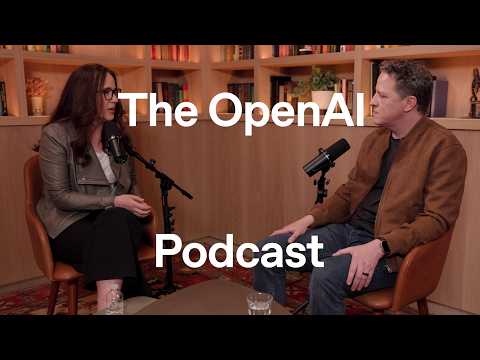
Published on YouTube by OpenAI on July 30, 2025, this podcast episode features OpenAI’s Head of Education, Leah Belsky, and host Andrew Mayne discussing how AI is redefining learning. According to the show description, the conversation explores personalized tutoring, new teaching models, and firsthand perspectives from college students Yabsera and Alaap on navigating the AI era.
## TL;DR
The discussion covers the global impact of ChatGPT as an educational platform, highlighting its adoption across campuses and its formal integration into national infrastructures like Estonia's school system. To shift AI from a passive answer machine to an active learning tool, OpenAI launched 'Study Mode,' which uses socratic questioning to build student confidence and drive long-term retention. Additionally, university students share how professors are evolving their curriculums, how advanced prompting helps stress-test ideas, and why mastering AI literacy is becoming a crucial requirement for future workforce readiness.
## Atmosphere & style
The podcast maintains an incredibly optimistic, forward-looking, and intellectual energy, blending professional expertise with casual, relatable campus anecdotes. The dynamics between the hosts and students feel collaborative and authentic, shifting effortlessly from hard-hitting debates about 'brain rot' and cheating to lighthearted jokes about Shrek fanfiction and advanced vocabulary. Listeners are left with a grounded sense of comfort and curiosity, driven by poignant personal stories that frame AI not as a sterile tool for complacency, but as an infinitely patient companion designed to unlock human potential.
## Key takeaways
- [00:22](https://www.youtube.com/watch?v=QCLkJra0PjY&t=22s) OpenAI's Head of Education, Leah Belsky, was challenged to pursue a massive moonshot: creating an AI that acts as an effective, lifelong tutor and companion accessible to everyone globally.
- [01:47](https://www.youtube.com/watch?v=QCLkJra0PjY&t=107s) ChatGPT has grown into the world's premier learning destination outside of traditional schooling, with learning being a top use case for its 600 million users.
- [01:47](https://www.youtube.com/watch?v=QCLkJra0PjY&t=107s) The "OpenAI for Countries" program launched to help nations like Estonia deploy AI as educational infrastructure and prepare their upcoming workforce for an AI-powered economy.
- [03:48](https://www.youtube.com/watch?v=QCLkJra0PjY&t=228s) Providing campus-wide AI access democratizes educational resources, but universities face low student adoption unless they explicitly guarantee that conversations are not being monitored.
- [03:48](https://www.youtube.com/watch?v=QCLkJra0PjY&t=228s) Early attempts to police student work using unreliable AI detectors severely damaged student-teacher trust and delayed effective shifts in homework and assessment design.
- [06:47](https://www.youtube.com/watch?v=QCLkJra0PjY&t=407s) OpenAI developed "Study Mode" using learning science to shift ChatGPT from an answer delivery machine into a Socratic tutor that uses active recall, quizzes, and dynamic back-and-forth Q&As.
- [09:39](https://www.youtube.com/watch?v=QCLkJra0PjY&t=579s) AI acts as a social leveler by expanding access to high-quality tutoring outside the classroom, heavily boosting student confidence and reducing intimidation.
- [11:35](https://www.youtube.com/watch?v=QCLkJra0PjY&t=695s) AI literacy is becoming critical for career readiness, with seven in ten employers preferring candidates with AI skills over those with a decade of traditional experience.
- [14:14](https://www.youtube.com/watch?v=QCLkJra0PjY&t=854s) The impact of AI depends heavily on usage; treating it as a passive shortcut prevents learning, much like using a scooter to train for a marathon prevents physical conditioning.
- [17:02](https://www.youtube.com/watch?v=QCLkJra0PjY&t=1022s) Advanced features like multimodal capabilities and voice mode make AI highly accessible for non-traditional learning, such as helping a dyslexic student engage with current events.
- [25:00](https://www.youtube.com/watch?v=QCLkJra0PjY&t=1500s) University professors are adapting to AI by shifting away from rote definitions toward open-format context application and creating two-track (AI vs. non-AI) assignments.
- [31:56](https://www.youtube.com/watch?v=QCLkJra0PjY&t=1916s) Students are increasingly reducing mindless social media scrolling in favor of utilizing targeted ChatGPT queries to support their daily productivity and learning.
- [35:34](https://www.youtube.com/watch?v=QCLkJra0PjY&t=2134s) The introduction of "deep research" capabilities allows users to bypass standard search engine limitations to surface highly specific, merit-backed academic arguments and authoritative sources.
- [36:55](https://www.youtube.com/watch?v=QCLkJra0PjY&t=2215s) Advanced users employ specific prompting tricks, including custom instructions and assigning critical personas, to eliminate unnecessary filler text and stress-test arguments.
- [41:03](https://www.youtube.com/watch?v=QCLkJra0PjY&t=2463s) The rapid advancement of AI-produced outputs is actively redefining the traditional boundaries and definition of academic cheating.
- [45:58](https://www.youtube.com/watch?v=QCLkJra0PjY&t=2758s) Future educational models will likely leverage multimodal AI systems for custom lectures while human teachers shift focus toward mentorship, social capital, and teaching adaptability.
- [48:39](https://www.youtube.com/watch?v=QCLkJra0PjY&t=2919s) The rise of generic AI writing has caused a backlash in niche online writing communities, driving up the premium and demand for authentic, experiential human writing.
- [51:12](https://www.youtube.com/watch?v=QCLkJra0PjY&t=3072s) A major systemic risk of AI adoption is the potential centralization of knowledge and truth, which could create closed informational loops and tight ideological echo chambers.
- [57:54](https://www.youtube.com/watch?v=QCLkJra0PjY&t=3474s) Advanced features like voice mode enable seamless, hands-free active recall and study sessions during routine daily tasks like commuting.
## Detailed walkthrough
### [00:00](https://www.youtube.com/watch?v=QCLkJra0PjY&t=0s) Introduction and Leah Belsky's Mission at OpenAI
Andrew Maine introduces the OpenAI podcast, setting the stage for a discussion on ChatGPT and education. He addresses the immediate, controversial questions surrounding the technology: "Does it cause brain rot? Is ChatGPT just a tool for cheating?" To explore these topics, Maine is joined by Leah Belsky, the Head of Education at OpenAI, alongside student users. Maine notes that ChatGPT has rapidly evolved to become "the world's largest learning platform."
Belsky shares her journey to OpenAI, which followed 15 years in the education sector, including roles at the World Bank and Coursera, where her focus was making education globally accessible. When she joined OpenAI, Chief Operating Officer Brad Lightcap challenged her to pursue a massive "moonshot." He told her to chase the dream of AI acting as an effective, lifelong tutor and companion for everyone, ensuring that once built, "everyone in the world can have it." Belsky found it highly inspiring that the head of revenue and go-to-market would prioritize a transformative, accessible moonshot over purely commercial goals.
[01:47](https://www.youtube.com/watch?v=QCLkJra0PjY&t=107s) Global Impact and "OpenAI for Countries"
Belsky highlights the massive scale of ChatGPT, noting that learning is one of the top use cases for its 600 million users, making it the world's premier learning destination outside of traditional schooling. Teachers are also major adopters, using the platform to reduce administrative burdens and enrich their classrooms.
To meet global demand, OpenAI recently launched the "OpenAI for Countries" program. Estonia—renowned for its top-tier PISA scores and excellent educational system—was one of the first to reach out. Estonian officials recognized the technology as an opportunity to push students further and empower teachers. Belsky explains that countries are approaching OpenAI with a dual focus: they want to deploy AI as core educational infrastructure, but they are also navigating an economic transition. To remain competitive in an AI-powered economy, governments realize they must graduate a workforce where every student has hands-on experience using AI before leaving secondary school.
- **600 million**: The number of active users on ChatGPT, making it a massive global learning destination.
- **OpenAI for Countries**: A program designed to help nations integrate AI into their core educational and economic infrastructure.
- **Estonia**: One of the first countries to partner with OpenAI to enhance its already high-performing school system.
[03:48](https://www.youtube.com/watch?v=QCLkJra0PjY&t=228s) Campus Adoption, Equity, and the "COVID Generation"
When discussing feedback from higher education, Belsky notes that institutions investing in AI feel a sense of pride in "equalizing access." Before university-wide deployments, wealthier students would purchase access to advanced models, while students on financial aid were left behind. Providing campus-wide access establishes AI as a shared, democratic infrastructure.
However, Belsky reveals a striking hurdle: students are often hesitant to use school-provided AI tools unless universities explicitly promise they are not monitoring their conversations. She explains that the current university demographic is the "COVID generation." Having spent formative school years on Zoom and Google Classroom with teachers monitoring their screens, these students are deeply skeptical of educational technology. To drive adoption, universities must actively build trust. Maine adds that early attempts at policing AI with "terrible" AI detectors damaged student-teacher relationships, often falsely accusing honest students of cheating. Belsky agrees that education got off on the "wrong foot" by focusing on policing rather than redesigning homework and assessments, though she notes the tide is turning as schools reverse initial bans.
[06:47](https://www.youtube.com/watch?v=QCLkJra0PjY&t=407s) The Launch of Study Mode
Maine asks about "Study Mode," a newly launched product designed to shift the ChatGPT experience from simply delivering answers to guiding students through the learning process. Belsky explains that in Study Mode, ChatGPT "answers socratically," personalizes responses to the user's learning level, asks follow-up questions, offers quizzes, and encourages deeper exploration.
The idea for Study Mode was sparked during a team trip to India. The OpenAI team observed that families there spend a massive percentage of their per capita income on private tutoring and after-school help, driven by a intense desire among young people to advance. This inspired Belsky's first experience building an AI product. Her team created a schema informed by learning science and pedagogical experts, working with global educators to compile "golden examples" of ideal tutor responses. These examples ensured the AI's tone was encouraging, curious, and tailored. Belsky views this as a starting point, imagining a future where Study Mode is multimodal—generating interactive biology diagrams or proactively nudging a student weeks later to study organic chemistry. Maine notes this would pair perfectly with spaced repetition for long-term retention.
[09:39](https://www.youtube.com/watch?v=QCLkJra0PjY&t=579s) AI as a Social Leveler and Building Student Confidence
Maine points out that private tutoring has traditionally been a major source of educational inequality, as wealthier families can easily afford extra help. Belsky agrees, asserting that AI's greatest educational impact is currently happening outside the classroom by equalizing access to adult-like support. For students without access to quality teachers, tutors, or parents who can help with homework, AI serves as a supportive companion.
To understand these dynamics, OpenAI formed the "ChatGPT Lab," a student user group. Belsky was struck by how much the tool boosted students' confidence. She shares an anecdote of a computer science student who used to get stuck, find textbooks incomprehensible, and feel like giving up. By using ChatGPT as a private tutor, she felt safe to ask questions, began to understand the material, and regained the confidence to continue her studies. Tutors do more than deliver content; they provide encouragement, which ChatGPT is uniquely positioned to scale.
[11:35](https://www.youtube.com/watch?v=QCLkJra0PjY&t=695s) Workforce Productivity and Coding as a Core Literacy
Belsky emphasizes that AI literacy is now essential for career readiness. Data shows that workers using AI are incredibly more productive, particularly in professional and financial services. Because of this, universities are deploying AI to ensure graduates possess these vital workforce skills. Belsky shares a striking statistic: "seven in 10 employers would rather hire someone with AI skills over someone who had up to 10 years of experience in a given function." Maine corroborates this from his own experience running a firm that helps companies deploy AI, noting he prioritizes practical AI skills over traditional resumes.
Furthermore, Belsky argues that coding is becoming a universal core literacy. With the rise of "vibe coding" and tools that simplify software creation, students should learn to use AI to build applications, generate images, and write code. Maine counters the common skeptical question, "why learn to code if the AI codes for you?" by comparing it to asking why we should learn to read if books are already written. Understanding, debugging, and creating code remains a vital skill. Belsky suggests that regular peer-to-peer meetups, where students or coworkers share what they have learned, is one of the most effective ways to master these tools.
- **7 in 10**: The proportion of employers who prefer hiring candidates with AI skills over those with up to a decade of traditional experience.
- **Vibe Coding**: The shifting landscape of software development where AI handles the bulk of syntax generation, making coding more accessible.
[14:14](https://www.youtube.com/watch?v=QCLkJra0PjY&t=854s) Addressing the "Brain Rot" Narrative
Maine brings up sensationalized headlines claiming that AI causes "brain rot" in students. Belsky acknowledges the concern but emphasizes that AI is ultimately a tool, and its impact depends entirely on how it is used. "Learning takes struggle," she explains. It requires actively working with and processing information. If students treat ChatGPT merely as an "answer machine" to bypass homework, they will not learn. The challenge for educators and developers is to design experiences that foster active engagement rather than passive consumption.
[14:44](https://www.youtube.com/watch?v=QCLkJra0PjY&t=884s) The Calculator Analogy and the Purpose of Studymode
The conversation centers on how educators and students can utilize AI to expand critical thinking and creativity rather than bypass the learning process. Leah draws a parallel to her daughter learning long division. While the process involves struggle and even tears, handing her a calculator or an AI to do the work for her would prevent her from learning the foundational math. However, once she masters advanced math, the calculator becomes a tool that allows her to perform at a much higher level. AI must be used similarly—as a personal tutor that drives feedback and helps students ask and answer questions in new ways.
The speakers laugh about a recent study making the news that concluded "if you copy paste answers you don't learn." Leah compares this obvious finding to training for a marathon: if someone gave her a scooter for her training runs, she wouldn't get into better shape. To address this, OpenAI created "Studymode" inside ChatGPT. This feature acts as a guided tutoring experience so students do not have to figure out how to prompt the model to quiz them or scaffold knowledge; instead, the model itself pushes, guides, and personalizes the learning journey.
- **The Marathon Analogy**: Using AI to copy-paste answers is like using a scooter on a marathon training run.
- **Studymode**: A dedicated mode in ChatGPT designed to scaffold knowledge, personalize context, and guide students toward answers without requiring complex prompting.
[17:02](https://www.youtube.com/watch?v=QCLkJra0PjY&t=1022s) The Infinite Patience of AI and a Personal Story of Accessibility
The speakers discuss the unique emotional and psychological benefits of AI in education. ChatGPT possesses "infinite patience" to discuss any niche topic, such as frogs, which can foster a budding herpetologist's passion when parents run out of energy to listen. Because no question asked of ChatGPT is ever treated as stupid, it builds the confidence and inspiration necessary for learning. Leah shares a deeply personal story about her dyslexic daughter, Zoe, which influenced her decision to join OpenAI.
Before joining the company, OpenAI launched its advanced voice mode. Leah handed her phone to Zoe, who was worried she wouldn't be able to keep up with current events because she couldn't read the newspaper like her brother. Zoe asked ChatGPT, "Can you tell me what's going on in the world?" The model responded warmly, asking Zoe what she was interested in, and launched into a conversation about space and robots. In that poignant moment, Leah realized AI would unlock the world for her daughter, easing her worries as a parent.
- **Key Attribute of ChatGPT**: It is infinitely patient and never judges a question as stupid, which helps build student confidence.
- **Zoe's Story**: Leah's dyslexic daughter used advanced voice mode to access current events, focusing on her interests in space and robots.
[19:29](https://www.youtube.com/watch?v=QCLkJra0PjY&t=1169s) Student Backgrounds: Communication, Business Analytics, and EECS
Leah turns the tables to ask the student hosts about their own academic journeys. Yabi explains that she recently completed her undergraduate degree in communication at USC and is about to enter her first semester of a master's program in business analytics, also at USC. She chose communication after taking general education courses to explore her interests, finding she loved the human component of research and theory. Later, statistics classes gave her a foundation in analytical thinking, prompting her to add a data science minor and eventually pursue business analytics to merge her creative and analytical sides.
Alot shares that he is a rising sophomore studying electrical engineering and computer science (EECS) at UC Berkeley. Growing up in the Bay Area, he was constantly exposed to technology. He describes himself as a very hands-on person who loves "fidgeting with circuits" and playing with code to solve real-world issues. When asked if he built things as a kid, Alot admits he built a small solar-powered car, followed later by a big one, preferring projects he can physically see and visualize.
- **Yabi's Academic Path**: BA in Communication (USC), Minor in Data Science, incoming MS in Business Analytics (USC).
- **Alot's Academic Path**: Rising sophomore in EECS at UC Berkeley; grew up in the Bay Area building solar-powered cars.
[21:24](https://www.youtube.com/watch?v=QCLkJra0PjY&t=1284s) First "Aha" Moments with AI: From Literature Essays to Shrek Fanfiction
When asked about their first big "aha" moments with AI, the students recall very different experiences. Alot remembers the buzz around ChatGPT during his junior year of high school. Though he had seen humanoid robots like Honda's ASIMO before, ChatGPT was the first interactive AI he could actually use. He and his classmates huddled around his computer, created an OpenAI account, and prompted it to write an essay on *To Kill a Mockingbird*. Seeing it generate a full essay instantly was a memorable, eye-opening moment, though he notes he did not actually use the essay for his assignment.
Yabi's first encounter was less academic and more mundane. During her first semester as a college sophomore, she saw social media posts about ChatGPT and decided to prompt it to write fanfiction. She admits to her roommates' amusement that she prompted it to write Shrek fanfiction. Although the early model's outputs were not as polished as they are today, the experience showed her that AI could be used for creative, day-to-day, and non-academic tasks. The host notes that writing fanfiction is a sweet and innocent way for fans to participate in a community, comparing the desire to write to learning to play the electric guitar—people do it because they love the process of creation itself.
- **Alot's "Aha" Moment**: Generating a *To Kill a Mockingbird* essay in high school.
- **Yabi's "Aha" Moment**: Generating Shrek fanfiction as a college sophomore, highlighting the tool's everyday, creative utility.
[25:00](https://www.youtube.com/watch?v=QCLkJra0PjY&t=1500s) How Professors are Adapting: Two-Track Assignments and Bigger Projects
The students discuss how their university professors are adapting to the presence of AI. Yabi notes that her communication courses have shifted away from simple "define this term" questions toward application, meaning, and intentionality. Exams have become more open-format, focusing on how concepts extrapolate to larger contexts. Alot shares a unique approach from his computer science classes at Berkeley. For a major project, the professor offered two tracks: an AI track and a non-AI track.
On the AI track, students were given a harder assignment, pushed further, and required to write a reflection on the AI's output. On the non-AI track, students completed a traditional project. Alot chose the non-AI track because he was still mastering the core concepts of the project and already had specific features he wanted to implement himself in his mini-game. The host supports this pedagogical evolution, arguing that while learning fundamentals like Python is crucial, forbidding AI entirely is almost like "malpractice." Instead of banning ChatGPT, professors should challenge students to build bigger, more ambitious projects, such as turning a traditional book report into a music video.
- **The Two-Track System**: Berkeley CS project offered an AI track (harder project + written reflection on AI outputs) and a traditional non-AI track.
- **Pedagogical Shift**: Moving from rote memorization and definitions to application, critical thinking, and larger-scale creative projects.
[29:08](https://www.youtube.com/watch?v=QCLkJra0PjY&t=1748s) The Power of "Study Mode" vs. Regular Chat
When trying to learn a new concept, the standard chat interface often falls short by simply dumping a massive, unstructured list of definitions. One speaker shares an anecdote about asking ChatGPT to teach them about AI. In regular chat mode, the model immediately served up a dry, overwhelming list of machine learning types. In contrast, when they switched to "study mode," the AI did not even answer the initial question directly. Instead, it countered with three diagnostic questions to gauge the user's current knowledge, their specific goals, and what they were currently working on. This interactive dialogue successfully narrowed the focus down to the specific topic of fine-tuning, breaking it down step-by-step.
The defining feature of study mode is its refusal to assume that a user has permanently retained information just because it was explained once. After a few minutes of conversation, the system will circle back with a "sanity check" or a quick mental quiz. This active recall forces the user to challenge themselves, which is precisely how neural connections are formed in the brain to solidify long-term memory. Study mode is highly recommended for anyone who wants to deeply understand and apply a concept rather than just receive a quick, passive answer.
- **Active Recall:** Study mode periodically issues "sanity checks" to test retention.
- **Diagnostic Onboarding:** Rather than dumping information, study mode asks clarifying questions about the user's background and goals.
- **Rigorous Learning:** It replaces long, passive blocks of text with a dynamic, back-and-forth Q&A.
---
[30:22](https://www.youtube.com/watch?v=QCLkJra0PjY&t=1822s) Conducting Side-by-Side Comparisons on Niche Topics
The speakers reveal their highly analytical approach to AI, admitting they run informal "AB tests" to compare ChatGPT's different modes. One speaker shares a research project they conducted on a highly niche topic: the history of EDM (Electronic Dance Music) and rave culture in California.
Normally, when using a Large Language Model (LLM) for research, the speaker maintains a healthy skepticism, acknowledging that LLMs are not inherently suited for rigorous research without strict guardrails. Their usual workaround is to find academic papers on Google, paste them directly into the chat, and instruct the model to draw *only* from those specific parameters to prevent hallucinations. However, when testing this rave culture topic in study mode, they found they did not even need to manually paste the source context. The structured, back-and-forth dialogue naturally narrowed the parameters and kept the research contained, resulting in a much more rigorous and effective learning experience than the long-winded outputs of the regular mode.
---
[31:56](https://www.youtube.com/watch?v=QCLkJra0PjY&t=1916s) AI's Impact on Career Confidence and the Shift Away from Social Media
When asked if these advanced AI tools give them more confidence about entering the workforce and adapting to the future, the response is highly optimistic but nuanced. The speakers see two distinct sides to OpenAI's developments. On one hand, there is the "super futuristic" agent mode, which might automate away some of the basic, repetitive tasks they used to perform during internships. On the other hand, there is study mode, which grounds the technology in academic growth. They view study mode as one of the most critical features in ChatGPT because it actively helps students learn, countering the common tendency of users to simply use AI to bypass the learning process to get a quick answer.
This shift toward active learning is also reflected in how the speakers manage their daily digital lives. Both have consciously scaled back their social media consumption. One speaker decided to quit TikTok about a year ago after realizing they were becoming too complacent, passively consuming highly digestible content without ever fact-checking or researching it. While they still use Instagram and other platforms to communicate with peers, ChatGPT has become far more salient in their daily routine. Because school and work occupy roughly 80% of their time, they find themselves using ChatGPT much more than social media.
Another speaker echoes this sentiment, noting that social media has tried to become a "one-stop shop" for shopping, news, and social updates, which often leads to hours of mindless scrolling. By replacing aimless browsing with targeted ChatGPT queries, they can get highly specific answers to their questions. They now consciously relegate social media strictly to leisure and relaxation, refusing to mix productivity and entertainment in a single app.
---
[35:34](https://www.youtube.com/watch?v=QCLkJra0PjY&t=2134s) Deep Research and the Evolution of AI Content Quality
The host notes a major turning point that occurred with the release of "deep research" capabilities, where the quality of AI-generated answers began to surpass what could easily be found through standard search engines. The host shares a personal example of using deep research to investigate a historical World War II story about a group of crocodiles massacring people, only for the AI to return a comprehensive, nuanced report explaining that the legend was largely overblown.
One of the student speakers recalls how much the technology has improved since they first used ChatGPT in high school. Back then, the model could not access the live web; pasting a URL would prompt an error message of "Oh, I can't read that," forcing the student to manually copy and paste massive blocks of text. Today, deep research allows users to find highly specific, academic, and merit-backed research. By instructing the model to search only authoritative sources, they can formulate sophisticated arguments and generate high-quality citations.
---
[36:55](https://www.youtube.com/watch?v=QCLkJra0PjY&t=2215s) Prompting Tricks: Personas, Critical Actors, and Custom Instructions
To get the most out of ChatGPT, the speakers employ several advanced prompting techniques. One major challenge with default LLM behavior is that the model's initial responses are often "overwhelmingly positive" and agreeable, which is not helpful when trying to stress-test an argument or brainstorm a research paper. To counter this, they prompt the AI to act as a "critical actor" or to embody specific personas.
For example, during a research project on conspiracy theories, a speaker asked ChatGPT to invent a conspiracy theory based on concepts they were studying. The model elegantly came up with a theory about "airport mirrors" monitoring passenger activity. To analyze the theory critically, the speaker instructed the AI to adopt various personas across the political spectrum, asking: "How would this person react to it? How would this person critique it? How would this person believe in it?" This exercise allowed them to view the topic through a holistic, multi-faceted lens.
Another key strategy is utilizing the "Personalize GPT" settings to establish permanent custom instructions. To eliminate unnecessary filler, one speaker uses instructions such as: "no fluff, like just get to the point, be brutally honest with me." They also frequently command the model to adopt high-level professional personas, such as acting as a consultant at a top-tier firm or a highly creative research professor, which consistently yields superior, more sophisticated solutions.
- **Custom Instructions:** "No fluff, like just get to the point, be brutally honest with me."
- **Persona Simulation:** Instructing the model to act as a top-firm consultant or a creative professor to elevate the quality of the output.
- **Multi-Perspective Analysis:** Prompting the model to simulate debates or critiques from different political or professional viewpoints.
---
[41:03](https://www.youtube.com/watch?v=QCLkJra0PjY&t=2463s) Redefining "Cheating" and Advice for the Next Generation
The conversation turns to the massive misconceptions surrounding AI in education, particularly the widespread panic among educators that students will inevitably use these tools to cheat. The speakers argue that the education system is reaching a critical inflection point. As AI-produced work continues to improve—to the point where it may soon outperform average human output—it becomes counterproductive to simply dismiss or ban the technology. Instead, teachers and students must adapt, finding new ways to demonstrate personal growth while still leveraging AI to its fullest potential.
In fact, the very definition of academic dishonesty is shifting. "I feel like we're like kind of redefining what like cheating means," one speaker notes, "So, I feel like I don't even know what cheating means anymore."
When asked what advice they would give to high school students today, one speaker shares a candid conversation they had with college friends. One friend admitted, "I feel like if I had ChatGPT in high school, I wouldn't be where I am today... I feel like I would just be stupider." While there is a valid fear that over-reliance on AI can make students complacent, the speakers are observing an encouraging, anecdotal shift. Students are moving away from using AI as a shortcut or a "cheat use case" to take the easy path, and are instead embracing it as a powerful tool to supercharge their productivity and active learning.
### [44:05](https://www.youtube.com/watch?v=QCLkJra0PjY&t=2645s) Intrinsic Motivation and the Dangers of Complacency
Using ChatGPT effectively requires a strong sense of intrinsic motivation and personal accountability. It is easy for students to use AI as a crutch to simply get answers rather than to understand the underlying concepts, which is a particularly difficult temptation to resist in high school. However, when used correctly, AI allows students to cut through the noise and focus on things they actually enjoy rather than just doing assigned busywork.
There is a real danger of complacency when students rely too heavily on AI. If the tool does all the work, students will find themselves lacking the necessary knowledge when they are finally challenged on a test. On the flip side, pushing AI to its limits can dramatically accelerate what a single person can accomplish. For example, building an image classifier project in high school used to require reading through endless documentation and taking a long time to understand. Today, a student can utilize AI to build, iterate, and produce a much better product in a fraction of the time. High schoolers should dive deep into their passions using these tools, but they must still respect and learn the core concepts taught by their teachers.
- **The Crutch vs. Tool Dilemma:** AI should be used to understand things better, not just to bypass the learning process.
- **Accelerated Development:** Projects like image classifiers that used to take weeks of reading documentation can now be built and iterated on rapidly with AI assistance.
### [45:58](https://www.youtube.com/watch?v=QCLkJra0PjY&t=2758s) The Future of AI in Education and the Hybrid Model
Eventually, education and lectures may be fully delivered by AI. Because every student learns differently, a multimodal AI system capable of visualizing concepts and generating custom, on-the-fly educational videos will likely teach students better than traditional lectures. In this future, human teachers will shift their focus toward teaching social skills, building social capital, providing mentorship, and instructing students on how to adapt to AI. In a rapidly changing job market, "adaptation is the new job security."
While AI can replace textbooks and act as an incredibly efficient teaching assistant, the human element remains irreplaceable. There is immense value in being mentored by a computer science or electrical engineering teacher who has actually worked in the field. The ideal future is a hybrid model where AI provides a highly accessible, standardized baseline of knowledge, while human mentors guide students on how to apply that knowledge, how to think about ethics, and how to use technology to help others.
- **Multimodal AI Tutors:** Future AI systems will generate custom visual content and videos tailored to individual student learning styles.
- **Shift in Teaching Roles:** Teachers will transition from lecturing content to focusing on mentorship, social skills, and ethical application.
- **Job Security:** Adaptability is identified as the most critical skill for students entering the future job market.
### [48:39](https://www.youtube.com/watch?v=QCLkJra0PjY&t=2919s) AI Agents and the Evolution of Creative Work
In the future, AI will continue to simplify everyday tasks. While some people worry about AI achieving consciousness, that reality is likely a long way off. Instead, the near future will see the deployment of highly capable AI agents. Some companies have already developed deployable AI software engineers, but the next step is a single AI agent capable of orchestrating an entire team—acting as a software engineer, marketer, and designer all at once. To prevent dangerous outcomes, humans must remain in the loop rather than letting AI run entirely unsupervised.
For creative and external-facing roles like marketing, the next decade will involve navigating the tension surrounding AI-generated content. Currently, there is a strong backlash in niche communities like Substack against AI-generated writing, with readers criticizing generic prose and the over-use of specific punctuation like em dashes. This backlash has actually increased the value of autobiographical, experiential writing. While generic articles can be written by anyone or anything, a writer sharing their personal, real-world experience holds unique value. Over the next five years, AI-generated content may become the accepted norm, with human marketers focusing primarily on providing the creative inputs to guide the AI's output.
- **Orchestration Agents:** The future lies in AI agents that can coordinate multiple roles (engineering, marketing, design) simultaneously.
- **The "Em Dash" Backlash:** Niche writing communities on platforms like Substack frequently critique AI-generated text for its formulaic style and punctuation choices.
- **Premium on Authenticity:** As generic content becomes fully automated, readers place a much higher premium on autobiographical and experiential writing.
### [51:12](https://www.youtube.com/watch?v=QCLkJra0PjY&t=3072s) Fears of Centralized Truth and Educational Loopholes
The rapid rise of AI brings distinct concerns from different perspectives. One major fear is that people will hesitate too much, miss out on learning these tools, and fail to realize that just six months of dedicated practice with AI can make someone incredibly valuable to a company. Conversely, there is a fear that students will use AI to exploit loopholes in traditional education to bypass learning entirely. If students rely on AI to solve every coding or conceptual problem, they will struggle in job interviews where employers look for fundamental problem-solving skills, conceptual understanding, and human adaptability.
Another profound concern is the centralization of knowledge and truth. Currently, knowledge is fragmented across many sources, and the beauty of learning lies in gathering those pieces to build an understanding. If chatbots become the sole search engines and central arbiters of truth, it could create a dangerous feedback loop where everyone references the same centralized sources. This risk is amplified by the emergence of ideologically themed chatbots (such as those tailored specifically for far-right or far-left activists), which can trap users in tight echo chambers. To combat this, education must place a heavier emphasis on critical thinking, challenging assumptions, and using AI to explore counter-examples and diverse perspectives.
- **The Interview Reality Check:** Employers do not just want to know if a candidate can prompt an AI to solve a problem; they test for core conceptual understanding and adaptability.
- **Centralization of Truth:** Relying on a single chatbot as a search engine risks creating a closed feedback loop of information.
- **Echo Chamber Chatbots:** The rise of politically themed chatbots threatens to lock users into ideological echo chambers, making critical thinking education more vital than ever.
### [55:04](https://www.youtube.com/watch?v=QCLkJra0PjY&t=3304s) Favorite Prompts: Personalized Coaching and Bookstore Optimization
AI is highly effective when personalized with specific user data. For instance, one creative way to use ChatGPT is to input personal dietary preferences and health goals, take a photo of a grocery receipt, and have the AI objectively "grade" the grocery trip based on those goals. Similarly, because ChatGPT retains memory, it can design highly customized physical therapy and exercise regimens. For someone with chronic knee pain from playing basketball, the AI can build a workout routine that avoids specific painful movements while still targeting leg strength, offering a level of personalization that generic fitness plans cannot match.
Another powerful application of AI is optimizing daily logistics to save time. In one instance, a student used ChatGPT to plan a highly efficient, 15-minute trip to "The Last Bookstore" in downtown Los Angeles, where parking is notoriously difficult. By feeding the AI a list of 15 books, the library's organizational system, the authors' last names, and the genres, the AI generated the absolute optimal physical route through the store to grab the books and get out before getting a parking ticket.
- **Grocery Grading:** Users can upload photos of grocery receipts to have ChatGPT analyze their purchases against specific nutritional and vitamin goals.
- **Customized Physical Therapy:** ChatGPT can design workout regimens around highly specific joint pain and physical limitations.
- **Logistical Optimization:** The AI successfully mapped out a physical path through a complex bookstore layout to minimize shopping time down to 15 minutes.
### [57:54](https://www.youtube.com/watch?v=QCLkJra0PjY&t=3474s) Learning on the Go with Voice Mode
Voice mode offers incredible convenience for learning during mundane tasks like driving. One student observed a friend in San Francisco using voice mode while driving to ask about tech billboards they passed, instantly learning what the advertised companies did. This inspired the student to use voice mode during their daily summer course commute. By engaging in a back-and-forth active recall study session with the AI while driving, they arrive home with their brain already active and prepared to tackle their assignments. The scarily humanlike nature of the voice feature makes the interaction feel like a genuine conversation with a study partner.
- **Commute Learning:** Voice mode allows students to conduct hands-free active recall and study sessions while driving.
- **Real-Time Inquiry:** Users can use voice commands to instantly query the AI about things they observe in their physical environment, such as billboards or signs.
[59:07](https://www.youtube.com/watch?v=QCLkJra0PjY&t=3547s) Wrapping Up and Looking Forward with Optimism
The speakers wrap up their conversation by expressing deep gratitude for the opportunity to discuss AI, particularly its role in the education space, which they describe as an incredibly "salient" and timely subject. The group shares a lighthearted moment, joking about the use of sophisticated vocabulary like "salient" before reflecting on the true depth of their discussion. They express mutual appreciation for having had the chance to tackle both "hard-hitting topics" and more "optimistic topics" throughout their dialogue, finding a healthy balance between the challenges and the promises of technological advancement.
Looking ahead, the overall sentiment remains highly positive and forward-looking. One speaker emphasizes their strong optimism for the future, noting that "the more we can help our friends adapt and find their own place with it, the better." This highlights a collective desire to guide others through the transition into an AI-integrated world, ensuring that people are not left behind but are instead empowered to find their unique footing alongside these emerging technologies.
- The speakers highlight the importance of having a platform to discuss AI's role in education due to how "salient" the topic has become.
- The conversation successfully balanced "hard-hitting topics" with "optimistic topics" regarding the future of technology.
- The ultimate goal moving forward is to help peers and friends adapt to AI so they can "find their own place with it."
## Notable quotes
> [00:22](https://www.youtube.com/watch?v=QCLkJra0PjY&t=22s) everyone in the world can have it — Brad Lightcap
> [11:35](https://www.youtube.com/watch?v=QCLkJra0PjY&t=695s) seven in 10 employers would rather hire someone with AI skills over someone who had up to 10 years of experience in a given function — Leah Belsky
> [11:35](https://www.youtube.com/watch?v=QCLkJra0PjY&t=695s) why learn to code if the AI codes for you? — Andrew Mayne
> [14:44](https://www.youtube.com/watch?v=QCLkJra0PjY&t=884s) if you copy paste answers you don't learn
> [17:02](https://www.youtube.com/watch?v=QCLkJra0PjY&t=1022s) Can you tell me what's going on in the world? — Zoe
> [36:55](https://www.youtube.com/watch?v=QCLkJra0PjY&t=2215s) no fluff, like just get to the point, be brutally honest with me
> [41:03](https://www.youtube.com/watch?v=QCLkJra0PjY&t=2463s) I feel like we're like kind of redefining what like cheating means
> [41:03](https://www.youtube.com/watch?v=QCLkJra0PjY&t=2463s) So, I feel like I don't even know what cheating means anymore
> [41:03](https://www.youtube.com/watch?v=QCLkJra0PjY&t=2463s) I feel like if I had ChatGPT in high school, I wouldn't be where I am today... I feel like I would just be stupider — Friend of student speaker
> [45:58](https://www.youtube.com/watch?v=QCLkJra0PjY&t=2758s) adaptation is the new job security
> [59:07](https://www.youtube.com/watch?v=QCLkJra0PjY&t=3547s) the more we can help our friends adapt and find their own place with it, the better
## Mentioned
Leah Belsky, OpenAI Podcast, OpenAI, Andrew Mayne, Yabsera, Alaap, ChatGPT, World Bank, Coursera, Brad Lightcap, Estonia, PISA, Zoom, Google Classroom, Study Mode, India, ChatGPT Lab, Python, USC, UC Berkeley, ASIMO, Honda, To Kill a Mockingbird, Shrek, Google, TikTok, Instagram, Substack, The Last Bookstore, Los Angeles, San Francisco
ChatGPT用户达6亿,OpenAI推进国家基础设施计划
生成式AI迅速融入全球教育体系,要求教学重点从防范学生作弊转向重新设计考核方式,此前早期的防作弊软件损害了课堂信任。
本次讨论探讨了ChatGPT作为教育平台的全球影响,重点介绍了它在大学校园中的普及,以及被正式纳入爱沙尼亚学校系统等国家基础设施的情况。为了推动AI从被动的答题工具转变为主动学习工具,OpenAI推出了“学习模式”(Study Mode),通过苏格拉底式提问帮助学生树立信心并促进长期记忆。此外,大学生们还分享了教授如何革新课程设置、高级提示词如何协助对观点进行压力测试,以及为什么掌握AI素养正在成为应对未来职场需求的关键要素。
OpenAI 教育主管 Leah Belsky 正致力于打造全球普及的终身 AI 导师;目前 ChatGPT 活跃用户已达 6 亿,自主学习已成为该平台最核心的使用场景之一。 (1:47)
OpenAI 推出“OpenAI for Countries”项目,爱沙尼亚等国率先合作,旨在将 AI 作为核心教育基础设施并为未来经济储备掌握 AI 技能的劳动力。 (1:47)
高校推广 AI 能有效拉平资源差距,但在经历不可靠 AI 检测工具的误伤后,学校正从单纯防范作弊转向重塑作业与考核设计,并需承诺不监控对话以重建学生信任。 (3:48)
OpenAI 研发并上线“学习模式”(Study Mode),基于认知科学采用苏格拉底式提问、诊断测验和主动回忆,促使 ChatGPT 从“直接给答案”转向启发式深度辅导。 (6:47)
AI 素养已成为职场核心竞争力,调研显示十分之七的雇主更倾向于录用具备 AI 技能的候选人,而非拥有十年传统工作经验的人选。 (11:35)
Reading summary
Leah Belsky, Head of Education at OpenAI, argues alongside student users that artificial intelligence is shifting from an anxiety-inducing shortcut into fundamental educational infrastructure. They contend that AI's pedagogical value depends on moving away from passive answer retrieval toward active Socratic scaffolding, while balancing automated tutoring with human mentorship.
Democratizing Access and Overcoming Student Distrust (1:47)
Belsky highlights that learning has become a primary use case across ChatGPT's 600 million active users, prompting national partnerships like the 'OpenAI for Countries' initiative launched with Estonia to bolster economic competitiveness. In higher education, institution-wide deployments aim to democratize access, closing the gap between affluent students who can afford private model subscriptions or personal tutors and peers receiving financial aid.
However, institutional adoption faces student resistance rooted in surveillance concerns. Having experienced intense digital monitoring over Zoom and Google Classroom during the pandemic, the 'COVID generation' hesitates to adopt university-provided tools without explicit guarantees of conversational privacy. Both Belsky and podcast host Andrew Maine emphasize that early institutional reliance on flawed AI detection software damaged student-teacher trust, reinforcing the need to replace punitive policing with structural curriculum integration.
Socratic Scaffolding Versus the Answer-Machine Trap (6:47)
Addressing fears that AI encourages intellectual complacency, Belsky stresses that learning requires cognitive struggle, likening students who copy-paste solutions to runners using an electric scooter to train for a marathon. Drawing from observations of private tutoring expenditures in India, OpenAI created 'Study Mode' alongside pedagogical experts. Rather than delivering direct answers, the feature prompts users with diagnostic questions, scaffolds concepts step-by-step, and triggers periodic active recall quizzes to solidify long-term retention.
Classroom instruction is evolving in tandem. Instead of banning generative tools, professors are developing new assessment models, such as a UC Berkeley computer science course offering a two-track project where students who choose the AI track complete more rigorous assignments coupled with written critiques of the model's outputs. Students also report countering the default agreeable tone of language models by implementing custom instructions like 'no fluff, be brutally honest' and prompting the AI to adopt critical academic or adversarial personas.
Workforce Skills, Coding Literacy, and Shifting Evaluation (11:35)
Belsky asserts that applied AI literacy has become essential for career readiness, citing figures showing that seven in 10 employers prefer hiring candidates with AI skills over those possessing up to 10 years of traditional domain experience. As 'vibe coding' and generative assistants handle routine syntax generation, coding is evolving into a broader literacy centered on problem decomposition, debugging, and high-level architecture.
This transformation is simultaneously redefining academic honesty. While student speakers note that AI accelerates ambitious work—enabling high schoolers to build image classifiers in hours rather than weeks of parsing documentation—it presents risks for those relying on it as a conceptual shortcut. Job candidates face evaluation standards where employers bypass simple prompting output to probe fundamental understanding, exposing students who used automation to skip core problem-solving practice.
Systemic Risks and the Hybrid Mentorship Model (45:58)
Looking toward long-term educational implications, the speakers raise concerns regarding the centralization of truth. If individual conversational interfaces replace fragmented web searches as primary information filters, or if ideologically customized chatbots confine users to political echo chambers, critical analysis could suffer. Simultaneously, a cultural backlash against formulaic AI-generated prose—such as critiques within writing communities on Substack—is driving a premium on authentic, experiential human perspectives.
To navigate these tensions, the panel envisions a hybrid educational model. In this framework, multimodal AI systems handle routine lectures through personalized, on-demand visualization, allowing human educators to concentrate on ethical application, professional socialization, and specialized field mentorship. As autonomous agents begin orchestrating multi-role tasks across engineering and design, adaptability is framed as the decisive factor in long-term career resilience.
The conversation concludes that while AI tools offer infinite patience and accessibility for non-traditional or neurodiverse learners, technological success depends on learner motivation and institutional redesign. The critical unresolved challenge is whether schools can prevent knowledge centralization and discourage superficial shortcuts before automated tools erode foundational analytical competence.
[0:22] Brad Lightcap: everyone in the world can have it
[11:35] Leah Belsky: seven in 10 employers would rather hire someone with AI skills over someone who had up to 10 years of experience in a given function
[11:35] Andrew Mayne: why learn to code if the AI codes for you?
[14:14] Leah Belsky: Learning takes struggle
[14:44] if you copy paste answers you don't learn
[17:02] Zoe: Can you tell me what's going on in the world?
[36:55] no fluff, like just get to the point, be brutally honest with me
[41:03] I feel like we're like kind of redefining what like cheating means
[41:03] So, I feel like I don't even know what cheating means anymore
[41:03] Friend of student speaker: I feel like if I had ChatGPT in high school, I wouldn't be where I am today... I feel like I would just be stupider
[45:58] adaptation is the new job security
[59:07] the more we can help our friends adapt and find their own place with it, the better
Original transcript
[0:00] Hello, I'm Andrew Maine and this is the
[0:02] OpenAI podcast. Today we're going to
[0:04] talk about chat GPT and education.
[0:07] Does it cause brain rot? Is chat GPD
[0:10] just a tool for cheating? We're going to
[0:12] speak with Leah Bellski, head of
[0:13] education at OpenAI, and a couple
[0:15] students who are active users. Chat GPD
[0:18] at this point is now the world's largest
[0:20] learning platform.
[0:20] >> It allows you to kind of cut through the
[0:22] noise and do things that you actually
[0:23] enjoy. you know, Chachi was going to
[0:25] unlock the world for this girl and I was
[0:28] not going to have to be worried in the
[0:29] same way.
[0:30] >> When it comes to learning and exploring
[0:31] ideas, I asked Chachi BT a lot of those
[0:33] questions.
[0:36] >> Tell me about your journey to OpenAI.
[0:39] >> You know, I think ultimately Open AI is
[0:42] about a mission and about its people.
[0:44] And so I'll tell you at least my my
[0:46] story. Um so I came to open AI after
[0:48] spending 15 years in the education space
[0:51] starting at the World Bank and then at
[0:53] Corsera focused on this mission of
[0:55] making education accessible to the
[0:57] world. Um and when I and I took on this
[1:00] job Brad our COO he brought he brought
[1:02] me into the office and you know I was
[1:04] wondering what what the exact focus of
[1:06] education to open AI would be and and he
[1:08] sat me down and he said Leah you know I
[1:10] want you to go after the moonshot. We
[1:12] all have this dream that that AI could
[1:15] improve human potential, that it could
[1:17] be an effective tutor and a companion
[1:19] for people throughout their lives. go
[1:21] after that dream
[1:23] >> and make sure that once we build that
[1:25] product everyone in the world can have
[1:26] it
[1:27] >> and that's really been the the north
[1:28] star and I thought that was meaningful
[1:30] you know from that the head of go to
[1:32] market the head of revenue
[1:33] >> to say go after the biggest
[1:35] transformative moonshot so that the
[1:37] highest and hopes and dreams that we all
[1:39] have for AI and education can be
[1:40] realized
[1:42] >> that's pretty inspiring and and hopeful
[1:44] the idea of trying to make it as
[1:45] widespread as possible
[1:47] how do you see basically you
[1:51] global impact. How are we gonna, you
[1:53] know, see the effects of this around the
[1:55] world?
[1:56] >> Yeah. Well, first thing to say is like
[1:58] chat at this point is now the world's
[2:00] largest learning platform. Learning is
[2:03] one of the top use cases on the platform
[2:05] at 600 million users. That means it is
[2:07] the world's learning destination and
[2:10] that means learning outside of the
[2:11] educational system. I really see Chachi
[2:14] as a new frontier for learning. Um but
[2:16] we also see that teachers are major
[2:18] adopters of the of the of the platform
[2:20] and they are using that both to get rid
[2:22] of the administrative burden of their
[2:24] own work but also to to bring it into
[2:26] their classroom.
[2:27] >> What's been striking is to just see the
[2:29] global demand for chat GBT. So a few
[2:32] weeks ago we launched a a program called
[2:34] open AI for countries and we've had
[2:36] ministries all over the world reach out.
[2:38] Estonia, the country of Estonia was
[2:40] actually one of the first countries that
[2:41] reach out.
[2:42] >> Estonia makes sense.
[2:43] >> Estonia makes sense. They are the they
[2:44] are the top of the world. They have some
[2:45] of the best PISA scores. They have an
[2:47] amazing educational system. Um but they
[2:49] were the first to realize, wow, this is
[2:52] an opportunity to like push students
[2:54] even further and to empower our teachers
[2:56] even further. And after Estonia, it's
[2:58] been one country after another. And
[3:00] what's interesting is that when the
[3:02] countries come to us, you know, they're
[3:04] coming to us because they want to deploy
[3:06] AI as core infrastructure through their
[3:08] education system, but they're also
[3:10] coming to us because they're feeling
[3:12] like the impact of an economic
[3:14] transition.
[3:15] >> And they're realizing that if they are
[3:17] going to be developing an AI powered
[3:19] economy, they need to they need to
[3:21] graduate a workforce that need learns
[3:23] how to use AI. And so it's not just
[3:25] about creating new AI courses. they need
[3:27] to make sure that every student who
[3:29] leads their secondary school system has
[3:32] used AI as part of their class. Um, and
[3:34] so it's that it's that dual focus of
[3:36] these countries. They're looking to be
[3:38] economically competitive. They want to
[3:40] build an AI ready workforce. They want
[3:42] to be successful in a new AI powered
[3:44] economy and they want to improve their
[3:46] education system.
[3:48] >> What are you hearing from educational
[3:50] partners and institutions?
[3:52] >> So, we're hearing a couple things. I
[3:53] think those that have made the
[3:55] investment feel a certain pride that
[3:57] they have equalized access to AI on
[4:00] their campuses. They are they really
[4:02] believe that AI should be core
[4:04] infrastructure for the campus and that
[4:06] it should be open to everyone. They're
[4:08] conscious that you know before
[4:09] introducing AI and many campus you
[4:11] you'll be find a situation where those
[4:13] who are not on financial aid will be
[4:15] buying access to the latest models and
[4:17] those who don't have access to resources
[4:19] um will not. So there's a there's a
[4:21] pride in in driving equal access. I
[4:24] think there institutions are also hungry
[4:27] to engage with each other and
[4:28] collaborate and understand what are the
[4:30] top five or 10 ways in which faculty are
[4:32] using the tech and bringing it into the
[4:34] classroom. The other type of feedback
[4:36] that we're getting though is that
[4:38] >> students are hesitant to use some of the
[4:41] school provided AI and unless
[4:44] universities make a big point of telling
[4:47] students that we're not monitoring this
[4:49] tech, we're not looking at your
[4:50] conversations,
[4:52] >> students are are hesitant to adopt it.
[4:54] You know what's striking is that the
[4:56] generation of students that is in
[4:58] universities right now is the COVID
[5:00] generation, right? they are used to
[5:03] having some of their first experiences
[5:04] with PACB about like Zoom and Google
[5:07] Classroom and having you know teachers
[5:09] screaming at them or monitoring and
[5:11] telling them they're not doing that
[5:12] homework while they're all sitting at
[5:13] home going crazy and so they're hesitant
[5:17] about educational technology and
[5:19] universities are realizing that if they
[5:21] want to engage with students and help
[5:23] students learn in new ways with Chhat
[5:24] GPT they need to build an actual trust
[5:26] with students. Yeah, I I mentioned this
[5:29] before like I was frustrated because
[5:30] like the AI detectors were terrible.
[5:32] Like there were these AI detector like
[5:34] one I could show somebody how to write
[5:37] text that would be flagged as AI and
[5:39] also how to prompt a thing to avoid it
[5:41] and and that just created this, you
[5:43] know, relationship that started off if
[5:45] you're using a bad tool like that, you
[5:46] know, you take one or two students who
[5:48] didn't cheat and told they're cheaters,
[5:50] that's just
[5:51] >> Yeah. In in many institutions, I would
[5:54] say we got off onto the wrong foot with
[5:56] AI in the classroom. Instead of trying
[5:58] to be explicit and establish clear
[6:01] policies on when students should use the
[6:03] tech and when they shouldn't, teachers
[6:04] sort of hid from it.
[6:06] >> Um, we started with policing its use
[6:08] rather than actually sitting there and
[6:10] figuring out how do we actually want to
[6:11] redesign the way we assess students and
[6:13] the way we assign homework.
[6:15] >> Um, but I think we're moving we're
[6:17] moving beyond that point. Yeah, I've
[6:18] been encouraged and we we saw I remember
[6:20] when I was here, we had one school
[6:22] system that was like had kind of a
[6:23] knee-jerk reaction said we're banning it
[6:26] and it was like a few months later they
[6:27] had enough teachers within there going
[6:29] hey no this is a really good tool we
[6:31] know how to teach to this and they said
[6:34] okay we're we're going to reverse that
[6:35] now and that was it was a it was very um
[6:40] good to see energized teachers embrace
[6:43] this and say okay and wanting their
[6:45] students to they knew this was going to
[6:46] be part of the future Sure. Well, now
[6:48] there's study mode. Could you talk a
[6:49] little about that?
[6:50] >> Um, so study mode is a a product we just
[6:53] launched. Um, and it is intended to take
[6:55] really improve learning in ChachiBT and
[6:58] take it from an experience that is just
[7:00] focused on giving answers to really
[7:02] guiding a student to get to the answers.
[7:04] So study in study mode uh chach answers
[7:07] socratically. It personalizes responses
[7:10] to sort of the level of your learning.
[7:12] It understands the context of what
[7:14] you're learning. It asks great follow-up
[7:17] questions. It asks if you want to have a
[7:18] quiz on the topic. It encourages you to
[7:21] >> to go deeper. Um, and ultimately this is
[7:24] this is a a first step to really leaning
[7:26] into this idea of of chachi as a as a
[7:30] tutor.
[7:30] >> So, how did this come about? Was there
[7:32] conversations with educators and parents
[7:34] about this?
[7:35] >> Um, so study mood actually um came out
[7:37] of a trip that our team took in India.
[7:40] >> Oh, wow.
[7:41] >> Um, where they had a few where they
[7:43] realized a few things. one they realized
[7:45] that in a place like India, families
[7:47] were spending a huge percentage of their
[7:48] per capita income on tutors and after
[7:51] school help. Um they also realized that
[7:54] there was just a tremendous will and
[7:55] desire among young people to get to get
[7:58] to the next level. And so you know we
[8:00] began this journey of like what would it
[8:02] take to actually get Chachi PT and turn
[8:04] Chachi into an even better tutor than it
[8:06] already is. And so we started by you
[8:09] know and this was my first my first
[8:10] experience building like an AI product.
[8:12] So we started actually building a a
[8:14] schema informed by learning science and
[8:16] informed by pedagogical experts that
[8:18] said how should chachu te respond if
[8:21] it's not just going to give answers but
[8:22] it's going to actually help you you
[8:24] learn. Um and then we worked with open
[8:26] with experts around the world to gather
[8:28] what we call golden examples
[8:30] >> of how chat would ideally respond. Is
[8:32] the tone encouraging? Does it encourage
[8:34] curiosity? Does it um cater a response
[8:38] to the level of a student's need? And
[8:41] through that process of sort of going
[8:43] back and forth and training the model,
[8:45] that's how study mode study mode
[8:47] emerged. And I would say, you know,
[8:48] we're we're super excited to see the
[8:50] feedback on this product out in the
[8:52] world, but it's also very much a
[8:54] beginning.
[8:54] >> Yeah, it's a starting point.
[8:55] >> It's a starting point. You know, we've
[8:57] we're really only in the early stages of
[8:59] pushing the way in which the model can
[9:01] respond in multimodal ways. You know,
[9:03] one day you could imagine asking study
[9:04] mode to give you samples of a sort of a
[9:07] biology assignment to explain organic
[9:09] chemistry and to pop up interactive
[9:11] diagrams or to nudge you, you know, 3
[9:14] weeks down the road, you remember you
[9:15] told me that you wanted to ace this
[9:17] year's organic chemistry exam. Can shall
[9:20] we dig back into the topic now? It could
[9:22] be proactive and really sort of travel
[9:25] with you over time. And I think over
[9:27] time the hope is to get study mode to
[9:29] that point.
[9:30] >> That'd be great. Yeah, I could see that
[9:31] combined with space repetition and you
[9:32] could have just a really good tool that
[9:34] doesn't just help you pass the test but
[9:37] help you remember it for a long time.
[9:39] >> And I think you you touched about
[9:40] something there which is that in you
[9:44] know certain households they can afford
[9:46] to have private tutors tutoring programs
[9:48] great and we talk about kind of the
[9:50] differences in educational
[9:52] opportunities. You can have a bunch of
[9:54] kids that go to the same school, but the
[9:55] parents that are able to have the kid go
[9:57] to a tutor are going to be in a
[9:59] situation where their child's going to
[10:00] have higher chance of an outcome. Now,
[10:02] you see this as a leveler.
[10:04] >> Look, I think the first place where AI
[10:06] is having a huge impact in education is
[10:09] not even in the classroom. It's outside
[10:10] of the classroom where it's equalizing
[10:13] access to what's really like adult
[10:15] support. There are many students out in
[10:17] the world who don't have access to a
[10:18] quality teacher. They don't have access
[10:19] to tutors. they don't have access to
[10:21] parents who are going to sit down and
[10:22] help them. And now with AI, they can
[10:25] have this companion who can encourage
[10:28] them, who can give feedback on their
[10:29] homework, on their writing, who can help
[10:31] help them answer tough questions. Um, we
[10:35] we formed a a lab of of student users of
[10:39] Chat GBT. It's called Chat GPT Lab. I
[10:41] think you're going to talk to a few of
[10:42] the students. And one thing that really
[10:44] struck me is they said using using AI
[10:48] gave them confidence.
[10:50] >> Um and it got to them a place where
[10:53] formerly they would feel stuck or they
[10:54] would feel discouraged. Um one of the
[10:56] students told the story of being in the
[10:58] classroom um as a computer science
[11:01] student
[11:01] >> and for many years she would get stuck
[11:03] in her consu computer science courses
[11:05] and she started to give up. She couldn't
[11:07] understand the textbooks. But when she
[11:08] used chatbt out of school as a as a
[11:11] tutor, she started to feel like, "Oh, I
[11:13] can ask questions. I can understand
[11:14] this. Like I have confidence and maybe I
[11:16] can actually continue and move forward."
[11:19] And so I think it's as much, you know,
[11:20] if you think about what tutors do in the
[11:22] world, they give you encouragement. They
[11:24] give you a sense of confidence that I
[11:25] can and I want and I can move forward.
[11:27] And then of course, they deliver the
[11:29] content in contextual and personal ways.
[11:31] I think Chachi can do all of these
[11:33] things. So when it comes to workforce
[11:36] productivity, how does that work on a
[11:38] personal scale? What advice would you
[11:39] give to people?
[11:41] >> So all the recent data shows that
[11:44] workers who use AI in the workforce are
[11:46] incredibly more productive. Um it's
[11:48] particular true in fields like
[11:49] professional services and financial
[11:51] students. But you know really any
[11:53] graduate who who leaves institution
[11:55] today needs to know how to use AI in
[11:58] their daily life. And that will come in
[11:59] both where they're applying for jobs as
[12:00] well as when they start start their new
[12:02] job. And so one of the big reasons why
[12:05] institutions are now deploying AI as
[12:07] core infrastructure about across campus
[12:09] is they want to make sure their students
[12:11] leave with those workforce skills. Um
[12:14] the the data shows that seven and 10
[12:16] employers would rather hire someone with
[12:18] AI skills over someone who had up to 10
[12:21] years of experience in a given function.
[12:24] >> I've seen that I I run a firm where I
[12:26] help put together teams to work with
[12:27] companies are trying to deploy AI. And
[12:29] the thing that we look for in people we
[12:32] work with is basically AI skills.
[12:34] Somebody spent six months learning how
[12:35] to use this stuff. I don't really care
[12:37] what their LinkedIn or actually their
[12:38] curriculum looked like. I just want to
[12:40] know, have you been using it? Can you
[12:42] use it?
[12:43] >> Yeah. Look, I think the other sort of
[12:45] core literacy that's going to become
[12:47] important now is coding.
[12:48] >> You know, for a while it was, you know,
[12:50] there was a moment where we thought all
[12:52] students need to learn coding and then I
[12:53] think there was a big focus on
[12:55] engineers. But now with vibe coding and
[12:57] now that there are all sorts of tools
[12:58] that make coding easier, I think we're
[13:00] going to get to a place where every
[13:02] student should not only learn how to use
[13:03] AI generally, but they should learn to
[13:05] use AI to create
[13:07] >> to create image to create create
[13:09] applications to to write code. And I
[13:12] think sort of basic coding is going to
[13:14] become a core literacy that's going to
[13:15] be important as well.
[13:16] >> Yeah, I I get I hear people go like why
[13:18] learn to code because they codes for you
[13:20] and it's like like why learn to read if
[13:22] books are full of text. I was like like
[13:24] no the world still runs on these things
[13:25] and it I think yeah it's a very valuable
[13:28] >> you know one of my colleagues you know
[13:30] he does a lot of financial stuff and
[13:31] he's creating new calculators and
[13:32] building little tools for this all the
[13:34] time. I build stuff for myself for
[13:36] learning and whatever and you know I
[13:38] already knew how to code but it just
[13:39] makes it so much easier and knowing what
[13:41] the code does is effective.
[13:42] >> Yeah absolutely. Look, I'm of the view
[13:44] that as coding becomes something that's
[13:46] easier, the ability to understand code
[13:49] to create it and debug it is going to
[13:51] become a core literacy that's going to
[13:53] become increasingly more important.
[13:55] >> Yeah, I think that's great advice. I
[13:57] think just the more time people spend
[13:59] trying to use these tools, trying
[14:00] different things with these tools. And
[14:02] one of the things I've heard that works
[14:03] really well is just meeting on a regular
[14:05] basis with other people whether it's at
[14:06] a work place, you know, like have once a
[14:08] week or once a month to get together and
[14:10] talk about stuff or students sharing
[14:12] what they've learned. So, uh, there's
[14:15] been some sort of sensational headlines
[14:17] talking about how AI can cause brain rot
[14:19] when it comes to education.
[14:22] >> Look, I I hear you and it's and it's
[14:23] it's one of these questions I get asked
[14:25] every day. AI is ultimately a tool and
[14:28] what matters most in the education space
[14:30] is how that tool is used. Learning takes
[14:33] struggle. It takes working with
[14:34] information. It takes processing it. If
[14:36] students use AI as an answer machine,
[14:39] they're not going to learn. And so I
[14:40] think that's what people are are worried
[14:42] about. And so part of our journey here
[14:44] is really to help students and educators
[14:47] use AI in ways that will expand critical
[14:49] thinking, that will expand creativity.
[14:52] and and it and you can you don't need to
[14:54] read complex studies to know that AIUS
[14:58] in certain ways is positive or negative.
[14:59] I think of my daughter, right? She's
[15:01] learning long division right now. It
[15:03] takes a certain amount of struggle.
[15:04] There's some tears involved. If I were
[15:06] to hand her a calculator and said,
[15:07] "Don't do the division problem. Just put
[15:09] it into into AI. Are you going to learn
[15:11] long division?" She wouldn't. But at the
[15:14] same time, you know, down the road as
[15:16] she's learning advanced math, I
[15:18] anticipate I can give her that
[15:19] calculator and she'll be able to you do
[15:21] math at a higher level than she
[15:23] otherwise would. Um, AI uses is no
[15:26] different. It needs to be used in a way
[15:28] that drives feedback that gives people
[15:30] personal tutoring that helps you ask and
[15:33] answer questions in in different ways.
[15:35] Um, that's how we're going to advance
[15:37] learning. Yeah, I read there was one
[15:39] study that just recently made the news
[15:40] and I actually sat down and I read it
[15:42] and it was saying if you copy paste
[15:43] answers you don't learn which was just
[15:45] like wow
[15:45] >> honestly it's like if I were if I were
[15:47] training for a marathon and you said
[15:49] like hey Leah can I give you a scooter
[15:51] and for some of these training runs
[15:52] you'd like take a scooter down the down
[15:54] the road I wouldn't get into more shape
[15:56] that that was very similar to that site.
[15:58] >> Yeah. And I I think the frustrating
[16:00] thing is like I think there really are
[16:01] important questions to be asked about
[16:02] this. I do think that, you know,
[16:04] critical thinking skills, we have to
[16:05] think about how we develop these and how
[16:07] we pursue that. I get a little
[16:08] frustrated that when I see I, again, I'm
[16:10] sure there's a real good defense of that
[16:12] study, but I see studies I like, this is
[16:14] you're saying an obvious thing. The
[16:15] thing we need to think about is how do
[16:18] you actually use these tools? How can
[16:19] you improve your critical thinking
[16:21] skills? And I think that's going to be,
[16:23] you know, an open-end question we're
[16:25] going to have to keep asking ourselves.
[16:26] Look, part of the reason why we created
[16:28] Studymood, which is essentially a
[16:30] tutoring experience for students, is so
[16:32] students wouldn't have to learn how to
[16:34] prompt the model in ways that would give
[16:36] feedback or quiz or or drive learning.
[16:40] Instead, it would be a mode that you
[16:42] would enter where the model itself would
[16:44] push you and would guide you towards
[16:46] answers and personalize and give context
[16:48] and scaffold knowledge. Um, so we're on
[16:50] this journey to create an experience in
[16:52] chatbt where a student doesn't have to
[16:56] know how to use it in certain ways. Um,
[16:58] and I think that's where you're going to
[16:59] really see um, the boundaries of
[17:01] learning being advanced.
[17:02] >> Yeah. And I'm I'm excited because I I'm
[17:04] hearing kind of anecdotal stories from
[17:06] parents where they'll
[17:09] while supervised, but they'll let their
[17:11] kid start a conversation with Chat GPT
[17:13] and you quickly realize that chat GPT
[17:15] has infinite patience to talk about
[17:17] frogs. You can never exhaust it. It'll
[17:20] talk about frogs forever. And that
[17:22] budding herpatologist might all of a
[17:23] sudden, you know, realize that they
[17:25] really like talking about this even
[17:26] though their parents don't.
[17:28] >> One of the things that's magical about
[17:30] ChachiBT is it is patient
[17:32] >> infinitely. So no question you ask
[17:35] Chachi BT is is ever stupid. It will
[17:37] always respond. It will always give you
[17:39] an honest, reasonable answer. And two,
[17:42] you know, half of learning is about
[17:44] feeling confident, inspired to learn.
[17:46] One of the things we always said at
[17:48] Corsera is, you know, it's one thing to
[17:50] build amazing courses and amazing tech,
[17:52] but to really get a kid to learn, you
[17:53] need to have them feel like I can learn
[17:56] >> and I want to learn. And I think a lot
[17:58] of what AI is doing in the education
[18:00] space is is giving people that
[18:02] scaffolding to have confidence that they
[18:04] can dive in and they and they can learn.
[18:07] So, one of the reasons I came to open
[18:08] was actually also connected to my
[18:10] daughter. Um, she is she is dyslexic and
[18:14] for years I would watch her brother come
[18:16] down in the morning and read the
[18:17] newspaper and I would sink to myself and
[18:19] think, you know, how is this brilliant
[18:20] little girl going to actually learn how
[18:22] to access the world? How is she going to
[18:24] learn about current events?
[18:26] >> And the summer before I joined OpenAI,
[18:28] we launched advanced voice mode.
[18:29] >> Um, and I remember handing her the phone
[18:32] and I said, "Zoe, why don't you try
[18:34] talking with Chat GPT?" and she said,
[18:35] "Hey, ChachiT, my mom is worried that
[18:38] I'm not going to learn about current
[18:39] events cuz I can't read the newspaper
[18:41] like my brother. Can you tell me what's
[18:43] going on in the world?" And it was so
[18:45] poignant as I remember Chachi responding
[18:47] and saying, you know, "Sure, Zoe, what
[18:50] are you interested in? What do you want
[18:52] to learn about in the world today?" And
[18:54] from there, the conversation went went
[18:56] on and they were talking about all her
[18:58] interests in space and robots. And I
[19:00] realized in that moment that, you know,
[19:02] Chachi was going to unlock the world for
[19:04] this girl and I was not going to have to
[19:06] be worried in the same way.
[19:09] >> That's that's powerful. I'm I'm excited
[19:12] to see how it helps with issues like
[19:14] that. Uh accessibility issues and I
[19:17] think that's it's going to be
[19:18] interesting to see where we are a few
[19:19] years from now. Uh Leah, thank you so
[19:22] much for talking with me. This has been
[19:23] very interesting. I'm excited to see
[19:25] where these things go next.
[19:26] >> Awesome. Great talking to you, Andrew.
[19:29] I'd also like to know a little bit more
[19:31] about you both too. So, Yabi, could you
[19:33] tell me what you're studying right now?
[19:36] >> Yeah. Um, so I actually just finished up
[19:38] my undergraduate degree in communication
[19:40] at USC. Um, and then I'm going to enter
[19:43] the first semester of my master's
[19:44] program in business analytics also at
[19:46] USC.
[19:47] >> Okay, cool. So, why did you want to
[19:49] choose that?
[19:51] >> Um, initially when I came to college, I
[19:53] wasn't really sure kind of like the
[19:54] subject matter I wanted to study. Um, so
[19:57] I took like a lot of time to take GE
[19:59] courses to kind of explore. Um, and then
[20:01] through there I think I I like the more
[20:03] of the human component of like research
[20:05] and theory. Um, and I found that
[20:07] communication was like a really good
[20:08] major to like kind of explore that
[20:09] through. Um, and then throughout like
[20:11] you know my college career, I started
[20:13] taking a lot of stat classes. Um, and
[20:16] then you know gave me the basis for like
[20:18] analytical thinking and I really wanted
[20:19] to kind of add that on. So I added a
[20:21] data science minor. Um, and then kind of
[20:24] having that like creative and anidal um,
[20:26] component come together. I think it led
[20:28] me to business analytics. So
[20:29] >> that's a it's a very interesting
[20:30] combination there. That's pretty cool
[20:32] the way that came about. So a lot tell
[20:34] us what you're studying.
[20:36] >> Yeah, I'm studying electrical
[20:37] engineering and computer science uh, at
[20:39] Berkeley. I'm a rising sophomore.
[20:41] >> What brought you into those fields?
[20:43] >> Um, I think growing up I grew up in the
[20:46] Bay Area, so I've been exposed to a lot
[20:48] of tech uh, around me and I'm also like
[20:50] a really hands-on guy. I like um
[20:53] fidgeting with circuits or playing
[20:55] around with code and I really like
[20:56] finding solutions to some issues that I
[20:58] see. Um and I found that one of my
[21:00] favorite ways to do that was through
[21:02] code and through hardware engineering.
[21:04] So I thought this would be a a good
[21:05] combination of the two.
[21:06] >> Did you like to build things when you're
[21:08] younger?
[21:08] >> Yeah. Yeah, definitely. Like I built
[21:10] like a solar power car.
[21:12] >> Oh, of course.
[21:13] >> Yeah, just like a small one and then and
[21:15] then I built a big one later.
[21:16] >> Oh, yeah. Obviously.
[21:17] >> Yeah.
[21:18] But yeah, just just anything I could
[21:20] just like really see just in in person
[21:23] and visualize.
[21:24] >> So you guys are both pretty forward
[21:26] thinking. Could you tell me
[21:28] what was kind of your first big aha
[21:31] moment with AI? Any kind of AI in
[21:33] general?
[21:33] >> I remember I was a junior in high school
[21:36] and and this kind of buzz of oh do you
[21:38] know have you heard of chatbt kind of
[21:39] started going around. Um and that was
[21:41] like that was like obviously AI had
[21:43] existed before. Um, I had witnessed like
[21:46] the OIMO robot. I don't know if you've
[21:48] heard of that, but yeah. So, humanoids,
[21:50] but but really like seeing like an AI
[21:51] that I could actually use and interact
[21:53] with was Chaz GBT. And we're all
[21:56] huddling around my computer and I just
[21:58] made an account with OpenAI. And I had
[22:01] an assignment on how to write my
[22:03] Tequilla Mockingbird essay. And I was
[22:05] like, if it can if it can really do
[22:06] anything, let's see how it writes,
[22:08] right?
[22:08] >> And boom, it wrote me a full Tequila
[22:11] Mockingbird essay. I did not use it, but
[22:13] uh it was definitely cool to see and
[22:14] just like a moment that I really
[22:16] remember.
[22:16] >> Yeah, I want to ask you a little bit
[22:17] more about that. Um so, how about you?
[22:20] >> Um I think for me it was honestly funny
[22:22] cuz I think a lot of people started off
[22:24] with like an academic or like study use
[22:26] case for it. But then I think when I
[22:28] stumbled across from it, I remember I
[22:29] was like a sophomore my first semester
[22:32] of sophomore year in college. Um, and I
[22:34] saw like the social media posts about
[22:36] like how, you know, you can kind of use
[22:38] Chad GBT for like certain like, you
[22:40] know, write a story for me. And so I
[22:42] think my first prompt to it was to like
[22:44] write fanfiction, which is like really
[22:47] funny. And like it was just like a
[22:48] random use case. I remember showing my
[22:50] roommates. Um, and they all thought it
[22:52] was pretty stupid, honestly. Um, and so
[22:55] I think it was just like a lot of
[22:56] mundane random use cases. Um, and and
[22:59] then I think it was like later on that I
[23:00] actually started using it like
[23:01] academically specifically when I started
[23:03] doing like more coding oriented classes.
[23:05] But I think that aha moment for me is
[23:08] the fact that you can use it for like
[23:09] day-to-day tasks and less so for like
[23:11] educational research.
[23:12] >> I can't let this drop. You mentioned
[23:15] fanfiction.
[23:16] What fanfiction?
[23:18] >> Um, so just to give context, I feel like
[23:22] when I was younger as most
[23:23] >> There's no judgment. You don't have to
[23:24] context. There's no judgment.
[23:26] >> Thank you. This feels like Chad GBT. Oh,
[23:28] don't say that to him.
[23:29] >> Yeah, I see what you're saying. That's
[23:32] great.
[23:33] >> Um, but um, so yeah, so I think there's
[23:36] like a lot of different kind of like
[23:38] outlandish like fanfictions like kind of
[23:39] going on. And I think one of the
[23:41] communities that I thought was like
[23:42] pretty funny was like the Shrek
[23:44] fanfiction community.
[23:48] >> Sorry, I'm sorry. I thought you said the
[23:50] Shrek fanfiction community. Could you
[23:52] say this again?
[23:53] >> Yes, the Shrek fanfiction community.
[23:55] >> Okay, so you did say that. Yeah. And so
[23:58] I think I don't know why that was like
[23:59] the top of mind kind of trope that I
[24:01] wanted to prompt and back then it was
[24:03] like super early so it wasn't like the
[24:05] outputs weren't as good, right?
[24:06] >> But um I feel like this could definitely
[24:08] you know be on one of those platforms
[24:09] that they write fanfiction all the time.
[24:12] It's it's interesting because like part
[24:14] of is you know part of the value of
[24:15] fanfiction is it's a way for fans to
[24:20] participate and and they can produce
[24:22] something that's cool that can kind of
[24:23] appeal to you and you showed your
[24:24] friends and they were like what
[24:26] >> they're like this is stupid
[24:28] >> but for you it created a neat moment. I
[24:30] think that's a lot of things we forget
[24:31] like I write and I love to write. Part
[24:33] of the writing experience for me though
[24:34] is the writing. Now people like, "Oh,
[24:36] you worked at Open Air. Are you going to
[24:37] use Chad CPT?" It's like that's like
[24:39] asking somebody to learn to play the
[24:40] electric guitar. Are you just gonna
[24:42] have, you know, play electric guitar
[24:44] music all the time instead of actually
[24:45] playing the guitar? Like no, I I learned
[24:47] to write to write to do these things. I
[24:50] think that kind of gets overlooked, but
[24:51] that where you can say, "Hey, what about
[24:53] this scenario?" And Shrek fanfiction is
[24:55] like the most sweet and innocent thing I
[24:57] think I possibly could have heard.
[25:00] So, how would you say your professors
[25:02] have been adapting?
[25:03] >> I think in terms of like actual
[25:05] assignments and work, I feel like the
[25:07] way I'm feeling about it is like similar
[25:09] to like how I felt when like when we
[25:11] were younger in like elementary school
[25:12] and we're transitioning between like
[25:15] doing like hand division to like using
[25:17] calculators to like take on like bigger
[25:19] tasks like you said. So, I feel like
[25:20] it's like that kind of transitional
[25:22] period where it's like um I think a lot
[25:24] of a lot less like like automation like
[25:26] automative tasks. So like I feel like in
[25:29] my communication courses like I'm seeing
[25:30] a lot less like as define this like term
[25:34] kind of question and more about like how
[25:36] do you apply this term? What does this
[25:38] mean in like a bigger context? So I feel
[25:40] like there's a lot more focus on like
[25:42] meaning and like intentionality as
[25:45] opposed to kind of more like basic
[25:47] understanding.
[25:48] >> Um and I think you know a lot of tests
[25:51] taking forms are actually like more open
[25:53] format than I thought they would be. Um
[25:55] and and because of that the questions
[25:57] have also shifted to ask more of like
[26:00] you know questions that are like you
[26:02] know could be extrapolated to like
[26:03] bigger meanings as opposed to kind of
[26:05] like the typical like define this term.
[26:07] So I feel like that's how I've seen it
[26:09] change.
[26:10] >> Yeah. I've actually noticed that in in
[26:12] my CS classes, um, some professors
[26:16] obviously they they want us to not use
[26:18] it for these like simple homework
[26:20] assignments that are just like check for
[26:22] uh check to see if you actually remember
[26:24] the concept,
[26:25] >> but for bigger projects, we actually got
[26:28] uh two tracks we could take. One is with
[26:30] using AI and one is without using AI.
[26:33] And I thought it was really interesting
[26:35] that the professor is kind of, you know,
[26:36] greeting this this new concept and and
[26:40] adapting to it. And the professor said,
[26:41] "With AI, we're going to give you a bit
[26:44] of a harder assignment and we're going
[26:45] to push you more and you're going to
[26:47] have to write a reflection on what AI
[26:48] gave you so that you also get the
[26:50] concepts that you would that AI would
[26:52] tell you." Um, but with the nonAI, you
[26:55] would kind of do a more traditional
[26:56] project, but with AI, you could like
[26:57] push it much further. So it was great to
[27:00] that the professor was allowing you to
[27:02] choose between the two.
[27:03] >> Which did you choose?
[27:04] >> I chose non AI. Okay. But um yeah, I
[27:07] know a lot of people who did choose AI.
[27:09] >> Why did you choose non AAI?
[27:10] >> I think that for me I I wasn't the
[27:17] I wasn't the most
[27:19] like
[27:20] technically like sound with the concept
[27:23] that the project was about. And I
[27:25] remember that I had a few features that
[27:27] I myself wanted to implement in this in
[27:30] this kind of mini game. But with AI, it
[27:33] was like you can ask it to brainstorm
[27:35] and help you get features and you can
[27:37] implement those with AI. But I kind of
[27:39] knew what I I wanted to do from the get-
[27:41] go.
[27:41] >> And because I already had my ideas, I
[27:44] use AI a lot for brainstorming, but
[27:46] because I already had my ideas, I was
[27:47] like, "Oh, I might as well just really
[27:49] just like focus on implementing the
[27:51] ideas that I had already come up with."
[27:53] That's a it's a thing that comes up a
[27:55] lot because I think some professors they
[27:56] want the students to learn the
[27:57] fundamentals which is important because
[27:58] if you learn Python you really need to
[28:00] learn Python and I think it's going to
[28:01] be helpful for even for decades to come.
[28:03] We need to have people who understand
[28:04] how these things work. Uh, but I've seen
[28:07] some programs where they're not even
[28:09] teaching them how to use AI for like
[28:10] code generation, which to me sounds like
[28:12] malpractice, you know, which again, just
[28:15] that's my take on that. But I think that
[28:17] I like the idea that there's a different
[28:19] courses and the idea that if you're
[28:21] going to use AI, then great, you have to
[28:23] do bigger challenges. And I've had
[28:24] people ask me about this. What do we do
[28:26] if people can use CAD GPT? I'm like,
[28:27] have students do bigger projects, you
[28:29] know, where they would have done a book
[28:30] report before. Have them make a music
[28:31] video. You know, just make bigger things
[28:33] and do more. I think they're valid
[28:35] concerns when people are looking at
[28:37] something that's going to change the way
[28:38] that we work and trying to figure out
[28:39] the outcome. And so I understand some of
[28:41] the hesitation there and I do think that
[28:43] critical thinking skills are important
[28:44] and I think this technology is trying to
[28:46] adapt to that because if it's just
[28:48] another thing that people copy paste
[28:49] from them like yeah you're not going to
[28:50] learn. So OpenAI is rolling out a new
[28:53] feature study the chat GPT which seems
[28:55] to be kind of very interesting approach
[28:56] with that. Have you guys tried this?
[28:58] >> Y
[28:59] >> what's your how would you describe it?
[29:01] Um I would say that study mode is is a
[29:05] cha it's challenging um and it it forces
[29:08] forces the user to actually challenge
[29:10] themselves with any sort of content. So
[29:12] I myself when I tried it I I asked it to
[29:15] teach me about AI
[29:16] >> and I also tried this with a regular
[29:19] chat mode and it just gave me a big list
[29:21] of oh AI is this there's this type of
[29:24] learning this type of learning
[29:25] >> and when I asked study mode it actually
[29:29] just didn't even answer my question and
[29:31] gave me three questions to understand
[29:33] what I really wanted and it said do you
[29:35] have a specific topic that you really
[29:36] want to get into how much do you know
[29:38] about this what are you doing right now
[29:40] and I got it to
[29:43] a specific topic which is fine-tuning
[29:46] and it really broke it down one by one.
[29:48] And I think the biggest thing about
[29:50] study mode is that it doesn't just
[29:52] assume that you remember it and move on.
[29:55] Maybe after a few minutes it'll go back
[29:57] and say, "Oh, here's a little uh mental
[29:59] check, a little sanity check. Do you
[30:00] remember this?" And you'll have to
[30:02] answer that again. Because in our
[30:04] brains, that's what's really like
[30:05] forming those connections, our neural
[30:07] connections, and actually helping us
[30:09] remember these concepts. And I think
[30:11] that study mode does a really great job
[30:12] if you really want to learn a concept
[30:14] and apply that concept and and
[30:16] understand it to its fullest potential.
[30:18] Um that's when you would use it when you
[30:20] don't want just a question answer.
[30:22] >> Yeah. Um I've also kind of done like a
[30:24] similar like sideby-side comparison with
[30:26] study mode versus like the regular mode.
[30:28] And I
[30:28] >> You guys are very analytical. I love
[30:30] this that you did these AB tests on
[30:32] this.
[30:32] >> Exactly.
[30:33] >> I played like oh this is pretty cool.
[30:36] Um, and I think like when I so I was I
[30:39] think I was like trying to I was doing
[30:41] like a research on a very like niche
[30:43] topic um kind of about like EDM and rave
[30:46] of culture and it's like history in like
[30:48] California and I was like I feel like
[30:50] that's like a really interesting topic
[30:51] to kind of do research on um and see
[30:54] what like you know Chad GBT has to say
[30:56] about it. And I remember um well I guess
[30:59] my usage of like kind of chat GBT for
[31:02] like research is I feel like I always in
[31:04] the back of my mind acknowledging that
[31:06] it's like an LLM not very like suited
[31:09] for like research unless you kind of
[31:11] have good parameters around it. So
[31:12] usually the way I approach it is that I
[31:14] go through my sources that I find like
[31:16] through Google like research papers and
[31:17] I actually paste that into the chat and
[31:19] ask it to only draw from those
[31:21] parameters because I want to keep it
[31:22] like more contained and less like
[31:24] general. Um, and so I feel like when I
[31:26] was doing that research into like kind
[31:28] of looking into like rave culture in
[31:30] California, I found that like when I
[31:32] used the regular mode and put in the
[31:34] context, it did produce a good output.
[31:36] But with study mode, I didn't even
[31:37] really need to use that context because
[31:39] it narrowed the parameters through that
[31:41] back and forth chat. Um, and I feel like
[31:43] my learning was more kind of rigorous
[31:45] through there because it's like we're
[31:46] answering questions instead of being
[31:48] like fed kind of like long pieces of
[31:50] content information that the regular
[31:51] mode gave. So, I thought that was like a
[31:53] really effective kind of learning
[31:55] method.
[31:56] >> Has this given you more confidence about
[31:58] the future as far as you're finding a
[32:00] role and being able to adapt to whatever
[32:02] is going to come next or not?
[32:04] >> Definitely. I think I think there's two
[32:06] sides to to what OpenAI is producing.
[32:09] Um, I think with this like agent mode
[32:11] there there is that like super
[32:13] futuristic look where you think, oh,
[32:15] like maybe some like certain task that I
[32:18] used to be doing for my internship they
[32:19] won't even want me to do. But then with
[32:21] study mode, it's really like drawing it
[32:23] back and thinking about like each
[32:25] concept that you're learning in school.
[32:27] And so to me, I think study mode is one
[32:29] of the most important modes in in chat
[32:32] GBT because it'll actually help you
[32:34] learn whereas I think people are when
[32:37] they're trying to use AI, they're trying
[32:38] to just get the answer.
[32:40] >> Yeah.
[32:40] >> Um so yeah,
[32:43] >> I'm I'm I'm excited as a lifelong
[32:45] learner is every time we have a new tool
[32:46] like this to continuously play with it
[32:48] and to see where this is heading.
[32:50] I use chat GPD all the time. I'm going
[32:54] to admit that here. I don't spend a lot
[32:55] of time on social media, but I was never
[32:57] a really big social media person other
[32:58] than like for news. What has been your
[33:00] experience? Do you spend like how is
[33:03] like what's a normal day for you? And
[33:05] then also like let's say how much social
[33:06] media are you using versus chat GPT? For
[33:09] me, I think so. I actually, not
[33:12] recently, about like a year ago, um kind
[33:15] of decided to take a step back from
[33:17] social media usage, particularly like
[33:19] Tik Tok. Um just cuz um I feel like I
[33:23] was just
[33:24] >> like getting a lot of content in one
[33:26] place in like a like a digestible
[33:29] manner, which is like what the
[33:30] convenience of it is. But I feel like I
[33:32] started getting too used to that
[33:34] convenience and like like I feel like I
[33:36] was just like kind of passively
[33:38] consuming content without really like
[33:39] researching or f factchecking it as
[33:41] much. I feel like it wasn't really
[33:43] >> that's the whole point of Tik Tok.
[33:44] >> Yeah, that's the whole point. But like I
[33:45] feel like I was like it was making me
[33:47] pretty complacent. I think um and I
[33:49] didn't like that. So I decided to go off
[33:51] it. Um so in that sense I think less of
[33:54] usage with like video form content. Um,
[33:57] but I do like use social media to like
[33:59] communicate with my peers and you know I
[34:01] guess Instagram for like photos and
[34:03] stuff like that. But um, I think chat
[34:05] GBT has become more salient in my life
[34:07] like cuz I feel like right now as a
[34:09] student like like 80% of my life is like
[34:11] school and then I guess even the summer
[34:13] like another 80% of my life is like
[34:15] work. So I feel like I definitely use it
[34:17] whether it's like in terms of that or
[34:19] even like dayto-day like activities. I
[34:21] feel like much more using Chad GBT than
[34:24] I am social media.
[34:27] Yeah, I think uh a big thing is that
[34:29] like social media is now trying to be
[34:32] that kind of like a one-stop shop for
[34:34] kind of everything, right? Like people
[34:35] will now shop on social media. People
[34:37] will now find their news on social
[34:39] media, see what their friends are doing.
[34:41] And I think similar to what you were
[34:42] saying, Gabby, about um like how social
[34:44] media you kind of started getting a
[34:46] little bit of everything. You know, some
[34:48] people can find that as a good thing.
[34:49] But for me, when I used to go on social
[34:51] media, I realized that I was just
[34:54] scrolling for hours because I realized
[34:56] that I was like, oh, like I'm getting
[34:57] some news content. I'm learning about
[34:59] some things here. And so I was less
[35:01] actual actually conscious about the time
[35:03] I was spending on social media. And I
[35:05] realized that a lot of that time is just
[35:06] a lot of content that I don't want as
[35:08] well.
[35:09] >> And so I've realized that that, you
[35:11] know, for my dayto-day, I I've drawn
[35:13] back on my social media usage. When it
[35:15] comes to learning and exploring ideas, I
[35:17] ask chatbt a lot of those questions
[35:19] because I'm very specific about what I
[35:21] want and what I can get out of chatbt.
[35:23] And social media I I use consciously is
[35:26] like my leisure time to just like relax
[35:27] and just enjoy some content. Whereas
[35:29] like I don't I don't like to kind of mix
[35:31] everything into one app.
[35:34] >> For me, there was this moment and it
[35:36] really happened with deep research where
[35:38] the quality of things I was getting was
[35:40] often better than what I found online.
[35:42] And I found it like I could ask a really
[35:43] interesting question. It could be
[35:44] something silly about like, you know, a
[35:46] bunch of crocodiles massacring people or
[35:48] something like I mean it was a World War
[35:49] II story. I'm like, what's the truth
[35:51] about this? And you get a deep research
[35:53] report and comes back. Well, it was
[35:54] overblown. But that was fun to sort of
[35:56] look through these things and say,
[35:57] "Okay, what are questions I want that I
[35:59] wish there were articles on that?" And
[36:01] and did you find that too that all of a
[36:03] sudden content got better? I remember so
[36:06] in high school when when Chad GBBT first
[36:08] came out, I was uh in like a research
[36:11] like a research class uh where I
[36:13] basically just researched on a topic
[36:14] that I wanted to and and wrote a paper
[36:16] about it. And early on, Chad GBT
[36:18] couldn't access the web. So I'd paste in
[36:21] a link and it' be like, "Oh, I can't
[36:22] read that." Um and so I found that like
[36:24] I would like paste like a big paper in
[36:26] and and try to give it that way. But it
[36:28] it wasn't it wasn't good at at like
[36:30] finding content for me. So I really had
[36:32] to do that myself. But deep research, it
[36:34] could allow me to actually find content
[36:37] specific to what I want. Um, and what I
[36:40] usually do is I I tell it to only only
[36:42] search for really academic uh
[36:45] meritbacked like research and formulate
[36:48] an argument for me. Um, and the content
[36:52] itself is actually very good and I cite
[36:54] it pretty often.
[36:55] >> So for you, Abby, do you have any
[36:56] particular tricks you use or things you
[36:58] do to try to get it to sort of perform
[37:00] the way you want it to? Um I think yeah
[37:02] first and foremost kind of like
[37:04] narrowing the research parameters I
[37:05] think is helpful by feeding it kind of
[37:07] the sources that I want it to kind of
[37:09] generate from. Um, and then I think for
[37:13] me I also prompted to be a critical
[37:15] actor sometimes because I think like as
[37:18] much as I like kind of the feedback I
[37:20] receive especially say so say if I'm
[37:22] like trying to brainstorm like a
[37:23] research paper, right? Um, and I'm like
[37:25] formulating like my kind of thesis like
[37:28] statement and I'm having like my set
[37:29] points. Um, and I think the feedback I
[37:31] get for the most part is like
[37:32] overwhelmingly positive
[37:34] >> and that's like the first I mean
[37:36] reaction to it. And I think
[37:38] >> that's that's valid. But sometimes I
[37:40] want an actual critical like outlook. So
[37:42] I think prompting it to kind of embody
[37:44] certain personas is really helpful and
[37:46] like the response that it gives to
[37:48] actually make like a holistic like
[37:50] paper. Um and then I think coupling that
[37:53] like with you know like having your
[37:55] professor's help um and kind of also
[37:57] filling certain gaps I think helps like
[37:59] have a holistic kind of overview at
[38:01] least when I'm writing papers.
[38:02] >> So give us some example of how you
[38:04] prompt when you talk about like
[38:05] different personas what you ask it to do
[38:07] specifically.
[38:08] Um, so for example, I think a while back
[38:12] I was doing some research on conspiracy
[38:14] theories.
[38:15] >> Um, and I think it was it was
[38:18] interesting research cuz I feel like
[38:19] there's a lot of information out there.
[38:21] Um, and so I think first step definitely
[38:23] narrowing those parameters and then I
[38:25] think I was creating kind of the
[38:27] arguments that like followed under
[38:28] there. Um, and I asked it um I asked it
[38:31] to actually make up a conspiracy theory
[38:34] using kind of the concepts that I've
[38:35] been learning. Um, and so it made up a
[38:37] conspiracy theory.
[38:38] >> What was the theory?
[38:40] >> I think it was some theory about like
[38:41] airport mirrors. Um,
[38:44] >> go on.
[38:45] >> And I forgot what the exact parameters
[38:47] were, but it was something about how
[38:48] like airport mirrors are like monitoring
[38:51] like your activity and how like you
[38:53] should be careful. Um, but it obviously
[38:55] worded it in very elegant way because it
[38:57] was using kind of that research to kind
[38:59] of like say, okay, this is why people
[39:00] believe in it. And so I asked it to take
[39:02] up like certain personas across like for
[39:05] example the political scale
[39:07] >> um and ask it like you know how would
[39:09] this person react to it? How would this
[39:10] person critique it? How would this
[39:11] person believe in it? Um and I think it
[39:14] gave me like kind of like a overview
[39:15] like for my learning but also like for
[39:17] the like argument forming making sure
[39:19] that I'm thinking it from like this
[39:20] critical lens or this lens and not just
[39:22] through like what I think um you know
[39:24] about that conspiracy theory.
[39:26] >> That's really good. I I think that
[39:27] that's one of the uh the really low-key
[39:31] things I think people could probably do
[39:32] more of is not just say give it one
[39:35] point of view but actually tell like
[39:37] yeah give me a couple different points
[39:38] of view and that was even back with GPD3
[39:39] that was what I thought was really cool
[39:40] is I could simulate a conversation from
[39:42] different points of view and it was
[39:44] reading those transcripts was
[39:46] interesting because you could see the
[39:47] model is pretty good at adapting to that
[39:49] and I love taking research papers and
[39:51] saying give me the counterpoint give me
[39:52] this to that and I think as that kind of
[39:54] tool that's helpful do you have any
[39:56] particular the kind of tips you use for
[39:57] any kind of personas or any different
[39:59] some questions you ask.
[40:00] >> Yeah, definitely. I I agree with like
[40:02] the it's very like lenient with you and
[40:04] it'll be like, oh, like you've done a
[40:06] great job on this and I found that there
[40:09] you can you can put a specific
[40:10] instructions for your chat. So, if you
[40:12] go to like personalize GBT, um you can
[40:15] >> put specific instructions. So, I say
[40:17] like no fluff, like just get to the
[40:19] point, be brutally honest with me um
[40:21] whenever I ask you a question or
[40:23] whenever I submit what I have. And to
[40:25] the persona thing as well, like I think
[40:27] it it's it's a great thing to to get
[40:29] different perspectives versus just tell
[40:31] it, oh, what do you think? Because then
[40:33] it'll be, oh, like more like I'll take
[40:35] your side and your perspective on it.
[40:37] Um, so I've I've told it to, you know,
[40:40] act as like a like a consultant at a top
[40:42] firm and and tell me how you do this or
[40:44] I told it to act as like a super
[40:46] creative like professor that researches
[40:48] on this and come up with unique
[40:49] solutions to this. So I think um really
[40:53] putting putting chatbt into like a
[40:55] persona or perspective and a
[40:58] professional um will like empower it to
[41:01] actually do better is what I've noticed.
[41:03] >> You two are both I think probably very
[41:06] well-engaged students. You you you have
[41:09] a lot of thought about this. What are
[41:11] some misconceptions you hear? Like I
[41:13] talk to people ring a chat GPT in
[41:15] education people ah cheating and this
[41:16] sort of stuff and again there's a
[41:18] conversation to be had for there but I
[41:20] think sometimes I hear this sort of
[41:21] assumption that every kid's just
[41:22] automatically going to use this to
[41:24] cheat. Have you encountered that? Do you
[41:26] feel like you know was that a been your
[41:30] experience? It is a great question and
[41:32] there's a lot of thought that goes into
[41:34] it, but um the more I think about kind
[41:37] of originality and how how people want
[41:40] like your own authentic original work um
[41:43] because like that'll help with your
[41:45] learning. That's that's definitely true.
[41:46] But then we're going to get to a point
[41:48] um with AI, maybe we already have, but
[41:51] it it'll keep going down the line where
[41:54] actually like AI produced work is going
[41:56] to be like much much better than than
[41:59] humans to the point where why are we
[42:01] just like dismissing what what an AI can
[42:04] produce. And
[42:05] >> I think soon we'll get to the point
[42:07] where
[42:09] we'll we'll have chat GBT like it'll
[42:11] have a much bigger impact than let's say
[42:13] like writing some report. Um, but then
[42:16] the teachers will and students will also
[42:18] have to adapt to how they can show their
[42:21] growth while also like using AI to its
[42:24] fullest because it can complete so many
[42:26] great tasks that humans can't.
[42:29] >> I think it's it's just hard to answer
[42:31] that question because I feel like we're
[42:32] redefining
[42:33] >> No, he just said it was a great
[42:34] question. He just said it was a great
[42:36] question. No, go ahead.
[42:39] Um, I was just saying I think it's just
[42:42] it's it's hard because I feel like we're
[42:44] like kind of redefining what like
[42:45] cheating means. So, I feel like I don't
[42:47] even know what cheating means anymore.
[42:49] >> Um, so I feel like that's why it's like
[42:52] kind of hard.
[42:52] >> Yeah. No, it's a fair question and a
[42:54] fair response. What advice would you
[42:57] give to high school students right now
[43:00] about using these tools?
[43:02] >> I don't know. something that I think
[43:03] I've like a lot of my friends were
[43:05] talking about even like before I came
[43:07] came here I was you know staying with my
[43:08] friends from college and we were just
[43:10] like talking about I was asking their
[43:12] experiences about like chat GBT and AI
[43:14] um and one of my friends was like I feel
[43:16] like if I had chat GBT in high school I
[43:20] wouldn't be where I am today um and I
[43:22] asked her like oh what do you mean by
[43:24] that and she said I feel like I would
[43:28] just be stupider I feel like that's just
[43:30] the best way she put it um and so So, I
[43:32] thought about that and I I feel like I
[43:35] can somewhat see that point. But I think
[43:38] the way that like AI is developing, at
[43:40] least AI usage, I feel like we're
[43:43] noticing kind of like a shift, at least,
[43:45] you know, anecdotally from what I see, a
[43:46] shift away from kind of using it as like
[43:48] a cheat use case or, you know, a use
[43:51] case to like, you know,
[43:53] >> take the easier path,
[43:54] >> but more so to just like improve like
[43:57] your productivity and like learning. And
[43:59] I think like through that lens, I think
[44:01] the advice like I would give is to kind
[44:04] of like, you know, have like an
[44:05] intrinsic motivation. I mean, that's
[44:07] hard advice, but I feel like, you know,
[44:09] you just have like that motivation to
[44:11] learn. And I think you can really use
[44:13] Chad GBT to kind of help you, but don't
[44:15] use it as a crutch at the same time. I
[44:18] think you just have to hold yourself
[44:20] accountable in kind of not using it to
[44:22] get the answer, more so to help you kind
[44:24] of understand things better. Um, but I
[44:27] think that's that's hard when you're in
[44:28] high school.
[44:29] >> But I think it allows you to kind of cut
[44:32] through the noise and do things that you
[44:33] actually enjoy versus, you know, things
[44:35] that are kind of like assigned to you, I
[44:38] guess.
[44:39] >> Yeah, definitely. I'd say um for high
[44:42] school students right now, I'd say be
[44:44] wary. Um, I've noticed that throughout
[44:47] my time. I mean, I started learning
[44:50] about it in high school and I definitely
[44:51] saw the dangers of it uh with
[44:53] complacency and and getting used to it.
[44:55] uh doing all the things and then when
[44:57] you when you actually get to the test
[44:59] and when you actually get to challenge
[45:00] what you've learned, you have less of
[45:02] that knowledge. But I've noticed that uh
[45:04] these past few months I've really kind
[45:06] of pushed CHBT to its limits and push
[45:08] myself to my limits. And I've noticed
[45:10] that I can accomplish a lot more than I
[45:12] used to. Um I remember in high school I
[45:15] was I was working on some project. It
[45:17] was a image classifier um project and it
[45:20] took me a long time, a lot of documents
[45:22] uh to to actually learn and understand
[45:25] how to do this. But now you can you can
[45:27] utilize AI and actually get this done
[45:29] much faster and improve on it and
[45:32] produce it and continue and and uh and
[45:35] iterate on it to make a much better
[45:38] product. tonight. I would encourage high
[45:40] schoolers to to find a passion and and
[45:43] really dive into that and and get the
[45:46] most out of it, but at the same time be
[45:48] wary and stick to the the concepts that
[45:50] teachers are teaching you and and don't
[45:53] just uh automatically dismiss it because
[45:55] AI can do it for you.
[45:57] >> How
[45:58] would you like teachers to be teaching?
[46:00] Now,
[46:02] >> I think and and this is a bold take, but
[46:04] I think that eventually we're going to
[46:06] get to a point where
[46:08] >> where education and the lectures are
[46:11] fully done by AI. M
[46:13] >> I think all all the content that we're
[46:15] consuming ourselves will be given by AI
[46:18] because I've noticed anecdotally that
[46:21] each student learns differently. And
[46:23] once AI gets to a point where there's um
[46:26] like a multimodal system where you can
[46:27] visualize things and and it'll provide
[46:30] you like YouTube videos that it creates
[46:33] itself.
[46:34] um we're going to get to a point where
[46:35] students learn better through AI and I
[46:38] think teachers will then be focused more
[46:40] on like the social social skills, social
[46:43] capital um part of it and mentorship and
[46:46] how to use AI because um I think
[46:49] everyone's worried about jobs as well
[46:51] but adaptation is the new job security
[46:55] for for students and for upand cominging
[46:59] um people that are trying to enter the
[47:02] job market. That's where I kind of
[47:04] wonder those. I think that AI has this
[47:05] great place as a companion, as tutor and
[47:07] whatnot and a lot of the material and
[47:08] kind of replace the textbook. But you
[47:10] brought up the word mentorship. I just
[47:11] see personally speaking, I think there's
[47:13] so much value to me be able to go to an
[47:16] electrical engineer that actually had an
[47:17] electrical engineering job, you know, or
[47:19] computer science teacher who actually
[47:20] has done the work of it, too. And so do
[47:22] you see that kind of as sort of the
[47:23] future? Is the idea is that the AI is
[47:26] the really good TA? It's the textbook.
[47:28] It's doing this sort of stuff, but then
[47:30] you want to still keep keep humans in
[47:31] the center.
[47:33] >> I guess like in terms of like teaching
[47:35] and learning, I feel like obviously who
[47:38] teaches you impacts what you learn and
[47:39] how you like apply it on later on in
[47:41] life. And like I feel like you can, you
[47:43] know, learn the same concept in biology
[47:45] like mitosis. It's the same concept, but
[47:48] like who teaches you like kind of really
[47:50] changes that, you know? So I think
[47:52] that's where the human aspect of like
[47:53] learning really comes in and it's what
[47:55] makes it important and I think that
[47:56] human connection. So I think it's it's
[47:59] somewhat like of I think I envision like
[48:00] somewhat of like a hybrid kind of of
[48:02] those two things. Um where I think we
[48:05] can get a standard from AI because it's
[48:07] helpful because it's easy because it's
[48:09] like you know accessible and then kind
[48:11] of that mentorship element comes in with
[48:13] the touch and like how you apply it and
[48:15] especially how you think about it in
[48:16] terms of ethics. I think maybe we'll
[48:18] we'll start shifting away from just like
[48:20] learning how to do do and thinking about
[48:22] like how does this impact people you
[48:24] know how can we help others through
[48:25] these technologies um and I think that
[48:28] shift and understanding is where the
[48:30] human touch and mentorship will also
[48:31] come in so I think you know having that
[48:33] hybrid model is you know something that
[48:35] I envision for the future and that's
[48:36] something that could be really
[48:37] successful.
[48:39] >> Where do you see the future headed with
[48:40] AI? Um definitely just like how any
[48:44] technology works just like simplifying a
[48:46] lot of tasks um obviously and I think uh
[48:49] a lot of people maybe are are worried
[48:52] about or are thinking about
[48:53] consciousness um in AI and I I don't
[48:57] think that AI will will generate
[48:59] consciousness for a long time. Um but I
[49:03] think that like in the future like right
[49:05] like deploying like you know like
[49:08] certain companies have already developed
[49:09] like deployable software engineers as as
[49:12] an AI agent. Um but like deploying like
[49:14] like a full just like a one agent
[49:17] that'll orchestrate like a software
[49:19] engineer, a marketer, a designer, um so
[49:22] many things. I think I think that's
[49:24] where the future is going. um where
[49:26] humans stand in that uh definitely like
[49:29] they'll they'll need to like stay in the
[49:30] loop. I think just letting letting AI go
[49:33] is is dangerous and it isn't uh feasible
[49:36] for for the upcoming future.
[49:39] >> What do you think your job is going to
[49:40] look like 10 years from now? I think
[49:42] it'll it'll be it'll be a mixed bag I
[49:44] think because I think because my job is
[49:47] pretty like kind of external facing
[49:49] people facing I think right now kind of
[49:52] the tension or the tri I see with like
[49:54] AI usage in like creative fields is like
[49:57] oh like I don't want to read something
[49:59] made by like chat GBT or like you know
[50:02] and it's like a lot of critique on like
[50:03] the usage of M dashes like the commas
[50:06] >> I I won I only want to read things by by
[50:08] Deep Research too. I use M dashes all
[50:10] the time now just to annoy people.
[50:13] >> Yeah. And so like Yeah, there's like a
[50:15] lot of like kind of critique about
[50:16] people like not wanting to read content
[50:18] that's like AI generated. And like I see
[50:20] that like on social media. I see that in
[50:22] like more niche communities like
[50:24] Substack. I feel like I've read like at
[50:26] least 15 Substack articles like kind of
[50:28] bashing the uses of like M dashes like
[50:30] >> Yeah, it's there's reactions are
[50:32] interesting, but like to me it puts I
[50:34] put more value now on autobiographical
[50:37] stuff. If if somebody's writing a
[50:38] generic thing that anything could rate,
[50:40] you know, could anything could create,
[50:41] then I don't really care as much. But if
[50:43] somebody's like, "Here's my experience
[50:45] doing this," that has way more value to
[50:47] me personally.
[50:48] >> It's just really about like I think in
[50:50] the future, at least in like marketing,
[50:51] it's like probably just navigating that
[50:53] tension and seeing like what audiences
[50:55] like kind of resonate too. So maybe who
[50:57] knows in like 5 years I feel like AI
[50:59] generated content might be like the norm
[51:00] and like acceptable and like us as like
[51:03] marketers are kind of like pushing in
[51:04] that creative input and for that like
[51:06] you know AI generated output but I feel
[51:08] like that's that's still a long years
[51:11] ahead but
[51:12] >> what is your biggest
[51:15] fear?
[51:16] I'll give you mine. Okay. I think these
[51:19] are incredible technologies. I think
[51:21] there's I think everybody has the right
[51:23] to kind of approach this however they
[51:24] want. And if somebody says I'm taking my
[51:26] time, that's fine. My concern is I think
[51:29] there's a lot of value. I think it's an
[51:30] incredible learning tool. And and I find
[51:32] that people can get up to speed very
[51:34] quickly in six months. I think six
[51:35] months time spinning this stuff, you can
[51:37] then go into a company and you can do a
[51:39] lot of value or can create a company and
[51:40] do this stuff. And my concern is that
[51:42] people are kind of hesitating too much
[51:45] and not asking a question and maybe
[51:47] we're not doing enough to teach or
[51:48] communicate everything we're doing
[51:49] there. And I fear my fear is people
[51:51] missing out. I kind of have like a like
[51:54] an opposite opposite view. I think that
[51:57] maybe maybe specifically because I'm I'm
[51:59] inserted in this education um that some
[52:02] people will will try to like find a way
[52:04] around like everything that's
[52:05] traditionally education um with AI and
[52:08] there are a lot of loopholes within
[52:10] education. Um, and my fear is that that
[52:14] you'll you'll get to the to the job
[52:15] market and and essentially
[52:18] you the the people interviewing you are
[52:21] not going to ask like oh like if you get
[52:22] this question how are you going to put
[52:24] into AI and solve it because AI can
[52:26] solve this question whatever traditional
[52:27] coding question that you have but
[52:29] they're really looking for the concepts
[52:30] and for how you how you adapt and and
[52:33] solve problems because they need that
[52:34] human aspect as well like humanity is
[52:36] not going away and my fear is that um
[52:41] that like the use of this tool is going
[52:43] to go too far where they realize that
[52:45] like traditional education is still
[52:47] important and understanding those
[52:49] concepts is still important. Um and and
[52:52] it'll be hard to like backtrack from
[52:53] there.
[52:54] >> For me like my fear component comes from
[52:56] a place more of like having kind of like
[52:59] knowledge and truth centralized in one
[53:02] place. I think that's what's more
[53:03] fearful for me because I think right now
[53:07] we have not like knowledge fragmented in
[53:09] so many different places and I think the
[53:10] beauty of learning is like taking each
[53:12] of those pieces and putting it together
[53:14] in one kind of like streamline
[53:15] understanding for yourself. But I think
[53:18] with you know kind of the usage of like
[53:20] chat GBT and like certain like you know
[53:22] like chat bots on its own and having
[53:25] that kind of as like the search engine
[53:27] or like the centralization of truth I
[53:29] feel like could be like a bad feedback
[53:31] loop sometimes where I think you're
[53:33] referring to the same sources and not
[53:35] really doing kind of that work to like
[53:37] reach out different like knowledge
[53:38] sources. So I think that's where my fear
[53:40] comes from and I think it becomes
[53:41] amplified when like you know with the
[53:43] emergence of things where they're like
[53:45] specific like chat bots like that are
[53:48] themed. So like maybe like you know
[53:50] doing like a chatbot only for you know
[53:52] far far right activists or like far less
[53:54] activists and like kind of when you you
[53:56] know go down those like feedback loops
[53:58] and you're unable to kind of extract
[54:00] yourself and have like a broader
[54:01] perspective because of kind of the
[54:03] accessibility of like you know
[54:04] generative AI I think is like where my
[54:06] fear comes from. So, kind of like where
[54:07] our social media, your fear is kind of
[54:09] echo chambers that people are going to
[54:10] say, "I'm only use these sources or that
[54:12] sources."
[54:13] >> I I would say that I'm optimistic and
[54:17] overall optimistic because I it's a lot
[54:19] easier like you pointed out before is
[54:21] you said, "Hey, I want you to use these
[54:23] sources and I want you to take different
[54:24] opinions and I want that." And is that
[54:27] something we need to be thinking about
[54:29] incorporating more into education and
[54:31] how we teach people critical thinking?
[54:33] The idea that if you're not challenging
[54:34] yourself, you're not learning. For sure.
[54:36] I I I 100% agree with that. And I think
[54:38] that that's what the study mode does
[54:40] great. Like it does it does give you
[54:41] that challenging aspect. And when your
[54:43] brain starts like, you know, really like
[54:45] diving deep and you start thinking um
[54:47] critically thinking about, oh, maybe
[54:49] different counter examples, different
[54:51] perspectives, then you can get a full uh
[54:53] overall just assessment of what whatever
[54:56] you want to be thinking about.
[54:57] >> Every time I ask this question, I
[54:59] usually get a good answer. Sometimes
[55:00] immediately, sometimes it takes longer
[55:02] for people to think about that.
[55:04] I want to ask about your favorite
[55:06] prompts, things that you've used that
[55:07] give you fun results or cool ways to use
[55:10] it.
[55:11] >> Um, so I've kind of noticed two things.
[55:13] I think the main thing is I can really
[55:15] um I can kind of personalize and give
[55:18] ChachiBT the specifics about me
[55:21] >> and and then have it give me an answer
[55:23] based on that. So I I tell it my my diet
[55:25] preferences, um what I what I want out
[55:28] of the food that I'm eating. And when I
[55:29] go to the grocery store, I'll take a
[55:31] picture of the receipt and have it grade
[55:33] it. You know, how well did I do um based
[55:36] on this grocery trip because I want to
[55:38] make sure that I I highlight and I get
[55:41] all of my vitamins and let's say that's
[55:43] my specific goal. And it'll grade me
[55:45] based on that objectively and it'll also
[55:47] track progress over time. But I think
[55:49] the the main thing with with prompts is
[55:51] that you can talk about you yourself and
[55:53] it'll also store that in memory. So, I
[55:56] uh I've been playing basketball for a
[55:57] long time, almost all my life. And I
[56:00] have like some knee issues that I've run
[56:02] into. And sometimes the traditional like
[56:05] best way to like work out your legs
[56:07] isn't the best when you have knee pain.
[56:09] >> And everyone has different types of pain
[56:12] and and different ways that that gets
[56:14] aggravated. So, when I ask Chachi BT,
[56:16] you know, I have this pain, but when I
[56:18] do this exercise, it feels fine, but
[56:19] when I do this exercise, it really
[56:20] hurts. So, can you make me can you maybe
[56:23] diagnose the problem? Maybe it's not
[56:25] that good at that, but can you make me
[56:27] just a exercise regimen that'll be
[56:30] wrapped around my specific needs?
[56:32] >> Oh, that's really cool.
[56:34] >> Yeah,
[56:34] >> giving me some ideas. Um,
[56:37] >> I think for me, so I also can think of
[56:39] like two use cases. Um, but I think
[56:41] personally for me the best thing that
[56:43] you know, Chad GBT and like AI gives me
[56:46] is like time and like I think having
[56:47] more time makes me happy. So like I feel
[56:49] like Chad GBT does make me happy as a
[56:51] person. But I think the best kind of
[56:53] like manifestation of that is like kind
[56:55] of like small day-to-day tasks. And um I
[56:57] think one of the times I used it was so
[57:00] I think I had like a reading list of
[57:02] like 15 books that I wanted to go get.
[57:04] Um and so the nearest bookstore from my
[57:06] campus is uh the last bookstore which is
[57:09] in DTLA and and for those of you who
[57:11] aren't from LA or know the area, it's
[57:13] really tough on parking. Um it's kind of
[57:16] like a very in-n-out situation. So I
[57:18] think there's like a time pressure for
[57:20] me. Um, and I also didn't want to pay
[57:21] like 40 bucks after a certain point. I
[57:24] wanted to put together, you know, the
[57:26] optimal strategy to get in and out of
[57:27] the bookstore in like 15 minutes. Um,
[57:30] and so that started off with kind of
[57:31] feeding it like the 15 books that I had
[57:33] in mind. Um, and organize it based off
[57:36] of like the library's organizational
[57:37] system. Um, and then the last name of
[57:39] the authors and the genre. So like kind
[57:41] of like those three inputs. Um, and so
[57:43] it gave me the most optimal strat to
[57:45] kind of like grab those books and get
[57:46] out as fast as possible. So, I thought
[57:48] that was a really cool use case and I've
[57:50] been using, you know, a lot of kind of
[57:51] use cases like that to optimize my time.
[57:54] Um, and then just another kind of like
[57:56] use case that actually my friend taught
[57:58] me, um, is to kind of use voice mode,
[58:00] um, to really also help with that time
[58:02] convenience. Um, and so I saw him use
[58:05] it, uh, while he was driving and he put
[58:08] it on voice mode and every time he would
[58:09] see like a tech billboard in San
[58:11] Francisco, he would ask it, "Oh, what is
[58:13] this company? Like, what does this
[58:14] billboard mean?" So, I think it was nice
[58:16] how he's able to kind of learn on the go
[58:18] and just like do some things that he's
[58:20] like interested in um with kind of like
[58:22] mundane tasks like driving. Um and then
[58:24] so I started kind of adopting that. Um
[58:26] I'm taking like a summer course right
[58:28] now. Um and so I don't have a lot of
[58:30] time with you know the work commute
[58:31] while driving. Um and then there's
[58:33] actual work for most of my day. So to
[58:35] really optimize my time, I've been just
[58:37] asking using voice mode to kind of do
[58:39] like steady like recall and back and
[58:41] forth on certain concepts so that when I
[58:43] get home, I feel like my brain is
[58:46] already ready and active to like do the
[58:47] assignments. So I think like that aspect
[58:49] has been really cool. And being able to
[58:51] use that voice feature is also really
[58:52] cool because it's scarily like
[58:54] humanlike. So I feel like I'm actually
[58:56] talking to someone.
[58:57] >> Guys, this has been great. like to thank
[58:59] you both for being here and look forward
[59:01] to talking again further down and seeing
[59:03] where your paths have taken you.
[59:05] >> Yeah. No, thank you so much for having
[59:07] us. I feel like it's a great platform to
[59:09] kind of like talk about like AI and like
[59:12] especially in the education space
[59:13] because it's something so salient. So,
[59:15] I'm glad like you know we had this
[59:16] platform. Thank you for having us.
[59:18] >> People can use words like salient.
[59:20] >> Exactly.
[59:22] >> I I echo what she said. No, this is this
[59:24] has been great uh great conversation.
[59:26] And I'm glad we got to talk about some
[59:27] hard-hitting topics and also some
[59:29] optimistic topics.
[59:30] >> Yeah, I'm very optimistic. I mean, it's
[59:32] going to be the more we can help our
[59:34] friends adapt and find their own place
[59:37] with it, the better.