Google Play Cuts Service Fees to 10% and Opens Alternative Billing
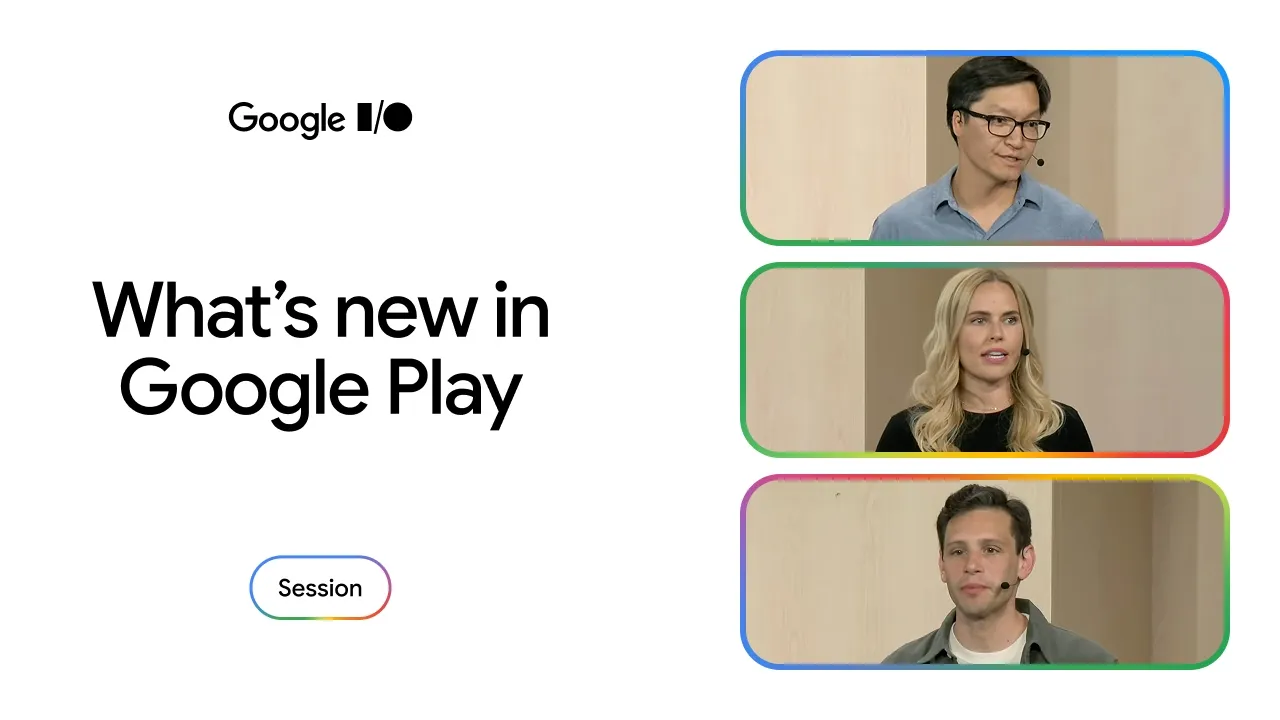
Android Developers
Decoupling payment processing and lowering commission rates to as low as 10 percent positions Google Play among the lowest-cost app marketplaces to spur Android developer reinvestment.
AI-assisted summary of What’s new in Google Play — original source. Check the original for full context.
Source published:
Key ideas
- Google Play announced a restructured service fee schedule effective December 30, setting fees at 10% for recurring subscriptions and the first $1M in annual earnings, and decoupling platform fees from payment processing while supporting alternative billing options. (1:17)
- App and content discovery is launching natively inside the Gemini app on Android and the web, using existing Play Console metadata with zero code changes and offering direct streaming actions across 450,000+ titles. (11:50)
- Google introduced AppFunctions as Android's native implementation of the Model Context Protocol (MCP), enabling deep conversational interactions between AI models and third-party mobile apps. (14:16)
- Play Console billing enhancements—including delayed charging for transient payment failures and an account recovery window extended from 30 to 60 days—have cut involuntary churn by 18% and total churn by 9% for top developers. (19:40)
Detailed notes
## Background Published by Android Developers on YouTube on May 21, 2026, this Google I/O session highlights the latest tools and platform updates on Google Play. Presented by Paul Feng, Kelly Jorrie, and Diego Dayan, the video focuses on new features designed to help developers scale and monetize their app businesses.
## TL;DR The session outlines major updates across Google Play's business model, storefront discovery, and back-office management. Key announcements include lower service fee tiers and support for alternative billing systems, alongside conversational discovery tools like Ask Play and direct Gemini app integration for Android. Additionally, Google introduces AI-powered catalog localization, delayed charging and churn-reduction APIs for subscriptions, unified security via Protected with Play, and conversational Gemini analytics inside the Play Console.
## Atmosphere & style The presentation carries the polished, optimistic, and structured energy characteristic of a major Google I/O keynote. The speakers transition seamlessly between high-level strategic visions and practical console workflows, using real-world scenarios—from booking vacation rentals to planning scuba diving trips—to keep technical updates relatable. It feels brisk, authoritative, and developer-centric, steadily moving from commercial flexibility and user discovery into the nuts and bolts of retention, security, and AI-driven telemetry.
## Bulletin - [01:17](https://www.youtube.com/watch?v=fwLiTPtPHjw&t=77s) Google Play announced a restructured service fee schedule effective December 30, setting fees at 10% for recurring subscriptions and the first $1M in annual earnings, and decoupling platform fees from payment processing while supporting alternative billing options. - [11:50](https://www.youtube.com/watch?v=fwLiTPtPHjw&t=710s) App and content discovery is launching natively inside the Gemini app on Android and the web, using existing Play Console metadata with zero code changes and offering direct streaming actions across 450,000+ titles. - [14:16](https://www.youtube.com/watch?v=fwLiTPtPHjw&t=856s) Google introduced AppFunctions as Android's native implementation of the Model Context Protocol (MCP), enabling deep conversational interactions between AI models and third-party mobile apps. - [19:40](https://www.youtube.com/watch?v=fwLiTPtPHjw&t=1180s) Play Console billing enhancements—including delayed charging for transient payment failures and an account recovery window extended from 30 to 60 days—have cut involuntary churn by 18% and total churn by 9% for top developers.
## Key takeaways - [01:17](https://www.youtube.com/watch?v=fwLiTPtPHjw&t=77s) Google Play is expanding billing flexibility by allowing embedded third-party billing providers and external links, while decoupling platform service fees from processing fees. - [01:55](https://www.youtube.com/watch?v=fwLiTPtPHjw&t=115s) Under the new fee schedule, platform fees drop to 10% on the first $1 million in annual revenue and on recurring subscriptions, with standard non-recurring fees set at 20% for new installs and 25% for existing installs. - [02:40](https://www.youtube.com/watch?v=fwLiTPtPHjw&t=160s) Incentive initiatives including the Level Up and Apps Experience programs further reduce non-recurring platform fees to 15% on new installs and 20% on existing installs. - [05:54](https://www.youtube.com/watch?v=fwLiTPtPHjw&t=354s) Content-driven store surfaces like Spotlight, the You Tab (250M MAU), and AI-powered Q&A are expanding discovery, with AI Q&A answering 95% of user listing queries. - [08:56](https://www.youtube.com/watch?v=fwLiTPtPHjw&t=536s) Play Shorts introduces full-screen vertical video previews to the Play Store, while Ask Play provides a conversational AI overlay that helps users evaluate specific app features. - [12:48](https://www.youtube.com/watch?v=fwLiTPtPHjw&t=768s) Conversational app discovery is integrating into the Gemini app across Android and the web, surfacing apps as contextual solutions using existing store listing metadata without code changes. - [14:16](https://www.youtube.com/watch?v=fwLiTPtPHjw&t=856s) Gemini content discovery enables direct deep links and install prompts for media and live sports across a catalog of over 450,000 movies and television shows. - [14:55](https://www.youtube.com/watch?v=fwLiTPtPHjw&t=895s) AppFunctions provides Android's native implementation of the Model Context Protocol (MCP), enabling developers to expose custom actions to conversational AI systems. - [15:43](https://www.youtube.com/watch?v=fwLiTPtPHjw&t=943s) Play Games Sidekick delivers real-time AI tips, achievement trackers, and friends' activity directly as an in-game overlay across more than 100 titles. - [17:26](https://www.youtube.com/watch?v=fwLiTPtPHjw&t=1046s) Play Console is incorporating Gemini to automate store listing localization via spreadsheets, translate subscription benefits, and support natural-language agentic catalog management. - [19:40](https://www.youtube.com/watch?v=fwLiTPtPHjw&t=1180s) Delayed charging evaluates initial payment failures in real time, granting immediate access to low-risk users while retrying transactions in the background. - [20:42](https://www.youtube.com/watch?v=fwLiTPtPHjw&t=1242s) Extending the default subscription account recovery window from 30 to 60 days resulted in an 18% reduction in involuntary churn and a 9% reduction in total churn for top developers. - [21:02](https://www.youtube.com/watch?v=fwLiTPtPHjw&t=1262s) The in-app Subscription Management API allows developers to intervene during cancellation flows with automated tier downgrades and prorated replacement billing. - [21:38](https://www.youtube.com/watch?v=fwLiTPtPHjw&t=1298s) The 'Protected with Play' dashboard unifies app integrity controls and benefits from reduced-latency Play Integrity API checks suitable for latency-critical user flows. - [22:42](https://www.youtube.com/watch?v=fwLiTPtPHjw&t=1362s) Play Console analytics are shifting to an indirect attribution model while expanding downstream visibility into post-install engagement, retention, and lifetime customer revenue. - [24:32](https://www.youtube.com/watch?v=fwLiTPtPHjw&t=1472s) Gemini-powered chart summaries and interactive Chart Q&A enable developers to diagnose performance anomalies and receive automated monetization guidance directly inside Play Console.
## Detailed walkthrough ### [00:00](https://www.youtube.com/watch?v=fwLiTPtPHjw&t=0s) Introduction and Google Play's Vision for Growth
Paul Feng, Vice President of Product Engineering and UX for Google Play, opens the session by welcoming developers and emphasizing the platform's commitment to supporting developer success. He acknowledges the immense effort developers put into building apps and games, noting that Play's purpose is to help turn those big ideas and passions into thriving global businesses while solving problems and entertaining users.
Feng outlines the agenda for the presentation, which is organized around three strategic themes: - **Evolving the business model**: Offering developers expanded flexibility and choices around monetization. - **Expanding discovery**: Kelly Jorrie will detail new channels and tools for reaching users on and off the Play Store. - **Streamlining workflows**: Diego Dayan will explain how Google Play is simplifying console workflows to free developers from repetitive administrative tasks.
---
[01:17](https://www.youtube.com/watch?v=fwLiTPtPHjw&t=77s) Evolving the Business Model: Play Billing and New Service Fee Structure
Feng discusses the core strengths of Google Play's billing platform, describing it as an engine designed to maximize conversion through three foundational pillars: trust, global reach, and seamless commerce. On the trust front, high privacy standards and integrated family protections give users the confidence to transact. In terms of reach, Play Billing supports more than 300 local payment methods across over 65 markets while managing regional tax and regulatory compliance. On the commerce side, pre-configured purchase paths have expanded the platform's base of purchase-ready users to over 890 million.
```mermaid flowchart TD accTitle: Google Play Billing Fee Structure accDescr: Diagram showing the updated standard and reduced tier fee structure for recurring and non-recurring transactions.
subgraph Recurring ["Recurring & Base Earnings"] Base["First $1M Annual Earnings: 10%"] Subs["Subscriptions (Recurring): 10%"] end
subgraph NonRecurring ["Non-Recurring Transactions (e.g., IAPs)"] direction TB subgraph StandardRates ["Standard Rates"] NewInst["New Installs: 20%"] ExistInst["Existing Installs: 25%"] end subgraph IncentiveRates ["Level Up & Apps Experience Programs"] ProgNew["New Installs: 15%"] ProgExist["Existing Installs: 20%"] end end ```
Addressing developer feedback requesting greater operational control, Feng outlines upcoming billing updates and lower fee tiers. Starting with announcements previewed in March, developers will be allowed to offer alternative billing systems alongside Google Play Billing, including embedded third-party billing providers or external web links. In tandem, Google Play is decoupling its platform service fee from the billing processing fee. Under the new standard schedule: - Platform service fees will be **10%** on the first $1 million in annual developer earnings. - Platform service fees will be **10%** on recurring transactions, such as subscriptions. - For non-recurring transactions (such as in-app purchases), fees are differentiated by user lifecycle: **20%** for new installs and **25%** for existing installs. - Through the revamped Level Up program and the new Apps Experience program, rates are reduced further to **15%** for new installs and **20%** for existing installs.
As Feng highlights:
> “With these changes, Google Play service fees will be among the lowest of any app store and will give you more resources to reinvest directly into your apps and games.”
The new rate card goes live on December 30 across a staggered regional schedule, with regional rollout dates establishing the baseline for defining new installs.
---
[05:54](https://www.youtube.com/watch?v=fwLiTPtPHjw&t=354s) Expanding Reach on the Store: Spotlight, You Tab, and AI Q&A
Kelly Jorrie, Global Head of Apps Category Management and Go-To-Market, takes the stage to discuss app discovery. She emphasizes that modern apps are no longer isolated destinations, but connected experiences spanning diverse devices and form factors. To reflect this shift, Google Play has leaned into content-first surfaces that capture user interest around seasonal and cultural milestones.
Jorrie reviews several content-driven surfaces implemented over the past year: - **Spotlight**: A prominent placement at the top of the Apps Home tab curating timely events. A featured campaign for the launch of BTS's latest album generated over 1.3 billion impressions during its opening weekend. - **You Tab**: A dedicated user hub for re-engagement that centralizes gamer profiles, achievements, and rewards, currently serving more than 250 million monthly active users. - **AI-Powered Q&A**: A search feature addressing nuanced inquiries directly on store listings (such as verifying whether Vrbo lists vacation rentals in Costa Rica), which now successfully answers 95% of user questions.
---
[08:56](https://www.youtube.com/watch?v=fwLiTPtPHjw&t=536s) New Storefront Discovery: Play Shorts and Ask Play
Building on storefront discovery, Jorrie announces **Play Shorts**, a vertical, full-screen video format intended to give users an immediate feel for an app's interface and interactive mechanics. Designed particularly to engage younger demographics such as Gen Z, developers can upload Shorts directly inside Google Play Console. The format launches next month for US users alongside select developers, with broader regional expansion planned.
Jorrie also introduces **Ask Play**, an interactive AI-powered overlay that transforms app discovery into a continuous conversation across Play Store touchpoints. Unlike static keyword searches, Ask Play maintains conversational context across iterative queries to pinpoint specific features. Demonstrating a search for learning chess, Jorrie shows how Ask Play identifies that Duolingo recently integrated chess lessons into its core curriculum. Follow-up queries within the overlay parse whether the course is free or paid, break down the features of the Super Duolingo subscription tier, and surface the availability of a seven-day free trial. Ask Play is available in English in the US, with additional languages and regions to follow.
---
[11:50](https://www.youtube.com/watch?v=fwLiTPtPHjw&t=710s) Expanding Discovery Beyond the Store: Gemini Integration
Looking beyond the boundaries of the Play Store app, Jorrie addresses the growing role of conversational assistants in daily user journeys. To ensure apps remain central to those workflows, Google Play is integrating app discovery directly into the **Gemini app** on Android and the web in the coming weeks.
To demonstrate, Jorrie shares a personal scenario: planning scuba diving trips around family vacations and researching regional fish species ahead of time, likening her recent interest to entering a personal "bird-watching era" for marine life. Through this integration, Gemini will be able to interpret conversational context and directly recommend relevant Android apps and services to millions of active Gemini users.
[12:48](https://www.youtube.com/watch?v=fwLiTPtPHjw&t=768s) Conversational App Discovery via Gemini
Kelly Jorrie illustrates how Gemini transforms the app discovery journey from a mechanical search into a natural, conversational exchange. Instead of typing rigid keywords into a search bar, a user planning a scuba diving trip can simply ask Gemini to recommend an app that reveals what species of fish they might encounter beneath the waves, or an aspiring content creator can ask how to replicate a grainy, 1990s disposable camera look on social media. In response, Gemini surfaces tools like Fish Identifier or VSCO directly in context, presenting the store listing not as a ranked search result, but as a direct solution to a spoken problem.
Crucially for developers, unlocking this conversational discovery pathway requires zero engineering changes or additional lines of code. Gemini relies on the structured metadata, descriptions, and assets already configured on the app’s Google Play Console store listing page, ensuring that the model presents the product faithfully to its creator's intent. As Jorrie summarizes: “By presenting your Store listing as a direct solution to a conversation, we're making it effortless for a fish enthusiast or an aspiring creator to go from a spark of inspiration directly to your app experience.”
[14:16](https://www.youtube.com/watch?v=fwLiTPtPHjw&t=856s) Deep Content Discovery and AppFunctions for Media and Sports
Expanding beyond general app recommendations, Google Play and Gemini are introducing direct content-level discovery later in the year, starting with media, entertainment, and sports. Users can query specific titles—such as asking where to stream the series *Landman*—and Gemini will surface Paramount+ alongside a direct "Watch" call-to-action button. If the user already has the streaming app installed, tapping the CTA takes them straight into the video stream; if not, it prompts an immediate app installation. At launch, the system allows users to search across a catalog of more than 450,000 movies and television shows.
This capability is also rolling out to live sports broadcasting. A basketball fan asking where to stream tomorrow's Indiana Fever versus Chicago Sky game will be directed to watch on the WNBA app. For developers looking to build even deeper, custom conversational integrations into their Android applications, Google is introducing AppFunctions, which serves as Android's native implementation of the Model Context Protocol (MCP) for mobile applications.
```mermaid flowchart TD accTitle: Gemini Content Discovery Architecture accDescr: Flow diagram showing how user queries in Gemini connect to streaming apps, install prompts, and developer integration via AppFunctions. subgraph Query["User Natural Query"] Q["'Where can I stream Landman?' or 'Where to watch Fever vs Sky?'"] end
subgraph GeminiResolution["Gemini & Play Catalog"] G["Identifies Provider<br/>(e.g., Paramount+, WNBA)"] end
subgraph AppAction["Deep Link & Install Flow"] Installed{"App Installed?"} Watch["Direct 'Watch' CTA<br/>(Stream Launches Instantly)"] Install["Install Prompt<br/>(Play Store Sheet)"] end
subgraph DevExtensibility["Developer Extensibility"] MCP["AppFunctions<br/>(Android native MCP implementation)"] end
Q --> G G --> Installed Installed -- "Yes" --> Watch Installed -- "No" --> Install Watch -. "Deep integrations".- MCP ```
[15:43](https://www.youtube.com/watch?v=fwLiTPtPHjw&t=943s) Player Engagement with Play Games Sidekick
For game creators, Jorrie details Play Games Sidekick, an in-game overlay engineered to deepen ongoing player retention and engagement without forcing players to switch out of the game. Sidekick surfaces real-time, contextually relevant information directly over gameplay, including AI-generated game tips, achievements, and player rewards. More than 100 titles have already integrated the overlay ahead of its broader global expansion during the summer, with configuration available immediately within the Google Play Console for developer testing.
Social connectivity within Sidekick is also receiving a dedicated upgrade. Beginning next month, two core community-building features are rolling out to the overlay: - A live friends list showing what games a user’s friends are currently playing. - A milestone tracker that broadcasts friends’ in-game achievements and recent accomplishments.
Concluding her segment on cross-device reach and store visibility, Jorrie welcomes Diego Dayan, Director of Engineering on the Google Play team, to outline how Play is simplifying back-office developer operations.
[17:26](https://www.youtube.com/watch?v=fwLiTPtPHjw&t=1046s) AI-Powered Content and Catalog Management
Diego Dayan introduces three overarching pillars designed to help studios and enterprises scale their app businesses while reducing manual administrative overhead: AI-powered content management, automated revenue optimization, and reporting insights. Addressing the friction of global distribution, Dayan notes that localizing store listings has historically forced developers into tedious routines requiring dozens of repetitive copy-and-paste actions across multiple languages.
To eliminate this barrier, Play Console now allows developers to upload structured spreadsheets, such as CSV files or Google Sheets, which Gemini reads to automatically pre-populate localized store listings for immediate review and approval. The same AI capability can now translate subscription benefit bullet points, ensuring prospective customers clearly comprehend the product's value proposition in their own native languages. Additionally, Play Console's Growth Overview page now bridges the gap between keyword discovery and asset creation: clicking a recommended trending search term instantly spins up a tailored, custom store listing optimized for that specific search term, ready for one-click deployment. For catalog administrators, upcoming agentic catalog management will allow teams to issue direct natural-language instructions to Gemini within the Play Console to execute bulk price updates, import SKU inventories, and modify product metadata.
[19:40](https://www.youtube.com/watch?v=fwLiTPtPHjw&t=1180s) Optimizing Revenue: Conversion, Involuntary Churn, and Cancellation Saves
Turning to billing and monetisation, Dayan breaks down tools engineered to protect revenue at three critical subscription milestones: initial conversion, billing renewal, and churn cancellation. To smooth out conversion bottlenecks caused by transient payment failures, Google Play is rolling out delayed charging. Under this system, when an initial payment attempt fails, internal risk assessment models evaluate the transaction in real time; if flagged as low-risk, the user receives immediate entitlement to the paid in-app features while Play retries the payment processing in the background, preventing a drop-off due to temporary bank processing errors.
```mermaid flowchart LR accTitle: Subscription Lifecycle Recovery and Retention accDescr: Flow diagram showing how Google Play handles payment retries, extended recovery periods, and in-app downgrade offers during cancellation. subgraph Conversion["Point of Conversion"] PF["Payment Fails"] --> RM{"Risk Assessment"} RM -- "Low Risk" --> DC["Delayed Charging<br/>(Immediate access, background retry)"] end
subgraph Renewal["Point of Renewal"] EC["Expired Card / Glitch"] --> AR["Extended Account Recovery<br/>(30 days expanded to 60 days)"] AR --> ChurnReduction["18% drop in involuntary churn<br/>9% drop in total churn"] end
subgraph Cancellation["Point of Cancellation"] Cancel["User Clicks Cancel"] --> Downgrade["In-App Subscription Management API<br/>(Offer plan downgrade)"] Downgrade --> Prorate["New Replacement Modes<br/>(Automated prorated refunds)"] end ```
To combat passive churn caused by expired cards and payment authorization declines, Play recently extended its default account recovery window from 30 days to 60 days. Dayan shares the concrete impact of that adjustment: “This change has resulted in an 18% reduction in involuntary churn and a 9% reduction in total churn for top developers.”
Finally, to address voluntary cancellations, Google is launching an in-app Subscription Management API. Rather than losing a subscriber outright when they navigate to cancel, developers can dynamically intervene within the cancellation flow to offer a lower-priced downgrade tier instead. Coupled with updated replacement modes that automatically compute prorated billing adjustments and refunds behind the scenes, developers gain an end-to-end mechanism to save at-risk customers.
[21:38](https://www.youtube.com/watch?v=fwLiTPtPHjw&t=1298s) Anti-Fraud Infrastructure and "Protected with Play"
Highlighting backend infrastructure investments, Dayan underscores the platform's scale in neutralizing bad actors before they degrade a developer's unit economics. During the previous calendar year, Google Play's automated security defenses shielded apps using Google Play Billing from $3.4 billion in attempted fraudulent transactions, while also intercepting $130 million in abusive refund attempts without requiring manual developer intervention.
To give engineering and operations teams unified oversight over these tools, Google is launching Protected with Play, a dedicated security command center inside the Play Console. The dashboard consolidates monitoring and policy controls across three primary defensive pillars: app integrity, official distribution verification, and monetization safeguards. At the heart of this dashboard is the Play Integrity API, which currently handles billions of runtime verification calls daily. Google has significantly reduced the latency of these API calls, enabling security engineers to evaluate device and app authenticity directly inside latency-sensitive, mission-critical user journeys without degrading UI responsiveness.
[22:42](https://www.youtube.com/watch?v=fwLiTPtPHjw&t=1362s) Next-Generation Analytics and Attribution
In the domain of measurement, Dayan details structural upgrades coming to Play Console reporting to deliver clearer insights into user acquisition ROI: - **Broader Funnel Visibility:** A new metric on the Grow Overview page monitors overall impression frequency across the store to gauge total exposure. - **Downstream Traffic Attribution:** Attribution reporting is no longer restricted strictly to the point of initial install. Developers can now track how specific traffic channels—such as Play Explore, direct visits, or paid marketing—impact downstream post-install behaviors, including long-term engagement, user retention curves, and cumulative lifetime revenue. - **Indirect Attribution Model:** Store reporting is migrating universally to indirect attribution, capturing instances where a prospective customer visits a store listing, views promotional screenshots or videos, and subsequently installs the application at a later time. - **Purchase Funnel & Churn Metrics:** Cart conversion rate has been integrated directly into core performance dashboards, while subscription churn analytics now break down subscriber lifespans, hardware device tiers, and specific departure rationale to pinpoint vulnerable user cohorts.
[24:32](https://www.youtube.com/watch?v=fwLiTPtPHjw&t=1472s) Gemini-Powered Chart Q&A and Performance Insights
To ensure developers are not overwhelmed by raw telemetry, Play is expanding its generative analytics features across the Console. Building upon the automated chart descriptions introduced previously on the Statistics page, Gemini-powered narrative summaries are now live on both the Reach and Devices page and the Store Performance dashboard, surfacing meaningful spikes and dips as soon as the views load.
Furthermore, charts now support interactive, conversational follow-up Q&A sessions embedded directly within the UI. Rather than manually slicing dimensions to diagnose anomalies, developers can select suggested prompts or ask Gemini custom queries to understand the root causes behind metric movements and receive concrete operational remedies. Dayan emphasizes: “Combined with new AI-driven performance insights that give you tailored monetization recommendations, you now have a much faster way to optimize your business.”
[25:40](https://www.youtube.com/watch?v=fwLiTPtPHjw&t=1540s) Closing Remarks and Partnering for Growth
Diego Dayan wraps up the session by reiterating Google Play's core mission for the developer community. Acknowledging that the team had far more updates than could fit into a single presentation, he directs developers to the official Google Play blog post to dive deeper into all the announcements and additional details not covered on stage. As Diego points out when summarizing the platform's overarching philosophy: “We want to be a good partner for your growth.”
Closing out the keynote on a warm and appreciative note, Diego expresses gratitude on behalf of co-presenters Paul Feng, Kelly Jorrie, and the broader Google Play team. He thanks developers for their continued partnership, their ongoing product feedback, and everything they create for the Android ecosystem before sending attendees off to enjoy the remainder of Google I/O.
- **Developer Resources**: Additional documentation and in-depth details on all session announcements are available via the official Google Play I/O blog post. - **Presenter Acknowledgments**: The session concluded on behalf of speakers Paul Feng, Kelly Jorrie, Diego Dayan, and the entire Google Play team.
## Notable quotes > [01:17](https://www.youtube.com/watch?v=fwLiTPtPHjw&t=77s) Google Play service fees will be among the lowest of any app store and will give you more resources to reinvest directly into your apps and games. — Paul Feng
## Mentioned Google Play, Google Play Console, Google Play Billing, Android, Paul Feng, Kelly Jorrie, Diego Dayan, Google I/O 2026, Level Up, Apps Experience, Spotlight, You Tab, BTS, Vrbo, Play Shorts, Ask Play, Duolingo, Super Duolingo, Gemini, Fish Identifier, VSCO, Landman, Paramount+, Indiana Fever, Chicago Sky, WNBA, AppFunctions, Model Context Protocol (MCP), Play Games Sidekick, Google Sheets, Subscription Management API, Protected with Play, Play Integrity API
## Video description Learn about the latest tools and updates on Google Play, all designed to help you grow your business.
Chapters: 00:00 Intro 01:17 Evolving business model with more choice 05:55 Expanding your reach on & off the store 17:26 Scaling your business with less complexity
Resources: Read the blog → https://goo.gle/play-io26 Features to power your growth on Google Play → https://goo.gle/google-play-console Play Console updates to scale your business → https://goo.gle/grow-your-business-io26
Speakers: Diego Dayan, Kelly Jorrie, Paul Feng
Watch the Android sessions from Google I/O 2026 → https://goo.gle/Android-at-IO2026
Subscribe to Android Developers → https://goo.gle/AndroidDevs
#GoogleIO
Event: Google I/O 2026
Products Mentioned: Google Play
[Source](https://www.youtube.com/watch?v=fwLiTPtPHjw)