Schneider Electric Targets AI Factory Power Losses With Digital Tools
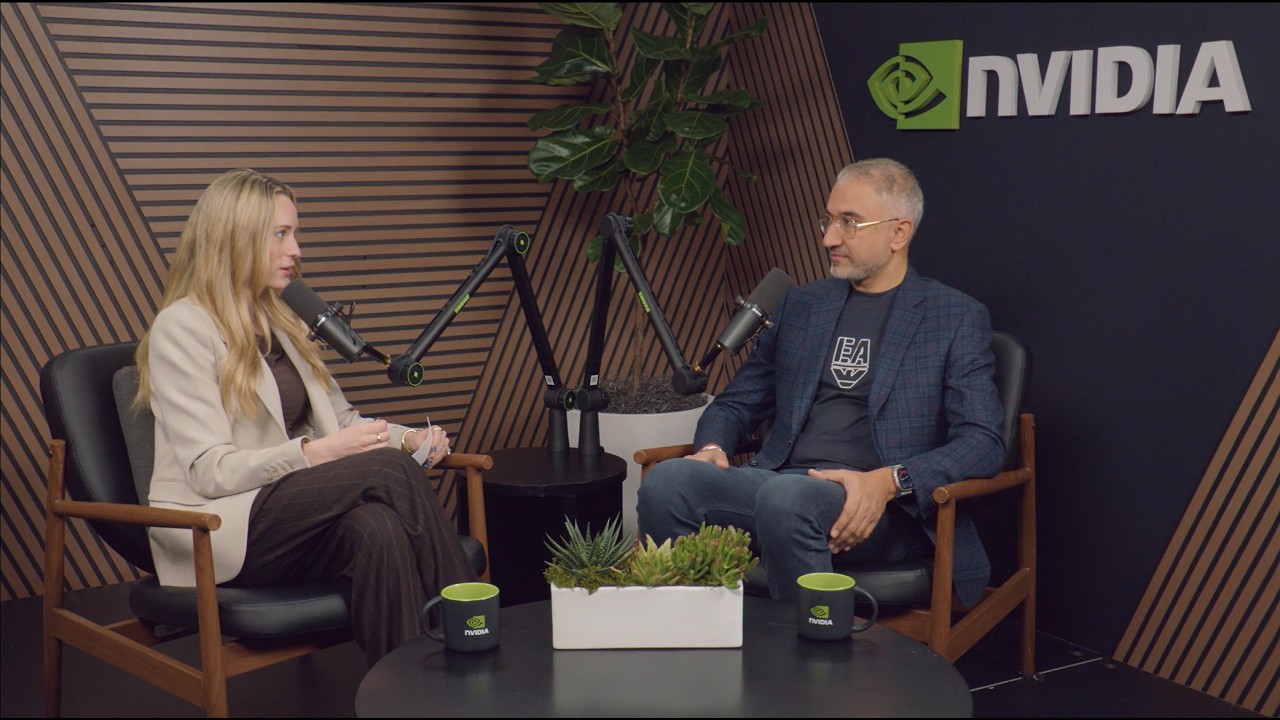
NVIDIA GTC Studio with Insights from Schneider Electric — NVIDIA

NVIDIA

Data centers must integrate AI-driven energy intelligence with physical infrastructure to eliminate the 40% efficiency gap currently threatening compute scalability.

AI-assisted summary of NVIDIA GTC Studio with Insights from Schneider Electric — original source. Check the original for full context.

Source published:

Key ideas

  • Energy infrastructure serves as the fundamental layer of the AI architecture stack, and its capacity, sustainability, and efficiency currently serve as the primary constraints on global AI factory scaling. (0:10)
  • Predictive AI algorithms applied to data center HVAC and cooling systems can reduce cooling energy consumption by approximately 10%. (2:23)
  • In standard AI data centers, up to 36-40% of input energy is lost or stranded during handovers between power distribution, compute, and cooling subsystems. (11:11)
  • Schneider Electric is integrating digital twin technology and NVIDIA SimReady assets to simulate thermal and electrical performance before construction, ensuring maximum efficiency from the design phase. (14:21)

Detailed notes

## Background This NVIDIA GTC studio session, published by the official NVIDIA YouTube channel on March 30, 2026, features a discussion with Pankaj Sharma of Schneider Electric. The page description explains that the session explores the challenges of scaling AI infrastructure, specifically focusing on energy as the foundational 'five-layer cake' and the potential for AI to optimize the energy systems it relies upon.

## TL;DR Pankaj Sharma argues that while energy is the primary bottleneck for scaling AI factories, the solution lies in a dual approach of physical infrastructure modernization and AI-driven software optimization. By applying 'energy intelligence'—using historical performance data to fine-tune cooling and power distribution—operators can recover significant amounts of stranded energy capacity. The session emphasizes that overcoming the industry's power constraints requires a 'system play' that integrates accelerated compute with advanced liquid cooling and digital orchestration, rather than relying solely on component-level upgrades.

## Atmosphere & style The session carries the professional, high-energy, and forward-looking atmosphere characteristic of a technical industry conference. The dialogue between Janzen and Sharma is collegial and collaborative, pivoting from a sense of initial alarm over power limitations to a grounded, problem-solving confidence. It feels like a high-level briefing designed to cut through industry hype, replacing anxiety about energy ceilings with a methodical, engineering-first perspective on how to build the next generation of AI infrastructure.

## Bulletin - [00:10](https://www.youtube.com/watch?v=lBNHFR41GgY&t=10s) Energy infrastructure serves as the fundamental layer of the AI architecture stack, and its capacity, sustainability, and efficiency currently serve as the primary constraints on global AI factory scaling. - [02:23](https://www.youtube.com/watch?v=lBNHFR41GgY&t=143s) Predictive AI algorithms applied to data center HVAC and cooling systems can reduce cooling energy consumption by approximately 10%. - [11:11](https://www.youtube.com/watch?v=lBNHFR41GgY&t=671s) In standard AI data centers, up to 36-40% of input energy is lost or stranded during handovers between power distribution, compute, and cooling subsystems. - [14:21](https://www.youtube.com/watch?v=lBNHFR41GgY&t=861s) Schneider Electric is integrating digital twin technology and NVIDIA SimReady assets to simulate thermal and electrical performance before construction, ensuring maximum efficiency from the design phase.

## Key takeaways - [05:02](https://www.youtube.com/watch?v=lBNHFR41GgY&t=302s) The rapid advancement of AI models and accelerated compute has compressed industry adoption timelines, making power availability an urgent bottleneck rather than a long-term planning exercise. - [00:10](https://www.youtube.com/watch?v=lBNHFR41GgY&t=10s) Energy is the foundational layer of the 'five-layer AI cake,' meaning physical infrastructure must evolve alongside advancements in compute and software. - [02:23](https://www.youtube.com/watch?v=lBNHFR41GgY&t=143s) AI functions as a dual-use technology: it is a primary driver of power demand, but it also provides the necessary tools for grid optimization and energy management. - [04:15](https://www.youtube.com/watch?v=lBNHFR41GgY&t=255s) Digital grid software can reduce technical line losses across power networks, effectively creating 'hidden' capacity without needing to build new power generation assets. - [06:12](https://www.youtube.com/watch?v=lBNHFR41GgY&t=372s) Scaling AI infrastructure requires a 'system play,' where power, cooling, and compute orchestration function as a single, cohesive unit rather than independent silos. - [07:28](https://www.youtube.com/watch?v=lBNHFR41GgY&t=448s) Brownfield data centers often hit 'thermal and electrical walls' because their legacy infrastructure was not originally designed for the high rack densities required by modern AI clusters. - [08:55](https://www.youtube.com/watch?v=lBNHFR41GgY&t=535s) Energy intelligence refers to using historical operational data combined with AI to drive real-time, autonomous optimizations in data center performance. - [09:18](https://www.youtube.com/watch?v=lBNHFR41GgY&t=558s) Operators of legacy, non-digital facilities must decide between retrofitting with external telemetry adapters or performing expensive 'rip-and-replace' hardware upgrades to enable AI-native monitoring. - [11:11](https://www.youtube.com/watch?v=lBNHFR41GgY&t=671s) Stranded capacity in AI factories is largely caused by poor synchronization during handovers between high-speed compute surges and the corresponding thermal/electrical responses. - [12:04](https://www.youtube.com/watch?v=lBNHFR41GgY&t=724s) The acquisition of Motivair enables Schneider Electric to manage the critical direct-to-chip cooling loops necessary for stabilizing high-density AI hardware. - [12:30](https://www.youtube.com/watch?v=lBNHFR41GgY&t=750s) True efficiency in cooling requires dynamic orchestration of fluid flow rates and temperatures, not merely installing high-capacity hardware. - [14:21](https://www.youtube.com/watch?v=lBNHFR41GgY&t=861s) SimReady digital twins allow engineers to test power failover and fluid dynamics in software, significantly lowering the risk of design flaws in new AI factories. - [15:22](https://www.youtube.com/watch?v=lBNHFR41GgY&t=922s) Energy intelligence is the essential linchpin for scaling AI, as physical grid expansion alone cannot keep pace with the exponential demand for compute power.

## Detailed walkthrough ### [00:10](https://www.youtube.com/watch?v=lBNHFR41GgY&t=10s) The Five-Layered AI Cake: Energy as the Critical Foundation

Host Tiffany Janzen opens the session at the NVIDIA GTC studio by welcoming Pankaj Sharma, Executive Vice President of Software and Services at Schneider Electric. Settling into the conversation after two packed and information-heavy days at the conference, Janzen notes that the work Schneider Electric is tackling directly addresses the single biggest bottleneck facing modern AI infrastructure: scaling power. With AI factories popping up rapidly around the world, their viability hinges entirely on securing massive amounts of electricity.

Sharma grounds the power dilemma in NVIDIA CEO Jensen Huang’s keynote concept of the “five-layered cake” of AI architecture. While Schneider Electric operates across multiple tiers of that stack, its core role sits squarely at the base: the foundational energy infrastructure. As generative AI embeds itself deeper into consumer and commercial workflows, efficiency gains across society drive an exponential demand for physical AI factories. That expansion immediately clashes with planetary limits around available generation and grid infrastructure. Sharma underscores that power availability cannot be treated as an isolated engineering problem; it must simultaneously meet stringent sustainability targets. As Sharma explains:

> “Now, when we think about the overall planet and the amount of energy available, and we keep in mind that at the end of the day, it has to be sustainable too, right?”

Addressing this baseline layer requires modernizing utility grid infrastructure, deploying clean generation, and building highly efficient physical data center hardware capable of handling massive thermal and electrical loads.

- **Foundational Layer:** Schneider Electric's primary footprint is at the bedrock of the AI infrastructure stack, delivering the power and thermal backbone required by AI factories. - **The Core Constraint:** Surging AI adoption demands more compute, which requires new physical facilities that are currently constrained by grid bottlenecks and the scarcity of clean, green power generation.

```mermaid flowchart TD accTitle: The AI Factory Infrastructure Dependencies accDescr: Diagram showing how AI applications rely on compute factories, which depend on sustainable energy and physical infrastructure at the foundation.

subgraph AI_Stack ["AI Architecture Stack"] Apps["AI Applications & Consumer/Enterprise Workloads"] Factories["AI Factories & Compute Clusters"] Foundation["Energy & Physical Infrastructure (Schneider Electric)"] end

subgraph Energy_Reqs ["Critical Foundation Inputs"] CleanGen["Clean & Sustainable Generation"] GridCap["Grid Transmission & Distribution Capacity"] PhysicalEff["Efficient Power Delivery & Cooling Systems"] end

Apps --> Factories Factories --> Foundation Foundation --- CleanGen Foundation --- GridCap Foundation --- PhysicalEff ```

---

[02:23](https://www.youtube.com/watch?v=lBNHFR41GgY&t=143s) AI for Energy and Energy for AI: Cooling and Grid Optimization

While the immense power requirements of AI dominate public discourse, Sharma reframes the dynamic as a dual opportunity: energy is needed to power AI, but AI itself is the essential tool required to unlock, optimize, and expand energy capacity. Janzen remarks on the circular irony of the problem—the technology consuming massive power is also the primary mechanism to fix the grid. Asked for concrete examples of how AI is already solving these structural hurdles, Sharma points to data center thermal management. The intense heat generated by high-density compute clusters requires complex HVAC and liquid cooling operations. By training AI algorithms on historical operational data from data center cooling systems, operators can automate dynamic on/off cycles and performance profiles, slashing cooling energy consumption by nearly 10 percent.

Beyond internal data center operations, AI algorithms are actively applied to compute workload scheduling and utility grid management. In large model training facilities, AI systems can predict and balance when peak compute is genuinely necessary versus when loads can be throttled or shifted, directly dampening peak power draw. Outside the data center walls, Schneider Electric’s digital grid business deploys software across transmission and distribution networks to optimize flow, reducing technical line losses by several percentage points. These reclaimed percentages represent raw, usable megawatts injected back into the available power pool. Reacting to these numbers, Janzen admits that her own research into the energy bottleneck had left her feeling stuck on how the industry could realistically scale without hitting a hard ceiling. Sharma emphasizes that panic over power demand misses the broader picture:

> “So AI for energy actually is a very important tool.”

He further elaborates on why software optimization must accompany raw capacity additions:

> “Of course, we need to generate, but we can't solve for what is available and how much is getting utilized.”

- **HVAC and Cooling Savings:** Applying predictive AI algorithms to historic data center cooling and HVAC operations reduces overall cooling energy consumption by almost 10%. - **Workload Optimization:** Monitoring compute necessity in large-scale AI training factories optimizes duty cycles and curbs unnecessary energy draw. - **Digital Grid Optimization:** Schneider Electric's software models bring down utility grid technical losses by several percentage points, expanding effective grid headroom without constructing new power plants.

---

[05:02](https://www.youtube.com/watch?v=lBNHFR41GgY&t=302s) Beyond Silos: Long-Term Efficiency and the System Play

Janzen wonders whether Schneider Electric’s focus on energy optimization is a reactive pivot to the recent generative AI boom or a continuation of longstanding work. Sharma reflects that data center energy constraints have been a continuous industry challenge for decades. What has fundamentally changed is the velocity of demand: advanced large language models paired with NVIDIA’s accelerated compute architectures have compressed adoption timelines from years into months. Schneider Electric approaches the problem from two fronts: re-engineering physical equipment to maximize native electrical efficiency, and wrapping that hardware in digital management software to shrink the gap between input energy entering a facility and the actual power utilized by compute chips.

Sharma stresses that scaling up to meet modern AI workloads cannot happen solely by speeding up silicon. The entire ecosystem must accelerate in parallel—including power generation, substation hardware, physical rack infrastructure, and orchestration software. Janzen observes that these layers cannot operate in traditional engineering silos, prompting Sharma to highlight that the physical facility and the digital management platform must function as an integrated machine to extract maximum performance:

> “So the system play is absolutely critical.”

According to Sharma, isolated component optimizations inevitably fail unless the entire data center operates as a cohesive, closed-loop system:

> “It's not just accelerated compute. It's accelerated generation of energy, the accelerated infrastructure, which is needed. It's accelerated digital, which is all softwares, which are going to make it easier.”

- **The Real Driver of Urgency:** Energy scarcity is not new, but the rapid capability jumps in LLMs and NVIDIA compute have dramatically steepened the adoption curve. - **Shrinking the Efficiency Delta:** Schneider’s engineering goal focuses on minimizing the losses between gross input power arriving at the data center boundary and useful power delivered to the compute silicon. - **Accelerated Everything:** Meeting AI demand requires concurrent acceleration across clean generation, physical facility infrastructure, and real-time digital software.

---

[07:28](https://www.youtube.com/watch?v=lBNHFR41GgY&t=448s) Brownfield Challenges and Upgrading Legacy Facilities

Janzen turns the conversation to brownfield environments—facilities built on older designs or saddled with legacy, archaic software systems—and asks how Schneider Electric adapts its physical and digital solutions when stepping into existing installations. Sharma clarifies that true greenfield “AI factories” purpose-built for generative AI are only just beginning to emerge across the market. Instead, the vast majority of existing global capacity consists of traditional data centers constructed over the past several decades.

Because global demand for computing is at an all-time high, these legacy facilities currently operate at exceptionally high utilization rates. However, many older facilities have hit a hard thermal and electrical wall. They were engineered around lower rack densities and predictable enterprise CPU workloads, leaving their cooling and electrical distribution paths fundamentally incapable of supporting modern, high-density AI clusters. Sharma observes the friction occurring within legacy footprints:

> “But some of the builds which happened in the past have reached a limit of performance, simply because they were never built for this level of compute.”

This reality forces operators to overhaul both their physical power and cooling delivery systems while simultaneously retrofitting digital monitoring tools to prevent legacy builds from stalling out under modern AI compute pressures.

[08:55](https://www.youtube.com/watch?v=lBNHFR41GgY&t=535s) Defining Energy Intelligence and Modernizing Brownfield Infrastructure

Pankaj Sharma introduces the concept of “energy intelligence” as a critical software intervention for existing facilities. In brownfield environments, operators often seek to optimize legacy infrastructure using modern software capabilities. Sharma explains that energy intelligence means taking decades of historical performance data from data centers and other critical industrial applications, feeding that operational history into software engines, and applying artificial intelligence to surface actionable optimizations. These insights can be implemented either as AI-augmented workflows or increasingly as fully AI-native automated decisions designed to drive the performance and efficiency of the underlying physical layer.

Upgrading brownfield facilities presents steep physical hurdles when decades-old equipment lacks native digital interfaces. Sharma points out that when the physical layer is completely analog, operators face a crossroads: they must either deploy digital appliances and edge adapters to extract telemetry from legacy machines, or undertake the cost and disruption of ripping and replacing the hardware entirely. Schneider Electric conducts comprehensive asset analyses to determine whether an installation can be retrofitted with sensing appliances or requires a hardware swap. Furthermore, Sharma stresses that location and external constraints dictate the entire strategy. If a data center sits in a region where the electrical grid is already maxed out, expanding the physical footprint is futile unless efficiency can be extracted from within the existing power envelope.

> “Energy intelligence is where, when you have performance data of data centers, as one example, and any other application for that matter, for the longest period of time, for decades, you utilize that data and then put AI on top of the data with the help of software, come up with insights, which you can either be AI augmented or AI native, more so AI native now, when it was heard that as a conversation, so that those insights can help improve the performance of the physical layer.” — Pankaj Sharma

- **Digitizing Analog Assets:** Facilities with non-digital infrastructure must either install bolt-on telemetry appliances to capture performance data or execute full equipment replacements. - **Geographic Grid Bottlenecks:** Physical expansions are rendered pointless if the regional utility grid cannot deliver additional megawatts, making internal energy intelligence the only viable path to capacity growth.

---

[11:11](https://www.youtube.com/watch?v=lBNHFR41GgY&t=671s) Systems Integration and Managing Handovers in AI Factories

Addressing the complex architecture of AI factories, Sharma explains why individual component efficiency is insufficient on its own. While AI factories are among the most heavily utilized computing environments in the world—running sustained, homogeneous model-training workloads—they still suffer from significant stranded capacity. Sharma cites an operational example where, out of 100 arbitrary units of energy entering a facility, only roughly 64 units actually reach the compute layer, leaving the remaining 36 to 40 units lost or stranded throughout the distribution chain. Recovering this stranded power requires managing the power distribution, cooling, and compute subsystems as a single, coordinated entity.

The primary point of energy leakage occurs during the operational handovers between interdependent subsystems. When compute demand surges, power infrastructure must ramp up instantaneously, which in turn triggers a proportional demand on the cooling infrastructure. If the control handovers between power delivery, server utilization, and heat removal are not synchronized in real time, massive thermal and electrical inefficiencies result. Sharma references Schneider Electric’s integration of Motivair—a leader in liquid cooling that joined the company roughly two years prior—to illustrate that having world-class hardware like Coolant Distribution Units (CDUs) and heat exchangers is only half the battle. Real efficiency depends on dynamic system orchestration: regulating the flow rates of cooling fluids, adjusting to load swings, and maintaining precise operating temperatures across the thermal envelope.

```mermaid flowchart TD accTitle: AI Factory System Handover Flow accDescr: Diagram illustrating how incoming power flows through physical systems and requires coordinated handover to prevent stranded capacity.

subgraph PowerIn["Power Inflow"] Grid["100 Units Total Inflow"] end

subgraph PhysicalLayers["Physical Subsystems"] Pwr["Power Infrastructure"] Comp["Compute Infrastructure"] Cool["Cooling Infrastructure & Liquid Loops"] end

subgraph Outcomes["System Utilization"] Used["~64 Units Active Compute"] Stranded["~36-40 Units Stranded / Lost"] end

Grid --> Pwr Pwr -->|"Dynamic Handover"| Comp Comp -->|"Thermal Load Handover"| Cool Comp --> Used Pwr -.->|"Uncoordinated Handover"| Stranded Cool -.->|"Sub-optimal Flow / Temp"| Stranded ```

> “If that handover is not seamless, then you're losing a lot of energy.” — Pankaj Sharma

> “Even if each one of those individual components are the most efficient components, software defined components... the system play is absolutely critical.” — Pankaj Sharma

- **Stranded Energy Reality:** In typical operations, up to 36% to 40% of supplied energy fails to reach compute workloads due to subsystem mismatches. - **Motivair Integration:** Schneider Electric brought liquid cooling manufacturer Motivair into its portfolio roughly two years prior to anchor direct-to-chip cooling and CDU distribution. - **Holistic Fluid Dynamics:** Efficient liquid cooling requires precise orchestration of fluid velocities and operating temperatures rather than just high-capacity heat exchangers.

---

[14:21](https://www.youtube.com/watch?v=lBNHFR41GgY&t=861s) Digital Twins, SimReady Infrastructure, and AI for Energy

When asked how the industry can break through the energy ceiling constraining AI scaling, Sharma highlights the marriage of physical efficiency and pre-construction simulation. Physical components such as power distribution units and advanced liquid cooling loops must continue to gain hardware-level efficiency, but the ultimate unlocks stem from energy intelligence deployed during the architectural phase. Leveraging the concept of NVIDIA SimReady assets, Schneider Electric designs every physical component to exist as a simulation-ready digital twin.

By modeling the entire electrical and thermal facility before ground is broken, engineers run predictive AI algorithms trained on decades of real-world operational performance data. These algorithms identify design flaws, simulate fluid dynamics, and test power failover handovers in software long before physical installation. Sharma frames this convergence as “AI for energy,” emphasizing that expanding AI capacity cannot rely solely on waiting for grid expansions or building more power plants. To meet escalating compute demands, the industry must rely on energy intelligence to squeeze maximum computing throughput from every megawatt available. The conversation closes with Sharma reinforcing that while modernizing physical grids remains a necessity, software-driven energy intelligence is the immediate linchpin for next-generation AI infrastructure.

> “More and more energy needed for AI cannot happen without energy intelligence, because of the learning what we have collectively for so many decades on how the performance of energy is and utilization is, you have to apply AI on that, and that's energy intelligence.” — Pankaj Sharma

- **SimReady Digital Twins:** Designing data centers with NVIDIA SimReady-compatible assets allows operators to simulate and optimize thermal and electrical performance before breaking ground. - **AI for Energy:** Algorithmic optimization applied to decades of facility telemetry unlocks capacity that physical hardware upgrades alone cannot achieve. - **Closing Takeaway:** Overcoming the power bottleneck requires a three-part approach: software-driven energy intelligence, highly coordinated physical-layer efficiency, and long-term utility grid modernization.

## Notable quotes > [05:02](https://www.youtube.com/watch?v=lBNHFR41GgY&t=302s) It's not just accelerated compute. It's accelerated generation of energy, the accelerated infrastructure, which is needed. It's accelerated digital, which is all softwares, which are going to make it easier. — Pankaj Sharma

> [11:11](https://www.youtube.com/watch?v=lBNHFR41GgY&t=671s) Even if each one of those individual components are the most efficient components, software defined components... the system play is absolutely critical. — Pankaj Sharma

> [02:23](https://www.youtube.com/watch?v=lBNHFR41GgY&t=143s) So AI for energy actually is a very important tool. — Pankaj Sharma

## Mentioned Pankaj Sharma, Tiffany Janzen, Schneider Electric, NVIDIA, Jensen Huang, Motivair, GTC

## Video description Pankaj Sharma, Executive Vice President of Software and Services at Schneider Electric, outlines the challenges of scaling AI infrastructure, emphasizing energy as the foundation of the five-layer AI cake. As AI adoption accelerates, he points to growing pressure on power, grid capacity, and sustainable energy—while highlighting the opportunity to use AI to optimize and expand energy systems for the next generation of AI.

[Source](https://www.youtube.com/watch?v=lBNHFR41GgY)

Reading summary

Schneider Electric's Pankaj Sharma argues that scaling artificial intelligence requires solving an acute physical power bottleneck, positioning software-driven 'energy intelligence' and holistic systems design as essential counterparts to new grid generation. The AI Infrastructure Stack and Energy Bottleneck (0:10) Grounding his analysis in NVIDIA CEO Jensen Huang's 'five-layered cake' concept of AI architecture, Sharma identifies foundational power and thermal systems as the core constraint on expanding AI factories. Surging generative AI adoption drives exponential demand for compute clusters, which immediately collides with planetary constraints on electricity generation and distribution. According to Sharma, addressing this requires simultaneously scaling clean generation, modernizing utility grid infrastructure, and engineering high-efficiency data center physical hardware to meet rigid sustainability mandates. Operational Gains from AI for Energy (2:23) While AI development consumes immense electrical loads, Sharma frames AI as an essential optimization mechanism to expand energy headroom across facilities and distribution networks. Training predictive algorithms on historical facility data allows automated tuning of HVAC and cooling profiles, which slashes data center cooling energy use by nearly 10 percent. Additionally, algorithms can balance and schedule compute workloads to dampen peak power draws in large model training facilities. Beyond data center perimeters, Schneider Electric deploys software across transmission and distribution networks to optimize power flow. Sharma notes that these digital grid interventions reduce technical line losses by several percentage points, freeing up existing megawatts without having to wait for the construction of new power generation plants. Upgrading Legacy Facilities with Energy Intelligence (7:28) Because purpose-built greenfield AI factories are only beginning to emerge, most global compute still resides in traditional brownfield data centers. Sharma explains that older facilities, built around predictable CPU loads and low rack densities, have reached electrical and thermal capacity ceilings. Expanding capacity physically is often impossible in regions where local utility grids are already fully saturated, forcing operators to extract more performance from their existing energy allocations. To bridge this gap, Sharma advocates for 'energy intelligence'—using machine learning models trained on decades of industrial telemetry to generate AI-augmented or AI-native automated operating decisions. In older analog facilities, operators must evaluate whether to install edge telemetry adapters to capture performance data or completely replace legacy hardware that lacks digital monitoring interfaces. System Integration and Handover Coordination (11:11) Sharma highlights that deploying top-tier physical components is insufficient without synchronized operations across power, compute, and cooling subsystems. In typical data centers, up to 36 to 40 percent of incoming energy is lost or stranded before reaching compute silicon, leaving only about 64 percent for active workloads. Energy leakage primarily occurs during uncoordinated handovers when power delivery and cooling cycles fail to track real-time surges in compute load. To address this, physical assets like Motivair liquid cooling systems and coolant distribution units must operate as a closed loop. Schneider Electric pairs hardware orchestration with pre-construction digital twins using NVIDIA SimReady assets. By modeling fluid dynamics and electrical failovers against operational data prior to construction, operators can eliminate thermal inefficiencies and recover stranded capacity before physical deployment. Sharma concludes that while physical grid modernization and clean power generation remain indispensable, scaling AI cannot rely solely on raw generation additions. Closing the infrastructure gap hinges on energy intelligence and integrated system design to extract maximum compute throughput from every available megawatt.

Source quotes

[5:02] Pankaj Sharma: It's not just accelerated compute. It's accelerated generation of energy, the accelerated infrastructure, which is needed. It's accelerated digital, which is all softwares, which are going to make it easier. [11:11] Pankaj Sharma: Even if each one of those individual components are the most efficient components, software defined components... the system play is absolutely critical. [2:23] Pankaj Sharma: So AI for energy actually is a very important tool.

Original transcript

[0:10] 1 Hi everyone, welcome to the NVIDIA GTC studio. [0:13] 2 My name is Tiffany Janzen and today I'm [0:15] 3 joined with Pankaj Sharma, who is the Executive [0:17] 4 VP of Software and Services at Schneider Electric. [0:21] 5 Pankaj, welcome. [0:22] 6 Thank you, Tiffany. [0:23] 7 How's your GTC been going so far? [0:26] 8 Excellent. [0:26] 9 It's been the last two days, super busy, [0:28] 10 a lot of information, but that's really good. [0:31] 11 That's really good to hear. [0:32] 12 When I saw that we'd be having a [0:33] 13 conversation today, [0:35] I was really looking forward to [0:36] 14 it because I think what Schneider Electric is [0:38] 15 working on and some of the challenges that [0:40] 16 you are solving are some of the biggest [0:42] 17 challenges we are, frankly, facing right now when [0:45] 18 it comes to AI infrastructure and scaling. [0:47] 19 And on that note, we are seeing incredible [0:50] 20 momentum around AI factories. [0:52] 21 We're seeing a ton of them starting to [0:54] 22 pop up. [0:54] 23 But in order for them to be successful, [0:57] 24 they need a ton of power. [0:59] 25 Can you share with me a little bit [1:01] 26 about some [1:01] of the challenges and also opportunities [1:03] 27 that brings? [1:04] 28 It brings, first of all, a lot of [1:06] 29 challenges and opportunities. [1:09] 30 So maybe just take a step back. [1:10] 31 If you heard the keynote when Jansen was [1:12] 32 sharing the five-layered cake. [1:14] 33 Yes. [1:15] 34 And we play at many layers, obviously, but [1:17] 35 the primary role we play is at the [1:19] 36 bottom, where [1:21] the energy infrastructure has to come [1:22] 37 in. [1:23] 38 Now, the challenge at hand is that the [1:26] 39 utilization and applications of AI are starting to [1:29] 40 increase dramatically. [1:30] 41 I mean, we see it in our own [1:31] 42 lives, right, as consumers or businesses and how [1:34] 43 it is making everything more efficient and so [1:37] 44 on. [1:37] 45 But to build all of that, you need [1:39] 46 the AI factories, for which, of course, you [1:42] 47 need physical [1:42] infrastructure and also you need available [1:45] 48 energy. [1:46] 49 Now, when we think about the overall planet [1:48] 50 and the amount of energy available, and we [1:49] 51 keep in mind that at the end of [1:50] 52 the day, it has to be sustainable too, [1:52] 53 right? [1:52] 54 So [1:53] available energy and green energy availability is [1:56] 55 overall a challenge. [1:57] 56 And that's why the big push right now, [2:00] 57 and when Jansen also shares the bottom layer, [2:02] 58 it's so important for us to be able [2:03] 59 to solve for that. [2:04] 60 So yeah, that's a huge issue at hand. [2:06] 61 So it's [2:07] related to great infrastructures, it's related [2:09] 62 to clean generation of energy, it's related to [2:12] 63 availability [2:13] of physical infrastructure,  which is efficient, which [2:15] 64 is where companies like us come in. [2:17] 65 So that's the overall challenge. [2:18] 66 But like you said, it's also a huge [2:20] 67 opportunity. [2:21] 68 It's a huge opportunity because while you think [2:24] 69 about availability of energy, you also have to [2:28] 70 think about how utilizing AI, you can make [2:32] 71 the availability of energy better. [2:33] 72 So at Schneider, for example, what we talk [2:36] 73 about is AI for energy and energy for [2:38] 74 AI, right? [2:39] 75 Everybody talks about energy for AI, oh, energy, [2:41] 76 so much of energy needed. [2:42] 77 But AI can actually enable by simplifying through [2:46] 78 digital and so on. [2:47] 79 Isn't that so funny how it works where [2:49] 80 it's, you know, we need so much energy [2:51] 81 for AI and AI is going to be [2:54] 82 the enabler to solve that challenge at the [2:56] 83 end of the day. [2:57] 84 What are some examples of AI being able [3:01] 85 to do that, that you have seen being [3:03] 86 able to solve some of these grid challenges? [3:04] 87 Because the grid really isn't set up for [3:07] 88 this level of scaling when it comes to [3:09] 89 AI. [3:10] 90 Multiple examples I can give you. [3:12] 91 So one of the examples I give you [3:14] 92 is when you think about in a large [3:17] 93 data center, right? [3:19] 94 There's so much of heat getting generated because [3:21] 95 of compute. [3:22] 96 So you need to take out the heat, [3:24] 97 which means you need cooling and you need [3:25] 98 cooling systems and HVACs and so on. [3:27] 99 Just [3:28] by utilizing AI algorithms on how historically [3:33] 100 the [3:34] air conditioning system, HVAC systems are working, [3:36] 101 we are able to save almost 10% [3:38] 102 energy being utilized, right? [3:40] 103 So this is when you turn them on, [3:41] 104 turn them off, et cetera. [3:42] 105 So this is where the genetic comes into [3:44] 106 play, right? [3:44] 107 I mean, it automates the whole performance. [3:47] 108 Other examples of where AI can help is, [3:52] 109 for example, overall in a large data center [3:56] 110 environment, [3:58] on the physical layer, you have compute. [4:00] 111 So when you apply AI to think about [4:03] 112 when is compute needed and when it is [4:05] 113 not needed, let's say in a large training [4:07] 114 factory, that can then help utilization of energy [4:10] 115 and bringing the need for energy down. [4:12] 116 So AI for energy actually is a very [4:15] 117 important tool. [4:16] 118 And I try to say that whenever somebody [4:18] 119 asks me this question, because it's very easy [4:20] 120 to just get overly perplexed by the fact [4:23] 121 that, oh, there's so much of energy needed. [4:25] 122 But unless we do AI, we can't even [4:27] 123 solve for that. [4:27] 124 Of course, we need to generate, but we [4:29] 125 can't solve for what is available and how [4:31] 126 much is getting utilized. [4:32] 127 Absolutely. [4:33] 128 And I think that's on a personal level, [4:35] 129 I think, to be honest with you, that's [4:36] 130 where I am currently at in my research [4:39] 131 journey, if you will, when it comes to [4:41] 132 AI and the energy required to keep on [4:44] 133 scaling is I'm in that stuck phase where [4:48] 134 it's, well, how are we going to solve [4:50] 135 this? [4:50] 136 Where is it going to go? [4:51] 137 So hearing from you of those use cases [4:54] 138 and examples [4:55] with AI is really exciting, especially [4:56] 139 that stat 10% for cooling. [4:59] 140 Yeah. [5:00] 141 Yeah. [5:00] 142 I mean, there are other examples I'll give [5:01] 143 you. [5:01] 144 Like when you think about software, we have [5:03] 145 one of our businesses, which is called the [5:05] 146 digital grid business, which is how do you [5:07] 147 optimize the grid? [5:08] 148 Just by utilizing software on how the grid [5:11] 149 is managed, you're able to bring down the [5:14] 150 technical losses by a few percentage points. [5:17] 151 Now, that means that much available energy, which [5:20] 152 can be utilized for all the other things [5:22] 153 we're trying to do. [5:23] 154 Now, if you put that in AI, AI [5:25] 155 helps again, right? [5:26] 156 So it's almost circular if you think about [5:28] 157 it. [5:28] 158 You know, have you at Schneider been working [5:32] 159 on this with AI for, I'm curious because [5:35] 160 right now I feel like it's a topic [5:36] 161 of conversation and I'm sure you've, you know, [5:38] 162 been bombarded with so many questions around this, [5:41] 163 but have you been working on this way [5:44] 164 before? [5:44] 165 I'm sure that people were even starting to [5:47] 166 really think about it, like the general public. [5:49] 167 Yeah. [5:49] 168 And, and, and look, the, the need for [5:52] 169 energy is something which has been a challenge [5:55] 170 for many years. [5:56] 171 It's not something new, right? [5:58] 172 The only thing is because now we have [6:01] 173 stronger LLMs and we have much stronger compute [6:04] 174 capability in NVIDIA, the, the application of AI [6:09] 175 has become rapidly faster. [6:12] 176 So hence the need of energy has gone [6:13] 177 up dramatically, but the need of energy for [6:16] 178 data centers has always been a challenge. [6:19] 179 For a company like us, we look at [6:22] 180 it from two points of view. [6:23] 181 First, [6:24] because we create the physical infrastructure. [6:26] 182 So our goal always is to make it [6:28] 183 more and more efficient and efficiency then helps. [6:31] 184 Efficiency is through design of the product, but [6:34] 185 efficiency is also through digital, which is how [6:38] 186 you manage those parts, the entire digital part, [6:41] 187 the software part of it. [6:42] 188 So we've always, as a company, been, been [6:44] 189 working on [6:46] bringing out those kinds of technologies [6:48] 190 so that the input energy, which is going [6:50] 191 into a data center and how much is [6:52] 192 actually getting utilized by compute, you start to [6:54] 193 reduce that gap dramatically. [6:55] 194 So that's been an effort of Schneider Electric [6:58] 195 for a very long time. [6:59] 196 We've also been also focused on thinking about [7:02] 197 how you utilize that in a sustainable fashion. [7:05] 198 It's just that today with the demand going [7:07] 199 up so much, everything needs to be accelerated, [7:10] 200 right? [7:10] 201 So it's not just accelerated compute. [7:12] 202 It's accelerated [7:12] generation of energy, the  accelerated infrastructure, [7:15] 203 which is needed. [7:16] 204 It's accelerated [7:18] digital, which is all softwares, which [7:19] 205 are going to make it easier. [7:20] 206 So all of that has to be accelerated. [7:22] 207 It really can't be done in silos. [7:24] 208 It has to be a solution altogether almost. [7:27] 209 Exactly. [7:28] 210 I mean, that's such a good point you're [7:29] 211 making because when you also think about the [7:32] 212 entire build out of AI factory, each system, [7:36] 213 each component of the system is important because [7:40] 214 you get the best optimization of both the [7:44] 215 physical layer and the software when it works [7:46] 216 as a system. [7:47] 217 So the system play is absolutely critical. [7:49] 218 So great point. [7:50] 219 You know, I know Schneider does both, as [7:52] 220 you mentioned, [7:53] the physical aspect, like the physical [7:55] 221 side of things, and then also the software. [7:57] 222 Are there any scenarios where you are solving [8:01] 223 a problem, working with a company who already [8:03] 224 has one or the other? [8:04] 225 And even though both are so important, you [8:06] 226 have to kind of really adjust based on [8:09] 227 that. [8:09] 228 So maybe it's an existing AI factory or [8:13] 229 they have pretty [8:15] archaic software that they're dealing [8:16] 230 with. [8:16] 231 Are there any cases of that? [8:18] 232 So your question really is on, let's say, [8:20] 233 Brownfield. [8:21] 234 Yeah. [8:21] 235 You will, right? [8:22] 236 And there are not many existing AI factories. [8:26] 237 Yeah, that's true. [8:26] 238 That's true. [8:27] 239 Just kind of getting started. [8:28] 240 But we've been building data centers, the world's [8:31] 241 been building data centers for many decades now. [8:33] 242 And typical utilization levels in data centers are [8:38] 243 extremely high right now, as you can imagine, [8:39] 244 because the demand is so high. [8:41] 245 But some of the builds which happened in [8:43] 246 the past have reached a limit of performance, [8:48] 247 simply because they were never built for this [8:50] 248 level of compute. [8:52] 249 So we have those kinds of examples, and [8:54] 250 to your point, both on the physical layer [8:55] 251 and the software which is utilized there, there [8:58] 252 are times when you can have a Brownfield [9:00] 253 environment and you can apply software. [9:02] 254 And when we say software, we talk about [9:04] 255 energy intelligence. [9:05] 256 And I'll maybe take a second here to [9:07] 257 explain to you what that means. [9:08] 258 Energy intelligence is where, [9:11] when you have performance [9:12] 259 data of data centers, as one example, and [9:15] 260 any other application for that matter, for the [9:18] 261 longest period of time, for decades, you utilize [9:21] 262 that data and then put AI on top [9:24] 263 of the data with the help of software, [9:26] 264 come up with insights, which you can either [9:30] 265 be AI augmented or AI native, more so [9:34] 266 AI native now, when it was heard that [9:36] 267 as a conversation, so that those insights can [9:38] 268 help [9:38] improve the performance of the physical layer. [9:42] 269 Now [9:44] in a Brownfield environment, sometimes with energy [9:47] 270 intelligence, this can be done. [9:48] 271 The challenge always is, if it is a [9:51] 272 much older environment, the physical layer is not [9:55] 273 digital. [9:57] 274 So either you attach something like an appliance [10:00] 275 on the physical layer to make it digital, [10:01] 276 to be able to gather the data and [10:04] 277 perform what I said as energy intelligence, or [10:06] 278 you really need to swipe it out. [10:08] 279 So it's a whole process. [10:09] 280 Like as a company, we do that for [10:11] 281 our customers. [10:11] 282 First of all, we have ourselves been building [10:13] 283 data centers for our customers for many decades [10:15] 284 now, right? [10:16] 285 So we work with them to think about [10:19] 286 their physical layer and do a complete asset [10:22] 287 analysis, et cetera, try to bring in digital [10:24] 288 software, et cetera, to simplify. [10:26] 289 But if there are times where the physical [10:28] 290 layer is just not digital at all, then [10:31] 291 all you have to do is you have [10:32] 292 to swap it out. [10:33] 293 Absolutely. [10:34] 294 So there are those kinds of scenarios. [10:35] 295 That's really interesting. [10:36] 296 It's exciting to me, or interesting to me, [10:40] 297 because every scenario is so different and every [10:42] 298 challenge is... [10:43] 299 I mean, there's a lot of similarities, but [10:45] 300 the way you have to think slightly about [10:48] 301 each one is different. [10:49] 302 Yeah. [10:49] 303 I mean, it's different also because it depends [10:51] 304 on where the data center is located. [10:52] 305 It depends on the environment around it. [10:56] 306 It depends on availability of power, how much [10:58] 307 more power is needed. [10:58] 308 Like for example, if you're already maxed out [11:00] 309 on power availability in a certain [11:03] geographical location, [11:04] 310 even if you can build more, there is [11:07] 311 no point of that, right? [11:08] 312 Yeah. [11:09] 313 I didn't think about that. [11:10] 314 That's a very good point. [11:11] 315 Why is it important? [11:13] 316 We kind of spoke about this earlier, but [11:15] 317 why is it important to manage all of [11:17] 318 these systems together for AI factories? [11:19] 319 Can you expand on that a bit more? [11:21] 320 Yeah. [11:21] 321 You know, when you think about an AI [11:23] 322 factory, I mean, think about everything that goes [11:25] 323 into the physical layer. [11:26] 324 So, first of all, you have energy coming [11:28] 325 in. [11:28] 326 And even in an AI factory, which, by [11:31] 327 the way, is some of the most, let's [11:34] 328 say, [11:34] well utilized environments, also because there's a [11:38] 329 lot of training which is happening in those [11:40] 330 AI factories, right? [11:40] 331 So it's kind of similar type of loads, [11:42] 332 right? [11:43] 333 [11:44] Even in those environments,  there is standard capacity [11:46] 334 of energy, which means if you're getting a [11:49] 335 hundred points [11:49] of energy coming in, you're utilizing [11:51] 336 only 64, as an example, for compute, which [11:55] 337 is the whole point, which means you still [11:56] 338 have 40, which is standard somewhere. [11:57] 339 Yeah. [11:58] 340 So that's one example. [12:00] 341 Then, so what do you do to make [12:02] 342 it better? [12:03] 343 So this is where software, AI, energy intelligence [12:05] 344 kind of things come into play. [12:06] 345 The second point is, when you think about [12:08] 346 the physical layer there, so you have different [12:12] 347 parts of physical layer. [12:13] 348 So you have the power infrastructure, you have [12:15] 349 the cooling [12:15] infrastructure, you have cabling, you have [12:17] 350 data, you have all of those things, right? [12:19] 351 So each one of them individually has to [12:22] 352 be the most efficient, but collectively is where [12:27] 353 the handovers happen. [12:28] 354 So as an example, the amount of compute [12:31] 355 getting generated leads to the utilization of the [12:34] 356 power infrastructure. [12:35] 357 [12:36] And when that's linked to  the cooling infrastructure, [12:39] 358 that handover is absolutely critical. [12:41] 359 If that handover is not seamless, then you're [12:44] 360 losing a lot of energy. [12:45] 361 You talk about the standard capacity, that's where [12:48] 362 you're losing. [12:48] 363 So that's why the play of the system [12:51] 364 is absolutely critical. [12:53] 365 Even if each one of those individual components [12:55] 366 are the most [12:57] efficient components, software defined components. [13:00] 367 Yes. [13:00] 368 But the system play is absolutely critical. [13:02] 369 Absolutely. [13:02] 370 That makes sense. [13:03] 371 So much energy and heat is lost if [13:05] 372 it's not, for example, going back to liquid [13:08] 373 cooling or properly system put in place. [13:12] 374 Exactly. [13:13] 375 So liquid cooling now, of course, I mean, [13:16] 376 for us is a material part of what [13:18] 377 we do, right? [13:19] 378 About two years ago, we had Motivair come [13:22] 379 in and join our company and they're the [13:24] 380 number one leader in the world in that [13:26] 381 space. [13:26] 382 But it's important that not just, so back [13:30] 383 to the system play, it's not just important [13:32] 384 to have the best liquid cooling technology from [13:34] 385 an offer standpoint, [13:35] whether the cooling distribution units [13:36] 386 or the heat exchangers, et cetera. [13:38] 387 It's also important how the flow of fluid [13:42] 388 is managed inside the data center and at [13:46] 389 what temperatures it's getting managed. [13:47] 390 What's the optimum temperature? [13:49] 391 Because all of that eventually is leading into [13:52] 392 the amount of energy we are consuming. [13:54] 393 And if you're wasting energy when you're consuming [13:56] 394 it, [13:57] then that's something that makes it inefficient. [14:00] 395 And again, we are talking about the fact [14:02] 396 we need more and more and more and [14:03] 397 more energy, right? [14:04] 398 Absolutely. [14:05] 399 That's such a good point. [14:06] 400 I never thought of it from that perspective, [14:08] 401 especially around with liquid cooling. [14:10] 402 I'm like, oh, liquid cooling, it's going to [14:11] 403 solve so many problems, but there's so much [14:13] 404 more that goes into it, even the way [14:15] 405 it's flowing, the way it's set up. [14:17] 406 If it's not done properly, then wasting energy. [14:20] 407 [14:21] There is, you know, throughout  our conversation, we've [14:25] 408 addressed that there is a bottleneck when it [14:27] 409 comes to AI scaling. [14:28] 410 And one of those bottlenecks is around power. [14:31] 411 Other than, for example, liquid cooling, what are [14:34] 412 some other ways to unlock this? [14:37] 413 So liquid cooling is a part of the [14:41] 414 physical layer, right? [14:42] 415 So everything on the physical layer, whether it's [14:45] 416 power infrastructure, [14:46] cooling infrastructure has to become more [14:47] 417 and more efficient, right? [14:49] 418 Which is what we spoke about already. [14:51] 419 On top of that, one way to unlock [14:54] 420 it now is with the energy intelligence, right? [14:58] 421 So [14:59] with energy intelligence, the ability to capture [15:01] 422 data, to be able to design better, you [15:06] 423 know, we talk a lot about SimReady in [15:07] 424 this conference with NVIDIA, there's a reason for [15:10] 425 that, right? [15:10] 426 Because everything which you put in, if it [15:12] 427 is SimReady, SimReady, SimReady, then it's able to [15:17] 428 do the digital twin, where even before building [15:21] 429 the AI factory, you have a design which [15:23] 430 is the most optimum design, right? [15:25] 431 So that's why [15:26] this entire energy intelligence layer [15:28] 432 comes into play. [15:29] 433 So now what you can do is, you [15:31] 434 can build a digital twin in advance before [15:34] 435 you make the AI factory, but with the [15:36] 436 intelligence of all the years of data which [15:39] 437 you have, in functioning of each one of [15:41] 438 those offers, [15:42] those physical layer offers, you create [15:44] 439 AI algorithms, which tells you how to now [15:47] 440 build so much better than the way you [15:49] 441 would have built in the past. [15:51] 442 So to unlock, to your point, the utilization [15:56] 443 of energy, it's both on the efficiency of [15:58] 444 the physical layer, but it's also on the [16:00] 445 energy intelligence which comes, which is again AI [16:02] 446 for energy. [16:03] 447 I love that. [16:04] 448 Energy intelligence. [16:06] 449 Energy intelligence. [16:06] 450 Yes. [16:06] 451 That's why I learned a lot through this [16:08] 452 conversation, but that was, for me, that's the [16:10] 453 take home that I... [16:11] 454 That's what we do. [16:13] 455 That's what we do. [16:13] 456 I mean, as a company, if you think [16:14] 457 about Schneider Electric, [16:16] again, we've been in the, [16:17] 458 not just data center, many other businesses, but [16:20] 459 we are an energy management company. [16:21] 460 But more and more energy needed for AI [16:25] 461 cannot happen [16:28] without energy intelligence, because of the [16:30] 462 learning what we have collectively for so many [16:33] 463 decades on how the performance of energy is [16:35] 464 and utilization is, you have to apply AI [16:38] 465 on that, and that's energy intelligence. [16:39] 466 And of course, there are other things that [16:40] 467 you need more grids, you need better grids, [16:42] 468 and there are many other things we need [16:43] 469 to do. [16:44] 470 Pankaj, thank you so much for your time [16:46] 471 today. [16:46] 472 This was a really insightful conversation. [16:49] 473 Thank you. [16:49] 474 And thank you all for tuning in. [16:51] 475 Make sure to go check out more sessions [16:53] 476 on demand in the GTC catalog.